
Features
Disability studies established in Lanka, Nalin’s heart attack in Johannesburg

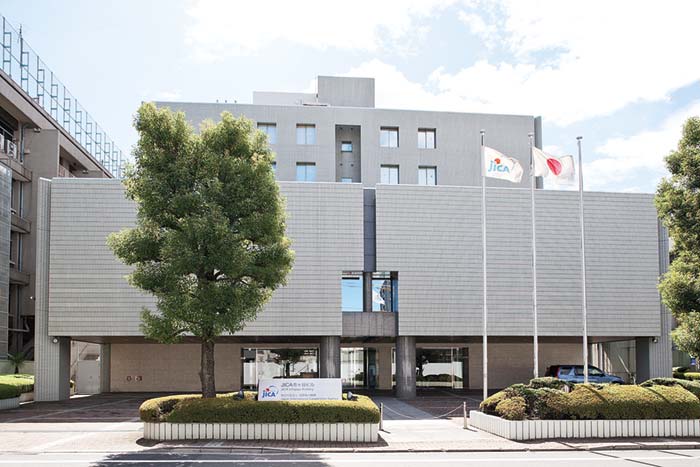
Some remarkable Japanese CBR workers
(Excerpted from Memories that Linger: My journey through
the world of disability
by Padmani Mendis)
The work done by the Disability Studies Unit (DSU) in Sri Lanka I have chronicled with my memories at home in Sri Lanka in a later section. Here let me recall but one other outstanding contribution that the DSU made at that time to the pursuit of disability studies and its practice. Through an agreement signed with the Child Health Unit of the University of London and the Great Ormond Street Hospital, London, a course for the education of Speech and Language Therapists (SLTs) was pioneered in 1998.
Since we had just one SLT at the time, we arranged for the London counterparts to send us six SLT teachers a year, each for one month for a period of six years, until some of ours could take over teaching functions. They also sent us Mary Wickenden as a full-time course coordinator for three years. Kelaniya University would establish relevant posts in the DSU by this time. What started as a diploma course became a degree course not much later. Soon those graduates were following masters degrees and then doing their doctoral degrees.
We started by selling our SLT course to the Ministry of Health for just six students at a cost of Rupees 90,000 per student per year. The ministry was required to establish a cadre and increase it annually. Private students were also enrolled. The DSU continued as a self-financing unit. When diplomas became degrees, I believe that initiative was no longer needed because the costs were met by the university.
The DSU is now a Department of Disability Studies or DDS with a large cadre of staff carrying out two degree courses. It has in the chair a Professor of Childhood Disability. A Disability Resource Centre to support disabled students and a Centre for Disability Research chaired by the Dean run alongside the DDS. The DDS is also the technical resource for the National Centre for the Rehabilitation of Children run by the University. It is called Ayathi.
Parting with satisfaction and fulfilment
I was sad to leave the DSU. Prof. Carlo Fonseka was no more the Dean. When leadership changes, so do policies. Disability was no longer viewed as a social issue and one of human rights. This was a Faculty of Medicine. It was made known to me that the responsibility for running the DSU would be taken over by a Senior Medical Teacher.
It was time for me to go. I left with a sense of satisfaction and fulfilment. I look back on that experience with an immense sense of joy. And of appreciation to the people of Sweden who made that possible. And then I continued on my journey in the World of Disability. This time with invitations also from the Japanese and the Norwegians.
Japan and Norway, major CBR supporters
Looking back, I wonder how I may, at this time of my life, share with you adequately my memories of all those other great individuals and organisations who contributed to the growth and development of Community Based Rehabilitation (CBR) and with whom I had a relationship in those early decades. All those people, those who lived with disability and those who did not, were concerned about improving the lot of a neglected, often oppressed section of our society. A few who I have not written about as yet come to mind. Of them, two press urgently on my memory. They are the Japanese and the Norwegians. Although I will spend some time with these two, that is not to say I have forgotten the many others. So before I go to those, let me share with you memories of Handicap International and of a personal experience in South Africa.
Handicap International
Handicap International, better known perhaps as HI, is one that brings back memories. They invited me to work in Nepal on many occasions to see the Nepalese on their way with CBR. I first met HI as a new-born in 1982 as Operation Handicap International or OHI. OHI had its headquarters in Lyon, France, not far from Geneva. Its co-founder, Jean-Baptiste Richardier, met us often at WHO and gave us valuable information and advice on appropriate assistive devices to include in the WHO Manual. And on other matters in general.
My relationship with HI was a long one though we did not meet frequently. It continued until much later, when they would call me in Colombo for briefings and discussions leading to work when needed. I hear that it is now called Humanity and Inclusion with branches in many countries. The name change was apparently to reflect that their work was no more confined to disabled people. It is also extended to other vulnerable groups. My, how it has grown in 40 years. Just wonderful.
South Africa, University of Witwatersrand and a Personal Experience
I cannot forget Marjorie Concha, a CBR pioneer in South Africa and Professor of Occupational Therapy at Witwatersrand University, Johannesburg, and her staff. Marj invited me over to meet with professionals in that part of the world and to visit a CBR project started by her department. Plans were first a three-day meeting with the professionals. Then a weekend at Krueger National Park with Marj and her husband Ettel, and thereafter on to CBR. The project was in Tintswalo in North Eastern Transvaal and adjoining the park.
This was a rare occasion on which Nalin had joined me. South Africa and Krueger wildlife could not be missed. But that was not to be.
At the end of the third day and with the end of the meeting, Nalin took ill. The hospital doctor instructed us to go to the Heart Hospital a few kilometres down the road (from our hotel). We found out later that this hospital was built for whites only during the apartheid regime. No expense had therefore been spared. It was the best that it could be. Thanks to the great Nelson Mandela, it was now open also to blacks, browns, the yellow-skinned and to all colours of the rainbow.
The Heart Hospital in Johannesburg
The warm and friendly young native African doctor who saw us was a cricket fan and knew well of our country. Sri Lanka was known all over the world not just for our tea, but also for our cricket. He talked of Arjuna, Murali and Aravinda. Sri Lankan Cricket was reason enough for his special concern.
Soon he told us that Nalin had had a heart attack. He arranged for Nalin to be admitted immediately. By this time it was nearly midnight but the Specialist came without delay. He told me the damage to the heart was extensive and severe. He had Nalin put on all the necessary life-saving machines. He said he would be back in the morning and carry out the required tests to make an accurate diagnosis.
He advised me to go back to the hotel and return at seven when he would be back. When I did go back in the morning, Nalin was in heart failure and in a coma. He remained in that state for the next four days. I was allowed to sit by his bedside all day. I had my meals in the hospital canteen. Nalin had a specialist nursing sister attending on him full-time, monitoring him closely. Each day would be written on his bed-head ticket, “Patient’s condition uncertain. Family informed.”
Back at the hotel on that first night there was much to be done. Communication by fax with the insurance people in London was a priority. But guess what? The insurance people informed the hospital that they would not meet our cost. We found out later that this was the reason – apparently Sri Lankans were notorious for travel insurance fraud. They would take out a travel insurance, go to a place like the UK, have pre-planned surgery and make costly insurance claims. So the London insurance people presumed we were one of the same breed. They refused our claim.
Fortunately, the owner of our insurance agency in Sri Lanka was Nihal Senaratne. Nihal came up trumps. He told the insurance people what the consequences of their refusal would be. All Nalin’s bills were settled. Otherwise that experience would at that time have cost us about USD 20,000. Such was the hospital. Such was the quality of care. Cheap in terms of the result.
Meanwhile my Lecture Tour was put an end to. But Marj and her staff did not end their relationship with me. They were in touch with me constantly through every day. I told them what I needed urgently was to get to a shopping centre. Two colleagues took me to one where I could buy for Nalin a couple of pairs of pyjamas. As a Sri Lankan, he wore only sarong at night. I was preparing for when he would come out of the coma. I knew he would recover. He had to. And then he had to have some smart pyjamas to walk around the hospital in.
Being with the Japanese
The Japanese came into CBR later, having first I suppose to look into their own disability situation. If I may name one individual who led the support for CBR in that amazing country, it was Yukiko Oka Nakanishi. She had lived with severe disability since the age of four years when she had polio. Yukiko’s empathy with people in the developing world who had disability themselves and for others of us who worked in the field of disability was infinite.
With her knowledge and commitment she earned the trust of JICA, the Japan International Cooperation Agency. She was one of its consultants and advisers it seems to me forever. JICA is the implementing agency of official Japanese development aid that supports socio-economic development and economic stability in developing countries. Influenced by Japan’s disabled people, JICA continued to push forward strategies to realise the full participation and equality of disabled persons globally.
Yukiko Oka Nakanishi
Yukiko was married to Shoji Nakanishi who also lived with very severe disability from a very young age. They are perfect partners, complementing each other’s work based on their life’s experiences before they met. And then continuing successfully to work towards changing the situation for others who had to face those same situations. She, through the Asia Disability Institute she set up. And Shoji, through the Human Care Association he founded.
Both promoted the Independent Living Movement (ILM). Shoji set up ILM through the Human Care Association. He took a leading role in it in his country, in the Asia-Pacific region and globally. Together, they harnessed the cooperation of many other fellow Japanese to change the situation of disabled people in their own country. And in other countries. And they continue to do so.
I had the good fortune to first meet Yukiko when she took up a post for three years at ESCAP, the Economic and Social Commission for Asia and the Pacific in Bangkok. Her task was, broadly speaking, to stimulate interest in disability issues in member countries of ESCAP and to discuss with them what they could do about it. Numerous meetings and workshops were held in Bangkok towards achieving this purpose and I was sometimes invited to share experiences of CBR at these events. ESCAP comes within the UN Economic and Social Commission headquartered in New York.
An Unusual Experience
I will illustrate how intensive CBR workshops generally were with a personal experience. I was the rapporteur at a multi-country workshop held in Khon Khaen city in north-eastern Thailand in 1990. Yukiko and her boss were working on the report with me. We worked long hours to get daily reports done. Then we had to get the final report ready by Friday morning so the participants could approve it.
We worked all night Thursday. We had it ready and photocopied. But it gave us time only for a quick shower and an even quicker breakfast so we could get to the workshop in time. The workshop ended by 1 p.m. for lunch. By 3 p.m. I was on a local flight to Bangkok with a direct connection to an international flight back home to Colombo.
Quite soon after boarding the flight to Colombo, I started feeling somewhat groggy. I held on for as long as I could, but decided finally to call a stewardess. Before I knew it, I found myself waking up flat-out on the aisle with a circle of worried faces peering down at me. I had collapsed.
When the flight landed, I was brought down in a wheelchair in the cargo lift. To be taken directly to the Medical Centre at the airport. When I said I was a diabetic, the good doctor gave me a glassful of glucose, quite sickening to drink and quite unnecessary I thought. I told her the reason for my collapse was fatigue. I was still unfit to walk, so the stewardess wheeled me out. Nalin was waiting to collect me. He nearly collapsed himself when he saw me being pushed out in a wheelchair.



 The abduction of Venezuelan President Nicolas Maduro by US special forces on January 3rd and his coercive conveying to the US to stand trial over a number of allegations leveled against him by the Trump administration marks a dangerous degeneration of prevailing ‘world disorder’. While some cardinal principles in International Law have been blatantly violated by the US in the course of the operation the fallout for the world from the exceptionally sensational VVIP abduction could be grave.
Although controversial US military interventions the world over are not ‘news’ any longer, the abduction and hustling away of a head of government, seen as an enemy of the US, to stand trial on the latter soil amounts to a heavy-handed and arrogant rejection of the foundational principles of international law and order. It would seem, for instance, that the concept of national sovereignty is no longer applicable to the way in which the world’s foremost powers relate to the rest of the international community. Might is indeed right for the likes of the US and the Trump administration in particular is adamant in driving this point home to the world.
Chief spokesmen for the Trump administration have been at pains to point out that the abduction is not at variance with national security related provisions of the US Constitution. These provisions apparently bestow on the US President wide powers to protect US security and stability through courses of action that are seen as essential to further these ends but the fact is that International Law has been brazenly violated in the process in the Venezuelan case.
To be sure, this is not the first occasion on which a head of government has been abducted by US special forces in post-World War Two times and made to stand trial in the US, since such a development occurred in Panama in 1989, but the consequences for the world could be doubly grave as a result of such actions, considering the mounting ‘disorder’ confronting the world community.
Those sections opposed to the Maduro abduction in the US would do well to from now on seek ways of reconciling national security-related provisions in the US Constitution with the country’s wider international commitment to uphold international peace and law and order. No ambiguities could be permitted on this score.
While the arbitrary military action undertaken by the US to further its narrow interests at whatever cost calls for criticism, it would be only fair to point out that the US is not the only big power which has thus dangerously eroded the authority of International Law in recent times. Russia, for example, did just that when it violated the sovereignty of Ukraine by invading it two or more years ago on some nebulous, unconvincing grounds. Consequently, the Ukraine crisis too poses a grave threat to international peace.
It is relevant to mention in this connection that authoritarian rulers who hope to rule their countries in perpetuity as it were, usually end up, sooner rather than later, being a blight on their people. This is on account of the fact that they prove a major obstacle to the implementation of the democratic process which alone holds out the promise of the prgressive empowerment of the people, whereas authoritarian rulers prefer to rule with an iron fist with a fixation about self-empowerment.
Nevertheless, regime-change, wherever it may occur, is a matter for the public concerned. In a functional democracy, it is the people, and the people only, who ‘make or break’ governments. From this viewpoint, Russia and Venezuela are most lacking. But externally induced, militarily mediated change is a gross abnormality in the world or democracy, which deserves decrying.
By way of damage control, the US could take the initiative to ensure that the democratic process, read as the full empowerment of ordinary people, takes hold in Venezuela. In this manner the US could help in stemming some of the destructive fallout from its abduction operation. Any attempts by the US to take possession of the national wealth of Venezuela at this juncture are bound to earn for it the condemnation of democratic opinion the world over.
Likewise, the US needs to exert all its influence to ensure that the rights of ordinary Ukrainians are protected. It will need to ensure this while exploring ways of stopping further incursions into Ukrainian territory by Russia’s invading forces. It will need to do this in collaboration with the EU which is putting its best foot forward to end the Ukraine blood-letting.
Meanwhile, the repercussions that the Maduro abduction could have on the global South would need to be watched with some concern by the international community. Here too the EU could prove a positive influence since it is doubtful whether the UN would be enabled by the big powers to carry out the responsibilities that devolve on it with the required effectiveness.
What needs to be specifically watched is the ‘copycat effect’ that could manifest among those less democratically inclined Southern rulers who would be inspired by the Trump administration to take the law into their hands, so to speak, and act with callous disregard for the sovereign rights of their smaller and more vulnerable neighbours.
Democratic opinion the world over would need to think of systems of checks and balances that could contain such power abuse by Southern autocratic rulers in particular. The UN and democracy-supportive organizations, such as the EU, could prove suitable partners in these efforts.
All in all it is international lawlessness that needs managing effectively from now on. If President Trump carries out his threat to over-run other countries as well in the manner in which he ran rough-shod over Venezuela, there is unlikely to remain even a semblance of international order, considering that anarchy would be receiving a strong fillip from the US, ‘The World’s Mightiest Democracy’.
What is also of note is that identity politics in particularly the South would be unprecedentedly energized. The narrative that ‘the Great Satan’ is running amok would win considerable validity among the theocracies of the Middle East and set the stage for a resurgence of religious fanaticism and invigorated armed resistance to the US. The Trump administration needs to stop in its tracks and weigh the pros and cons of its current foreign policy initiatives.

 The British School in Colombo (BSC) hosted its Annual Christmas Carnival 2025, ‘Gingerbread Wonderland’, which was a huge success, with the students themseles in the spotlight, managing stalls and volunteering.
The event, organised by the Parent-Teacher Association (PTA), featured a variety of activities, including: Games and rides for all ages, Food stalls offering delicious treats, Drinks and refreshments, Trade booths showcasing local products, and Live music and entertainment.

The carnival was held at the school premises, providing a fun and festive atmosphere for students, parents, and the community to enjoy.
The halls of the BSC were filled with pure Christmas magic and joy with the students and the staff putting on a tremendous display.
Among the highlights was the dazzling fashion show with the students doing the needful, and they were very impressive.

The students themselves were eagerly looking forward to displaying their modelling technique and, I’m told, they enjoyed the moment they had to step on the ramp.
The event supported communities affected by the recent floods, with surplus proceeds going to flood-relief efforts.

 Hi! This week I’m giving you some beauty tips so that you could look forward to enjoying 2026 with a glowing younger looking skin.
Face wash for natural beauty
* Avocado:
Take the pulp, make a paste of it and apply on your face. Leave it on for five minutes and then wash it with normal water.
* Cucumber:
Just rub some cucumber slices on your face for 02-03 minutes to cleanse the oil naturally. Wash off with plain water.
* Buttermilk:
Apply all over your face and leave it to dry, then wash it with normal water (works for mixed to oily skin).
Face scrub for natural beauty
Take 01-02 strawberries, 02 pieces of kiwis or 02 cubes of watermelons. Mash any single fruit and apply on your face. Then massage or scrub it slowly for at least 3-5 minutes in circular motions. Then wash it thoroughly with normal or cold water. You can make use of different fruits during different seasons, and see what suits you best! Follow with a natural face mask.
Face Masks
* Papaya and Honey:
Take two pieces of papaya (peeled) and mash them to make a paste. Apply evenly on your face and leave it for 30 minutes and then wash it with cold water.
Papaya is just not a fruit but one of the best natural remedies for good health and glowing younger looking skin. It also helps in reducing pimples and scars. You can also add honey (optional) to the mixture which helps massage and makes your skin glow.
* Banana:
Put a few slices of banana, 01 teaspoon of honey (optional), in a bowl, and mash them nicely. Apply on your face, and massage it gently all over the face for at least 05 minutes. Then wash it off with normal water. For an instant glow on your face, this facemask is a great idea to try!
* Carrot:
Make a paste using 01 carrot (steamed) by mixing it with milk or honey and apply on your face and neck evenly. Let it dry for 15-20 minutes and then wash it with cold water. Carrots work really well for your skin as they have many vitamins and minerals, which give instant shine and younger-looking skin.

Warning for deep depression over South-east Bay of Bengal Sea area

It’s 4-1 to Australia after Carey and Green complete stuttering chase at SCG

US seizes two ‘shadow fleet’ tankers linked to Venezuelan oil

Showers above 100 mm are likely at some places in the Eastern and Uva provinces and showers about 50-75 mm in other areas

Easter Sunday attacks: Govt. says wife of Katuwapitiya Church bomber alive

Indian Army Chief here

‘Dates have the highest sugar content to fight Coronavirus’

Sunday Island 27 December – Headlines

#SundayIsland 17th December – Headlines

Sunday Island – 28th March

Sunday Island Headlines – 21 March

Sunday Island – 21st February – Headlines
-

 News2 days ago
Interception of SL fishing craft by Seychelles: Trawler owners demand international investigation
-
 News2 days ago
Broad support emerges for Faiszer’s sweeping proposals on long- delayed divorce and personal law reforms
-
 News3 days ago
Private airline crew member nabbed with contraband gold
-

 News1 day ago
Prez seeks Harsha’s help to address CC’s concerns over appointment of AG
-

 News1 day ago
Govt. exploring possibility of converting EPF benefits into private sector pensions
-

 News5 days ago
Health Minister sends letter of demand for one billion rupees in damages
-

 Features2 days ago
Educational reforms under the NPP government
-
 Features3 days ago
Pharmaceuticals, deaths, and work ethics