
Business
Dilmah – HSBC future writers festival attracts 150+ entries


Last year’s Future Writers winner makes it to Gratiaen Shortlist
Hafsa Rizvi, Taleetha Wambeck and Sohara Bandaranayake named winners of 2nd Future Writers Programme
With a focus on empowering emerging voices, the Future Writers Programme presented by Dilmah is a flagship initiative of the HSBC Ceylon Literary & Arts Festival and is fast becoming a catalyst for creative growth in Sri Lanka. More than a competition, it is a platform designed to foster and elevate the talents of young Sri Lankan writers, supporting their journey from inspiration to impact, a news release connected with the event said.
“A powerful example of this impact is evidenced in Savin Edirisinghe, last year’s competition winner, being shortlisted for the prestigious 32nd Gratiaen Prize – a milestone that affirms the programme’s mission, it noted.
This year’s Awards Ceremony, held at Genesis – The Dilmah Centre for a Sustainable Future, brought together distinguished literary figures and young creatives to celebrate and recognise the emerging national literary talents.
Speaking at the event, Dilhan C. Fernando, Tea Grower and Chairman/CEO of Dilmah, emphasised the importance of storytelling as a force for cultural preservation and personal expression: “Creativity is what differentiates us in this age of AI and so much mundane automation. It’s creativity that will make us distinct and give us an identity, he said”
Dilmah’s support of the Festival and young writers reflects its long-standing legacy of storytelling, beginning with founder Merrill J. Fernando’s mission to share the story of Ceylon tea with the world. Today, that legacy lives on in every young Sri Lankan who dares to write with heart, with purpose, and with the hope of being heard.
Ajai Vir Singh, Creative Platform Builder and Co-Founder & Director of the HSBC Ceylon Literary & Arts Festival added, “The role of platforms in modern day societies is very important as they re-engage a generation on common purpose. Our platform is driving the resurgence of arts and culture among the youth through their engagement and this programme is a testimony of that. It’s also building a unique Sri Lankan identity. The Future Writers Programme acts as a supply chain that boosts the arts and culture stream of Sri Lanka. Soft power enhancement has been our goal for a few years now and that remains the bigger purpose for us.”
Now in its second consecutive year, the Future Writers Programme presented by Dilmah invited aspiring writers aged 15 – 29 to develop their storytelling abilities through dedicated writing workshops and a national short story competition. This year, participants explored two evocative themes: ‘Whispers from the Jungle’ and ‘Echoes of the Protector’. The overwhelming response to the call for submissions reflected the interest in creative writing among Sri Lanka’s youth and a hunger for platforms that support creative expression.
The highlight of the evening was the announcement of the Future Writers Programme Competition winners. The top three were honoured for their imaginative and thought-provoking stories that captured the spirit of this year’s festival theme, ‘Writing with Purpose’. Hafsa Rizvi claimed the top prize for her story, while Taleetha Wambeck was named First Runner-up and Sohara Bandaranayake received Second Runner-up honours.
The judging panel for this year’s competition comprised acclaimed writers and literary professionals: Ameena Hussein, Lal Medawattegedara, and Artika Aurora Bakshi who shared their insights during a thought-provoking panel discussion at the awards ceremony moderated by lawyer and presenter Shanaka Amarasinghe. Their selection reflected a thoughtful and rigorous evaluation of the entries, recognising young voices with originality, creativity, clarity and identity.
The top three winners were awarded a cash prize and the opportunity to engage in a mentorship session with award winning author and publisher Ameena Hussein providing valuable guidance to refine their craft and continue their literary journeys. The 48 Shortlist and Longlist recipients were also presented with certificates and a token in recognition of their achievements.
To read the stories of the top 11 on the shortlist, visit: www.ceylonliteraryfestival.com


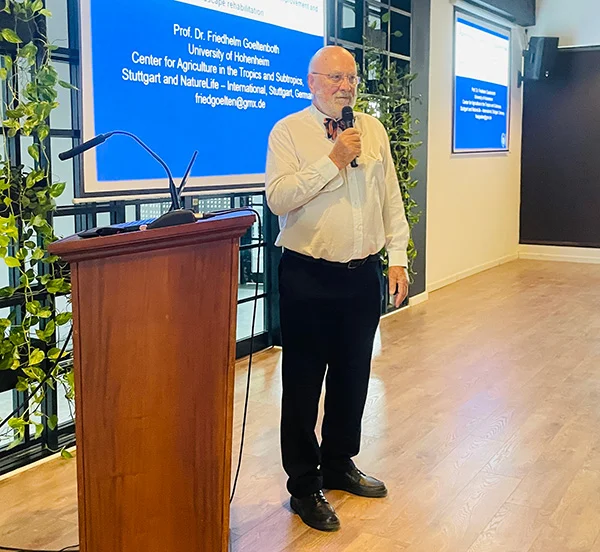
Sri Lanka’s economic strategy continues to focus on exports, productivity and fiscal consolidation.
Yet one of the country’s most valuable assets — its forests and traditional forest-based farming systems — remains largely absent from economic planning. This is no longer an environmental oversight. It is a business risk.
At a recent Dilmah Genesis Thought Leadership Series lecture in Colombo, tropical ecology expert Professor Friedhelm Goeltenboth delivered a clear message: once forests are destroyed, the economic value they provide is lost permanently.
What replaces them — monoculture plantations — may appear efficient, but over time they generate declining yields, rising input costs and growing exposure to climate shocks.
From a financial perspective, this is asset depletion, not development.
Monoculture systems simplify production but externalise costs. Soil erosion, fertiliser dependency, water stress and biodiversity loss eventually hit farmers, banks, insurers and the state.
Sri Lanka is already seeing the consequences through falling productivity and rising agricultural vulnerability.
Forest-integrated farming offers a different model — one that treats land as a multi-income asset.
Spices such as cinnamon, pepper, cardamom and nutmeg can be grown under shade alongside fruit, timber and fibre crops, stabilising income while protecting soil and water. For lenders and insurers, diversified systems reduce risk. For exporters, they support traceability, sustainability certification and premium pricing.
The strongest business opportunity lies in carbon markets. Voluntary carbon markets allow companies to offset emissions by funding verified forest conservation and restoration.
Across Southeast Asia, communities now earn income simply by protecting forests that store carbon.
Sri Lanka has the scientific capacity to enter this space. Farmers can collect data; experts can certify it. What is missing is a coordinated national framework that allows communities and corporates to participate efficiently.
Carbon revenue will not replace agriculture, but it can stabilise it — providing income during crop maturation and creating a new form of export: environmental services.
Ignoring this opportunity carries downside risk.
Biodiversity loss, pollinator decline and climate volatility threaten long-term agricultural productivity. Forests are not sentimental assets; they are economic infrastructure.
Sri Lanka’s recovery cannot be built on short-term extraction. If the country wants resilient growth, it must start recognising the real value of what is still standing, he added.
By Ifham Nizam

Sri Lanka batting coach Vikram Rathour has hailed middle-order batter Pavan Rathnayake as one of the finest players of spin in the modern game, saying the youngster’s nimble footwork and velvet touch were a “breath of fresh air” for a side long troubled by the turning ball.
Drafted in for the second T20I after Sri Lanka’s familiar struggles against spin, Rathnayake looked anything but overawed by England’s seasoned tweakers, skipping down the track with sure feet and working the ball into gaps with soft hands.
“He is one of the better players when it comes to using the feet,” Rathour told reporters. “I haven’t seen too many in this generation do it as well as he does. That is really impressive and a good sign for Sri Lankan cricket.”
Sri Lanka went down in a last-over nail-biter but there were silver linings despite the hosts being a bowler short. Eshan Malinga was forced out after dislocating his left shoulder and has been ruled out for at least four weeks, a blow that ends his World Cup hopes. Dilshan Madushanka, Pramod Madushan and Nuwan Thushara have been placed on standby.
 Power hitting remains Sri Lanka’s Achilles’ heel and Rathour, who carries an impressive CV from India’s T20 World Cup triumph two years ago, pointed to a few grey areas in the batting blueprint.
“There are two components to T20 batting,” he said. “One is power hitting, but the surfaces here, especially in Colombo, are not that conducive to clearing the ropes. The wickets are slow and the ball doesn’t come on to the bat. The other component, just as important, is range as a batting unit.”
Even when Sri Lanka lifted the T20 World Cup in 2014 they were not blessed with a dressing room full of big hitters, relying instead on sharp running, clever placement and a mastery of spin. Rathour preached a similar mantra.
“If you are not a team that hits a lot of sixes, you can still find plenty of fours by utilising the whole ground,” he said. “Most of them sweep well, reverse sweep and use their feet. That is encouraging. If you don’t have the brute power, you can make up for it by using angles and scoring square of the wicket.
“These wickets perhaps suit that style more. They are not the easiest surfaces to hit sixes, and I’m okay with that. If they can use their feet and the angles well, that is as good.”
Rex Clementine
at Pallekele
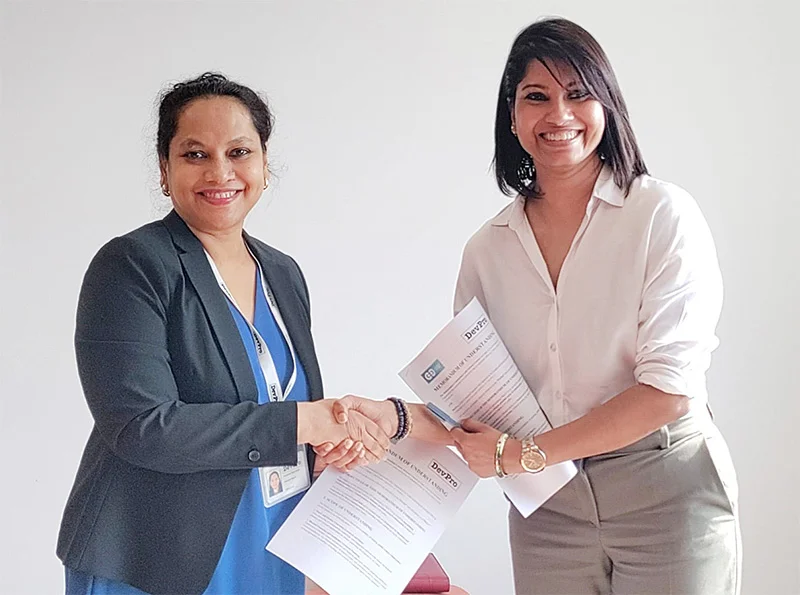
Sri Lanka’s dairy and livestock sector is central to food security, rural livelihoods, and national nutrition, yet continues to face challenges related to productivity, climate vulnerability, market access, and financing.
In this context, Connect to Care and DevPro have entered into a formal partnership through a Memorandum of Understanding (MoU) to support Sri Lanka’s journey towards dairy self-sufficiency.
A core objective of DevPro is to strengthen inclusive and resilient dairy value chains by empowering smallholder farmers through technical assistance, capacity building, climate-resilient practices, and market-oriented approaches, building on its extensive field presence across Sri Lanka.
A core objective of Connect to Care is to support the achievement of dairy self-sufficiency by 2033, as outlined in the national development manifesto, with an interim target of 75% self-sufficiency by 2029.
By strengthening local dairy production and value chains, this effort will also help reduce Sri Lanka’s dependence on imported dairy products, while improving farmer incomes and domestic supply resilience.
The partnership will focus on climate-smart dairy development, multi-stakeholder coordination, and exploring blended finance and PPP models—providing a structured platform for development partners and the private sector to engage in scalable action.

England will bat first in 3rd ODI

Members of the National Student Parliament meet PM

Sri Lanka aim to overcome disarray and end trophy drought

Mrs. I.J. Aberathne appointed Director General of the Department of Trade and Investment Policy

Cabinet gives green light to provide equipment for the promotion of Aesthetic Education in schools

Cabinet approves obtaining Technical Assistance of the Mahaweli Consultation Bureau for implementation of the Rural Community Water Supply Project.

‘Dates have the highest sugar content to fight Coronavirus’

Sunday Island 27 December – Headlines

#SundayIsland 17th December – Headlines

Sunday Island – 28th March

Sunday Island Headlines – 21 March

Sunday Island – 21st February – Headlines
-
 Opinion5 days ago
Sri Lanka, the Stars,and statesmen
-
 Business6 days ago
Climate risks, poverty, and recovery financing in focus at CEPA policy panel
-

 Business4 days ago
Hayleys Mobility ushering in a new era of premium sustainable mobility
-

 Business4 days ago
Advice Lab unveils new 13,000+ sqft office, marking major expansion in financial services BPO to Australia
-
 Business4 days ago
Arpico NextGen Mattress gains recognition for innovation
-

 Business3 days ago
Altair issues over 100+ title deeds post ownership change
-

 Business15 hours ago
SLIM-Kantar People’s Awards 2026 to recognise Sri Lanka’s most trusted brands and personalities
-

 Business3 days ago
Sri Lanka opens first country pavilion at London exhibition