
Midweek Review
Dilith pins hopes on nationalistic vote in spite of Namal’s move

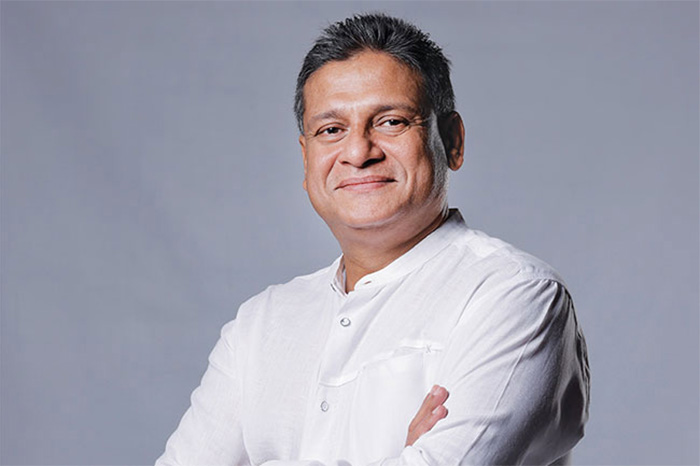
Continuing political unrest and economic crisis will encourage foreign powers to seek to consolidate their position here. Instead of blaming external interventions, Sri Lanka should take meaningful measures to thwart such interferences. However, bankruptcy status has placed the country in an extremely vulnerable situation. Mawbima Janatha Pakshaya (MJP) leader and presidential contestant Dilith Jayaweera said so commenting on altogether seven US, Indian and Chinese warships, including five destroyers, visiting Colombo harbor since the closing of nominations on Aug. 15. The Indian destroyer was followed by their National Security Advisor Doval whose interventions during previous administrations are too well known. Many eyebrows were raised over his visit to Colombo last week where he met three contestants, presidential Wickremesinghe, Premadasa and Dissanayake, followed by denial of him attempting to make a last ditch effort to bring about a reconciliation between the above-mentioned first two.
By Shamindra Ferdinando
Having served President Ranil Wickremesinghe’s despicable political agenda since May 2022, till August this year, parliamentarian Namal Rajapaksa entered the fray in a last-ditch attempt to save the SLPP’s nationalistic vote, Mawbima Janatha Pakshaya (MJP) leader Dilith Jayaweera declared.
The highest taxpaying presidential contestant Jayaweera tore into SLPP candidate Namal Rajapaksa as he questioned the motives of the eldest son of former President Mahinda Rajapaksa to seek the Office of the President.
Business magnate and Attorney-at-Law Jayaweera said so in response to The Island query during an interview with him last week at Triad Advertising (Pvt.) Ltd., where he acknowledged that the SLPP candidate was eyeing the nationalistic block vote at the expense of his (Jayaweera’s) campaign.
In a no holds barred interview, we sought an explanation from Jayaweera who. in spite of being a close friend and associate of the then President Gotabaya Rajapaksa. accepted US Ambassador Julie Chung’s invitation for a lunch three weeks after the ‘Aragalaya’ movement launched a public protest campaign outside the then President Gotabaya Rajapaksa’s private residence at Pangiriwatte, Mirihana, on March 31, 2022, the first definite inkling of Aragalaya materialized outside the private residence of the then popularly elected Head of State. Ambassador Chung, widely accused of playing a significant role in a high profile project that overthrew Gotabaya Rajapaksa, will remain in Colombo till early next year though we erroneously believed she would leave before the Sept. 21 Presidential Election. Even as widespread violence erupted across the country almost simultaneously against the elected representatives of the then government on May 09, 2022 Ambassador Julie Chung steadfastly maintained that it was a peaceful protest movement and urged the police and the armed forces not to take any action against them. How did an Ambassador get such sweeping powers to order about the armed forces of the country she was serving in?
Asked whether the entry of Namal Rajapaksa troubled his campaign, Jayaweera, without hesitation, acknowledged that he felt so. “Namal Rajapaksa entered the fray to cause a problem, to undermine my campaign. Obviously, the Rajapaksa camp believes Namal will be sort of isolated among the nationalistic electorate hence the bid to challenge our move. The electorate will not accept their strategy,” Jayaweera said.
Sipping a hot cup of coffee, at one of his spacious rooms at the Triad office, Jayaweera alleged that the SLPP founder Basil Rajapaksa and Namal Rajapaksa fully cooperated with President Wickremesinghe’s strategy to bring about the downfall of Gotabaya Rajapaksa, both in and outside Parliament. They pursued a common strategy at the expense of national interests, Jayaweera pointed out, adding that their original plan was to go along with UNP leader Wickremesinghe.
“The bottom line is that Namal Rajapaksa, in his capacity as an SLPP parliamentarian, threw his weight behind Wickremesinghe,” Jayaweera alleged, pointing out that the SLPPer, under any circumstances, couldn’t absolve himself of the responsibility for ensuring enactment of laws inimical to the country during the UNP leader’s presidency.
Jayaweera again held the Basil-Namal duo directly responsible for Gotabaya Rajapaksa’s predicament. Jayaweera alleged that they promoted businessman Dhammika Perera, MP, as an alternative presidential candidate as their original plan to reach consensus with Wickremesinghe went awry. Perera, who had been brought into Parliament in late June 2022, amidst a public protest campaign, wasn’t involved, at any level, with nationalistic politics. “Actually, Perera never understood the concept of nationalistic politics and was never interested in it at all,” Jayaweera alleged, asserting that the businessman lacked even the basic knowledge of politics.
Jayaweera questioned the rationale in even considering MP Perera as a tool to disrupt or undermine the nationalistic camp. The controversial, yet patriotic, businessman who played a significant role in the government efforts to attract fresh recruits to the armed forces as unlike previous presidents, the Mahinda Rajapaksa government embarked on a fight-to-a-finish with the LTTE terrorist, with Sarath Fonseka as the Army Commander, a type of General that a country gets maybe once in about a thousand years. He was backd by the then Defence Secretary, retired Lieutenant Colonel Gotabaya Rajapaksa, and a band of tested frontline commanders.
Jayaweera, who then wholeheartedly backed Gotabaya Rajapaksa’s successful presidential polls campaign, said that MP Perera’s sudden pullout and Namal Rajapaksa’s entry into the presidential race should be examined against the backdrop of post-‘Aragalaya’ politics.
Responding to the query whether Jayaweera felt that MP Perera quit the contest in line with the strategy pursued by the Basil-Namal duo, the MJP leader said that wasn’t the case. “I believe MP Perera realized that he is going to suffer a devastating defeat. His friends and relatives, too, appeared to have advised him against going ahead with risky political adventures. MP Perera got lost in politics and suffered the consequences.”
Jayaweera alleged that the Rajapaksas must have sought to use MP Perera’s wealth to achieve their own immediate agenda.
Over 17.1 mn people are eligible to vote at the Sept. 21 Presidential Election. Of them, over one million are voters who are qualified to exercise their franchise for the first time, in a national election called the after removal of a President through unconstitutional means.
Jayaweera said that Sarvajana Balaya he is contesting from would definitely contest the next parliamentary polls.
CP candidate
We sought an explanation as to why Jayaweera submitted his nominations through the Communist Party (CP) in spite of having his own registered party and a coalition called Sarvajana Balaya as some questioned the move that they felt confused the electorate, particularly the nationalistic vote base.
“There is absolutely no basis for that assertion. There cannot be any ambiguity over our selection of CP, one of the constituents of Sarvajana Balaya. We picked CP as its symbol ‘star’ to attract the electorate, regardless of political differences.”
Jayaweera dismissed the assertion that he contesting the election, under the CP symbol, somewhat undermined his campaign. Dr. Geeganage Weerasinghe, in his capacity as the General Secretary of CP, paid the deposit for Jayaweera on August 13, the day before the final day for the acceptance of nominations. The Mawbiba Janatha Pakshaya leader is one of the 38 candidates in the fray after ex-parliamentarian Sarath Kumara Gunaratna failed to submit nominations after paying the deposit and independent candidate Muhammad Ilyas, 78, (ex-parliamentarian) died of a heart attack.
Jayaweera said that they agreed on a common agenda and was pursuing it vigorously. As a constituent of Sarvajana Balaya, CP, played an important role in the coalition, Jayaweera said, adding as the leader of MJP he led the strategic planning.
Weerasumana Weerasinghe (Matara District) represents the CP in the current Parliament. The first time entrant and the only CP MP, Weerasinghe entered Parliament on the SLPP ticket. The SLPP won 145 seats, including 17 National List slots, at the last parliamentary election. However, of them, as many as 130 switched allegiance to major candidates – President Wickremesinghe, SJB leader Sajith Premadasa and MJP leader Jayaweera with the UNP leader being the main beneficiary. As many as about 100 elected on the SLPP ticket and appointed on its National List back Wickremesinghe, whereas Premadasa received the support of about a dozen and several pledged their allegiance to Jayaweera.
Jayaweera said that those parliamentarians, who had been closely identified with the nationalistic camp, joined Sarvajana Balaya. The group included parliamentarians Wimal Weerawansa (National Freedom Front/NFF), Udaya Gammanpila (Pivithuru Hela Urumaya), Gevindu Cumaratunga (Yuthukama civil society group), Weerasumana Weerasinghe (CP), Gamini Waleboda (NFF) and Jayantha Samaraweera (NFF).
However, Mohammed Muzammil (National List), Jagath Priyankara (Puttalam district) and Nimal Piyatissa switched their allegiance to President Wickremesinghe at the expense of the NFF. Weerawansa’s party, that had seven MPs in Parliament at one time, lost another when their actor-turned-politician Uddhika Premaratne resigned his seat a few months ago. The SLPP filled Premaratne’s vacancy as the next highest preference vote taker happened to be S.C. Muthumumarana who contested the Anuradhapura district at the last election.
A meet during Aragalaya
Asked whether him meeting US Ambassador Chung, three weeks after violent demonstration at Pangiriwatte where ‘Aragalaya’ tested President Gotabaya Rajapaksa’s defences, in some way suggested that he, too, cooperated with the conspirators, Jayaweera emphasized that it was a totally wrong interpretation of what he was trying to do.
Jayaweera explained how he sought to set the record straight as various interested parties quite comfortably, at the expense of the war-winning country, pursued an anti-national line in their conversations with foreign envoys and other senior representatives of international organizations. Alleging that Colombo-based coffee drinking, wine sipping cocktail going groups with NGO mentality propagated a false narrative with the international community, Jayaweera stressed that he honestly tried to clarify what was happening.
Some Western envoys, too, for obvious reasons, found the company of their local ardent admirers trying to curry favour with them quite endearing, Jayaweera declared, asserting that such conversations never helped them to understand the ground situation and the genuine grievances of the people, regardless of their ethnicity.
Referring to several cases of high profile external interventions over the past several years, both before and after the 2022 Aragalaya, Jayaweera said Western powers adopted a hostile strategy here as advised by those who immensely benefited from foreign funded projects.
In the absence of a cohesive State policy to counter false narratives propagated by various interested parties hell-bent on doing away with our unitary status, especially in the wake of the eradication of separatist terrorist power in May 2009, external powers could advance their strategy without hindrance. Jayaweera cited the ongoing Geneva project as a glaring example of Sri Lanka’s failure to address false accountability charges that led to the co-sponsorship of 30/1 resolution in October 2015, with Wickremesinghe as the Prime Minister.
Jayaweera emphasized the responsibility on the part of the powers that be whoever was in power to counter false narratives at different levels.
Key challenges
Commenting on challenges faced by the post-Aragalaya situation against the backdrop of the government accepting bankruptcy status, the country couldn’t progress as the vast majority of people live without hope. The economic-political-social crisis perpetrated by those who wielded power over a period of time not only the two years under President Gotabaya Rajapaksa, the country was in a bind. “That is the ugly truth those exercising political power do not want to admit for obvious reasons.”
The hapless people have to be inspired, Jayaweera said, adding that restoration of public confidence would be the key to overcoming economic ruin, political uncertainty and social issues.
Jayaweera declared that Sarvajana Balaya manifesto addressed the daunting challenges experienced by the country with specific recommendations/proposals to gradually overcome the issues. “Different segments of the populations, ranging from the student community to professions ,should be ready to bear difficulties for a year, perhaps a little more than a year until Sarvajana Balaya proposals can be implemented.”
The outspoken political party leader said that political and economic objectives have to be achieved in an environment where all communities could live together and not in any way divide them on ethnic lines and be forced to take up extremist stands. “In such an atmosphere, regardless of diverse political opinions, people will invest, gradually as they face the challenges with confidence,” Jayaweera said, adding that he proposed UNIQUE identity numbers at birth to improve social security. That would deliver a knockout blow to corruption, Jayaweera said, adding that the banking system would be part of the whole operation to monitor transactions at all levels.
During a recent interview with the writer, active citizen L. J. Udukumburage discussed how the existing banking system could be utilized to curb corruption through an effective control on cash transfers (Prez polls 2024: Passage of Economic Transformation Bill strengthens Ranil strategy (The Island, July 31, 2024).
Responding to another query, Jayaweera pointed out that the much publicized agreement with the IMF that had been repeated like a mantra should be examined taking into consideration the failure on the part of the government to take remedial measures over two years after Wickremesinghe received premiership and the finance portfolio in May 2022.
Those who talk proudly of moratorium on the payment of foreign debt till 2028 should explain why at least revenue collection hadn’t been streamlined yet, over two years after ‘Aragalaya’ and the same corrupt lot allowed to continue gleefully as repeatedly revealed by revelations made in Parliament.
Sri Lanka announced suspension of debt payment in April 2022, a few weeks after the Pangiriwatte protest.
Jayaweera alleged that in spite of the economy still being in intensive care, the executive and legislature continued on the same path. Recent disclosure regarding the failure on the part of a key revenue collector to fulfil his obligation underscored the requirement for total overhauling of the revenue collection system. The present day leaders would happily continue with this corrupt system as they were only interested in spending the rest of their lives in luxury, at the expense of the public.
A proper investigation would reveal that many political party leaders, ministers and ordinary MPs are living way beyond their means, Jayaweera alleged. He named two political party leaders as utterly corrupt though they pretend to be paragons of virtue.
Too many candidates
Jayaweera expressed the urgent need to amend existing laws to prevent major political parties fielding proxy candidates. According to him, of the 39 candidates in the fray, there were at least 20 proxies fielded by independent candidate Wickremesinghe and SJB leader Premadasa. Referring to the last Presidential Election conducted in November 2029, Jayaweera said that the situation was equally bad that time, too, with so many proxies.
Six contested the 1982 presidential poll followed by three in 1988, six in 1994, 13 in 1999, 13 in 2005, 22 in 2010, 19 in 2015, 35 in 2019 and 39 in 2024.
Jayaweera said that having special provision to grant special status to ex-MPs and serving MPs couldn’t be justified under any circumstances. In terms of the Presidential Election Act, any elector and even unregistered political parties could nominate only ex or serving MPs. “This ridiculous law should be done away with. In fact, the government should have addressed this issue in 1999 after 13 contested the presidential election won by PA leader Chandrika Bandaranaike Kumaratunga in that year.”
Jayaweera said that as far as he knew JJB hadn’t fielded at least one proxy candidate. Wickremesinghe and Premadasa should be held accountable for criminal waste of public funds caused by proxy candidates. The Election Department has said that election expenditure could have been drastically reduced if only ‘serious’ candidates contested.
A smiling Jayaweera said that they clearly identified whom the proxies served but couldn’t still correctly get at the allegiance of two independents, both former parliamentarians. Declaring the JJB, too, followed the policies of the Wickremesinghes and Premadasas, Jayaweera alleged that Rathusahodarayas, too, benefited from the black economy and the conduct of that party over the past couple of years proved that essentially all three operated on the same lines.
Warning over post-poll violence
Commenting on MP Weerawansa’s recent high profile accusation that the JJB would resort to violence to disrupt counting of votes on Sept. 21, thereby create a situation that may allow Wickremesinghe to continue, pending a decision on the election, Jayaweera said that particular allegation echoed Sarvajana Balaya thinking, as well as the former Minister’s personal opinion.
Pointing out that the JVP polled 273,428 votes (4.19%) at the 1982 presidential poll and 418,553 votes (3.16%) at the 2019 poll, Jayaweera said that over the past several years the JVP has expanded and it was now a far bigger setup. The JVP leadership could find it difficult to keep those ‘newcomers’ under control. Therefore, the JVP/JJB was in flux. There could be trouble, serious trouble at short notice unless the powers that be maintain a close watch on the situation.
Declaring that unprecedented divisions in Parliament didn’t really reflect the mood of the electorate on the eve of the Presidential Poll, Jayaweera said that approximately 40% of the votes of those who exercised their franchise in support of Gotabaya Rajapaksa at the 2019 Presidential election remained undecided yet. Jayaweera is convinced that block vote, regardless of Namal Rajapaksa’s intervention, would stand by the nationalistic camp, hence he could be the beneficiary.
Jayaweera is of the opinion that the contest is so fierce no candidate could secure 30% of the vote. Jayaweera also discussed the transformation of the Marxist JVP leadership to a rightwing political force serving the interests of the West.
He dismissed assertions that those who lacked political experience at lower level (Local Government, Provincial Councils and Parliament) shouldn’t aspire for the President’s Office. Those with administrative experience should receive the preference over politicians who ruined the country, the leading businessman with a definite patriotic background asserted.
Jayaweera accused President Wickremesinghe of causing further destabilization by refusing to adhere to Supreme Court directives or trying to circumvent SC orders. A continuing dispute between the President and the judiciary could cause quite an explosive situation, Jayaweera alleged, asserting that the President’s response to recent SC directives and rulings that he may have considered disadvantageous to him didn’t do him any good.

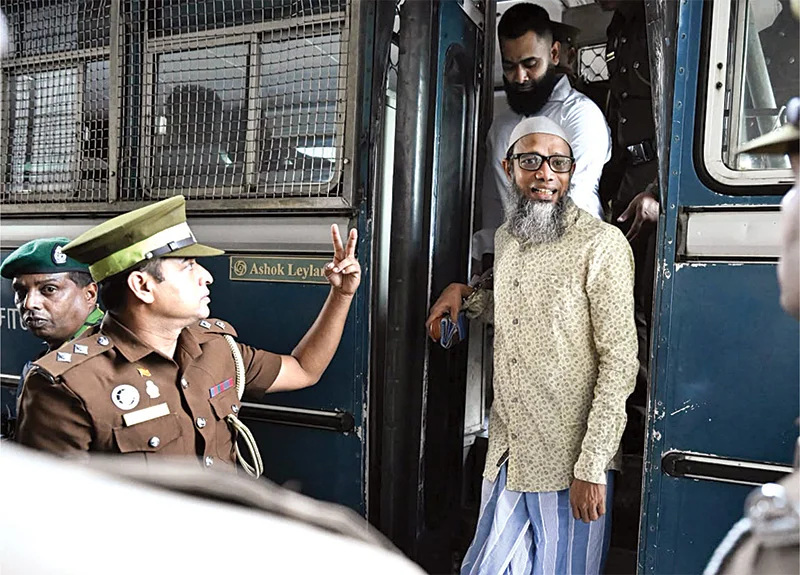
Senior Additional Solicitor General Haripriya Jayasundera, PC, requested the Trial-at-Bar ahead of the declaration of its verdict that those found guilty should be dealt with in a manner that would serve as a deterrent to anyone of any religious and social environment who holds extremist views. Declaring that none of the accused had shown regret, Haripriya alleged that they were still holding on to their ideology. She painted an extremely dangerous picture of the religious mindset of a group of people who still remained a threat to society.
By Shamindra Ferdinando
Mohammadu Ibrahim Mohamad Naufer, aka Naufer Maulavi, 48, sentenced to 220 years of rigorous imprisonment by the High Court trial-at-Bar on 22 Sept. for his role in the 2019 Easter Sunday carnage, was taken into custody a few days after the incident. It was considered the principal case as there are other cases concluded and in progress.
At the time the police apprehended him, following a tip off received from the staff of a small hotel in Dambulla, where he was taking refuge, the Sainthamaruthu suicide blasts had taken place. Fifteen persons died in the suicide blasts, triggered by some of them, on 26 April 2019, after police, backed by the Army, surrounded their hideout.
Naufer Maulavi was initially cleared but an immediate subsequent check led to his arrest in the first week of May 2019. He was taken in at Dambulla, following consultations between Dambulla police and the Terrorist Investigation Division (TID). At the time of the multiple Easter Sunday blasts, Naufer Maulavi had been in Colombo and was on his way to the densely populated and predominantly Muslim Kattankudy, his home town on the eastern coast.
Naufer Maulavi was among 15 persons charged with plotting the Easter Sunday bomb attacks that killed 270 people and injured more than 500. The prosecution named him the mastermind in the unprecedented terrorist operation carried out by the now proscribed National Thowheeth Jamaath (NTJ). Nine other men were acquitted. Of the 25 accused, the 17th died in custody.
It would be pertinent to mention that the US Justice Department identified Naufer Maulavi, brother-in-law of Zahran Hashim, as one of the three persons, with Muhammed Riskan and Ahamed Milhan being the others, as conspirators in the ISIS plot. Let me stress that Naufer Maulawi and Zahran Hashim had been at the helm of the NTJ responsible for the carnage.
The US, too, identified Naufer Maulavi as the Easter Sunday architect, though some still considered Zahran Hashim as the mastermind. Colombo Trial-at-Bar found Naufer Maulavi, Muhammed Riskan and Ahamed Milhan guilty. The 15 accused were sentenced to 200 to 260 years in prison.
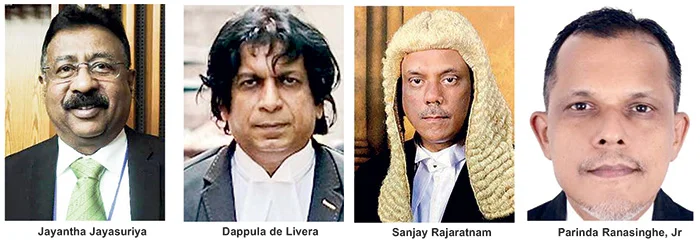
Now that Naufer Maulavi had been sentenced to life imprisonment for masterminding the Easter Sunday carnage, perhaps a controversial declaration made by Dappula de Livera, PC, on the eve of his retirement as the Attorney General, should be re-examined. Outspoken Livera alleged a grand conspiracy with regard to the 2019 April attacks but resorted to legal recourse to thwart the TID from questioning him. The Court of Appeal issued an interim order blocking his arrest or questioning him regarding the controversial statement. The Attorney General couldn’t have been referring to Naufer Maulavi.
Livera received appointment as Acting AG on 29 April, 2019, in the wake of the Sainthamaruthu blasts, and received confirmation on 10 May 2019, following approval by the Constitutional Council. He relinquished Office on 25 May, amidst the raging controversy over his grand conspiracy claims.
Dr. Wijeyadasa Rajapakshe, PC, in his capacity as the Justice Minister of the post-Aragalaya Wickremesinghe-Rajapaksa government, directed the TID to question Livera, in April 2023. Unfortunately, it was not to be. Sanjay Rajaratnam, PC, replaced Livera in May 2021. In July 2024, Parinda Ranasinghe (Jnr), PC, succeeded Rajaratnam.
The issue at hand is why Livera failed to file indictments or directed comprehensive police investigations while during his tenure as the AG. The undeniable truth is successive governments failed to pursue Livera’s claim that paved the way for unsubstantiated accusations pertaining to a wider conspiracy. Unfortunately, Livera’s claim remains uninvestigated to date.
None of those demanding justice for the Easter Sunday victims ever requested Livera to assist the investigation.
We refrain from speculating as to why Livera sought an extension, though President Rajapaksa offered him the golden opportunity to serve as our High Commissioner in Ottawa in his retirement. In fact, his then Coordinating Officer, State Counsel Nishara Jayaratne, offered the writer an opportunity to interview the outgoing AG and received a set of questions for him to respond, but at the eleventh hour, he cancelled it. With Livera’s retirement, Ms. Jayaratne, relinquished her position created especially for her. That position was abolished.
But, his explosive claim, as the outgoing AG, fuelled conspiracy theory that 2019 SLPP presidential election candidate Gotabaya Rajapaksa, through former head of Directorate of Military Intelligence (DMI), the then Brigadier Suresh Sallay, arranged the attacks to facilitate his victory.
Ibrahim family
Forty-five foreigners were among those who perished in the Easter Sunday massacre. Altogether, 279 persons, including suicide bombers, perished on that day. The dead included Fatima Ibrahim, the pregnant wife of suicide bomber Ilham Ibrahim, the Shangri-la bomber, and sister-in-la of Inshaf Ibrahim, who blasted himself at the Cinnamon Grand. Fatima blasted herself during a police raid on their Dematagoda mansion where law enforcement authorities apprehended her father-in-law, wealthy spice trader Mohamed Yusuf Ibrahim. The blast triggered by Fatima also claimed the lives of her two children and three policemen assigned to the search party.
The prominent spice tycoon was granted bail on 25 May 2022, during Gotabaya Rajapaksa’s presidency.
Ibrahim, who had been on the JVP’s National List at the 2015 parliamentary election, was not among those charged before the Trial-at-Bar. Was it a case of no limit to what money or influence can secure?
Another person, who had been arrested under the Prevention of Terrorism Act (PTA), in April 2020, but granted bail by the Court of Appeal, on 7 February 2022, is Hejaaz Hisbullah, who served as the lawyer for the Ibrahims. Hisbullah received bail several weeks before Mohamed Yusuf Ibrahim did.
In spite of being arrested over his alleged links to the Easter Sunday massacre, the lawyer was formally charged with the lesser offence of inciting communal disharmony/racial hatred, based on a speech allegedly given at an Islamic school. His arrest received international attention with even the Geneva-based United Nations Human Rights Council (UNHRC) taking it up. Amnesty International named the lawyer a prisoner of conscience. International organisations issued a spate of statements expressing serious concern over the lawyer’s arrest though no one challenged him for serving the Ibrahim family.
The investigation also targeted Colossus (Pvt.) Ltd, a copper factory located in Wellampitiya, managed by the Cinnamon Grand bomber. During the investigations, it transpired that the factory, obviously through connections, secured large stocks of non-ferrous metals and, in once instance, ex-lawmaker Shantha Bandara, who had been serving as the Director General of Public Relations at President Maithripala Sirisena’s Office, directed Industrial Development Board (IDB) to allocate 500 tonnes of brass/copper scrap to Colossus (Pvt.) Ltd. The IDB hadn’t been able to fulfill Bandara’s directive because it didn’t have such a large quantity at the time the request was made. Investigations revealed that the Wellampitiya factory, situated just five kms away from the Dematagoda mansion, was used to prepare explosives used in suicide jackets. Many an eyebrow was raised when a group of workers, arrested on 22 April, 2019, in connection with the investigation, was granted bail on 6 May, 2019. Although police headquarters announced an internal investigation, the country was never told what really happened in court on 6 May. The investigation, undertaken by the Special Investigation Unit (SIU), as far as this writer is aware of, was never made public.
The statements at that time made by AG Livera, and also attributed to him, made interesting reading. Livera made some thought-provoking statements regarding the Easter Sunday investigations but caused irrevocable damage before he retired.
Years later, former parliamentarian Wijeyadasa Rajapakshe disclosed, at a public meeting in Kandy, why Livera caused the Easter Sunday controversy. The former Minister alleged that the AG claimed what the media called a grand conspiracy after President Gotabaya Rajapakshe turned down his request for a one-year extension. The former AG never contested this claim.
By the time Livera retired, the investigation conducted by the CID had reached a crucial stage. In the second week of August, 2021, AG Rajaratnam forwarded indictments to the Chief Justice in respect of 25 suspects over conspiracy to stage the 2019 Easter Sunday terror attacks.
A total of 23,270 charges were filed, including conspiracy to murder, aiding and abetting, collecting arms and ammunition, and attempted murder under the PTA. Trials before the three-judge bench, consisting of Judges Navaratne Marasinghe, Ramanathan Kannan, and Sujeewa Nissanka, on November 22, 2021, and concluded evidence recordings on August 24, 2026.
During the high profile battle over the 22nd Amendment to the Constitution, President Anura Kumara Dissanayake attributed the delay in filling vacancies in the Court of Appeal due to the Easter Sunday Trial-at-Bar. Immediately after the declaration of the Easter Sunday verdict, Navaratne Marasinghe was referred to the Constitutional Council by President Dissanayake.
Easter probe under different govts.
The Easter Sunday probe began under the Sirisena-Wickremesinghe government. Gotabaya Rajapaksa’s administration took over the investigation in Nov. 2019, followed by the Wickremesinghe-Rajapaksa government in July 2022, and then by Anura Kumara Dissanayake’s government in Sept. 2024.
Having backed Gotabaya Rajapaksa’s candidature at the 2019 Nov. presidential election, the Catholic Church first sought an explanation from the President, in mid July 2021, regarding his failure to act on the PCoI recommendations. The Church released to the media its letter signed by the Archbishop of Colombo Malcolm Cardinal Ranjith and several auxiliary bishops. Altogether there were close to 30 signatories. The Church resorted to a warning letter in the wake of the slow progress in the overall process, in spite of President Gotabaya Rajapaksa receiving the PCoI recommendations on 1 Feb. 2021. Livera served as the AG.
The JVP/NPP, under any circumstances, cannot deny that Minister Dr. Nalinda Jayatissa, who served the Parliamentary Select Committee (PSC) that probed Easter Sunday carnage in Feb. 2021, alleged direct Indian involvement in the reprehensible act. Dr. Jayatissa explained to the BBC Sinhala Service why he reached that conclusion and a few years later former President Maithripala Sisisena, too, directed accusations against India.
SSP Shanie Abeysekera, who had been the Director, CID, at the time of the attacks, and was removed from that post, less than a week after Gotabaya Rajapaksa took Office as the President. Having campaigned for the JVP/NPP, Abeysekera who had been in retirement was reinstated to the Police Department in Oct. 2024 and named Director CID in June 2025. Ravi Seneviratne, who had been Abeysekera’s superior at the time of the Easter Sunday carnage, returned as Secretary to the Public Security Ministry.
The unexplainable failure on the part of the Gotabaya Rajapaksa administration to implement the PCoI recommendations was cleverly utilised by the NPP/JVP in line with its overall strategy that made the Catholic Church throw its weight behind the political movement to oust President Rajapaksa. Perhaps, the country at large still does not know that the Catholic Church, in its July 2021 letter to President Gotabaya Rajapaksa, specifically questioned the inordinate delay in taking punitive action against former President Sirisena.
Unfortunately, by then Sirisena had become a member of the SLPP parliamentary group and functioned as the leader of the SLFP, the second largest party in the ruling coalition. The SLPP parliamentary group consisted of 14 SLFPers in a 145-member government parliamentary group. Against that backdrop, the President had no option but to conveniently ignore the PCoI recommendations. By the time the President received the PCoI recommendations, the SLFP had consolidated its hold, via its unconditional support to enact the controversial 20th Amendment to the Constitution.
The SLPP enacted the 20th Amendment to the Constitution in late Oct. 2020, several weeks after the parliamentary polls. That enabled the President to bring a dual US, Sri Lankan citizen to Parliament and accommodate him in the Cabinet in early July 2021 after the economic crisis gripped the country. The SLPP didn’t know where it was heading.
The President’s decision to accommodate Suresh Sallay, who held the rank of Brigadier as the Director of State Intelligence Service (SIS), a position that had never been bestowed on an armed forces officer, obviously gave an opportunity for the interested parties to exploit the situation. Sallay received the appointment as Director SIS on 8 Dec. 2019 and was elevated to the rank of Maj. Gen. on 22 May 2020.
2019 and 2024 political platforms
The Easter Sunday attacks dominated the 2019, 2020 and 2024 national election platforms. The Easter Sunday fallout, without doubt, facilitated the overall SLPP strategy at the 2019 and 2020 presidential and parliamentary polls, respectively. There cannot be any dispute over that. The Catholic Church adopted a transparently hostile position vis a vis the UNP, following Sajith Premadasa’s heavy defeat at the presidential poll, and many of those who backed him felt the Archbishop of Colombo Malcolm Cardinal Ranjith ensured Gotabaya Rajapaksa’s triumph. But, former Yahapalana Minister Harin Fernando, whose bombshell revelation that his ailing father, receiving treatment at a private hospital, knew of the impending attacks, went public with the allegation. The outspoken politician alleged that the Archbishop’s partisan actions cost the SJB five percent of the Catholic vote and the election.
The Archdiocese of Colombo said that Fernando’s comments were unfounded and uncalled for and were made for cheap political gain. Now, the allegations have turned a full circle and the Church is being accused of targeting Gotabaya Rajapaksa.
At the 2024 national elections, the JVP/NPP exploited the Easter Sunday fallout to its full advantage. That exploitation should be examined taking into consideration the Catholic Church throwing its weight behind a US-India backed political operation that forced the President out of Office in July.
In spite of several high profile investigations, certain developments didn’t receive the attention they deserved. Efforts made by the NTJ to form an alliance to represent its interests in Parliament should have been thoroughly investigated. The NTJ sought to form that alliance on the lines of LTTE-TNA (Tamil National Alliance) partnership. Established in 2001, the LTTE-TNA alliance functioned until the very end of the LTTE’s collapse on the Vanni east front. At one-time, the TNA group, consisting of 22 lawmakers represented in Parliament (2004 to 2010). But, the NTJ couldn’t implement a successful strategy. Perhaps, its failure to establish an effective proxy at the 2015 parliamentary polls and the massive political turmoil caused by the Sirisena-Mahinda Rajapaksa alliance, formed in late Oct. 2018. at the expense of the UNP, may have influenced the Easter Sunday attacks. Or the NTJ may have advanced its plans in a bid to take advantage of the crisis situation.
The first indication of a small section of the Muslim community establishing contact with ISIS was disclosed in Nov 2016 by the then Justice Minister Wijeyadasa Rajapakshe. Instead of taking action, Wickremesinghe let loose his parliamentary group on Rajapakshe. Some MPs tore into Rajapakshe who caused himself further trouble when he openly criticised the leasing of strategic Hambantota port on a 99-year-lease to China.
During a hastily called media briefing at Sri Lanka Foundation, Rajapakshe warned that the US wouldn’t leave Sri Lanka alone as long the Hambantota port remained in the Chinese hands. That stunning declaration was made amidst tumult over the Easter Sunday attacks.
What really prompted the NTJ to seek political alliance with Muslim political groups aligned with the UNP. The writer had an opportunity to examine the NTJ’s relationship with the National Front for Good Governance (NFGG) when the political grouping called a media briefing at Mandarina Hotel, Galle Road, in late May 2019. NFGG leader Abdul Rahuman explained their dealings with Zahran Hashim in the run up to the 2015 parliamentary elections. Responding to The Island queries, Rahuman said that though NFGG received recognition only in 2017, he was able to contest the 2015 parliamentary election on the SLMC ticket.
According to Rahuman, he got the opportunity to contest the 2015 parliamentary polls thanks to a tripartite agreement among the UNP, SLMC and his NFGG involved with the NTJ in 2015 and 2016. However, the NFGG ended its contacts with the NTJ after the latter went underground in March 2017. But, by 2017, law enforcement authorities knew what NTJ was up to. In spite of the TID seeking instructions from the AG, that Department failed to respond for over a year. The PCoI, too, mentioned the AG’s department’s lapse in its recommendations.
The briefing provided by Brig. Chula Kodituwakku, the then head of the DMI, at the Janadhipathi Mandiraya, in the presence of President Sirisena and Army Commander Lt. Gen. Mahesh Senanayake, proved that the DMI knew the clandestine activities of the NTJ and Jamathei Millathu Ibrahim (JMI). The writer was among those present there.
Although various interested parties, including the Catholic Church, claimed that Sallay, arrested in February this year and named a suspect in another Easter Sunday case, had been the head of DMI at the time of the attacks, it was not so. Yahapalana Premier Wickremesinghe unceremoniously sacked Sallay and packed him off to our diplomatic mission in Kuala Lumpur, Malaysia. The investigation into Sallay’s alleged role had been initiated in response to Krishnan Guru-Murthy’s Channel 4 documentary aired in early Sept. 2023, a year ahead of the last presidential election. The documentary on Easter Sunday bombings became a major issue on JVP/NPP’s presidential and parliamentary polls platforms. The rest is history.
by Usvatte
What is economics is a question that many young people may ask. They may be making choices for university education; some more mature persons may be making career choices, and those vigilant about what goes on in the society around them and how their societies came to be may want to know what economists contribute to that effort. They may all want to know what economics is. Economics is what economists do. What some particular economist did may be found in his autobiography or biographies.
We have a good idea of what Karl Marx, John Maynard Keynes and some physiocrats thought and wrote about. Many economists also set up new organisations like the International Monetary Fund, the World Bank, OECD and UNCTAD. A large number of economists advise governments on economic policy and administer economic policy. A few run intergovernmental economic organisations, like the African Development Bank or the World Bank. A good many work in financial services, including financial assets markets. A large number of economists undertake research partly to understand how economies work, partly to report on how economies functioned so that policy makers and the general public may understand changes in an important part of their well-being. Many economists collect and analyse data for these purposes. A relatively few economists always work on ways and methods of conducting research and examine the limitations of the results derived from research using current techniques and look for new means of understanding how economies work. It is economists from among these, like Amartya Kumar Sen, that win the Sveriges Riksbank Prize in Economic Sciences in Memory of Alfred Nobel, awarded annually. A large number of economists teach economics in universities and upper forms in schools. In that process, some set up research organisations. Someone, whom I knew well, who set up a highly successful research organisation was K. N. Raj. He set up the Institute of Development Studies in Trivandrum (then). Many economists, in their lifetime, combined many of these activities. Keynes was a Fellow and Bursar of King’s College, (but never a member of the Faculty and Politics in Cambridge or elsewhere) worked in the British Treasury, partook in the Paris Peace Conference, negotiated the setting up of the IMF and the World Bank, was a member of a Royal Commission and a patron of the arts and founded the Arts Theatre in Cambridge. Above all, he published two seminal books, one of which established a central part of modern economics: The General Theory of Employment, Interest and Money. Closer home K. N. Raj taught economics at Delhi University and was its vice-chancellor, set up the Kerala Institute of Development Studies, advised governments of Kerala and India and lent his services briefly to intergovernmental organisations. He published mostly on the Indian economy. He was the leader of the intellectual community in India and was universally respected. Many economists argue with one another because economists deal with economies, which are enormously complex variegated essentially social institutions. And we know that there is much disagreement among people on the nature and purpose of social organisations.
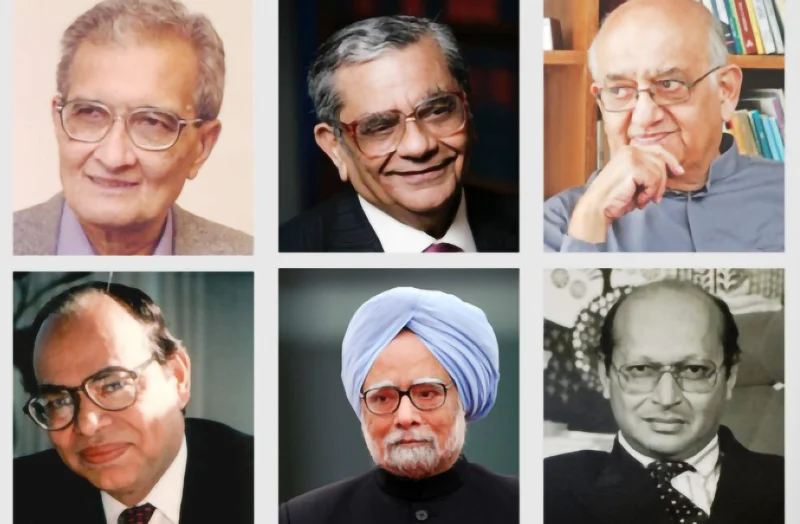
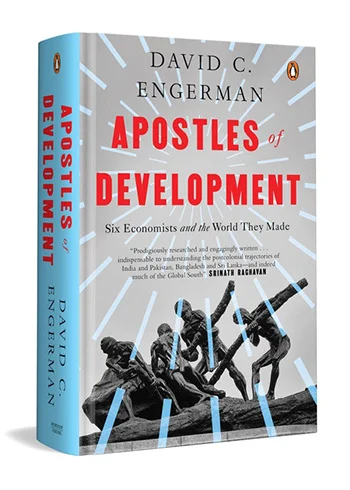
David Engerman, Professor of History and Global Affairs at Yale, has written a long book (534 pages) with the title Apostles of Development in which he discusses admirably the work of six economists from India, Pakistan (and Bangladesh) and Ceylon (Sri Lanka). They lived and worked mostly after the 1939-45 war. All of them were brilliant students in Cambridge University from about 1955 to 1963.
They were Manmohan Singh, Amartya Kumar Sen, and Jagdish Bhagwati from India, Mahbub ul Haq and Rehman Sobhan from Pakistan (later Bangladesh) and Lal Jayawardena from Ceylon (Sri Lanka). I knew most of them personally, Lal Jayawardena closely, Singh marginally and Bhagwati not at all, (in part, because of my poor understanding of international trade.) Engerman is a historian and has an interdisciplinary reach. He writes a lot of economics and that very well. The meticulous care with which he documents his account bears ample testimony to that training and accomplishments as a historian at Yale. The title of the book derives from two sources. The development of low-income countries had not been a major concern of economics teaching until about 1960, although the early economists Robert Malthus, David Ricado and Karl Marx had studied long term consequences of changes in economies that they observed. The physiocrats in Paris in the 18th century had explored the consequences of certain policies affecting economies. At Cambridge, economics emerged from Moral Sciences and both Sidgwick and Marshal taught there, first. Adam Smith at Glasgow in the 18th century had been a professor of Moral Sciences. Apostles was a nickname given to members of a Cambridge students’ society, all highly intelligent and particularly from privileged homes.
 Of these six, the economist who contributed to the almost immediate betterment of living standards of millions of people was Manmohan Singh. Until Singh started policies of liberalizing the economy of India, it was notorious for slow growth, which was derisively named the ‘Hindu rate’ of growth. After Singh opened the economy of India to trade with the rest of the world and cut down barriers to trade in the internal market, India set upon a new path of development and the Indian economy has grown at rates well above 5 percent per year. Those high rates of growth and other policies raised some 500 million people from poverty while they also have enabled the emergence of persons of immense wealth, probably unprecedented in India. (There was the splendour of pre-British India.) Singh in India and Zu Rongji in China both deserved the Nobel Peace Prize for their contributions to reduce poverty.
Singh had worked on international trade with Ian Little at Oxford, where he earned a Ph. D. degree and also worked as a young economist who together with La Jayawardena, worked with enthusiasm to establish the United Nations Conference on Trade and Development (UNCTAD) led by Nicholas Kaldor, Sydney Dell and Hans Singer, all three distinguished Cambridge economists. They were senior to these six. Jagdish Bhagwati, who taught at Columbia explored the rationale for opening up economies for trade with the rest of the world. Gamani Corea, senior to them at both Cambridge and Oxford, Lal Jayawardena
Economics
and Manmohan Singh worked as pioneers setting up the South Centre in Geneva. Singh and Jayawardena took a great interest in the reform of the international financial structure. They worked indefatigably in committees set up for the purpose: as Deputies in the Committee of 20 set up by the IMF.
I came to know Rehman Sobhan long after he had left Cambridge and achieved much. We met several times in Delhi in a committee that examined proposals to set up a university for South Asia, which came into being later. We also met in a group, under the leadership of Isher Judge Ahluwalia, to examine the feasibility of coordinating the work of research institutions in South Asia. The initiative came from the World Bank.
Two stand out among economists having contributed to the expansion of the horizons of their discipline: Amartya Sen and Jagdish Bhagwati. They both removed some infelicities that had gone undetected until then and cleared up the way to see new realities. We understand better welfare economics, poverty and economic and social development, thanks to their successful intellectual exploits. One of them had deep insights into the economics of international trade. Three of them, in varying ways, taught us to understand the nature of the information on economic development and how to use them for better policy formation: Amartya Sen, Mahbub ul Haq and Lal Jayawardene dug up new information and handled them in ingenious ways to obtain insights into social formations.
The Human Development Report of UNDP, which had been mostly a dull report, became a lively theatre for debate on questions of economic and social policy thanks to the work of ul Haq, Amartya Sen together with another colleague from Cambridge, Richard Jolly, who regularly worked in the nearby UNICEF office in New York, right opposite mine on 44th Street. Manmohan Singh, Mahbub ul Haq, Lal Jayawardene and Rehman Sobhan contributed heavily to the formation of development plans in their respective countries. They built up new institutions that enriched the architecture for international economic relations: Lal Jayawardene, Manmohan Singh and Mahbub ul Haq. Most of them contributed heavily and directly to the formation of economic policies of their own countries. Of almost equal importance are the contributions most of them made to improve the administration of economic policies in their countries.
Sen taught at Delhi, Cambridge and Harvard, where he was latterly University Professor. He also had the high distinction of serving as the Master of Trinity College, Cambridge University. Singh taught for a short while at the University of Punjab and the Delhi School of Economics. Bhagwati Taught at Delhi, MIT and, for a long time, at Columbia. Jayawardena did not teach economics although his approach to economic problems was heavily academic. Jayawardena’s academic instincts blossomed when he ran the World Institute of Development Economics Research (WIDER) in Helsinki. Within a year of its establishment, WIDER became an essential meeting place for leading economists all over. WIDER published several useful reports, commonly added to college economics reading lists.
Of the six, three stand out: Singh, Sen and Bhagwati. Singh understood the power of markets and created them for India. Sen helped us mightily to understand welfare economics and also brought economics to the centre of popular imagination. Bhagwati championed the cause of free trade: open markets and globalization. He was a fierce debater and many suffered at his hands.
It is striking that six persons who first met as undergraduates in one university worked to change for the better economic policies, the world over. What brought them together? A great university teaching in a language commonly used, at least by the elte, in a number of countries made that concatenation feasible. The circumstance at that time, in both their countries and region and globally, called for their expertise and commitment. That not all their endeavours reached fruition, was a product of the power relations among countries. Nonetheless, the academic world and the material conditions millions of people are richer on account of their contributions.
This short note has taken a long time to write. I apologise to David Engerman for the delay.
By Sanja de Silva Jayatilleka
This September, on the sidelines of the 81st Session of the United Nations General Assembly, a number of countries from North to South and East to West, thought it necessary to come together in a new coalition of states to protect multilateralism against the recent acceleration of unilateralism which has negatively impacted most of the world.
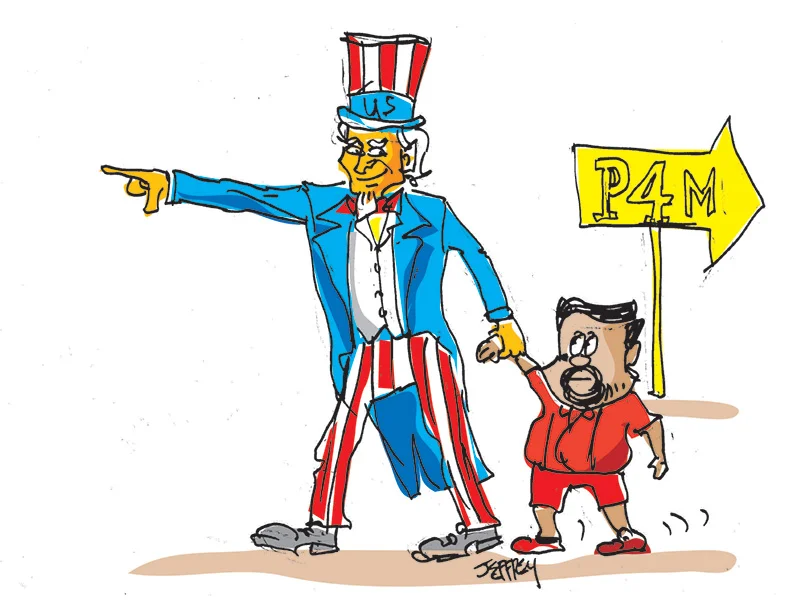
The members of the new formation called ‘Partners for Multilateralism’ or P4M, established on the 21st of September 2026 in New York, aims to protect themselves against threats to global peace and security including through violent conflicts, disregard for international law, coercive measures such as sanctions and tariffs arbitrarily applied leading to disruptions of trade and supply chains, and to reaffirm their commitment to multilateralism based on the Charter of the United Nations.
The authentically global spread of the dissatisfaction with the subversion of the existing international order through unilateralism was evident from the initial co-sponsors of the initiative: Australia, Barbados, Brazil, Canada, the European Union, India and Kenya, covering all 5 continents.
Further signatories to this commitment were Albania, Bosnia and Herzegovina, the Council of Europe, Croatia, Cyprus, Finland, Guatemala, Liechtenstein, Luxembourg, Moldova, Norway, San Marino, Slovakia, Spain, Türkiye and Uruguay.
This initiative of a formal commitment through a network of countries offering a common platform for dialogue and collective action, specifically as a response to unbridled unilateralism, is a significant moment in current international relations.
Its significance lies in the fact that this coalition of states includes countries of the Global North allying with those of the Global South, in an act of resistance, of breaking traditional ranks, of the rejection of the imposition of the will of the United States. This is a rallying of individual attempts at asserting sovereign independence into the synergistic enhancement needed to contain the obvious risks to each one.
The Joint Declaration states that the members “recognise that economic interdependence is increasingly used as a source of leverage, disrupting trade, supply chains, investment and development finance…”
The Declaration also recognises emerging multipolarity and the importance of international law and the multilateral system. It also recommits to the principles of sovereign equality and territorial integrity, among other things:
“We reaffirm that the multilateral system founded on the United Nations Charter remains indispensable. It has helped provide a framework for peace, decolonization, prosperity, and human dignity. It must now respond to a world that is more interconnected and complex, more contested and more multipolar.
We affirm the need to uphold and enforce the rules, principles and commitments that remain essential to international order, while renewing and reforming the multilateral system so that it is more effective, representative, inclusive and fit for purpose.
We reaffirm our commitment to international law and to the principles of sovereign equality, territorial integrity, the peaceful settlement of disputes and the prohibition of the threat or use of force.”
The full statement can be found at
https://www.consilium.europa.eu/en/press/press-releases/2026/09/21/declaration-of-the-partners-for-multilateralism-p4m-summit-21-september-2026/
Got the T-Shirt
China and Russia have consistently reiterated their commitment to multilateralism, though they weren’t signatories to the 2026 declaration of the P4M summit. The Global South has been fighting multiple versions of unilateralism for many decades.
The final document and declaration adopted at the eighteenth Summit of meeting of the Heads of State and Government of the Movement of Non-Aligned Countries, held in Baku on 25th and 26th October 2019, condemns the “promulgation and application of unilateral coercive measures against countries of the Movement, which are in violation of the Charter and international law and undermine, among other things, the principles of sovereignty, territorial integrity, political independence, self-determination and non-interference”.
The UN Human Rights Council which appointed a Special Rapporteur on Unilateral Coercive Measures (UCM) many years ago in 2014, passed its latest resolution in 2023 reiterating that no state can use unilateral measures to “coerce another State in order to obtain from it the subordination of the exercise of its sovereign rights and to secure from it advantages of any kind…”
It also declared that secondary sanctions imposed on attempts to circumvent primary sanctions as contrary to international law and welcomes the launch of a ‘sanctions research platform’ and “uniform and universal tool for monitoring and assessing the impact of unilateral coercive measures and overcompliance on human rights“.
As per the Office of the High Commissioner for Human Rights, the Sanctions Research Platform is a “comprehensive online reference tool dedicated to collecting article, reports, videos and any research material and information on Unilateral Coercive Measures and their effect on human rights”. (OHCHR)
It further states that the tool for monitoring “offers the possibility to observe how humanitarian indicators have been changing yearly, comparative with the data before unilateral sanctions were imposed, with special attention to years when sanctions pressure has been increased or decreased.” (OHCHR)
The Special Rapporteur for Universal Coercive Measures described the tool for monitoring as follows: “The monitoring and impact assessment tool is unique…Due to the political discrepancy among states, adequacy of monitoring and assessment can only be achieved at the UN level through collecting information on specific indicators from all relevant sources, based on the principles of comprehensiveness, impartiality, transparency and verification.”
Submitted in 2023 at the UNHRC, this Resolution was voted against by several countries of the Global North with voting rights: Belgium, Czechia, Finland, France, Georgia, Germany, Lithuania, Luxembourg, Montenegro, Romania, Ukraine, United Kingdom of Great Britain and Northern Ireland and United States of America.
However, the Resolution passed with 32 votes which included China and voting members from South Asia, Bangladesh, Pakistan, and Nepal among others.
Canada and other European states have now found this particular scourge of UCM at their own doorstep as the current US administration declares its aspirations to annex sovereign territories to its own federation, to name their rivers to reflect US ownership, to impose crippling tariffs and involve itself in violent conflict overseas– affecting all countries of the world given the interdependency of trade.
Despite earlier unprincipled positions on the same issue, the new consensus on the negative effects of unilateralism and participation of the Global North in the P4M is of great value to the international efforts to minimize its consequences.
Safety in Numbers
Given Washington’s economic power and unassailable military superiority, only one country, China, can realistically resist without great cost, the unilateral coercive action by the United States. China has already proved it with successful counter sanctions. This is a privilege not available to any other state.
Iran has been threatened with annihilation already, with a shocking ultimatum announced by the President of the USA at the recent 81st Session of the UNGA, to make a deal, or be ‘quickly destroyed’. How long before the surreal transforms into the real? The premier multilateral institution, the UNGA, was platform for the most classically unilateral, coercive announcement conceivable.
It is in this context that P4M has been formed. Individually unable to prevent acts of coercion, coalitions of states on the other hand is a phenomenon that has the potential to effectively reinstate rationality in international relations, if the momentum grows as it should.
Underestimating Global Groupings
For small South Asian states like ours, groupings such as the Non-Aligned Movement and more recently BRICS, as well as the Shanghai Cooperation Organization are sources of strength and hope, even if we are only aspirant members or associates of some of them. When Sri Lanka was an active member of NAM, it gave us stature and influence far beyond our actual strength in global affairs. Formed at a particular point in history, it served its members beyond their expectations in the decades following its formation, and lasts to this day as the biggest collective at the United Nations.
Coalitions of like-minded states are necessary also to respond to other global realities that exert influence and enforce strategies on countries unfairly, such as the dominance of the reserve currency, especially in the context of sanctions. BRICS has attempted to minimise this disadvantage by agreeing to trade among its members where possible, in local currencies, to circumvent unilateral sanctions regimes. It has also addressed the critical issue of debt and development financing by establishing the New Development Bank. Such groupings and the alternatives being facilitated by those initiatives are relevant to all who discern the unpredictability and uncertainty introduced by unilateralism.
For the rest of the world watching, the Munich Security Conference 2026 at which the US Secretary of State urged a return to a time of Western hegemony was a wake-up call, especially as the conference burst into applause. It’s a relief that things have got clearer, at least for most countries of Europe and Canada since then, as they too became victims.
Cultivating relationships with the members of groupings that are making the effort to carve out a more equitable way of relating to each other in the world should be a priority for us. Seeking membership, partnerships, associate membership or whatever is immediately available to them of such coalitions, to be enhanced later, should be a natural course of action for countries like Sri Lanka. Even as partner countries or associate members, these are platforms to discuss problems affecting us and even to intervene to shape a more equitable global order as a collective. Recent events in Sri Lanka suggest that these developments haven’t filtered through to policy makers, as opportunities to do just that, were squandered.
Violating International Law?
Much more concerning than the acts of omission are the recent acts of commission in the opposite direction by Sri Lanka’s current administration.
As disclosed by Colombo newspapers and confirmed by a US Embassy website report, Sri Lanka has decided to be partners in an activity that the UN has specifically declared as contrary to international law. Sri Lankan state officials were recently trained to assist in detecting violators of sanctions, unilaterally and extraterritorially imposed by the United States.
Apparently several officials attended:
“… a three-day training September 9–11 in Colombo to strengthen Sri Lanka’s ability to detect and respond to maritime sanctions evasion that threatens U.S. security interests and legitimate global commerce… More than 40 officials from the Sri Lanka Atomic Energy Regulatory Council, Central Bank of Sri Lanka, Sri Lanka Coast Guard, Merchant Shipping Secretariat, Sri Lanka Ports Authority, Ministry of Defense, and Sri Lanka Navy built proficiency…”
()
Now let’s check the preambular paragraph to Resolution 54/15 of the UNHRC on Human rights and unilateral coercive measures adopted on 11th October 2023 which refers specifically to secondary sanctions:
“Alarmed by the expanding use of secondary sanctions, civil and criminal penalties for alleged circumvention and the means of enforcement of primary sanctions regimes, which are contrary to international law, give rise to overcompliance strategies of States, businesses and civil society
and indiscriminately affect the whole population of targeted countries and impede humanitarian work and deliveries, including those made pursuant to Security Council resolutions”
Perhaps it is time to read the signs and read them clearly, as Sri Lanka’s external relations and foreign policy are being dramatically redesigned.

Landslide Early Warnings issued to the Districts of Kandy, Kegalle, Matale and Ratnapura

No handshakes and a delayed ceremony as India beat Pakistan at Asian Games

Showers or thundershowers will occur in most parts of the island after 1.00 p.m

Lanka enters new phase of prosecutions as hurdles clear

Police warn: Court evaders face property seizure

Nearly 20 Iranian tankers stranded off Lanka amid US sanctions

‘Dates have the highest sugar content to fight Coronavirus’

Sunday Island 27 December – Headlines

#SundayIsland 17th December – Headlines

Sunday Island – 28th March

Sunday Island Headlines – 21 March

Sunday Island – 21st February – Headlines
-

 News6 days ago
Police remove Thileepan statue in Jaffna
-

 Features6 days ago
The 22nd Amendment, constitutional recovery and illiberal slippage
-

 Features6 days ago
Of foreigners as CEOs of Lankan ventures
-

 Latest News4 days ago
Gold winner Tharanga gets brand-new Honda Vezel from SLAAJ
-

 News6 days ago
Sajith rejects Jt. Opp. protest sabotage claim; SJB TU chief demands remedial action
-

 Features4 days ago
Why Sri Lanka needs an Inclusive Civic Nationalism – urgently
-

 News3 days ago
US-assisted ‘Ice’ detection: NPC to examine IGP’s move to transfer drug-busting team
-

 Features5 days ago
Thailand’s biggest new global star …