
News
DEW urges Sri Lanka to deviate from neo-liberal economic strategy

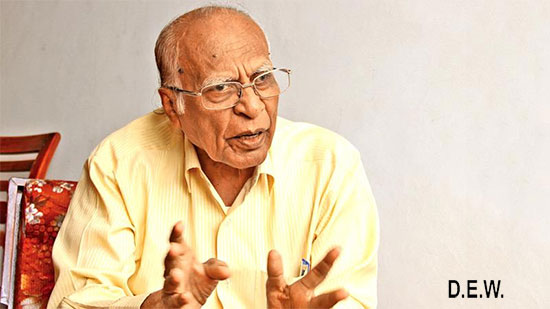
Former General Secretary of the Communist Party D.E.W. Gunasekera, has said the current economic crisis couldn’t be resolved unless Sri Lanka deviates from the neo-liberal strategy.
The former lawmaker said so at the opening of the 22nd National Congress of the Sri Lanka Communist Party recently. “44 years of experience is more than enough. We must embark upon a strategy of planning – market – state intervention. The strategy of Import and Consumption should make way for export-oriented, domestic production and national savings strategy. Our exports need diversification. Human resource development is the best guarantee for mixed foreign remittances. We must make our country the best tourist destination in the world. We must stop borrowing forthwith money from the international money market. We must go in for concessionary loans from our friendly countries. We must make best use of the new Silk Road Economic Project.
The most important element needed is national unity and religious harmony. This is the best guarantee for foreign capital. We missed the great opportunity offered to us by termination of anti-terrorist war.
The only way to ensure a new economic strategy is the unity of left, radical, nationalist forces. There is no other alternative.”
Excerpts of the speech: “National Congresses of our Party has always been eventful, colourful, and fruitful. It has immensely contributed towards raising political consciousness, enhancing political thinking, and formulating policies. Our Party, formed in 1943, in the midst of World War II, is the second oldest Party in the country.
At the outset, I wish to remember with great respect, honour, and gratitude the six founding leaders of our Party namely, Dr. Sugeeshwara Wickremasinghe, Pieter Keuneman, M.G. Mendis, Ven. Udakandewela Sri Saranankara, A. Vayithyalingam, and P. Kandaiah.
“The 22nd National Congress is being held at a time of a deep, profound, and decisive economic crisis. We had to postpone this Congress several times owing to the Corona Pandemic. Even today, we are holding it amidst health restrictions.
“We have presented a political thesis incorporating all aspects of the crisis for discussion and debate. We are now in the process of formulating economic policy and programme for the Country, taking into account the global developments, decisive changes, and also taking into account the successes and failures of our past Policies.
“Our last economic policy document, adopted by the 5th National Congress, was a long-term strategy and policies presented by the then General Secretary Dr. S.A. Wickremasinghe. It was the first and last Policy presented and ever introduced to the Country by a Political Party. It is still relevant which has now become a Study Course used by the Universities. New Economic Policy will be presented to the people in due course, after approval by a Special Congress.
“First, I would like to touch on the current international situation: We entered the 21st Century, with a new changing world economic order and also a changing new balance of power with a rise of the Asian economy. There is no longer a unipolar or bipolar world.
“There have emerged new regional economic centres – North American, EU, Asian, African Union, Latin American CELAC, emerging new Euro Asia, East Asia, North Asia, South Asia, and the Middle East, etc. This is an unprecedented development in economic history. The National Liberation Movement, Economic Globalisation, Scientific and Technological Revolution have brought about this reality.
“The second feature of world development is the decline of imperialism. The birth of modern imperialism took place in and around 1880, according to historian142 years have elapsed. The leadership changed from Great Britain to the US with World War II. With neo-liberalism in crisis, imperialism is passing through a period of decay and decline on all fronts after China became the second economic power as from 2010.
China has made two landmark achievements, namely alleviation of abject poverty and the new Silk Road Economic Project or the Belt and Road Initiative (BRI) comprising 140 odd countries. Argentina is the latest partner in the BRI.
“Imperialism is today left with three options. i.e., confrontation, competition, and corporation with 10 nuclear nations. Imperialism cannot again choose world war as a political solution to an economic crisis. That is why China and Russia appeal to the US, choosing competition or co-operation, preferably co-operation.
“We have to formulate our Economic Strategy in this world context.
“Thirdly, of late we are facing a geopolitical challenge here in the Indo-Pacific Zone relevant to Sri Lanka and South Asia.
“In my view, South Asia is more united and peaceful than ever before. We must strengthen this trend. We must continue with our non-aligned policy of dynamic neutrality. That is our appeal to all South Asian States. The emergence of two military organisations as “QUAD” and white Imperialist AUKUS. NATO has entered the Indo-Pacific Zone. It is making a similar attempt with the Ukrainian crisis expanding the frontiers to Eastern Europe. This is in line with the choice of “Confrontation Policy”. Our Congress condemned this attempt with all vehemence. We appeal to India to come back to its traditional policy of non-alignment.”



The Indian Naval Ship (INS) GHARIAL made a port call in Colombo for operational turnarounds on 04 Feb 26. The Sri Lanka Navy welcomed the visiting ship in compliance with naval traditions.
Commanded by Commander Gaurav Tewari, INS GHARIAL is a vessel with a length of 124.8 meters.
During this visit, ten (10) Bailey Bridges, brought by ship, through the coordination of the High Commission of India in Sri Lanka, will be handed over to the Disaster Management Center. These bridges will provide temporary transportation links while bridges damaged across the island by adverse weather conditions are repaired.
The crew’s itinerary features scheduled goodwill activities with the Sri Lanka Navy, alongside visits to several tourist attractions across the island.

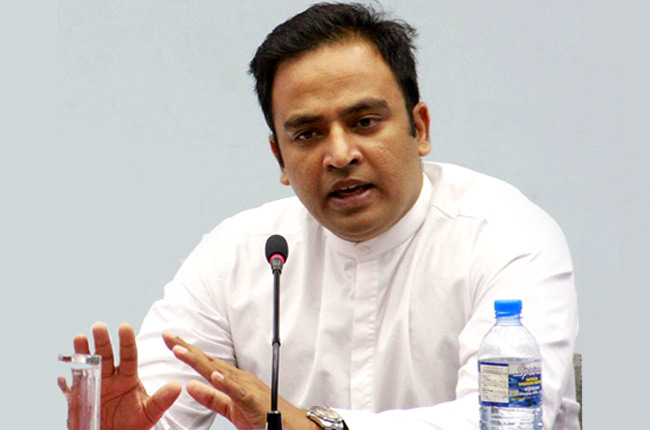
SJB Gampaha District MP Harshana Rajakaruna yesterday told Parliament that the Speaker’s Personal Secretary had written to the Secretary-General of Parliament seeking information on a complaint lodged with the Commission to Investigate Allegations of Bribery or Corruption (CIABOC) by a former Deputy Secretary of Parliament against the Speaker. Rajakaruna called for an immediate investigation into what he described as interference with an ongoing probe.
Raising the matter in the House, Rajakaruna said he had formally requested the Commission to initiate an inquiry into the conduct of the Speaker’s Personal Secretary, Chameera Gallage, questioning the authority under which such information had been sought.
Rajapakaruna tabled in Parliament a copy of the letter allegedly sent by Gallage to the Secretary-General requesting details of the bribery complaint.
Addressing the House, Rajakaruna said that the letter, sent two days earlier, had sought “full details” of the complaint against the Speaker. He maintained that seeking such information amounted to interference with an investigation and constituted a serious offence under the Bribery Act.
“The Speaker’s Secretary has no right to interfere with the work of the Bribery Commission. Under what law is he acting? What authority does he have? The Speaker, like everyone else, is subject to the law of the land,” Rajakaruna said, urging the Commission to take immediate action.
He noted that the Bribery Act treated the obstruction of investigations and the destruction of documents relating to such inquiries as serious offences punishable by law, and said he believed the Minister of Justice would concur.
The allegations sparked sharp reactions in the Chamber, as Opposition members called for accountability and due process in relation to the complaint against the Speaker.
By Saman Indrajith
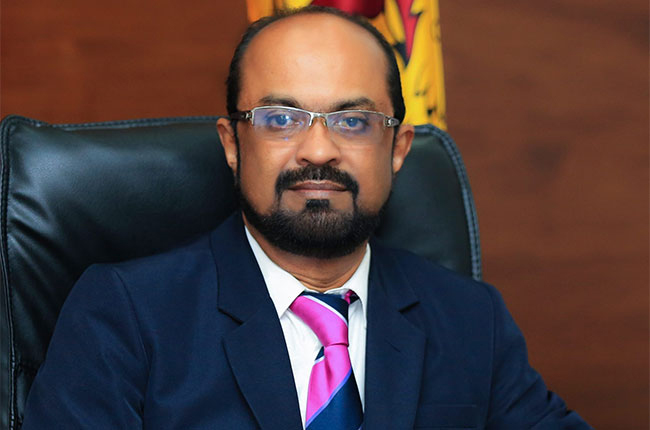
The Ceylon Electricity Board has managed to reduce the average cost of electricity generation from Rs. 37 per unit to Rs. 29, marking a 22 percent reduction, Minister of Power and Energy Eng. Kumara Jayakody told Parliament yesterday.
Responding to an oral question raised by Opposition MP Ravi Karunanayake, the Minister said that electricity tariffs cannot be reduced unless the cost of generation is brought down.
“You cannot reduce electricity tariffs without reducing the cost of generation. What we are currently doing is buying at a higher price and selling at a lower price. When we assumed office, the cost of purchasing and generating electricity was Rs. 37 per unit. We have now managed to bring it down to Rs. 29, a reduction of 22 percent.
Our target is to further reduce this to Rs. 25. Once that is achieved, we will reduce electricity tariffs by 30 percent within three years, as we promised,” Minister Jayakody said.
He added that the government has already formulated a long-term generation plan to further expand the country’s power generation capacity.
According to the Minister, key measures include increasing the absorption of renewable energy into the national grid, expanding the national transmission and distribution network, introducing renewable energy storage systems, and constructing thermal and liquefied natural gas (LNG) power plants to replace aging facilities and meet future demand.
He also said that steps would be taken to enhance the capacity of existing hydropower plants as part of the broader strategy to ensure energy security and reduce long-term electricity costs.
By Ifham Nizam

India chase sixth Under-19 World Cup title, England their first since 1998

Meet the women protecting India’s snow leopards

Louvre Museum crown left crushed but ‘intact’ after raid

US and Iran talks to begin as fears of direct conflict continue

INS GHARIAL makes port call in Colombo

ICC-PCB in back-channel talks to resolve India boycott at T20 World Cup

‘Dates have the highest sugar content to fight Coronavirus’

Sunday Island 27 December – Headlines

#SundayIsland 17th December – Headlines

Sunday Island – 28th March

Sunday Island Headlines – 21 March

Sunday Island – 21st February – Headlines
-

 Business6 days ago
Hayleys Mobility ushering in a new era of premium sustainable mobility
-

 Business3 days ago
SLIM-Kantar People’s Awards 2026 to recognise Sri Lanka’s most trusted brands and personalities
-
 Business6 days ago
Advice Lab unveils new 13,000+ sqft office, marking major expansion in financial services BPO to Australia
-
 Business6 days ago
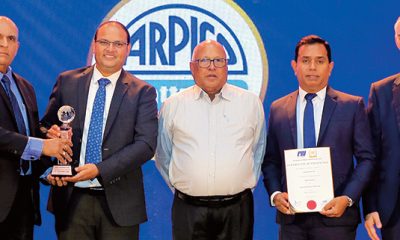
Arpico NextGen Mattress gains recognition for innovation
-
 Business5 days ago
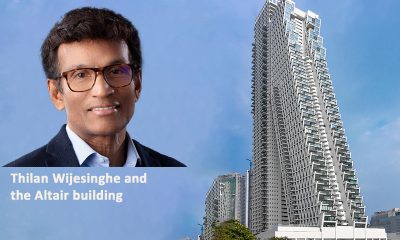
Altair issues over 100+ title deeds post ownership change
-

 Editorial6 days ago
Govt. provoking TUs
-

 Business5 days ago
Sri Lanka opens first country pavilion at London exhibition
-

 Business4 days ago
All set for Global Synergy Awards 2026 at Waters Edge