
Opinion
Deshamanya M.A. Bakeer Markar

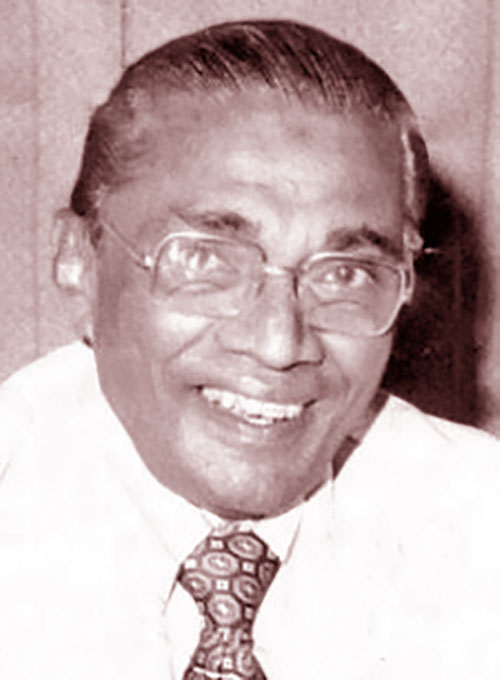
4th Commemorative Anniversary
Deshamanya Marhoom Al Haj Mohammed Abdul Bakeer Markar’s ancestry is traced to Sheik Jamaluddeen-Al-Maghdoomi, an Arab settler in Beruwala. His father Hakeem Alia Marikkar Mohomed Marikkar belonged to a family of physicians, whose ancestors too were physicians.
He was born in Beruwala on May 12, 1917 and educated at Zahira College, Colombo under the tutelage of Dr. T.B. Jayah, the Principal of Zahira. He held a number of responsible and honorary positions at Zahira, such as Editor of the College Magazine, President of the College Majilis and the Literary Association.
He entered Colombo Law College in 1940 and after passing out as a lawyer he joined the unofficial bar o0f Kalutara and enjoyed a lucrative practice. Later he was elected President of the Kalutara District Branch of the Bar Association of Ceylon.
Since his childhood, he exhibited his humble qualities which I presume was the road to achieve greatness, win respect from people of all walks of life and intimacy from those around. No wonder he took to politics as a consequence and the public was decided to elect him as their representative.
Bakeer Markar’s life as a politician was even more illustrious than his career as a lawyer. He was elected a member of the Beruwala Urban Council and later appointed Chairman. He was the MP for Beruwala from March 1960 and continued to re-elected from April 1965 to March 1970. He was the Deputy Speaker from August 4, 1977 to September 7, 1978, the Speaker from September 1978 to August 1983, a Cabinet Minister and the Governor of the Southern Province from June 13, 1988 to December 1993. He even served as the acting Head of State while the President and Prime Minister were out of the country.
His name, which was equal to honesty and integrity in politics, is immortalised in Sri Lankan parliamentary history of being the last Speaker of the former Parliament and, the First Speaker of the new Parliament. His service to the people was so great that it was easy for his son Imitiaz Bakeer Markar to be elected as a parliametarian to serve the same electorate and even to serve as a Minister.
Bakeer Markar was an accomplished parliamentarian and was truly, a dedicated representative of his people who did not care for ethnicity, race or religion and received much support from the Sinhala community than any Muslim candidate. This I learnt personally from my in-laws in Beruwala. His non-consideration of ethnicity, language and religion was well observed from the fact that he educated his son Imitiaz at Ananda College, a leading Buddhist educational institution, where he also showed his prowess in debating in Sinhala, like his father, going on the same trilingual path. He was impartial and strove to promote harmony among all ethnic and religious groups. He served the people, who trusted him.
Bakeer Markar’s morals in politics was so firm he did not want to read the Address to the Provincial Council in 1994, as wished by Colombo. I had to be involved in a tough
assignment, as I remember, to adjust his stances to appease the powers in Colombo and to bring political sensitivities to normalisation.Similarly, his experiences as Governor has left many lessons to his successors like me.
As a Muslim leader he was the founder President of the All Ceylon Union of Muslim League Youth Fronts and the Vice President of the All Ceylon Muslim League. Further he was the Chairman of the Beruwala, Maradana Mosque Jamaath until his demise.
Bakeer Markar served as a goodwill Ambassador of Sri Lanka. His close connections with the Iraqi Government enabled him to build a village in Eravur, and was the founder President of the Iraq-Sri Lanka Friendship Association and remained in this position until his demise. He was honoured and appreciated by the President of Indonesia for his assistance rendereed to the when an Indonesian airliner crashed with many Indonesians on board. Not only was he a son of our soil, he was also a citizen of the world.
Youth Development and Fostering the youth for Community Development and Service, was another aspect, which he actively promoted, and, he founded the All Ceylon Muslim Youth Front, with sincere objectives, and now, being successfully continued by his son Imtiaz Bakeer Markar.Bakeer Markar’s services in the field of education, towards the Muslim Community were unique.
When all these aspects of the Late Bakeer Markar’s life is considered in a nutshell, one may consider a very wholesome life of a man who dedicated himself to the society, without any discrimination, dedicated to politics, youth, religion, especially to the Muslim community without any problems created to other communities and treating others as equals. He imagined a world better than the one he lived in and strove to make it a reality.
He could be therefore considered as an emblem of a great personality whose principles of life should be emulated by the current leaders, especially those who try to create social commotion built on religion, ethnicity, language, social inequality and mean economic issues. May he be remembered for all those great qualities which should be reintroduced to this society. At this instance when looking back at his life history and review lessons learnt, we may easily conclude that we need many more Bakeer Markars to make Sri Lanka a greater nation.
In commemorating the death of Bakeer Marker, I’m reminded of the Quranic teaching in AL Baqarah 2.197, which says “Take a provision with you for your journey. But the best provision is al- taqwa which is piety and righteousness”. He deserves to be respected because he was conscious and cognizant of Allah, of truth, of the rational reality, “piety, fear of God”. Therefore, Bakeer Marker’s life was a sincere collection of al taqwa for his journey beyond this life and this world. It may be best if his life is emulated by politicians, social workers and civil leaders.
– Austin Fernando
Former Secretary to the President, High Commissioner of Sri Lanka to India and Governor of Eastern Province



It is with deep sorrow that I share the passing of one of my dearests and most trusted friends of many years, Lakshman Balasuriya. He left us on Sunday morning, and with him went a part of my own life. The emptiness he leaves behind is immense, and I struggle to find words that can carry its weight.
Lakshman was not simply a friend. He was a brother to me. We shared a bond built on mutual respect, quiet understanding, and unwavering trust. These things are rare in life, and for that reason they are precious beyond measure. I try to remind myself that I was privileged to spend the final hours of his life with him, but even that thought cannot soften the ache of his sudden and significant absence.
Not too long ago, our families were on holiday together. Lakshman and Janine returned to Sri Lanka early. The rest of the holiday felt a bit empty without Lakshman’s daily presence. I cannot fathom how different life itself will be from now on.
He was gentle and a giant in every sense of the word. A deeply civilized man, refined in taste, gracious in manner, and extraordinarily humble. His humility was second to none, and yet it was never a weakness. It was strength, expressed through kindness, warmth, and dignity. He carried himself with quiet class and had a way of making everyone around him feel at ease.
Lakshman had a very dry, almost deadpan, sense of humor. It was the kind of humor that would catch you off guard, delivered with too straight a face to be certain he was joking, but it could lighten the darkest of conversations. He had a disdain for negativity of any kind. He preferred to look forward, to see possibilities rather than obstacles.
He was exceptionally meticulous and had a particular gift for identifying talent. Once he hired someone, he made sure they were cared for in unimaginable ways. He provided every resource needed for success, and then, with complete trust, granted them independence and autonomy. His staff were not simply employees to him. They were family. He took immense pride in them, and his forward-thinking optimism created an environment of extraordinary positivity and a passion to deliver results and do the right thing.
Lakshman was also a proud family man. He spoke often, and with great pride, about his children, grandchildren, nephews, and nieces. His joy in their achievements was boundless. He was a proud father, grandfather, and uncle, and his devotion to his family reflected the same loyalty he extended to his colleagues and friends.
Whether it was family, staff, or anyone he deemed deserving, Lakshman stood by them unconditionally in times of crisis. He would not let go until victory was secured. That was his way. He was a uniquely kind soul through and through.
Our bond was close. Whenever I arrived in Sri Lanka, it became an unspoken ritual that we would meet at least twice. The first would be on the day of my arrival, and then again on the day I left. It was our custom, and one I cherished deeply. We met regularly, and we spoke almost daily. He was simply a top-class human being. We were friends. We were brothers. His passing has devastated me.
Today I understood fully the true meaning of the phrase ‘priyehi vippaogo dukkho’ — (ප්රියෙහි විප්පයෝගෝ දුක්ඛෝපෝ) ‘separation from those who are beloved is sorrowful.’
My thoughts and prayers are with Janine, Amanthi, and Keshav during this time of profound loss. Lakshman leaves behind indelible memories, as well as a legacy of decency, loyalty, and quiet strength. All of us who were fortunate to know him will hold that legacy close to our hearts.
If Lakshman’s life could leave us with just one lesson, that lesson would be this. True greatness is not measured in titles or possessions, but in the way one treats others: with humility, with loyalty, with kindness that does not falter in times of crisis. Lakshman showed us that to stand by someone, to believe in them, and to lift them up when they falter, is the highest of callings, and it was a calling he never failed to honour.
Rest well, my dear friend.
Krishantha Prasad Cooray
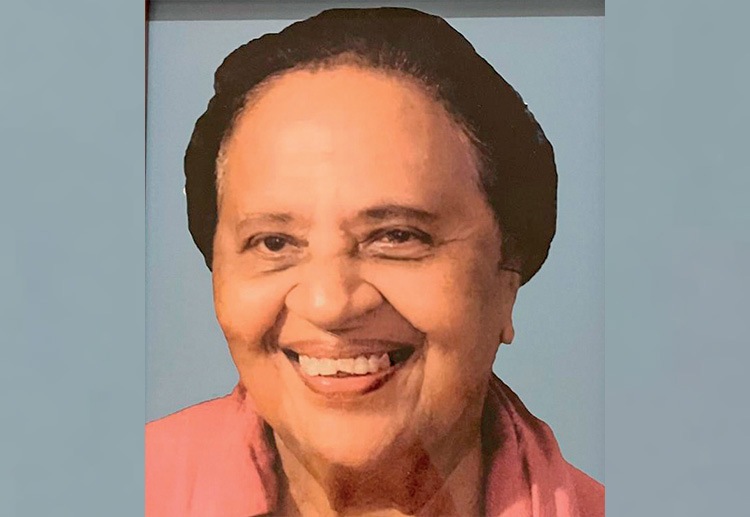
It was so sudden!
I have known Padmini as a French student in the 70s. She was recognized at the Non Aligned Conference in 1976 by being recruited as a French interpreter. She was an active member at l’ Alliance Francaise and was able to associate with the Director/s in a manner that was closer than to many of us would venture.
She also knew astrology, did you know that?
She knew to dress fashionably. In later years, her walking stick was as fashionable as her dress!
She knew to cook and impressed the Colombo Hilton by winning first place or was runner-up at cookery competitions. She rarely spoke about such achievements but did so sometimes at the right moment.
My favourite times with her was when Padmini invites me with a group of others to many of her Cheese’n Wine get-togethers. There were always different cheeses in abundance, with a choice of rye, baguette or other fancy breads to complement the cheese. It was always a wonderful afternoon only possible at Padmini’s.
Her smile, her charm, and her warm friendship, I will miss. My sympathies go to her three children. Amal, Tamara and Aruni. May her memory live on with all her friends. As for me, she was very special.
Ramani Rajapakse

Keynote Address Delivered at the International Research Conference of the Faculty of Law, University of Colombo, on 12 December 2025.
(Continued from yesterday)
V. Usage Down the Ages
Empirical evidence during all epochs of history, and in a vast array of legal cultures, establishes without doubt the need for far-reaching executive powers during times of crisis.
The legal acumen of the Roman Republic did not recoil from conferment of even dictatorial powers on its principal executive officials—the two consuls—during periods of breakdown. They wielded life and death powers over Roman citizens, but the right balance was struck. Extraordinary authority was limited to the brief span of six months, and the appointing official could not select himself. Checks and balances assured success of the system: although 90 dictators were appointed under the Roman Republic during a period of 300 years, not one dictator attempted to perpetuate the system at the end of his tenure.
The English common law is certainly no exception to this tradition. The essence of the English doctrine is that the Executive has “an inherent constitutional authority to proclaim martial law when it deems there to be a public emergency, a proclamation that entitles the Executive to act as it sees fit to respond to the emergency” (Dyzenhaus).This power has been applied by the United Kingdom to her colonies, including Ceylon, where Governor Sir Robert Chalmers, for example, made ruthless use of it during the Sinhala-Muslim riots under the cloud of World War I.
In the United States, Congress has passed no fewer than 470 statutes granting authority to the President to use extraordinary powers during a declared state of national emergency. An egregious instance is Executive Order 9066 issued by President Roosevelt just two months after the Japanese attack on Pearl Harbour. This resulted in the mass incarceration of approximately 120,000 Japanese Americans from the western United States, over 70,000 of whom were American citizens(Amanda Tyler).
In the aftermath of 9/11, one of the gravest global emergencies in our time, American and British courts, for compelling reasons, showed marked solicitude for executive authority. A plurality of the Supreme Court of the United States held that the Congressional Resolution, Authorization for Use of Military Force, permitted the detention of enemy combatants, such power being recognized as “fundamental” and “a necessary and appropriate use of force” (Hamdi v. Rumsfeld). In the United Kingdom, in the first decision after 9/11, the House of Lords, grounding its decision in the separation of powers, held that it is for the Executive to decide what is in the interest of national security (The Belmarsh case).In doing so, the House of Lords had no hesitation in overruling the decision to the contrary by an administrative tribunal, the Special Immigration Appeals Commission.
VI. Imaginative Features of the Evolving Law
The limits of judicial review in this setting emerge clearly from impeccable precedents across the world. Legitimacy of the Proclamation of Emergency issued in Sri Lanka by the Acting President on 17 July 2022, assessed in light of these precedents, admits of no doubt.
The dominant test is that based on proportionality. The salient requirement is that the impugned measure should clearly realize or advance its underlying purpose, that “the use of such means would rationally lead to realization of the law’s purpose”(A. Barak). In terms of a comparative assessment of the harm inflicted on constitutional rights and the benefit accruing to the public interest, intervention by the Executive should come down heavily on the side of the latter, as opposed to the former(A.P. Brady).
The basis of justification is that the risk of harm sought to be averted should be very high, an overriding public interest being placed at stake in a situation where the outcome is perilously uncertain (J. Zander).Gravity of the risk and the extent of impending harm are the governing factors.
Evaluated against these criteria, the Sri Lankan Emergency Proclamation of 17 July 2022 passes the test with ease. In the backdrop of the nerve centres of the Executive Administration having fallen to the control of a violent mob, and the attempted extension of their initiative to the precincts of Parliament, where a crucial vote was scheduled within a matter of days for the election of the President of the Republic, in keeping with constitutional procedure, the Proclamation clearly served the purpose of ensuring unimpeded access to Parliament for legislators to perform their constitutional duty. Prevention of this by unlawful force would have presaged nothing less than the collapse of constitutionalism and the descent of the country into anarchy.
While recourse to the proportionality test would inevitably yield this result, it is worth noting a further refinement in the developing law. This has taken the form of modifying the criterion of proportionality by the application of a “precautionary principle” in suitable contexts.
The effect of this principle, now fortified by reliable antecedents, is “to favour the governmental objective (to mitigate or avert a crisis) over fundamental rights” (Ondrejek and Horak). This approach, militating against the postulate, in dubio pro libertate, has been described as “a rational and prudent response in the face of uncertainty”(Renn).
The precautionary principle, as a feature of contemporary jurisprudence, has its origin in international environmental law. Its substance is captured in the Rio Declaration on Environment and Development, 1992, which states: “In order to protect the environment, the precautionary approach shall be widely applied by States according to their capabilities. Where there are threats of serious or irreversible damage, lack of full scientific certainty shall not be used as a reason for postponing cost-effective measures to prevent environmental degradation”. Lack of epistemic certainty, then, must not forestall preventive action against grave damage. This principle has currently received acceptance outside the domain of environmental law as the anchor of a pragmatic mediating technique, of particular value in our time.
Applied to the Sri Lankan situation, it should conclusively govern the outcome, in that pre-emptive action in the face of impending disruption of a crucial meeting of Parliament is obviously a measure of prudence.
VII. A Realistic Assessment
The ratio decidendi of the majority decision of the Supreme Court is that, even after the President had reached a proper conclusion about the existence of a state of public emergency, he is still compulsorily required to consider whether other options are available to deal adequately with the crisis. This finding is demonstrably at variance with established authority.
The view has been persuasively taken that “There is usually more than one decision compatible with the complainant’s rights,
and it is for the public body rather than the court to choose between them”(T. R. S. Allen). Thus, “when there is scope for different answers or approaches, it is right that the court accept the solution favoured by the public authority”. Sir Thomas Bingham (as he then was) has referred in this context to “the range of options open to a reasonable decision maker”(R v. Ministry of Defence, ex parte Smith).Accordingly, there should not be “too narrow a space for the discretion of the primary decision maker”(Ondrejek and Horak).
The Supreme Court of the United States has declared: “It is no part of the function of a court to determine which one of two modes was likely to be the most effective for the protection of the public”(Jacobson v. Massachusetts). The Court spelt out the rationale for its ruling: the contrary decision could well lead to “disorder and anarchy”.
In a well-known ruling in 2018, in a case involving a travel ban imposed by President Trump, the Supreme Court observed: “Whether the President’s chosen method of addressing perceived risks is justified from a policy perspective, is irrelevant”(Trump v. Hawaii).The Court therefore refused the plaintiffs’ request for “a searching inquiry” on the ground of “the deference traditionally accorded to the President in the sphere of national security”.
This approach has cogency, for at least four compelling reasons.
First, the need for expeditious intervention is paramount. This is tied to the essential “reassurance function” of the Executive. “The government must act visibly and decisively to demonstrate to its terrorized citizens that the breach was only temporary, and that it is taking aggressive action to contain the crisis”(Ackerman).Speedy action on the spur of the moment, in an atmosphere far removed from one conducive to meticulous weighing of alternatives ex post facto, in a relaxed and unhurried setting, is the critical need.
Second, the consequences of delay should be evaluated against the prudence of prompt action. The reflection by Obeyesekere J. carries conviction: “In the event the Acting President did not take decisive steps, and further elected representatives were murdered, or Parliament was stormed, this Court may have had to consider whether there was a dereliction of duty in failing to act on the advice of pivotal officers responsible for maintaining law and order”. This was a situation in which the Minister of Public Security, the Secretary to the Ministry of Defence, and the Inspector General of Police had all recommended to the Acting President the declaration of a State of Emergency.
Third, in this instance, the effect of Presidential intervention was required only for a strikingly brief duration—until Parliament met within two days. Professor Bruce Ackerman of Yale University has offered the sapient comment: “The Executive should be given the power to act unilaterally only for the briefest period—long enough for the Legislature to convene and consider the matter, but no longer”.
Fourth, the rigidly circumscribed scope of judicial review in this setting is indicated by the narrow window for application of the Wednesbury test of reasonableness. In the evolving law, the impugned action is no longer required to be “suitable”, as a matter of judicial proof. All that is required is that it should “not be manifestly unsuitable”. This involves, from a practical standpoint, shifting of the burden of proof from the decision maker to those assailing the decision; and the threshold of proof is dauntingly exacting. The preferred principle in modern law is that “the courts should not quash or declare illegal any emergency measure or decision unless it is very likely(based on the already available data and evidence) that it cannot contribute to the legitimate aim in any way”(Ondrejek and Horak).
The Supreme Court of India has determined that there is no warrant for judicial intervention unless it is clear from the material on record that there is “absolutely no justification” for the Proclamation (Bhagvati J in Minerva Mills).Stringency of the test for availability of judicial review is laid bare by the example given by Bhagwati J—the Chief Minister of the state in question being below five feet in height(State of Rajasthan v. Union of India).This bears comparison with the famous illustration of the red-headed schoolteacher in the Wednesbury case. The trend, then, is unmistakably hostile to expansion of judicial review on this ground.
In our own country, this predisposition is reinforced by a firmly entrenched constitutional norm. A foundational principle of our public law is the vesting of judicial power, not in the courts but in Parliament, which exercises judicial power through the instrument of the courts. This is made explicit by Article 4(c) of the Constitution which provides: “The judicial power of the People shall be exercised by Parliament through courts, tribunals and institutions created and established, or recognized by the Constitution, or created and established by law, except in regard to matters relating to the privileges, immunities and powers of Parliament and of its members, wherein the judicial power of the People may be exercised directly by Parliament according to law”.
VIII. Conclusion
One of the most influential academic contributions to this subject in our time is the paper recently published in the University of Queensland Journal by Richard Ekins, Associate Professor of Law in the University of Oxford, and Graham Gee, Professor of Public Law in the University of Sheffield. The view is there articulated with exceptional force that there is reason to entertain deep suspicion regarding “a vague freewheeling judicial power”, which is seen at bottom as “antithetical to the rule of law”. This has been trenchantly denounced as “a lawless grab for power, unrooted in our constitutional tradition”.
The overarching problem is one of legitimacy. It should certainly give us pause that “this dangerous stretch of legal technique” carries with it the risk of displacing the proper exercise of political accountability and, in doing so, compromising basic constitutional principle.
This kind of judicial overreach has many undesirable consequences beyond the crisp question of the legality of the declaration of a state of emergency in 2022, including:
a) Traducing constitutional tradition;
b) Subverting the specific model of separation of powers reflected in our Constitution;
c) Undermining the established rule of interpretation that the courts construe the law from the face of the statutory and/or constitutional text, including due respect for ouster clauses;
d) Eroding established principles of public law in respect of the legality of executive or administrative actions; and
e) Inappropriately invoking doctrines such as those relating to ‘public trust’ and ‘just and equitable’ remedies to justify judicial overreach when those doctrines are there to ensure the common good and institutional role morality.
By Professor G. L. Peiris ✍️
D. Phil. (Oxford), Ph. D. (Sri Lanka);
Rhodes Scholar, Quondam Visiting Fellow of the Universities of Oxford, Cambridge and London;
Former Vice-Chancellor and Emeritus Professor of Law of the University of Colombo.

Showers will occur in the Eastern, Uva and Central provinces and in Polonnaruwa and Hambantota districts.

Steps are being taken to abolish the Executive Presidency and establish a Parliamentary System of Government – Prime Minister

The full speech delivered by President Anura Kumara Dissanayake in Parliament (2025-12-19)

Lawyers slam NPP Mayor for claiming judicial powers

Electricity consumers oppose going to WB to cover CEB losses from Ditwah, instead of using funds in its kitty

PM rejects Hakeem’s call for involving ex-Presidents for disaster fundraising

‘Dates have the highest sugar content to fight Coronavirus’

Sunday Island 27 December – Headlines

#SundayIsland 17th December – Headlines

Sunday Island – 28th March

Sunday Island Headlines – 21 March

Sunday Island – 21st February – Headlines
-

 Midweek Review4 days ago
How massive Akuregoda defence complex was built with proceeds from sale of Galle Face land to Shangri-La
-
 News3 days ago
Pope fires broadside: ‘The Holy See won’t be a silent bystander to the grave disparities, injustices, and fundamental human rights violations’
-

 News3 days ago
Pakistan hands over 200 tonnes of humanitarian aid to Lanka
-

 News4 days ago
Burnt elephant dies after delayed rescue; activists demand arrests
-

 Editorial4 days ago
Colombo Port facing strategic neglect
-

 News2 days ago
Army engineers set up new Nayaru emergency bridge
-

 Business2 days ago
Unlocking Sri Lanka’s hidden wealth: A $2 billion mineral opportunity awaits
-

 News4 days ago
Sri Lanka, Romania discuss illegal recruitment, etc.