
Opinion
Deadly bans, opposition blind spots and Dullas-GL group as factor

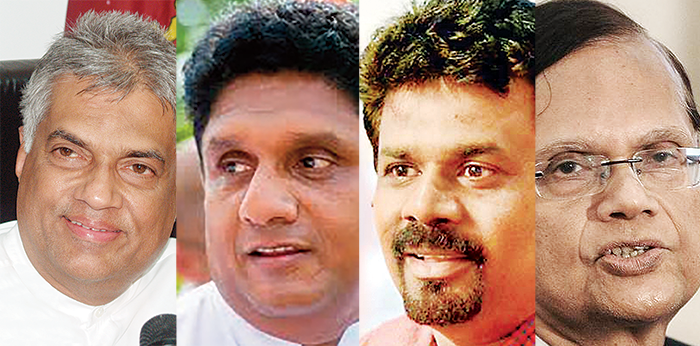
By DR. DAYAN JAYATILLEKA
When President Ranil Wickremesinghe’s administration engaged in a ‘shock ban’ of a large number of items, I expected the Opposition’s economists to do exactly what they did when President Gotabaya Rajapaksa and Dr PB Jayasundara did the same thing. That is, to denounce it to the high heavens, demanding “BUILD BRIDGES, NOT WALLS!” But no, when Ranil does what Gotabaya did, there is a deafening silence from the same quarters.
Ranil’s ban and the Opposition’s silence are especially dangerous because the items listed include material vital for the maintenance of our railways which are used by large numbers of commuters. The banned items include rail air brakes, fire fighting vehicles, rail locomotives, railway signaling equipment, railway coaches, wooden railway sleepers, safety headgear, steam turbines, boilers, diesel engines.In the absence of these items, the already depleted railway system could begin to malfunction even more than it currently does, leading to the most horrendous accidents, causing large numbers of deaths and maiming.
Come to think of it, that may be an opportunity to make a case for privatizing the railways and selling them off to local or foreign “investors”.
Maybe that’s why the ‘Economic Ranilists’ in politics and civil society are not voicing opposition to the ban?
Ranil’s ban includes many items necessary for the maintenance of industrial plant and infrastructure, agriculture, and production of goods and services locally: Machinery for making paper or paper board, book sewing machines, printing machines, lathes, weaving machines (looms), knitting machines, ploughs, harvesting machines, dairy machinery, poultry incubators, machinery for preparing animal feed, machinery for cleaning, sorting or grading seeds, duplicating machines, machinery for the extraction or preparing of animal or ‘fixed’ vegetable fats or oils, gaskets, safety headgear, boilers, ship cranes, fork lift trucks, hoses, gas and water gas generators.
Industries of all sorts from manufacturing to dairy and poultry, and even agriculture could collapse due to these items being banned. Here too, if these do collapse, one supposes that foreigners could be asked to set up in those sectors! Hence the silence from the usual suspects, the free-market fundamentalists.
SJB SELF-TRAPPED
The Opposition as it stands is caught in a self-designed trap. The trap wasn’t designed by Ranil Wickremesinghe but it has been triggered by him and the Opposition has still to extricate itself.The main Opposition party the SJB is trapped by the declared statement of its designated economic troika that they endorse and support President Ranil Wickremesinghe’s economic policy doctrine.
In the context of a deep economic crisis, if the economic policy-makers of the Opposition support in the main, the economic policy of the ruler, an economic policy that will cause tremendous hardship, then there is a severe limitation on the capacity of the SJB to oppose the government. This is a completely unnecessary dilemma, given that the SJB has as an asset of inestimable value, the economic policy doctrine, model and example of President Ranasinghe Premadasa, a proven success story in rescuing the country and rapidly growing its economy.
It is now increasingly evident that the SJB contains two tendencies: those who regard Ranasinghe Premadasa as a greater inspiration than Ranil Wickremesinghe and those who regard Ranil and the late Mangala Samaraweera as greater than Ranasinghe Premadasa. The former regard Sajith Premadasa as their only leader, while the latter seem to have a two-tier loyalty structure in which their immediate, temporary leader is Sajith but their Supreme Leader is Ranil.
Dr Ravi Rannan-Eliya’s IHP/SLOTS tracker data clearly shows that the erosion of SJB votes and their switch to the JVP-JJB is traceable to the loss of the Nov 2019 Sajith Premadasa presidential election vote-base, which in turn is due to the pivot from his (Ranasinghe Premadasa-ist) ‘developmental-populism’ to a policy discourse heavily weighted towards the neoliberalism of his economic policy troika.What is noteworthy is that the first ‘Premadasa-ist’ tendency does not comprise of leftists from outside the UNP, but precisely those like Imtiaz Bakeer Markar, a second generation UNPer. The second, ‘Ranilist’ tendency consists of those whose UNP experience is solely limited to the disastrous Ranil quarter-century with its neoliberal ideology, but were also minions of Ranil during one or both of his stints as PM (2001-2003, 2015-2019).
JVP-JJB JAMMED-UP?
The other important component of the Opposition—now perhaps the leading component—is the Left, consisting of the JVP-JJB and the FSP. Though in terms of parliamentary politics, we could simply limit it to the JVP-JJB, the main weakness is common to the Lankan Left as a whole. It is the absence of a declared, credible macro-economic alternative, fronted or backed by economists of mainstream repute.
This again is an unnecessary weakness and is easily bridgeable, because the first economist I heard focusing on the debt crisis and its effects on the economy as a whole– and this was many years ago, to an audience which included Mahinda Rajapaksa, who chaired most of the day-long meeting, was Prof Sumanasiri Liyanage, Sri Lanka’s most notable Marxist economist (not counting Prof Howard Nicholas)! Prof Sumanasiri Liyanage and Dr. Ahilan Kadirgamar could easily chart a progressive, pro-people path out of the crisis, but I have yet to see the Left produce a policy plan co-authored and signed by them.
There are two further weaknesses of the JVP-JJB which could cost them everything they have built so far. One is the refusal to entertain the idea of a united front, even in the face of Pohottuwa officials naming at media briefings, Anura Kumara Dissanayaka and Sunil Handunetti (JVP-JJB), as well as Kumara Gunaratnam (FSP), as conspiring to overthrow the democratic system by extra-constitutional means. The net of repression is beginning to descend on both parties but only the FSP has called for two united fronts: a political united front of all democratic parties, and a workers united front against privatization and cutbacks.
The third weakness, is that the JVP-JJB while very correctly campaigning for an early parliamentary election, avoids the elephant in the room: even if it wins such an election, which is possible, even likely, the President, Defence Minister and Commander-in-Chief will remain Ranil Wickremesinghe who will have no hesitation whatsoever in signaling Secretary/Defence (Retd) General Kamal Gunaratna to use live ammunition against demonstrations, however colossal they may be. The JVP-JJB must logically call for a snap president election as well, but it fails to do so.
SLFP, 10-PARTY SUICIDE
The third space in the Opposition consists of the Centrist and Center-Left currents. At the moment, these are the SLFP and the 9-party group (the Union of Independent Parties). The first is led by President Maithripala Sirisena and the second, which should have been led by Vasudeva Nanayakkara, is headed by Wimal Weerawansa.
Both these currents have lost their way. While Maithripala Sirisena often strikes the correct note, speaking with the benefit of experience, the SLFP contains several personalities who are in their track shoes awaiting to make a running-jump into President Ranil’s administration. There are a few free-floating individuals like Chaminda Weerakkody and Anura Priyadarshana Yapa, who are pretty good on policy issues but are of no fixed political abode.
As for the 9 -or 10 party grouping, it blotted its copybook by voting for the Emergency and has followed it up with the Weerawansa party’s vicious attacks on the Aragalaya and support for “investigation into the conspiracy”. This is the same bitterness with which the Old Left denounced Wijeweera’s JVP as a “CIA conspiracy” and cold lack of sympathy or empathy it displayed towards the youth uprising of April 1971, the brutality of the suppression of which completely undermined the moral legitimacy of the United Front Government and decimated the Left electorally in 1977.
This ‘Union of Independent Parties’ seems ideologically closer to Prime Minister Dinesh Gunawardena than to anyone else. Given that the PM is part of the Rajapaksa bloc which is propping up and being propped up by President Ranil Wickremesinghe, the traditional adversary of the center-left, I see no electoral future for the Wimal-led ‘union’.
DULLAS-GL GROUP
There is however, hope for the important Center-left space and tradition in the island’s politics. A new entity seems to be struggling to be born. That is the Dullas Alahapperuma-GL Peiris group of ‘SLPP Reformists’. It has several strengths, some of which are manifest, others, potential.
· It is bigger than a splinter group in parliamentary numbers, running as it does into double-digits.
· It’s personalities have national name-recognition. It is not a one-man show.
· It’s collective brain-power as manifested in academic and professional credentials — starting with Prof GL Peiris–arguably exceeds that of any other formation in Parliament. Dr. Charitha Herath and Dr. Nalaka Godahewa can match anyone in a substantive policy debate. To produce a realistic economic rescue package/roadmap and negotiate with the IMF, I’d bet on GL-Charitha-Nalaka over Harsha-Eran-Kabir on any given day.
· Dullas Alahapperuma, a prominent SLPPer whose house was not burned on May 9th, is a parliamentarian of rare civility and integrity, whose progressive ideological discourse expresses and extends the best of the SLFP-JO-SLPP experiences.
· The SLPP’s option for the long-standing enemy of the center-left voters, Ranil Wickremesinghe, the vacillation of the SLFP and the 10-party group, and the unfortunate circumscription of the SJB’s progressive center-left appeal and potential by its neoliberal ‘economic Ranilists’, gives the Dullas-GL group a clear field on the center-left, if it chooses a New Middle Path and a 21st century social democratic project. If, in short, it can be the 21st century successor to SWRD Bandaranaike and the SLFP of 1951-1955, before the travesty of Sinhala Only in 1956.
However, it must be said realistically, that in the first stage, the new formation will have the potential of a new, progressive project, partnering and allying with either Sajith Premadasa’s SJB, or Anura Kumara’s JVP-JJB, or ideally, both, in a broad democratic bloc.











A recent tragedy of a young audit professional has prompted a nationwide conversation on Sri Lanka’s audit work culture. What was initially described as an untimely passing has since raised serious concerns about excessive workloads, workplace responsibility, and the well-being implications of the professional pressure. Accordingly, this article seeks to explore prevailing audit culture and professional practices in Sri Lanka, and highlights areas where thoughtful reform may be considered
The Evolution of Accounting and Finance Education in Sri Lanka
Over the past several decades, accounting and finance education in Sri Lanka has evolved from a narrowly technical field into a recognised professional discipline. Universities and professional institutions now offer specialised programmes aligned with international standards, covering accounting, finance, auditing, taxation, and corporate governance.
Professional bodies have modernised curricula by incorporating international accounting and auditing standards, ethics, and governance related content. As a result, Sri Lankan accounting graduates develop both technical competence and professional judgment, enabling them to compete successfully in multinational corporations, international audit networks, and global financial institutions, both locally and overseas.
This progress reflects a broader national commitment to professional excellence. Accounting and finance are now recognised as disciplines central to economic governance, market transparency, investor confidence, and public trust.
Why Professional Qualifications Matter
Professional qualifications often act as gateways to the corporate world. Professional pathways in Sri Lanka include qualifications offered by the Institute of Chartered Accountants of Sri Lanka (ICASL), the Association of Chartered Certified Accountants (ACCA), the Chartered Institute of Management Accountants (CIMA), the Institute of Chartered Professional Managers (ICPM), and the Association of Accounting Technicians (AAT).
For employers, these qualifications signal technical competence, ethical compliance, and completion of structured practical training. For students, they represent professional legitimacy, career security, and upward mobility.
Therefore, families and students invest significant time and resources in this pathway, reflecting its importance, often exceeding the practical value of a degree alone. Qualified professionals trained through this system contribute to both Sri Lanka’s domestic financial sector and overseas markets.
The Growth and Public Role of the Audit Sector
Alongside educational development, Sri Lanka’s audit sector has expanded in scale and influence as businesses have become more complex and globally connected. Audit firms now operate across the listed companies.
Audit firms perform an important public interest function by assuring the credibility of financial information, supporting investor confidence, and underpinning regulatory compliance and corporate governance. Beyond service delivery, they also act as professional institutions that determine norms and train future leaders in accounting and finance.
As a result, internal practices within audit firms, including organisational culture, workload expectations, remuneration, and supervision, have implications that extend beyond individual workplaces, influencing professional judgment, audit quality, and long-term public trust.
The Dream of Becoming a Chartered Accountant
For thousands of young Sri Lankans, becoming a Chartered Accountant represents one of the most respected professional ambitions. It is widely viewed as a symbol of discipline, resilience, and upward mobility. Students enter the pathway with the expectation that years of study, sacrifice, and perseverance will ultimately lead to professional recognition and stability.
A defining feature of this pathway is mandatory practical training. To qualify, students must complete a prescribed period of supervised training, most commonly within audit firms. This requirement is designed to bridge theory and practice, ensuring that academic knowledge is reinforced through real world exposure, professional supervision, and ethical decision making.
In practice, securing a training position is often the most decisive and competitive stage of the journey. Without completing this training, the qualification remains unattainable regardless of examination success. Therefore, audit firms are not only employers but also essential gatekeepers to professional advancement, controlling access to qualifications, experience, and future career opportunities.
Where the System Begins to Strain
This structure, while well intentioned, creates a significant imbalance of power. Trainees depend on audit firms not only for income, but also for the completion of their professional qualification. In such circumstances, questioning workloads, working hours, or basic welfare provisions can feel risky. Many trainees remain silent, fearing that concerns could delay qualification or affect future career prospects.
Audit work is demanding worldwide, particularly during peak reporting periods. Long hours, tight deadlines, and intense fieldwork are widely recognised features of the profession. However, the concern arises when these pressures become normalised without sufficient regard for rest, safety, remuneration, or minimum working conditions.
Training allowances and entry-level remuneration in audit firms are often modest relative to workloads and expectations, with trainee allowances typically ranging from LKR 10,000 to 20,000 per month, despite daily working hours that frequently extend 8 to 12 hours. Many trainees accept low pay and long hours as temporary sacrifices in pursuit of long-term professional goals. Over time, when such conditions are justified as “part of training,” unhealthy practices risk becoming normalised and embedded within professional culture.
Such environments may still produce technically competent professionals, but at the cost of burnout, ethical fatigue, and reduced long term engagement with the profession.
A Regulatory Blind Spot
In Sri Lanka, audit firms are regulated by CA Sri Lanka with respect to professional standards, ethical conduct, examinations, and prescribed training requirements, thereby playing an important role in maintaining the profession’s credibility and international standing. This is a professional regulation.
However, professional regulation serves a different purpose from organisational or workplace oversight. While audit firms are subject to general labour laws, there is no audit specific public oversight mechanism that systematically reviews audit firms’ internal governance, remuneration structures, or training environments.
This creates a regulatory asymmetry. Audit firms scrutinise others under detailed regulatory frameworks, yet their own internal systems are not subject to equivalent public review. Given the large population of trainees with limited bargaining power, this gap may affect professional sustainability, audit quality, and public trust.
Following a recent tragedy involving a trainee, CA Sri Lanka issued a public condolence statement acknowledging stakeholder concerns and confirming that the circumstances are under review.
Looking Ahead
To strengthen the long-term sustainability of the audit profession, Sri Lanka may consider the following measures:
* Establish a dedicated public oversight body for audit firms, with responsibility for monitoring firm level governance, training environments, and organisational practices, complementing existing professional regulation.
* Introduce transparency reports for audit firms, requiring disclosure of governance structures, quality control systems, training arrangements, and continuing professional education practices.
* Apply modern labour governance principles, drawing on modern slavery frameworks used internationally that emphasise prevention, transparency, and early identification of labour related risks.
* Improve visibility of trainee remuneration and workload practices, particularly where mandatory training creates structural dependency.
* Strengthen coordination between professional self-regulation and public oversight, ensuring that professional excellence is supported by sustainable and accountable organisational environments.
These measures do not imply illegality or misconduct. Rather, they reflect an opportunity to align Sri Lanka’s audit profession with evolving global norms that prioritise transparency, dignity, and long-term public confidence. If audit firms are entrusted with holding others accountable, the systems governing them must also reflect responsibility toward the people who sustain the profession.
by Sulochana Dissanayake
Senior Lecturer at Rajarata University of Sri Lanka | Sessional Academic & PhD Candidate at Queensland University of Technology (QUT)
and
by Prof. Manoj Samarathunga
Faculty of Management Studies
Rajarata University of
Sri Lanka Mihintale

It is both an honour and a pleasure to address you on this occasion as we gather to celebrate International Philosophy Day. Established by UNESCO and supported by the United Nations, this day serves as a global reminder that philosophy is not merely an academic discipline confined to universities or scholarly journals. It is, rather, a critical human practice—one that enables societies to reflect upon themselves, to question inherited assumptions, and to navigate periods of intellectual, technological, and moral transformation.
In moments of rapid change, philosophy performs a particularly vital role. It slows us down. It invites us to ask not only how things work, but what they mean, why they matter, and how we ought to live. I therefore wish to begin by expressing my appreciation to UNESCO, the United Nations, and the organisers of this year’s programme for sustaining this tradition and for selecting a theme that invites sustained reflection on mind, consciousness, and human agency.
We inhabit a world increasingly shaped by artificial intelligence, neuroscience, cognitive science, and digital technologies. These developments are not neutral. They reshape how we think, how we communicate, how we remember, and even how we imagine ourselves. As machines simulate cognitive functions once thought uniquely human, we are compelled to ask foundational philosophical questions anew:
What is the mind? Where does thinking occur? Is cognition something enclosed within the brain, or does it arise through our bodily engagement with the world? And what does it mean to be an ethical and responsible agent in a technologically extended environment?
Sri Lanka’s Philosophical Inheritance
On a day such as this, it is especially appropriate to recall that Sri Lanka possesses a long and distinguished tradition of philosophical reflection. From early Buddhist scholasticism to modern comparative philosophy, Sri Lankan thinkers have consistently engaged questions concerning knowledge, consciousness, suffering, agency, and liberation.
Within this modern intellectual history, the University of Peradeniya occupies a unique place. It has served as a centre where Buddhist philosophy, Western thought, psychology, and logic have met in creative dialogue. Scholars such as T. R. V. Murti, K. N. Jayatilleke, Padmasiri de Silva, R. D. Gunaratne, and Sarathchandra did not merely interpret Buddhist texts; they brought them into conversation with global philosophy, thereby enriching both traditions.
It is within this intellectual lineage—and with deep respect for it—that I offer the reflections that follow.
Setting the Philosophical Problem
My topic today is “Embodied Cognition and Viññāṇasota: Buddhist Insights on the Extended Mind Thesis – Some Observations.” This is not a purely historical inquiry. It is an attempt to bring Buddhist philosophy into dialogue with some of the most pressing debates in contemporary philosophy of mind and cognitive science.
At the centre of these debates lies a deceptively simple question: Where is the mind?
For much of modern philosophy, the dominant answer was clear: the mind resides inside the head. Thinking was understood as an internal process, private and hidden, occurring within the boundaries of the skull. The body was often treated as a mere vessel, and the world as an external stage upon which cognition operated.
However, this picture has increasingly come under pressure.
The Extended Mind Thesis and the 4E Turn
One of the most influential challenges to this internalist model is the Extended Mind Thesis, proposed by Andy Clark and David Chalmers. Their argument is provocative but deceptively simple: if an external tool performs the same functional role as a cognitive process inside the brain, then it should be considered part of the mind itself.
From this insight emerges the now well-known 4E framework, according to which cognition is:
Embodied – shaped by the structure and capacities of the body
Embedded – situated within physical, social, and cultural environments
Enactive – constituted through action and interaction
Extended – distributed across tools, artefacts, and practices
This framework invites us to rethink the mind not as a thing, but as an activity—something we do, rather than something we have.
Earlier Western Challenges to Internalism
It is important to note that this critique of the “mind in the head” model did not begin with cognitive science. It has deep philosophical roots.
Ludwig Wittgenstein
famously warned philosophers against imagining thought as something occurring in a hidden inner space. Such metaphors, he suggested, mystify rather than clarify our understanding of mind.
Similarly, Franz Brentano’s notion of intentionality—his claim that all mental states are about something—shifted attention away from inner substances toward relational processes. This insight shaped Husserl’s phenomenology, where consciousness is always world-directed, and Freud’s psychoanalysis, where mental life is dynamic, conflicted, and socially embedded.
Together, these thinkers prepared the conceptual ground for a more process-oriented, relational understanding of mind.
Varela and the Enactive Turn
A decisive moment in this shift came with Francisco J. Varela, whose work on enactivism challenged computational models of mind. For Varela, cognition is not the passive representation of a pre-given world, but the active bringing forth of meaning through embodied engagement.
Cognition, on this view, arises from the dynamic coupling of organism and environment. Importantly, Varela explicitly acknowledged his intellectual debt to Buddhist philosophy, particularly its insights into impermanence, non-self, and dependent origination.
Buddhist Philosophy and the Minding Process
Buddhist thought offers a remarkably sophisticated account of mind—one that is non-substantialist, relational, and processual. Across its diverse traditions, we find a consistent emphasis on mind as dependently arisen, embodied through the six sense bases, and shaped by intention and contact.
Crucially, Buddhism does not speak of a static “mind-entity”. Instead, it employs metaphors of streams, flows, and continuities, suggesting a dynamic process unfolding in relation to conditions.
Key Buddhist Concepts for Contemporary Dialogue
Let me now highlight several Buddhist concepts that are particularly relevant to contemporary discussions of embodied and extended cognition.
The notion of prapañca, as elaborated by Bhikkhu Ñāṇananda, captures the mind’s tendency toward conceptual proliferation. Through naming, interpretation, and narrative construction, the mind extends itself, creating entire experiential worlds. This is not merely a linguistic process; it is an existential one.
The Abhidhamma concept of viññāṇasota, the stream of consciousness, rejects the idea of an inner mental core. Consciousness arises and ceases moment by moment, dependent on conditions—much like a river that has no fixed identity apart from its flow.
The Yogācāra doctrine of ālayaviññāṇa adds a further dimension, recognising deep-seated dispositions, habits, and affective tendencies accumulated through experience. This anticipates modern discussions of implicit cognition, embodied memory, and learned behaviour.
Finally, the Buddhist distinction between mindful and unmindful cognition reveals a layered model of mental life—one that resonates strongly with contemporary dual-process theories.
A Buddhist Cognitive Ecology
Taken together, these insights point toward a Buddhist cognitive ecology in which mind is not an inner object but a relational activity unfolding across body, world, history, and practice.
As the Buddha famously observed, “In this fathom-long body, with its perceptions and thoughts, I declare there is the world.” This is perhaps one of the earliest and most profound articulations of an embodied, enacted, and extended conception of mind.
Conclusion
The Extended Mind Thesis challenges the idea that the mind is confined within the skull. Buddhist philosophy goes further. It invites us to reconsider whether the mind was ever “inside” to begin with.
In an age shaped by artificial intelligence, cognitive technologies, and digital environments, this question is not merely theoretical. It is ethically urgent. How we understand mind shapes how we design technologies, structure societies, and conceive human responsibility.
Buddhist philosophy offers not only conceptual clarity but also ethical guidance—reminding us that cognition is inseparable from suffering, intention, and liberation.
Dr. Charitha Herath is a former Member of Parliament of Sri Lanka (2020–2024) and an academic philosopher. Prior to entering Parliament, he served as Professor (Chair) of Philosophy at the University of Peradeniya. He was Chairman of the Committee on Public Enterprises (COPE) from 2020 to 2022, playing a key role in parliamentary oversight of public finance and state institutions. Dr. Herath previously served as Secretary to the Ministry of Mass Media and Information (2013–2015) and is the Founder and Chair of Nexus Research Group, a platform for interdisciplinary research, policy dialogue, and public intellectual engagement.
He holds a BA from the University of Peradeniya (Sri Lanka), MA degrees from Sichuan University (China) and Ohio University (USA), and a PhD from the University of Kelaniya (Sri Lanka).
(This article has been adapted from the keynote address delivered
by Dr. Charitha Herath
at the International Philosophy Day Conference at the University of Peradeniya.)
Reference ,the Indian High Commissioner’s recent comments ( The Island, 9th Jan. ) on strong India-Sri Lanka relationship and the assistance granted on recovering from the financial collapse of Sri Lanka and yet again for cyclone recovery., Sri Lankans should express their thanks to India for standing up as a friendly neighbour.
On the Defence Cooperation agreement, the Indian High Commissioner’s assertion was that there was nothing beyond that which had been included in the text. But, dear High Commissioner, we Sri Lankans have burnt our fingers when we signed agreements with the European nations who invaded our country; they took our leaders around the Mulberry bush and made our nation pay a very high price by controlling our destiny for hundreds of years. When the Opposition parties in the Parliament requested the Sri Lankan government to reveal the contents of the Defence agreements signed with India as per the prevalent common practice, the government’s strange response was that India did not want them disclosed.
Even the terms of the one-sided infamous Indo-Sri Lanka agreement, signed in 1987, were disclosed to the public.
Mr. High Commissioner, we are not satisfied with your reply as we are weak, economically, and unable to clearly understand your “India’s Neighbourhood First and Mahasagar policies” . We need the details of the defence agreements signed with our government, early.
RANJITH SOYSA

PM departs Sri Lanka to participate in the 56th World Economic Forum Annual Meeting in Davos-Klosters, Switzerland.

Several killed in Kabul blast, Afghan Interior Ministry says

Senegal beat hosts Morocco to win AFCON 2025 after farcical walk-off

At least six killed in Pakistan as fire rips through Karachi shopping mall

Chile declares ‘state of catastrophe’ as deadly wildfires menace cities

At least 21 killed in Spain after crash involving high-speed trains

‘Dates have the highest sugar content to fight Coronavirus’

Sunday Island 27 December – Headlines

#SundayIsland 17th December – Headlines

Sunday Island – 28th March

Sunday Island Headlines – 21 March

Sunday Island – 21st February – Headlines
-

 Editorial2 days ago
Illusory rule of law
-
 News3 days ago
UNDP’s assessment confirms widespread economic fallout from Cyclone Ditwah
-

 Business5 days ago
Koaloo.Fi and Stredge forge strategic partnership to offer businesses sustainable supply chain solutions
-

 Editorial3 days ago
Crime and cops
-
 Features2 days ago
Daydreams on a winter’s day
-

 Editorial4 days ago
The Chakka Clash
-
 Features2 days ago
Surprise move of both the Minister and myself from Agriculture to Education
-
 Features2 days ago
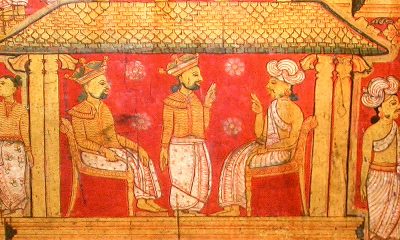
The Story of Furniture in Sri Lanka