
Features
CTB then SLTB now

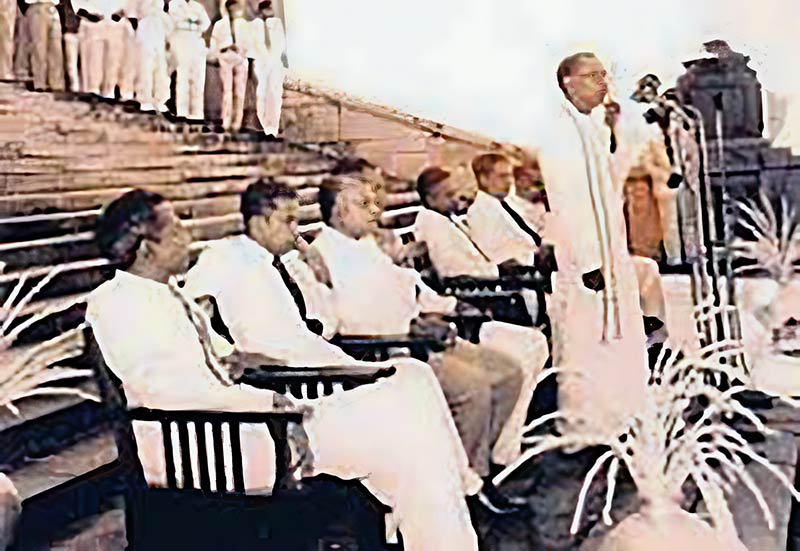
by HM Nissanka Warakaulla
As a former employee of the then Ceylon Transport Board (CTB) whch commenced operations on January 1, 1958 when the SWRD Bandaranaike government was in power and Mr. Maithripala Senanayake was the Minister of Transport, I write on a subject I’m familiar with. I joined the CTB as a graduate probationer in 1966 and left to join the University of Ceylon six years later.
The government nationalized all the bus companies that were operating passenger transport services island wide in the context of bus mudalalis of the day being widely perceived as UNPers. However some of the companies like the South Western Bus Company, owned by Sir Cyril de Zoysa, were running very efficient services. It was not only the buses that were taken over; all properties belonging to the then bus companies were also nationalized. So much so that even the houses where the owners were living, if they were within the compounds of the companies, were also taken over.
Thus, the house where bus owner Madanayake who owned the Sri Lanka Bus Company lived, which was within the company compound, and the similarly placed home of the owner of the Kandy Omnibus Company (KOC) were taken over. While Madanayake’s house later became the Peliyagoda Police Station, the home of the KOC owner which remained within the Kandy South Depot premises, is being used as its office.
With the nationalization of the bus services, an efficient board of directors was appointed to run the organization with Mr. Vere de Mel as the chairman. He had been a civil servant and was running then Ceylon’s first radio taxi service known as Quickshaws at that time. With several other civil servants co-opted from government service, the board was able to run the CTB in a very efficient manner with the passenger services running very smoothly throughout the country.
It was indeed an arduous task at the beginning. After having taken over all the buses and other properties belonging to the bus companies, the CTB commenced operations throughout the island on January 1, 1958 with the new logo of the CTB painted on all buses without changing their colours. Prime Minister SWRD Bandaranaike and the Minister of Transport Maithripala Senanayake rode a brand-new Mercedes Benz bus, sporting curtains on its windows, imported from Germany to inaugurate the passenger transport services of the CTB. About eight or 10 of these buses were imported at that time. Only one is available now as an exhibit at the BMICH.
The head office was set up at Kirula Road, Thimbirigasyaya where it remains todate. The board of management was established with Mr. de Mel as chairman and most of the others being co-opted from the then Ceylon Civil Service (CCS). As controlling everything from head office was impossible, Regional offices were established in Colombo South, Colombo North, Kandy, Kurunegala, Anuradhapura, Jaffna Badulla and Galle. Each of these regions were controlled by a regional manager. Though the regions managed the depots under their purview, the schedules of all the services were handled by the schedules division at the head office, with a schedules manager in charge.
The CTB had its own mail service, where letters, circulars from the head office to regional offices and depots were transported by bus so that no postage was paid. In addition to transporting its own mail, the CTB helped the postal department too by carrying mail bags from one destination to another, for which the CTB was paid.
Another important thing the CTB established at that time was the allocation of route numbers to the bus services so that from route number one (Colombo-Kandy) to 99 (Colombo-Badulla) were allocated to the long-distance journeys and other numbers according to the respective regions. Colombo and suburban routes were allocated numbers from 100 (Panadura-Pettah) to 199 (Bollegala-Pitakotte).
Now a number of the services in Colombo area have become redundant, eg. 115 Pitakotte via Slave Island, 116 Piliyandala to Pettah via Maradana, 167 (Nawala to New Jetty via Slave Island, Lower Lake Road (later named Baladaksha Mawatha) past the then Army headquarters and Army Hospital, Scout Headquarters, Queen’s Street (now Janadhipathi Mawatha) past Senate building and Gordon Gardens where the statue of Queen Victoria originally stood, 198 Panadura to Battaramulla, 199 Bollegala to Pitakotte, etc. Also, some of the services have been broken into two segments, such as 138 Homagama to Kaduwela, 101 Ja-ela to Panadura, etc.
Earlier, all buses carried a running number which was displayed in front and on either side of the vehicles. The depots had their run outs early in the morning and the buses were sent out according to the times of departure of the services. The depot superintendent (DS) was expected to be at these run outs as far as possible. I wonder how many DSs do so now!
During the time of the chairmanship of Mr. RT De Siva, three batches of graduate probationers were recruited and I was in one of them in 1966. The third batch was the largest, with a total of 15 recruits. In addition to the graduate probationers, there was a large number of graduates chosen for the next two grades. There was resentment from the employees who had been taken over from the bus companies, known as Section 38 employees as they thought that the graduates would be an obstacle to their promotions. This, actually, was not to be.
These graduates did a great service to the CTB, making improvements with innovative ideas in various areas. Unfortunately, later due to politicization almost all of these graduates left to join other organizations where there was no political interference. Thereafter, the CTB never recruited graduate probationers.
Also, during this same period, Major Oscar de Livera, the Vice-Chairman was very enthusiastic about developing sports in the CTB. There were many national level sportsmen and sportswomen recruited so that the CTB had very good teams in cricket, hockey, football, netball and athletics and won a number of tournaments in the Nationalized Services sports events. But now the CTB does not seem to be interested in this aspect of encouraging sports activities among its employees.
The CTB had flying squads operating from time to time to check buses to see whether conductors had issued tickets to all the passengers, whether the drivers were picking up passengers outside bus halts etc. They were given the Fiat cars which the CTB had got free for buying Fiat buses from Italy during Mr. Anil Moonesinghe’s tenure as Chairman.
The CTB had a scheme where the buses were sent for docking to the engineering section of the depot every six weeks, 12 weeks and 18 weeks. This ensured shortcomings were fixed so that buses were in good running condition and would last longer. I do not think this system exists now judging from the buses seen on the roads today.
Another achievement of the CTB was the playground at Park Road which has been a boon to most of the schools close by for their sports meets and training. The CTB’s Shalika Hall too has been helpful to organizations to have their meetings. The hall needs thorough renovation to resurrect it from its dilapidated state.
Gradually the CTB went down the pallang as a result of some ill-thought decisions. The first of these was the opening of depots in almost every electorate. It was first thought to be a very good decision to run the services more efficiently with each depot having to manage a lesser number of services and employees. But that was not to be as the expenses of running these depots were exorbitant with additional supervisory staff recruited.
Then the CTB was divided into regions and a chairman was appointed to head every provincial unit. This meant additional expenses. Thereafter each government that came into power recruited employees without any control of numbers. Consequently, where there should have been 16 employees per bus, the number jumped threefold.
With the gradual decline the CTB, now renamed Sri Lanka Transport Board (SLTB) became an organization difficult to resurrect. With strong competition from the private buses, the SLTB suffered in terms of revenue earned.
I am not sure whether there was a need to change the name CTB to SLTB as the Ceylon Electricity Board and the Ceylon Petroleum Corporation have retained their original names. Most people always say CTB when they refer to the organization rather than SLTB despite this name change.


 It would not be particularly revelatory to say that the US is plagued by ‘gun violence’. It is a deeply entrenched and widespread malaise that has come in tandem with the relative ease with which firearms could be acquired and owned by sections of the US public, besides other causes.
However, a third apparent attempt on the life of US President Donald Trump in around two and a half years is both thought-provoking and unsettling for the defenders of democracy. After all, whatever its short comings the US remains the world’s most vibrant democracy and in fact the ‘mightiest’ one. And the US must remain a foremost democracy for the purpose of balancing and offsetting the growing power of authoritarian states in the global power system, who are no friends of genuine representational governance.
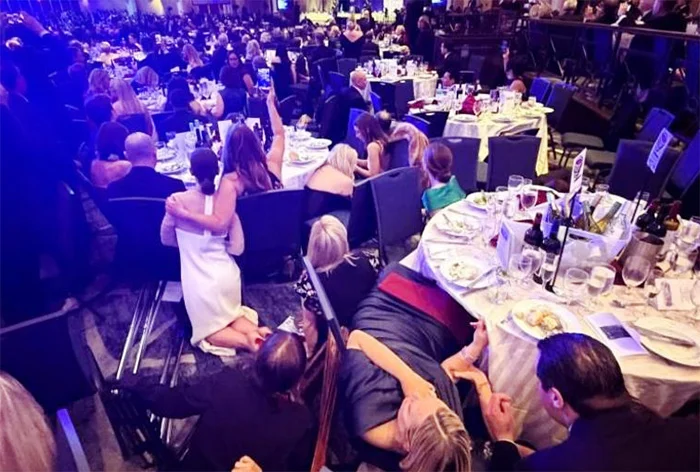
Therefore, the recent breaching of the security cordon surrounding the White House Correspondents’ Dinner in Washington at which President Trump and his inner Cabinet were present, by an apparently ‘Lone Wolf’ gunman, besides raising issues relating to the reliability of the security measures deployed for the President, indicates a notable spike in anti-VVIP political violence in particular in the US. It is a pointer to a strong and widespread emergence of anti-democratic forces which seem to be gaining in virulence and destructiveness.
The issues raised by the attack are in the main for the US’ political Right and its supporters. They have smugly and complacently stood by while the extremists in their midst have taken centre stage and begun to dictate the course of Right wing politics. It is the political culture bred by them that leads to ‘Lone Wolf’ gunmen, for instance, who see themselves as being repressed or victimized, taking the law into their own hands, so to speak, and perpetrating ‘revenge attacks’ on the state and society.
A disproportionate degree of attention has been paid particularly internationally to Donald Trump’s personality and his eccentricities but such political persons cannot be divorced from the political culture in which they originate and have their being. That is, “structural” questions matter. Put simply, Donald Trump is a ‘true son’ of the Far Right, his principal support base. The issues raised are therefore for the President as well as his supporters of the Right.
We are obliged to respect the choices of the voting public but in the case of Trump’s election to the highest public position in the US, this columnist is inclined to see in those sections that voted for Trump blind followers of the latter who cared not for their candidate’s suitability, in every relevant respect, and therefore acted irrationally. It would seem that the Right in the US wanted their candidate to win by ‘hook or by crook’ and exercise power on their behalf.
By making the above observations this columnist does not intend to imply that voting publics everywhere in the world of democracy cast their vote sensibly. In the case of Sri Lanka, for example, the question could be raised whether the voters of the country used their vote sensibly when voting into office the majority of Executive Presidents and other persons holding high public office. The obvious answer is ‘no’ and this should lead to a wider public discussion on the dire need for thoroughgoing voter education. The issue is a ‘huge’ one that needs to be addressed in the appropriate forums and is beyond the scope of this column.
Looking back it could be said that the actions of Trump and his die-hard support base led to the Rule of Law in the US being undermined as perhaps never before in modern times. A shaming moment in this connection was the protest march, virtually motivated by Trump, of his supporters to the US Capitol on January 6th, 2021, with the aim of scuttling the presidential poll result of that year. Much violence and unruly behaviour, as known, was let loose. This amounted to denigrating the democratic process and encouraging the violent take over of the state.
In a public address, prior to the unruly conduct of his supporters, Trump is on record as blaring forth the following: ‘We won this election and we won by a landslide’, ‘We will stop the steal’, ‘We will never give up. We will never concede. It doesn’t happen’, ‘If you don’t fight like hell, you’re not going to have a country anymore.’
It is plain to see that such inflammatory utterances could lead impressionable minds in particular to revolt violently. Besides, they should have led the more rationally inclined to wonder whether their candidate was the most suitable person to hold the office of President.
Unfortunately, the latter process was not to be and the question could be raised whether the US is in the ‘safest pair of hands’. Needless to say, as events have revealed, Donald Trump is proving to be one of the most erratic heads of state the US has ever had.
However, the latest attempt on the life of President Trump suggests that considerable damage has been done to the democratic integrity of the US and none other than the President himself has to take on himself a considerable proportion of the blame for such degeneration, besides the US’ Far Right. They could be said to be ‘reaping the whirlwind.’
It is a time for soul-searching by the US Right. The political Right has the right to exist, so the speak, in a functional democracy but it needs to take cognizance of how its political culture is affecting the democratic integrity or health of the US. Ironically, the repressive and chauvinistic politics advocated by it is having the effect of activating counter-violence of the most murderous kind, as was witnessed at the White House Correspondents’ Dinner. Continued repressive politics could only produce more such incidents that could be self-defeating for the US.
Some past US Presidents were assassinated but the present political violence in the country brings into focus as perhaps never before the role that an anti-democratic political culture could play in unraveling the gains that the US has made over the decades. A duty is cast on pro-democracy forces to work collectively towards protecting the democratic integrity and strength of the US.

 The Editor-in-Chief of The Sri Lankan Anchorman, a Toronto-based monthly, celebrating Sri Lankan community life in Canada, is none other than veteran Sri Lankan journalist Dirk Tissera, who moved to Canada in 1997. His wife, Michelle, whom he calls his “tower of strength”, is the Design Editor.
According to reports coming my way, the paper has turned out to be extremely popular in Toronto.
In fact, The Sri Lankan Anchorman won a press award in Toronto for excellence in editorial content and visual presentation.
However, the buzz in the air in Canada, right now, is The Sri Lankan Anchorman’s 22nd Anniversary Gala, to be held on Friday, 12 June, 2026, at the J&J Swagat Banquet Convention Centre, in Toronto.
An action-packed programme has been put together for the night, featuring some of the very best artistes in the Toronto scene.
The Skylines, who are classified as ‘the local musical band in Toronto’, will headline the event.
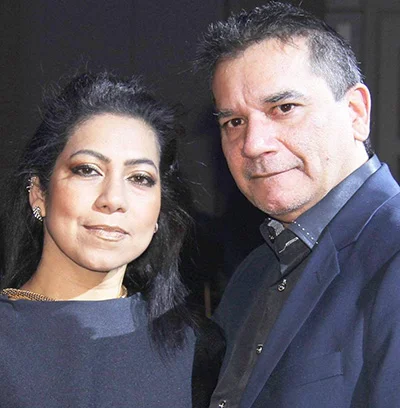
Dirk Tissera and wife Michelle: Supporting Sri Lanka-Canada community events, in Toronto, since launching The Anchorman
in 2002
They have performed and backed many legendary Sri Lanka singers.
According to Dirk, The Skylines can belt out a rhythm with gusto … be it Western, Sinhala or Tamil hits.
Also adding sparkle to the evening will be the legendary Fahmy Nazick, who, with his smooth and velvety vocals, will have the crowd on the floor.
Fahmy who was a household name, back in Sri Lanka, will be flying down from Virginia, USA.
He has captivated audiences in Sri Lanka, the Middle East and North America, and this will be his fourth visit to Toronto – back by popular demand,
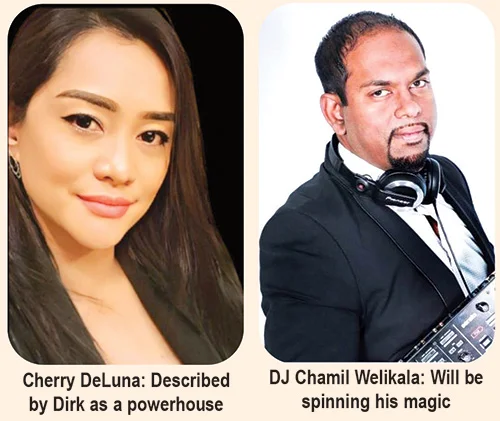
Cherry DeLuna, who is described by Dirk as a powerhouse, also makes her appearance on stage and is all set to stir up the tempo with her cool and easy delivery.
“She’s got a great voice and vocal range that has captivated audiences out here”, says Dirk.
Chamil Welikala, said to be one of the hottest DJs in town, will be spinning his magic … in English, Sinhala, Tamil and Latin.
Both Jive and Baila competitions are on the cards among many other surprises on the night of 12 June.
This is The Anchorman’s fifth annual dance in a row – starting from 2022, 2023, 2024 and 2025 – and both Dirk and Michelle, and The Anchorman, have always produced elegant social events in Toronto.
“We intend to knock this one out of the park,” the duo says, adding that Western music and Sinhala and Tamil songs is something they’ve always delivered and the crowd loves it.
“We have always supported Sri Lanka-Canada community events, in Toronto, since launching The Anchorman, in 2002, and we intend to keep it that way.”
No doubt, there will be a large crowd of Sri Lankans, from all communities, turning up, on 12 June, to support Dirk, Michelle and The Anchorman.

 * Apple and Orange:
Blend a few apple and orange pieces together. Add to it a pinch of turmeric and one tablespoon of honey. Apply it to the face and neck and rinse off after 30 minutes. This face pack is suitable for all skin types.
According to experts, apple is one of the best fruits for your skin health with Vitamin A, B complex and Vitamin C and minerals, while, with the orange peel, excessive oil secretion can be easily balanced.
* Mango and Curd:
Ripe mango pulp, mixed with curd, can be rubbed directly onto the skin to remove dirt and cleanse clogged pores. Rinse off after a few minutes.
Yes, of course, mango is a tasty and delicious fruit and this is the mango season in our part of the world, and it has extra-ordinary benefits to skin health. Vitamins C and E in mangoes protect the skin from the UV rays of the sun and promotes cell regeneration. It also promotes skin elasticity and fights skin dullness and acne, while curd, in combination, further adds to it.
* Grapes and Kiwi:
Take a handful of grapes and make a pulp of it. Simultaneously, take one kiwi fruit and mash it after peeling its skin. Now mix them and add some yoghurt to it. Apply it on your face for few minutes and wash it off.
Here again experts say that kiwi is the best nutrient-rich fruit with high vitamin C, minerals, Omega-3 fatty acids and vitamin E, while grapes contain flavonoids, which is an antioxidant that protects the skin from free radical damage. This homemade face pack acts as a natural cleanser and slows down the ageing process.

Food Security is vital to ensuring a Nation’s Sovereignty and National Security – Prime Minister

Showers or thundershowers will occur in the most parts of the island after 1.00 pm

Explanation sought from AKD on ‘Russian energy supplies’

US reiterates its commitment to enhancing relations with Northern Sri Lanka

Rooftop Solar at Crossroads as Sri Lanka Shifts to Distributed Energy Future

Indonesia-SL agreement on Visa Exemption for Diplomatic and Official passports soon

‘Dates have the highest sugar content to fight Coronavirus’

Sunday Island 27 December – Headlines

#SundayIsland 17th December – Headlines

Sunday Island – 28th March

Sunday Island Headlines – 21 March

Sunday Island – 21st February – Headlines
-
 News7 days ago
Whistleblowers ask Treasury Chief to resign over theft of USD 2.5 mn
-

 News7 days ago
No cyber hack: Fintech expert exposes shocking legacy flaws that led to $2.5 million theft
-

 News4 days ago
BIA drug bust: 25 monks including three masterminds arrested
-
 Business5 days ago
Nestlé Lanka Announces Change in Leadership
-
 News2 days ago
Treasury chief’s citizenship details sought from Australia
-

 News4 days ago
Banks alert customers to phishing attacks
-
 News5 days ago
Hackers steal $3.2 Mn from Finance Ministry
-
 Business7 days ago
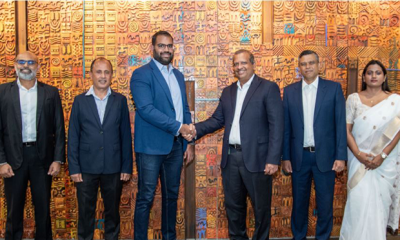
Dialog Enterprise partners Star Garments: Pioneering 5G innovation in Sri Lanka’s apparel industry