
Opinion
Crafting an alternative to a failing govt.


By Harim Peiris
A nation was promised “vistas of prosperity and splendor” and about 6.9 million voters, opted for it, subsequently providing a two third parliamentary majority to implement the same. A little over two years later, the reality is experienced by everyone. Shortages of everything, from cooking gas to milk powder, from foreign exchange to crude oil and now the resulting power cuts.
There is little need to expound at length, the economic, social and daily pain that the populace is experiencing. It is a daily experience, which will speak the loudest at the ballot box, when the government musters up the courage to face the polls, be they the delayed local or provincial elections.
This is a government running scared of facing the electorate. Covid is hardly an excuse, we had elections in August 2020 at the height of the first wave and after a long lockdown. We are since, vaccinated, masked and learning to live life with a virus, dengue and a shortage of everything.
What is more useful, is to study the colossal policy and political failures of the SLPP / Rajapaksa Administration, so that perhaps the Government can learn from its mistakes and make a course correction and that a future SJB Administration can avoid the colossal blunders of this Government’s current tenure.
1. Majoritarian ethno-religious nationalism has it limits
It is Samuel Johnson, who in 1745 is credited with the saying “patriotism is the last refuge of the scoundrel”. Then as now, what Johnson and other political theorists argued was that it is very easy to play identity politics or ethno-religious nationalism to mask self-interest and ignore sound public policies and prudent governance. Unfortunately for Sri Lanka, post war the Administrations of 2010-2014 and 2019 to date, has heightened divisiveness and polarisation in society for political power.
In the discourse on Sri Lanka’s national question, there is often the claim, not without merit, that the British colonial administration practiced “divide and rule” in the then Ceylon as well as in other colonies. In reality, we don’t need to go that far back in history to see divide and rule politics in Sri Lanka. But what the elections of 2015 demonstrated and future elections will demonstrate, is that there is a limit to economic pain and bad governance, that a majority in society will tolerate, notwithstanding the most strident and ardent ethno-religious nationalism. Lesson no 1; Ardent ethno-religious nationalism is not a substitute for sound policy and prudent governance.
2. The Military is not there to run the country
The Sri Lankan military is one of the best in the world and until skepticism set in about our domestic human rights enforcement and safeguards, widely desired for UN peacekeeping roles, as one of the few militaries with actual combat experience.
However, a military like any other state institution and structure has a role and purpose. To pervert that role and purpose is to do a disservice to society and also to weaken the institution concerned. The Sri Lankan military’s latest mandate from this Administration has become “green agriculture”. The Government’s epic failure of overnight denying to both farmers and planters, non-organic fertiliser. One wonders how the light infantry or the heavy artillery, is to be deployed effectively for organic farming.
The government has become heavy on presidential taskforces, the latest one being headed by an ex-convict, that almost prompted the Justice Minister to throw in the towel. The governance of Sri Lanka’s oldest democracy requires as President Premadasa famously stated “consultation, compromise and consensus”. A process and skill, which the governing party, the ruling family and the powerful generals and admirals running the country seemingly have in short supply, if at all. Sri Lanka’s democratic institutions of governance must be allowed to function freely, robustly and independently. That is not really the case today. We do not need a Hitler; we need a Mandela. Lesson no 2; The military is not an answer to every problem.
3. Policy not politics should drive governance decisions
At the heart of Sri Lanka’s current economic woes are two key political decisions of the Administration and not a Sars virus named Covid-19 and its mutations. The first and most negative decision the Government took in December 2019, was to slash and roll back the tax increases which had been painfully introduced by its predecessor Administration. This in a country which has an extremely narrow tax base and a very low tax revenue to GDP ratio, compared with peer nations. We are today going hat in hand to Bangladesh for foreign currency and swap arrangements. The failures of the government’s fiscal policy are not just on full display, its resultant monetary policy implications are now felt in the pain of everyday living as shortages of all imports essential to daily life, from fuel, milk power, medicines, cooking gas and basic food items mount and continue with no end in sight. The second policy blunder, effected last year, was to overnight ban non-organic fertiliser.
The resultant decline in agricultural yields, farmer incomes and increase in food prices, combine to create severe hardship to both rural farmers and urban consumers. Both these decisions ignored the advice of economists, policy experts and community leaders.
For an Administration, which promised technocracy driven sound policy, we have ended up with quite the opposite. A small elite, listening to an echo of its own words.
Lesson no 3. Rome was not built in a day. We do not need shock therapy, that is all shock and no therapy.
(The writer previously served as Advisor to the President)


In 1956 a Sri Lankan politician riding a great surge of populism, made a move that, at a stroke, disabled a functioning civil society operating in the English language medium in Sri Lanka. He had thrown the baby out with the bathwater.
It was done to huge, ecstatic public joy and applause at the time but in truth, this action had serious ramifications for the country, the effects have, no doubt, been endlessly mulled over ever since.
However, there is one effect/ aspect that cannot be easily dismissed – the use of legal English of an exact technical quality used for dispensing Jurisprudence (certainty and rational thought). These court certified decisions engendered confidence in law, investment and business not only here but most importantly, among the international business community.
Well qualified, rational men, Judges, thought rationally and impartially through all the aspects of a case in Law brought before them. They were expert in the use of this specialised English, with all its meanings and technicalities – but now, a type of concise English hardly understandable to the casual layman who may casually look through some court proceedings of yesteryear.
They made clear and precise rulings on matters of Sri Lankan Law. These were guiding principles for administrative practice. This body of case law knowledge has been built up over the years before Independence. This was in fact, something extremely valuable for business and everyday life. It brought confidence and trust – essential for conducting business.
English had been developed into a precise tool for analysing and understanding a problem, a matter, or a transaction. Words can have specific meanings, they were not, merely, the play- thing of those producing “fake news”. English words as used at that time, had meaning – they carried weight and meaning – the weight of the law!
Now many progressive countries around the world are embracing English for good economic and cultural reasons, but in complete contrast little Sri Lanka has gone into reverse!
A minority of the Sinhalese population, (the educated ones!) could immediately see at the time the problems that could arise by this move to down-grade English including its high-quality legal determinations. Unfortunately, seemingly, with the downgrading of English came a downgrading of the quality of inter- personal transactions.
A second failure was the failure to improve the “have nots” of the villagers by education. Knowledge and information can be considered a universal right. Leonard Woolf’s book “A village in the Jungle” makes use of this difference in education to prove a point. It makes infinitely good politics to reduce this education gap by education policies that rectify this important disadvantage normal people of Sri Lanka have.
But the yearning of educators to upgrade the education system as a whole, still remains a distant goal. Advanced English spoken language is encouraged individually but not at a state level. It has become an orphaned child. It is the elites that can read the standard classics such as Treasure Island or Sherlock Holmes and enjoy them.
But, perhaps now, with the country in the doldrums, more people will come to reflect on these failures of foresight and policy implementation. Isn’t the doldrums all the proof you need?
by Priyantha Hettige
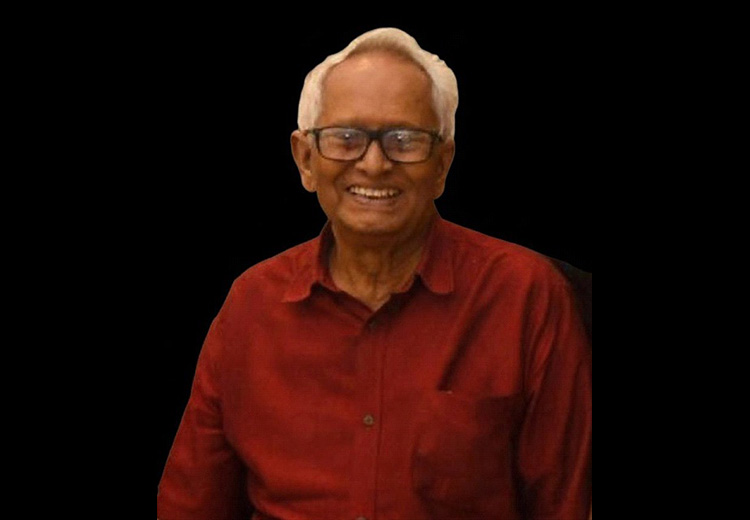
It is with deep gratitude and profound sorrow that we remember Mr. K. L. F. Wijedasa, remarkable athletics coach whose influence reached far beyond the track. He passed away on November 4, exactly six months after his 93rd birthday, having led an exemplary and disciplined life that enabled him to enjoy such a long and meaningful innings. To those he trained, he was not only a masterful coach but a mentor, a friend, a steady father figure, and an enduring source of inspiration. His wisdom, kindness, and unwavering belief in every young athlete shaped countless lives, leaving a legacy that will continue to echo in the hearts of all who were fortunate enough to be guided by him.
I was privileged to be one of the many athletes who trained under his watchful eye from the time Mr. Wijedasa began his close association with Royal College in 1974. He was largely responsible for the golden era of athletics at Royal College from 1973 to 1980. In all but one of those years, Royal swept the board at all the leading Track & Field Championships — from the Senior and Junior Tarbat Shields to the Daily News Trophy Relay Carnival. Not only did the school dominate competitions, but it also produced star-class athletes such as sprinter Royce Koelmeyer; sprint and long & triple jump champions Godfrey Fernando and Ravi Waidyalankara; high jumper and pole vaulter Cletus Dep; Olympic 400m runner Chrisantha Ferdinando; sprinters Roshan Fernando and the Indraratne twins, Asela and Athula; and record-breaking high jumper Dr. Dharshana Wijegunasinghe, to name just a few.
Royal had won the Senior & Junior Tarbats as well as the Relay Carnival in 1973 by a whisker and was looking for a top-class coach to mould an exceptionally talented group of athletes for 1974 and beyond. This was when Mr. Wijedasa entered the scene, beginning a lifelong relationship with the athletes of Royal College from 1974 to 1987. He received excellent support from the then Principal, late Mr. L. D. H. Pieris; Vice Principal, late Mr. E. C. Gunesekera; and Masters-in-Charge Mr. Dharmasena, Mr. M. D. R. Senanayake, and Mr. V. A. B. Samarakone, with whom he maintained a strong and respectful rapport throughout his tenure.
An old boy of several schools — beginning at Kandegoda Sinhala Mixed School in his hometown, moving on to Dharmasoka Vidyalaya, Ambalangoda, Moratu Vidyalaya, and finally Ananda College — he excelled in both sports and studies. He later graduated in Geography, from the University of Peradeniya. During his undergraduate days, he distinguished himself as a sprinter, establishing a new National Record in the 100 metres in 1955. Beyond academics and sports, Mr. Wijedasa also demonstrated remarkable talent in drama.
Though proudly an Anandian, he became equally a Royalist through his deep association with Royal’s athletics from the 1970s. So strong was this bond that he eventually admitted his only son, Duminda, to Royal College. The hallmark of Mr. Wijedasa was his tireless dedication and immense patience as a mentor. Endurance and power training were among his strengths —disciplines that stood many of us in good stead long after we left school.
More than champions on the track, it is the individuals we became in later life that bear true testimony to his loving guidance. Such was his simplicity and warmth that we could visit him and his beloved wife, Ransiri, without appointment. Even long after our school days, we remained in close touch. Those living overseas never failed to visit him whenever they returned to Sri Lanka. These visits were filled with fond reminiscences of our sporting days, discussions on world affairs, and joyful moments of singing old Sinhala songs that he treasured.
It was only fitting, therefore, that on his last birthday on May 4 this year, the Old Royalists’ Athletic Club (ORAC) honoured him with a biography highlighting his immense contribution to athletics at Royal. I was deeply privileged to co-author this book together with Asoka Rodrigo, another old boy of the school.
Royal, however, was not the first school he coached. After joining the tutorial staff of his alma mater following graduation, he naturally coached Ananda College before moving on to Holy Family Convent, Bambalapitiya — where he first met the “love of his life,” Ransiri, a gifted and versatile sportswoman. She was not only a national champion in athletics but also a top netballer and basketball player in the 1960s. After his long and illustrious stint at Royal College, he went on to coach at schools such as Visakha Vidyalaya and Belvoir International.
The school arena was not his only forte. Mr. Wijedasa also produced several top national athletes, including D. K. Podimahattaya, Vijitha Wijesekera, Lionel Karunasena, Ransiri Serasinghe, Kosala Sahabandu, Gregory de Silva, Sunil Gunawardena, Prasad Perera, K. G. Badra, Surangani de Silva, Nandika de Silva, Chrisantha Ferdinando, Tamara Padmini, and Anula Costa. Apart from coaching, he was an efficient administrator as Director of Physical Education at the University of Colombo and held several senior positions in national sporting bodies. He served as President of the Amateur Athletic Association of Sri Lanka in 1994 and was also a founder and later President of the Ceylonese Track & Field Club. He served with distinction as a national selector, starter, judge, and highly qualified timekeeper.
The crowning joy of his life was seeing his legacy continue through his children and grandchildren. His son, Duminda, was a prominent athlete at Royal and later a National Squash player in the 1990s. In his later years, Mr. Wijedasa took great pride in seeing his granddaughter, Tejani, become a reputed throwing champion at Bishop’s College, where she currently serves as Games Captain. Her younger brother, too, is a promising athlete.
He is survived by his beloved wife, Ransiri, with whom he shared 57 years of a happy and devoted marriage, and by their two children, Duminda and Puranya. Duminda, married to Debbie, resides in Brisbane, Australia, with their two daughters, Deandra and Tennille. Puranya, married to Ruvindu, is blessed with three children — Madhuke, Tejani, and Dharishta.
Though he has left this world, the values he instilled, the lives he shaped, and the spirit he ignited on countless tracks and fields will live on forever — etched in the hearts of generations who were privileged to call him Sir (Coach).
NIRAJ DE MEL, Athletics Captain of Royal College 1976
Deputy Chairman, Old Royalists’ Athletics Club (ORAC)
Sri Lanka is now grappling with the aftermath of the one of the gravest natural disasters in recent memory, as Cyclone Ditwah and the associated weather system continue to bring relentless rain, flash floods, and landslides across the country.
In view of the severe disaster situation, Speaker Jagath Wickramaratne had to amend the schedule for the Committee Stage debates on Budget 2026, which was subsequently passed by Parliament. There have been various interpretations of Budget 2026 by economists, the business community, academics, and civil society. Some analyses draw on economic expertise, others reflect social understanding, while certain groups read the budget through political ideology. But with the country now trying to manage a humanitarian and economic emergency, it is clear that fragmented interpretations will not suffice. This is a moment when Sri Lanka needs a unified, responsible, and collective “national reading” of the budget—one that rises above personal or political positions and focuses on safeguarding citizens, restoring stability, and guiding the nation toward recovery.
Budget 2026 is unique for several reasons. To understand it properly, we must “read” it through the lens of Sri Lanka’s current economic realities as well as the fiscal consolidation pathway outlined under the International Monetary Fund programme. Some argue that this Budget reflects a liberal policy orientation, citing several key allocations that support this view: strong investment in human capital, an infrastructure-led growth strategy, targeted support for private enterprise and MSMEs, and an emphasis on fiscal discipline and transparency.
Anyway, it can be argued that it is still too early to categorise the 2026 budget as a fully liberal budget approach, especially when considering the structural realities that continue to shape Sri Lanka’s economy. Still some sectors in Sri Lanka restricted private-sector space, with state dominance. And also, we can witness a weak performance-based management system with no strong KPI-linked monitoring or institutional performance cells. Moreover, the country still maintains a broad subsidy orientation, where extensive welfare transfers may constrain productivity unless they shift toward targeted and time-bound mechanisms. Even though we can see improved tax administration in the recent past, there is a need to have proper tax rationalisation, requiring significant simplification to become broad-based and globally competitive. These factors collectively indicate that, despite certain reform signals, it may be premature to label Budget 2026 as fully liberal in nature.
Overall, Sri Lanka needs to have proper monitoring mechanisms for the budget. Even if it is a liberal type, development, or any type of budget, we need to see how we can have a budget monitoring system.
Establishing a National Budget Performance and Evaluation Office
Whatever the budgets presented during the last seven decades, the implementation of budget proposals can always be mostly considered as around 30-50 %. Sri Lanka needs to have proper budget monitoring mechanisms. This is not only important for the budget but also for all other activities in Sri Lanka. Most of the countries in the world have this, and we can learn many best practices from them.
Establishing a National Budget Performance and Evaluation Office is essential for strengthening Sri Lanka’s fiscal governance and ensuring that public spending delivers measurable value. Such an office would provide an independent, data-driven mechanism to track budget implementation, monitor programme outcomes, and evaluate whether ministries achieve their intended results. Drawing from global best practices—including India’s PFMS-enabled monitoring and OECD programme-based budgeting frameworks—the office would develop clear KPIs, performance scorecards, and annual evaluation reports linked to national priorities. By integrating financial data, output metrics, and policy outcomes, this institution would enable evidence-based decision-making, improve budget credibility, reduce wastage, and foster greater transparency and accountability across the public sector. Ultimately, this would help shift Sri Lanka’s budgeting process from input-focused allocations toward performance-oriented results.
There is an urgent need for a paradigm shift in Sri Lanka’s economy, where export diversification, strengthened governance, and institutional efficiency become essential pillars of reform. Establishing a National Budget Performance and Evaluation Office is a critical step that can help the country address many long-standing challenges related to governance, fiscal discipline, and evidence-based decision-making. Such an institution would create the mechanisms required for transparency, accountability, and performance-focused budgeting. Ultimately, for Sri Lanka to gain greater global recognition and move toward a more stable, credible economic future, every stakeholder must be equipped with the right knowledge, tools, and systems that support disciplined financial management and a respected national identity.
by Prof. Nalin Abeysekera ✍️

Nine killed in shooting at Australia’s Bondi Beach, police say

Angry fans throw chairs and bottles at Messi event in India

Landslide early warnings in force in the Districts of Badulla, Kandy, Kegalle, Kurunegala, Matale, Nuwara Eliya and Ratnapura

The rights of the fishing community will never be compromised – President

Prioritize rebuilding the livelihoods of disaster-affected communities – President

A few showers may occur in the Northern, North-Central, Eastern, Uva and Central provinces

‘Dates have the highest sugar content to fight Coronavirus’

Sunday Island 27 December – Headlines

#SundayIsland 17th December – Headlines

Sunday Island – 28th March

Sunday Island Headlines – 21 March

Sunday Island – 21st February – Headlines
-
 Features4 days ago
Finally, Mahinda Yapa sets the record straight
-

 News6 days ago
Over 35,000 drug offenders nabbed in 36 days
-
 News5 days ago
Cyclone Ditwah leaves Sri Lanka’s biodiversity in ruins: Top scientist warns of unseen ecological disaster
-

 News6 days ago
Rising water level in Malwathu Oya triggers alert in Thanthirimale
-
 Features4 days ago
Handunnetti and Colonial Shackles of English in Sri Lanka
-
 Business3 days ago
Cabinet approves establishment of two 50 MW wind power stations in Mullikulum, Mannar region
-

 Business6 days ago
Sri Lanka betting its tourism future on cold, hard numbers
-

 News6 days ago
New landslide alerts as Ditwah aftermath worsens