
Features
Covid-19: Potential risks of fast-tracking vaccine


The clinical development and release of an effective vaccine against any disease is essentially mandated to go through several rigorously controlled testing processes. A vaccine candidate is first identified through pre-clinical evaluations that could involve high quality screening and selecting the proper biological antigen to invoke a defensive immune response. The pre-clinical stages are also necessary to determine approximate dose ranges and proper drug formulations such as oral tablets, drops, syrups or injections. This is also the stage in which the vaccine candidate would be first tested in laboratory animals or on human cells in the laboratory, prior to moving to the clinical stage of actual human trials.
The subsequent clinical stages of human trials are a three-phase process. Each phase tests larger and larger groups of humans. During Phase I, small groups of human subjects, perhaps 50 or so in each group, receive the trial vaccine. It primarily assesses the safety of the vaccine in healthy people. In Phase II, the clinical study is expanded and vaccine is given to a larger group of people, maybe a few hundreds, who have the characteristics such as age and physical health, similar to those for whom the new vaccine is intended. In Phase III, the vaccine is given to thousands of people, with as broad a cross-section of people as possible, and tested for efficacy and safety. Many vaccines also undergo Phase IV formal, on-going studies after the vaccine is approved, licensed and administered to humans. All these processes are known to take years, sometimes as much as 10 years. It is a very meticulously formulated and long drawn out route to ensure the efficacy and safety of vaccines.
In the case of a COVID vaccine, we really do not have the luxury of spending years on this process. However, if one was to try and condense the timelines from years to months, it is quite obvious that it would necessarily have to entertain compromises. Currently there is a world-wide rush to find a safe and effective vaccine against Covid-19. Experts and companies claim one could be on the market in 12–18 months. The President of the United States of America wants one by the end of the year. According to the World Health Organization (WHO), a significant number of candidate vaccines are in clinical trials, with a couple already in Phase III and several others likely to enter those final stages. The plethora of COVID-19 vaccines in development gives us many attempts at getting a potentially useful vaccine. But it has to be stated clearly and unequivocally that rushed development could mean missing information about long-term safety and the levels of protection. The accelerated speed of development of the COVID vaccines has public health experts gravely concerned that vaccines might be approved with incomplete data and analysis.
This apprehension intensifies because many of the vaccine platforms in development against Covid-19 are unproven new technologies. Byram Bridle, a viral immunologist at the University of Guelph in Canada, who has received Covid-focused funding to develop a new vaccine, has said “Developing a vaccine even in about a year is unprecedented. As a scientist with expertise in the field I am personally concerned that conducting science too fast could risk compromising the rigour needed to properly assess vaccines”.
Among the top fears is the potential that a fast-tracked vaccine will have unintended side-effects. No vaccine is 100% safe, but if a billion people are vaccinated, a one in 10,000 serious adverse event will affect 100,000 of those people. In May, it was revealed that four out of 45 people in Moderna’s Phase 1 COVID vaccine trial experienced ‘medically significant’ adverse events. The most important thing is to stringently ensure that fast tracking does not mean major compromisation on safety or efficacy. Rarer adverse events need even larger trials, and as explained by Gregory Poland, Director of vaccines research at the Mayo Clinic in Minnesota, USA, ‘We won’t know about rare events until after the vaccine is licensed”.
One potential adverse event is antibody-dependent enhancement (ADE), a type of immune reaction where vaccination makes subsequent exposure to the virus more dangerous. This condition has been observed with some vaccines for the dengue virus, as well as in animal models for the original Severe Acute Respiratory Syndrome (SARS) virus. ADE occurs when the body, primed by a vaccine, generates antibodies that do not sufficiently neutralise the virus when later exposed to it and instead encourage the virus to get into cells and replicate, exacerbating the disease.
However, there is still a lot we do not know about coronaviruses, which is another concern with speedy vaccine development. For example, the question mark over immunity; are antibodies protective and how long does immunity last? Bridle says fast tracking vaccines risks compromising assessments of immunological memory. Arguably, a vaccine against Covid-19 should confer immunity for more than one year to reduce the risk of future recurrences. But how long would it take to determine if a vaccine can confer immunological memory for one year? Of course, it would take at least one year. So how does that fit into the goal of getting a vaccine into broad public use in under a year? Any vaccine is useless if it does not confer long-term immunological memory to respond when exposed to the virus.
Currently a somewhat controversial scenario has developed in the COVID vaccine development. In Phase III trials it is necessary to give the vaccine to a group of normal individuals the test vaccine and give another comparable group a placebo and all participants then have to go about their life as usual. They are all followed up for a prolonged period to see whether the vaccine protects against the disease. This will invariably take a long time. Until enough of the participants get the disease, there will not be sufficient data to draw worthwhile conclusions. To get over this requirement of prolonged observations, some people are now starting to advocate a more controversial model. Instead of waiting for any of the participants to contract the disease naturally, if at all, what if we give a set of willing volunteers in the vaccine group, the virus on purpose? These are called ‘Human Challenge Trials’. In some countries there are volunteers who have come forward to be willing to be exposed to the virus after vaccination with the trial vaccine. They have expressed various altruistic sentiments to speed up things so that the rest of humanity would benefit. Researchers had done such trials with a Typhoid Vaccine in the UK in 2016. The researchers in that trial felt that they saved three to four years of observations by that manoeuvre. In human challenge trials of a COVID vaccine, the entire process could be shortened to a matter of months.
However, and this is the real crux of the matter, in the human challenge trials which had been conducted for other diseases like typhoid, cholera, malaria etc, we do have effective treatments for those diseases. No one has actually died in those studies because if the vaccine was unsuccessful, they could be treated. That is where COVID-19 is in a special group. WE HAVE NO EFFECTIVE SPECIFIC TREATMENT FOR IT. If in a human challenge trial for COVID-19, the vaccine fails, there may be deaths of some of the volunteers. Such a trial in COVID-19 vaccine would be conducted in young healthy and much narrower group of people than in a conventional Phase III trial. It is to their eternal credit that these brave volunteers are prepared to take that small risk if their participation would help wider humanity. Yet for all that the risks are very real. In addition, if it works in that set of people, we will not be able to say for sure whether the vaccine will work as well in a wider cross-section of ordinary people and particularly in the elderly. Also, there are the potential prospects of some long-term effects of COVID-19, even in young people. Some authorities have labelled the human challenge trials as a ‘morally murky way’ of speeding up the COVID-19 vaccine process
Yet for all this, any risk of harm or death in a challenge study for COVID-19 would completely set it apart from all other challenge studies. Obviously, in the face of all this, many vaccine researchers would be reluctant to go into such trials for a COVID vaccine. However, the Oxford group that is doing Phase III trials on their vaccine are considering a challenge study by the end of the year. If the conventional Phase III trials that are currently being conducted find a useful vaccine, we may never have to do human challenge studies in COVID-19.
Ensuring a vaccine is safe and effective will be essential in keeping the public trust in vaccines. There is a risk that a fast-tracked vaccine could dent this and compromise vaccination programmes. Already in the US, around 30% of the public say they would reject a COVID vaccine, according to various surveys. Poland says policies have to be driven by science and effectively communicated to the public. But with economies flagging from the health crisis, will society accept more risk in a vaccine? That could be the case with Covid-19. Poland says the risk–benefit ratio of all vaccines will be carefully reviewed by authorities but notes that risk boundaries are subjective.
To be quite fair, even a not so perfect vaccine, that could provide at least more than 50 per cent protection, could still slow the spread of the disease and save lives. But safety and efficacy concerns aside, there is more at stake here. Covid-19 will not be the only coronavirus pandemic in the future. The risk is if we do not build on the scientific gains once this pandemic recedes and if we fail to use the data and technology to be ready to develop a safe and effective vaccine for the next coronavirus or any other blight for that matter. It is obvious that the entire world would then be at grave risk in the future.







by Dr Debapriya Mukherjee
Former Senior Scientist
Central Pollution Control Board
Human beings often treat nature as an unlimited storehouse, clearing forests, polluting rivers and degrading soil for immediate gain. Animals and plants, without environmental policies or scientific knowledge, survive through relationships with their surroundings and other forms of life. An elephant needs connected habitats; a bee depends on flowers; a tree supports organisms while drawing nutrients from the soil. Humans can understand these connections, yet too often act as if their consequences did not concern us.
Elephants remind us that habitats cannot survive as isolated islands. Elephants disperse seeds and shape vegetation through feeding. Roads, railway lines, mines and settlements can obstruct their movements, increasing the risk of accidents and encounters with people. An elephant entering a village may reflect not only animal behaviour but also habitat fragmentation or changes in access to food and water. Protecting elephants therefore means conserving the corridors connecting essential habitats, not merely preserving separate patches of forest.
Vultures reveal the value of nature’s unsung services. These scavengers consume carcasses and help remove decaying animal material. India’s vulture crisis, linked particularly to exposure to the veterinary drug diclofenac, showed how a chemical used for one purpose can disrupt a distant ecological process. A creature often dismissed as unattractive may perform a service whose loss has far-reaching consequences.
Bees and bats reveal the biological foundations of food security. Bees pollinate many crops and wild plants. Certain bats also pollinate flowers, disperse seeds or consume insects. Habitat destruction, pesticide exposure and loss of food sources can threaten these contributions. Agricultural success cannot be judged by yield alone; the health of pollinators and the wider landscape also matter.
-
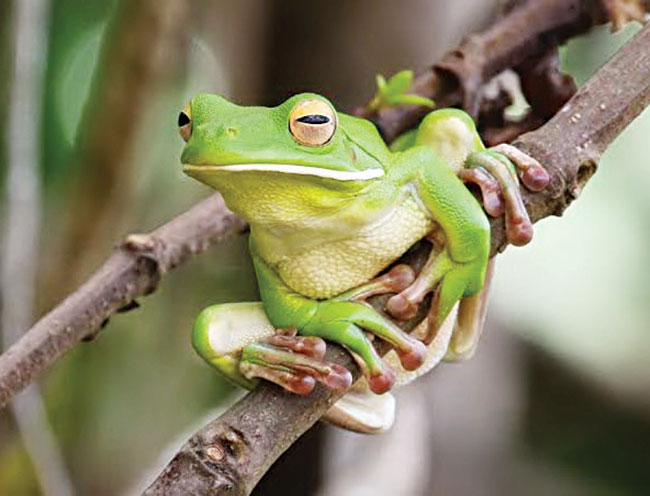
- Frog
-

- Bee
Frogs can warn us of environmental disturbance. Many amphibians have permeable skin and depend on both aquatic and terrestrial habitats. Some populations are sensitive to pollution, pesticides, habitat loss and disease. Frogs also consume insects and provide food for birds, snakes and other animals. Their decline does not identify a particular pollutant by itself, but it can warrant investigation. A pond may still hold water while losing important elements of ecological health.
Earthworms and termites reveal the living world beneath our feet. Earthworms contribute to soil structure and organic-matter decomposition. Termites recycle plant material and influence soil formation in many environments. Alongside fungi and bacteria, these organisms sustain processes essential to soil health. This matters to agriculture: applying cow dung or vermicompost does not guarantee a good crop if soil conditions and nutrient requirements are unknown. Agricultural inputs should be chosen according to soil properties, water availability and crop needs.

“Elephants remind us that habitats cannot survive as isolated islands. Elephants disperse seeds and shape vegetation through feeding. roads, railway lines, mines and settlements can obstruct their movements, increasing the risk of accidents and encounters with people.” (A file photo by picture by Dilum Alagiyawanna.)

Mangroves
Fig trees and native grasses show why conservation must respect each habitat’s character. Many fig species depend on specialised fig wasps for pollination, while their fruits feed birds, bats and other animals. Native grasses provide food and shelter for insects, birds and grazing animals. Planting trees everywhere is therefore not necessarily ecological restoration. Converting natural grasslands into tree plantations can damage habitats adapted to open landscapes. Conservation must protect the ecosystem suited to each place, not simply increase tree numbers.
Mangroves and wetland plants provide natural protection. Mangroves support wildlife, trap sediments in suitable conditions and can reduce wave energy and coastal erosion. Wetlands store water, provide habitat and cycle nutrients; some also help moderate flooding. Neither can prevent every cyclone or flood, but destroying these systems without assessing their functions may increase risks and the cost of protecting communities.
Nature is not a world of perfect cooperation. Predators hunt prey, plants compete for sunlight, and organisms sometimes harm one another. Its lesson lies instead in interdependence, environmental limits and the consequences of disruption.
Development is often measured through roads built, buildings completed and economic returns. These achievements matter, but the picture is incomplete when ecological damage is ignored or its costs are transferred to other communities. Science enables us to examine impacts before approving projects, protect wildlife corridors before they are severed, test soil before choosing inputs and assess wetlands before filling them. Knowledge, however, protects nature only when it influences decisions.
Nature does not ask humanity to abandon progress. It asks us to distinguish genuine progress from activities that destroy their own ecological foundations. A vulture, frog, bat, termite or fig tree may seem insignificant in isolation; their importance emerges through the processes they sustain.
The living world offers no simple moral sermon, but a scientific truth: a civilisation that neglects the ecological relationships sustaining life ultimately undermines its own future.
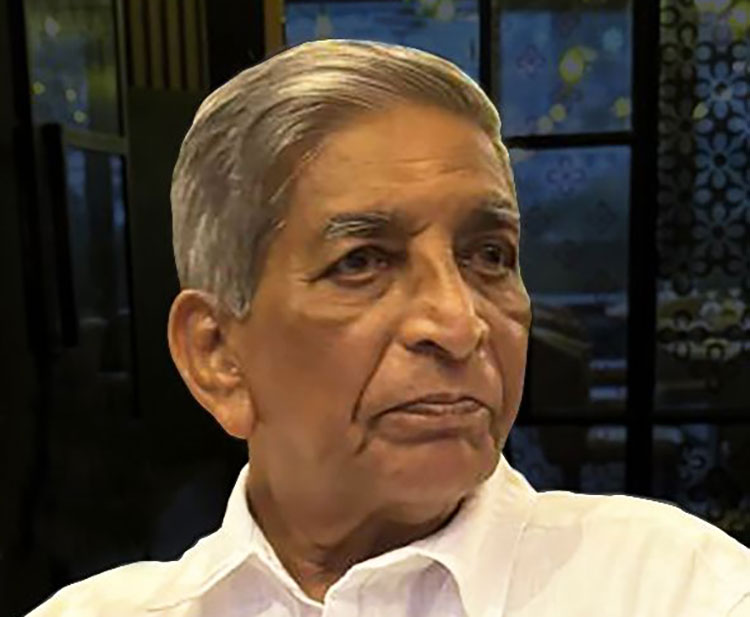
A tribute to the man who believed Sri Lankan music deserved the very best
by Vindana Ariyawansa
Some people build companies. Others build institutions that outlive them. When Ananda Ganegoda passed away last week at the age of 81, he left behind something far larger than a business: a cultural landmark whose logo sits on the cassette shelves of countless Sri Lankan homes, and whose songs many of us grew up with without knowing the man who made them possible.
For decades, his name and Singlanka were one and the same. Both stand for the belief that Sri Lankan music deserved the highest standard of quality in its content, its production and its presentation.
“Singlanka: the symbol of excellence in creation and of priceless perfection in finish!”
That was the promise printed in the company’s advertising, and Ananda Ganegoda spent his life trying to keep it.
A friendship that changed a life
In the 1970s, Ganegoda was already a successful businessman from an industrialist family, running enterprises alongside his brothers. Then he met pop singer Milton Mallawarachchi, and the friendship became a turning point.
Through Milton, he came to know many of the country’s most celebrated artistes. He admired them deeply, and they welcomed him into their circle. Before long, the businessman had become something rarer: a patron who supported the country’s artistic endeavours out of genuine love for them.
Worried for the artistes
By the late 1970s the audio cassette had become the most practical way to sell music, and many businessmen rushed into the trade. Ganegoda watched this with concern. He worried about what it meant for singers’ creative and financial independence, and whether the people who made the music would share fairly in its rewards.
At the request of leading artists, he decided to enter music production himself. He did it, by every account, without commercial ambition. His only intention was to serve the artists.
18 March 1980
Singlanka was founded on 18 March 1980 as a limited company. Its founding team was remarkable. Clarence Wijewardana, the celebrated singer and songwriter, joined it. So did the renowned lyricist Kularatna Ariyawansa, who gave up his government job to be part of the venture, and continued to this day as its creative director. Vijaya Ramanayake, owner of the Tharanga record label, took charge of distribution.
Dozens of veteran artists who were close friends of Ganegoda handed over songs they had recorded independently to be released under the new label. Many new songs were recorded under the guidance of Clarence Wijewardana and Vijaya Ramanayake. In April 1980, Singlanka launched with 25 albums at once.
The first cassettes were produced in Singapore and imported. Because Sri Lanka then lacked the facilities to print Sinhala on the covers, the first sleeves carried their titles and information in English. Listeners objected, and the albums were quickly re-released with new covers in Sinhala.
By December 1980, 15 more albums recorded earlier in the year had followed. That same year, the Singlanka recording studio opened in Nugegoda under Clarence Wijewardana’s supervision. Equipped with the latest technology, it produced the country’s first eight-track recordings. Ganegoda invested heavily in it, and with veteran recordist Dayananda Perera at the helm it became the busiest and most respected studio in the country.
One roof, one family
The year 1981 was a landmark for the company. Ganegoda held a strong conviction that artists should not be left at the mercy of a fluctuating cassette market, which made careers unpredictable and unsustainable. If he could give them stability under one roof, he believed, they could give their energy to their art instead of worrying about money.
So, he invited them to join Singlanka, and they came. Amaradeva, Nanda Malini, Victor Rathnayaka, Sanath Nandasiri, Milton Mallawarachchi, Gunadasa Kapuge, Priya Sooriyasena, Sisira Senarathna, Indrani Wijayabandara, Malkanthi Nandasiri, Clarence Wijewardana, Anton Jones, Abeywardana Balasooriya and Niranjala Sarojini became exclusive Singlanka artists. Sunil Edirisinghe, T. M. Jayaratna, Somathilaka Jayamaha, Karunarathna Divulgane, Deepika Priyadarshani, Janaka Wickramasinghe, Rohan Bulegoda and Dayan Witharana joined them later.
Singlanka also produced best-selling albums by H. R. Jothipala, M. S. Fernando, Desmond de Silva, Nihal Nelson and Vijaya Kumaratunga.
The journey was not without heartache. Some ventures did not bear fruit, and it pained him when a few artistes left the label over the years. But the majority stayed, which says something about the man they stayed with.
A company of firsts
Singlanka’s catalogue reads like a record of firsts for Sri Lankan music:
· In April 1981, it released the first film soundtrack on cassette, for Sunil Ariyaratna’s Vajira.
· That year it also released Nanda Malini Live in London, the country’s first live-recorded cassette.
· In 1982, Ganegoda began replicating cassettes in Sri Lanka itself, having previously relied on Singapore. Veteran musician Rohana Weerasinghe left his government teaching post to join the company in 1983.
· In 1983, Prof. Ediriweera Sarachchandra’s iconic play Sinhabahu was released on a double cassette. Noorthi and Nadagam Songs, directed by Punyasena Gunasinghe, followed as another first.
· In 1984, under Sanath Nandasiri’s direction, came Madhubani, the country’s first album of classical instrumentals and songs, launched with a classical concert at Colombo’s Tower Hall.
· The same year, Nanda Malini’s double vinyl album Sathyaye Geethaya was released. Vinyl was not in popular demand at the time, so the experiment was not continued.
· In 1987, one of Ganegoda’s dream projects came true with Dorata Waduma, an album by six talented amateur singers. It introduced the singer Deepika Priyadarshani.
· In 1987, Sansare Api became the first collection of songs written by a member of the clergy, the Venerable Rambukkana Siddhartha.
· In 1989, Dhammapada Geethaya set verses of the Dhammapada to song.
The famous Singlanka logo was designed by Charlie Chang of Singapore. It has since become a timeless emblem of quality Sinhala music. In its first decade alone, Singlanka produced 136 original albums, a remarkable achievement for a company built on original recordings.
A patron of the nation’s culture
Ganegoda’s generosity reached well beyond his own studio. During its first two decades, Singlanka contributed financially to virtually every prominent national artistic event in the country.
In the early 1980s he sponsored concert tours to the United Kingdom for Amaradeva, Sisira Senarathna, Indrani Wijayabandara, Sunil Edirisinghe, Malani Bulathsinhala, Sanath Nandasiri and Malkanthi Nandasiri, carrying Sri Lankan music to audiences abroad.
He supported the first Sarasaviya Film Festival at the BMICH in 1980, the University of Colombo Art Festival, the G. B. Senanayake scholarship at the University of Sri Jayewardenepura, and the Mahagama Sekara Memorial Festival. He supported the Amaradeva felicitation event, the Children’s Books Society’s book exhibitions and prize-givings, the Bandaranaike Memorial Foundation Fund, and the Charles Silva Gunasinghe Memorial Fund. He supported the Vesak Bhakthi Gee Festival of the Lake House Buddhist Society, the “40 Years of Sinhala Cinema” event organised by the film critics and writers’ society, Prof. Sarachchandra’s drama festival, and the Premakeerthi Tribute Festival.
He also helped launch Amaradeva’s Naada Siththam, Dharmasiri Gamage’s Sulan Kurullo, and the concert Mage Swarayayi Obe Ridmayayi by Victor Ratnayake and Premasiri Kemadasa. These are only some of the many occasions on which he quietly gave his support.
More than a company
Today, Ananda Ganegoda’s name and Singlanka are inseparable. Singlanka is more than a record label. It is a cultural emblem of Sri Lanka, one that preserved the country’s musical heritage and identity for a generation and set a benchmark that the industry still looks to.
He began as a businessman who befriended a singer. He became a guardian of Sri Lankan music, giving artists a home, a stage and the security to create. Most of the millions who have hummed those songs may never have known his name. But every time a Singlanka melody plays, his dream is still being heard.

Dr B. J. C. Perera
MBBS(Cey), DCH(Cey), DCH(Eng), MD(Paediatrics), MRCP(UK), FRCP(Edin), FRCP(Lond), FRCPCH(UK), FSLCPaed, FCCP, Hony. FRCPCH(UK), Hony. FCGP(SL)
Specialist Consultant Paediatrician and Honorary Senior Fellow,
Postgraduate Institute of Medicine, University of Colombo, Sri Lanka.An independent freelance medical correspondent.
KEY POINTS
- The foetus lives a pampered existence within the womb of the mother and the birth itself is a bit of a harrowing experience for the baby.
- The most important initial need is to establish normal breathing.
- Exclusive breastfeeding should be commenced within one hour of birth.
- Baby should “bed-in” with the mother and should be fed on demand, day and night.
- The baby needs warmth and to be cuddled.
- The baby should pass urine and stools within the first 24 hours.
The arrival of any newborn baby is certainly a superlatively joyous occasion. The mother has carried this bundle of joy in her womb for just about nine months, and at long last, it will be time for him or her to see the light of day. The foetus in the womb has a pampered existence, with the mother meeting all its needs. Her body provides all the warmth and essential nourishment that the baby needs for growth and development. The baby grows in the protected environment of the womb, floating in a bag of water in completely dark surroundings. Having gone through nine months of such a blissful existence, it must surely be quite a harrowing experience at the time of delivery, either by the natural route or by a Caesarean operation. No small wonder that all of them come out making quite a bit of noise and crying. That noise is music to the ears of the birth attendants, as in the vast majority, it implies that all is generally well with the baby.
First essential requirement
The first essential requirement for the newborn baby, at birth, is to breathe properly. In the womb, the mother’s blood provides the baby with life-giving oxygen through the placenta and umbilical cord. This route is cut off rather suddenly at birth, and the baby has to fend for itself as far as breathing is concerned. The immediate need, after birth, is to initiate and maintain normal breathing. In the vast majority of deliveries, Mother Nature has put in the necessary mechanisms for the baby to start breathing normally, and the baby comes out with a lusty cry, expands the lungs and starts to breathe normally. The life-giving oxygen from the air will be extracted by the lungs and carried to all the tissues by the blood. The skin turns pink, the baby starts to move all four limbs vigorously, keeps on crying, and with some gentle coaxing, settles down to the normal routine of a newborn baby. The umbilical cord is generally secured with a germ-free sterile plastic clamp or tied up with special sterile suture material and cut with a pair of sterile scissors.
Based on scientific evidence, it is now advised to delay the clamping of the cord by 60 seconds or more after the birth of the baby, as it has several benefits for the health of the baby. The total functional dependence on the mother is terminated with the cutting of the cord, but the baby still remains almost totally dependent on the mother for its basic needs.
Yet for all this, in a small minority of babies, breathing problems are encountered, and this situation must be dealt with promptly, imperiously, and with a lion-hearted response by the medical attendants at delivery. Sometimes the possibility of breathing problems could be predicted, but at other times it just happens out of the blue. Inadequate establishment of normal breathing leads to a catastrophic fall in the oxygen content of the blood. One organ that is exquisitely sensitive to a lack of oxygen is the newborn baby’s brain. There is absolutely no time to lose. Every second matters, and resuscitative measures should be instituted immediately. The recovery of the baby will depend on the skills, capability and urgency of the medical response. Happily, such episodes can now be dealt with competently and decisively using the currently available resources in our medical institutions. In many instances, all that is necessary is to take over the baby’s breathing for a couple of minutes with a special bag with a mask attached to it. This type of artificial ventilation automatically induces the baby to breathe normally in most cases. Once a baby has recovered adequately and satisfactorily from such a calamity, there is no looking back, and he or she will be quite normal.
Different treatment modalities
However, if the treatment modalities are delayed, leading to a protracted lack of oxygen to the brain of the newborn, or the baby does not recover well even after adequate efforts at resuscitation, there is a very real risk of permanent brain damage from which he or she will suffer for the rest of his or her life. The damage to the brain can take many forms, but the most common is a disturbance of the ability to move the limbs normally known as Cerebral Palsy. In some instances, it does leave the child severely disabled for the rest of his or her life. Baby brains that are permanently damaged in this fashion do not recover completely, and the child is likely to have enormous problems for his or her life thereafter. This is the reason that training of all personnel and dedication towards the resuscitation of the newborn is such an important aspect of the day-to-day routine in the labour rooms and operating theatres.
While in the womb, the baby is constantly exposed to a surrounding temperature of around 37 degrees Celsius. This is the normal body temperature of the mother. The room temperature in the delivery rooms and operating theatres is much lower than this. Even in non-air-conditioned areas, it may be about 28 to 30 degrees Celsius, while in air-conditioned surroundings it may be as low as 18 – 20 degrees Celsius. The newborn baby needs to be kept warm, particularly because the normal body temperature control mechanisms of the baby are rather immature and not fully developed or sensitised at birth. In many institutions, radiant heaters are used to keep the baby warm, but simple measures like keeping the baby adequately covered in pre-warmed linen are quite effective. The most rational and simplest way of keeping the baby warm is to keep the baby with the mother as soon as feasible, using the body warmth of the mother for the purpose. This is known in medical parlance as ‘Kangaroo Care’.
Food and nourishment
During the time that the baby is in the womb, all the nutrients for the baby are provided by the mother. There is a prime need to provide food and nourishment for the baby after birth. The very best food for the baby is, of course, mother’s milk. Breastfeeding is the natural continuation of the care that has been given to the baby during the months of pregnancy. Breast milk is all the food that the baby needs for the first six months of life, and it is the proverbial elixir of life. The best time to start breastfeeding is right after the baby is born. Babies are born with a sucking reflex, which is most powerful around 30 minutes after birth. Putting the baby to the breast then helps the mother and baby in several ways.
The sucking of the baby releases hormones in the mother’s body which contract the womb and help to control blood loss. The baby gets colostrum, or first milk, which offers proteins and immune protection. The mother responds to successful breastfeeding by making more milk, so that the baby loses less weight after birth. Immediate feeding is also known to initiate and enhance that all-important mother-child bonding, which would last a full lifetime. In scientific circles, this bonding with the mother is considered to be one of the many useful outcomes of early breastfeeding. It has been clearly established that the sooner the baby is started on mother’s milk, the better it is, especially to successfully feed the baby for the first few months of life.
Need to be with mother
The bundle of joy is later cleaned up, washed, dressed in very light clothes and handed over once again to the mother. It is now the usual practice to have the baby bedded in with the mother in the same bed. In the good old days, babies were separated from their mothers and kept in nurseries and cots. Being with the mother at all times helps her to respond to the needs of the baby and particularly to react to demand feeding whenever the need arises. The normal newborn baby is expected to pass urine during the first few hours after birth and to open its bowels during the first 24 hours. The urine is generally very light-coloured, and the stools are dark blackish. Gradually, the stools turn to the normal yellowish brown colour over the first couple of days.
The baby tends to sleep a lot during the first few days and wakes up when he or she is hungry. All that the baby needs in the first few days is for it to be fed adequately with the mother’s milk and kept clean and warm. It is also important to continue to feed the baby whenever the baby wakes up in the night, as there is hormonal stimulation by the suckling process, which increases the supply of milk from the mother. With night feeding, this benefit is carried on even into daytime. The currently advised practice is to exclusively breastfeed the baby for the first six months of life. What is meant by this is to give only mother’s milk to the exclusion of everything else, except medicines and vitamins. The World Health Organisation (WHO) recommendation for exclusive breastfeeding is six months. However, due to social reasons, such as the need for the mother to go back to work and the limitation imposed by the period of maternity leave, it may be necessary to curtail this period to four months. It has been scientifically shown that the baby does not need even additional water, not even in very warm climates. The vast majority of babies do very well on this regime of exclusive breastfeeding, grow and develop satisfactorily. They should be protected from infections by preventing people with other communicable diseases from coming into contact with the baby. It must be remembered that newborn babies have immature defence mechanisms and a still-developing immune system. Therefore, they are that much more vulnerable to many types of infections.
Newborn babies need to be cuddled and comforted. The warmth of the mother is quite soothing and reassuring to the baby. Normal newborn babies thrive extremely well without any further assistance from anything or anyone else, provided adequate nutrition is provided for them. In evolutionary terms, they are born with all the necessary requirements and the potential to grow unhindered into childhood, adolescence and adult life. The vast majority of them will develop and flourish, just like flowers that bloom beautifully in this world.

What nature knows that humanity has forgotten

Man Behind the Music: Ananda Ganegoda and Singlanka

Malinga’s career best effort fails to stop Pakistan crossing 300

The newborn baby

SC grants special leave to appeal against bribery conviction to ex-Deputy Minister

Police probe alleged links between cops and cricketer’s brother

‘Dates have the highest sugar content to fight Coronavirus’

Sunday Island 27 December – Headlines

#SundayIsland 17th December – Headlines

Sunday Island – 28th March

Sunday Island Headlines – 21 March

Sunday Island – 21st February – Headlines
-

 Latest News6 days ago
Nissanka’s return headlines Sri Lanka’s Test squad against Pakistan
-

 News7 days ago
CP alleges NPP has taken the blame for illegal US sanctions on Iranian vessels
-

 News5 days ago
Sri Lanka, India caught in US-Iran ship crisis
-

 Latest News6 days ago
Imran Khan’s PTI braces to fight federal takeover of Khyber Pakhtunkhwa
-

 Latest News5 days ago
Kusal Mendis’ unbeaten 87 hands Sri Lanka consolation win
-

 News7 days ago
Ex-Tiger witness claims Ekneligoda proposed to fire missile at MR’s plane
-

 Latest News5 days ago
Missiles intercepted near Riyadh after Saudi coalition hits Yemen fuel depot
-
 News6 days ago
Mahinda and Shiranthi hospitalised