
Features
Combination of circumstances gives CBK the opportunity to dissolve Parliament


Bradman takes final bow after a period on intense political manoeuvering
Ranil’s strength, according to the Constitution, came from his supremacy in Parliament. With great managerial skill he managed to keep at all times a sizable majority in place. The UNF never lost a vote in Parliament during those two years (Ranil was PM). The UNF itself was a coalition bringing together five parties which contested the election together. It must have brought much credit to his political acumen and management skills that in spite of severe stresses and strains, the UNF held together. It was also quite remarkable in a country where party political loyalties are notably fickle, that during the period of his government there was not a single resignation from party or office.
According to the Constitution, Parliament cannot be dissolved by presidential fiat until one year after its election. Thereafter though, the president is vested with the power to dissolve parliament at will and even though the government might have an absolute majority in the House. When Ranil’s second year began there was the opportunity for a sudden dissolution but although fears were raised from time to time, this did not happen. The peace process was well on track, the economy was beginning to pick up and investor confidence was rising. It needed an event of dramatic consequence to trigger any decision by the president to dissolve Parliament.
The opportunity finally came through a combination of circumstances. Firstly, the negotiation process itself had stalled in April 2003. Citing non-performance of undertakings given at the `talks’ as a primary reason, and the Washington donor review meeting to which they had not being invited as another, the LTTE refused to continue the schedule of talks as planned. Worse was to follow when they declined the invitation to participate at the June Tokyo Donor Conference. Initially the donor meeting had been planned for with both the government of Sri Lanka and the LTTE being joint hosts.
There was a final issue which literally broke the camel’s back and impelled the line of action that resulted in the dissolution of Parliament.
The Interim Self-Governing Authority (ISGA)
ISGA was the response of the LTTE to the government’s proposals for an Interim Administration for the northeast. The government, after a great deal of thought by Ranil and G L, had sent in a proposal in June 2003 basically designed to provide for a mechanism which would handle effectively and speedily the donor funding anticipated for development. The decision-making authority was to consist of LTTE and government nominees (including representatives of the Muslims) with the LTTE having the majority.
The concept of an interim administration for the northeast was a cornerstone of the road map for a durable peace and had been one of Ranil’s undertakings in the election manifesto for the 2001 elections. Of course the details had not been determined and the government proposals at this stage were in the nature of a first offer open for discussions.
After a while, on October 31, 2003 the LTTE predictably, in view of their own thinking on the matter which was to obtain control of the administration of the northeast province, and not merely have a mechanism for the funding component, put forward their proposals for an Interim Self-Governing Authority (ISGA). This was clearly very far forward towards autonomy in the management of the northeast.
Ranil and G L responded immediately that the ISGA went further than they would think necessary at this stage of the negotiations but that the proposals could certainly constitute the basis for further discussion.
However considerable fear began to be expressed in the media, fuelled by elements opposed to the peace process and the political opposition to the government, that the ISGA represented the opening towards the creation of Eelam. The public debate and agitation put the UNF, already reeling from a sustained campaign carried out by the media, on the defensive. The media had a ready-made portfolio of apparent concessions made by the government to the LTTE through its ‘so-called’ peace process and supposed imminent danger to national security, especially the sea base at Trincomalee through the surreptitious establishment of 13 camps encircling the town.
Daily dispatches from intrepid news reporters filled the newspapers and the names of the ‘formidable’ LTTE camps, particularly Manirasakulam, were in everyone’s heads. Finally a brave attempt at taking the camp by a force of volunteers led by the leader of the Hela Urumaya was foiled in the nick of time – the army turning the force back before they could get within firing range. The government – defence ministry response – was lacklustre and the media had succeeded in preparing the grounds for a final denouement.
The president timed her move to perfection. On November 4, 2003 catching the ground-swell against the government at full tide and at a time when Ranil was out of the country in Washington, for a meeting with President Bush about the Free Trade Agreement with the US, President Chandrika launched her strike. She took over, under her constitutional powers, the ministry of defence on the grounds of the imminent threat to national security.
To make a clean sweep of things she also added the ministry of interior, which controlled the police, and the ministry of mass communication which ran the media institutions – two TV stations with all island coverage, the radio broadcasting service and Lake House with its complement of daily English, Sinhala and Tamil newspapers. This was a huge and an important capture of state power by the president which completely altered the balance of power in the cohabitation arrangement of December 2001. “A superbly timed and effectively executed constitutional coup,” as some commentators described it.
UNP Regroups after November 4
I had not gone to Washington with the PM because the trip was to be of very short duration. It was a long journey and I decided to stay back. As soon as the news broke, Karu Jayasuriya who was deputising for Ranil and Malik Samarawickrama, the very active chairman of the party, got together and called the rest of the Cabinet and MPs for an urgent meeting at Temple Trees. The mood was ugly. Some were for taking to the streets and creating a public agitation which would engulf the president’s house. Finally someone got through to Ranil – it was 3.00 am in the morning in Washington – but he was soon wide awake and giving instructions on how the crisis was to be met.
There was to be no panic reaction and no thought of violence. We were to be in constant consultation with him as the matter progressed. Tilak Marapana, minister of defence, John Amaratunga, minister of the interior and (media minister) Imtiaz Bakeer Markar should go about their work as if nothing had happened. The UNF parliamentary majority should be preserved at all costs. Ranil displayed great maturity in the way he dealt with this crisis. Nothing should be done to disturb the peace; the government should act with care; law and order should be preserved at all times and we should wait until he returned as scheduled. He would come back not a day earlier not a day later.
Ranil’s return to Colombo by air that morning, the November 7, was unprecedented. I have never seen a display of public support as that which he received from the hundreds of thousands who converged on the Katunayake-Colombo highway that day. The crowd was hysterical and would not let the convoy of cars pass on. One could, and some did, walk the 22 kilometres to Colombo faster than the cavalcade of cars. The triumphal procession (it had now taken on the character of a victory parade with papara music bands in open trucks providing the sound) took over nine hours. He should have been at Temple Trees at 10.00 am. He arrived at 5.30 pm flushed and hoarse with the number of speeches he had made on route but exultant in the outpouring of public support he had seen and felt that day.
The National Government of Reconciliation and Reconstruction
Ranil awaited the next move from the president. It came in the form of an invitation to talk. Ranil asked me to join him and I accepted with alacrity because it was always a pleasure to meet Chandrika. She would immediately remember the old days when I was her father’s and mother’s secretary and I felt very much at home with her. She had Karunaratne, her secretary and Mano Tittawella, who had come in as senior advisor at the presidential secretariat on her side.
The little communique we issued later said it was a cordial meeting which lasted almost two hours. But it was much more exciting than that. It began with the tension we officials feared. Ranil’s opening ball was a bumper. “Why did you have to do this when I was away?” he started off with. President Chandrika went into a very interesting, very long explanation of all that the UNP had done to her in the past two years. She had suffered all this in silence. But she had to act now since the government’s inaction had placed the nation in jeopardy. So she had to take over defence.
However she wanted Ranil to continue with the peace process. She did not want to touch it. Ranil countered that it was impossible to handle the peace process without control of the ministry of defence. If she could not give him back the ministry of defence then he had no objection at all to her handling the peace process. As the ‘ping-pong’ match was looking like ending in a draw the president made it known that she was suggesting this in the context of her overall design of a national government which could be termed one for “reconciliation and reconstruction”.
All parties would be represented in it; they could draw up a common, agreed-upon, program of action covering the national issues peace process, constitutional reform, economic development and governance questions; the Cabinet could be expanded from 50 upwards if necessary and there would be a definite period of time for the national government. At the end of the one or two-year period the need for the national government would not be there and the parties could go their individual ways.
President Chandrika also hinted that if this did not find acceptance she had other options to proceed with on her own. She indicated that there was a strong movement from within the PA for an alliance – a sandhanaya – with the JVP. That particular agreement was almost ready for signature. So the idea of a national government was now beginning to sound politically interesting and doable, albeit with a lot of goodwill on all sides. The small print had however to be worked out.
For that, both the president and Ranil agreed, one needed persons who were not politicians. Finally it was decided that the respective secretaries, that is Karu (Jayasuriya) and myself and Malik Samarawickrem and Mano Tittawella would be the four-man team who would work out the details. The president liked and got on well with Malik and she suggested he come in as Ranil’s representative while she would have Mano Tittawella as her person on the team.
Thus was born the ‘Mano-Malik Talks’ – an adequate sobriquet manufactured by the media for the seven rounds of a fascinating, extended conversation between the four of us in the months of November and December 2003 and January 2004. It was valid too, since it was the two of them who did most of the talking. Karu and I did the writing.
We had two basic terms of reference. The first which was easy was to formulate a consensual plan of action outlining the detailed measures to be taken on which all could agree. This covered steps to be taken to resume the negotiations with the LTTE, areas of governance like the appointment of the anti-bribery commission, electoral reform – the Report of the Select Committee of Parliament was to be expedited, clearing the impasse regarding the setting up of the elections commission, and a listing of urgent infrastructural projects awaiting development – roads, power plants, port facilities, etc.
The second which was extremely complex and on which no agreement could be reached, was the issue of the defence ministry. The critical question being as to whether there was any formula by which Ranil would be able to assume authority over the defence apparatus which would enable him to pursue the peace process, while the defence ministry portfolio would continue to be handled by the president. Try as we could, and we had some suggestions from a friendly neighbour too, there was no way something acceptable to both chief actors could be devised all through November and December.
Time was running out when we resumed our talks after the long X’mas and New Year break. We managed to cobble together a not-so-satisfactory arrangement which would have needed great patience and forbearance by both the president and prime minister to work through at our final meeting at the end of January. Malik and I were promised a final decision by the other side at a scheduled meeting on February 9 after the Independence Day festivities were completed. The presidential message of February 4 too seemed promising. But then inexplicably, on the night of February 7, Parliament was dissolved and elections fixed for April 2, 2004. Mano-Malik disappeared into thin air (if that were possible as far as Mano was concerned) and once again the battle lines were being drawn for the now-almost annual parliamentary elections.
Ranil took the field with his old team – all his allies from the UNF, the CWC and Rauf Hakeems S1MC, especially by his side. President Chandrika’s PA now had the powerful support of the JVP in a new political formation: the UPFA the United Peoples Freedom Alliance – retaining traces of the People in JVP and the Freedom in SLFP -. It proved to be a winning combination roaring in with massive majorities in several electoral districts.
Ranil stuck to his track record of credible achievement in the two and a quarter years he had run the government. He had promised an end to the war and peace so that people could lead a normal life. He had fulfilled that promise. He had promised the restoration of a run-down economy and the laying of a foundation for sustainable growth. He felt he had achieved this with modest growth ‘the fundamental macro-economic indicators of inflation, budgetary deficits, etc, in order, and renewed investor interest in the economy. He had promised no ‘goodies’ and he had none to hand out yet. That would come later, after the sweat and tears but no blood.
The UPFA campaign too addressed the two chief issues; the peace process and the economy. But directly in contravention of the UNF’s perception of how things had gone in two years the UPFA insisted that the peace process was flawed; it had only been a craven knuckling-down by the government to the unreasonable demands of the LTTE, endangering national security. The UPFA would keep the peace and negotiate with the LTTE but without sacrificing national security and dignity. On the economy, the UPFA maintained that the rich had got richer but the poor had got poorer. The government’s policy prescriptions, dictated by the World Bank and IMF, only favoured the rich – the cost of living had risen and unemployment was rampant.
The electorates choice was decisive as the results of the April 2 election showed:
UPFA
105 seats 45.60%
UNF
82 seats 37.83%
ITAK
22 seats 6.84%
JHU
9 seats 5.97%
SLMC
5 seats 2.02%
No party or coalition had secured the necessary 113 seats for an absolute majority in the 225 member Parliament. No more sustainable alliances appeared possible. Two new political formations with profound significance for the future too had arrived on the scene.
ITAK – the old (1956) Ilankai Tamil Arasu Katchi – alias Federal Party had emerged after a clean sweep of the north and east and were now virtually the political representatives of the LTTE.
Jatika Hela Urumaya (JHU), the national Sinhala heritage party with only Buddhist monks as its parliamentary representatives had sprung up virtually from nowhere as a protest constituency. It appeared to be a heady mix of middle class professionals, Buddhist devotees. and intellectuals dissatisfied with both mainline parties – the PA and the UNP – and their inability to protect the Sinhala Buddhist identity against the “insidious forces ofTamil separatism, unethical conversions to Christianity, and the sweeping tide of western neo-colonialism under the garb of globalisation.”‘
The polarization of political, economic and social forces had never been seen in such clarity before. The divisive impulses of class – rich against the poor; race Tamil against the Sinhalese (or the Tiger against the Lion); and religion – Buddhists against the Christians – had come back cloaked and garbed, 50 years on to challenge our leaders for the next 50 years. As Ranil, perhaps a trifle wearily, settled down to take stock and address the future, I decided it was time to make my final bow.
(Excerpted from ‘Rendering Unto Caesar’
by Bradman Weerakoon) ✍️


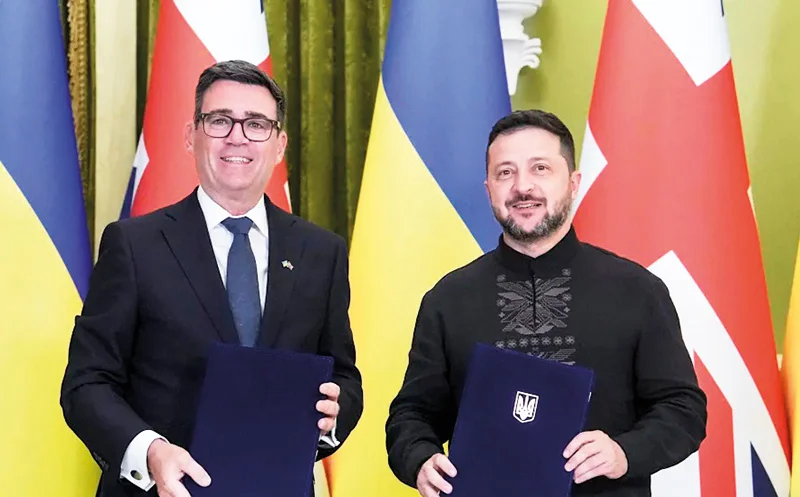
 The present offer by the UK to strengthen Ukraine’s defense capabilities in the missile technology field in particular comes as ‘a stitch in time’ and the initiative is also likely to be appreciated considerably by democratic opinion world wide for the possible morale-boosting effect it would have on Ukraine. Besides continuous arms support, the conviction that the world’s frontline democracies are behind it would prove a huge plus in Ukraine’s eyes in its grinding fightback against the Russian invasion.
While continued US support for Ukraine could not be considered ‘a given’ any more, British Prime Minister Andy Burnham’s words during a recent visit to Kyiv that the UK would stand by Ukraine ‘for as long as it takes’ is the kind of assurance that Ukraine needs at present. For, the conflict in Ukraine is essentially a war of liberation conducted by the latter against an invader and deeply at issue here is the upholding of International Law and its foundational concepts, such as national sovereignty and a nation’s right to political self-determination. The world of democracy is of the firm view that the latter ideals cannot be compromised, come what may.
The UK has its work cut out in this connection. It would find it difficult to convince the Trump administration that it should staunchly stand by Ukraine but it could campaign vigorously with the rest of the West and the EU fold in particular to unflaggingly support the embattled and over-run country.
Ukraine has shown an impressive adeptness in using drone technology in particular against her enemy and has even manufactured her own hardware in this respect but using the relevant blueprints handed over by the UK for the manufacture of more sophisticated cruise missiles, for instance, may prove financially difficult, going forward. It is left to be seen whether the UK and the rest of the West who are with Ukraine will continue to be with her, considering their own rising financial constraints.
The latter impediments could only multiply in the future. Oil, gas and energy prices are on the rise and the latter costs are glaringly reflected in kitchens and meal tables the world over. As we go along consumer discontent would steadily intensify and governments, East and West, would need to figure out with considerable rigour and foresight how such disaffection could be ably managed. Failing which, in most democratic societies, the chances are that publics would be out on the streets demanding that their grievances be redressed forthwith.
These rising concerns are reflected in a recent move by some EU governments to consider imposing what is described as ‘a windfall tax’ on the profits specified major oil companies operating within their shores have made in the wake of the US-Israel war on Iran. The rationale apparently is to use such tax earnings to cushion the rising cost of living of their publics and bolster the respective countries’ social expenditure.
In a recent letter to the president of the EU Council the EU governments referred to said, among other things, while drawing attention to the ‘discontent that is growing over the rising cost of living’: ‘A common approach’ is needed that ‘ensures those who profit from the crisis contribute their share to reducing the burden on the general population.’ Meanwhile, Oxfam with reference to the above development is on record as calling for a ‘permanent windfall tax of at least 50% on profits exceeding a 10% return on investment.’
Such are the rising economic pressures on the majority of Western governments. The question to be posed is how consistent they would be in their assistance to Ukraine if they decide consensually to stand by her. The soaring cost of living in the West compels the conclusion that there could be no guarantee that Western assistance to Ukraine, particularly in the defense and security fields, would be of a longstanding kind.
Of particular concern would be the fact that the weapons systems on offer from the UK to Ukraine could be increasingly costly to manufacture going forward. Besides they would need to be manufactured and put into action without delay.
However, these considerations should in no way deflect Ukraine’s supporters from the principled policy stance of defending her to the extent possible. Because at issue is the defense of International Law and the democratic system of government from their enemies; fascism and authoritarian rule.
While during World Wars 1 and 2 the US was with the major democracies of the West, this time around with regard to Ukraine, the US has chosen to be at cross-purposes with them. For instance, in relation to tariff matters and defense expenditure, in the NATO context, the US is pursuing a hard line which puts it at polar opposites with the West. Thus it is no longer possible to talk unreservedly of a ‘Western democratic alliance’. Put plainly, the cause of democratic development has been weakened.
A measure of relief for the supporters of Ukraine in the West could come by way of the upcoming mid-term polls in the US. If the Democratic Party fares well in them the pressure would be on the Trump administration to defer to opposition opinion at home, accommodate the best interests of Ukraine in its West European policy and perhaps even work towards a diplomatic solution to the Ukraine crisis in cooperation with Russia. Accordingly, the Democratic Party would need to put the Trump administration on the defensive, so to speak.
Until such time Ukraine’s Western supporters have no choice but to remain committed to it, ensure its steadfast defense against the invasion and work judiciously towards keeping the economic pressures at home in check.
Interestingly, at the present juncture in international politics the US could be said to be more weak than strong. For example, it has to some extent been militarily humbled by Iran; so much so it is resorting to economic means to keep Iran in check.
In keeping with this strategy, the US has launched ‘a new big wave of anti-Iran economic sanctions’ at the time of writing, aimed at cutting Iran away from all its major income sources. Some of these relate to digital assets, technology, gold, aviation and shipping. The hoped for result is the complete severance of Iran from the US dollar system.
However, while the UK and EU have no choice but to adhere to their policy of backing Ukraine, going forward they would need to dialogue more closely with the US and ensure that it cooperates with them on outstanding questions, such as Ukraine and the strengthening of democracy. The well being of the world is served when the latter aim is pursued.
OPA 39th Annual Conference calls for Sri Lanka to move Beyond Recovery towards Sustainable Transformation
The Orgnisation of Professional Associations (OPA) successfully concluded its 39th Annual Conference, held recently at the Cinnamon Grand Colombo, under the theme “Envisioning Sri Lanka: Beyond Recovery”.
Held under the patronage of Jayantha Gallehewa, President of the OPA, with the leadership and guidance of Tisara De Silva, President-Elect and Chairman of the 39th Annual Conference, the Conference brought together leading professionals, academics, business leaders and representatives of the public and private sectors to deliberate on Sri Lanka’s next phase of national development.
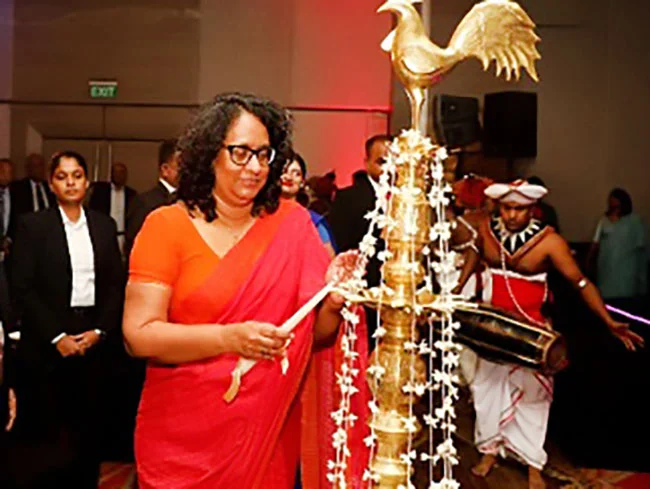
The Inaugural Session, on August 2026, was graced by Prime Minister Dr. Harini Amarasuriya, as the Chief Guest; Andrew Patrick, British High Commissioner to Sri Lanka, as the Guest of Honour; and Murtaza Jafferjee, Chairman of the Advocata Institute, Sri Lanka, as the Keynote Speaker.
In her address, Prime Minister Dr. Harini Amarasuriya emphasised that overcoming the economic crisis alone should not be Sri Lanka’s ultimate objective, stressing that recovery must serve as the foundation for a broader economic and institutional transformation necessary for sustainable national progress. Reflecting on the difficult period experienced by the country, the Prime Minister noted that Sri Lanka had faced significant economic, social and institutional challenges, which had weakened public confidence and created uncertainty about the country’s future.
She stressed that “recovery only provides the foundation” and that Sri Lanka can move forward sustainably only by using that foundation to bring about meaningful transformation.
The Prime Minister observed that the theme of the OPA’s 39th Annual Conference, “Envisioning Sri Lanka: Beyond Recovery,” aptly encapsulated these national aspirations. She emphasised that Sri Lanka’s objective should not merely be to return to the conditions that existed before the crisis, but to forge a stronger national foundation characterised by robust institutions, a resilient economy, high-quality public services and an enabling environment in which every citizen has the opportunity to thrive.
She further underscored that Sri Lanka’s future development cannot be secured through economic growth and physical development alone. She emphasised that the effective mobilisation of the country’s knowledge, skills and professional expertise, is equally essential to achieving sustainable and inclusive national progress
The Technical Sessions held on 12 August 2026 brought together 19 distinguished experts and professionals representing academia, industry, banking and finance, public health, technology, management and business leadership. Their diverse expertise provided a multidisciplinary platform to examine the critical challenges, emerging opportunities and strategic choices that will shape Sri Lanka’s next phase of development, with particular emphasis on economic transformation, institutional strengthening, digitalisation, private-sector growth, human capital and sustainable development.
The deliberations were structured around four principal sub-themes: “Resilient Recovery and Sustainable Economic Development”; “Future Readiness: Innovation & Transformation”; “Policy for Impact: Advancing Equity, Sustainable Living, and National Well-Being”; and “Leadership, Governance and National Responsibility.”
Across these thematic areas, the sessions explored the structural reforms, institutional requirements and policy choices necessary to move Sri Lanka beyond economic stabilisation towards a more productive, competitive, resilient and inclusive economy. The discussions brought together diverse professional perspectives, enabling participants to examine national priorities through economic, technological, industrial, financial, social and governance lenses.
Particular emphasis was placed on the need to move beyond the diagnosis of problems towards pragmatic, evidence-based and implementable solutions. The deliberations recognised that sustainable national progress requires not only sound policies, but also effective institutions, professional competence, innovation, responsible leadership and the capacity to translate policy into tangible outcomes.
The sessions further underscored the importance of collaboration across sectors, recognising that Sri Lanka’s complex development challenges cannot be addressed in isolation. Stronger engagement among Government, private sector, professional associations, academia and civil society was identified as essential to fostering a coherent national response and ensuring that professional knowledge and expertise are effectively translated into policy and action.
Collectively, the Technical Sessions provided a substantive platform for knowledge exchange, critical reflection and forward-looking dialogue, reinforcing the OPA’s commitment to bringing the country’s professional expertise to bear on the task of building a resilient, innovative, equitable and prosperous Sri Lanka.
The OPA expressed its sincere appreciation to Prime Minister Dr. Harini Amarasuriya, the Chief Guest; Andrew Patrick, British High Commissioner to Sri Lanka and Guest of Honour; and Murtaza Jafferjee, Chairman of the Advocata Institute, Sri Lanka and Keynote Speaker, for their distinguished contributions to the Conference.
Much of what the 39th Annual Conference achieved would not have been possible without the leadership, commitment and generous contributions of Jayantha Gallehewa, President of the OPA; Tisara De Silva, President-Elect and Chairman of the 39th Annual Conference; Eng. Ravi Rupasinghe, General Secretary; Dharshana Wijemanne, Treasurer; Bhanu Wijayaratne, Convener & the Chairman of the Session Planning Committee of the 39th Annual Conference Committee, Past Presidents and Office Bearers; Presidents and representatives of Member Associations; members of the Executive Councils and General Forum; and the distinguished Session Chairmen, Resource Persons and professionals who shared their time, expertise and insights in pursuit of the Conference’s shared vision. The OPA remains immensely grateful to all those whose collective contributions enriched the 39th Annual Conference and strengthened its role as a meaningful platform for professional exchange, informed dialogue and national reflection.
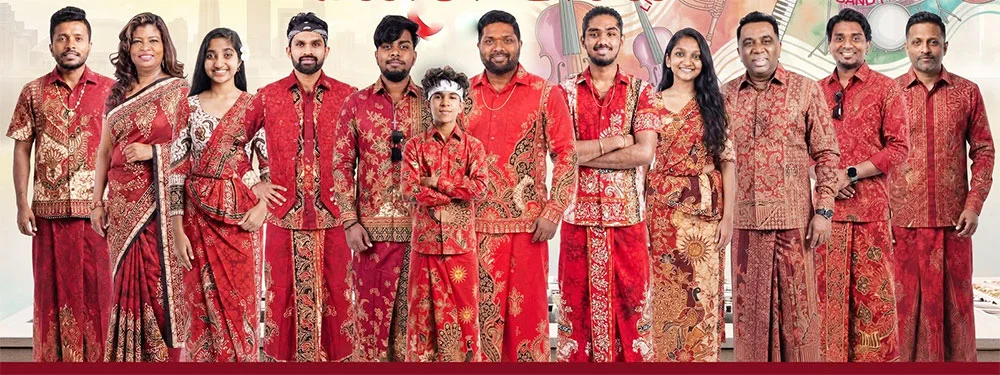
 For Sri Lankans living 14,000 kilometres from home, the sound of home has never felt closer — and that’s thanks to one man and his band.
Since stepping into the spotlight, Gamini Hemalal and the Ceymphony Band have turned into the heartbeat of the Sri Lankan community in Toronto.
Their mission is simple: bring the music, bring the memories, bring the people together. And it’s working.
What turned out to be the talk-of-the-town was their intimate musical evening with Sri Lanka’s legendary crooner Sohan Weerasinghe.

Sohan Weerasinghe: Had
everyone on their feet at the
Angus Glen Golf Club, in
Toronto, Canada
It was a ‘full house’ long before the big date. Tickets vanished within days — demand was that overwhelming.
According to those who were there, it was a truly amazing evening. The hall was packed, the energy electric. Sohan didn’t just sing — he owned the stage.
With his velvet vocals, his charm, and that signature style, he had everyone on their feet. The ladies, especially, couldn’t get enough. No wonder they call him “The Ladies’ Man!”
One attendee summed it up perfectly:
“We had so much fun. It is truly a blessing to have our kids around us, enjoying these beautiful moments together. Thank you, Gamini Hemalal, for such a wonderful evening, with an amazing crowd and an incredible atmosphere. Your hard work and dedication truly made it a special night.
“We also need to say a big thank you to the Ceymphony Band for delivering such an outstanding performance. You all were absolutely amazing! Our entire family had a fantastic time, and we truly enjoyed every moment.

Ceymphony Band: Extremely popular in the scene in Toronto
“Wishing you all continued success. Keep up the amazing work, we can’t wait for the next.”
And the next is already on the cards: ‘Halloween Pissu Baila Party 2026,’ on Friday, 30th October, at the famous Angus Glen Golf Club.
Gamini promises a crazy night of baila, music, dancing and Halloween vibes with the Ceymphony Band. Action runs from 8:00 PM to 12:00 midnight, with plenty of prizes to be won.

Gamini Hemalal: Amazing work for the Sri Lankan community,
in Toronto, Canada
Gamini is also putting together a special event, connected with the 2027 Avurudu celebrations — ‘Avurudu Musical Show 2027,’ a uniquely styled musical Avurudu celebration … Ceymphony Band style.
It’s scheduled to be held on Saturday, 10th April, 2027, also at the Angus Glen Golf Club.
Through music, Gamini Hemalal and Ceymphony are doing what diaspora bands do best — they’re shrinking the distance between two worlds.
One baila beat at a time, one full house at a time, they’re making sure that even in Canada, Sri Lankans feel like home.
Yes, there is plenty of action, indeed, for the Sri Lankan community in Toronto, Canada.

More than 360 dead, 1,400 missing in Nepal and Tibet after Himalayan floods

Bosnian Serb convicted war criminal Ratko Mladic dies

Prince of Wales to celebrate 150th anniversary with six-a-side cricket

Unyielding Dinusha, spirited tail hold off India to save Colombo Test

US golfer Gogel gets six-month ban for betting

UAE’s Asif Khan handed 15-month ban for using a banned substance

‘Dates have the highest sugar content to fight Coronavirus’

Sunday Island 27 December – Headlines

#SundayIsland 17th December – Headlines

Sunday Island – 28th March

Sunday Island Headlines – 21 March

Sunday Island – 21st February – Headlines
-
 News7 days ago
Country’s first woman Surveyor General appointed
-
 Business6 days ago
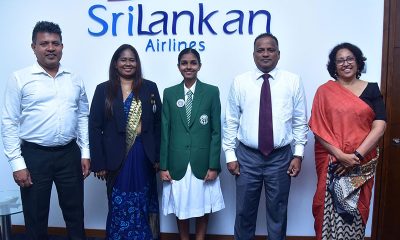
SriLankan Airlines makes ShakthiSAT Mission possible for talented Sri Lankan student
-
 Features7 days ago
Medical education in Sri Lanka: Then and now
-
 Latest News6 days ago
Imran Khan moved to private hospital amid deteriorating health
-
 Latest News7 days ago
Government has declared 21, 22 and 23 August 2026 as national days of mourning
-
 Features5 days ago
My secondary schooling after Royal Primary
-
 Features5 days ago
From the First to the 22nd: A short history of Amendment Politics and Reform Frustrations
-
 News7 days ago
22A: Opp. demands all available SC judges hear petitions