
News
Colombo Law Society objects to judges’ retirement age move


…Urges President not to undermine public confidence in independence of judiciary
The Colombo Law Society has urged President Anura Kumara Dissanayake not to proceed with any constitutional amendment to extend the retirement age of Supreme Court and Court of Appeal judges, warning that such a move could undermine public confidence in the independence of the judiciary.
In a letter dated July 2, 2026, the Society said its Executive Committee had unanimously resolved to convey its concerns following reports of a proposal to increase the retirement age of judges of the superior courts.
The Society said any amendment affecting the tenure of sitting judges should be approached with caution, adding that public confidence in the independence of the judiciary must be safeguarded.
Full text of the letter: The Executive Committee of the Colombo Law Society, at its duly convened meeting held on 25 June 2026, deliberated extensively on the reported proposal to increase the retirement age of Judges of the Court of Appeal and the Supreme Court.
Having carefully considered the matter, the Executive Committee unanimously resolved to convey its concerns to Your Excellency and to express its support for the position taken by the Bar Association of Sri Lanka in its letter addressed to Your Excellency, dated 25 May, 2026.
The Colombo Law Society recognizes and appreciates the invaluable contribution made by members of the higher judiciary to the administration of justice in Sri Lanka. However, we respectfully take the view that any alteration to the constitutionally established retirement age of Superior Court Judges must be approached with the utmost caution and only after broad consultation with all relevant stakeholders.
The existing retirement ages of Judges of the Court of Appeal and the Supreme Court have remained unchanged since the promulgation of the 1978 Constitution. Any departure from this long-standing constitutional framework, particularly where it affects serving judges, may give rise to public concern and perceptions that could undermine confidence in the independence and impartiality of the judiciary.
The independence of the judiciary is one of the cornerstones of the Rule of Law and democratic governance. Equally important is the public perception of such independence. The judiciary must not only be independent in fact but must also be seen to be independent and free from any appearance of influence or accommodation.
The Colombo Law Society further notes that the number of Judges of both the Court of Appeal and the Supreme Court was increased through constitutional reform in 2020. In those circumstances, questions naturally arise as to whether there exists a compelling institutional necessity to alter the retirement age of Superior Court Judges at this juncture.
We respectfully submit that constitutional amendments relating to the judiciary should be undertaken only after careful consideration of their long-term impact on judicial independence, public confidence, and the constitutional framework of the Republic.
Accordingly, the Colombo Law Society respectfully urges Your Excellency to give the fullest consideration to the concerns expressed by the legal profession and to refrain from proceeding with any constitutional amendment seeking to extend the retirement age of Judges of the Court of Appeal and the Supreme Court.
We remain confident that Your Excellency will continue to uphold and safeguard the independence, integrity, dignity, and public confidence in the judiciary, which remain essential to the preservation of the Rule of Law and democratic governance in Sri Lanka.




The Sri Lanka Press Institute (SLPI) and several leading media organisations have expressed strong opposition to the proposed Chartered Institute of Media Professionals of Sri Lanka (CIMP) Bill, urging the Government to withdraw the legislation and engage in consultations with stakeholders.
In a joint statement, the SLPI, together with its constituent organisations—the Newspaper Society of Sri Lanka (NSSL), the Editors’ Guild of Sri Lanka (TEGOSL), the Free Media Movement (FMM) and the Sri Lanka Working Journalists Association (SLWJA)—as well as affiliated bodies including the Muslim Media Forum (MMF), the Tamil Media Alliance (TMA), the Federation of Media Employees Trade Union (FMETU) and the South Asia Free Media Association (SAFMA) – Sri Lanka Chapter, said their primary objection was the government-led nature of the proposed institute.
Full text of the statement: The Sri Lanka Press Institute (SLPI), and its constituent partners, the Newspaper Society of Sri Lanka (NSSL), The Editors’ Guild of Sri Lanka (TEGOSL), the Free Media Movement (FMM), the Sri Lanka Working Journalists Association (SLWJA) together with its affiliated organizations, the Muslim Media Forum (MMF), the Tamil Media Alliance (TMA), The Federation of Media Employees Trade Union (FMETU), the South Asia Free Media Association’s SL Chapter (SAFMA) object the proposed Chartered Institute of Media Professionals of Sri Lanka (CIMP) Bill.
Our primary objection stems from the government-led nature of this initiative. History shows that robust professional bodies, such as the Institute of Engineers and the Sri Lanka Institute of Architects, were founded and drafted by the professionals themselves before being incorporated by Parliament. In contrast, the CIMP is a state-driven project ordered to be published by the Minister of Health and Mass Media despite objections raised by media’s professional bodies. We view this as an attempt to impose a state-managed regulatory framework upon a profession that must remain independent of government interference to function effectively.
The SLPI, its constituents and affiliated organizations maintain that professional media standards must be self-regulated in principle and led by the media community, not mandated by law under ministerial oversight. The SLPI has presented an alternative mechanism, viz., the Sri Lanka Media Commission (SLMC), based on co-regulatory and self-regulatory principles, which improves professionalism. In addition, the Sri Lanka College of Journalism, which is recognised by the media industry for training journalists for more than two decades, could also be an alternative way of building relevant journalism standards with government financial support if it intends to genuinely promote media professionalism. We call upon the government to withdraw this Bill and engage in a genuine dialogue with stakeholders that respects the autonomy and freedom of the media in a democracy.

The Fort Magistrate’s Court yesterday issued a warrant for the arrest of Jaffna District MP Ramanathan Archchuna after he failed to appear before court in connection with a pending case.
Court officials said the MP and his bail sureties were absent when the matter was taken up, prompting the Magistrate to issue the warrant.
The case relates to an alleged incident in which Archchuna is accused of obstructing the duties of Fort Police officers while they were performing their duties.
The matter was listed before the Colombo Magistrate’s Court yesterday as well, when the MP failed to appear before court and his bail guarantor was also absent. Following this, the Magistrate ordered that a warrant be issued against him.
The case is to proceed with further legal action against the MP.

Sri Lanka’s dengue outbreak has continued to worsen, with the number of infections reported this year surpassing 80,000, according to official surveillance data.
The country recorded 80,114 dengue cases as of midnight on July 23, while health authorities reported 59 dengue-related deaths, resulting in a case fatality rate of 0.07%.
The National Dengue Control Unit said that by Week 29, a total of 175 Medical Officer of Health (MOH) areas had been identified as high-risk zones, with an average of 2,391 new cases being reported daily.
July has emerged as the worst month of the year so far, with 24,739 cases recorded, while June also saw a significant surge with 21,534 infections.
The Western Province continues to account for more than half of the country’s dengue burden, with Gampaha recording 16,950 cases and Colombo 16,091 cases. Together, the two districts account for more than 40% of total infections reported nationwide.
Other districts recording high numbers include Matara with 5,534 cases, Kandy with 4,827, Kalutara with 4,545, and Ratnapura with 4,428 cases. The Colombo Municipal Council area alone has reported over 3,200 dengue infections.
At provincial level, the Southern Province has recorded 12,143 cases, followed by the Central Province with 6,686 and Sabaragamuwa with 6,607. Meanwhile, the North Western, Eastern, Uva, North Central and Northern provinces have reported 3,844, 3,148, 2,154, 1,264 and 1,173 cases respectively.
Health authorities have urged residents, particularly those living in high-risk areas, to intensify mosquito-control measures and seek immediate medical attention when dengue symptoms appear, warning that the situation could deteriorate further without sustained preventive action.

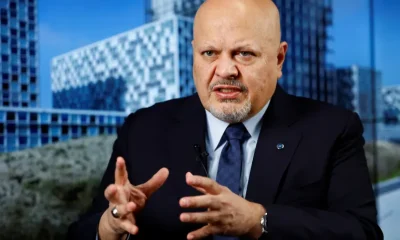
ICC prosecutor Karim Khan removed over ‘political’ sex abuse claims

A few showers will occur in the Western, Sabaragamuwa and North-western provinces and in Galle and Matara districts

Govt. urged to withdraw Media Professionals Bill

Fort Magistrate orders arrest of MP Archchuna

Dengue rages with average of 2,391 new cases detected daily

Lanka produces only 43% of daily milk requirement, says Deputy Minister

‘Dates have the highest sugar content to fight Coronavirus’

Sunday Island 27 December – Headlines

#SundayIsland 17th December – Headlines

Sunday Island – 28th March

Sunday Island Headlines – 21 March

Sunday Island – 21st February – Headlines
-

 Features6 days ago
Two memorable excerpts from a former SLAF commander’s memoir
-
 Business6 days ago
‘Giving up was never an option’: The fisherman who fought back after losing millions in SL
-

 Life style6 days ago
Taste of the Swiss Alps comes to Colombo
-
 Features6 days ago
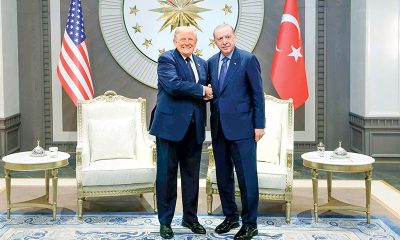
Erdoğan’s New Republic
-
 Midweek Review3 days ago
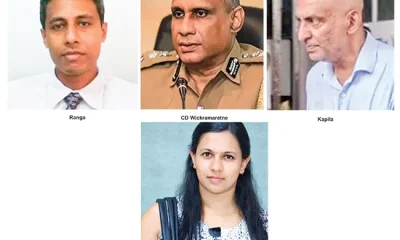
Three high-profile alleged suicides shaping key investigations
-

 News3 days ago
Customs asked to resume probe or face legal action
-
 Editorial4 days ago
Welcome bid to tackle rolling death traps
-
 Foreign News7 days ago
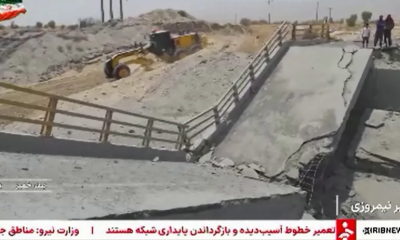
Iran accuses US of striking critical infrastructure as war intensifies