
News
Health experts push dengue vaccine rollout

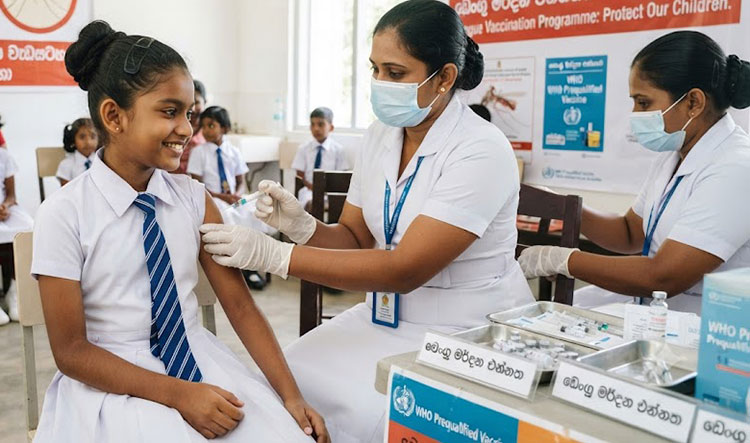
Sri Lanka’s escalating dengue outbreak, with nearly 60,000 reported cases and 32 deaths so far this year, has intensified calls for the introduction of a dengue vaccination programme, as hospitals struggle with more than 1,000 daily admissions and outbreak control teams are deployed to eliminate mosquito breeding sites, Health Ministry sources said.
Ministry sources said that the current surge, driven by heavy monsoon rains and flooding linked to Cyclone Ditwah, has pushed case numbers close to levels seen in 2017, with infections nearly doubling between April and mid-June.
While vector control measures remain the country’s primary response, health experts point to a missing component in the national strategy: vaccination.
Globally, a tetravalent dengue vaccine designed to protect against all four serotypes has already been introduced in 41 countries, with 18.6 million doses administered across endemic regions including Indonesia, Thailand, Malaysia, Brazil and Colombia.
The vaccine was evaluated in the large-scale Phase 3 TIDES clinical trial involving more than 20,000 children and adolescents aged 4 to 16 across eight dengue-endemic countries, including Sri Lanka, with study sites in Colombo and Gampaha districts. Interim and final analyses published in peer-reviewed journals, including The Lancet Global Health, have reported sustained efficacy over several years of follow-up.
Since receiving its first approval in Indonesia in 2022, the vaccine has been prequalified by the World Health Organization (WHO) and is recommended for use in high-transmission settings for children aged 6 to 16 years.
Health experts argue that Sri Lanka already possesses the infrastructure needed for phased rollout, particularly through its school-based health system, suggesting that priority districts such as Colombo, Gampaha, Kalutara and Kandy could be targeted first.
They note that reducing severe dengue cases would ease pressure on hospitals during peak monsoon seasons, improve workforce productivity, and reduce disruption to education in high-incidence areas.
Concerns previously raised over vaccine safety in dengue-naïve populations are said to have been addressed in later-stage clinical data, which demonstrate protection across both previously exposed and unexposed individuals, reducing the need for pre-screening in large-scale public programmes.
Sri Lanka’s tourism sector, currently experiencing a strong rebound, could also benefit from the availability of a vaccine, with industry stakeholders noting that dengue risk perception continues to influence traveller confidence.
While the WHO maintains that vaccination should complement—not replace—mosquito control efforts, public health observers say Sri Lanka’s goal of eliminating dengue mortality by 2030 may require additional preventive tools beyond current strategies.
With the science established and implementation models already in place globally, the decision now rests on whether Sri Lanka will integrate vaccination into its national dengue response framework.



India are through to the semi-finals of the Asian Games men’s tournament, with persistent rain and a damp outfield in Nisshin forcing the abandonment of their quarter-final against Afghanistan 16 minutes before the scheduled toss. India’s higher seeding – determined by the ICC T20I team rankings – ensured they went through at Afghanistan’s expense.
India will next face the winners of Tuesday’s quarter-final between Nepal and Sri Lanka in Thursday’s second semi-final. As one of the four seeded teams – India, Pakistan and Bangladesh are the others – to qualify directly for the quarter-finals, Sri Lanka will progress to the semi-finals if their match against Nepal is washed out too.
By Shamindra Ferdinando
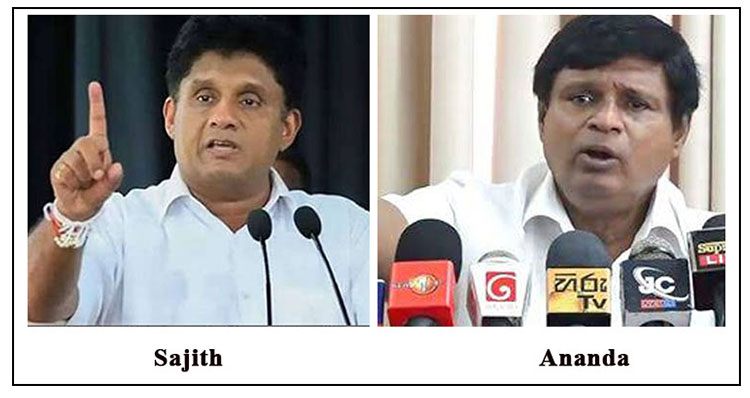
Alleging that the Samagi Jana Balawegaya (SJB) had betrayed the joint protest campaign, planned on 24 Sept., at Polduwa junction, against the enactment of the 22nd Amendment without securing public approval at a referendum, SJB trade union leader Ananda Palitha emphasised that SJB and Opposition Leader Sajith Premadasa should take remedial measures to restore the alliance against the NPP government.
Responding to The Island queries, the trade union activist said that he spoke on behalf of the vast majority of the SJBers who felt betrayed by the sudden declaration made by Colombo District SJB lawmaker S.M. Marikkar that they didn’t expect Opposition political parties’ participation, except that of the UNP.
Pointing out that at the behest of Premadasa, MP Marikkar belittled those who had pledged on 17 Sept. to join the SJB-led protest, Palitha emphasised the Opposition leader should be held responsible for restoring the shattered alliance. Palitha warned that the NPP, which was rapidly moving on a dictatorial path, would be the beneficiary of such treacherous actions.
When The Island raised the allegations pertaining to the 24 Sept. protest, Colombo District MP Premadasa said there was no basis for such claims. MP Premadasa called the accusations directed at him ‘rubbish.’
Palitha said that the pathetic failure on the part of the Opposition to genuinely challenge the authoritarian NPP should be examined, taking into consideration the government following an agenda almost 100 percent against the election pledges. Except the much touted anti-corruption campaign, the NPP reneged on all its election promises.
Recalling massive rice imports after having promised to stop the same in the run up to the national elections in 2024, Palitha alleged that the utterly corrupt NPP created an artificial shortage to enable import of large stocks of salt for their benefit. Massive earnings were made through commissions, Palitha said, urging the SJB to reiterate its commitment to the 17 Sept. pledge. According to him, the SJB’s irresponsible action sabotaged the joint Opposition agreement reached on the eve of President Anura Kumara Dissanayake completing two years in Office.
Palitha said that the disruption of a genuinely joint protest, at the last moment, caused irreparable harm to the Opposition. The unexpected eleventh hour declaration made by the SJB upset their efforts to organise a large scale two-day protest on 24 and 25 Sept. Palitha emphasised the responsibility on the part of the SJB leadership and its top management to spearhead an all-out campaign against the government. The former petroleum sector employee said that a strong and transparent campaign could undermine the NPP within as a section of its parliamentary group was deeply dismayed by the current policies and strategies.
Palitha, in his capacity as the trade union leader, invited the Bar Association of Sri Lanka (BASL) to join the trade unions’ protest on 25 Sept. to intensify pressure on the government. BASL President Rajeev Amarasuriya told The Island that they didn’t accept that invitation.
Former SLPP Kalutara District MP Sanjeewa Edirimanna said that the SJB was far more keen to organise a large-scale protest to counter the SLPP’s highly successful Anuradhapura rally held on 12 September than a genuine joint protest against the 22nd Amendment or the government. Edirimanna said that they realised that the SJB would probably join a joint protest campaign only after organising a gathering to counter the SLPP. According to him, the SJB hadn’t been honestly interested in a joint protest campaign. Instead, it sought to resist possible challenges from rival political parties, he said.
An aide to UNP leader and former President Ranil Wickremesinghe said that though the SJB announced they were welcome to join the 24 Sept. protest, the party never received an invitation. The official said that some UNPers joined the protest on their own though the party neither directed supporters to join or boycott the event. As the Janathawadi Joint Opposition decided against participating for want of formal invitations, the UNP, as part of that group, decided not to join the 24 Sept. protest.
By Norman Palihawadane
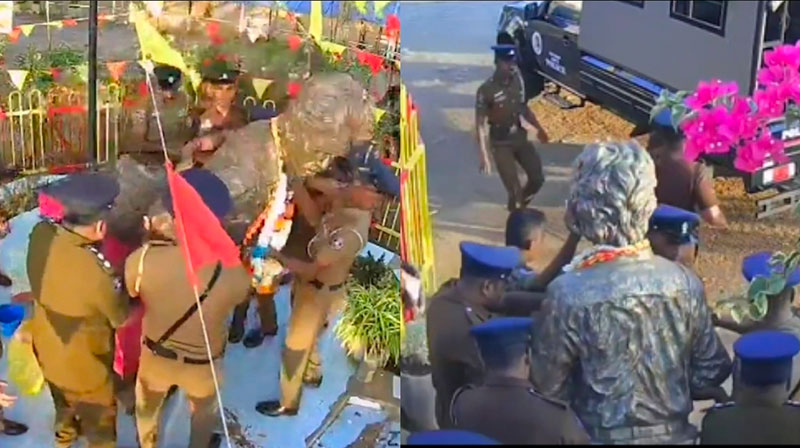
Police have removed a memorial statue of former LTTE member Rasaiah Parthipan, alias Thileepan, from the Thileepan Memorial Square in Nallur, Jaffna, following the conclusion of commemorative events, marking the 39th anniversary of his death.
The statue was removed in the early hours of yesterday (27), a day after the final day of the commemoration was held at the site.
CCTV footage from the memorial reportedly shows police officers removing the statue and taking it away in a vehicle.
Tamil National People’s Front (TNPF) Secretary and MP Selvarasa Gajendran alleged that more than 15 police officers arrived at the site, without prior notice, entered the premises wearing footwear, and forcibly removed the statue.
The reason for the removal and the legal basis for the police action had not been officially announced as of yesterday.
Thileepan, a former political wing leader of the LTTE, died in September 1987, after undertaking a hunger strike in Nallur, while making several demands of the Indian Government.
The memorial events, marking the 39th anniversary of his death, were held at the site on Saturday (26). A statue had been erected at the location in connection with the commemoration.

Mexico’s Pacific coast braces for Hurricane Polo

Washout against Afghanistan sends India into semi-finals

‘Still a lockdown’: Deadly floods hit Nepal tourism as peak season begins

Tharanga wins highly anticipated Asian Games gold

Tharanga on cusp of Asian Games Gold

Rain threat looms over lopsided India vs Afghanistan quarter-final

‘Dates have the highest sugar content to fight Coronavirus’

Sunday Island 27 December – Headlines

#SundayIsland 17th December – Headlines

Sunday Island – 28th March

Sunday Island Headlines – 21 March

Sunday Island – 21st February – Headlines
-
 News6 days ago
Mastermind Naufer Moulavi among 15 found guilty
-
 Midweek Review6 days ago
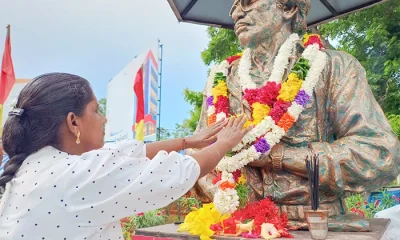
Thileepan’s fast unto death: An authentic narrative that many missed
-
 News7 days ago
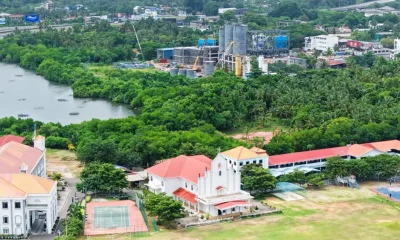
Protest against setting up of cement factory in highly populated area near BIA
-

 Editorial7 days ago
Trouble beginning in earnest
-

 Latest News5 days ago
Showers above 100 mm are likely at some places in the Western, Sabaragamuwa, Central and North-western provinces and in Galle and Matara Districts
-
Editorial6 days ago
Big Bad Bills
-
 News7 days ago
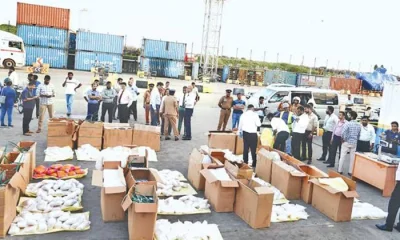
Police may seek clarification from US
-
 News7 days ago
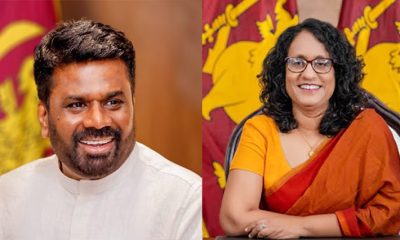
Govt. confident of 2/3 majority despite NPP split speculation