
News
‘Colombo based Indian HC official issued last warning before 2019 Easter attacks


By Shamindra Ferdinando
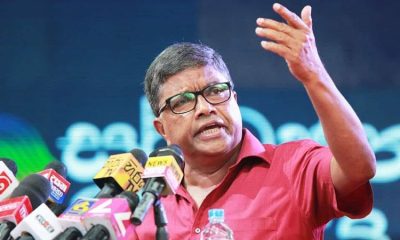
The founding Director General of the Institute of National Security Studies Sri Lanka (INSSSL) Asanga Abeyagoonasekera says the then Chief of State Intelligence Service (SIS) Senior DIG Nilantha Jayawardana had received the final warning about the 2019 Easter Sunday attacks from an Indian with diplomatic status based at the Indian High Commission in Colombo.
Abeygoonasekera, in an exclusive interview with Chamuditha Samarwickrema recently on ‘Truth with Chamuditha’ quoted the Indian as having told him intelligence on the impending blasts would have been shared if he knew Abeygoonasekera was planning to visit Shangri La.
Abeygoonasekera was about to press the button of a lift in Shangri La when the first of the two blasts ripped through the hotel. One time Executive Director of the Lakshman Kadirgamar Institute of International Relations and Strategic Studies (LKIIRSS) had been with his wife and two children.
Shangri La blasts claimed the lives of 35 persons and wounded 34.
Abeygoonasekera alleged that the Presidential Commission of Inquiry (P CoI) that inquired into the Easter attacks prevented him from naming the Indian.
Claiming that he knew the diplomat for some time, Abeygoonasekera questioned how the Indian intelligence had prior information of the date of the operation unless someone within Zahran Hashim’s outfit worked for them.
Zahran Hashim and Ilham Ahmed carried out attacks in Shangrila.
Abeygoonasekera said that when he asked for an explanation as to how India got to know about the date of the suicide attacks, the Indian HC representative attributed their success to examination of accidental explosion in Sainthamaruthu in the East. Abeygoonasekera said that Indian claimed the accidental blast that had wrecked a motorcycle led them to get specific information.
Abeygoonasekera agreed with interviewer Samarawickrema the diplomat’s claim was not acceptable.
However, Abeygoonasekera appeared to have mistakenly referred to a blast at Sainthamaruthu in the run up to the April 21 suicide attacks whereas the actual test blast took place at Kattankudy on April 16.
Abeygoonasekera now functions as the Senior Advisor to Opposition Leader Sajith Premadasa.
The young academic alleged that in the wake of 2019 Easter attacks the yahapalana government sought to move him out of INSSSL. Asserting that an influential section of the previous administration wanted him out of that position in the wake of him raising the failure on the part of the then President Maithripala Sirisena to act on a missive sent by him as regards heightened threat posed by extremists.
Declaring that he raised the issue at the National Security Council following the Easter Sunday blasts, Abeygoonasekera admitted that he was not sure whether the President actually received his report exclusively prepared for him though it was submitted through the Secretary, Ministry of Defence.
Pressed for a definite answer, Abeygoonasekera said that when he inquired from President Sirisena, the latter claimed he never received it.
Abeygoonasekera claimed that however, Senior DIG Jayawardena had told him how President Sirisena discarded the report expressing concerns about causing an unnecessary issue.
Abeygoonasekera, the only son of assassinated SLMP leader Ossie Abeygoonasekera recalled how President Sirisena created INSSSL by a cabinet paper. The SLMP leader was killed in an LTTE suicide attack on UNP presidential candidate Gamini Dissanayake’s political platform at Thotalanga in Oct 1994.
The academic contested Gampaha district at the 2015 general election on the UNP ticket.
Asanga Abeygoonasekera questioned whether the powers that be felt uncomfortable as a result of him disputing the then administration’s response to the extremist threat. According to him, in his capacity as the DG, INSSSL, he authored a report warning the President of the impending threat soon after the police raided extremists’ hideout at Wanathawilluwa in January 2019.
Responding to interviewer, Abeygoonasekera said that after the 2019 presidential election he was told of a diplomatic posting at the Sri Lankan mission in Germany. On an assurance received from the cabinet by way of a letter, Abeygoonasekera quit the INSSSL to pave the way for the incumbent Foreign Secretary Admiral Jayanath Colombage to take over that post. However, the diplomatic posting hadn’t materialized as promised, Abeygoonasekera said, adding that though he brought the development to the notice of Prime Minister Mahinda Rajapaksa the government didn’t take remedial measures.
After the change of government in 2015 the then Foreign Minister Mangala Samaraweera had removed Abeygoonasekera from LKIIRSS though the same government created INSSSL later to accommodate him.
Commenting on former Attorney General Dappula de Livera, PC’s declaration soon before his retirement in May this year that the Easter Sunday carnage was a conspiracy, Abeygoonasekera explained how the perpetrators would have chosen Sri Lanka to carry out the operation. Abeygoonasekera made reference to high level Indian delegation visiting Colombo just ahead of the Easter carnage.
The Catholic Church has repeatedly asked the government to inquire into the former AG’s claim though he was yet to be questioned.
According to the Parliamentary Select Committee that inquired into the suicide blasts that claimed the lives of 277, including bombers and caused injuries to 406 persons.
Abeygoonasekera strongly questioned the conduct of the then SIS Chief Senior DIG Jayawardena. In spite of President Sirisena’s specific instructions, Jayawardena conveniently refrained from making available certain letters written by Ven. Galagodaatte Gnanasara thera regarding extremist activities. The SIS Chief withheld those letters claiming they had previously examined the matters discussed therein, Abeygoonasekera said.
Abeygoonasekera declined to blame any particular country though he expressed the belief Indian, US and China factors should be examined thoroughly. The academic lamented the failure on the part of successive administrations to probe how the National Thowheed Jamaat (NTJ) received the required funding. Asked whether the perpetrators could be identified, Abeygoonasekera quoted a foreign expert as having told him perhaps in about 20 to 30 years.
Referring to a discussion he had with Archbishop of Colombo Malcolm Cardinal Ranjith, Abeygoonasekera said that the Church suspected a certain country, though he didn’t want to disclose the Archbishop’s suspicions. Abeygoonaekera said that all agreed that there was an external power behind the Easter Sunday carnage.
Declaring that President Sirisena, who had held the defence portfolio at the time of the deadly carnage didn’t benefit at all, Abeygoonasekera blamed the ‘Deep State’ for the heinous operation. When repeatedly asked by the interviewer, Abeygoonasekera admitted that his reference to experts in Singapore receiving the attention of the P CoI was about Prof. Rohan Gunaratne now with the INSSSL.
Abeygoonasekera said that the conduct of the then SIS Chief was very suspicious as he in spite of being the recipient of specific intelligence didn’t take tangible measures to thwart the attacks.


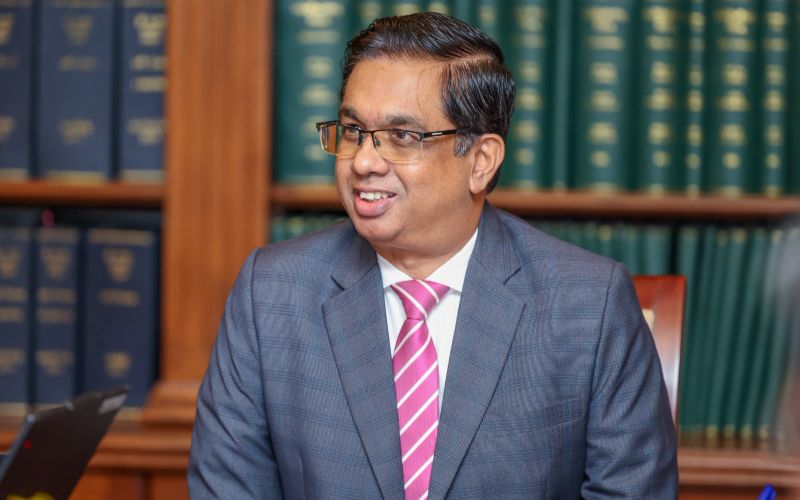
A progress review meeting on reforms and modernisation initiatives at Sri Lanka’s key state revenue-collecting institutions was held on Thursday (15) at the Presidential Secretariat, chaired by Secretary to the President Dr Nandika Sanath Kumanayake, with the participation of representatives of the International Monetary Fund (IMF) and officials of the Revenue Administration, Reform and Modernisation Bureau (RARMB) of the Presidential Secretariat.
At the meeting, the IMF representatives commended the revenue collection efficiency of the Department of Inland Revenue, Sri Lanka Customs and the Department of Excise, the country’s three leading state revenue-collecting institutions. Extensive discussions were also held on the progress of the reform and modernisation programmes being implemented at these institutions.
Secretary to the President Dr Nandika Sanath Kumanayake outlined the progress achieved by the three institutions to date and the reforms planned for implementation in the future.
The IMF representatives also highlighted the importance of strengthening risk management, developing human resources and ensuring the efficient operation of computer systems at the respective institutions.
Senior Additional Secretary to the President Seevali Arukgoda also attended the meeting. The IMF was represented by Cindy Negus, Senior Economist in Revenue Administration for the Asia and Pacific, Europe, Middle East and Central Asia regions; Alison Lister, Revenue Administration Adviser; and Gregory Toppin, Resident Revenue Adviser in Sri Lanka. A group of senior officials from the Revenue Administration, Reform and Modernisation Bureau of the Presidential Secretariat also participated.
(President’s Media Division)

By Anuradha Hiripitiyage
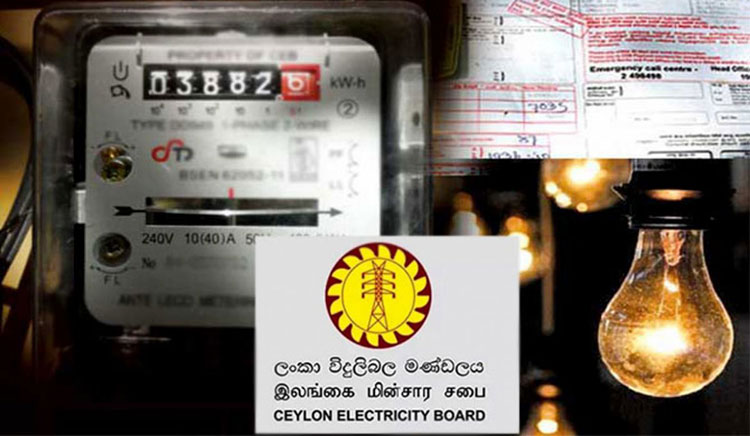
Electricity tariffs should be reduced by between 3 and 5 percent instead of being increased by 2.88 percent in the fourth quarter, as proposed by the National System Operator (NSO), Electricity Consumers’ Association Secretary Sanjeewa Dhammika said.
Addressing a media briefing in Maradagahamula, Divulapitiya, Gampaha, yesterday (16), Dhammika said a proper assessment of electricity generation costs, including the contribution of hydropower, could justify a reduction in tariffs.
He said the NSO had sought approval from the Public Utilities Commission of Sri Lanka (PUCSL) for a 2.88 percent tariff increase, which was expected to generate an additional Rs. 4,438 million.
However, the Commission had indicated that an increase of only 1.46 percent was warranted, amounting to Rs. 2,245 million, he said, adding that even this increase was unnecessary.
Dhammika alleged that the proposed revision sought to pass on to electricity consumers the financial burden arising from the non-arrival of five coal shipments and failed tenders.
“The Government had said that the burden of coal-related losses would not be passed on to the public. It is therefore unjust to make consumers bear these costs,” he said.
He pointed out that the PUCSL had forecast that hydropower would account for 32.34 percent of total electricity generation in the coming quarter, while the cost of such generation would represent only 3.45 percent of the overall cost of electricity production.
Consumers should benefit from the lower cost of hydropower generation rather than bear the burden of more expensive thermal power generation, he said.
Dhammika also questioned the inclusion of Rs. 669 million in capacity charges that had not been approved by the PUCSL, as well as a further Rs. 1,069 million to repay loans relating to incomplete projects.
Including such charges in the proposed tariff revision was unjustifiable, he said.
The PUCSL has given the public until October 30 to submit their views on the proposed tariff revision.
Dhammika said the possibility of increased hydropower generation in the coming weeks, as reservoir levels rise, should also be taken into account when determining electricity tariffs.
He maintained that tariffs could be reduced by 3 to 5 percent if hydropower generation was properly assessed and coal-related losses and unapproved charges were excluded from the calculations.
He further claimed that electricity tariffs could be reduced by as much as 10 percent through the promotion of renewable energy and the effective use of solar power and battery storage systems.
The Electricity Consumers’ Association urged the Government to withdraw the proposed tariff increase, insisting that consumers should not be made to bear costs arising from coal supply problems and other disputed charges.

By S.K. Samaranayake
Most Ven. Warakagoda Sri Gnanaratana Mahanayake Thera of the Asgiri Chapter has called for the immediate release of Ven. Galagodaaththe Gnanasara Thera, who is currently serving a prison sentence, following a court ruling.
The Asgiri Mahanayake made the appeal when a delegation of senior prison officials, including Assistant Commissioner of Prisons and Director of Operations Senaka Pallegedara, called on him on the 16th.
During the meeting, the prelate warned that the continued incarceration of Ven. Gnanasara Thera could lead to a volatile situation and cause public agitation.
Responding to the appeal, the prison officials informed the Mahanayake Thera that the authority to order the release of Ven. Gnanasara Thera did not rest with the Prisons Department but with the President.
Other senior prison officials, including Rajeev Srimal Silva, Sampath Warnakulasooriya and Mangala Welivita, were also present at the meeting.

Mumbai Indians and head coach Mahela Jayawardene part ways

Review of progress in reforms and modernisation of key state revenue-collecting institutions

Rose Bowl expanded to include Australia vs New Zealand T20Is

Trump claims US Navy blockade stops Iranian ships in Hormuz

Showers above 75 mm are likely at some places in the Western, Sabaragamuwa, Central and North-central provinces and in Trincomalee and Mullaitivu districts

Cut power bills by 3-5%, don’t hike them, consumers demand

‘Dates have the highest sugar content to fight Coronavirus’

Sunday Island 27 December – Headlines

#SundayIsland 17th December – Headlines

Sunday Island – 28th March

Sunday Island Headlines – 21 March

Sunday Island – 21st February – Headlines
-

 News7 days ago
Sri Lanka escalates anti-graft drive with Shiranthi’s jailing
-

 News7 days ago
Iranian ships stranded, Lanka fears US sanctions
-

 Latest News6 days ago
Farhan and Sadaqat help Pakistan seal series in style
-

 Latest News4 days ago
Nissanka’s return headlines Sri Lanka’s Test squad against Pakistan
-

 Features6 days ago
Intake 16: 45 years of duty and honour
-
 News6 days ago
Malwathu Chapter issues statement on talks with President over Gnanasara Thera’s robes
-
 News7 days ago
Navi Pillay’s Lankan affairs in focus as she wins 2026 Nobel Peace Prize
-
 News6 days ago
CP alleges NPP has taken the blame for illegal US sanctions on Iranian vessels