
News
CIABOC claims Sri Lanka Railways’ online ticketing system integrity restored

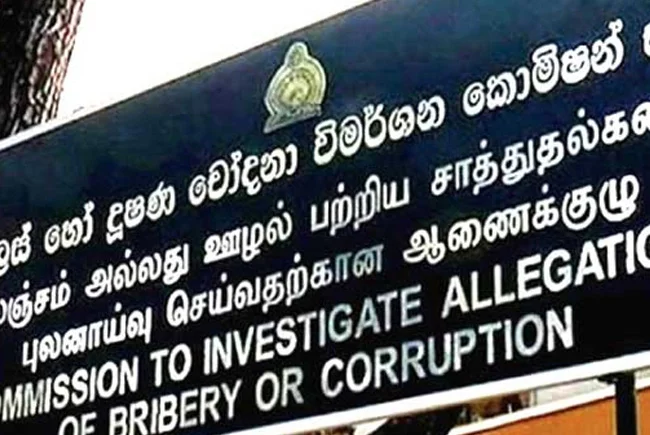
The Commission to Investigate Allegations of Bribery or Corruption (CIABOC) has said that measures implemented in terms of the Anti-Corruption Act 2023 (No. 09), particularly Articles 36–39(1)(2) fortified the integrity of Sri Lanka Railways’ online ticketing system.
It said that the operation was spearheaded by CIABOC’s Corruption Prevention Unit.
CIABOC’s comprehensive 45-page investigative report on Sri Lanka Railways’ Online Ticket System has been prepared after examining over one million entries—including ID numbers, phone numbers, and detailed booking patterns—the study uncovered patterns of repeated bookings, fake numbers, bulk ticket allocations, station-specific anomalies, counter official behaviours, and seasonal trends. These insights led to targeted recommendations that have driven unprecedented positive reforms, enhancing public trust and operational efficiency in Sri Lanka’s vital rail network.
The recommendations were formally transmitted to the General Manager of Sri Lanka Railways on February 18, 2025, and to the Secretary of the Ministry of Transport on March 21, 2025, mandating implementation under the Anti-Corruption Act. In a detailed response dated September 9, 2025, the General Manager confirmed that six key recommendations have been either fully enacted or actively advanced over the past six months, yielding tangible benefits for passengers and the broader economy.
Highlights of Implemented Recommendations
CIABOC commends Sri Lanka Railways for its swift and collaborative action, in partnership with entities like Mobitel and the Department for Registration of Persons. The following achievements underscore the Act’s efficacy in curbing fraud and promoting accountability:
Spot Fines and Non-Transferable Ticket Enforcement: This cornerstone recommendation has been fully operationalised, establishing a strong deterrent against black market reselling. On February 27, 2025, Mobitel was directed to print non-transferability warnings on all reserved seat tickets, citing the Railway Ordinance, Section 7, Articles A-G. A comprehensive instruction manual, issued on July 26, 2025, empowers station masters, superintendents, ticket examiners, and security officers to verify ID-passport matches at gates, impose double-price fines for mismatches, and remove non-compliant passengers. This has successfully minimised fraudulent transfers, ensuring tickets serve their intended purpose and protecting ordinary travelers from exploitation.
ID Authenticity Verification Integration: Proactive steps toward linking the system with the Department for Registration of Persons’ Check Digit Algorithm began with a formal request on March 7, 2024, followed by a meeting to resolve integration challenges. This collaboration is poised to eliminate fake IDs at the booking stage, further safeguarding the system’s integrity and aligning with global best practices for digital public services.
· Mobile Phone Number and OTP Verification: Ongoing discussions with Mobitel highlight a commitment to robust identity confirmation, despite cost considerations for SMS OTPs to local and international users. As a forward-thinking alternative, WhatsApp verification is under active exploration, with implementation targeted for the near future. These efforts, combined with warnings during booking, are already reducing reservations via fake websites and enhancing user security.
Limits on Repeated Bookings:
System updates to cap individual purchases at 10 tickets per period—triggering double fines thereafter—are in advanced stages, addressing bulk buying for resale. Interim measures, including mandatory identity recording for every reservation, have naturally curbed excessive bookings, promoting fair access during peak demand.
Countering Black Market Activities: Awareness initiatives at stations and embedded warnings in the ticketing terms and conditions have educated passengers on the perils of fake tickets, significantly deterring illicit operations. This community-focused approach, amplified by media campaigns, empowers citizens to support a corruption-free travel ecosystem.
Expanded Train Services on High-Demand Routes:
Addressing root causes of scarcity, Sri Lanka Railways has augmented capacity on the Colombo Fort-Badulla line with extra trains during peak tourist and school seasons, beyond regulars like Nos. 1005/1006, 1007/1008, 1015/1016, and 1047/1048. The Ella Odyssey (1041/1042) has evolved from thrice-weekly to near-daily operations: Saturdays and Sundays from Colombo Fort to Badulla; Fridays and Saturdays from Badulla to Colombo Fort; Mondays to Fridays from Kandy to Badulla; and Sundays to Thursdays from Badulla to Kandy. A new weekend intercity express (1001/1002) now connects Colombo Fort to Badulla, while the innovative Calypso train—boasting an open carriage with live Calypso music—delights locals and tourists alike, boosting tourism and revenue.
The research, data analysis, recommendations, and monitoring detailed in this report were conducted by Corruption Prevention Officer Shilamega Welithotage.



News
Establishment of an Institutional Framework to Inagurate Upper Hydro Catchment Areas Management Authority

Policy approval of the Cabinet of Ministers was granted at their meeting held on 08.06.2026 to establish the Upper Hydro Catchment Areas Management Authority for identification and
execution of a formal and long – lasting remedy to secure the central hills including the upper hydro catchment areas enabling them to sustain amidst extreme weather conditions
due to natural calamities and human activities as well as to be used for the sustainable development of the country.
Accordingly, a concept paper has been prepared including
institutional structure, activities, powers, active subject area as well as administrative and coordination mechanism for the proposed authority by an expert technical committee appointed by the Secretary to the President.
Based on the said concept paper, the Cabinet of Ministers granted approval to the resolution furnished by the President to instruct the Legal Draftsman to prepare a draft bill including legal provisions required for the establishment of Upper Hydro Catchment Areas Management Authority.
News
Introduction of Flora and Fauna (Regulation of actions of the Indigenous Community within the nominated areas) Regulations
With the objective of securing the traditional livelihood and the eco system of the indigenous community, it has been recognized the necessity of introducing a formal regulation methodology to secure their engagement in livelihood activities by being more sensitive to the existing laws.
Thereby, the Fauna and Flora (regularizing) regulations under the Fauna and Flora Protection Ordinance (Authority 469) have been prepared so that nominated activities within the prescribed area to a member of the indigenous community
who has been registered for securing the rights acquired from law or custom or usage or traditional stance to execute an act within a certain state land that is fundamental to the survival of the indigenous community permission can be granted
Accordingly, the Cabinet of Ministers granted approval to the resolution furnished by the Minister of Environment to publish the said regulations in the government gazette notification and thereby submit to the Parliament for its concurrence.
Latest News
M. M. D. J. Senarathne, appointed Director General of the Department of National Botanical Gardens
The Cabinet of Ministers approved the resolution furnished by the Minister of Environment to appoint M. M. D. J. Senarathne, who is the senior most officer in Grade I of Sri Lanka Scientific Service se

Establishment of an Institutional Framework to Inagurate Upper Hydro Catchment Areas Management Authority
Introduction of Flora and Fauna (Regulation of actions of the Indigenous Community within the nominated areas) Regulations
M. M. D. J. Senarathne, appointed Director General of the Department of National Botanical Gardens

Harmanpreet Kaur steps down as India captain

Turkiye, Pakistan agree Saudi Arabia military deployment under Mecca pact

Rumesh Tharanga among nominees announced for World Athlete of the Year 2026

‘Dates have the highest sugar content to fight Coronavirus’

Sunday Island 27 December – Headlines

#SundayIsland 17th December – Headlines

Sunday Island – 28th March

Sunday Island Headlines – 21 March

Sunday Island – 21st February – Headlines
-

 Latest News7 days ago
Gold winner Tharanga gets brand-new Honda Vezel from SLAAJ
-

 News6 days ago
US-assisted ‘Ice’ detection: NPC to examine IGP’s move to transfer drug-busting team
-

 Features7 days ago
Why Sri Lanka needs an Inclusive Civic Nationalism – urgently
-

 Editorial5 days ago
Colombo Port drug bust: The plot thickens
-

 News7 days ago
Civil society activist accuses govt. of favouring Ven. Gnanasara
-
 Midweek Review7 days ago
Dappula’s Easter Sunday ‘grand conspiracy’ claim demolished
-

 Editorial7 days ago
When crime bosses rise above law and shrines
-
Editorial6 days ago
Drug busting, transfers and trust deficit