
Features
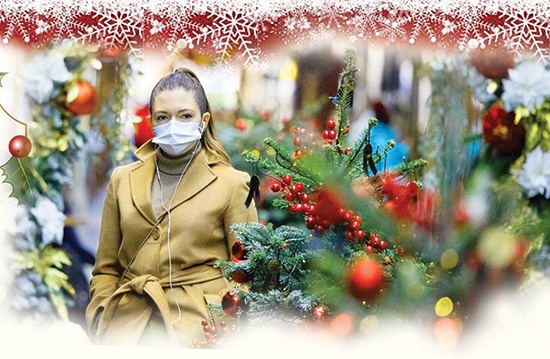
Christmas at crossroads Celebrating Christmas 2020 in an era of a pandemic

by Rev. Fr. Leopold Ratnasekera OMI
Ph.D., Th.D. Oblate Seminary Ampitya’
The worst pandemic ever to hold humanity to ransom since the Spanish Flu of 1918/19 that killed over 50 million people world-wide, has by now come to stay as a devastating health hazard of stunning magnitude and an eerie threat to life on a global scale. The ever-mounting statistics tell us the depressing story of millions of victims who either by now had contracted this deadly virus or hundreds of thousands who have succumbed to it and the challenges that confront medical personnel and health care workers throughout the world, battling both with arresting the decease and bringing healing to those languishing in their care. Meanwhile, the whole world awaits the day when the vaccines being administered so far, will succeed infallibly in preventing this disaster getting further aggravated. In such a bleak scenario of death’s pale hovering over humanity bringing in its train immense human loss, pain, and suffering inflicted with scant respect to age or social status nationality etc., one can legitimately raise the dilemma of having to accommodate a grandiose celebration which commemorates the birth of Jesus Christ at this year’s Christmas. The two phenomena seem poles apart considering the joyous nature of the latter on the one hand and the depressing nature of the former on the other.
The birth of Jesus Christ was no fairy tale studded only with glad tidings, song, gifts and smiles. It had both lights and shadows. First of all, the new-born infant thought to be of royal dynasty and expected to be the Messiah that would liberate an oppressed people under colonial power of the imperial Rome of Caesars, saw the light of day far away from the abode of his parents in the dead of night of a cold winter, with a manger of straw for his bed and a bundle of swaddling clothes to warm his tender body. His parents though from royal lineage were a carpenter’s family. Though angelic voices rang out from the hills heralding “Glory to God on high and Peace on earth to all men of goodwill”, the angelic chorus was harkened to only by some humble shepherds who were keeping their flocks by night in the town of Bethlehem, where the birth took place. To make it worse, since there was no room in the inn, where the parents sought refuge, they had to be content for the birth, in a stable where the cattle lay in the backyard. Though there was a song in the heavens and three kings came from the orient bringing gifts to the new-born, there was already a threat to the life of the infant from the cruel hand of Herod who ordered a merciless massacre of infants under two years of age, with the intent of destroying the carpenter’s son gossiped about to be a king, thus posing a chilling threat to Herod who ruled the country in the name of Caesar, The Christmas story recalls how the new family was forced to flee to Egypt which was miles away from Bethlehem to avert danger. This arduous journey marked a long period of exile turning them into migrants.
It is only with the news that Herod who plotted is dead, they could make a secure journey back to Nazareth where the family would live till, Jesus as a young man will decide to venture out of home choosing to be an itinerant preacher and a wonder-worker. When taken to the temple for an initiation rite, a wise man takes the child into his hands prophesying that the infant is set for the rise and fall of many and that one day, a sword of sorrow will pierce the heart of the mother. This was a reference to the cruel death of Jesus on a cross decreed by the Roman authority falsely condemned by religious authorities of the time linked to the temple of Jerusalem. These were all the chilling shadows which cast a certain gloom over the happy birthday of the world’s redeemer born on the first Christmas day 2000 years ago. This birth narrative which on purpose places the birth of Christ is a context of utter poverty, anonymity, helplessness and trial, portrays a story that should evoke mixed feelings almost amounting to a sign of contradiction. How could the appearance of God made man, the Incarnation of God, one of Christianity’s core mysteries be overshadowed by such distressing circumstances? Yet, in his work, he would overturn established religious norms in favor of compassion and mercy, challenge hypocrisy, reconcile opposing factions, claim power to forgive sin, preach love of the enemy, heal the sick, drive out demons, praise the innocence of children condemning the rash and despicable behavior of adults, raise the dead, heal sicknesses, promote love of the enemy and even command the roaring waves of the high seas, stilling storms to a whisper.
This humble carpenter’s son from the hamlet of Nazareth in the south of Galilee was destined to revolutionize entire cultures and civilizations through the era of the Roman Caesars and regime of Constantine, followed by the oligarchic period of the medieval ages, then through renaissance and the industrial revolution to finally impacting even the modern and post-modern era of our so-called techno-scientific secular age. His teachings have provided not only spiritual but also philosophical and cultural insights that have inspired various schools of scientific thought in areas of culture, politics and civil life. Today there is prolific discourse on human dignity and fundamental human rights, social justice, human freedom and liberation, dignity of work, sacredness of life and sanctity of the institution of marriage, human solidarity and fraternity and finally dialogue at all levels seen as the language that facilitates communication and collaboration in a world that is highly complex and diverse: in fact, a global village. Only the language of dialogue can bring together people of many tongues. While the earliest disciples of Jesus strived to accommodate the reconciliation of the Jews and the Gentiles, Paul the apostle took the teachings of Jesus of Nazareth to all the main cosmopolitan centers of the Roman empire such as Athens, Corinth, Ephesus, Philippi, Colossae, Thessalonica and finally to imperial Rome itself. According to Christian philosophy, based on human dignity, there was to be no distinction based on religious or ethnic differences such as between Jews and Greeks, social status as between slave and free men, and even distinction based on gender as between men and women. It brought in indeed a radical socio-cultural revolution. It is this same doctrine that is being defended today in the free world about the equality of all as declared in the United Nations Charter of 1948 and being diffused in all democratic societies worldwide. It is to be noted that within the Church is propounded a social doctrine anchored on four pillars: namely, human dignity of all, preservation of common good in all endeavors and the twin-principles of solidarity and subsidiarity. These principles guarantee a free and just society anywhere. The Gospel flavor diffused by Jesus Christ continues to influence even current controversial and disturbing issues such as proliferation of nuclear weapons, ethically questionable medical procedures, unfair economic systems and environmental issues.
Christmas 2020 instead of sending negative messages ensures on the contrary, the possibility of engendering hopes and dreams that will help us get over the present pandemic crisis that plagues the world and trust in a God who loves the world and also in humanity which will tend increasingly to fraternize in efforts to overcome periods of crisis, tragedies and challenges. The pandemic phenomenon has led the world to treasure human life and work hard to save and protect it with all the means it can muster. The whole world community is drawn into an incredible solidarity sharing the global pain of all who are victims, scattered as they are in all corners of the globe. There is generosity with time and financial resources to attend to the enormous expenditures incurred in the care of the sick and with the prevention of the viral decease. Medical technology is at work to dispensing remedies for healing the sick and providing preventive measures. The whole of humanity yearns, prays and joins hands in ushering the hour and day of total freedom from the devastation that is, plunging the world population into disarray. The true spirit of Christmas inspires us to identify with all those placed in trying circumstances and rush to the aid and solace of all who are afflicted by the current pandemic. Despite the fact that the pandemic crisis would surely stall customary external celebrations, crowded solemn liturgies in churches, frantic shopping and gifting or parties; we can this particular Christmas turn our gaze on the divine infant born in a stable, his family in exile with danger to the life of the new-born and a whole tangle of uncertainty and sheer poverty that surrounded the nativity scene. The spirit of Christmas cannot grind to a halt falling a victim to these adverse conditions that may prevent an exotic celebration, for it is good news about life, family warmth and challenges that usually confront the struggle for survival. The latter feature notwithstanding, the moving story of the Christmas child is the greatest story ever told in our hearing and worthy of admiration. This alternate manner of celebrating Christmas 2020 with a difference, will make us resonate better with the current situation of anxiety prevailing globally making it easier as well without loss of hope, to contend with the tragedy at hand.

Features
Combining local resources,traditional knowledge and science to build a food-secure Sri Lanka


World Food Day 2026: Innovating today for a better food future
by Dr. Kaushalya Wijayasekara
What will be on the Sri Lankan dinner table ten years from now? Will our children be able to get nutritious food at a price their families can afford? Will farmers be able to grow enough despite changing weather and rising costs? And how much of the food we produce will actually reach the consumer, instead of being lost or wasted along the way?
These questions can’t wait. A farmer faces unpredictable weather. A family faces rising food costs. Fruit goes unsold after a good harvest. Some children do not get enough nutrition. The future of food is tied to the future of Sri Lanka itself.
World Food Day 2026 is a chance to look beyond the immediate problems and ask whether we can build a food system that feeds our people well, gives farmers better opportunities, protects the environment and makes better use of what we already have. The answer can be yes, but we will have to think differently.
We are not starting from zero. Sri Lanka has diverse crops, fisheries, traditional food knowledge, indigenous varieties, research institutions, universities and a young generation able to create new solutions. What we need is to bring these together and act. Producing more will not secure our food future on its own. It will depend on how intelligently we produce, process, preserve, distribute and consume food.
Making more of what we already have
Innovation does not always mean inventing something new. Often it means finding better uses for the resources we have.
Sri Lanka grows traditional rice varieties, kurakkan, green gram, cowpea, jackfruit, breadfruit, cassava, sweet potato, coconut and palmyrah. All of them have great potential for modern, nutritious, value-added foods. Jackfruit and breadfruit can be made into flour and other convenient products. Traditional rice varieties can go into new foods that suit changing consumer needs. Palmyrah, with its strong cultural heritage, can create new income through better processing, packaging, quality assurance and market development.
The aim is to connect our traditional food knowledge with modern consumer needs and technology, while keeping our food heritage.
Stop wasting the food we produce
Reducing food loss and waste should be a major priority. Seasonal fruits such as mango, banana, papaya and pineapple can be lost in large quantities when production exceeds demand or when storage, transport and processing facilities are inadequate. With suitable technology, these fruits can become dried products, pulps, powders, beverages and other shelf-stable foods.
Agricultural and fisheries by-products are resources too. They could be turned into food ingredients, animal feed, bio-based products and other useful materials, which would move us toward a more circular food economy.
Technology alone is not enough. We need stronger local processing facilities, cold storage, efficient transport, collection centres and market information systems, especially close to where food is produced. Cutting food loss raises the value of what our farmers and fishers already produce.
Nutrition and food safety come first
Food security means more than having enough food. People also need food that is safe and nutritious.
Sri Lanka can develop affordable, nutritious foods from local pulses, grains, vegetables, fruits and fish. Children and other vulnerable groups should get particular attention. Schoolchildren in particular deserve a focus: safe, nutritious, locally sourced products for school feeding programs would support child nutrition, local farmers and domestic food industries at the same time.
Food safety must stay at the centre of food innovation. Good hygiene, quality control, laboratory testing, traceability and appropriate food safety systems are what make new products safe as well as attractive and nutritious.
A food system that can cope with climate change
Climate change is already affecting agricultural production, water availability, crop yields and food prices. We need food systems that can handle changing conditions. That means climate-resilient crops, efficient water use, soil and water conservation, better storage and resource-efficient food processing.
Traditional knowledge matters here. Generations of Sri Lankan farmers have developed practices suited to local climates and ecosystems. Combining that experience with modern science can give us solutions that fit local conditions and are sustainable. Technology alone will not build the future of food. Science, experience and local knowledge together can.
Give young people a bigger role
Sri Lanka’s universities have an important part to play in shaping our food future. Young people should be encouraged to identify real problems in the food system and work on practical solutions in areas such as food waste, sustainable packaging, nutrition, food safety, modernising traditional foods and digital technologies.
A good research project should not always end as a research paper. Where appropriate, research should be supported to move on to products, technologies, enterprises and community solutions. That needs stronger partnerships between universities and industry, along with mentoring, research funding, business support and market connections. If young researchers and entrepreneurs can turn their ideas into viable food innovations, both consumers and producers will benefit.
A pathway designed for Sri Lanka
We do not need to copy food-system models from other countries. We can build a pathway that suits our own resources, culture and needs. It would bring together local resources, traditional knowledge, scientific research, appropriate technology and entrepreneurship, with farmers, fishers, universities, research institutions, food industries, entrepreneurs and policymakers working side by side.
The goal goes beyond selling raw materials. We need to create more value, reduce waste, improve nutrition, generate jobs and strengthen rural livelihoods. This matters especially for small and medium-scale food enterprises, which can drive local economic development when they get the right technical, financial and market support.
The choices we make today
The food future will not create itself. It will be shaped by what we grow, what we research, what we process, what we consume and what we choose not to waste.
So, the question for World Food Day 2026 is this: what can we do today so that every Sri Lankan has safe, nutritious, affordable and sustainable food tomorrow?
The answers are already around us, in our farms, fisheries, food businesses, universities, laboratories and communities. We have the resources, the traditional knowledge, the scientific expertise and talented young people. What we need now is to connect them and act.
A better food future begins with the choices we make today.
Dr. Kaushalya Wijayasekara
Senior Lecturer, Department of Biosystems Technology, Faculty of Technology, University of Ruhuna

By Admiral Ravindra C Wijegunaratne
WV, RWP and Bar, RSP, VSV, USP, NI (M) (Pakistan), ndc, psn, Bsc
(Hons) (War Studies) (Karachi) MPhil (Madras)
Former Navy Commander and Former Chief of Defence Staff
Former Chairman, Trincomalee Petroleum Terminals Ltd
Former Managing Director Ceylon Petroleum Corporation
Former High Commissioner to Pakistan
The Digampathana suicide truck attack on 16th October 2006 remains the deadliest single strike in Sri Lanka Navy history, leaving scars that time cannot erase.
It was a seemingly ordinary Monday morning on 16 October 2006, but the calm of that day would soon be shattered in a way none of us could have imagined. As the Commandant of the Naval and Maritime Academy and Flag Officer Commanding Naval Fleet at Trincomalee, I was aware that a number of my cadets were travelling that morning, part of a convoy of fifteen buses carrying naval personnel from Trincomalee, Colombo, and other bases, heading toward Dambulla to rendezvous with another group. The convoy also included trucks and escort vehicles, a routine movement planned and coordinated with the army to ensure the roads were clear. The morning started quietly. Some personnel greeted friends, handed over their weapons, or strolled to a nearby tea shop. It all seemed so ordinary—too ordinary for what would come next.

Sri Lanka Navy sunk LTTE Ships carrying arms, ammunition and warlike materials thousand miles away from Sri Lanka in Indian Ocean in September and October 2007.
By late morning, both convoys had reached the small ground at Digampathana, near the Sigiriya junction, and personnel mingled briefly, unaware that a carefully orchestrated act of terror was waiting. Then, suddenly, an empty half-truck veered directly into the convoy. It exploded with a ferocity I can still recall as if it were yesterday. Nuts, bolts, and high explosives tore through the air. Pandemonium erupted instantly. I later learned that 107 of our naval personnel were killed on the spot and another 153 critically injured. The scene was indescribable—bodies scattered, vehicles mangled, personal effects strewn across the ground. I remember later hearing that the head of the suicide bomber was recovered more than 100 meters away from the blast, a grim testament to the sheer force of the explosion.
I was in my office at the Naval and Maritime Academy when my mobile phone rang. A young midshipman from the 21st intake called, his voice trembling: “Sir, there was a huge explosion at the convoy point! Many are dead … my batch mate Wijesundara is among them.” I immediately jumped into my jeep with my escort Chief Petty Officer and driver and rushed to Digampathana, relying on every ounce of my driving skill to reach the scene. The journey, which usually took little more than an hour, felt endless that day, each passing mile weighed down by dread.
When I arrived, I was confronted with a sight that no training can prepare you for. The injured were being rushed to Dambulla Hospital, where doctors and nurses worked tirelessly, improvising in ways that saved lives despite the overwhelming chaos. I went back to the site after visiting the hospital. The remains of our naval personnel were scattered across the ground, and someone had begun collecting weapons and protective gear. I immediately contacted Surgeon Rear Admiral Nico Jayasekara and received his instructions: collect all body parts in separate bags and transport them to the Trincomalee Naval Hospital mortuary. This gruesome work had to be done with care and dignity, and it filled the icebox in my vehicle. Through DNA testing initiated by Rear Admiral Nico, we were able to identify every naval personnel lost that day, bringing some closure to grieving families.
The Navy Commander at the time, Vice Admiral Wasantha Karannagoda, was devastated. I had worked closely with him and knew how deeply he cared for his men. He ensured that the fallen were honoured with full ceremonial naval funerals at Welisara Naval Base, attended by families and comrades. Sixty-seven funerals were conducted in a single day—a number that still haunts me.
The Digampathana attack remains the largest single loss of naval life in our history. It was a day of sorrow, but also a day that reinforced our resolve. The tragedy galvanized the Navy to target the LTTE Sea Tiger wing with renewed determination and reshaped our maritime operations forever. Every time I think of that day, I remember not just the lives lost, but the courage, professionalism, and dedication of those who survived, those who treated the injured, and those who ensured the fallen were honored properly. May the souls of our naval hero’s rest in peace, their sacrifice guiding us and inspiring generations of naval personnel to come.

Tales of Mystery and Suspense – 24
I was intrigued by the title of a book I found in a book drop at the condominium of a friend, Murder at Whitby Abbey, and I brought it home with me though I will not be able to return it in the near future. It was described on the cover page as ‘a standout in the crowded medieval mystery field’, though I fear I do not know of other books in this field, apart from the Cadfael series, which I have dealt with earlier.
The book, by Cassandra Clark, is set during the reign of Richard II and has as a backdrop his precarious position, which led to his being replaced, and murdered, by his cousin Henry, who reigned as Henry IV. It is a gloomy book, the action taking place in the twelve days of Christmas leading up to the Epiphany. And the gloom is pervasive, even though this is supposed to be a time of festivity, with mummers performing, and many of those in the guest house where the heroine stays going to town to enjoy themselves, with much drinking and much music, which also fills the guesthouse.
The heroine Hildegarde is a nun, sent to try to acquire a relic being sold by Whitby Abbey, though this was also a penance set by the Abbot of the monastery that governed her abbess because she had had sex with a man. Soon after she and her companions reach the Abbey set high on a cliff, she finds that there are other bidders, and soon suspects that the hierarchy, not perhaps the Abbot who seems a weakling, but his rapacious bursar, is determined to make money, and not above creating false relics to sell to several aspirants.
After Hildegarde and her Cistercian companions – Whitby is a Benedictine Foundation – two monks, Gregory and Egbert, and a young priest Mark, reach the abbey, they find that Aelwyn, a monk they had met on their way to the guesthouse had died. This was in the apple store, and they realize, when they find the surplices of novices stuffed into the air vents, that he had been left to suffocate in the overwhelming scent of apples.
Clark
The Cistercians are asked to look into the death, perhaps because they are likely to get no cooperation from the Abbey folk, but perhaps because those in charge are keen to know what happened. And the infirmarer, an old monk, suggests Hildegarde talk to a man called Edred who worked for the bursar, and had been a friend of Aelwyn’s. But Edred too is killed, before he can keep an appointment he had made with Hildegarde, drowned in a pool near the farmhouse of the Abbey.
Meanwhile tensions arise between the fisherfolk and the abbey for the bursar wants to charge them for using the beach that technically belongs to the abbey to dry their fish and their nets. This leads to physical battles, when the guards used by the abbey, under the command it seems of the bursar whose determination to make money is not resisted by the abbot and the prior, try to storm the area where the fishermen live.
Hildegard finds out more about what had happened through two youngsters, one of whom Torold is the son of Aelwyn by a woman who worked as a prostitute for a cartel, and with whom Mark fell in love. The other works on the farm and had seen Edred meet someone near the pool, after which that someone left the place by himself. And the boy had also found in the pool a sort of dagger with the seal of the abbey.
He and his dog, and Torold who follows her, rescue Hildegarde from a man at arms who has waylaid her and tries to rape her earlier. Escaping into the abbey she was nearly been raped then by the bursar, but she managed to escape, in the process setting fire to him and the muniments room, which led, when he was rescued, to the discovery of a box with the money he said had been stolen, blame being cast on both Aelwyn and Edred.
Matters come to a head when the fisherfolk try to storm the abbey, being resisted by the men at arms stationed on the towers. But then Hildegarde realizes that behind the murders was the bursar’s clerk, whom she pursued to the cathedral. There is great drama then as she escapes from him when he tries to kill her, and then from the man at arms who had tried to both rape and kill her, but they both fall from the scaffolding she had climbed, the latter coming from a tower where he had been stationed.
Both of them think they run the rapacity of the abbey, the latter claiming to work for the nobles opposed to Richard, who is presented throughout the book as devoted to his subjects, not to power or money. But though the villains die, the bursar continues, having got over the hysteria the fire had caused and his acknowledgment then of guilt – and though the abbot and the prior seem less vicious, whether they will be able to assert themselves is questionable.
Before the climax, when the others in the guesthouse were leaving, Hildegarde found that two of them were in possession of the relic, for which they seem to have paid well. Hildegarde herself had made a derisory offer, but before she leaves the abbot gives her the relic, perhaps in gratitude for what she and her fellow Cistercians had discovered, the abbey having made as much money as it needed and more from the gullible other buyers.
Mark’s inamorata is saved from the stews because she moves in with Edred’s widow whom the bursar had thrown out of the rooms he occupied when her husband was found dead. Hildegarde had paid for lodgings, in a house run by the man who ran the brothels, but he had a kindly side and was going to finance them to make nets for the fishermen.
So, the Cistercians set off for their home as swiftly as they can to get there on the day of the Epiphany, having stopped en route to pray for King Richard whose birthday it was.

Iyer to lead in last two New Zealand ODIs, Kushagra earns maiden call-up

Pope pictured for first time since surgery and cancer diagnosis

Qatar announces ‘massive’ solar plant project in Lebanon

Samagi Spice Exports to launch Ceylon Cinnamon based beverage range

Asian Cup in Saudi Arabia could be postponed by a year amid Houthi attacks

Houthi missile attack on Yemeni presidential palace kills five, minister says

‘Dates have the highest sugar content to fight Coronavirus’

Sunday Island 27 December – Headlines

#SundayIsland 17th December – Headlines

Sunday Island – 28th March

Sunday Island Headlines – 21 March

Sunday Island – 21st February – Headlines
-

 News6 days ago
Sri Lanka escalates anti-graft drive with Shiranthi’s jailing
-

 News7 days ago
NPP govt. reminded of its responsibilities as US warship leaves Colombo
-

 Latest News7 days ago
Farhan, Sadaqat help Pakistan ace 183 chase to go 1-0 up
-

 Latest News5 days ago
Farhan and Sadaqat help Pakistan seal series in style
-

 News6 days ago
Iranian ships stranded, Lanka fears US sanctions
-

 Latest News4 days ago
Nissanka’s return headlines Sri Lanka’s Test squad against Pakistan
-
 News7 days ago
Interdicted top House official Kularatne receives special recognition in Mexican Parliament
-

 Features5 days ago
Intake 16: 45 years of duty and honour