
Business
Charting Sri Lanka’s economic future: Current challenges and strategies for resilient growth

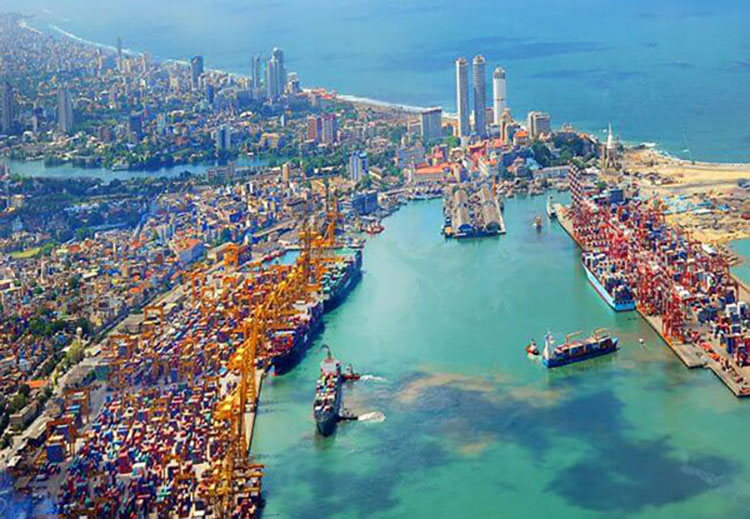
By Rasith Wickremasinghe COYLE Chairman
The Sri Lankan economy currently grapples with the significant challenges presented by a complex financial situation unfolding in unprecedented ways. As the country tackles the intricacies of this economic turmoil to overcome fiscal obstacles, there is a prevailing sense of concern among the populace. Against this backdrop, the nation contends with politically motivated decision-making that bears the marks of a presidential election at the end of 2024.
Despite these existing realities, we remain optimistic about the rising potential through collective efforts and shared objectives driven by the nation’s private sector, aiming to revitalize the economy. In the present circumstances, positive indicators emerge as macroeconomic policy reforms start showing concrete outcomes, signalling a promising phase of stabilization in Sri Lanka’s economic landscape. Nonetheless, the path to recovery and inclusive growth relies on maintaining the ongoing momentum of these reforms.
Looking at the recent upgrade of Sri Lanka’s local currency rating from selective default (SD) to CCC+/C by S&P Global Ratings, there is a reflection of a more optimistic view of the country’s solvency. This upgrade follows the finalization of a domestic debt restructure, including collaboration with superannuation funds (EPF/ETF) and the Central Bank. https://www.fitchratings.com/research/sovereigns/fitch-upgrades-sri-lanka-long-term-local-currency-idr-to-ccc-28-09-2023
The completion of the first IMF review under the 48-month Extended Fund Facility marks a significant milestone, unlocking access to SDR 254 million (about US$337 million) to support the country’s economic policies and reforms. Notably, Sri Lanka’s performance under the program has been deemed satisfactory, with the majority of performance criteria and indicative targets met by the end of June.
The publication of the Governance Diagnostic Report showcases a pioneering step, positioning Sri Lanka as the first country in Asia to undergo this IMF exercise. The commendable progress made by the authorities in restoring debt sustainability, raising revenue, and ensuring financial stability reflects a positive trajectory. Moving forward, a strong commitment to improving governance and protecting the welfare of the vulnerable will be crucial, laying the foundation for a resilient and prosperous economic future.
Examining Sri Lanka’s net general government debt, which currently exceeds 100% of GDP and is projected to persist until at least 2028, there are challenges ahead. Addressing concerns about long-term sustainability, potential positive shifts can be driven by factors such as nominal GDP growth, successful fiscal consolidation, increased revenue generation, current interest rates, and the positive impacts of future restructuring efforts. By navigating these aspects effectively, Sri Lanka has the potential to enhance its fiscal outlook and achieve more favourable outcomes in the coming years. https://www.fitchratings.com/research/sovereigns/fitch-upgrades-sri-lanka-long-term-local-currency-idr-to-ccc-28-09-2023
It’s noteworthy that Sri Lanka’s Budget for 2024 presents ambitious targets, though they pose challenges, particularly with the projected wider fiscal deficit of 9.1% of GDP. The government’s focus on achieving a primary surplus, excluding bank recapitalization, aligns with the IMF’s projections. However, the expenditure target of 22.2% of GDP exceeds the IMF’s envisioned 19.7%. While this discrepancy may raise questions, it also reflects a commitment to ambitious goals, and successful implementation could enhance the budget’s long-term viability and effectiveness. https://island.lk/sri-lankas-ambitious-budget-agenda-faces-high-implementation-risks-fitch-ratings/
Fitch Ratings has already expressed concerns about the government’s plan to reach its revenue target by 2024. Sri Lanka has a history of not meeting fiscal goals, with revenue collection falling short by 29% in the first nine months of 2023. Recently, the government has planned a revenue increase of nearly 45% in 2024, with a confirmed 3-percentage-point rise in the value-added tax to 18%.
We believe as far as tax revenue is concerned, widening the tax net or the number of taxpayers in the country is more critical than raising the percentage values. Only as little as 2.6% of Sri Lanka’s total workforce of 4.64 million is subjected to the PAYE income tax. Nearly half of the labour force receives less than Rs.30,000 monthly salary, while 3.91 million families, out of 5.8 million families, are seeking state assistance to continue their livelihoods. In 2021, there were about 105,000 registered companies, and 60,721 had income tax files, from which 82 per cent of the corporate income taxes were paid by 342 companies. https://economynext.com/sri-lanka-only-has-137-persons-who-paid-income-taxes-of-rs5mn-or-more-legislator-100108/#:~:text=Sri%20Lanka%20in%202021%20had,were%20paid%20by%20342%20companies
What baffles us mostly is the number of tax files reported by the inland revenue which is recorded to be only 500,000 as per the Commissioner Association Inland Revenue department. https://www.newsfirst.lk/2023/07/27/tott-only-500-000-tax-files-in-sri-lanka-president-commissioner-association-27-07-2023/ . If the recorded number of tax files is only 500,000 out of the 5.8 Million families in Sri Lanka, we must ask the question of what has happened to the rest of the taxpayers.
Several businesses in Sri Lanka, whether small, medium, or large, conduct their transactions mainly through cash. Despite how much they earn, there can be several loopholes they can harness for tax evasion. Even though it is apparent in many ways, there is little to no step taken forward to curb the issue owing to political gains or the mass displeasures that could arise curbing the future of many political affiliates in the decision-making process.
Concurrently, the growing wealth gap between the affluent and less privileged segments of the population is reaching alarming levels, compelling numerous skilled professionals to seek better opportunities abroad.
It’s not just the taxation system; the government’s inability to overhaul unprofitable state-owned enterprises (SOEs) adds to the discontent. The weight of these financially struggling entities falls disproportionately on a limited number of taxpayers, causing widespread chaos that ripples through the entire system. This, in turn, has a cascading impact on the economy and Sri Lankan society. An aspect often overlooked by many governing parties owing to their political future. Given that a significant portion of those affected by these restructuring efforts comprises a substantial voter base and influential circles in the country, there appears to be a reluctance among decision-makers to take the necessary corrective actions.
One of the contributing factors for the IMF to provide the second tranche was the promise to reduce the commercial bank interest rates to single digits, which is yet to be done. Even though the president and the CBSL have requested the above, several parties have been insensitive about the situation and requests. As COYLE, we emphasize the importance of expanding the tax potential net and then further tracking the registered yet inactive member mass. However, we can observe, that the government is now distracted to a path more concerned with securing votes for the upcoming elections as opposed to the earlier economic revival path, which has diminished its momentum from the critical pace of decision-making on SOE restructuring.
This will bring us to COYLE’s point of view on how we can set further to solve the foreign currency deficit by adopting different and dynamic strategies. At COYLE, we believe Sri Lanka must look at foreign direct investments with changing state policy decisions to have a more attractive and investor-friendly outlook to attract numerous investors from booming industries. We urge the Parliamentary Select Committee on Ease of Doing Business to reactivate and pursue proactive steps towards ensuring FDIs are secure in the country without further delay.







Business
India pledges $450 million for cyclone recovery while Sri Lanka’s top financial watchdog seat remains vacant


India extended a powerful hand of friendship on December 23, pledging $450 million to help Sri Lanka rebuild from Cyclone Ditwah. The aid, announced by Indian External Affairs Minister Dr. S. Jaishankar, is a lifeline for critical infrastructure, housing and agriculture.
Yet, even as this commitment was made, a crucial question hung in the air: Who will watch the money?
Sri Lanka has operated without a permanent Auditor General for eight months, an independent observer told The Island Financial Review.
“Since April 2025, the constitutional body meant to be the independent guardian of public spending has been led by temporary appointees. This isn’t just bureaucratic delay; it is a self-inflicted wound on democratic accountability,” he said.
He explained that the Auditor General, mandated by the Constitutional Council, is the linchpin that ensures public funds are used with integrity.
“In a nation still recovering from a devastating economic crisis, the AG’s role is the bedrock of trust. This office audits everything from social safety nets to state-owned enterprise losses and, critically, emergency expenditures,” he noted.
“The delay undermines public trust and robust oversight at a time when these are urgently needed. With no permanent AG, the oversight of billions in cyclone relief funds – including India’s generous package – can be fundamentally weakened.”
India’s decision to provide funds despite this oversight vacuum is a profound act of goodwill, the observer said.
“But the question now shifts squarely to the Sri Lankan government: How will it honour that faith? The $450 million is a mirror held up to Sri Lanka’s governance,” he stated.
He urged the Constitutional Council to act decisively to appoint a competent, independent Auditor General through a transparent process.
“This is the cornerstone of ensuring that disaster recovery builds not just physical infrastructure, but also public trust,” he concluded.
By Sanath Nanayakkare
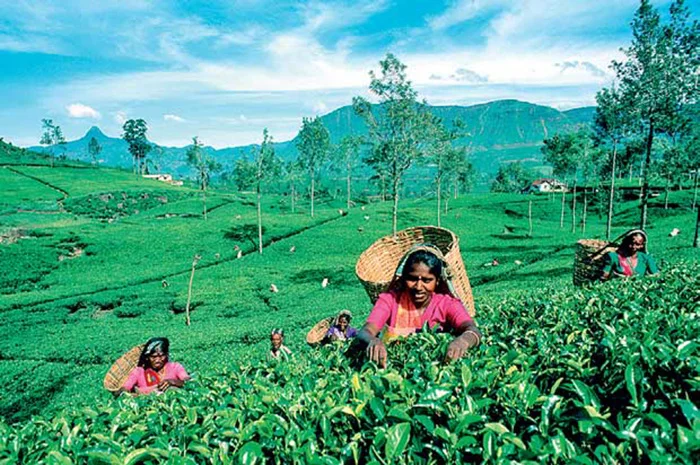
Ceylon Tea exports have demonstrated notable volume growth for the first eleven months of 2025, reaching a cumulative total of 239.57 million kilograms. This figure represents a solid increase of 16.35 million kilograms compared to the corresponding period in 2024, signalling robust overseas demand for Sri Lanka’s premier commodity.
The broader trend, however, reveals a dynamic reshuffling among the nation’s key export markets, painting a picture of both promising diversification and shifting global trade currents.
A striking development is the continued ascendancy of Iraq as the single largest importer of Ceylon Tea. During the January to November period, Iraq purchased 36.77 million kilograms, marking a substantial 21% year-on-year increase and firmly securing its top position. In contrast, the traditional powerhouse market of Russia, while holding second place with 19.94 million kilograms, recorded a 13% decline in volume. Other markets show significant movement; Türkiye follows closely in third place, while Libya has emerged as a high-growth destination, witnessing a remarkable 115% surge in imports to claim fourth position. This evolving landscape underscores a strategic shift, where gains in emerging and regional markets are actively counterbalancing softer demand in some established ones.
Categories such as Instant Tea and Tea Bags have recorded encouraging gains in both volume and foreign exchange earnings, indicating a positive consumer trend towards convenience and value-added products. This gradual move up the value chain is crucial for enhancing the sector’s resilience and profitability.

Sri Lanka is poised to enter the regional cultural spotlight as the host of South Asia’s first-ever reggae music festival. “ONE LOVE 2026 – A Tribute to Bob Marley” will be held from 27 to 29 March 2026 on the beaches of Bentota, marking an unprecedented celebration of global reggae music within the Asia-Pacific region.
The landmark announcement was made at a press conference hosted by the ultra-luxury property, NUWA- City of Dreams in Colombo.
The festival represents a significant cultural and tourism initiative, featuring an unprecedented assembly of international reggae talent for the region. The confirmed lineup includes six globally acclaimed acts: Maxi Priest, The Wailers, Julian Marley & Ky-Mani Marley, Inner Circle and Big Mountain.
Organised by One In A Million Entertainment Ltd.—a Sri Lankan-owned firm with headquarters in Europe and Colombo – in strategic collaboration with Caribbean Entertainment, the event builds upon a proven track record of delivering major international entertainment to Sri Lanka. The festival is anticipated to attract thousands of attendees, including local enthusiasts and visitors from key markets such as India, the Maldives, and Bangladesh, as well as Western tourists seeking a tropical retreat.
Aligning with the commemoration of Bob Marley’s 81st birthday, the event carries profound cultural resonance. It also incorporates a charitable component, with a portion of proceeds dedicated to a children’s orphanage water purification project managed by the Indian Cultural Association in Sri Lanka, and to supporting the charitable activities of the Bob and Rita Marley Foundation in Jamaica.
The festival’s international delegation will be accommodated at NUWA Sri Lanka, the flagship ultra-luxury destination of Melco Resorts & Entertainment in Colombo.
Ticket Information: Daily General Admission: LKR 10,000, Daily VIP Admission: LKR 50,000, Early Bird Three-Day Festival Pass (Limited Offer):, General Admission: LKR 25,000, VIP Access: LKR 125,000 Tickets are available via the PickMe Events platform.

CoPF Chief steps up pressure on Prez to appoint AG

Indian HC and Consulates extend humanitarian assistance to families affected by Cyclone Ditwah

Sri Lanka prepares to deploy fresh military contingent under UN command

New measures to protect environmentally sensitive Sri Pada region

Chief selector’s remarks disappointing says Mickey Arthur

Christmas spirit, relief and pledges

‘Dates have the highest sugar content to fight Coronavirus’

Sunday Island 27 December – Headlines

#SundayIsland 17th December – Headlines

Sunday Island – 28th March

Sunday Island Headlines – 21 March

Sunday Island – 21st February – Headlines
-

 News2 days ago
Members of Lankan Community in Washington D.C. donates to ‘Rebuilding Sri Lanka’ Flood Relief Fund
-

 Business6 days ago
Unlocking Sri Lanka’s hidden wealth: A $2 billion mineral opportunity awaits
-

 News6 days ago
Army engineers set up new Nayaru emergency bridge
-
 News6 days ago
TISL, civil society flay NPP govt. for holding up Auditor General’s appointment
-

 Latest News5 days ago
Landslide early warnings issued to the districts of Badulla, Kandy, Kurunegala, Matale and Nuwara-Eliya extended till 8AM on Sunday (21)
-

 Opinion6 days ago
The Maha Jana Handa at Nugegoda, cyclone destruction, and contenders positioning for power in post-NPP Sri Lanka – II
-

 Latest News6 days ago
Tannane goal from own half sets Morocco on way to FIFA Arab Cup 2025 title
-
 News6 days ago
Sri Lankans rescued from cybercrime centers in Myanmar repatriated