
News
Change at ICTA helm in the wake of shocking COPE revelations

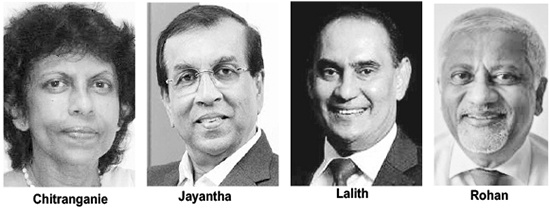
Patali questions move to launch 500 more projects….
By Shamindra Ferdinando
Close on the heels of the recent revelation of massive waste, corruption and irregularities at the country’s apex ICT institution, the Information and Communication Technology Agency (ICTA), there has been a change at the helm of the institution.
The Parliamentary watchdog – COPE (Committee on Public Enterprises) on Dec 08, 2020 exposed staggering losses amounting to over Rs 2.6 bn due to negligence, shortcomings and failure on the part of the ICTA. ICTA bosses had been present at the meeting along with representatives from the Auditor General’s Department.
The COPE under the leadership of SLPP (Sri Lankan Podujana Peramuna) National List lawmaker Prof. Charitha Herath dealt with projects that had been carried out since 2013. The 31-member COPE found fault with projects undertaken during the 2010-2015 Rajapaksa administration and also 2015-2020 yahapalana period.
The Communications Department of the Parliament confirmed the COPE inquiry conducted two days before the end of parliamentary session for the year.
ICTA has been authorized to implement the government’s policies and action plans in relation to ICT.
Prof. Lalith Gamage, who has been a member of the ICTA board yesterday (1), succeeded Jayantha de Silva whereas the latter received appointment as Secretary to the newly created Technology Ministry.
The current ICTA board consists of Prof. Lalith Gamage, Reshan Dewapura, the Chief Executive Officer at GSS International (Pvt) Ltd, Vimukthi Janadara, Director General, Information Technology Management Department, Oshada Senanayake, Director General of the Telecommunications Regulatory Commission of Sri Lanka, Kushan S. Kodituwakku, Managing director of Orel Corporation, Mano Sekaram, Chief Executive Officer (CEO) & Co-Founder of 99X Technology Ltd and Madu Ratnayake, Group CIO and the Center Head for Virtusa Sri Lanka.
The COPE session that inquired into ICTA comprised Prof. Herath, Minister Mahinda Amaraweera, State Ministers Susil Premajayantha, Indika Anuruddha and Members of Parliament Eran Wickramaratne, Jagath Pushpakumara, Premnath C. Dolawaththa, S. M. Marikkar, Patali Champika Ranawaka and Shanakiya Rasamanickam. Out of its31 members, only ten attended the session.
The COPE is empowered to report to Parliament on accounts examined, budgets and estimates, financial procedures, performance and management of Corporations and other Government Business Undertakings.
COPE sources said that the most of the projects examined had been carried out before Jayantha de Silva a former CEO and President of IFS Sri Lanka took over the apex body on Dec 19, 2019, just three days after Gotabaya Rajapaksa’s election as the President.
Prior to the appointment of Jayantha de Silva it was chaired by Prof. Rohan Samarajiva, also a former CEO and President of IFS Sri Lanka. Prof. Samarajiva received the appointment in April 2018. Samarajiva succeeded Chitranganie Mubarak, who had been the first ICTA head under Yahapalana administration.
The ICTA board appointed immediately after the Nov 2019 presidential election consisted of Jayantha de Silva, 99X Technology CEO Mano Sekaram; founder of WSO2 Dr. Sanjiva Weerawarana; CEO of the Sri Lanka Institute of Information Technology (SLIIT) Prof. Lalith Gamage; former ICTA CEO Reshan Dewapura; SAP India Country Sales Manager Manori Unambuwe and former Digital Secretary and ICTA Programme Director Wasantha Deshapriya.
Prime Minister Ranil Wickremesinghe led UNF Government established ICTA in terms of the Information and Communication Technology Act No. 27 of 2003, (ICT Act), was subsequently amended by the UPFA by Act No. 33 of 2008.
According to the Communications Department, a high profile ‘e-Pensions’ project launched in late Oct 2010 had been abandoned on Nov 1, 2013 after spending a staggering Rs 510 mn. At the time of the launch of the project involving ministries of Public Administration and Home Affairs, ICTA had been under the Presidential Secretariat
The then ICTA Chairman Professor P.W. Epasinghe is on record as having said that under the project the whole procedure – from computation to the payment of pension – would be changed for the benefit of the pensioner.
The abandoned project was meant to develop the required hardware and software for its implementation in the Western Province covering the District Secretariat, the Armed Forces, the Department of Prisons, the Department of Railways and the Department of Civil Defense.
The COPE asserted that ICTA performances in respect of other failed developments, too, could be compared with the disastrous ‘e-Pension’ project.
The COPE also examined Google Loon project officially announced in June 2013 but finalized in late July 2015, too had been abandoned after spending Rs 1,851, 322 mn to clear Google Loon equipment from the Customs, in addition to Rs 64 mn spent on project promotions.
COPE also revealed that another high profile project called ‘Lanka Government Network’ or LGN launched in Nov 2016 by then Minister Harin Fernando amidst much fanfare to provide internet services countrywide, too, failed to achieve desired results with the progress asserted at just 17 per cent. Of Rs 850.47 mn approved for the project, Rs 148.33 mn had been spent, the COPE bared while categorizing LGN, too, as a failed initiative.
Samagi Jana Balavegaya (SJB) lawmaker Patali Champika Ranawakaka, who had been present at the COPE meeting questioned ICTA officials why the launch of 500 projects was contemplated against the backdrop of such losses.
Funds amounting to Rs 32.5 mn allocated for ‘e-NIPO’ (project undertaken for the National Intellectual Property Office) had been utilized by the I.C.T.A to pay salaries of its officials.
The Island
in a front-page report titled ‘Sheer negligence on the part of the Treasury, Parliament revealed’ carried on Dec 14th edition, pointed out how some employees received monthly salaries in the range of Rs 755,000 to Rs 245,000 outside public sector salary scales though they were paid by the taxpayers’ money.
The COPE also found fault with ICTA for not including Rs 39 mn spent on ‘e-Local Authorities’ yahapalana project in the performance reports.
The COPE also made the shocking revelation that a 2017 Corporate Plan that had been prepared at the cost of Rs. 2,737,000 mn was thrown away without seeking approval from the board. One of the challenges faced by the new Chairman is to conduct an internal inquiry as regards preparation of Corporate Plans beginning 2003-2019.
The COPE is also under fire for the recruitment of management level workers on contract basis to senior positions.

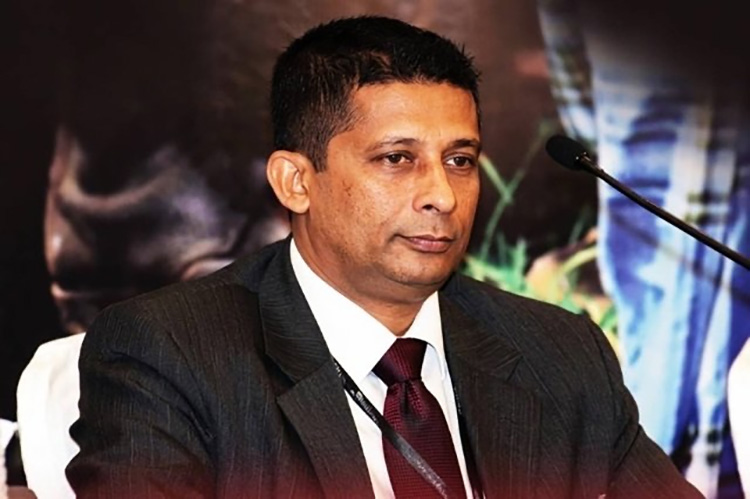
The government has chosen not to respond to questions raised by the United Nations Human Rights Council (UNHRC) regarding the detention of retired Maj. Gen. Suresh Sallay in connection with the ongoing investigations into the 2019 Easter Sunday attacks.
The Criminal Investigation Department (CID) arrested the ex-official in late February this year. The Special Rapporteur on the promotion and protection of human rights and fundamental freedoms while countering terrorism, the Working Group on Arbitrary Detention, the Special Rapporteur on the right of everyone to the enjoyment of the highest attainable standard of physical and mental health and the Special Rapporteur on the independence of judges and lawyers have jointly raised the issue on 20 July, 2026.
Drawing attention of President Anura Kumara Dissanayake to what they called alleged arbitrary detention of Sallay, former Director General of the State Intelligence Service (SIS) and former Director of Military Intelligence (DMI), under the Prevention of Terrorism Act (PTA), as well as allegations of torture and other cruel, inhuman or degrading treatment while in custody, resulting in the grave deterioration of his health, and imminent risks of retaliation through further torture and ill-treatment resulting in irreparable harm, should he be released from hospital and returned to custody, the UN sought the government explanation with a 60-day period.
The UN has stated: “This communication, and any response received from your Excellency’s Government, will be made public via the communications reporting website at the 60 days mark. Should your Excellency’s Government respond within 60 days, both the communication and the response, may be published before the 60 days mark. The communications and responses
will also be made available in the subsequent periodic report to be presented to the Human Rights Council.”
In the absence of the government’s response, the UN posted the letter, dated 20 July, 2026, addressed to President Dissanayake. The full letter can be accessed https://spcommreports.ohchr.org/TMResultsBase/DownLoadPublicCommunicationFile?gId=31125
News
Section of wartime KKS High Security Zone vacated to facilitate economic development in the area

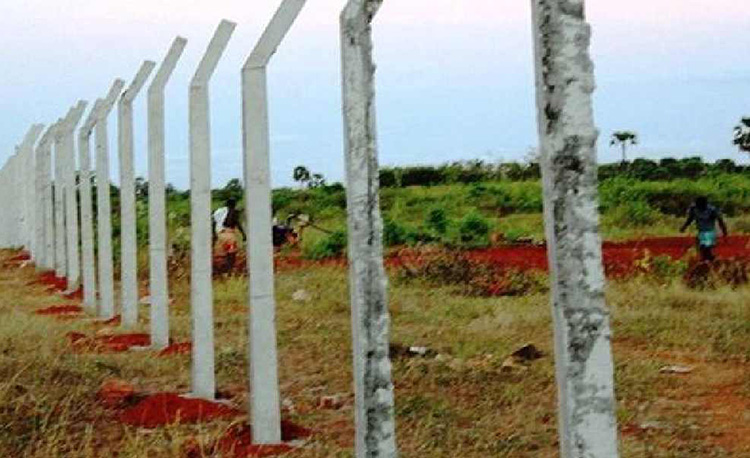
The Army, last week, vacated an area, within the wartime high security zone in the Jaffna peninsula. The Defence Ministry said that an extent of 187.56 acres of land, belonging to the Cement Corporation in Kankesanthurai, Jaffna, has been released by the military. The released land, located in Grama Niladhari Division J/233, Kankesanthurai West, within the Valikamam North (Tellippalai) Divisional Secretariat Division, had been utilised by the Sri Lanka Army since the middle of 1997.
The release of the 187.56-acre extent forms part of the initiative to make State land available for the proposed investment zone in Kankesanthurai, thereby facilitating future investment and economic development in the area.
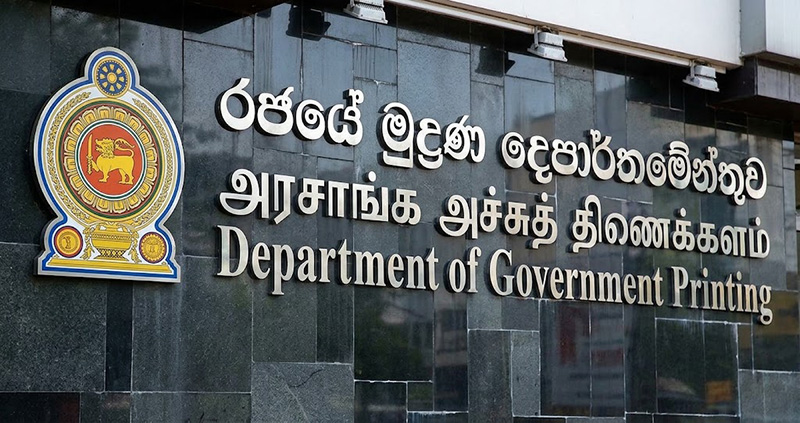
A complaint has been lodged with the Colombo Fraud Investigation Bureau against the Government Printer and the Secretary to the Ministry of Media regarding the online release of falsified documents bearing a forged Speaker’s certificate.
Attorney-at-Law Aruna Laksiri has lodged a complaint with the Colombo Fraud Investigation Bureau requesting legal action against the Government Printer of the Department of Government Printing (No. 118, Dr. Danister de Silva Mawatha, Colombo 08), Prasanna Jayaratne, and the Secretary to the Ministry of Mass Media (Asidisi Medura, 163, Kirulapone Mawatha, Polhengoda, Colombo 05), Dr. Anil Jasinghe.
The complaint alleges the commission of offences by forging and uploading falsified documents online using a forged Speaker’s certification, failure to perform statutory duties, and misappropriation of public property.
The complaint states that a copy of the English translation of the 22nd Amendment to the Constitution was downloaded and printed from the official website of the Government Printing Department (www.documents.gov.lk), which operates under the Ministry of Mass Media. On its outer cover and on page 1, the text “certified on 25th of September, 2026” is inscribed inside brackets.
The complaint pointed out that the Speaker has certified an English translation. Under Articles 23, 79, 83, and 80 of the Constitution, Parliament enacts laws and the Speaker certifies bills strictly in the Sinhala and Tamil languages; under the Constitution, therefore the Speaker cannot apply such certification to an English translation.

Showers or thundershowers will occur at several places in the most part of the island after 1.00 p.m

GS1 Lanka drives Sri Lanka’s shift to 2D barcodes

Geneva takes up Sallay’s case and govt. ignores opportunity to answer accusations

Section of wartime KKS High Security Zone vacated to facilitate economic development in the area

Lawyer lodges complaint against Govt. Printer, Media Ministry Secy.

Sri Lankan troops in joint anti-terrorist exercise in Russia

‘Dates have the highest sugar content to fight Coronavirus’

Sunday Island 27 December – Headlines

#SundayIsland 17th December – Headlines

Sunday Island – 28th March

Sunday Island Headlines – 21 March

Sunday Island – 21st February – Headlines
-

 Latest News5 days ago
Gold winner Tharanga gets brand-new Honda Vezel from SLAAJ
-

 Features5 days ago
Why Sri Lanka needs an Inclusive Civic Nationalism – urgently
-

 News4 days ago
US-assisted ‘Ice’ detection: NPC to examine IGP’s move to transfer drug-busting team
-

 Features6 days ago
Thailand’s biggest new global star …
-

 News6 days ago
First cases taken up by SC after enactment of 22A dismissed
-

 News5 days ago
Civil society activist accuses govt. of favouring Ven. Gnanasara
-

 Editorial3 days ago
Colombo Port drug bust: The plot thickens
-

 Editorial6 days ago
Aftershocks of 22A