
News
CEB GM forwards draft agreement giving exclusive rights to Chinese company


Supply of natural gas to power plants
By Ifham Nizam
The Ceylon Electricity Board (CEB) General Manager has forwarded a draft agreement to the Ministry of Finance recommending that exclusive rights be granted to a Chinese company for supplying natural gas (regasified LNG) to power plants at Kerawalapitiya and Kelanitissa.
The CEB invited international bids in February 2021 for the development of a floating storage and regasification unit (FSRU) at Kerawalapitiya on build, own and operate (BOO) basis on a 10-year contract.
Under this tender, the FSRU stationed offshore at Kerawalapitiya will regasify the natural gas delivered by ship in liquid form (LNG) and then deliver it to power plants at Kerawalapitiya and Kelanitissa through gas delivery pipelines to be constructed under a separate tender floated by the Ceylon Petroleum Corporation.
The CEB has engaged an Indian consulting firm using funds provided by the Asian Development Bank (ADB) to prepare the request for proposal (RFP) documents of this tender, which includes the FSRU agreement and the implementation agreement (IA).
The FSRU agreement is to be signed between the CEB and the project company that would be set up by the selected bidder. The IA is an agreement signed between the project company and the Sri Lankan government, which sets out terms on which the government will provide incentives (such as tax concessions) and assistance (for obtaining statutory approvals such as environmental permits) to the prospective project company.
Under the IA, the GOSL will guarantee the payment due to the project company from the CEB under the FSRU agreement. The IA published with the RFP in February 2021 has not offered exclusivity to bidders, as it is unnecessary to offer such a guarantee since the FSRU agreement will ensure that the project company will operate the FSRU for 10 years.
The bids were closed on 25 June 2021, and the CEB has received only two bids despite some 18 companies purchasing the bidding documents.
The CEB Engineers’ Union (CEBEU) at the time claimed that potential investors had been discouraged by the government’s decision to entertain an unsolicited proposal by the US Company New Fortress Energy (NFE) to supply LNG to two private power plants in Kerawalapitiya including the FSRU and delivery pipeline.
However, according to a senior CEB engineer, this allegation was baseless because another international tender for a combined cycle power plant at Kerawalapitiya published around the same time attracted only a single bid. Industry experts blame international developers’ lack of interest in the dire financial situation in the country that existed at the time.
Out of the two bids received, the offer submitted by a leading US firm that owns and operates a large fleet of FSRUs was rejected by the technical evaluation committee (TEC) because the bidder had sought to conduct on its own expense a complete hydrological study of the offshore location assigned for the FSRU.
Some experts, contacted by The Island agreed that such studies were required for designing the offshore mooring system of the FSRU, which is one of the most critical items in the FSRU operation.
They were of the opinion that it was not usual for FSRU developers to rely on preliminary studies conducted by a third party because mooring system design is a highly specialised job that was not entrusted to unknown parties. However, the CEB has refused the bidder’s request, citing the urgency of implementing this project as the proposed study would take approximately two months. Accordingly, the bid has been rejected without further consideration.
However, despite CEB’s claim of urgency, the TEC is yet to complete the evaluation of the single bid and award the tender, 14 months after the bids were closed. The then CEBEU President Saumya Kumarawadu told The Island in September 2021 that the CEB’s tender was based on a comprehensive feasibility study carried out by experts and the tender was in its final stage of evaluation.
He expressed confidence that the CEB would soon select a suitable investor through a transparent and competitive bidding process, to procure the LNG infrastructure to supply LNG for all existing and future power plants in the country at the most competitive prices.
The TEC has accepted the only remaining offer received from a Chinese company, which is already engaged in road construction contracts in Sri Lanka, submitted in partnership with the Pakistani supplier of the FSRU. It is understood that this “qualifying offer” had quoted a price that is nearly twice that of the offer rejected by the TEC.
Based on the prices offered in the two bids received and the total LNG throughput guaranteed by the CEB in the RFP for the FSRU operation (443 million MMBtu for the 10-year period), the Chinese offer would cost around USD 560 million more than the offer of the US company over the 10-year contract term.
Because of the substantially high price quoted by the selected bidder, it has been decided to negotiate with the bidder with a view to reducing the price. Although the government tender guidelines allow negotiating the price with the selected bidder, they do not permit amendments to original commercial conditions or technical specifications during price negotiations in BOO/BOT projects. However, it is understood that the TEC has agreed to several material changes to the bid conditions including the bidder’s demand to change the designated location of the FSRU, a request adamantly rejected by the CEB during tendering.
The CEB has turned down repeated requests from potential bidders during the pre-bid meetings to change the location of the FSRU specified in the RFP. These parties have claimed that the location specified in the RFP did not have sufficient depth of water needed to float the FSRU.
Industry experts contacted by The Island believed that the CEB’s refusal to change the location may have resulted in the CEB ending up with only two bids. In any event, changing the assigned location of the FSRU is a material deviation from the original tender conditions, especially since the CEB has been clear from the beginning that this change could not be allowed.
The amended IA forwarded by the CEB General Manger is believed to contain several other unfavourable conditions not included in the original IA published with the RFP.
One such amendment is the GOSL’s undertaking to grant exclusive rights to the Chinese company for FSRU operation and delivery of gas to power plants for 10 years. Such a condition will effectively give this company full control of gas supply to nearly 2000 MW of generation capacity in the country, regardless of who supplies LNG.
Ironically, the strong opposition by the CEBEU to the proposal by the US company NFE was based on the allegation that NFE would be given a five-year monopoly for LNG supply in the country under that proposal.
It is also understood that the amended IA has added a new section that will effectively prevent the proposed restructuring of the CEB. Some question whether this is a clever ploy by the CEB engineers, who are opposed to the government’s restructuring of the CEB, to force the GOSL to abandon its reform process.
It is also understood that the amended IA has shifted the burden of obtaining numerous governmental and statutory approvals to the GOSL and CEB. Obtaining such approval is the Project Company’s obligation and the government generally agrees in the IA to provide reasonable assistance.
A senior CEB official contacted by The Island agreed that changing mandatory tender conditions after the award was made would be unlawful and likely to be challenged in court. He stated further that it would be most unlikely that the Ministry of Finance would agree to the changes proposed in the amended IA forwarded by the CEB, as some of these conditions may impinge on the rights of the government.




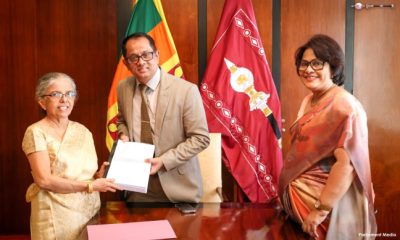


It was decided at the committee appointed to oversee the distribution of essential goods to appoint five officials from the Ceylon Petroleum Corporation to cover all ministries in order to examine fuel-related issues and undertake the necessary interventions.
It was further discussed that the responsibility of these officials would be to examine fuel-related issues arising in institutions under each ministry and to intervene in providing solutions by maintaining coordination with the Corporation.
These matters were discussed at a meeting of the committee appointed to oversee the distribution of essential goods, chaired by Minister of Transport, Highways and Urban Development Bimal Rathnayake held on Friday (27) at the Presidential Secretariat.
It was also noted, with particular attention, that requests have been made by industrialists indicating that the current fuel quota allocated to vehicles for the distribution of their products across the country is insufficient. It was further discussed that, if these concerns are not addressed, there is a likelihood of an increase in the prices of goods, which could in turn cause significant hardship to the public during the festive season.
The committee also discussed the issuance of fuel for the distribution of essential food items by state and private institutions, including supermarkets such as Sathosa, wholesale importers, tourism-related service providers, hotels and other service-providing organisations.
Accordingly, it was discussed that requests for fuel quotas submitted by these institutions should be carefully considered and prompt action taken as necessary and that such requests should be forwarded to the Ministry of Energy through the relevant ministries.
Attention was also drawn to the need for the swift implementation of a QR code system for the issuance of fuel to other sectors, including agriculture and the fisheries industry, based on letters issued on the recommendations of the relevant government officials, including agricultural research officers, instead of the previous method of direct fuel allocation.
Minister Bimal Rathnayake emphasised the need to ensure a continuous and properly managed fuel supply, with particular focus on providing goods to the public without shortages and preventing excessive price increases during the forthcoming Sinhala and Hindu New Year season.
The discussion was attended by a group of government officials, including Minister of Trade, Commerce, Food Security and Cooperative Development Wasantha Samarasinghe, Deputy Minister of Power Arkam Ilyas, Senior Additional Secretary to the President, Kapila Janaka Bandara and Chairman of the Ceylon Petroleum Corporation, D. J. Rajakaruna.


Parliament:
… sexual harassment claims dismissed
Recommendations made by retired High Court Judge Ms. Sujatha Alahapperuma, following an inquiry into claims by a female employee of the Department of Information Systems and Management of Parliament, regarding sexual harassment, denial of due salary increments and other forms of harassment, were yet to be implemented, sources familiar with the investigation said.
The retired HC Judge handed over the report to Speaker Dr. Jagath Wickramaratne on 24 November, 2025. Secretary General of Parliament Kushani Rohanadeera was also present on that occasion.
The retired judge has recommended that administrative decisions be taken expeditiously to grant her salary increments due for 2024 and 2025, reevaluation of all employees attached to the Department of Information Systems and Management and keep them under close scrutiny and strengthening of the ‘Helpdesk’ to meet the requirements.
Sources said that none of the recommendations have been implemented and the concerned employee in spite of still being the Senior Helpdesk coordinator remained attached to the Supplies and Services Office. She had been ordered to report to the Supplies and Services Office in January 2025 following a continuing dispute with the top management of the Department of Information Systems and Management.
Parliamentary Staff Advisory Committee on 25.07.2025 decided to conduct an external investigation into the issue after the employee refused to accept the outcome of the internal inquiry conducted in the wake of SJB lawmaker Mujibur Rahman raising the issue in Parliament.
The retired judge has emphasised the urgent need to take tangible measures to address administrative issues with a view to enhance discipline and human resources management among other issues.
However, the retired judge has declared that the complainant or any other female employee attached to the of Department of Information Systems and Management hadn’t been subjected to any form of sexual harassment as alleged.
The retired judge further asserted that the complainant had been prejudicially treated by two interview boards when she appeared before them seeking posts of Database Administrator and Parliament Officer.
The retired judge has also asserted that the Supplies and Services Office where the complaint continued to serve even now was not suitable and not in line with her qualifications. Some of those who had appeared before the retired judge during the inquiry claimed that was a temporary transfer. However, the report dismissed that claim declaring that transfer appeared to have been done outside acceptable procedure and her increments stopped without giving any justifiable reason.
The retired judge has stated that for want of proper procedures and systems, the administration seems to be in turmoil.
By Shamindra Ferdinando
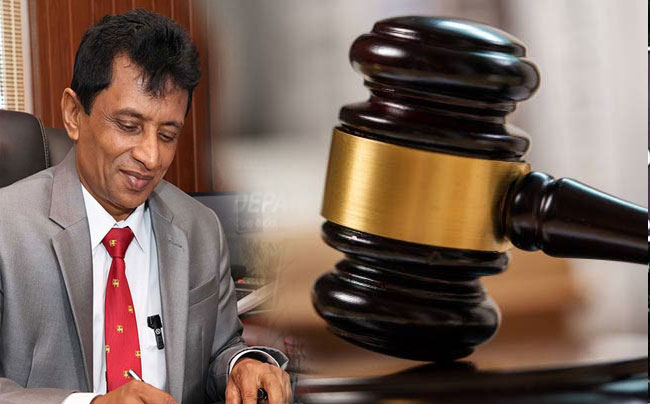
Motor Traffic Commissioner General Kamal Amarasinghe, taken into custody by the CID, was remanded until today (30) following his production before the Kurunegala Magistrate’s Court.
The investigation was launched after the Central Anti-Corruption Task Force received information regarding an illegally assembled taxi, which was later handed over to the CID for further inquiries.
Preliminary findings revealed that the vehicle’s registered chassis number had been altered and documents submitted to obtain a “weight certificate.” These documents were then used to assign a registration number to the taxi, while the chassis modification files were concealed. False declarations were allegedly made to facilitate the fraudulent assembly, with Commissioner General Amarasinghe accused of aiding and abetting the operation.
The suspect was taken into custody on the afternoon of Friday (27) by a CID team at the Hector Kobbekaduwa Road, Colombo 7.
In parallel, the Bribery and Corruption Commission has launched a separate probe into the matter.
The initial investigation was conducted under the direction of SSP Indika Weerasinghe, Head of the Central Anti-Corruption Task Force, along with DIG Rohan Olugala and Senior DIG of CID Kamal Ariyawansa.
BY Norman Palihawadane

A QR code system to be introduced for agricultural lands and other sectors requiring fuel

Rickelton, Rohit, Shardul break Mumbai’s first-game jinx

Oil tops $116 a barrel as Iran accuses US of preparing invasion

Iranian attack damages Kuwait power and desalination plant, kills worker

Warm weather conditions prevailing over the island are expected to continue

Inquiry into female employee’s complaint: Retired HC Judge’s recommendations ignored

‘Dates have the highest sugar content to fight Coronavirus’

Sunday Island 27 December – Headlines

#SundayIsland 17th December – Headlines

Sunday Island – 28th March

Sunday Island Headlines – 21 March

Sunday Island – 21st February – Headlines
-

 News5 days ago
Senior citizens above 70 years to receive March allowances on Thursday (26)
-

 Features2 days ago
A World Order in Crisis: War, Power, and Resistance
-

 News3 days ago
Energy Minister indicted on corruption charges ahead of no-faith motion against him
-

 News4 days ago
US dodges question on AKD’s claim SL denied permission for military aircraft to land
-

 Business4 days ago
Dialog Unveils Dialog Play Mini with Netflix and Apple TV
-

 Sports3 days ago
SLC to hold EGM in April
-

 News5 days ago
CEB Engineers warn public to be prepared for power cuts after New Year
-
 Business6 days ago
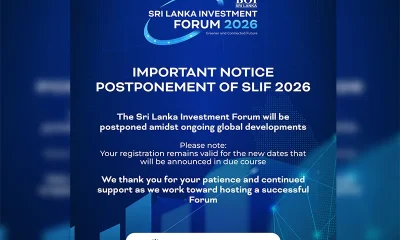
Postponement of Sri Lanka Investment Forum 2026