
News
CEB GM forwards draft agreement giving exclusive rights to Chinese company


Supply of natural gas to power plants
By Ifham Nizam
The Ceylon Electricity Board (CEB) General Manager has forwarded a draft agreement to the Ministry of Finance recommending that exclusive rights be granted to a Chinese company for supplying natural gas (regasified LNG) to power plants at Kerawalapitiya and Kelanitissa.
The CEB invited international bids in February 2021 for the development of a floating storage and regasification unit (FSRU) at Kerawalapitiya on build, own and operate (BOO) basis on a 10-year contract.
Under this tender, the FSRU stationed offshore at Kerawalapitiya will regasify the natural gas delivered by ship in liquid form (LNG) and then deliver it to power plants at Kerawalapitiya and Kelanitissa through gas delivery pipelines to be constructed under a separate tender floated by the Ceylon Petroleum Corporation.
The CEB has engaged an Indian consulting firm using funds provided by the Asian Development Bank (ADB) to prepare the request for proposal (RFP) documents of this tender, which includes the FSRU agreement and the implementation agreement (IA).
The FSRU agreement is to be signed between the CEB and the project company that would be set up by the selected bidder. The IA is an agreement signed between the project company and the Sri Lankan government, which sets out terms on which the government will provide incentives (such as tax concessions) and assistance (for obtaining statutory approvals such as environmental permits) to the prospective project company.
Under the IA, the GOSL will guarantee the payment due to the project company from the CEB under the FSRU agreement. The IA published with the RFP in February 2021 has not offered exclusivity to bidders, as it is unnecessary to offer such a guarantee since the FSRU agreement will ensure that the project company will operate the FSRU for 10 years.
The bids were closed on 25 June 2021, and the CEB has received only two bids despite some 18 companies purchasing the bidding documents.
The CEB Engineers’ Union (CEBEU) at the time claimed that potential investors had been discouraged by the government’s decision to entertain an unsolicited proposal by the US Company New Fortress Energy (NFE) to supply LNG to two private power plants in Kerawalapitiya including the FSRU and delivery pipeline.
However, according to a senior CEB engineer, this allegation was baseless because another international tender for a combined cycle power plant at Kerawalapitiya published around the same time attracted only a single bid. Industry experts blame international developers’ lack of interest in the dire financial situation in the country that existed at the time.
Out of the two bids received, the offer submitted by a leading US firm that owns and operates a large fleet of FSRUs was rejected by the technical evaluation committee (TEC) because the bidder had sought to conduct on its own expense a complete hydrological study of the offshore location assigned for the FSRU.
Some experts, contacted by The Island agreed that such studies were required for designing the offshore mooring system of the FSRU, which is one of the most critical items in the FSRU operation.
They were of the opinion that it was not usual for FSRU developers to rely on preliminary studies conducted by a third party because mooring system design is a highly specialised job that was not entrusted to unknown parties. However, the CEB has refused the bidder’s request, citing the urgency of implementing this project as the proposed study would take approximately two months. Accordingly, the bid has been rejected without further consideration.
However, despite CEB’s claim of urgency, the TEC is yet to complete the evaluation of the single bid and award the tender, 14 months after the bids were closed. The then CEBEU President Saumya Kumarawadu told The Island in September 2021 that the CEB’s tender was based on a comprehensive feasibility study carried out by experts and the tender was in its final stage of evaluation.
He expressed confidence that the CEB would soon select a suitable investor through a transparent and competitive bidding process, to procure the LNG infrastructure to supply LNG for all existing and future power plants in the country at the most competitive prices.
The TEC has accepted the only remaining offer received from a Chinese company, which is already engaged in road construction contracts in Sri Lanka, submitted in partnership with the Pakistani supplier of the FSRU. It is understood that this “qualifying offer” had quoted a price that is nearly twice that of the offer rejected by the TEC.
Based on the prices offered in the two bids received and the total LNG throughput guaranteed by the CEB in the RFP for the FSRU operation (443 million MMBtu for the 10-year period), the Chinese offer would cost around USD 560 million more than the offer of the US company over the 10-year contract term.
Because of the substantially high price quoted by the selected bidder, it has been decided to negotiate with the bidder with a view to reducing the price. Although the government tender guidelines allow negotiating the price with the selected bidder, they do not permit amendments to original commercial conditions or technical specifications during price negotiations in BOO/BOT projects. However, it is understood that the TEC has agreed to several material changes to the bid conditions including the bidder’s demand to change the designated location of the FSRU, a request adamantly rejected by the CEB during tendering.
The CEB has turned down repeated requests from potential bidders during the pre-bid meetings to change the location of the FSRU specified in the RFP. These parties have claimed that the location specified in the RFP did not have sufficient depth of water needed to float the FSRU.
Industry experts contacted by The Island believed that the CEB’s refusal to change the location may have resulted in the CEB ending up with only two bids. In any event, changing the assigned location of the FSRU is a material deviation from the original tender conditions, especially since the CEB has been clear from the beginning that this change could not be allowed.
The amended IA forwarded by the CEB General Manger is believed to contain several other unfavourable conditions not included in the original IA published with the RFP.
One such amendment is the GOSL’s undertaking to grant exclusive rights to the Chinese company for FSRU operation and delivery of gas to power plants for 10 years. Such a condition will effectively give this company full control of gas supply to nearly 2000 MW of generation capacity in the country, regardless of who supplies LNG.
Ironically, the strong opposition by the CEBEU to the proposal by the US company NFE was based on the allegation that NFE would be given a five-year monopoly for LNG supply in the country under that proposal.
It is also understood that the amended IA has added a new section that will effectively prevent the proposed restructuring of the CEB. Some question whether this is a clever ploy by the CEB engineers, who are opposed to the government’s restructuring of the CEB, to force the GOSL to abandon its reform process.
It is also understood that the amended IA has shifted the burden of obtaining numerous governmental and statutory approvals to the GOSL and CEB. Obtaining such approval is the Project Company’s obligation and the government generally agrees in the IA to provide reasonable assistance.
A senior CEB official contacted by The Island agreed that changing mandatory tender conditions after the award was made would be unlawful and likely to be challenged in court. He stated further that it would be most unlikely that the Ministry of Finance would agree to the changes proposed in the amended IA forwarded by the CEB, as some of these conditions may impinge on the rights of the government.





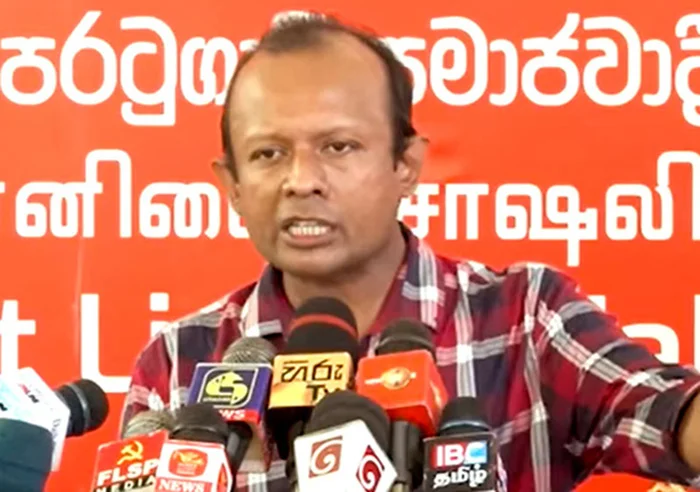
The Frontline Socialist Party (FSP) yesterday accused the government of seeking to use the proposed Protection of the State from Terrorism Act (PSTA) to suppress popular political activity, claiming that some of its provisions were more repressive than those of the Prevention of Terrorism Act (PTA).
FSP Education Secretary Pubudu Jayagoda told a media briefing, in Nugegoda, that the definition of terrorism in the Bill was so broad that it could be used to label almost any form of popular political activity as terrorism.
He said the Bill’s approach to defining terrorism was based largely on attempts to compel a government, or an international organisation, to do, or refrain from doing something, rather than on internationally recognised criteria, such as killings, causing serious bodily harm, kidnapping or acts intended to spread terror among the public.
Jayagoda also alleged that the Bill transferred substantial powers from the judiciary to the executive, while extending powers of arrest, investigation and detention to the armed forces, in addition to the police.
He claimed that the government had sought to portray the Bill as a replacement for the PTA while retaining or introducing provisions that could facilitate political victimisation and repression.
The FSP also questioned the government’s decision to proceed with the Bill, despite having previously sought public views on an earlier draft.
Jayagoda said a draft had been published earlier this year, with the period for public submissions ending on February 28, but the Bill subsequently gazetted was essentially the same draft with some provisions rearranged.
Jayagoda also referred to a letter reportedly sent by Attorney-at-Law Saliya Peiris, a member of a Committee, chaired by President’s Counsel Rienzie Arsecularatne, that had been appointed to draft the legislation. He said Peiris had stated, in the October 06 letter, that changes had been made to the draft prepared by the Committee.
“This means that even the Committee, appointed to prepare the Bill, was a deception,” Jayagoda alleged.
He said that the PSTA was fundamentally similar to the Anti-Terrorism Bill introduced by the previous government, in 2023, which the National People’s Power (NPP) opposed and challenged in court.
“If the NPP opposed that Bill then and is now bringing the same legislation before Parliament, the government must explain its position,” he said.
Jayagoda called on NPP MPs to oppose the PSTA in Parliament and urged trade unions and other groups to build a broad public movement against the legislation.
He challenged the government to an open debate on the Bill.

Former First Lady Shiranthi Rajapaksa was yesterday remanded until 13 October after being produced before the Colombo Magistrate’s Court following her arrest by the Commission to Investigate Allegations of Bribery or Corruption (CIABOC).
Shiranthi, wife of former President Mahinda Rajapaksa, was arrested at her residence on Poorwarama Road, Kirulapone, after CIABOC officers recorded a statement from her for nearly two hours.
According to the CIABOC, the arrest was made over allegations that Rs. 10 million obtained from the National Savings Bank through the Siriliya Saviya organisation was misappropriated.
The money was allegedly obtained to provide a Computed Tomography (CT) scanner to the children’s hospital. Investigators allege that the scanner was not provided and that the funds were instead unlawfully used.
CIABOC is investigating alleged offences under the Public Property Act and corruption-related provisions in connection with the transaction and other financial activities involving Siriliya Saviya, which was headed by Rajapaksa.
Rajapaksa returned to Sri Lanka on Monday night on a flight from Malaysia after travelling overseas for medical treatment. She left for Singapore on 16 September after being admitted to a private hospital in Colombo on 15 September following an illness.
She had been due to appear before the Financial Crimes Investigation Division (FCID) on 13 October in connection with its investigation into the financial affairs of Siriliya Saviya.
Meanwhile, her lawyers filed an anticipatory bail application before the Maligakanda Magistrate’s Court on Monday, seeking an order preventing her arrest in connection with the FCID investigation.
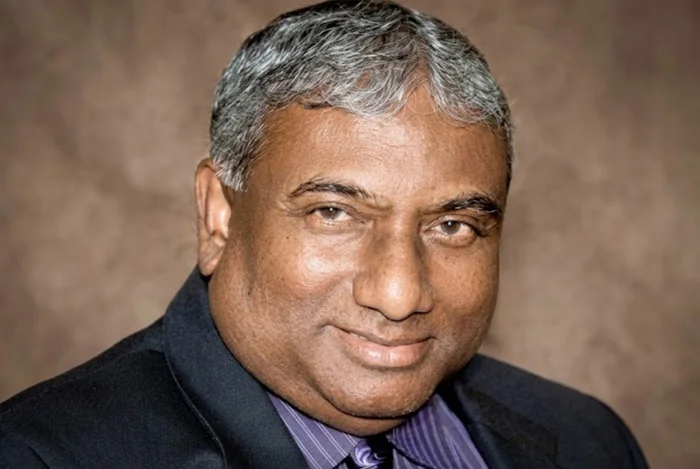
Former National Savings Bank (NSB) Chairman Pradeep Kariyawasam was yesterday granted bail by the Colombo Magistrate’s Court following his arrest by the Commission to Investigate Allegations of Bribery or Corruption (CIABOC).
Kariyawasam, husband of former Chief Justice Shirani Bandaranayake, was arrested in connection with the Bribery Commission’s investigation into the ‘Siriliya Saviya’ account linked to former First Lady Shiranthi Rajapaksa.
The investigation concerns financial activities involving the Siriliya Saviya initiative, which was headed by Rajapaksa, wife of former President Mahinda Rajapaksa.
CIABOC is continuing investigations into the alleged financial irregularities relating to the account.

Showers above 100 mm are likely at some places in the Western, Sabaragamuwa, Central, Uva and Southern provinces and in Anuradhapura district

PSTA worse than PTA: FSP

Shiranthi R remanded until 13 Oct.

Former NSB Chairman Kariyawasam granted bail

Katchatheevu row: India SC urges fishermen to avoid Sri Lankan waters

Remembering Juvenal, Coke, Acton and Machiavelli

‘Dates have the highest sugar content to fight Coronavirus’

Sunday Island 27 December – Headlines

#SundayIsland 17th December – Headlines

Sunday Island – 28th March

Sunday Island Headlines – 21 March

Sunday Island – 21st February – Headlines
-

 Editorial7 days ago
Colombo Port drug bust: The plot thickens
-

 Features5 days ago
The first woman in the foreign service or Ceylon Overseas Service it was then called
-

 Editorial6 days ago
Fuelling discontent and protest
-

 News4 days ago
Geneva takes up Sallay’s case and govt. ignores opportunity to answer accusations
-

 Foreign News5 days ago
Ten injured after car crashes into rugby supporters in Australia
-

 Latest News5 days ago
Tharindu Rathnayake, bowlers secure Asian Games Bronze for Sri Lanka
-

 News5 days ago
Nearly 20 Iranian tankers stranded off Lanka amid US sanctions
-

 Features4 days ago
Sri Lanka Cricket Bill: Governance reform is not yet a cricket strategy