
Opinion
Can doctor-patient confidentiality be broken?


I am thankful indeed to Guwan Seeya (The unthinkable: The Island, 28 July) for expanding on and clarifying some of the points I raised in my article “Did the ‘unthinkable’ happen?” (The Island, 22 July). Unfortunately, the crash of Air India flight 171 on12th June, which was in the air only for 32 seconds before falling to the ground, continues to arouse controversy, the latest focus of attack by experts on YouTube being the report of the Aircraft Accident Investigation Bureau of India, overlooking the fact that this is only an interim report. I was surprised by the comment of an American pilot “This is no longer an accident investigation. It should now be a criminal investigation!” whilst there are reports that investigators are considering the possibility of a limited fire in the tail of the aircraft as there was fire damage to the black box sited there. Perhaps, the AAIB report, while meeting statutory obligations, gave room for speculation by not naming the pilot who asked the question “Why did you turn the fuel switch off?” Further, why there was a delay of 10 seconds to turn the fuel switches back is not explained. It may well be that there is nothing in the cockpit recording to explain or may well be due to the disorienting psychological response of pilots, due to the most unusual of circumstances, known as ‘startle effect’
Guwan Seeya has laid my mind to rest by assuring that both Boeing and Airbus aircraft have adequate warnings. However, he mentions that these tend to be rather muted under 400 feet. In fact, though AI 171 climbed to 625 feet above sea level, as Ahmedabad airport is 200 feet above sea level, alarms may not have been loud. On further inquiry, I am surprised to find that dual engine failure produces a yellow than a red alert. He has also raised the issue whether psychological support services are available to Indian pilots. Perhaps not, as it is reported that several Air India pilots reported sick, peaking at 112.
Guwan Seeya has gone in to the details of the purposeful crash by the co-pilot of Germanwings flight 9525 and raised the very valid question whether it could have been avoided, provided doctor-patient confidentiality could be broken. Though he wondered whether it was a complex situation, it clearly was not and could have been avoided. This is a clear instance where the treating psychiatrist should have broken doctor-patient confidentiality as the suicidal tendencies, by the very nature of the profession, posed a significant threat to the public. However, in mitigation of the psychiatrist is the fact that he may have trusted his patient to heed the advice not to fly.
Doctor-patient confidentiality, unlike the confidentiality in the confessional, is subject to laws of the land. As for ’The Seal of the Confessional’ Catholic Education Resource Centre states:
“The sacramental seal is inviolable. Quoting Canon 983.1 of the Code of Canon Law, the Catechism states, “…It is a crime for a confessor in any way to betray a penitent by word or in any other manner or for any reason” (No. 2490). A priest, therefore, cannot break the seal to save his own life, to protect his good name, to refute a false accusation, to save the life of another, to aid the course of justice (like reporting a crime), or to avert a public calamity. He cannot be compelled by law to disclose a person’s confession or be bound by any oath he takes, e.g. as a witness in a court trial. A priest cannot reveal the contents of a confession either directly, by repeating the substance of what has been said, or indirectly, by some sign, suggestion, or action.”
Fortunately, doctors are not bound by such severe strictures. According to the General Medical Council of UK, confidentiality is needed because “Trust is an essential part of the relationship between patients and medical professionals and confidentiality is central to this. Patients may avoid seeking medical help, or may under-report symptoms, if they think their personal information will be disclosed without consent, or without the chance to have some control over the timing or amount of information shared.”
However, doctor-patient confidentiality could be broken under specific circumstances, usually, where public good is placed above that of the privacy of the patient. While confidentiality is a fundamental principle in healthcare, there are specific, legally, and ethically justified circumstances under which it can be breached to protect individuals or the public, which include:
Risk of Serious Harm If a patient poses a threat to themselves or others, confidentiality may be breached to prevent harm. This includes situations where a patient threatens violence or has a serious communicable disease that poses a risk to public health.
Legal Obligations
Healthcare professionals may be required to disclose information under certain laws, such as reporting infectious diseases, child abuse, or when ordered by a court. In these cases, the law mandates disclosure to protect individuals or the public.
Public Interest: Breaches may be justified if the benefits of disclosure outweigh the patient’s right to confidentiality. This includes scenarios where failing to disclose could result in death or serious harm to others, such as in cases of serious crime or public health threats.
Lack of Capacity: If a patient lacks the capacity to make informed decisions, healthcare professionals may disclose information in the patient’s best interest, especially if they are at risk of harm.
However, Healthcare professionals must carefully weigh the ethical implications of breaching confidentiality. The General Medical Council (GMC) emphasizes that any disclosure should be justifiable, and professionals should document their reasoning clearly. Maintaining trust in the doctor-patient relationship is crucial, and breaches should be approached with caution.
Thus, it can be seen that in the case of Germanwings pilot, his psychiatrist should have breached confidentiality. which would have saved many lives.
By Dr Upul Wijayawardhana


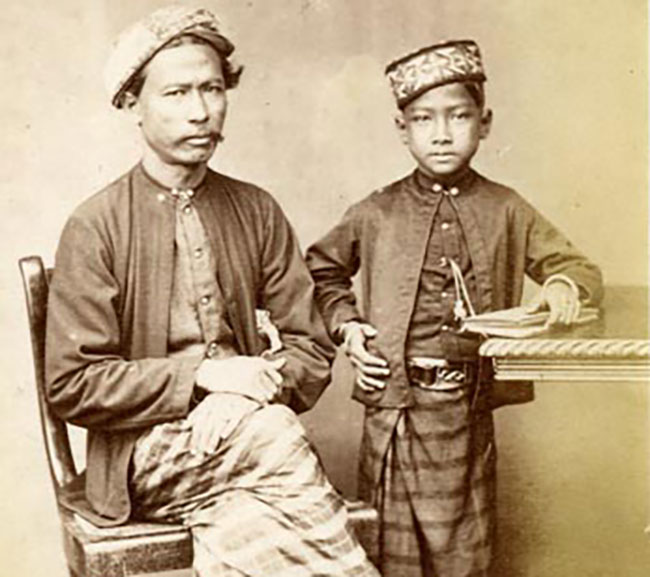
There is a mosque on Slave Island in Colombo that has stood for more than three centuries. Masjidul Jamiya was not built by merchants or pilgrims. It was built by soldiers, Malay soldiers who came to this island in service to the Dutch crown and, after 1796, to the British, and who stayed, raised families, and made Ceylon their permanent home. That mosque, and the neighborhood that grew quietly around it, is perhaps the most visible monument to something the rest of this country has largely forgotten: that the Malays of Sri Lanka have been here, contributing and serving, for longer than the modern republic has existed.
Today the community that built that mosque numbers approximately 40,000 people. We are 0.2 percent of the population. We hold no seat in Parliament. We have no dedicated political voice. With each passing decade our language, our culture and our civic presence grow a little quieter. This is not an appeal for sympathy. It is a case, resting on history and on democratic principle, for a recognition that is long overdue. The Malays of Sri Lanka are not asking for charity. We are asking to be counted in the nation we helped build
A Community of Soldiers, Scholars and Statesmen
The Sri Lankan Malay story does not begin in the colonial footnotes. Austronesian seafarers reached these shores as early as 200 BC. The 13th century brought Chandrabhanu Sridhamaraja, a Javanese ruler who led an invasion from Tambralinga and briefly held dominion over northern Sri Lanka. The community that exists today, however, traces its roots most concretely to the Dutch colonial era, when soldiers, nobles and political exiles from across the Indonesian archipelago, from Sulawesi, Java, Bali, Ambon and Madura, arrived in Ceylon and never returned.
These were not passive arrivals waiting for history to happen around them. The Malays became the backbone of Ceylon’s colonial military, serving with enough distinction that the British formalised their role through the Ceylon Rifle Regiment, a unit staffed almost entirely by Malays. The regiment’s influence extended far beyond the barracks. Malay soldiers in Colombo published the first Malay-language newspaper issued anywhere in the Eastern world. They built mosques across Kandy, Badulla, Kurunegala and Hambantota. They left their mark on the Sinhala language in ways that persist to this day: the words sarong, rabana, botale, kamara, bonchi and soldaduwa all trace their roots to Malay. The nation’s beloved dodol is a Malay contribution.
In the legal and civic sphere, the record is equally substantial. Justice Maas Thajoon Akbar became the first Malay Justice of the Supreme Court of Sri Lanka in the 1920s. Tuan Burhanudeen Jayah, known as T. B. Jayah, served in the Legislative Council, the State Council and in the first post-independence Parliament. Dr. P. Drahaman, a physician who founded the All Ceylon Malay Congress in 1944, won a parliamentary seat in 1956 and argued with striking clarity that Malays deserved representation in their own right, distinct from any other community. In the armed forces, Brigadier T. S. B. Sally rose to become Chief of Staff of the Sri Lanka Army, the highest rank any Malay officer has ever held.
This is not a peripheral community. This is a community that has served at every level of Sri Lankan public life and has been rendered progressively invisible in the democratic structures of the state it helped to build. We shaped this nation’s language, defended its sovereignty and administered its laws. Yet today we hold no seat in its Parliament.
The Slow Erasure
The 2024 Census records the Malay community within a combined category alongside Burghers, Chetties, Bharathas and Veddas that together account for just 0.3 percent of Sri Lanka’s total population of 21.7 million. Within that fraction, the Malays number fewer than 40,000. Under Sri Lanka’s proportional representation system, where votes are cast for parties across multi-member electoral districts, a community of this size has no realistic prospect of parliamentary representation through any community-specific route.
The practical consequence has been absorption into broader Muslim political formations that do not always attend to the specific cultural, linguistic and civic concerns of the Malay community. The All Ceylon Malay Political Union, which fought explicitly and consistently for a distinct Malay political voice, faded from active political life decades ago. The last Malay to hold a parliamentary seat of any kind was a nominated member in 1989. That is 37 years without representation.
The Sri Lanka Malay language, a creole blending Austronesian, Sinhala and Tamil in proportions found nowhere else on earth, is classified as endangered. Senior academics who are themselves Malay acknowledge that they rarely speak it at home. The Malay Club at Slave Island, the Sri Lanka Malay Association, the Conference of Sri Lanka Malays: these institutions remain active and their members dedicated, but cultural associations cannot substitute for political representation. Without a voice in policy, a community has no mechanism to advocate for its own language, its schools or its civic recognition.
The Bonds That Remain
What makes the Malay political case distinctive, and worth the attention of any serious Sri Lankan political leader, is the particular character of the community’s relationship with the Sinhalese majority. Unlike many of the fault lines that have defined Sri Lankan politics for decades, the Malay connection with Sinhalese society runs deep and is rooted in centuries of genuine proximity. Sri Lankan scholars have documented significant intermarriage between early Malay settlers and Sinhalese communities, particularly in the south and west of the island. The linguistic overlap is not incidental; it reflects generations of neighbors, colleagues and extended family.
The Malays were never a party to this country’s most devastating ethnic conflicts. A community that is small in number and dispersed across Colombo and the western coast has always been obliged to build relationships across communal lines rather than retreat behind them.
That quality of bridge-building is not weakness, nor is it political neutrality born of indifference. It is the earned disposition of a people who have always understood that their future in Sri Lanka is inseparable from the future of the country as a whole.
In a political moment when Sri Lanka is actively pursuing national reconciliation and inclusive governance under the NPP administration of President Anura Kumara Dissanayake, that disposition is not a liability. It is a genuine political asset. The Malay community has never been an adversary in Sri Lanka’s story. We have always been partners. It is time the state recognised us as such.
What Representation Would Look Like
This is not an argument for a return to communal politics or ethnic bloc-building. Sri Lanka has paid an enormous price for that history and nobody with any sense wants to revisit it. What is being argued here is a model of civic representation rooted in culture, in documented contribution and in constitutional possibility.
The National List, the 29 proportionally allocated parliamentary seats distributed after each general election, has been used before to include communities and voices that the direct electoral system cannot accommodate. A major political party that chose to place a credible Malay representative on its National List would bear no electoral cost for doing so and would signal something genuine about its understanding of Sri Lanka’s full diversity. That is not a complicated ask.
At the local level, the Colombo Municipal Council and the relevant Pradeshiya Sabhas offer a more immediate pathway. The Malay community is concentrated enough in Slave Island, Wellawatte and the broader Colombo district that a well-organised ward-level campaign is a realistic proposition. Local government has historically been where minority community members establish the credibility that national politics eventually recognizes.
Beyond elections, there is a straightforward case for formal state recognition of the Sri Lankan Malay community’s cultural and linguistic heritage, including support for language preservation, inclusion in national school curricula and proper documentation of Malay contributions to Sri Lankan history. When Mahatma Gandhi visited Sri Lanka in 1927, he reportedly mentioned the Malays in nearly every public address he gave on the island. It would be a particular kind of failure if the modern Sri Lankan state knew less about its own communities than a visiting guest did, a century ago.
A Voice Worth Having
I write this as a Sri Lankan Malay who has a great deal of affection for this country and a clear-eyed view of both what it has been and what it can become. The NPP government came to power on a conviction that the old patterns of Sri Lankan politics needed to be broken and that the state should answer to all of its people. If that conviction is real rather than rhetorical, it must eventually reckon with the communities that have slipped through the architecture of the electoral system through no failure of their own but through the simple arithmetic of smallness.
Forty thousand Malays. Three centuries of documented service. No seat in Parliament.
That is not a record that should be comfortable for any government that takes representation seriously. It is, however, one that is entirely possible to change.
ABOUT THE AUTHOR
Thanzyl Thajudeen FCIPR FCIM FCMI is a Chartered PR Practitioner, Managing Director of Mark and Comm (Pvt) Ltd, and a board member of PRCA Asia Pacific. He was named Campaign Asia-Pacific 40 Under 40 in 2024. He is a Sri Lankan Malay. The views expressed are his own.
by Thanzyl Thajudeen,a Sri Lankan Malay ✍️

Children’s stories have always been an important part of childhood. From traditional fairy tales to modern picture books, stories entertain children while also helping them understand the world around them. When children are learning English as a language, stories become an especially valuable tool because they provide a natural, enjoyable, and meaningful way to develop language skills. Through characters, plots, and imaginative situations, children’s stories support vocabulary development, improve communication abilities, and encourage confidence in using English.
One of the greatest benefits of children’s stories in English language learning is that they introduce children to new vocabulary in a meaningful context. Instead of memorising isolated words from a list, children learn words through situations and actions within a story. For example, a story about a farm may introduce words such as “animal,” “field,” “farmer,” and “plant” while showing how these words relate to each other. This contextual learning helps children understand and remember new vocabulary more effectively.
Stories also improve children’s listening skills. When teachers, parents, or other speakers read stories aloud, children hear correct pronunciation, sentence structures, and natural expressions in English. Regular exposure to spoken English helps children become familiar with the rhythm, sounds, and patterns of the language. Even when children do not understand every word, they can often follow the meaning through pictures, gestures, and the events of the story. Over time, this develops their ability to understand spoken English in different situations.
Another important impact of children’s stories is the development of speaking skills. Stories encourage children to talk about characters, describe events, answer questions, and share their own ideas. Activities such as retelling a story, acting out scenes, or discussing what might happen next give children opportunities to practise English in a relaxed environment. Because stories are enjoyable and engaging, children are often more willing to participate and communicate without fear of making mistakes.
Children’s stories also support the development of grammar skills. Through repeated exposure to well-formed sentences, children gradually recognize how English works. They learn common sentence patterns, verb forms, and ways of expressing ideas. For young learners, grammar is often easier to understand when it is presented through a story rather than through direct explanations. For example, a story that describes past events naturally introduces the use of past tense verbs, allowing children to observe grammar in action.
In addition to language development, stories have a strong influence on children’s imagination and creativity. Stories allow children to enter different worlds, meet interesting characters, and explore new ideas. When learning English, imagination makes the language experience more meaningful. A child who becomes interested in a story about a brave character or a magical adventure is more likely to remember the words and expressions connected with that experience. Creativity also encourages children to create their own stories, which further strengthens their ability to use English.
Children’s stories can also help develop cultural awareness. Language is closely connected with culture, and stories often introduce children to different traditions, lifestyles, and values. English stories from different countries allow children to learn about people and places beyond their own experiences. This helps them understand that English is not only a subject to study but also a way to communicate with people around the world.
Reading stories in English can also increase children’s motivation and positive attitudes toward learning. Many children may find learning a new language challenging, especially when they focus only on textbooks or exercises. Stories make learning more enjoyable because they combine education with entertainment. When children associate English with fun and creativity, they are more likely to develop curiosity and continue learning.
The emotional impact of stories should not be overlooked. Many children’s stories contain themes such as friendship, kindness, courage, and problem-solving. Through characters and situations, children can learn important social and emotional lessons. Discussing these themes in English gives children opportunities to express feelings, opinions, and personal experiences. This not only improves language ability but also supports emotional growth.
Teachers play an important role in using stories effectively in English language classrooms. Selecting stories that match children’s age, interests, and language levels is essential. Teachers can support understanding by using pictures, asking questions, encouraging predictions, and connecting the story to children’s lives. Repetition is also valuable, as hearing the same story several times allows children to become more familiar with vocabulary and sentence structures.
Parents can also encourage language learning through storytelling at home. Reading English stories together, listening to audiobooks, or watching story-based programs can provide additional exposure to the language. A supportive environment where children feel comfortable experimenting with English can greatly improve their confidence and progress.
In conclusion, children’s stories have a powerful impact on learning English as a language. They provide children with opportunities to develop vocabulary, listening, speaking, reading, and grammar skills in an enjoyable and meaningful way. Beyond language learning, stories encourage imagination, creativity, cultural understanding, and emotional development. By making English learning engaging and enjoyable, children’s stories help young learners build a strong foundation for future communication and lifelong learning.
Saumya Aloysius
(A children’s writer contributing to both local and foreign newspapers as a freelance writer)
Any government that comes into power is a caretaker – of its people, environment and security. This is another glaring occasion where their lack of knowledge, or blatant disregard to the environment is causing long-lasting damage to this country.
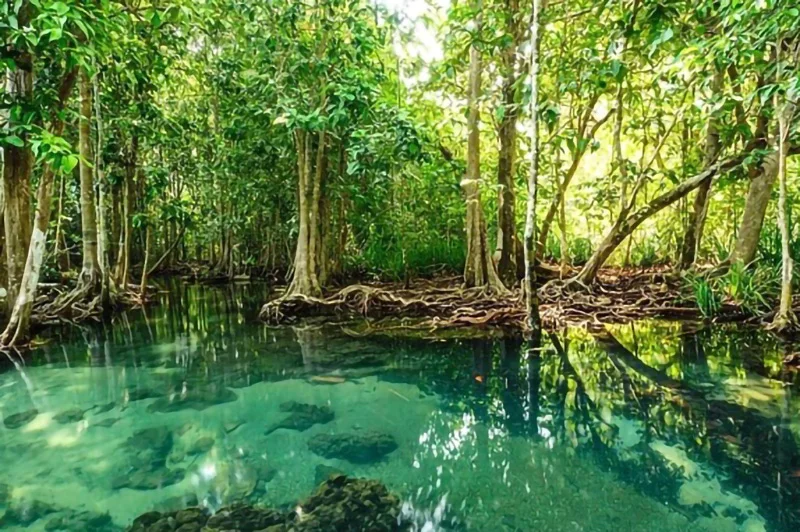
After the devastation of the tsunami, then governments took the initiative to raise natural protection of the island by undertaking massive projects to plant mangroves. It was a long-term project, spanning 20 years, by the armed forces, to get these barriers up. Now the same army is used by this government to chop down these mangroves!!
This is happening right now in the Trincomalee lagoon. Nearly 40 lorry loads of mangrove forest have been taken away already. The excuse used for this is dengue control, a circular issued by the presidential secretariat in June. The ignorance is here; the seawater mixed lagoon does NOT breed mosquitoes. Trincomalee does not pop up in the dengue demographics, even as a high risk area. Yes, there is garbage, and plastic thrown into the mangroves that can be breeding grounds for mosquitoes. These can be cleared away in a clean-up operations, without harming the mangrove trees. It has been done a few times before, by previous government authorities, like coast conservation, who know the value of the mangrove belts. The local rumour becomes believable, that this deplorable act is done to please some local business partners of the area who run pleasure boats in the lagoon.
Yes, unhealthy mangroves can breed mosquitoes. But mangroves are ‘decease swamps’ is a dangerous myth. That mangroves are dirty, stagnant swamps teeming with decease carrying mosquitoes is a misconception that promotes harmful policies to control dengue outbreaks. This top myth justifies the illegal coastal clearance today in Trincomalee. It is destroying an important ecological asset of this country, mangroves, while failing to address the true root of dengue transmission. Where is the coast conservation department in this situ? Have they got CCD permission to carry out this butchery?
Healthy mangroves do not breed dengue mosquitoes, especially the one’s closely connected to the sea like in Trincomalee. The larvae needs completely still unmoving water to breathe at the surface, and mature. The power of tidal flushing which keeps water circulating in the mangroves makes this impossible. Also the daily ebb and flow of ocean tides keeps the water moving in the mangroves and frequently drains the forest floor. The natural hydrology of healthy mangroves, acts as an automatic self-regulating barrier against stagnant water collection, making viable breeding sites virtually impossible.
Also mangroves contain nature’s exterminators. It hosts a massive army of mosquito predators. These mangroves are not dead swamps but vibrant nurseries. Young Fish, dragon flies, crusteasians, and insectivorous birds are natural mosquito predators. Clearing mangroves collapses this natural food web, removing this natural pest control.
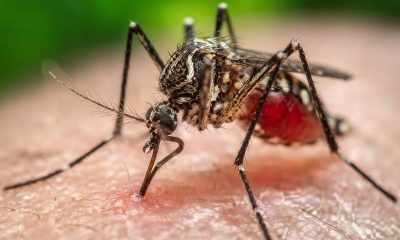
In fact, clearing mangroves is counterproductive and will backfire with worsened dengue cases. The heavy machinery will leave a scarred landscape with deep tyre tracks in the marshy soil making stagnant water pools and disrupted drainage. When rainwater fills these artificial depressions it will create perfect stagnant, predator free, fresh water pools, Ideal breeding grounds for Aedes aegypti. Also clearing this kind of buffers can bring in the urban sprawl with its people, housing, and garbage, to the new degraded land.
The collateral damage is even bigger. Destroying mangroves in the name of pest control leaves coastal populations poorer, hungrier, and highly vulnerable to extreme weather. One would have thought at least the people in the coast conservation department were knowledgeable enough about the loss of wave attenuation with removal of mangroves and the risk of flooding and storm surge damages to the coastal areas. Collapse of these fish nurseries should ring alarm bells in the fisheries department. Reduced fish harvest and loss of livelihood for the local fishermen should have had fisheries department people rushing to the site. But neither of the mentioned government departments have raised a murmur, in the face of political influence. This is the sad truth of the country at the moment. Sri Lanka’s climate resilience has been compromised by release of stored ‘blue carbon’ and a loss of natural buffer against rising sea levels, while the responsible people in the government are silent in front of an ignorant political hierarchy.
This is an appeal to the highest authority in the country to stop this environmentally insensitive projects of this nature being coughed up by ignorant municipal members. Clearing these forests directly violates so many policies on conservation. Our local fishermen depend entirely on healthy mangrove root systems—such as those being chopped down. From a health perspective, medical professionals have repeatedly assured us that under the current National Policy Framework, marshy lands and mangrove ecosystems pose no threat of dengue. We request your guidance and intervention to ensure our environment is not sacrificed.
Citizen S

Binura, Liyanage, Neesham take Colombo Kapps to victory

Russia launches major ballistic missile attack on Ukrainian cities

Messi on the brink of history – will it be his last World Cup game?

Manjot Kalra denies fixing allegations in LPL 2026

Lizaad, Traveen and Bhanuka steer Jaffna Kings to five wicket win

10th Navy Open Shooting Championship concludes

‘Dates have the highest sugar content to fight Coronavirus’

Sunday Island 27 December – Headlines

#SundayIsland 17th December – Headlines

Sunday Island – 28th March

Sunday Island Headlines – 21 March

Sunday Island – 21st February – Headlines
-

 Business23 hours ago
‘Giving up was never an option’: The fisherman who fought back after losing millions in SL
-
 Features23 hours ago
Two memorable excerpts from a former SLAF commander’s memoir
-

 Latest News2 days ago
Davis cup Asia/Oceania Group IV 2026 to be held in Colombo from 20th to 25th July
-

 Features23 hours ago
Erdoğan’s New Republic
-

 Life style23 hours ago
Taste of the Swiss Alps comes to Colombo
-
 Features5 days ago
Dirty Money
-
 News2 days ago
Dengue outbreak gallops ahead: Infections surpasses 73,455, leaving 50 dead
-

 News2 days ago
Evidence recorded in money laundering case against Yoshitha Rajapaksa