
Opinion
Reflections on a journey towards positive ageing – Part I


A Former Senior Tutor, Pubic Health, NIHS, Kalutara
This article is intended to guide the reader through fundamental concepts of aging and the notion of positive ageing, elucidating how these factors empower individuals to achieve a state of health and well-being as they advance in years. Positive aging is predicated upon one’s attitude and mindset, recognising that aging is an intrinsic process that necessitates acceptance of the vulnerabilities encountered throughout one’s lifetime. The aging process commences in one’s early twenties, with abilities peaking around the thirties, subsequently followed by a gradual decline in both physical and mental health. Seven essential factors are delineated as crucial for successful aging, among which social connections are identified as critically significant. David Alan Lereah posits that the quality of life is not dictated by physical or mental constraints but rather by our selection of “aging rooms,” which he categorises into three distinct types. Positive thinking, an integral component of positive aging, can result in an extended lifespan. In the final analysis, positive aging may be regarded as a fundamental pillar of enhanced happiness and profound joy.
Ageing
Ageing is an accumulation of changes in a human being over time and can encompass, physical, psychological and social changes. It is a lifelong process when physical and mental decline occurs throughout one’s lifespan. With the right attitude and a healthy spirit, aging can bring about much joy and many rewards. Getting old is not at all depressing. The goal is to adjust in your life so you can better cope with “inconveniences” such as changes to your appearance, bodily functions and mental health and even life-threatening disease. Aging means living to its fullest as you grow older.
Positive ageing
There is no set definition of positive aging. However, the passage of time undeniably exerts a psychological influence on our lives. Generally speaking, positive aging encompasses our capacity to nurture an optimistic outlook, remain anchored in the present moment, cultivate self-assurance, maintain physical well-being, and engage wholeheartedly in the journey of life. When approached with zeal, positive aging transforms into successful aging, enabling us to author a gratifying narrative about our existence. This concept empowers us to better navigate the inevitable physical and mental decline that accompanies aging. It emphasises the importance of maximising our later years and embracing the singular opportunities they present, rather than fixating solely on the tribulations of growing older.
Positive aging encompasses a variety of attitudes and lifestyle choices that promote well-being and fulfilling life as people age. Positive aging also entails the elements of psychological, spiritual, physical, and social support. They are in a frame of mind such as exercise, healthy diet, social interaction and so on. Having a positive mindset about growing older can have an impact on overall well-being throughout the life span.
Positive ageing vs healthy ageing
While positive aging focuses on maintaining a positive attitude and mindset about aging, healthy aging emphasises maintaining physical and mental health, functional abilities and overall well-being. Healthy aging can be seen as a component of positive aging, as a positive attitude can support healthier choices and engagement in life. While often used interchangeably, both are related but are distinct concepts.
Ageing process
Aging occurs throughout our life. Doesn’t happen when we reach 65. It begins in our 20s. According to John Cavanaugh, sensory abilities peak in your early 20s while vision typically begins to deteriorate in your middle ages. The muscle strength in men and women peaks between 20 and 30 and resting metabolism which accounts for a major part of energy consumption peaks in early adulthood. According to Valerie Gladwell, your endurance peaks at age 22 while memory peaks at 28. We are physically and mentally deteriorating for most of our lifetime. But for most of us aging doesn’t begin to have a significant impact on the quality of our lives until after we pass 50.
Most of us begin life believing we are immortal that nothing will happen to us. As we grow old and encounter the physical and mental hall mark of aging, the reality of our mortality and the concept of finality creeps into our thoughts. Moreover, trying to age gracefully with dignity feels like swimming against the tide of today’s fore ever-young society where the young are perceived as beautiful and more energetic while the old are seen as stale and useless. Aging and its accompanying physical and mental challenges may be inevitable, but our later years do not have to be miserable.
Building blocks as a foundation for successful and positive ageing.
Those possessing a positive mindset will cultivate qualities such as self-love and self-worth, altruism and communal stewardship, as well as a harmonious alignment with the ecosystem. The attributes, often found within the realms of spiritualism and its various interpretations, will elevate one’s existence, guiding individuals toward a life of fulfillment and higher states of being. The fundamental building blocks noted below represent the core values that inspire and propel one toward achieving peace and tranquillity as one matures.
* Your inner spirit
* Mindfulness
* Positive attitudes
* Acceptance
* Adaptation
* Appreciation
* Social support
The inner spirit
We are more than merely our physical form. We possess a spiritual essence that embodies our inner spirit, which constitutes the quintessence of an individual. This essence encompasses spiritual, emotional, and cognitive dimensions. Spiritual power, conversely, refers to the intrinsic strength that remains unseen, which the inner spirit can harness for diverse purposes.
A more robust inner spirit imparts a profound sense of purpose and meaning to life, offering solace, resilience, and a feeling of belonging. It enhances emotional capacity and well-being, equipping individuals to navigate their emotions and confront challenges. Moreover, it has the potential to ignite creativity, allowing one to express their authentic self.
We need to go our spiritual journey to prevent growing older. Most are unaware the critical role that spiritual power can influence. With the support and family and friends combined with a healthy spirit, growing can be positive if not an exciting journey.
The Swedish Gerontologist Lars Tomstan who developed the theory called Gerotranscendence (1989) postulates a mind shift in old age from a rational and materialistic viewpoint to a more transcendent one and accompanied by increased satisfaction (Wadensten.2007). The outcome of transcendental aging is the individual’s acceptance of him/herself and others as well as a decrease fear of death. Furthermore, an unhappy narrative in many people’s heads that cause a very miserable life could also be minimised.
Mindfulness
Is the practice of residing in the present moment with non-judgmental awareness, liberated from concerns regarding the past or the future? This approach enables individuals to truly appreciate each moment in life. It encourages heightened awareness of one’s thoughts, actions, and physical sensations. Techniques such as meditation, mindful breathing, and yoga, among others, are employed to cultivate this awareness. The myriad advantages that mindfulness affords are substantial—it alleviates stress, enhances concentration, and fosters overall health and well-being.
Particularly for older adults, mindfulness can mitigate symptoms associated with depression, combat illness, promote cardiovascular health, manage pain, and improve sleep quality. Most crucially, being anchored in the present moment allows the elderly to concentrate their attention on their immediate surroundings, which can avert potential hazards in environments characterised by poor lighting, slippery surfaces, or stairs. Ultimately, what we aspire to provide our elders is an improved quality of life, and there exists ample evidence that mindfulness can facilitate this goal.
Positive attitudes
Positive attitudes significantly contribute to physical, mental, and social well-being. They serve as a precursor to personal growth and development, which, in the context of positive aging, embodies a purposeful and successful existence. Individuals with optimistic dispositions tend to be resilient, open-minded, adaptable to change, and spiritually inclined. They nurture thoughts and emotions that manifest as acts of wisdom. Furthermore, they are the ones who frequently experience moments of joy and fulfillment, demonstrating a profound connection to biodiversity. Abundant in love and affection, they exhibit a generous spirit. Research indicates that those who cultivate positive attitudes enjoy longer lives, experience reduced stress, and are less vulnerable to illness. Embracing positivity enables us to uphold our self-worth as we navigate the challenges of aging, allowing us to eschew negative thoughts and confront life with unwavering resolve.
The 3 As Acceptance
Acceptance emerges from individual preferences, which are fundamentally rooted in one’s value judgments. It is akin to the decision-making process involved in accepting a job, wherein one weighs the advantages and disadvantages, particularly the short-term and long-term benefits. However, acceptance as a fundamental component of the aging process appears to diverge, as the elderly must cultivate a genuine understanding that aging is a natural progression accompanied by both physical and mental decline, often amid anxiety and the fear of mortality. On the advantageous side lies the maturity and wisdom amassed over the years. It seems to present a dichotomy between these two aspects. A positive disposition towards aging, a readiness to embrace change, and a belief in one’s destiny can significantly pave the way towards positive aging. Exemplars such as centenarians, esteemed statesmen, writers, and poets serve as inspiring figures to emulate. Engaging in meditative practices, leisure activities, mild exercise, and mental stimulation will undoubtedly enhance the aging experience.
Adaptation
Is a manner in which individuals attunes themselves to navigate an unforeseen event or an undesirable circumstance, anticipating some form of relief? Such resilience can be cultivated by concentrating on the purpose and significance of a fulfilling life. On a superficial level, one might engage in regular physical exercise, adhere to appropriate medical regimens, maintain a nutritious diet, ensure adequate rest, and practice spiritual meditation, as well as volunteerism that enriches the psychological landscape. Numerous instances illustrate how adaptability can triumph when faced with adverse situations of various kinds.
Recall your initial day at school or your workplace; feelings of nervousness and apprehension regarding your peers were prevalent. You navigated those periods by accepting the challenges as inevitable hurdles.
As you mature, it is essential to adapt to your environment and the changes in your physical condition. For instance, should you suffer a knee injury, employing a walker becomes necessary. If memory falters, utilizing a reminder calendar can be beneficial. In the face of a cancer diagnosis, seeking treatment and nurturing hope is imperative. It is indeed that straightforward. This is your encore. Seize the opportunity to make the most of it. (To be continued)
(The writer holds a BA degree, Diploma in Social work (Sri Lanka) and Masters in Public Health, School of Public Health, University of Hawaii USA. He was a Former Senior Tutor Public Health, National Institute of Health Sciences, Kalutara, Social Science Officer National Water Supply & Drainage Board, Consultant to DANIDA & FINNIDA on Water & Sanitation, Social Development Consultant National Institute of Plantation Management, Sociologist European Union Funded Agriculture Productivity Village Development y Project, NGO Coordinator IFAD Funded North Western Province Dry Zone Development Project. Experience in working as an After-hour Interne at the Makua Ali Senior Citizen Housing Project Honolulu, Hawaii from January thru December 1983 during his Masters programme in 1982-1983 and research experience in social science, public health , reproductive health and heath promotion.)


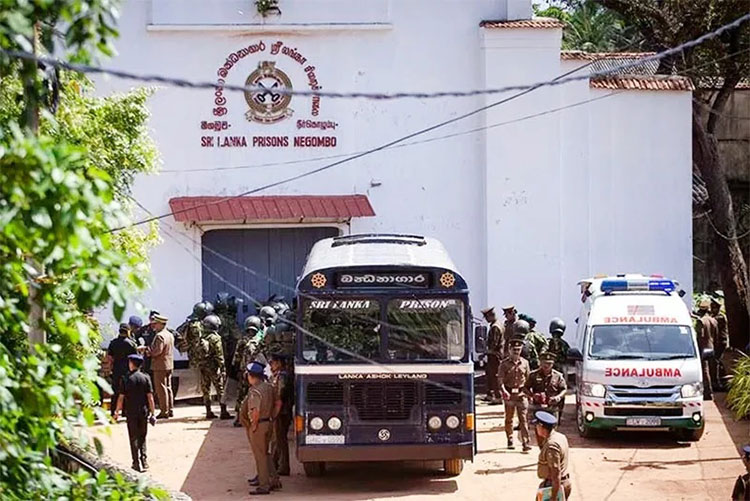
I watched the Negombo Prison riots on news channels from London, and the tragic deaths of the prisoners, and the prison officers, who were killed during the riots. Ten prison officials and 21 prisoners died in the two days of fighting between two groups of inmates at the prison.
Some mainstream media in Sri Lanka always exaggerate the cruelty of the prisoners, while ignoring the circumstances of the ill-fated prisoners and their poor relatives. The government came to power promising to eradicate poverty but their priority became eradicating the drugs. By launching the aggressive war on drugs, the government arested a large number of suspects without a comprehensive plan to accommodate them in remand prisons. There were complaints and reports about how some police officers had abused their power to arrest and detain some individuals, on false drug charges
The number of inmates in Sri Lankan prisons is reported to be 4,000, but in their NPP election manifesto (2024) placed the figure at 138,581 in 2022. How would the government explain this discrepancy? Did the NPP exaggerate the true figure for political gains? (Reference: https://www.scribd.com/document/766722056/NPP-Presidential-Election-Manifesto-2024)
(See page 115-116)
Negombo Prison, with a capacity for about 650 inmates, held around 2,400 at the time of the riot.
In the National People’s Power (NPP) election manifesto, ‘A Thriving Nation, A Beautiful Life’, it recognises the increase in the remand prisoner population as a major cause of overcrowding due to the long time it takes to complete the legal proceedings.
This shows that President Anura Kumara Dissanayake was well aware of the critical issues in the prisons and the judicial system, and resolving them should have been a top priority of this government. The judicial process has been adversely affected by backlogs of cases. The situation seems to have taken a turn for the worse under the current government.
The following attractive pledges were made in the (NPP) manifesto to improve the conditions of the prisons and the life of the prisoners;
=Preventing all forms of torture inside prisons
=Analysing the nature, mental status and other qualities of the prisoners and categorising and placing of prisoners accordingly.
=Expanding the facilities, within the prisons, including special facilities, according to international standards.
=Ensuring the quality of food given to the prisoners. (pages 115-116)
But, according to the reports and the prisoners’ experience, appalling conditions in the prisons had gone from bad to worse since the NPP government came to power.
President Anura Dissanayake has been in power since 2024 and the government had sufficient time to address the issues, at least the major issues. Had he taken a genuine interest to resolve the critical issues, in consultations with the prisoners, and the relevant parties, this tragedy could have been prevented. Although the Minister of Justice Harsana Nanayakkara has taken responsibility for the tragedy, President Dissanayake himself is also responsible for the bloodshed, as the Minister of Defence. The government always boasts of having so many professors in key positions. Did they advise the President and the minister/s about the remedies for the prison issues?
Although sycophants misled him, President Dissanayake should have heeded the voice of the media. It is said that some of our great kings, in the history, went from village to village, incognito, to ascertain public opinion. Reams have been written to educate the government to address the critical national issues, proposing viable solutions to them, such as human-elephant conflict, deforestation, human-monkey conflict, and invasive foreign fish which destroyed the biodiversity in our fresh water lakes. But many issues still remain unsolved because of lack of political will. For example, deforestation continues, largely aggravating the human-elephant conflict; invasive fish released to the freshwater lakes, by The National Aquaculture Development Authority, continue to destroy the biodiversity in our freshwater lakes, including traditional fish, such as ‘Lula’, and lotus, and the waterweed. Did the government take serious interest in the disasters?
President Dissanayake tells the public fairy tales. Do people really believe him, the way they did in the past? Farmers are protesting against the import of massive quantities of rice from India and China when Sri Lanka has stocks of paddy to meet the needs of the rice consumers. ‘Recent farmer unrest in Sri Lanka was heavily exacerbated when over 160,000 tonnes of imported Indian and Chinese rice flooded the domestic market immediately before the local harvesting season, crashing paddy prices.’
Last week, by launching a Japanese-funded safe drinking water project in Anuradhapura, President Dissanayake said, “We imported rice for foreign tourists, they don’t like to eat Sri Lankan rice.” This is a totally misleading picture. When tourists go to any country, they like to enjoy the traditional foods of the country. They do so in Sri Lanka and they relish rice and curry.
The government has clearly failed to deliver its promises yet, as they pledged. Paddy farmers’ protests against the government demanding a reasonable price for paddy, demonstrate widespread anger and the frustration of the farming community. The harsh blows on the faces of the effigies of the Minister Lal Kantha and Deputy Minister Namal Karunarathna demonstrate the frustration of farmers. The dengue epidemic is another example of the failure of the government’s ‘Clean Sri Lanka’ programme; even the Beira Lake, next to the Presidential Secretariat, is not clean.
The controlled price for rice is also not working. Although the maximum retail price of rice per kilo is Rs 260, people always have to pay more than Rs.360 per kilo for some varieties of rice. One of the aims of the government’s digitalisation programme was to improve efficiency in the government departments and minimise delays in serving the public. However, when you send emails to government officials, including to the permanent secretaries, they never bother to even acknowledge the receipt of the email, thus forcing the public to visit their offices, physically, if they need to.
After the Negombo Prison riots, the Minister of Justice Harsana Nanayakkara announced that the Bogambara Prison would be used to accommodate the prisoners. It is a wise decision, although some politicians and NGOs are critical about the move. As it has been purpose built and is the second largest, it can be improved and developed within a short period of time to accommodate more than 2,000 inmates. In my view, it should be preserved and continued as a prison for the benefit of the prisoners. The critics should understand the priorities. Since the closure of the prison in 2014, the conditions of the buildings have deteriorated. The prison will provide foreign tourists of a glimpse of our colonial legacy.
by Rajasinghe Bandara
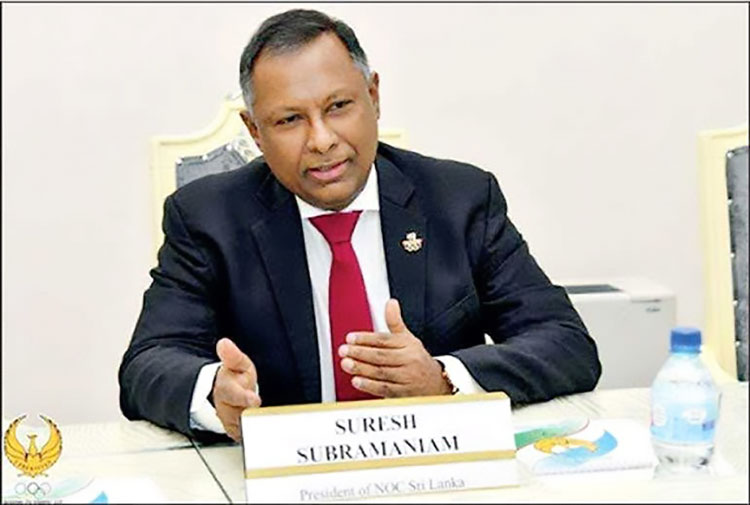
It was with unbearable grief and a total lack of understanding that we got to know of the demise of Mr Suresh Subramanium on Wednesday, the 15th of July 2026, after a brief illness. It was a departure from an absolutely remarkable and fruitful life on Mother Earth, which spanned just 65 years, 10 months, and 27 days.
We do not merely mourn the passing of an extraordinary man, but celebrate a life defined by an unyielding spirit, a towering intellect, and absolute integrity. When a friend of such magnitude leaves us, the silence they leave behind in our hearts is profound. He was a man who operated in three distinct universes: the competitive arena of tennis, the intricate domain of engineering, and the highly charged world of sports administration. In each of them, he left an indelible and permanent imprint. To the world, he was a strategist, a builder, and a leader. But to those of us who had the privilege of walking alongside him, he was simply a man of resolute drive, a loyal friend, and a beacon of principal strength when the winds of adversity blew the hardest.
I got to know the young tennis player Suresh when I was posted as the Consultant Paediatrician to General Hospital Badulla in 1979 at age 31. I had taken up playing tennis at that age, having never played the game before. I believe it was in the very early 1980s that Suresh played in the Uva Club Ranking Tennis Tournament. He and his partner had reached the Semi-Finals of the Men’s Doubles, and someone brought him to me in the Uva Club, quite ill with a tummy upset. Suresh was more concerned about letting his partner down. I treated him with some of the latest medicines. He miraculously recovered and went on to win the Semi-Finals and the Finals. After receiving the Championship Trophy at the Awards Ceremony, he came running and handed it to me. He did everything on his own, but he thought I was his saviour. We became very close friends over the next several decades and never missed an opportunity to share the kind of camaraderie that was ever so precious.
Long before he held sway over Boardrooms of Administrators or international delegates, he mastered the quiet discipline of engineering. It is a side of him that the general public may not be quite familiar with, yet it was the bedrock of everything he accomplished. Engineering is not just a profession; it is a way of looking at the world. It is the art of seeing structural vulnerabilities and figuring out how to reinforce them. It is about precision, physics, and solving problems that others deem impossible.
He brought that exact analytical rigour to every facet of his life. When he looked at a tennis court, he did not just see a game of baseline rallies; he saw geometry, angles, and systemic endurance. When he looked at sport’s governing bodies later in life, he did not just see committees; he saw complex frameworks that needed optimisation, modernisation, and structural integrity. He had an extraordinary capacity to dissect a chaotic situation, strip away the emotional noise, and present a logical, elegant solution. His mind was a finely tuned instrument, and he used it tirelessly for the betterment of everyone around him.
On the tennis court, his drive was legendary. Those who watched him play in his prime remember a competitor who refused to give an inch. He possessed a fierce, burning desire to win, but never at the expense of sportsmanship. His baseline play was a reflection of his character: disciplined, relentless, and deeply principled. He understood that tennis, at its core, is a solitary battle against one’s own limitations. The long hours of training, the blistering heat, the mental fatigue: he absorbed it all because he respected the game too much to give it anything less than absolute devotion.
What many do not realise is how his early years on the international and national circuits shaped his later philosophy on administrative leadership. He knew what it felt like to be an athlete out on the court with no one in the stands, fighting for the pride of a community. He knew the sacrifices, the injuries, and the profound loneliness that often accompanies high-level competition. This firsthand experiential knowledge meant that when he transitioned into administration, he was not just a bureaucrat in a suit; he was a former warrior looking out for the next generation of fighters.
It was perhaps in the realm of sports administration that his resolute drive faced its greatest tests and achieved its most significant victories. Taking the reins of sports governing bodies is often a thankless task. It requires navigating shifting political tides, managing conflicting egos, and balancing tight budgets. Yet, he stepped into these roles not for accolades, but out of a deep sense of duty.
He took local sports out of the shadows and pushed them onto the global stage. He pioneered grassroots initiatives, quietly funding equipment and coaching for young athletes who came from backgrounds where a tennis racket or a pair of proper running shoes was an unimaginable luxury. He brought international coaches to our shores, upgraded decaying infrastructure, and implemented data-driven training regimens that mirrored the high standards of his engineering background.
He didn’t build temporary programmes; he built systems designed to outlast him. He was a man who looked twenty years into the future, planting trees under whose shade he knew he might never sit.
You cannot bring about profound change without disrupting the status quo, ruffling a few feathers, and in that sense, our friend certainly shook the foundations of complacency. Because he refused to compromise on his principles and demanded transparency and efficiency, he occasionally drew the ire of those who preferred the old, comfortable ways of doing things. As is unfortunately common in the upper echelons of public life, there were moments when whispers and allegations were levelled against him. In a world quick to judge and slow to look at the facts, these could have broken a lesser man. But he stood like an iron pillar in a storm. He knew who he was. He knew the clean ledgers of his conscience.
True to his character, he never stooped to public mudslinging or bitter retaliations. Instead, he let his work, his transparency, and the eventual, absolute lack of proof speak for themselves. He understood that integrity isn’t the absence of criticism; it is the ability to walk through a firestorm and emerge on the other side with your head held high and your hands clean. He showed us that truth does not need to shout; it merely needs to stand. Of course, stand he did, proving his detractors wrong not with venom, but with an unassailable record of service.
While the public will remember the titles, the tournaments, and the executive boardrooms, those of us closer to him will remember the quiet moments. There is data about him that will never make the newspapers, actions that he purposefully hid from the spotlight.
I remember the times he quietly stepped in to pay the travel expenses for a promising young junior player whose family had hit hard times, strictly commanding that his name never be mentioned to the press. I remember him spending late nights reviewing architectural plans for new sports complexes, offering his engineering expertise entirely pro bono, simply because he wanted to ensure the concrete poured was as solid as the promises made to our youth.
He was a man who possessed a sharp, sometimes demanding exterior, a byproduct of his relentless drive, but underneath it beat a fiercely loyal and generous heart. If you were his friend, you had an ally for life. He would pick up the phone in the middle of the night, offer balanced, clear-headed counsel, and expect absolutely nothing in return.
His passing leaves a void that will be felt across multiple disciplines. The engineering community has lost a brilliant analyst. The sporting world has lost one of its most capable, fiercely protective architects. All of us, his friends, have lost an irreplaceable companion.
But as we look at the legacy he leaves behind – the tennis courts alive with the sounds of playing children, the robust sports frameworks that now run seamlessly, and the lives of the countless athletes he directly impacted – we realise that he is not truly gone. His blueprint remains. Yet for all that, our hearts go out to his immediate family. I know many of them, and I know for sure how much they are going through.
To my dear friend: You played the match of life with every ounce of your strength. You engineered bridges where others saw divides. You protected the integrity of the game when it was hard, and you ran your race until the very final second. I do regret that, due to circumstances entirely beyond my control, I was not in a position to join you in your final journey
Rest in peace, dear Suresh; your drive will continue to inspire us, and your integrity will remain our guiding light.
(The writer, Dr. Perera, is a former nationally ranked tennis player.)
By Dr B. J. C. Perera ✍️
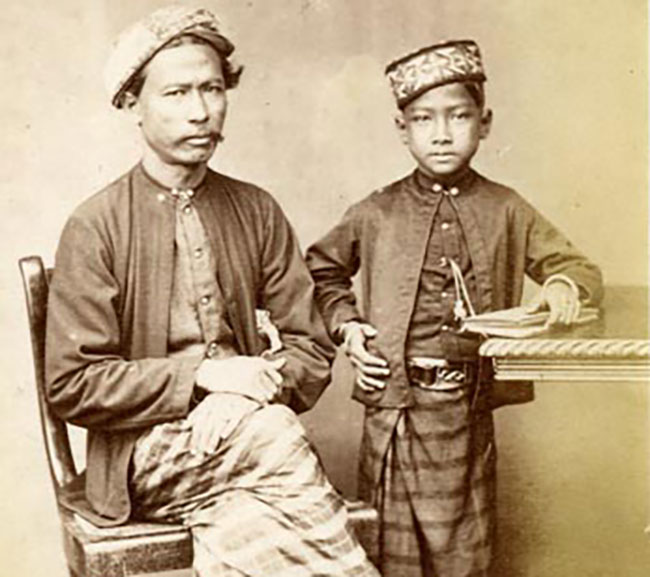
There is a mosque on Slave Island in Colombo that has stood for more than three centuries. Masjidul Jamiya was not built by merchants or pilgrims. It was built by soldiers, Malay soldiers who came to this island in service to the Dutch crown and, after 1796, to the British, and who stayed, raised families, and made Ceylon their permanent home. That mosque, and the neighborhood that grew quietly around it, is perhaps the most visible monument to something the rest of this country has largely forgotten: that the Malays of Sri Lanka have been here, contributing and serving, for longer than the modern republic has existed.
Today the community that built that mosque numbers approximately 40,000 people. We are 0.2 percent of the population. We hold no seat in Parliament. We have no dedicated political voice. With each passing decade our language, our culture and our civic presence grow a little quieter. This is not an appeal for sympathy. It is a case, resting on history and on democratic principle, for a recognition that is long overdue. The Malays of Sri Lanka are not asking for charity. We are asking to be counted in the nation we helped build
A Community of Soldiers, Scholars and Statesmen
The Sri Lankan Malay story does not begin in the colonial footnotes. Austronesian seafarers reached these shores as early as 200 BC. The 13th century brought Chandrabhanu Sridhamaraja, a Javanese ruler who led an invasion from Tambralinga and briefly held dominion over northern Sri Lanka. The community that exists today, however, traces its roots most concretely to the Dutch colonial era, when soldiers, nobles and political exiles from across the Indonesian archipelago, from Sulawesi, Java, Bali, Ambon and Madura, arrived in Ceylon and never returned.
These were not passive arrivals waiting for history to happen around them. The Malays became the backbone of Ceylon’s colonial military, serving with enough distinction that the British formalised their role through the Ceylon Rifle Regiment, a unit staffed almost entirely by Malays. The regiment’s influence extended far beyond the barracks. Malay soldiers in Colombo published the first Malay-language newspaper issued anywhere in the Eastern world. They built mosques across Kandy, Badulla, Kurunegala and Hambantota. They left their mark on the Sinhala language in ways that persist to this day: the words sarong, rabana, botale, kamara, bonchi and soldaduwa all trace their roots to Malay. The nation’s beloved dodol is a Malay contribution.
In the legal and civic sphere, the record is equally substantial. Justice Maas Thajoon Akbar became the first Malay Justice of the Supreme Court of Sri Lanka in the 1920s. Tuan Burhanudeen Jayah, known as T. B. Jayah, served in the Legislative Council, the State Council and in the first post-independence Parliament. Dr. P. Drahaman, a physician who founded the All Ceylon Malay Congress in 1944, won a parliamentary seat in 1956 and argued with striking clarity that Malays deserved representation in their own right, distinct from any other community. In the armed forces, Brigadier T. S. B. Sally rose to become Chief of Staff of the Sri Lanka Army, the highest rank any Malay officer has ever held.
This is not a peripheral community. This is a community that has served at every level of Sri Lankan public life and has been rendered progressively invisible in the democratic structures of the state it helped to build. We shaped this nation’s language, defended its sovereignty and administered its laws. Yet today we hold no seat in its Parliament.
The Slow Erasure
The 2024 Census records the Malay community within a combined category alongside Burghers, Chetties, Bharathas and Veddas that together account for just 0.3 percent of Sri Lanka’s total population of 21.7 million. Within that fraction, the Malays number fewer than 40,000. Under Sri Lanka’s proportional representation system, where votes are cast for parties across multi-member electoral districts, a community of this size has no realistic prospect of parliamentary representation through any community-specific route.
The practical consequence has been absorption into broader Muslim political formations that do not always attend to the specific cultural, linguistic and civic concerns of the Malay community. The All Ceylon Malay Political Union, which fought explicitly and consistently for a distinct Malay political voice, faded from active political life decades ago. The last Malay to hold a parliamentary seat of any kind was a nominated member in 1989. That is 37 years without representation.
The Sri Lanka Malay language, a creole blending Austronesian, Sinhala and Tamil in proportions found nowhere else on earth, is classified as endangered. Senior academics who are themselves Malay acknowledge that they rarely speak it at home. The Malay Club at Slave Island, the Sri Lanka Malay Association, the Conference of Sri Lanka Malays: these institutions remain active and their members dedicated, but cultural associations cannot substitute for political representation. Without a voice in policy, a community has no mechanism to advocate for its own language, its schools or its civic recognition.
The Bonds That Remain
What makes the Malay political case distinctive, and worth the attention of any serious Sri Lankan political leader, is the particular character of the community’s relationship with the Sinhalese majority. Unlike many of the fault lines that have defined Sri Lankan politics for decades, the Malay connection with Sinhalese society runs deep and is rooted in centuries of genuine proximity. Sri Lankan scholars have documented significant intermarriage between early Malay settlers and Sinhalese communities, particularly in the south and west of the island. The linguistic overlap is not incidental; it reflects generations of neighbors, colleagues and extended family.
The Malays were never a party to this country’s most devastating ethnic conflicts. A community that is small in number and dispersed across Colombo and the western coast has always been obliged to build relationships across communal lines rather than retreat behind them.
That quality of bridge-building is not weakness, nor is it political neutrality born of indifference. It is the earned disposition of a people who have always understood that their future in Sri Lanka is inseparable from the future of the country as a whole.
In a political moment when Sri Lanka is actively pursuing national reconciliation and inclusive governance under the NPP administration of President Anura Kumara Dissanayake, that disposition is not a liability. It is a genuine political asset. The Malay community has never been an adversary in Sri Lanka’s story. We have always been partners. It is time the state recognised us as such.
What Representation Would Look Like
This is not an argument for a return to communal politics or ethnic bloc-building. Sri Lanka has paid an enormous price for that history and nobody with any sense wants to revisit it. What is being argued here is a model of civic representation rooted in culture, in documented contribution and in constitutional possibility.
The National List, the 29 proportionally allocated parliamentary seats distributed after each general election, has been used before to include communities and voices that the direct electoral system cannot accommodate. A major political party that chose to place a credible Malay representative on its National List would bear no electoral cost for doing so and would signal something genuine about its understanding of Sri Lanka’s full diversity. That is not a complicated ask.
At the local level, the Colombo Municipal Council and the relevant Pradeshiya Sabhas offer a more immediate pathway. The Malay community is concentrated enough in Slave Island, Wellawatte and the broader Colombo district that a well-organised ward-level campaign is a realistic proposition. Local government has historically been where minority community members establish the credibility that national politics eventually recognizes.
Beyond elections, there is a straightforward case for formal state recognition of the Sri Lankan Malay community’s cultural and linguistic heritage, including support for language preservation, inclusion in national school curricula and proper documentation of Malay contributions to Sri Lankan history. When Mahatma Gandhi visited Sri Lanka in 1927, he reportedly mentioned the Malays in nearly every public address he gave on the island. It would be a particular kind of failure if the modern Sri Lankan state knew less about its own communities than a visiting guest did, a century ago.
A Voice Worth Having
I write this as a Sri Lankan Malay who has a great deal of affection for this country and a clear-eyed view of both what it has been and what it can become. The NPP government came to power on a conviction that the old patterns of Sri Lankan politics needed to be broken and that the state should answer to all of its people. If that conviction is real rather than rhetorical, it must eventually reckon with the communities that have slipped through the architecture of the electoral system through no failure of their own but through the simple arithmetic of smallness.
Forty thousand Malays. Three centuries of documented service. No seat in Parliament.
That is not a record that should be comfortable for any government that takes representation seriously. It is, however, one that is entirely possible to change.
ABOUT THE AUTHOR
Thanzyl Thajudeen FCIPR FCIM FCMI is a Chartered PR Practitioner, Managing Director of Mark and Comm (Pvt) Ltd, and a board member of PRCA Asia Pacific. He was named Campaign Asia-Pacific 40 Under 40 in 2024. He is a Sri Lankan Malay. The views expressed are his own.
by Thanzyl Thajudeen,a Sri Lankan Malay ✍️

Rare identical quadruplets born in Australia

Showers will occur in the Western, Sabaragamuwa and North-western provinces and in Kandy, Nuwara-Eliya, Galle and Matara districts

Merchant Shipping Secretariat probes bribery scandal

Theft of USD 2.5 mn: Dinana Dakuna claims COPF trying to protect mastermind

COPF chief slams security sticker scam

CAA urged to protect soap users

‘Dates have the highest sugar content to fight Coronavirus’

Sunday Island 27 December – Headlines

#SundayIsland 17th December – Headlines

Sunday Island – 28th March

Sunday Island Headlines – 21 March

Sunday Island – 21st February – Headlines
-
 Business2 days ago
‘Giving up was never an option’: The fisherman who fought back after losing millions in SL
-
 Features2 days ago
Two memorable excerpts from a former SLAF commander’s memoir
-

 Latest News2 days ago
Davis cup Asia/Oceania Group IV 2026 to be held in Colombo from 20th to 25th July
-
 Features2 days ago
Erdoğan’s New Republic
-
 Life style2 days ago
Taste of the Swiss Alps comes to Colombo
-
 Features6 days ago
Dirty Money
-

 News3 days ago
Dengue outbreak gallops ahead: Infections surpasses 73,455, leaving 50 dead
-
 News3 days ago
Evidence recorded in money laundering case against Yoshitha Rajapaksa