
Latest News
Cabinet gives green light to establish Metro Bus Unit for urban transportation.


It has been proposed in the budget that a fleet of comfortable and high-tech buses be introduced as a pilot project for the modernisation of public transport services.
Under this project, it is planned to deploy 100 comfortable, low-entry buses for passenger transport along several major road corridors, including Colombo, Ma Kubura (Kottawa), Kaduwela, Kadawatha and Moratuwa.
Accordingly, taking this into consideration, the Cabinet of Ministers has approved the proposal presented by the Minister of Transport, Highways, Ports and Civil Aviation to establish a subsidiary company belonging to the Sri Lanka Transport Board under the Companies Act No. 7 of 2007 and to implement the proposed project


Muhammad Shazad has broken the record for the fastest first-class century by a Pakistani batter, reaching the mark in just 49 balls.
The right-hander smashed eight sixes and 12 fours in his innings of 114 off 62 balls for Pakistan Television against Kingsmen Academy at the Diamond Cricket Ground in Islamabad on the opening day of the third round of the President’s Trophy.
This is Shahzad’s sixth first-class century in 21 matches. Batting at No. 5, he walked out when PTV were struggling at 34 for 3 and struck a 143-run stand with Mohammad Taha, who made 43. Shahzad has also played 22 List A matches and 26 T20s. He made his PSL debut for Islamabad United in the 2025 season, playing six matches.
Misbah-ul-Haq previously held the record for the fastest first-class century by a Pakistan batter for his 56 ball effort against Australia in the second Test at Abu Dhabi in 2014. Misbah, at the time, levelled Viv Richards’ record for the fastest Test century. But that record was broken two years later by Brendon McCullum, when he made a 54-ball century against Australia in Christchurch in the second Test of the series.
Shahzad has come through the PCB’s age-group programme, playing for Pakistan’s Under-16 and Under-19 sides. He played in the 2020 Under-19 World Cup in South Africa.
(Cricinfo)
Latest News
Showerss above 100 mm are likely at some places in the Western, Sabaragamuwa, Central and North-western provinces and in Galle and Matara Districts

WEATHER FORECAST FOR 24 SEPTEMBER 2026
Issued at 05.30 a.m. on 24 September 2026 by the Department of Meteorology
The Deep Depression over the West-central and adjoining Northwest Bay of Bengal is moving west-northwestwards and is currently crossing the North Andhra Pradesh and adjoining South Odisha coasts of India.
Although this system will not have a direct impact on Sri Lanka, the prevailing rainy conditions in the southwestern part of the island are expected to continue due to the wind flow towards the system.
Showers or thundershowers will occur at times in the Western, Sabaragamuwa, Central and North-western provinces and in Galle and Matara Districts. Heavy showerss above 100 mm are likely at some places in the above areas.
A few showers will occur in North-central province and in Mannar district.
Strong winds of about (40-50) kmph can be expected at times over the Western slopes of the Central hills, the North-central and North-western provinces and in Trincomalee, Hambantota and Matale Districts.
The general public is kindly requested to take adequate precautions to minimize damage caused by temporary localized strong winds and lightning during thundershowers.

North Korean weightlifter Ri Song Gum has broken three world records en route to winning gold in the women’s 49kg (108lbs) competition, which saw India’s Mirabai Chanu win an elusive Asian Games medal by finishing second.
Ri gave North Korea its first gold of the games in Nagoya, Japan, on Wednesday, joining an elite club of four weightlifters who have won three Asian Games gold medals.
The 28-year-old hauled 94kg above her head in the opening snatch discipline – the first official segment of the competition where athletes lift a barbell from the floor to an overhead position in a single motion. The lift was 1kg heavier than the previous world record of 93kg.
Ri followed it up by breaking the world record twice in the 115kg clean and jerk – a two-part movement where a barbell is lifted from the floor to the shoulders and then pushed overhead. The 4ft-7in (139.7cm) weightlifter hoisted 116kg and 121kg above her head.
Ri’s total lift of 215kg obliterated the old world record total by 7kg.
She is the fourth lifter, and first woman, to win three Asian Games weightlifting golds and joined Iran’s Mohammad Nassiri (1966-74), South Korea’s Kim Tae-hyun (1990-98) and Iran’s Behdad Salimi (2010-18), who all won three gold medals. No athlete has won four weightlifting gold medals.

In the same category, India’s Chanu finally won an Asian Games medal at the third time of asking. She won a silver medal at the Tokyo Olympics in 2021.
The 32-year-old is India’s most decorated weightlifter, with three Commonwealth gold medals and a silver to her name, along with multiple global titles.
She lifted a total of 198kg after a snatch of 87kg and a clean and jerk of 111kg, while Indonesia’s Diana Tri Wijayana took bronze with a total of 191kg, comprising 88kg and 103kg.
Chanu’s silver also ended India’s 28-year wait for a weightlifting medal at the games since Karnam Malleswari won silver in 1998.

(Aljazeera)

Muhammad Shahzad smashes fastest first-class hundred by a Pakistani batter

Gul, Kharote spin Afghanistan to victory over Japan in Asian Games opener

Showerss above 100 mm are likely at some places in the Western, Sabaragamuwa, Central and North-western provinces and in Galle and Matara Districts

Mirabai Chanu wins Asian Games silver as Ri breaks weightlifting record

Trump greets China’s Xi Jinping on arrival for three-day US

BASL calls for conscience vote on 22nd Amendment

‘Dates have the highest sugar content to fight Coronavirus’

Sunday Island 27 December – Headlines

#SundayIsland 17th December – Headlines

Sunday Island – 28th March

Sunday Island Headlines – 21 March

Sunday Island – 21st February – Headlines
-

 News6 days ago
Shanakiyan urges urgent action over reported death sentence for Lankan in Saudi Arabia
-

 News7 days ago
Bid for Basil’s extradition nears final stage: Police
-

 News5 days ago
Namal Rajapaksa Buddhist gambit fails, bail denied
-

 Features5 days ago
Why the spelling Sri Lankan names in English vary
-

 Features5 days ago
Three bands, a new identity: Sri Lankan wolf snake recognised as distinct species
-
 Business5 days ago
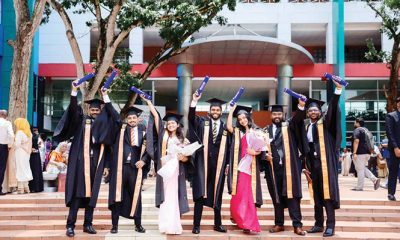
SLIIT holds largest-ever convocation
-

 News5 days ago
Govt monitors reported Saudi death sentence – Foreign Ministry
-

 News5 days ago
Vehicle prices drop by up to Rs. 1 mn, says importers’ body