
News
CAA pushes for new legislation to regulate LPG composition in cylinders


‘Lives of consumers should not be endangered’
By Suresh Perera
A top level Consumer Affairs Authority (CAA) team met with Attorney General Sanjay Rajaratnam last week to discuss the scope of enacting legislation to regulate the composition of Liquid Petroleum Gas (LPG) in existing cylinders and new products introduced to the market.
The move comes in the backdrop of the controversy over Litro Gas Lanka launching a new 18-litre product, which was described as a “violation of consumer laws”.
Despite the weight being reduced by three kilograms, the domestic 9.18 kg hybrid cylinder was priced Rs. 1,395 – a mere one hundred rupees less than the regular 12.5-kilogram cylinder.
“The butane and propane composition in cooking gas should be regulated for public safety”, says Thushan Gunawardena, CAA’s Executive Director.
It should be ensured that gas companies don’t endanger the lives of consumers by changing the composition for profiteering by ignoring possible risk factors of increasing propane in the composition, he said.
“We have sought to regulate the composition of LPG domestic cylinders under Section 18 of the CAA Act”, he told The Sunday Island.
Stressing on the immediate need for legal clout to “mitigate the risk factors typically associated with LPG composition”, Gunawardena has already written to CAA Chairman, Major General (Rtd) D. M. Shantha Dissanayaka, with copies to the President’s office, AG’s Department and State Minister Lasantha Alagiyawanna, calling for new laws to adequately scrutinize the LPG sector’s manufacturing process.
He said the Sri Lanka Standards Institution (SLSI) has received complaints that cylinder valves are leaking due to the composition change. This could pose a serious hazard and possible loss of life, if true.
Under Section 7 (a), the objects of the CAA shall be “to protect consumers against the marketing of goods or the provision of services which are hazardous to life and property of consumers”, Gunawardena further says in his letter.
“Therefore, we need to formally engage the SLSI to publish the required LPG standards as per Act No. 6 of 1984 and adopt the standard under Section 12 (2) of the CAA Act and publish a gazette informing adoption of the standard set by SLSI”, he continued.
“If we don’t take action to enact new regulations for the LPG sector to adequately scrutinize the manufacturing process, we are in contravention of the CAA Act for inaction by virtue as per in section 12 (1) & (2) of the Act”, he pointed out.
The composition of LPG in other countries is regulated. However, the composition varies from country to country and is generally decided by the climatic conditions, the CAA Executive Director explained, while adding that “we need to scientifically get the composition from SLSI or a similar institution for the best composition for Sri Lanka for propane+ and butane percentages that forms LPG”.
As far as available data shows, a propane rich mixture is used only in cold countries and a butane rich mixture is more suitable for tropical countries like Sri Lanka. According to reports, butane has a higher fuel value than propane and makes it ideal for domestic use as a propane rich mixture carries a risk during handing, Gunawardena noted.
On Wednesday, an extraordinary gazette notification was issued under the CAA Act No. 09 of 2003 directing all manufacturers and traders of LPG to ensure that adequate quantities of 12.5kg domestic cylinders are available for sale at all outlets island-wide.
“No trader who has in his possession or custody or under his control 12.5kg LPG cylinders shall refuse to sell or in any manner directly or indirectly compel consumers not to purchase such cylinders”, it warned.
Asked what prompted the special direction, Gunawardena said the CAA has received more than one thousand complaints so far about the non-availability of 12.5kg domestic cylinders in the marketplace.
What is the use of the CAA if it cannot do its job of regulating the market?, he queried. “A regulator serves no purpose if the system is allowed to be manipulated”.
“We need to push for a directive to prohibit the sale of 18-litre cylinders”, he emphasized.


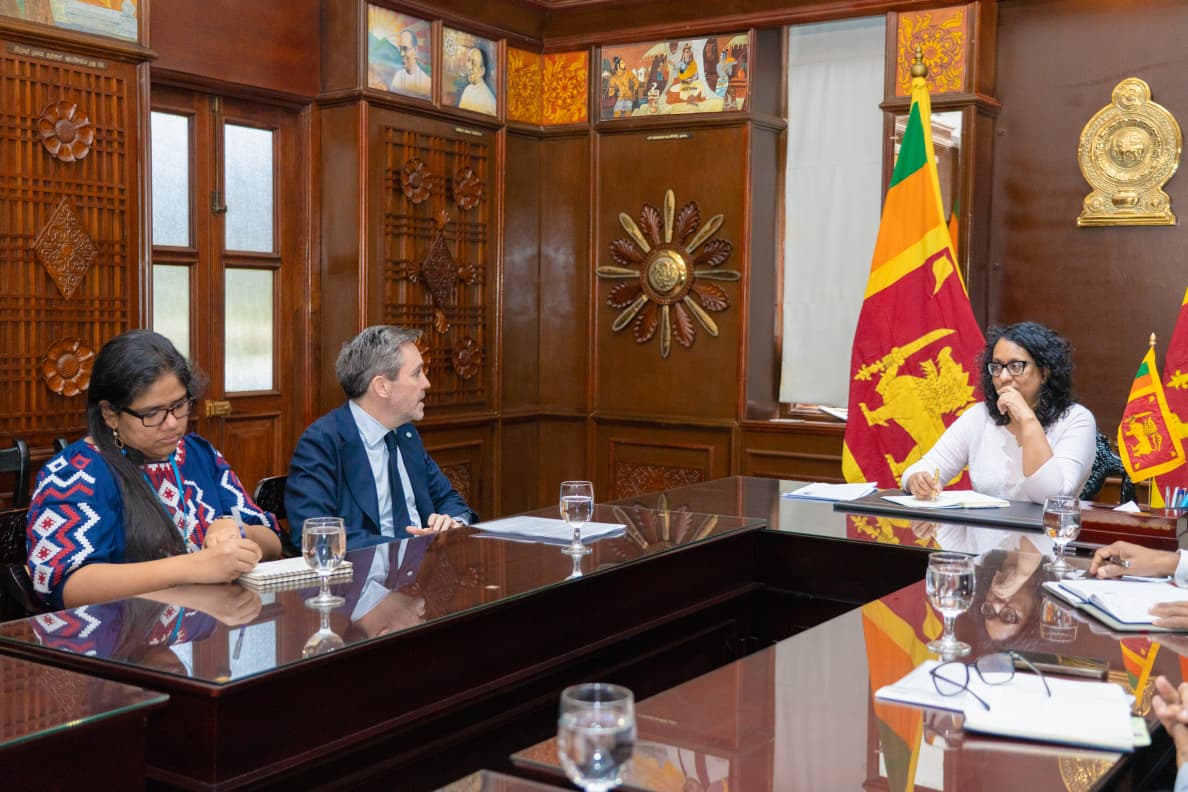
A meeting between Prime Minister Dr. Harini Amarasuriya and the United Nations Resident Coordinator in Sri Lanka, Marc-Andreé Franche, was held on the 20th of December 2025 at the Prime Minister’s Office.
During the meeting, Mr. Marc-Andreé Franche commended the swift coordination in which the Government acted to rescue affected communities and provide relief following the recent natural disaster situation faced by Sri Lanka.
Comparing experiences from other countries around the world, he noted that the level of international support Sri Lanka has received during such a disaster is exceptionally high. He further emphasized that he would utilize both his professional capacity and personal commitment to the fullest extent to ensure that Sri Lanka receives the necessary assistance.
Expressing appreciation for the continuous support extended by the United Nations to Sri Lanka, the Prime Minister stated that the role played by both the political authority and public officials in the field during this disaster management effort was exemplary. She highlighted that the collective and coordinated efforts of all parties from district leadership to the ground-level officials have become part in this success.
The Prime Minister also affirmed that the Government remains committed to properly managing the international assistance received and to rapidly restoring normalcy to the lives of people in the affected areas.
The meeting was attended by the secretary to the Prime Minister Pradeep Saputhanthri and Secretary to the Ministry of Education Nalaka Kaluwewa
[Prime Minister’s Media Division]

President, Academy of Health Professionals, Ravi Kumudesh, yesterday (22), alleged that the National Medicines Regulatory Authority’s (NMRA) decision to suspend several batches of Ondansetron Injection USP 8 mg/4 mL (Batch Nos: OD24021E, OD25009E, OD25024E, OD25023E), following suspicions of patient complications, and a few reported deaths, seemed to be a bid to cover-up the latest public health sector crisis.
Kumudesh said so responding to The Island queries.
Kumudesh pointed out that the Chief Executive Officer of the NMRA, and other responsible officials of the Ministry of Health, were on record as having said that the alleged bacterial contamination in the medicine in question was based on laboratory test results generated at the Microbiology Laboratory of the National Hospital, Kandy.
He, however, emphasised that the Kandy facility lacked legally mandated facilities, validated systems, or regulatory accreditation required to conduct pharmaceutical sterility testing in accordance with internationally accepted regulatory standards.
“The Academy of Health Professionals is aware that the Microbiology Laboratory of the National Hospital, Kandy, does not possess the required facilities,” Kumudesh said, urging the government to come clean in this matter.
Kumudesh said the regulatory action taken by the political authority was aimed at deceiving the public, and theAcademy of Health Professionals had raised the issues with Health Minister Dr. Nalinda Jayatissa, Health Secretary Dr. Anil Jasinghe, NMRA head Dr. Ananda Wijewickrama and Director General Health Services (DGHS) Dr. Asela Gunawardena.
Kumudesh pointed out that the Kandy facility was meant to meet requirements within the Kandy National Hospital and not a world standard testing lab. Kumedesh sought an explanation as to how the suspended Ondansetron Injection had been administered on 13 December to a person warded at the hospital where NMRA head is based, a day after the NMRA decided to suspend it.
Public health sector trade union activist Kumudesh said that the Health Ministry couldn’t turn a blind eye to the disclosure that post-mortem reports of two persons, who allegedly died after being given the same medicine by the National Institute of Infectious Diseases, did not identify the medicine as the cause of death. According to him, the National Institute of Infectious Diseases administered the same medicine to patients, on multiple occasions, in the wake of the controversy.
Kumudesh said that it would be the responsibility of the government to ensure a comprehensive technical, legal, and administrative investigation into, what he called, Ondansetron affair. Having lambasted all previous governments of waste, corruption and irregularities, at the expense of the hapless public, the NPP couldn’t, under any circumstances, side-step the issue. “In the interest of transparency, regulatory credibility, and the protection of public health, this should be properly investigated,” Kumudesh said.
The crux of the matter was that the very basis of NMRA’s suspension of Ondansetron batches seemed to be irregular and questionable, Kumudesh said.
The Academy of Health Professionals, in its letter to Dr. Jayatissa, sought the Health Ministry’s response to the following questions: 1. Who requested the Microbiology Laboratory of the National Hospital, Kandy, to conduct sterility testing on this medicinal product?
2. Under what legal provisions was such a request made, and on what basis was the laboratory authorised to accept and perform such testing?
3. Who conducted the test, and who issued the report? Did those individuals possess the requisite professional qualifications, regulatory authorisation, and legal mandate to do so?
4. Did the laboratory possess the required infrastructure, validated testing systems, quality assurance mechanisms, and specialised training necessary to perform pharmaceutical sterility testing in compliance with regulatory standards?
5. If patient complications were attributed to microbial contamination, were all related materials—including syringes, IV lines, infusion fluids, and other associated devices—systematically tested? If not, on what scientific basis was it concluded that the contamination originated exclusively from the medicine?
6. Given that the NMRA is legally empowered to suspend a medicine as a precautionary measure, even without laboratory confirmation, when serious safety concerns arise, what was the justification for relying on an irregular and non-regulatory laboratory test instead?
Kumudesh stressed that Ondansetron, and nine other injectable medicines that had been suspended, were all ordered by the State Pharmaceutical Corporation (SPC) from an Indian manufacturer, Maan Pharmaceuticals.
By Shamindra Ferdinando
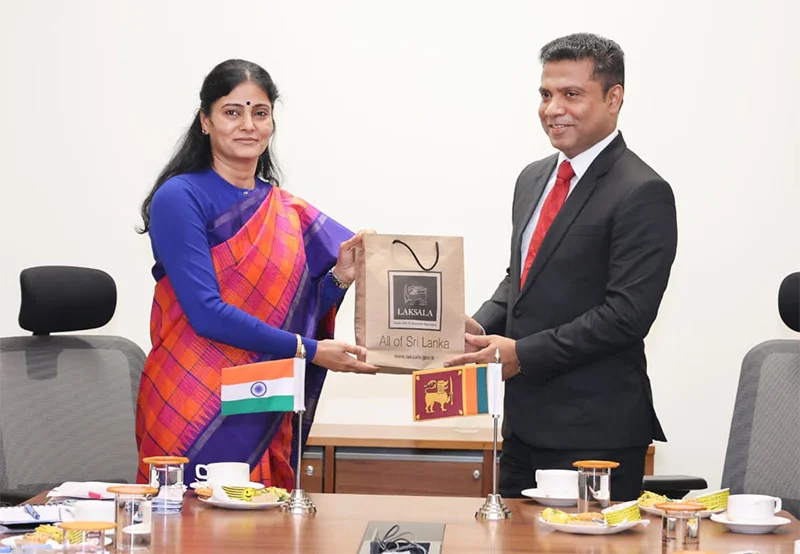
Amidst the ongoing controversy over the suspension of several batches of Indian manufactured Ondansetron Injection USP 8 mg/4 mL (Batch Nos: OD24021E, OD25009E, OD25024E, OD25023E) over safety fears, Health Minister Dr. Nalinda Jayatissa undertook a visit to New Delhi.
The Indian HC in Colombo said: ‘Dr. Jayatissa, the Minister of Health and Mass Media of the Government of Sri Lanka led a delegation to India from 17–19 December 2025 to participate in the 2nd WHO Traditional Medicine Global Summit held at Bharat Mandapam, New Delhi. The Summit was jointly organized by the World Health Organization and the Ministry of Ayush, Government of India.
The Summit was held under the theme “Restoring Balance: The Science and Practice of Health and Well-Being” and aimed to advance a global movement focused on restoring balance for individuals and the planet through the scientific understanding and practice of traditional medicine.
During the Summit, the Minister participated in the Ministerial Roundtable and delivered his remarks, highlighting Sri Lanka’s perspectives and rich traditions in Ayurveda and traditional healing.
During the visit, the Minister held bilateral meetings with Anupriya Patel, Minister of State for Health & Family Welfare, Government of India, and Prataprao Ganpatrao Jadhav, Minister of State (Independent Charge), Ministry of Ayush, Government of India. Discussions focused on strengthening cooperation in healthcare and traditional medicine, including regulatory collaboration, research linkages, and capacity-building initiatives.
On the sidelines of the programme, Minister Jayatissa also visited Apollo Hospitals to gain insights into the implementation of Public-Private Partnership (PPP) models and to explore best practices.
The visit reaffirmed the shared commitment of India and Sri Lanka to deepen collaboration in the fields of health and traditional medicine and to explore new avenues of partnership for the benefit of the people of both countries.’

Ashes over for Cummins, uncertainty over T20 World Cup too

Trump warns Maduro not to ‘play tough’ as Russia, China back Venezuela

PM meets UN Resident Coordinator

Showers may occur in the Uva and Eastern provinces and in Matale, Nuwara-Eliya, Polonnaruwa and Hambantota districts.

Suspension of Indian drug part of cover-up by NMRA: Academy of Health Professionals

Dr. Jayatissa visits India amidst Ondansetron controversy

‘Dates have the highest sugar content to fight Coronavirus’

Sunday Island 27 December – Headlines

#SundayIsland 17th December – Headlines

Sunday Island – 28th March

Sunday Island Headlines – 21 March

Sunday Island – 21st February – Headlines
-

 Midweek Review6 days ago
How massive Akuregoda defence complex was built with proceeds from sale of Galle Face land to Shangri-La
-

 News5 days ago
Pope fires broadside: ‘The Holy See won’t be a silent bystander to the grave disparities, injustices, and fundamental human rights violations’
-

 News5 days ago
Pakistan hands over 200 tonnes of humanitarian aid to Lanka
-

 Business4 days ago
Unlocking Sri Lanka’s hidden wealth: A $2 billion mineral opportunity awaits
-

 News6 days ago
Burnt elephant dies after delayed rescue; activists demand arrests
-

 Editorial6 days ago
Colombo Port facing strategic neglect
-

 News4 days ago
Army engineers set up new Nayaru emergency bridge
-

 News7 hours ago
Members of Lankan Community in Washington D.C. donates to ‘Rebuilding Sri Lanka’ Flood Relief Fund