
News
Building disaster-resilient infrastructure through enhanced knowledge


Strengthening Irrigation sector in Sri Lanka to ensure appropriate disaster-resilient measures
Recognizing the necessity for greater investment in the planning process for disaster-resilient infrastructure across Asia and the Pacific, UNDP through its Regional Hub in Bangkok with the financial support of the Asian Development Bank (ADB) has launched the Project, ‘Resilient Infrastructure through Enhanced Knowledge’. The Project will build the capacity of selected infrastructure sectors in four countries; namely Sri Lanka, Armenia, Cambodia and Fiji; to ensure that appropriate disaster-resilient measures are defined and applied into pre-disaster preparation for recovery and post-disaster recovery efforts.
Considering the importance of water and food security, Sri Lanka has selected the Irrigation sector to develop a comprehensive country-specific disaster recovery framework under this project. The activities will concentrate on supporting Post-Disaster Needs Assessment (PDNA) training to Government officials, utilizing contingency and recovery tools and plans, improve financial preparedness planning which will help to meet the resources required for disaster recovery and cover the additional costs of building forward better.
The Project is implemented in collaboration with the Disaster Management Center (DMC), the Department of National Planning, Department of National Budget and all stakeholder agencies in the Irrigation sector; including the Department of Irrigation, Department of Agrarian Development, 9 Provincial Departments of Irrigation and the Mahaweli Authority of Sri Lanka.
The first training on Post Disaster Needs Assessment and Disaster Recovery Planning took place in Colombo recently, with over 63 participants from across the above stakeholders including Engineers, Planners, and Accountants. Speaking on the importance of such training Anoja Seneviratne, Director, Mitigation Research & Development, Disaster Management Centre said: “The Irrigation sector is one of the most important sectors in the country. Irrigation resilience is not only for water management, but also provides inputs for agricultural expansion, facilitates technological change and helps increase sectoral productivity and the GDP of the country…Introducing a disaster recovery framework will benefit the sector as it ensures recovery to build back faster and better. This workshop will be the first of such to brainstorm, share knowledge in damage & loss, and recovery in the sector following a more scientific way.” She went onto note, “This initial step will be foundational towards the country’s disaster resilience. I appreciate all the stakeholders for their engagement and appreciate UNDP and ADB’s support for a cleaner, greener and resilient Sri Lanka.”
In 2016 and 2017, UNDP in Sri Lanka coordinated the PDNAs on behalf of the UN system, and supported the Government of Sri Lanka, together with the European Union and the World Bank, to conduct a comprehensive assessment of Post Disaster Needs after the 2016 and 2017 flood and landslide disasters. The total estimated cost of damages and losses for irrigation infrastructure was LKR 2708 Million.
One of the major challenges identified in this assessment was the lack of baseline data and insufficient capacities to conduct PDNAs, and the need to establish an institutional framework for recovery.
This project will build the capacity of Sri Lankan Government officials and relevant stakeholders in the irrigation sector institutions and related partner agencies for disaster recovery in the long run, by adapting the PDNA and Disaster Recovery Framework (DRF) methodology for the irrigation sector including sector templates, developing SOPs by bringing together all relevant stakeholders to create a pool of experts in the sector.
Eng. V. Premakumar, Provincial Director Irrigation, Northern Province as a participant of the workshop stated, “This is a great opportunity for us, particularly for the young engineers that work on the ground in the Northern Province. There are 24 engineers in the Province, and it is essential that we continuously enhance their capacities to ensure that the key infrastructure upon which the communities depend on are disaster resilient. This has provided us with the opportunity to engage with and learn from esteemed sectoral experts, as well, and will surely contribute to the growth of our engineers and their knowledge on disaster-resilience.”
M A F Mubarak, Deputy Director, National Budget Department said: “As a part of the development of the Disaster Recovery Framework, we’re received technical support on financial preparedness planning and post disaster budget execution capabilities. Hence, this enables Sri Lanka to be ready to face any upcoming disaster events, which in turn will be helpful for the economy of the country.”
Speaking on UNDPs role of supporting disaster preparedness efforts, Vajira Hettige, Technical Coordinator- Climate and Environment Team, UNDP in Sri Lanka said: “This pre-disaster recovery planning in the irrigation sector is a unique opportunity, since post disaster recovery planning is usually ad-hoc in nature. Involvement of national planning and budget departments from the inception will support financial preparedness and identify new sources of risk financing, which will ultimately contribute towards expediting resilient recovery in the irrigation sector.”


By Shamindra Ferdinando
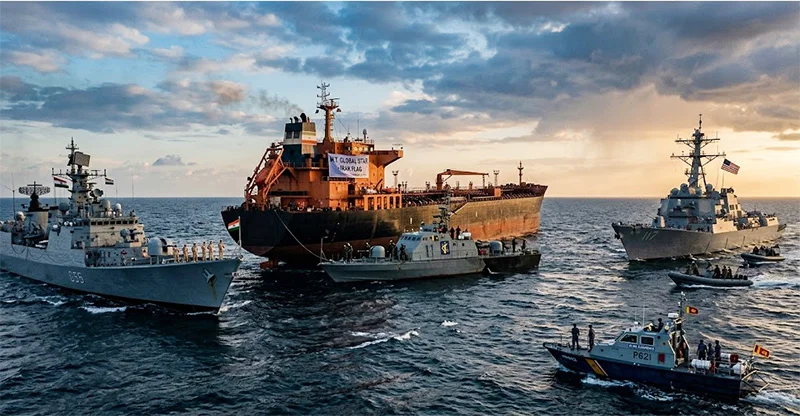
Iran has sought the Indian intervention, at the highest level, to provide lifesaving support to the crews of empty Iranian vessels stranded just outside Sri Lanka’s 12-nautical mile territorial waters off Galle.
Sources familiar with the issue said that Iran had brought the developing situation to the attention of New Delhi as the crews of almost 20 vessels, included Indian nationals. Sources stressed that the group of vessels that unloaded crude oil a couple of months back were now stranded within Sri Lanka’s Exclusive Economic Zone (EEZ).
The US Navy torpedoed an unarmed Iran frigate, returning from India, on 04 March, 2026, about 19 nautical miles off the Galle coast. The unprovoked attack killed nearly 100 Iranians.
The Iranian Embassy in Colombo has inquired from the Indian High Commission of their response to the situation, sources said. The US has issued a global warning against providing food, water, medicine and other services to the Iranian vessels. The outcome of Iran-India talks on the issue at hand was not known, though sources asserted India may not throw its weight behind Iranian efforts to address the issue.
Responding to The Island queries, sources said both Sri Lanka and India were in a dilemma due to the US warning. India couldn’t ignore the plight of the Indian crew members and the Iranian vessels in its backyard.
The Sri Lankan government remains tight-lipped about the vessels stranded in its EEZ. Our efforts to elicit a response from relevant authorities were in vain. In addition to Indians, there are Bangladeshis among the crew members. Iran has explicitly stated the responsibilities of the countries concerned to provide assistance in terms of international law.
The Iranian position was articulated by its Ambassador to Sri Lanka, Dr.Alireza Delkhosh, recently. In a special statement, Ambassador Delkhosh emphasised that in terms of the Convention on the Law of the Sea (Article 98) as well as SOLAS and SAR
Conventions, Sri Lanka couldn’t refrain from providing the needs of the Iranian vessels stranded in its EEZ.
SLMC leader Rauff Hakeem lambasted the NPP government in Parliament for failing to provide assistance to the Iranian ships. The former Minister alleged that the government was simply carrying out dictates of the US. He strongly criticised the way Foreign Minister Vijitha Herath was handling the issue.

MP Namal Rajapaksa, who is in remand custody over the controversial Airbus deal, was further remanded until October 27 by the Colombo Magistrate’s Court yesterday (13).
Colombo Chief Magistrate Asanga S. Bodaragama made the order after considering submissions by officers of the Commission to Investigate Allegations of Bribery or Corruption and lawyers representing Rajapaksa.

Sri Lanka’s economy is expected to sustain its recovery over the next two years, although growth is projected to moderate amid mounting global uncertainties, according to the International Monetary Fund’s (IMF) latest World Economic Outlook.
In its World Economic Outlook 2026: Resilience Under Strain, Urgent Choices, the IMF projects Sri Lanka’s economy to expand by 4% in 2026, slowing to 3.7% in 2027, following estimated growth of 5% in 2025.
Inflation, meanwhile, is forecast to rise to 5.3% in 2026 and 5.4% in 2027, reversing the average deflation rate of 0.5% recorded in 2025.
Unemployment is expected to remain steady at 3.9% throughout the forecast period.
The projections come amid growing pressure on the global economy from the ongoing conflict in the Middle East, elevated energy prices, geopolitical tensions and trade disruptions.
Sri Lanka’s external position is also expected to weaken, with the current account balance projected to shift from a surplus of 1.6% of gross domestic product (GDP) in 2025 to deficits of 0.5% in 2026 and 0.3% in 2027.
The IMF’s outlook points to continued economic expansion in Sri Lanka, but with slower growth, rising inflation and a narrowing external surplus giving way to current account deficits over the forecast period.

Heavy showers above 100 mm are likely at some places in the Western, Sabaragamuwa, Southern, Central, and North-western provinces and in Anuradhapura district.

Sri Lanka, India caught in US-Iran ship crisis

Namal further remanded

IMF projects Lankan economic growth to moderate amidst mounting global uncertainties

Major Gen Pushpakumara assumes command of 56 Infantry Division

Dickwella axed, Bandara earns maiden Test call up

‘Dates have the highest sugar content to fight Coronavirus’

Sunday Island 27 December – Headlines

#SundayIsland 17th December – Headlines

Sunday Island – 28th March

Sunday Island Headlines – 21 March

Sunday Island – 21st February – Headlines
-

 Features6 days ago
The Sri Lankan who made Scottish history
-

 Sports6 days ago
Nissanka absence opens door for Sri Lanka’s young guns
-

 News5 days ago
NDB fraud Rs 60mn more than reported
-

 News5 days ago
Removing monk’s robes matter for Sangha to decide: Mahanayake Theras
-
 News6 days ago
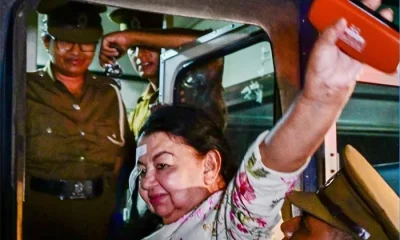
Shiranthi R remanded until 13 Oct.
-

 Features6 days ago
Future of Sri Lanka’s state university system: Should it be shut down and reopened?
-

 News3 days ago
Sri Lanka escalates anti-graft drive with Shiranthi’s jailing
-

 Latest News4 days ago
Farhan, Sadaqat help Pakistan ace 183 chase to go 1-0 up