News
Building disaster-resilient infrastructure through enhanced knowledge
Strengthening Irrigation sector in Sri Lanka to ensure appropriate disaster-resilient measures
Recognizing the necessity for greater investment in the planning process for disaster-resilient infrastructure across Asia and the Pacific, UNDP through its Regional Hub in Bangkok with the financial support of the Asian Development Bank (ADB) has launched the Project, ‘Resilient Infrastructure through Enhanced Knowledge’. The Project will build the capacity of selected infrastructure sectors in four countries; namely Sri Lanka, Armenia, Cambodia and Fiji; to ensure that appropriate disaster-resilient measures are defined and applied into pre-disaster preparation for recovery and post-disaster recovery efforts.
Considering the importance of water and food security, Sri Lanka has selected the Irrigation sector to develop a comprehensive country-specific disaster recovery framework under this project. The activities will concentrate on supporting Post-Disaster Needs Assessment (PDNA) training to Government officials, utilizing contingency and recovery tools and plans, improve financial preparedness planning which will help to meet the resources required for disaster recovery and cover the additional costs of building forward better.
The Project is implemented in collaboration with the Disaster Management Center (DMC), the Department of National Planning, Department of National Budget and all stakeholder agencies in the Irrigation sector; including the Department of Irrigation, Department of Agrarian Development, 9 Provincial Departments of Irrigation and the Mahaweli Authority of Sri Lanka.
The first training on Post Disaster Needs Assessment and Disaster Recovery Planning took place in Colombo recently, with over 63 participants from across the above stakeholders including Engineers, Planners, and Accountants. Speaking on the importance of such training Anoja Seneviratne, Director, Mitigation Research & Development, Disaster Management Centre said: “The Irrigation sector is one of the most important sectors in the country. Irrigation resilience is not only for water management, but also provides inputs for agricultural expansion, facilitates technological change and helps increase sectoral productivity and the GDP of the country…Introducing a disaster recovery framework will benefit the sector as it ensures recovery to build back faster and better. This workshop will be the first of such to brainstorm, share knowledge in damage & loss, and recovery in the sector following a more scientific way.” She went onto note, “This initial step will be foundational towards the country’s disaster resilience. I appreciate all the stakeholders for their engagement and appreciate UNDP and ADB’s support for a cleaner, greener and resilient Sri Lanka.”
In 2016 and 2017, UNDP in Sri Lanka coordinated the PDNAs on behalf of the UN system, and supported the Government of Sri Lanka, together with the European Union and the World Bank, to conduct a comprehensive assessment of Post Disaster Needs after the 2016 and 2017 flood and landslide disasters. The total estimated cost of damages and losses for irrigation infrastructure was LKR 2708 Million.
One of the major challenges identified in this assessment was the lack of baseline data and insufficient capacities to conduct PDNAs, and the need to establish an institutional framework for recovery.
This project will build the capacity of Sri Lankan Government officials and relevant stakeholders in the irrigation sector institutions and related partner agencies for disaster recovery in the long run, by adapting the PDNA and Disaster Recovery Framework (DRF) methodology for the irrigation sector including sector templates, developing SOPs by bringing together all relevant stakeholders to create a pool of experts in the sector.
Eng. V. Premakumar, Provincial Director Irrigation, Northern Province as a participant of the workshop stated, “This is a great opportunity for us, particularly for the young engineers that work on the ground in the Northern Province. There are 24 engineers in the Province, and it is essential that we continuously enhance their capacities to ensure that the key infrastructure upon which the communities depend on are disaster resilient. This has provided us with the opportunity to engage with and learn from esteemed sectoral experts, as well, and will surely contribute to the growth of our engineers and their knowledge on disaster-resilience.”
M A F Mubarak, Deputy Director, National Budget Department said: “As a part of the development of the Disaster Recovery Framework, we’re received technical support on financial preparedness planning and post disaster budget execution capabilities. Hence, this enables Sri Lanka to be ready to face any upcoming disaster events, which in turn will be helpful for the economy of the country.”
Speaking on UNDPs role of supporting disaster preparedness efforts, Vajira Hettige, Technical Coordinator- Climate and Environment Team, UNDP in Sri Lanka said: “This pre-disaster recovery planning in the irrigation sector is a unique opportunity, since post disaster recovery planning is usually ad-hoc in nature. Involvement of national planning and budget departments from the inception will support financial preparedness and identify new sources of risk financing, which will ultimately contribute towards expediting resilient recovery in the irrigation sector.”

Latest News
Prime Minister Dr Harini Amarasuriya meets Foreign Secretary of the United Kingdom
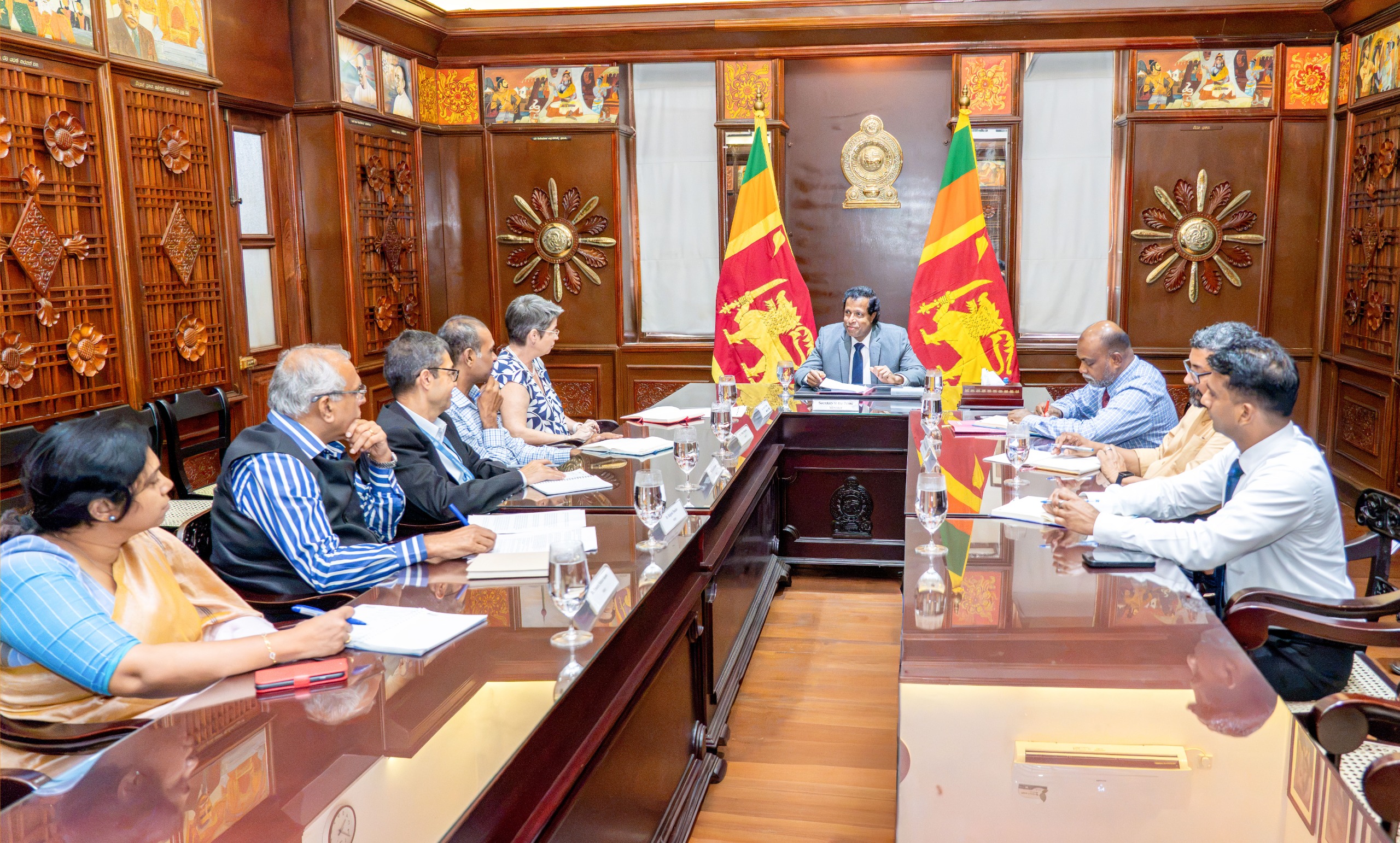
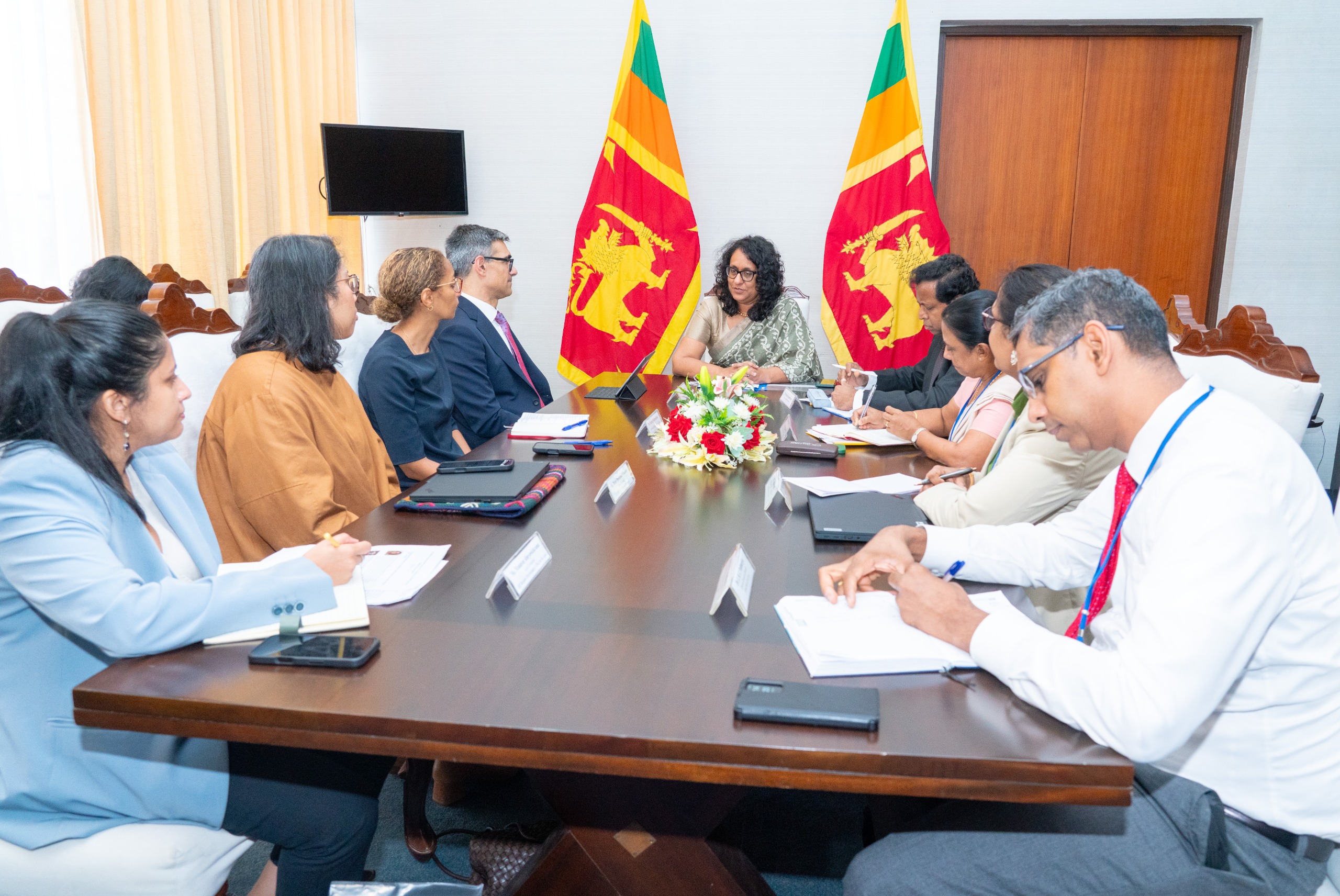
Prime Minister Dr Harini Amarasuriya currently undertaking an official visit to London, United Kingdom, to participate in the 43rd Commonwealth of Learning (COL) Board of Governors Meeting 2026 held a bilateral meeting with the Yvette Cooper MP, Foreign Secretary of the United Kingdom ON Wednesday [20]. The Prime Minister was accompanied by Sri Lanka’s High Commissioner to the United Kingdom, Nimal Senadheera, along with officials from the Sri Lankan High Commission.
During the meeting, the Prime Minister conveyed Sri Lanka’s appreciation to the United Kingdom for the support extended in the aftermath of Cyclone Ditwa, including ongoing rebuilding and recovery assistance. The Prime Minister also commended the United Kingdom’s support in facilitating increased bilateral trade and exports for Sri Lanka.
The Prime Minister briefed the UK delegation on Sri Lanka’s recent economic developments and policy priorities, the Government’s commitment to advancing human rights and reconciliation, as well as Sri Lanka’s positive growth trajectory.
The two sides also exchanged views on current global geopolitical developments, challenges in the energy sector, and the importance of enhancing regional connectivity and long-term energy security.
Both sides also emphasised the importance of strengthening structured academic mobility frameworks while ensuring fairness, clarity, and integrity within migration systems.
They also reaffirmed their commitment to further strengthening bilateral cooperation between the two countries in areas of mutual interest.
[Prime Minister’s Media Division]
News
Suspects involved in sureties controversy granted bail
Airbus bribe case:
Colombo Additional Magistrate Lahiru Silva yesterday (20) granted bail to Mohamed Riswan and Mohamed Irshan, who allegedly received money to stand as sureties for the late former SriLankan Airlines CEO, Kapila Chandrasena. They were identified as residents of Sanchi Arachchi Watta, situated next to the Hulftsdorp court complex.
Chandrasena was found dead at his brother-in-law, Aravinda De Silva’s residence, at No. 38, Pedris Road, Kollupitiya, on 8 May.
The Magistrate also granted bail to B. A. Tissa and Perumal Ganesh, who arranged for Riswan and Irshan to stand as sureties for Chandrasena, who is under investigation for allegedly receiving a USD 2 million bribe through his wife to facilitate an Airbus deal. They, too, residents of Sanchi Arachchi Watta, were granted bail on two personal bail of Rs. 500,000 each.
Airbus had to pay USD 4 billion in penalties after admitting it had paid huge bribes to secure contracts in 20 countries. Sri Lanka is among them.
The Magistrate directed that the Grama Niladhari should certify their residence and the relevant certificates submitted to court and to establish the financial status of those who stood as sureties for the four persons.
The court was told that Mohamed Riswan and Mohamed Irshan obtained 17 Grama Niladhari certificates from January till May 2026. On the basis of a statement recorded from Keselwatta Grama Niladhari S. Nilantha Silva police informed court that the first suspect had obtained 10 certificates and the second person seven.
Fourth suspect Ganesh had first met those who stood as sureties, on 05 May, in the court premises and struck the deal. Crime OIC of Keselwatta Police, Sub Inspector K.W.D. Anuruddha, told court that Mohamed Riswan, Mohamed Irshan and B. A. Tissa hadn’t even known who Chandrasena was and were not related to him in anyway, according to investigations. Police requested that the four persons be further remanded.
The Magistrate granted them bail and set the next hearing for 25 June.
Legal sources said that such illegal practices were rampant, and in this particular case the Court Registrar should have been able to see that the sureties were very much unlikely to be relatives of Chandrasena.
By Shamindra Ferdinando
News
Steps underway to safeguard Sri Lanka’s maritime heritage
The government has initiated a major conservation drive to protect its fragile northern marine ecosystems, with top government officials pledging stronger action against environmental degradation, destructive fishing practices, and Illegal, Unreported and Unregulated (IUU) fishing in the country’s northern seas and adjacent islands.
A high-level discussion chaired jointly by Deputy Minister of Environment Anton Jayakody and Deputy Minister of Defence Aruna Jayasekara was held on Tuesday (19) at the Ministry of Environment to formulate an integrated strategy aimed at safeguarding Sri Lanka’s maritime heritage and accelerating marine conservation initiatives.
Senior naval officers, top environment officials, conservation experts, and representatives from several state agencies attended the meeting, which focused heavily on the declaration of new Marine Protected Areas (MPAs) in the Northern Province.
Among those present were Secretary to the Ministry of Environment K.R. Uduwawala, Chairman of the Marine Environment Protection Authority Samantha Gunasekara, Director General of the Coast Conservation and Coastal Resource Management Department Prof. Turny Pradeep Kumara, Conservator General of Forests Palamakumbura, officials of the Department of Wildlife Conservation, and senior ecologists from International Union for Conservation of Nature.
Officials stressed that the protection of Sri Lanka’s northern marine zone was essential not only for biodiversity conservation but also for sustaining the livelihoods of fishing communities and strengthening the country’s maritime standing internationally.
A major concern raised during the meeting was the increasing ecological destruction caused by IUU fishing activities. Ministers warned that such unlawful practices posed a severe threat to marine biodiversity and the economic stability of local fishermen.
The discussion also focused on intensifying surveillance operations and strengthening law enforcement mechanisms to combat destructive fishing methods, including dynamite fishing, unauthorized spearfishing, and the use of banned fishing gear that continue to devastate coral reef ecosystems and endangered marine species.
Attention was also drawn to governance and infrastructure shortcomings within fishing harbours, with officials identifying the lack of proper management systems and formal regulatory mechanisms as major vulnerabilities contributing to environmental degradation.
As part of the proposed conservation strategy, several islands and surrounding marine zones in the Northern Province have now been identified for official declaration as Marine Protected Areas.
Authorities clarified that the establishment of MPAs would not undermine the livelihoods of local communities but instead promote sustainable fishing practices while opening new opportunities for eco-tourism development.
Officials said these protected marine zones could eventually be developed into internationally recognised eco-tourism destinations, generating fresh economic opportunities for the Northern Province while enhancing Sri Lanka’s environmental credentials globally.
The meeting further highlighted that the declaration of new MPAs would reinforce Sri Lanka’s commitment to international biodiversity conservation obligations and demonstrate the country’s role as a responsible custodian of the Indian Ocean’s marine resources.
A proposal was also made to establish a multi-sectoral working group comprising representatives from the Ministries of Tourism, Fisheries, Defence, Environment, and Justice to implement a coordinated mechanism for the protection of coastal and marine resources under the leadership of the Ministry of Environment.
Officials described the initiative as another significant milestone in Sri Lanka’s broader journey towards building a sustainable biosphere and ensuring long-term environmental security for future generations.
By Ifham Nizam
-
Features4 days agoSri Lankan Airlines Airbus Scandal and the Death of Kapila Chandrasena and my Brother Rajeewa
-
News5 days agoLanka’s eligibility to draw next IMF tranche of USD 700 mn hinges on ‘restoration of cost-recovery pricing for electricity and fuel’
-
News4 days agoKapila Chandrasena case: GN phone records under court scrutiny
-
News4 days agoRupee slide rekindles 2022 crisis fears as inflation risks mount
-
Features1 day agoOctopus, Leech, and Snake: How Sri Lanka’s banks feast while the nation starves
-
Business4 days agoExpansion of PayPal services in Sri Lanka officially announced
-
Features6 days agoMysterious Death of United Nations Secretary General Hammarskjöld
-
News4 days agoCourt orders further arrests in alleged USD 42 Mn NDB fraud case