
News
Bring down price of medicines by using the Senaka Bibile Policy

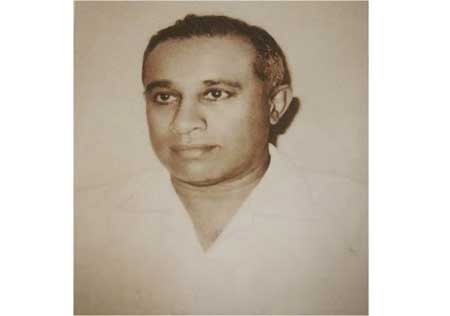
In the present context of rising prices of essentials, after food, the people are most hit by the high prices of medicines. With the fact that there is a severe shortage of medicines in the Government hospitals, patients are compelled to buy them from private pharmacies.
Though a few of them sell medicines at a reasonable price keeping an acceptable profit margin, unfortunately, a majority fleece the patients. Many poor patients can afford to buy only a portion of the prescribed medicine or not at all, and fail to recover from their illness.
Some patients with chronic illnesses like diabetes and high blood pressure suffer due to partial control of their illness, with long term consequences, which can also be life threatening.
This situation can be rectified if we return to the Senaka Bibile Medicinal Drug Policy that was in operation during the 1970 SLFP/LSSP/CP Coalition Government period. During that period, every Government hospital had practically every required medicine for every illness in adequate amounts to be given to patients free of charge. These were available in adequate amounts and the quality was assured. There were hardly any rejections.
The prices in the private pharmacies too were low and the quality good, so that the private health sector too benefited. This was because Senaka Bibile established the State Pharmaceutical Corporation (SPC) which purchased the entire requirement of both state and private sectors. Globally tenders were called for the bulk purchase of the entire requirement. He ensured that the quality was good by obtaining certificates of good manufacturing practice and by periodic checks for quality control, both internally and externally.
In calling for tenders, he only used the generic term (the proper scientific name) of each medicine. By avoiding the company trade names, all the bulk producers of expensive brands had to compete with all producers of the much cheaper generics of good quality. Most Brand producers were used to buying generics and after applying their brand name to jack up their prices considerably. The patients were fooled by intensive advertising of the particular brand, and claiming that it ensured quality. The doctors were given all sorts of perks and even big bribes to ensure that the doctor prescribe that particular drug. The pharmacists were also bribed to give that brand drug when the prescription carried only the generic name. By making the SPC the sole importer for the entire country requirement Prof. Senaka Bibile ensured that the price to the consumer remained as low as possible, specially because the same medicines were being given free in the Government sector. To reach the public, he not only opened many SPC sales outlets in the bigger cities, but he also promoted outsourcing to private pharmacies.
His policy enabled the consumer through the intervention of the government to get low price good quality medicine. By ensuring that the government hospitals had all the medicines for practically every disease free of charge, the poor greatly benefited. The WHO and UNCTAD acclaimed him for his wonderful policy.
The 35th World Health Assembly in Geneva in May 1982 made special mention of his achievement. They then proceeded to recommend the adoption of this policy by all Third World countries. It was when he went to Guyana at the request of UNCTAD to train people there on his method that his premature death at the age of 57 years took place under mysterious circumstances.
This was a great loss not only to the poor people of Sri Lanka but also to the poor people of the world. The Lanka Sama Samaja Party (LSSP) expected the State Pharmaceutical Corporation to mark the occasion by having the Annual Senaka Bibile Memorial Lecture. I am sorry to learn that this is not being held. The lack of time prevented the LSSP from having a commemorative meeting. I have to be content with sending this short article to the newspapers to mark the occasion.
I think it is my duty to mention that Prof. Bibile was born in Bibile on February 13, 1920. He had his secondary education at Trinity College Kandy and after completing his degree he received higher education in the University of Edinburgh, UK, specializing in Pharmacology. On his return to Sri Lanka he set up the first Department of Pharmacology at the University of Ceylon, Colombo. He was an excellent teacher and gave the students a clear understanding of the subject without the help of any notes.
With the establishment of the University at Peradeniya, he set up the Pharmacology Department. In addition, he developed a separate Education Unit for the academic staff to improve their teaching abilities. This was done when he became the first Dean of the Faculty of Medicine in Peradeniya.
He was a convinced socialist and joined the Lanka Sama Samaja Party at a very early age. He was an admirer of Dr. N. M. Perera and Dr. Colvin R. de Silva among other leaders of the LSSP. As students we visited his house once a week, where he explained the teachings of Marx, Engels, Lenin, Trotsky and other theoreticians in very clear and simple language. His ability as a teacher was a great help in acquiring this knowledge. In a way, we are indebted to him both for our knowledge of Medical Pharmacology as well as Marxism.
I had the good fortune to develop a lasting friendship with him. I still recall having dinner at his flat in Borella along with our wives Kamini and Leela the night before he left for Guyana. He mentioned that because of his policy which had greatly reduced the profits of the pharmaceutical drug industry that his life may be in in danger. He had received a warning not to go to Guyana.
He laughed this off and said that nothing would deter him from going ahead with spreading his ideas and helping the poor people in third world countries to benefit from his policy.
It was one of the saddest days of my life when I and Kamini went to Katunayake airport to receive Leela when she returned from Guyana with his ashes.
– Prof. Tissa Vitarana

News
GMOA warns of trade union action unless govt. urgently resolves critical issues in health sector


Influx of substandard drugs is of particular concern
The Government Medical Officers’ Association (GMOA) has warned of renewed and intensified trade union action if the government fails to fulfil its promise to resolve the ongoing crisis in the health sector within the next few days.
GMOA Executive Committee member Dr. Prasad Colombage said his association was hopeful that commitments made by the government, including those formally stated by the Minister of Health in Parliament and recorded in the Hansard, would be implemented.
He called for urgent remedial action in view of the influx of substandard medicines into the country, patient deaths linked to such drugs, difficulties faced by doctors in prescribing medicines, and disruptions to patient care services caused by the continued migration of medical professionals. These factors, he warned, had placed patients’ lives at serious risk.
Dr. Colombage said discussions had already been held with all relevant authorities, including the President and the Minister of Health. He expressed hope that swift solutions would be forthcoming based on agreements reached at discussions. However, he cautioned that the GMOA would not hesitate to resort to strong trade union action if tangible progress was not seen in the coming days.
Meanwhile, the Federation of Medical and Civil Rights Professional Associations yesterday (01) handed over a special memorandum to President Anura Kumara Dissanayake, calling for immediate action to resolve the deepening crisis in the health sector.
Federation President, Consultant Dr. Chamal Sanjeewa, said Sri Lanka’s health system was currently facing a severe crisis and had sought an opportunity to hold discussions with the President on the matter.
The memorandum calls for the President’s direct and immediate intervention on several key issues, including the Indo–Sri Lanka health agreement, shortages of essential medicines including cancer drugs, continued allegations surrounding the administration of the Ministry of Health, reported irregularities at the National Hospital, Colombo, and the absence of an internationally accredited quality control laboratory for the National Medicines Regulatory Authority to test medicines. The Federation has also requested a meeting with the President to discuss these concerns in detail.
By Sujeewa Thathsara ✍️

Sri Lanka’s latest elephant census must result in immediate policy action, not remain a paper exercise, Centre for Environmental Justice (CEJ) Managing Director Dilena Pathragoda warned, as nearly 400 wild elephants have already died in 2025 alone amid escalating human–elephant conflict.
With the national elephant population estimated at around 5,879, Pathragoda said the figures would be meaningless unless they shape land-use planning, habitat protection and enforcement.
“As of mid-December, close to 397 elephants have died in 2025, mostly due to shootings, electrocution, train collisions and other human-related causes,” he told The Island. “When deaths continue at this scale, census numbers alone offer little reassurance.”
Official data show that 388 elephants died in 2024, while 2023 recorded a staggering 488 deaths, one of the highest annual tolls on record. Conservationists warn that the trend reflects systemic failure to secure habitats and elephant corridors, despite repeated warnings.
“An elephant census should not end with a headline figure,” Pathragoda said. “If these statistics do not influence development approvals, infrastructure planning and land-use decisions, they fail both elephants and rural communities.”
Elephant populations remain unevenly distributed, with higher densities in the Mahaweli, Eastern and North Western regions, while other areas face sharp declines driven by habitat fragmentation and unplanned development.
Pathragoda said recurring fatalities from gunshots, illegal electric fences, improvised explosive devices along with poisonings and rail collisions expose the limits of short-term mitigation measures, including ad hoc fencing projects.
“The crisis is not a lack of data, but a lack of political will,” he said, calling for binding conservation policy, transparent environmental assessments and accountability at the highest level.
He urged authorities to treat elephant conservation as a national governance issue, warning that failure to act would only see future censuses record further decline of these majestic animals.
“Elephants are part of Sri Lanka’s natural heritage and economy,” Pathragoda said. “Ignoring these warning signs will come at an irreversible cost.”
By Ifham Nizam ✍️

The Ministry of Education has yet to clarify whether school hours will be extended by 30 minutes from next Monday (05) under the proposed new education reforms, Ceylon Teachers’ Union (CTU) General Secretary Joseph Stalin has said.
Stalin told The Island that the Ministry should reconsider the planned reforms, warning that decisions taken without adequate study and consultation could have serious repercussions for nearly four million schoolchildren.
He said the Education Ministry had announced that education reforms would be implemented in Grades from 1 to Grade 6, but it had not said anything about the Grades above 6. This lack of clarity, he said, had created confusion among teachers, parents and students.
Stalin also noted that although learning modules had been issued, students are required to obtain photocopies based on the codes introduced in these modules. However, the Ministry had not revealed who would bear the additional financial burden arising from those costs, raising further concerns over the practical implementation of the reforms.
by Chaminda Silva ✍️

Over 400,000 Russians killed, wounded for 0.8 percent of Ukraine in 2025

SCG curator ‘really happy’ with pitch for final Ashes Test

Showery condition is expected to enhance in the Eastern, Northern and Uva provinces during the coming days, due to the development of a low-level atmospheric disturbance to the East of Sri Lanka

GMOA warns of trade union action unless govt. urgently resolves critical issues in health sector

Elephant census urged as death toll nears 400

CTU raises questions about education reforms

‘Dates have the highest sugar content to fight Coronavirus’

Sunday Island 27 December – Headlines

#SundayIsland 17th December – Headlines

Sunday Island – 28th March

Sunday Island Headlines – 21 March

Sunday Island – 21st February – Headlines
-

 Sports5 days ago
Gurusinha’s Boxing Day hundred celebrated in Melbourne
-
 News3 days ago
Leading the Nation’s Connectivity Recovery Amid Unprecedented Challenges
-

 Sports6 days ago
Time to close the Dickwella chapter
-

 Features4 days ago
It’s all over for Maxi Rozairo
-

 News6 days ago
Environmentalists warn Sri Lanka’s ecological safeguards are failing
-
 News4 days ago
Dr. Bellana: “I was removed as NHSL Deputy Director for exposing Rs. 900 mn fraud”
-
 News3 days ago
Dons on warpath over alleged undue interference in university governance
-
 Features6 days ago
Digambaram draws a broad brush canvas of SL’s existing political situation