
News
Bring down price of medicines by using the Senaka Bibile Policy

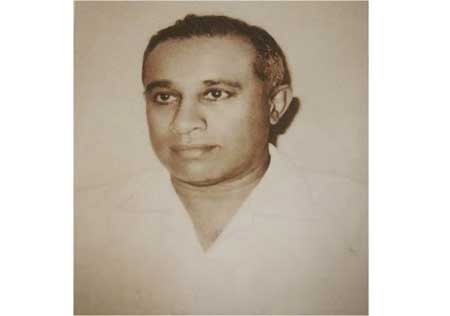
In the present context of rising prices of essentials, after food, the people are most hit by the high prices of medicines. With the fact that there is a severe shortage of medicines in the Government hospitals, patients are compelled to buy them from private pharmacies.
Though a few of them sell medicines at a reasonable price keeping an acceptable profit margin, unfortunately, a majority fleece the patients. Many poor patients can afford to buy only a portion of the prescribed medicine or not at all, and fail to recover from their illness.
Some patients with chronic illnesses like diabetes and high blood pressure suffer due to partial control of their illness, with long term consequences, which can also be life threatening.
This situation can be rectified if we return to the Senaka Bibile Medicinal Drug Policy that was in operation during the 1970 SLFP/LSSP/CP Coalition Government period. During that period, every Government hospital had practically every required medicine for every illness in adequate amounts to be given to patients free of charge. These were available in adequate amounts and the quality was assured. There were hardly any rejections.
The prices in the private pharmacies too were low and the quality good, so that the private health sector too benefited. This was because Senaka Bibile established the State Pharmaceutical Corporation (SPC) which purchased the entire requirement of both state and private sectors. Globally tenders were called for the bulk purchase of the entire requirement. He ensured that the quality was good by obtaining certificates of good manufacturing practice and by periodic checks for quality control, both internally and externally.
In calling for tenders, he only used the generic term (the proper scientific name) of each medicine. By avoiding the company trade names, all the bulk producers of expensive brands had to compete with all producers of the much cheaper generics of good quality. Most Brand producers were used to buying generics and after applying their brand name to jack up their prices considerably. The patients were fooled by intensive advertising of the particular brand, and claiming that it ensured quality. The doctors were given all sorts of perks and even big bribes to ensure that the doctor prescribe that particular drug. The pharmacists were also bribed to give that brand drug when the prescription carried only the generic name. By making the SPC the sole importer for the entire country requirement Prof. Senaka Bibile ensured that the price to the consumer remained as low as possible, specially because the same medicines were being given free in the Government sector. To reach the public, he not only opened many SPC sales outlets in the bigger cities, but he also promoted outsourcing to private pharmacies.
His policy enabled the consumer through the intervention of the government to get low price good quality medicine. By ensuring that the government hospitals had all the medicines for practically every disease free of charge, the poor greatly benefited. The WHO and UNCTAD acclaimed him for his wonderful policy.
The 35th World Health Assembly in Geneva in May 1982 made special mention of his achievement. They then proceeded to recommend the adoption of this policy by all Third World countries. It was when he went to Guyana at the request of UNCTAD to train people there on his method that his premature death at the age of 57 years took place under mysterious circumstances.
This was a great loss not only to the poor people of Sri Lanka but also to the poor people of the world. The Lanka Sama Samaja Party (LSSP) expected the State Pharmaceutical Corporation to mark the occasion by having the Annual Senaka Bibile Memorial Lecture. I am sorry to learn that this is not being held. The lack of time prevented the LSSP from having a commemorative meeting. I have to be content with sending this short article to the newspapers to mark the occasion.
I think it is my duty to mention that Prof. Bibile was born in Bibile on February 13, 1920. He had his secondary education at Trinity College Kandy and after completing his degree he received higher education in the University of Edinburgh, UK, specializing in Pharmacology. On his return to Sri Lanka he set up the first Department of Pharmacology at the University of Ceylon, Colombo. He was an excellent teacher and gave the students a clear understanding of the subject without the help of any notes.
With the establishment of the University at Peradeniya, he set up the Pharmacology Department. In addition, he developed a separate Education Unit for the academic staff to improve their teaching abilities. This was done when he became the first Dean of the Faculty of Medicine in Peradeniya.
He was a convinced socialist and joined the Lanka Sama Samaja Party at a very early age. He was an admirer of Dr. N. M. Perera and Dr. Colvin R. de Silva among other leaders of the LSSP. As students we visited his house once a week, where he explained the teachings of Marx, Engels, Lenin, Trotsky and other theoreticians in very clear and simple language. His ability as a teacher was a great help in acquiring this knowledge. In a way, we are indebted to him both for our knowledge of Medical Pharmacology as well as Marxism.
I had the good fortune to develop a lasting friendship with him. I still recall having dinner at his flat in Borella along with our wives Kamini and Leela the night before he left for Guyana. He mentioned that because of his policy which had greatly reduced the profits of the pharmaceutical drug industry that his life may be in in danger. He had received a warning not to go to Guyana.
He laughed this off and said that nothing would deter him from going ahead with spreading his ideas and helping the poor people in third world countries to benefit from his policy.
It was one of the saddest days of my life when I and Kamini went to Katunayake airport to receive Leela when she returned from Guyana with his ashes.
– Prof. Tissa Vitarana

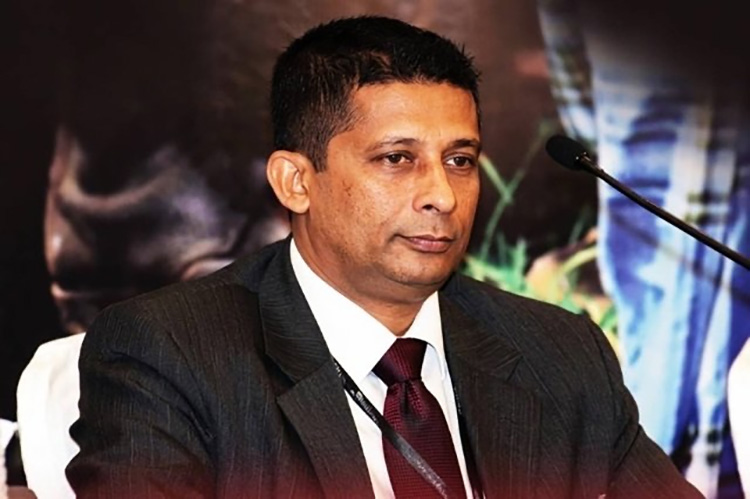
The government has chosen not to respond to questions raised by the United Nations Human Rights Council (UNHRC) regarding the detention of retired Maj. Gen. Suresh Sallay in connection with the ongoing investigations into the 2019 Easter Sunday attacks.
The Criminal Investigation Department (CID) arrested the ex-official in late February this year. The Special Rapporteur on the promotion and protection of human rights and fundamental freedoms while countering terrorism, the Working Group on Arbitrary Detention, the Special Rapporteur on the right of everyone to the enjoyment of the highest attainable standard of physical and mental health and the Special Rapporteur on the independence of judges and lawyers have jointly raised the issue on 20 July, 2026.
Drawing attention of President Anura Kumara Dissanayake to what they called alleged arbitrary detention of Sallay, former Director General of the State Intelligence Service (SIS) and former Director of Military Intelligence (DMI), under the Prevention of Terrorism Act (PTA), as well as allegations of torture and other cruel, inhuman or degrading treatment while in custody, resulting in the grave deterioration of his health, and imminent risks of retaliation through further torture and ill-treatment resulting in irreparable harm, should he be released from hospital and returned to custody, the UN sought the government explanation with a 60-day period.
The UN has stated: “This communication, and any response received from your Excellency’s Government, will be made public via the communications reporting website at the 60 days mark. Should your Excellency’s Government respond within 60 days, both the communication and the response, may be published before the 60 days mark. The communications and responses
will also be made available in the subsequent periodic report to be presented to the Human Rights Council.”
In the absence of the government’s response, the UN posted the letter, dated 20 July, 2026, addressed to President Dissanayake. The full letter can be accessed https://spcommreports.ohchr.org/TMResultsBase/DownLoadPublicCommunicationFile?gId=31125
News
Section of wartime KKS High Security Zone vacated to facilitate economic development in the area

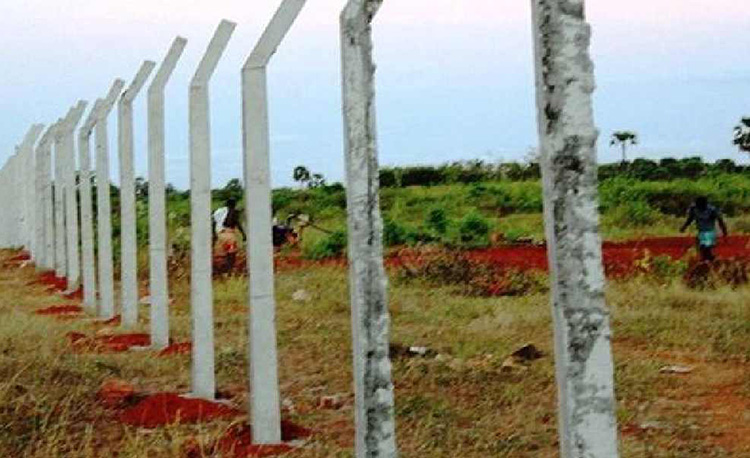
The Army, last week, vacated an area, within the wartime high security zone in the Jaffna peninsula. The Defence Ministry said that an extent of 187.56 acres of land, belonging to the Cement Corporation in Kankesanthurai, Jaffna, has been released by the military. The released land, located in Grama Niladhari Division J/233, Kankesanthurai West, within the Valikamam North (Tellippalai) Divisional Secretariat Division, had been utilised by the Sri Lanka Army since the middle of 1997.
The release of the 187.56-acre extent forms part of the initiative to make State land available for the proposed investment zone in Kankesanthurai, thereby facilitating future investment and economic development in the area.
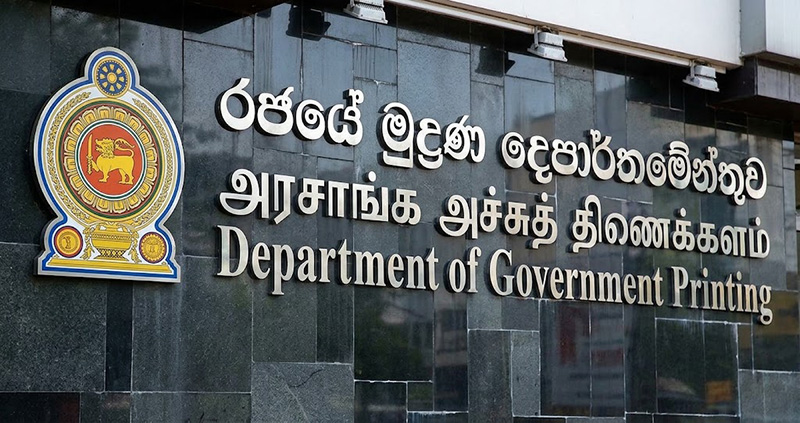
A complaint has been lodged with the Colombo Fraud Investigation Bureau against the Government Printer and the Secretary to the Ministry of Media regarding the online release of falsified documents bearing a forged Speaker’s certificate.
Attorney-at-Law Aruna Laksiri has lodged a complaint with the Colombo Fraud Investigation Bureau requesting legal action against the Government Printer of the Department of Government Printing (No. 118, Dr. Danister de Silva Mawatha, Colombo 08), Prasanna Jayaratne, and the Secretary to the Ministry of Mass Media (Asidisi Medura, 163, Kirulapone Mawatha, Polhengoda, Colombo 05), Dr. Anil Jasinghe.
The complaint alleges the commission of offences by forging and uploading falsified documents online using a forged Speaker’s certification, failure to perform statutory duties, and misappropriation of public property.
The complaint states that a copy of the English translation of the 22nd Amendment to the Constitution was downloaded and printed from the official website of the Government Printing Department (www.documents.gov.lk), which operates under the Ministry of Mass Media. On its outer cover and on page 1, the text “certified on 25th of September, 2026” is inscribed inside brackets.
The complaint pointed out that the Speaker has certified an English translation. Under Articles 23, 79, 83, and 80 of the Constitution, Parliament enacts laws and the Speaker certifies bills strictly in the Sinhala and Tamil languages; under the Constitution, therefore the Speaker cannot apply such certification to an English translation.

Showers or thundershowers will occur at several places in the most part of the island after 1.00 p.m

GS1 Lanka drives Sri Lanka’s shift to 2D barcodes

Geneva takes up Sallay’s case and govt. ignores opportunity to answer accusations

Section of wartime KKS High Security Zone vacated to facilitate economic development in the area

Lawyer lodges complaint against Govt. Printer, Media Ministry Secy.

Sri Lankan troops in joint anti-terrorist exercise in Russia

‘Dates have the highest sugar content to fight Coronavirus’

Sunday Island 27 December – Headlines

#SundayIsland 17th December – Headlines

Sunday Island – 28th March

Sunday Island Headlines – 21 March

Sunday Island – 21st February – Headlines
-

 Latest News5 days ago
Gold winner Tharanga gets brand-new Honda Vezel from SLAAJ
-

 Features5 days ago
Why Sri Lanka needs an Inclusive Civic Nationalism – urgently
-

 News4 days ago
US-assisted ‘Ice’ detection: NPC to examine IGP’s move to transfer drug-busting team
-

 Features6 days ago
Thailand’s biggest new global star …
-
 News6 days ago
First cases taken up by SC after enactment of 22A dismissed
-

 News5 days ago
Civil society activist accuses govt. of favouring Ven. Gnanasara
-

 Editorial3 days ago
Colombo Port drug bust: The plot thickens
-

 Editorial6 days ago
Aftershocks of 22A