
Business
Bangladesh-SL FTA could help boost bilateral trade though uncertainties remain – Economist


By Ifham Nizam
A Free Trade Agreement (FTA) between Bangladesh and Sri Lanka could significantly enhance bilateral trade, although uncertainties remain, a Bangladeshi economic analyst said.
Speaking to The Island Financial Review economist Jamal Uddin said that both nations have substantial opportunities for economic collaboration, particularly in regional trade. Bangladesh currently imports more from Sri Lanka, but there is optimism among businessmen that the situation may improve under the new government led by Nobel laureate Dr. Muhammad Yunus.
Uddin added: ‘The recent political upheaval in Bangladesh, including the resignation of former Prime Minister Sheikh Hasina, has impacted trade, but business leaders are hopeful that stability will return, enabling better trade relations.
‘The prospects of a FTA is especially appealing as it could lower tariffs and boost exports from Bangladesh to Sri Lanka, particularly in sectors like pharmaceuticals, paper and cement.
‘Bangladesh’s trade deficit with Sri Lanka has been growing, with Sri Lanka exporting more to Bangladesh than it imports. In the fiscal year 2022-23, Bangladesh’s trade deficit with Sri Lanka was USD 1.63 million, and this gap is expected to widen. Despite this, Bangladeshi exports to Sri Lanka have shown some growth, particularly in goods like medicines, ready-made garments and home textiles.
‘The FTA negotiations have been ongoing, with technical committees from both countries working on the details. If successful, the FTA would be Bangladesh’s first with any country, and it is expected to make regional trade more efficient by potentially reducing import-export times by 3 to 4 days if Sri Lankan ports are used.’
Meanwhile, a Sri Lankan businessman said: ‘Businessmen of Dhaka feel that everything is not normal yet. But they are optimistic that the situation will soon be under the control of the new government. Sri Lankans are doing well in the energy sector in Bangladesh and the recent political problem could be a storm in a tea cup.
‘Businessmen are optimistic that the new government will work to improve the business environment, especially since their eyes are on regionally focused. We urge the creation of an enabling business- friendly environment for boosting bilateral trade in this region.
‘In the case of Sri Lanka, Bangladesh depends on it for some goods and services. Recently, Bangladesh participated in a trade fair in Colombo and Bangladeshi businessmen are now looking to strengthen opportunities for trade development. Data found that both sides are eagerly waiting for a FTA that could increase business volumes.’
According to Abdul Awal Mintu, a former president of the Federation of Bangladesh Chambers of Commerce and Industries (FBCCI), there is a good relationship between Dhaka and Colombo.
Mintu said the opening of LCs and import-export activities had been disrupted during the uprising. He believed that the situation will be normalized soon.
‘Statistics indicate that Bangladesh’s imports from Sri Lanka are increasing. However, the export of products to Bangladesh is also increasing from Sri Lanka. Overall, the bilateral trade gap is currently in favor of Sri Lanka, he explained.

By Ifham Nizam
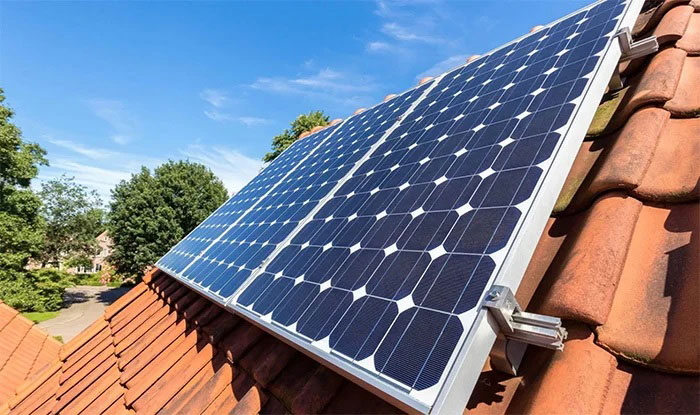
A USD 57.4 million investment package is set to reshape the economics of electricity for small and medium-sized businesses, while creating a stronger platform for private investment in rooftop solar and other distributed renewable-energy projects.
The financing package—comprising a USD 35 million concessional loan from the Asian Development Bank (ADB), a EUR 15.4 million grant from the European Union (EU), equivalent to USD 16.94 million, and a USD 5.5 million grant from the Japan Fund for the Joint Crediting Mechanism (JFJCM)—will finance a five-year programme to modernise the electricity distribution system from 2026 to 2030.
For the business community, one of the most significant elements is the planned introduction of Virtual Net Metering (VNM), which will be implemented in the country for the first time.
The EU-funded component will support 25 MW of aggregated rooftop solar PV capacity, specifically aimed at helping reduce the electricity-bill burden of small and medium-scale entrepreneurs.
The move could open a new investment channel for SMEs that have traditionally faced difficulties in absorbing high energy costs and making the upfront investment required for renewable-energy systems.
Rather than viewing rooftop solar simply as a household energy solution, the programme positions distributed solar as an important business-cost management tool.
For SMEs, which operate with considerably tighter margins than many large corporates, electricity expenditure can have a direct impact on competitiveness, cash flow and the ability to expand operations.
By allowing electricity generated from qualifying rooftop solar installations to be applied through a virtual net-metering arrangement, the programme is expected to broaden the economic benefits of solar power beyond individual premises.
The financial significance of the scheme extends beyond the initial 25 MW.
By establishing the infrastructure and regulatory framework required to manage aggregated distributed generation, the project could help create greater investor confidence in the development of decentralised renewable-energy assets.
The investment therefore has the potential to leverage additional private capital into the renewable-energy sector rather than functioning solely as a government-funded infrastructure programme.
The financing package is particularly notable because a substantial portion comes in the form of grants and concessional funding, reducing the cost of financing technologies that would otherwise require significant upfront capital.
The ADB loan will support the wider modernisation programme, while the EU and Japanese grant components will help finance renewable-energy integration and technologies designed to strengthen the grid.
At EDL, the investment will upgrade the existing CEBAssist platform with Advanced Metering Infrastructure (AMI), a Distributed Energy Resource Management (DERM) system and distribution control centres supported by an Advanced Distribution Management System (ADMS).
These systems will give the utility real-time visibility of electricity consumption and distributed generation, allowing it to manage an increasingly decentralised power system more efficiently.
That digital infrastructure is critical to the business case for expanding rooftop solar.
As more SMEs and other consumers generate their own electricity, the distribution network needs to know where generation is taking place, how much electricity is entering the grid and how those flows are affecting local network conditions.
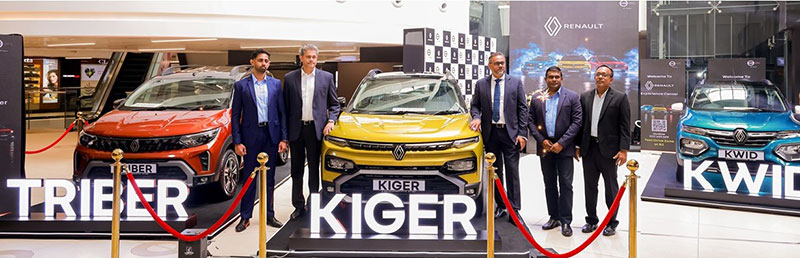
Renault has taken another significant step in its return to the Sri Lankan market with the opening of the Renault Experience Centre at Majestic City, Colombo, offering customers an opportunity to discover the brand and experience its latest models.
The Centre was officially declared open by Jawahar Ganesh, Group Managing Director of Associated Motorways (Private) Limited, accompanied by Prasanna de Silva, Director – Sales, AMW. The occasion was attended by AMW management and staff, members of the media, customers, well-wishers and other invited guests.
Located at the lobby of Majestic City, the Centre features three Renault models being introduced to the Sri Lankan market – the Renault Kwid, Renault Kiger and Renault Triber. Visitors can explore the vehicles, learn about their features and specifications, and take advantage of test drives available at the location.
Adding to the convenience for customers, AMW has ample stocks of Renault vehicles available in Sri Lanka, allowing customers to take delivery of their chosen vehicle without having to wait for months for it to arrive. Subject to completion of the necessary documentation and registration, customers can look forward to driving away in their new Renault within as little as one day, making the purchase experience faster and more convenient.
Customers can also enjoy greater peace of mind with a three-year manufacturer warranty, supported by dedicated Renault aftersales facilities to provide professional service and support throughout their ownership journey.
Commenting on the opening, Jawahar Ganesh, Group Managing Director of AMW, said, “We are delighted to welcome Renault back to Sri Lanka and to open the Renault Experience Centre at Majestic City. Renault is a brand with an exceptional heritage, a strong global presence and a reputation for innovation and distinctive automotive design. Through AMW, we are bringing that heritage and experience closer to Sri Lankan customers”.
Business
Dialog and Indira Cancer Trust continue breast cancer awareness initiative through Yeheli.lk

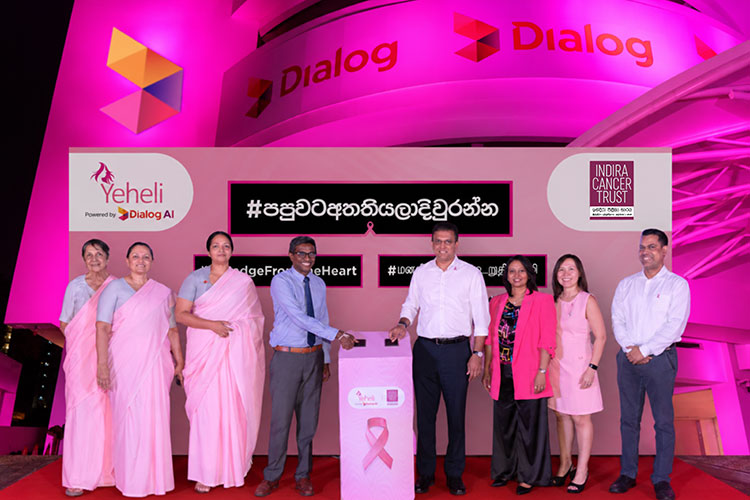
Dialog Axiata PLC, Sri Lanka’s #1 connectivity provider, marked the beginning of Breast Cancer Awareness Month by illuminating its Corporate Head Office in pink, in partnership with the Indira Cancer Trust, to stand in solidarity with individuals and families affected by breast cancer and encourage greater awareness, regular screening and early detection.
Building on previous breast cancer awareness campaigns conducted through Dialog’s Yeheli.lk platform in collaboration with the Indira Cancer Trust, this year’s initiative will continue throughout October under the theme, ‘A Pledge from the Heart’. As part of the campaign, members of the public can visit yeheli.lk to register for a free monthly SMS reminder and take their pledge for early detection throughout Breast Cancer Awareness Month.

Showers or thundershowers will occur in most part of the island after 1.00 p.m.

Removing monk’s robes matter for Sangha to decide: Mahanayake Theras

NDB fraud Rs 60mn more than reported

President orders review of laws on treatment of imprisoned monks

BHC, Colombo: “LTTE remains a proscribed org. in the UK”

Sri Lanka runs out of essential anti-TB medicines, India comes to rescue

‘Dates have the highest sugar content to fight Coronavirus’

Sunday Island 27 December – Headlines

#SundayIsland 17th December – Headlines

Sunday Island – 28th March

Sunday Island Headlines – 21 March

Sunday Island – 21st February – Headlines
-

 Features5 days ago
The first woman in the foreign service or Ceylon Overseas Service it was then called
-

 Editorial6 days ago
Fuelling discontent and protest
-

 News4 days ago
Geneva takes up Sallay’s case and govt. ignores opportunity to answer accusations
-

 Foreign News6 days ago
Ten injured after car crashes into rugby supporters in Australia
-

 Latest News6 days ago
Tharindu Rathnayake, bowlers secure Asian Games Bronze for Sri Lanka
-

 News5 days ago
Nearly 20 Iranian tankers stranded off Lanka amid US sanctions
-

 Features4 days ago
Sri Lanka Cricket Bill: Governance reform is not yet a cricket strategy
-

 News5 days ago
Lanka enters new phase of prosecutions as hurdles clear