
Midweek Review
Aragalaya: GR blames CIA in Asanga Abeyagoonasekera’s explosive narrative

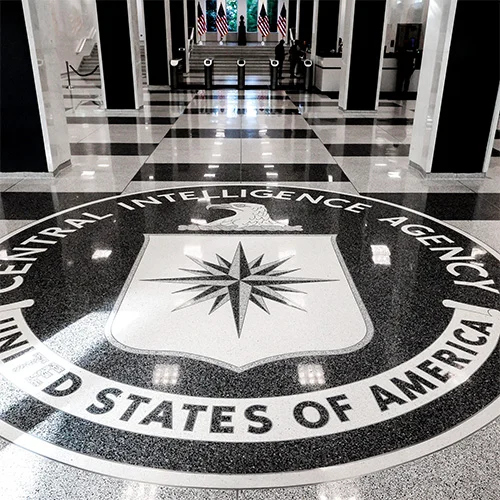
Did CIA chief William Burns visit Colombo in Feb 2023? Sri Lanka and the US refrained from formally confirming the visit. The Opposition sought confirmation of the then CIA Chief’s visit to Colombo in terms of the Right to Information Act but the Wickremesinghe-Rajapaksa government sidestepped the query. A former Republican congressman from Texas and Director of National Intelligence (2020–2021) John Ratcliffe succeeded Burns in late January 2025.
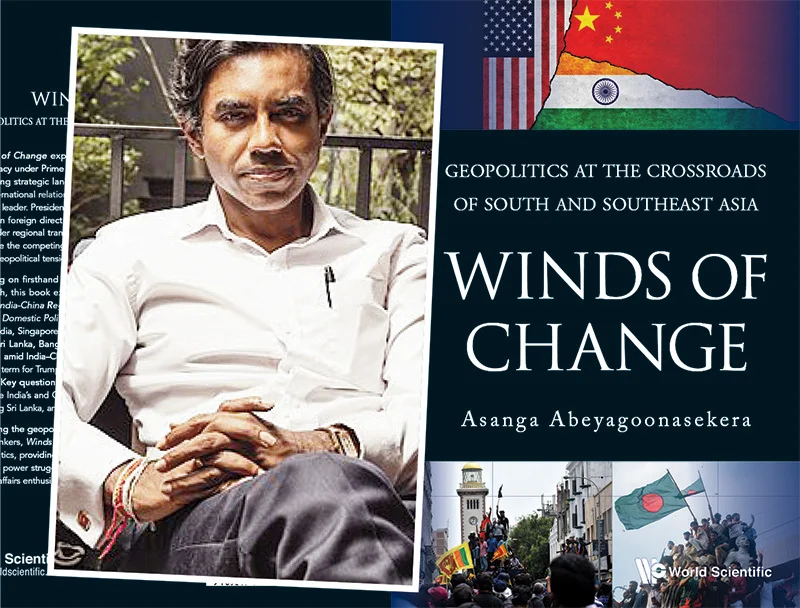
On the sheer weight of new evidence presented by Asanga Abeyagoonasekera’s ‘Winds of Change’, readers can get a clear picture of the forces that overthrew President Gotabaya Rajapaksa in 2022.
Even five years after the political upheaval, widely dubbed ‘Aragalaya,’ controversy surrounds the high-profile operation that forced wartime Defence Secretary Gotabaya Rajapaksa to literally run for his dear life.
Gotabaya Rajapaksa, formerly of the Army but a novice to party politics, comfortably won the 2019 November presidential election against the backdrop of the Easter Sunday carnage that caused uncertainty and suspicions among communities. The economic crisis, also clandestinely engineered from abroad, firstly by crippling vital worker remittances from abroad, almost from the onset of Gotabaya Rajapaksa’s presidency, overwhelmed the government and created the environment conducive for external intervention. Could it have been avoided if the government, that enjoyed a near two-thirds majority in Parliament, sought the help of the International Monetary Fund (IMF)?
The costly and well-funded book project, undertaken at the time Abeyagoonasekera was working on a governance diagnostic report for the IMF, in the wake of the change of government in Sri Lanka, meticulously examined the former Lieutenant Colonel’s ouster, taking into consideration regional as well as global developments. Abeyagoonasekera dealt efficiently and furiously with rapidly changing situations and developments before the unprecedented 03 January, 2026, US raid on Venezuela.
Lt. Col. (retd) Gotabaya Rajapaksa, for some unexplainable reason and a considerable time after the events, has chosen to blame his ouster on the United States. We cannot blame him either, by the way we have seen how other regime changes had been engineered, in our region, by Washington, since and before Gotabaya’s ouster. The accusation is extraordinary as Gotabaya Rajapaksa in his memoirs ‘The conspiracy to oust me from presidency’ refrained from naming the primary conspirator, though he clearly alluded to an international conspiracy.
April 8, 2019 meeting
Launched in March 2024, in the run-up to the presidential election that brought Anura Kumara Dissanayake (AKD) to power, almost in a dream ride, if not for the intervening outside evil actors, ‘The conspiracy to oust me from presidency’ discussed the international conspiracy, but conveniently failed to name the primary conspirator. What made the former President speak so candidly with Abeyagoonasekera, the founding Director-General of the national security think tank, the Institute of National Security Studies Sri Lanka (INSS), under the Ministry of Defence, from 2016 to 2020?
Abeyagoonasekera also served as Executive Director at the Lakshman Kadirgamar Institute (LKI), under the Ministry of Foreign Affairs (2011–2015), during Mahinda Rajapaksa’s second term as the President. The author, both precisely and furiously, dealt with issues. Readers may find very interesting quotes and they do give a feeling of the author’s general hostility towards the US, India, as well as to the US-India marriage of convenience. Those who sense so may end up thinking ‘Change of Winds’ being supportive of the Chinese strategy. Among the highly sensitive quotes that underlined the Indian approach were attributed to Indian Defence Secretary Sanjay Mitra. The author quoted Mitra as having declared: “We need the MRCC centre [Maritime Rescue Coordination Centre], and you cannot give it to another nation.” As pointed out by the author, it was not a request but an order given to Sri Lanka on 8 April, 2019, meant to prevent Sri Lanka from even considering a competing proposal from China. Against that background, the author, who had been present at that meeting at which the Sri Lanka delegation was led by then Defence Secretary Hemasiri Fernando, questioned the failure on the part of the delegations to take up the Easter Sunday attacks. Terrorists struck two weeks later. Implications were telling.
That particular quote reveals the circumstances India and the US operated here. No wonder the incumbent government does not want to discuss the secret defence MoUs it has entered into with India and the US as they would clearly reveal the sellout of our interests.
The following line says a lot about the circumstances under which Gotabaya Rajapaksa was removed: “In Singapore, a senior journalist recounted how Gotabaya Rajapaksa’s resignation was scripted, under duress, at a hotel, facilitated by a foreign motorcade.”
In the first Chapter that incisively dealt with the Belt and Road Initiative (BRI), the author was so lucky to secure an explosive quote from the ousted leader in an exclusive, hitherto unreported, interview in June 2024, a few months after the launch of Gotabaya Rajapaksa’s memoirs. The ex-President hadn’t minced his words when he alleged that the Central Intelligence Agency (CIA) orchestrated his removal. He also claimed that he had been under US surveillance throughout his presidency.
The ousted leader has confidently cleared India’s Research and Analysis Wing (RAW) of complicity in the operation. What made him call Indian National Security Advisor (NSA) Ajit Doval ‘a good man,’ in response to Abeyagoonasekera’s pointed query. Abeyagoonasekera quoted Gotabaya Rajapaksa as having said: “… he would never do such things.” The ex-President must have some reason to call Doval a good friend, regardless of intense pressure exerted on him and the Mahinda Rajapaksa government by the Indians to do away with large scale Chinese-funded projects. (Doval in late October last year declared “poor governance” was the reason behind uprisings that led to change of governments in Bangladesh, Nepal, and Sri Lanka over the period of past three-and-a-half years. The media quoted Doval as having said, during a function in New Delhi, that democracy and non-institutional methods of regime change in countries, such as Bangladesh, Sri Lanka and Nepal, created their own set of problems. That was the first time a senior Indian government official made remarks on Nepal’s government change, followed by the Gen Z uprising in early September, 2025.)
Gotabaya Rajapaksa also cleared the Chinese of seeking to oust him. It would be pertinent to mention that China reacted sternly when at the onset of the Gotabaya presidency, the President suggested the need to re-negotiate the Hambantota Port deal.
During the treacherous ‘Yahapalana’ administration (2015 to 2019) Gotabaya Rajapaksa told me how Doval had pressed him to halt not only the Colombo Port City project but to take back Hambantota Port as well. By then, the Chinese had twisted the arms of the Yahapalana leaders Mairthpala Sirisena and Ranil Wickremesinghe and secured the Hambantota Port on a 99-year lease in a one-sided USD 1.2 bn deal. The Colombo Port City project, that had been halted by the Yahapalana government, too, was resumed possibly under Chinese threat or for some money incentive.
Once Wijeyadasa Rajapakshe, PC, declared, at a hastily arranged media briefing at Sri Lanka Foundation (SLF), that Sri Lanka would be relentlessly targeted as long as the Chinese held the Hambantota Port. The writer was present at that media briefing.
Wijeyadasa Rajapakshe said so in the aftermath of the 2019 Easter Sunday carnage, while disclosing his abortive bid to convince the Yahapalana government to abrogate the Hambantota Port deal. Did the parliamentarian know something we were not aware of? The author’s assessment, regarding the Easter Sunday attacks, based on interviews with Chinese officials and scholars, is frightening and an acknowledgement of a possible Western role in Sri Lanka’s destabilisation plot.
The ousted leader, in his lengthy interview with Abeyagoonasekera, made some attention-grabbing comments on the then US Ambassador here, Julie Chung. The ex-President questioned a particular aspect of Chung’s conduct during the protest campaign but his decision not to reveal it all in his memoirs is a mystery. Perhaps, one of the most thought-provoking queries raised by Abeyagoonasekera is the rationale in Gotabaya Rajapaksa’s claim that he didn’t want to suppress the protest campaign by using force against the backdrop of his own declaration that the CIA orchestrated the project.
Author’s foray into parliamentary politics
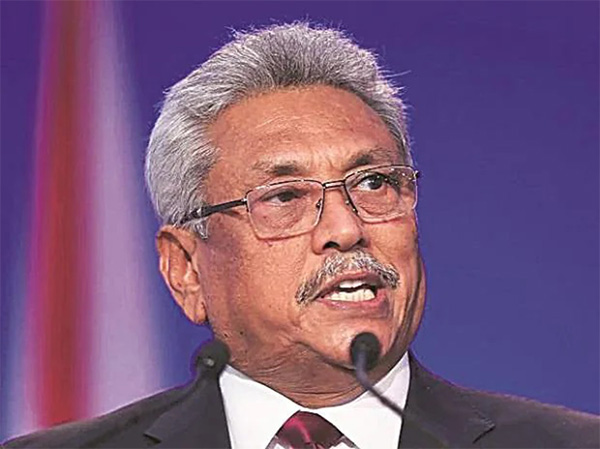
Gotabaya
For those genuinely interested in post-Chandrika Bandaranaike Kumaratunga developments, pertaining to international relations and geopolitics, may peruse ‘Winds of Change’ as the third of a trilogy. ‘Sri Lanka at Crossroads’ (2019) dealt with the Mahinda Rajapaksa period and ‘Conundrum of an Island’ (2021) discussed the treacherous Sirisena–Wickremesinghe alliance. The third in the series examined the end of the Sri Lanka Podujana Peramuna’s (SLPP) President Gotabaya Rajapaksa’s rule and the rise of Anura Kumara Dissanayake (AKD) whom the author described as a Marxist, though this writer is of the view the JVP and NPP leader AKD is not so. AKD has clearly aligned his administration with US-India while trying to sustain existing relationship with China.
Among Asanga Abeyagoonasekera’s other books were ‘Towards a Better World Order’ (2015) and ‘Teardrop Diplomacy: China’s Sri Lanka Foray’ (2023, Bloomsbury).
Had Abeyagoonasekera succeeded in his bid to launch a political career in 2015, the trilogy on Sri Lanka may not have materialised. Abeyagoonasekera contested the Gampaha district at the August 2015 parliamentary election on the UNP ticket but failed to garner sufficient preferences to secure a place in Parliament. That dealt a devastating setback to Abeyagoonasekera’s political ambitions, but the Wickremesinghe-Sirisena administration created the Institute of National Security Studies Sri Lanka (INSS), under the Ministry of Defence, for him. Abeyagoonasekera received the appointment as the founding Director-General of the national security think tank, from 2016 to 2020.
Several persons dealt with ‘Aragalaya’ (the late Prof. Nalin de Silva used to call it (Paragalaya) before Abeyagoonasekera though none of them examined the regional and global contexts so deeply, taking into consideration the relevant developments. Having read Wimal Weerawansa’s (Nine: The hidden story), Sena Thoradeniya’s (Galle Face Protest; Systems Change or Anarchy?). Mahinda Siriwardena’s (Sri Lanka’s Economic Revival – Reflection on the Journey from Crisis to Recovery) and Prof. Sunanda Maddumabandara’s (Aragalaye Balaya), the writer is of the opinion Abeyagoonasekera dealt with the period in question as an incisive insider.
Abeyagoonasekera, as a person who left the country, under duress, in 2021, painted a frightening picture of a country with a small and vulnerable economy trapped in major global rivalries. The former government servant attributed his self–imposed exile to two issues.
The first was the 2019 Easter Sunday carnage. Why did the Wickremesinghe-Sirisena government ignore the warning issued by Abeyagoonasekera, in his capacity as DG INSS, in respect of the Easter Sunday bombing campaign? There is absolutely no ambiguity at all in his claim. Abeyagoonasekera insists that he alerted the government four months before the National Thowheed Jamath (NTJ) bombers struck. The bottom line is that Abeyagoonasekera had issued the warning several weeks before India did but those at the helm of that inept administration chose to turn a blind eye.
The second was the impending economic crisis that engulfed the country in 2022. Abeyagoonasekera is deeply bitter about his arrest on 21 July, 2024, at the Bandaranaike International Airport (BIA) over an alleged IRD –related offence as reported at that time, especially because he was returning home to visit his sick mother.
Asanga’s father Ossie, a member of Parliament and controversial figure, was killed in an LTTE suicide attack at Thotalanga in late Oct. 1994. The Chairman and leader of Sri Lanka Mahajana Pakshaya had been on stage with then UNP presidential election candidate Gamini Dissanayake when the woman suicide cadre blasted herself. The assassination was meant to ensure Kumaratunga’s victory. The LTTE probably felt that it could manipulate Kumaratunga than the experienced Dissanayake who may have had reached some sort of consensus with New Delhi on how to deal with the LTTE.
Let me reproduce a question posed to Asanga Abeyagoonasekera and his response in ‘Winds of Change’ as some may believe that the author is holding something back. “Didn’t they listen?” a US intelligence officer had asked me incredulously after the bombings. Years later, during my role as a technical advisor for the International Monetary Fund (IMF) amid Sri Lanka’s collapse, the question resurfaced: “How did you foresee the collapse of a powerful regime with a majority in parliament?” My answer remained the same—patterns. Rigorously gathered data and relentless analysis reveal the arcs of history before they unfold.
Perhaps, readers may find what former cashiered Flying Officer Keerthi Ratnayake had to say about ‘Aragalaya’ and related developments (https://island.lk/ex-slaf-officer-sheds-light-on-developments-leading-to-aragalaya/)
Bombshell claim
Essentially, Abeyagoonasekera, on the basis of his exclusive and lengthy interview with former President Gotabaya Rajapaksa, confirmed what Wimal Weerawansa and Sena Thoradeniya alleged that the US spearheaded the operation.
But Prof. Maddumabandara, a confidant of first post-Aragalaya President Ranil Wickremesinghe has bared the direct Indian involvement in the regime change operation. In spite of Gotabaya Rajapaksa confidently clearing Indian NSA Doval of complicity in his ouster, Prof. Maddumabandara is on record as having said that the then Indian High Commissioner here Gopal Baglay put pressure on Speaker Mahinda Yapa Abeywardena to take over the government for an interim period. (https://island.lk/dovals-questionable-regional-stock-taking/)
Obviously, the US and India worked together on the Sri Lanka regime change operation. That is the undeniable truth. India wanted to thwart Wickremesinghe receiving the presidency by bringing in Speaker Abeywardena. That move went awry in spite of some sections of both Buddhist and Catholic clergy throwing their weight behind New Delhi.
The 2022 violent regime change operation cannot be discussed without taking into consideration the US-led project that also involved the UNP, JVP and TNA to engineer retired General Sarath Fonseka’s victory at the 2010 presidential election and their backing for turncoat Maithripala Sirisena at the 2015 presidential election.
The section, titled ‘Echoes of Crisis from Sri Lanka to Bangladesh: South Asia’s Struggle in a Polycrisis’, is riveting and underscores the complexity of the situation and fragility of governments. Executive power and undisputable majorities in Parliament seems irrelevant as external powers intervene thereby making the electoral system redundant.
Having meticulously compared the overthrowing of Gotabaya Rajapaksa and Bangladesh’s Premier Sheikh Hasina, the author condemned them for their alleged failures and brutality. Abeyagoonasekera stated: “When the military sides with the protesters, as it did in Sri Lanka and now in Bangladesh, it reveals the rulers’ vulnerabilities.” The author unmercifully chided the former President for seeking refuge in the West while alleging direct CIA role in his ouster. But that may have spared his life. Had he sought a lifeline from the Chinese so late the situation could have taken a turn for worse.
The comment that had been attributed to Gotabaya Rajapaksa seemed to belittle Ranil Wickremesinghe who accepted the challenge of becoming the Premier in May 2022 and then chosen by the ruling SLPP to complete the remainder of Gotabaya Rajapaksa’s five-year term. Ranil was definitely seen as an opportunistic vulture who backed ‘Aragalaya’ without any qualms till he saw an opening for himself out of the chaos.
On Wickremesinghe’s path
Abeyagoonasekera discussed the joint US-Indian strategy pertaining to Sri Lanka. Whatever the National People’s Power (NPP) and its President say, the current dispensation is continuing Wickremesinghe’s policy as pointed out by the author. In fact, this government appears to be ready even to go beyond Wickremesinghe’s understanding with New Delhi. The Memorandum of Understanding (MoU) on defence and the selling of the controlling interests of the Colombo Dockyard Limited (CDL) to India, mid last year, must have surprised even those who always pushed for enhanced relations at all levels.
The economic collapse that resulted in political upheaval has given New Delhi the perfect opportunity to consolidate its position here. Uncomplimentary comments on current Indian High Commissioner Santosh Jha in ‘Winds of Change’ have to be discussed, paying attention to Sri Lanka’s growing dependence and alleged clandestine activities of India’s Research and Analysis Wing (RAW). Abeyagoonasekera seemed to have no qualms in referring to RAW’s hand in 2019 Easter Sunday carnage.
Overall ‘Winds of Change’ encourages, inspires and confirms suspicions about US and Indian intelligence services and underscores the responsibility of those in power to be extra cautious. But, in the case of smaller and weaker economies, such as Sri Lanka still struggling to overcome the economic crisis, there seems to be no solution. Not only India and the US, the Chinese, too, pursue their agenda here unimpeded. Utilisation of political parties, represented in Parliament, selected individuals, and media, in the Chinese efforts, are obvious. Once parliamentarian Wijeyadasa Rajapakshe raised the Chinese interventions in Sri Lanka. He questioned the Parliament receiving about 240 personal laptops for all parliamentarians and top officials. The then UNPer told the writer his decision not to accept the laptop paid for by China. Perhaps, he is the only Sri Lankan politician to have written a strongly worded letter to Chinese leader Xi warning against high profile Chinese strategy.
Winds of Change
is available at
Vijitha Yapa and Sarasavi
By Shamindra Ferdinando

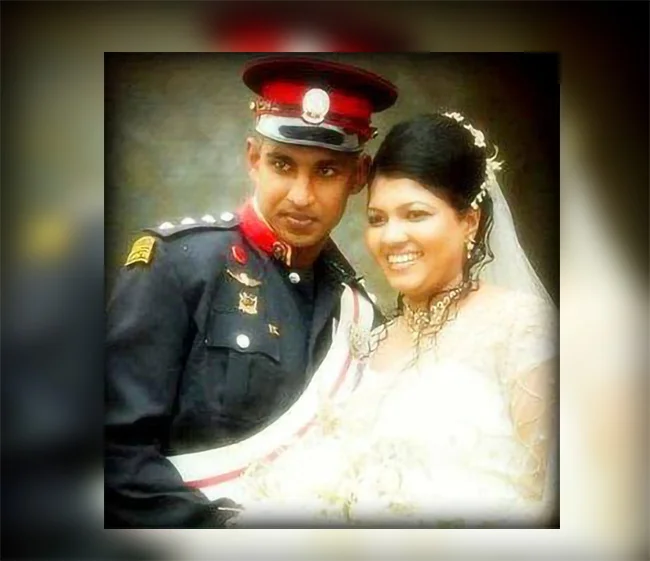
Second Lieutenant S.U. Aladeniya, the first recipient of the Parama Weera Vibhushanaya, died fighting the LTTE in the second week of July, 1990. The young commanding officer of the isolated Kokavil Army detachment refused an opportunity to leave his wounded colleagues. Instead, he chose to set an extraordinary example. The fate of the Kokavil detachment, as well as the unprecedented military debacle that forced the Army to vacate the Kandy–Jaffna A9 road, north of Vavuniya, in 1990, happened due to the late President Ranasinghe Premadasa’s folly. Premadasa trusted the LTTE to such an extent, he ordered several hundred police officers, in the East, to surrender to appease the LTTE. The rest is history.
By Shamindra Ferdinando
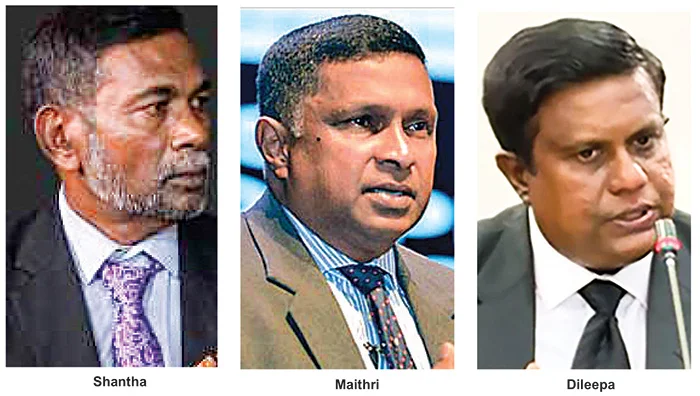
Additional Solicitor General Dileepa Peiris recently questioned in court as to why retired Air Force officer Shantha Jayathilake appeared in court wearing armed forces medals.
The highly decorated war hero Flight Lieutenant Jayathilake represented himself under Section 260 of the Criminal Procedure Code in the trial of Maj. Gen. Suresh Sallay, the alleged mastermind of the 2019 Easter Sunday carnage.
During his submission, Dileepa Pieris looked at the medals worn by the retired officer and said: “He comes wearing pieces of tin.”
When Jayathilake objected to the ASG’s remark, Magistrate Pasan Amarasena warned the ex-officer not to interrupt proceedings. Then Peiris said that he couldn’t see Jayathilake’s medals properly. Jayathilake is the recipient of Weewa Wickrema Vibhushanaya (WWV), the second highest gallantry medal awarded to Sri Lankan military. The PWV is the highest gallantry decoration that can be received by a living military man. Jayathilake who joined the Air Force in 1989 at the height of the JVP-led insurgency, retired in 1999, and was also the recipient of the Rana Sura Padakkama (RSP).
Senior President’s Counsel Maithree Gunaratne, who represented Sallay in court, said: “The problem is not with your eyes, but with the red-tinted glasses you are wearing. You wore blue-tinted glasses for a while, and now you wear red-tinted glasses, so the gallantry medals, earned with blood, sweat, and tears for the country, look like pieces of tin to you”
Gunaratne requested that Pieris’s comments on the ex-officer be formally recorded in court records. This happened in the Fort Magistrate’s court on 2 July, 2026. The court proceedings caused controversy with various interested parties expressing differing views on Jayathilake wearing medals to a courtroom.
Some found fault with him for wearing medals while others strongly backed him. The issue at hand received social media attention. Obviously some sought political advantage at the expense of the government and the Attorney General’s Department. Others lambasted the former State Intelligence Service (SIS) Chief Sallay (2029-2024) for causing unnecessary developments. However, the gallantry medals worn by military, both officers and men, cannot be ridiculed by anyone, regardless of his/her position in the society. Gallantry medals remind the country of immense and untold sacrifices made by the military, during the war, and any attempt to dilute them should be strongly opposed.
Those who silently backed or publicly take action against war-winning Army Chief General (retd.) Sarath Fonseka, in 2010, after his defeat at the 2010 January presidential election, shouldn’t see the incident at the Fort Magistrate court as an opportunity.
Although Sri Lanka has been deeply divided over investigations into the conduct of armed forces during the war and after, no issue caused controversy like the arrest of Sallay, a post-war head of the Directorate of Military Intelligence (DMI) over the 2019 Easter Sunday carnage. Sallay served as the Director of State Intelligence Service (SIS) from 2019 to 2024 before President Anura Kumara Dissanayake replaced him. Perhaps President Gotabaya Rajapaksa shouldn’t have brought Sallay as Director, SIS, contrary to the practice of SIS always being headed by a senior police officer or he was quite right in bringing in a serving military officer with a proven intelligence track record, knowing the shameful behaviour of responsible top police officers in the run up to the Easter Sunday suicide attacks, despite there having been adequate advance intelligence warnings to prevent them.
The intervention made by the retired Air Force officer triggered an unexpected reaction from the Attorney General’s top representative and the subsequent continuing controversy influenced The Island to discuss the awarding of gallantry medals, namely Parama Weera Vibhushanaya (PWV), the highest, followed by Weera Wickrema Vibhushanaya (WWV), Rana Wickrema Padakkama (RWP) and Rana Sura Padakkama (RSP). The fourth medal, Weeradhara Vibhushanaya, is awarded for bravery, regardless of the risks to one’s own life, but for voluntary interventions outside the battlefield.
Bravery of an exceptional kind
During the war, Sri Lanka awarded 32 PVWs posthumously. The Army, Navy and Air Force shared 29, 2 and 1, respectively. The PVW is awarded to all ranks of armed forces, both regular and volunteer, for individual acts of bravery in the face of enemy, disregarding the risks to one’s own life. Of the 32 recipients of the PVW, the extraordinary case of Maj. J.A.L. Jayasinghe (Lalith Jayasinghe), posthumously promoted to the rank of Lieutenant Colonel, captured unprecedented public attention.
On many occasions, PWVs were awarded posthumously for sacrifices made in defensive action, while the armed forces were responding to enemy action. However, Lalith had initiated action deep within the enemy-held territory and his efforts reflected the overall military strategy.
The 29 recipients consisted of 27 Army: Second Lieutenant S.U Aladeniya, Lance Corporal (LC) Y.G.G. Kularatne (Hasalaka Gamini), Second Lt. K.W.T. Nishshanka, Staff Sgt. H.P.B. Gunasekera, LC W.I.M. Seneviratne, Lt. Col. A.F Lafir, Capt. G.S. Jayanath, Maj. J.A.L. Jayasinghe, Maj. K.A. Gamage, Capt. U.G.A.S. Samaranayake, H.G.M.K.I. Megawarna, Sgt H.G.S. Bandara, Corporal P.N. Suranga, Corporal P.M.N. Pushpakumara, Corporal D.N\M.S. Chandrasiri Bandara, LC K. Chandana, Private R.M.D.M. Ratnayake, LC A.M.M.P. Abeysinghe, recruit A.M.B.H.G. Abeyratne Banda, private T.G.R. Dayananda, Lt. P.N. Punsiri, Second Lt W.D. Jayathilake, Sgt. K.G.N.L.R. Perera, Corporal K.P.D.T. Gunasekera, LC H.A. Nilantha Kumara, LC S.V.A.M. Pushpamal. Navy: Lt. J.L.D.S. Wijetunga, Petty Officer K.G. Shantha and Air Force: Squadron Leader T.D.S. Silvapulle.
Although Jayasinghe paid the supreme sacrifice, while serving the Special Forces, he had been a proud member of the Gemunu Watch (GW). GW veteran Maj. Gen. K.B. Egodawele in his Hewayekuge Mathaka Satahan (Memories of a soldier), first launched in 2012, declared that Jayasinghe had been among four GW personnel, namely Captain U.G.A.S. Samaranayake, Captain H.P.M.K. Meghawardena and Corporal D.M.A.M. Pushpakumara to receive the PWV, posthumously.
All of them received the highest gallantry award for actions on the Vanni east region during Eelam War IV (2006 August to 2009 May).
Jayasinghe’s wife Kaushalya accepted the PVW on 19 May, 2012, at the annual Victory Day parade. Maj. Gen. Kamal Gunaratne read the awardee’s official citation. Kaushalya had been five months pregnant at the time Jayasinghe mounted a raid deep inside the LTTE-held territory in the Vanni east region. Gunaratne, the wartime General Officer Commanding (GoC) of the 53 Division declared that Jayasinghe had been in command of an LRRP (Long Range Reconnaissance Patrol)/Deep Penetration Unit tasked to eliminate LTTE leaders. That unit had moved about 40 kms into the enemy held territory in Oddusuddan and was positioned alongside the Mankulam-Oddusuddan road to kill LTTE leaders, on 26 November, 2008.
Suddenly, Jayasinghe had fallen sick but joined other members of the LLRP to fight the enemy after fierce fighting erupted between the two sides. In spite of having an opportunity to retreat, Jayasinghe, hero of many previous battles, suffered grievous injuries during the battle and succumbed to his injuries.
Jayasinghe had been an extraordinary soldier and was the recipient of the second highest gallantry medal, WWV, on three or four occasions. In one such occasion, Jayasinghe had received two WWVs at one ceremony and recalled retired Maj. Gen. Dhammi Hewage, who received the RSP at the same event. Hewage spoke admirably about what he called high risk and extraordinary LRRP operations undertaken by Jayasinghe over a period of time. Let me give you an opportunity to know more about Hewage whose no holds barred examination of the Army during the war received public attention ( https://island.lk/a-special-forces-officers-narrative/)
Those who risked their lives to earn battlefield recognition played a significant role in transforming the armed forces, particularly the Army. Gallantry medals had been earned by armed forces officers and men in various circumstances but the deadly LRRP strikes, deep within the LTTE held territory, made quite a difference in the overall direction of the war. Those who operated in enemy territory in a way functioned as suicide cadres/units as the probability of them being intercepted by the LTTE was very high. But, regardless of severe risks, they ventured out of government-held areas to infiltrate deep inside enemy held territory to carry out operations. The LRRP team, led by Jayasinghe, is a case in point.
Clandestine operations received public attention in the run-up to the 2001 December parliamentary election when UNP leader Ranil Wickremesinghe all of a sudden alleged that the Directorate of Military Intelligence (DMI) was planning to assassinate him. Within weeks after the UNP victory at the parliamentary election, the UNP unleashed the police on the DMI. The police raided the DMI safe house at Millennium City, Athurugiriya. In spite of Army Chief, the late Lt. Gen. Lionel Balagalle, personally assuring the UNP that there was absolutely no basis for such claims, Wickremesinghe was not prepared to change his political strategy. He gave Minister John Amaratunga in charge of police the go ahead for planned action.
The January 2, 2002, raid led to the arrest of Captain Mohamed Nilam, Staff Sgt. P. Ananda Udulagama, Staff Sergeant I. Edirisinghe Jayamanne, Corporal H.M. Nissanka Herath, Lance Corporal H. Mohamed Hilmy and an LTTE operative identified as Niyaz/Subashkaran. Others involved in that particular operation had been living in the East and were called into join operations, depending on the requirement. On the instructions of Lt. Gen. Balagalle, those tasked with carrying out attacks on selected targets received the opportunity to train under Special Forces instructors from Maduru Oya. They underwent training at the Panaluwa Test Firing Range, where firing special weapons was a key element in the training schedule.
In a bid to ensure secrecy, those operatives mostly operated on their own, and had their own arsenal, which included a range of weapons, including claymore mines. In fact, those involved in such operations functioned on a need-to-know basis. Even senior DMI officials, as well as the Army top brass, except a few, hadn’t been aware of what was going on. Even the then powerful Deputy Defence Minister, the late Anuruddha Ratwatte, hadn’t been told of the Millennium City safe-house, though he knew of the ongoing hits behind enemy lines.
Shortly after the exposure of the DMI operation, Balagalle met Premier Wickremesinghe to explain the secret operations undertaken against the LTTE. The Army chief had been accompanied by officials, including Hendarawithana, while one-time Attorney General Tilak Marapana, National List MP holding the Defence portfolio, and Minister Milinda Moragoda, too, were present.
“Except for Minister Moragoda, the others obviously didn’t realise what we were doing. They acted as if we were conspiring to do away with the political leadership so as to undermine the Norwegian initiative,” a source familiar with the dynamics of the project said. “We quickly realised we were up against a government, which simply wanted to negotiate a deal with the LTTE at any cost. The LTTE and the Norwegians exploited the situation to the hilt.”
Success in the East
Hitting the enemy in the area under its control had been Balagalle’s idea. The DMI hadn’t been successful in its first and the second attempts to take two specific targets. The targeted area had been Batticaloa south and the first and the second operations were mounted on 18 July 2001 and 12 September 2001. But both actions went awry and the targeted men identified as Jim Kelly (commander of Jeyanthan regiment) and Jeevan escaped death.
But, they succeeded on 17 September 2001. Operatives carried out a successful attack on ‘Major’ Mano Master, who was at that time in charge of the communications network in the Ampara-Batticaloa area.
But immediately after the UNP’s victory, the government terminated all such operations. The treacherous government betrayed those who risked their lives for the country. Ex-LTTEers and others who worked for the Army were exposed and the LTTE hunted them down. Scores of men were killed. Some were tortured and killed.
Apart from Mano Master, the secret raids claimed the lives of Batticaloa District Intelligence Head Lt. Col Nizam and Capt. Thevathasan.
Among those killed in the north were LTTE Air Wing Head Col. Shankar (Vaithilingam Sornalingam) and Sea Tiger Deputy Commander Lt. Col Kangai Amaran.
S.P. Thamilselvan, his Deputy Major S. Thangan, Vavuniya Special Commander Col. Jeyam and Deputy Military Chief Col. Balraj were believed to have been targeted in the North but escaped. In the East, among those who escaped targeted killings, were Col. Karuna, Karikalan, Jim Kelly and Intelligence Chief Lt. Col. Ramanan.
In spite of the LTTEers, particularly its leaders on a heightened state of alert, the Army ambushed Karikalan’s vehicle on 18 October, 2001. The destruction of the vehicle fuelled speculation of Karikalan’s demise, with a section of the media reporting him killed in a special operation. Shortly before the attack on Karikalan’s vehicle, the Army intercepted a radio conversation between Karikalan and his wife, a medical doctor by profession, serving in the Northern Province. “She simply begged him to leave Batticaloa and take refuge in the North to avoid the Army’s deep penetration operations,” a source familiar with LRRP operations told the writer many years ago.
The Army struck again on 26 November, 2001. ‘Major’ Swarnaseelan and ‘Captain’ Devadas were eliminated in the Pulipanjikkal area. It was the last operation before the December 5 General Election.
The UNP terminated the operation. But, the Army revived the strategy after the eruption of hostilities in 2005.
It would be pertinent to mention that hit and run attacks, deep within the LTTE held territory, troubled them to such an extent, they took up the issue with Norway. Fearing a relentless campaign, the LTTE got Norway to include LRRP operations in their negotiations, leading to a one-sided Ceasefire Agreement (CFA) signed in February 2002 by the Wickremesinghe regime. That CFA revealed the existence of a secret Army project to target the LTTE in their own area. The CFA called for termination of LRRP operations.
Three PVWs
Lieutenant J.L.D.S. Wijetunga was the first Navy recipient of the Parama Weera Vibhushanaya (PWV), Sri Lanka’s highest gallantry award given posthumously. Wijetunga, Commanding Officer of the Israeli built Dvora Fast Attack Craft (FAC), maneuvered his vessel to intercept an explosives-laden Sea Tiger suicide boat approaching a troop transport ship off Point Pedro on 30 March, 1996. Wijetunga, in spite of knowing his action was suicidal, went ahead with the risky maneuver that saved the lives of a large contingent of off duty servicemen on their way to Trincomalee from Kankesanthurai (KKS).
The Navy earned its second PWV on 1 November, 2008, off Point Pedro, during the Eelam war IV. A Petty Officer of elite Special Boat Squadron K.G. Shantha rammed an explosives-laden Sea Tiger suicide craft with his Arrow boat (Z-142 ). Shantha and his three SBS colleagues were blasted to smithereens, though their action saved an Inshore Patrol Craft (IPC) carrying a dozen SBS personnel.
Wing Commander T.D.S. Silvapulle received the nation’s highest gallantry award PWV for attacking Sea Tiger boats firing at Army defences south-east of Elephant Pass on 19 December, 1999. Silvapulle, flying a Mi 24 helicopter gunship in adverse weather conditions, regardless of the threat posed by surface-to-air missiles, engaged the enemy craft. Silvapulle compelled the enemy to flee but was hit during the confrontation. His individual act of gallantry was recognized in 2012, four years after the eradication of the LTTE. The then President Mahinda Rajapaksa conferred the PWV at a ceremony held on 19 May, 2012. Maj. Lalith Jayasinghe received his PWV at the same ceremony.
The betrayal of the armed forces in October, 2015, at the Geneva-based Human Rights Council, by the treacherous Sirisena-Wickremesinghe regime, underscored the mentality of those who wielded political power. The calling of gallantry medals ‘pieces of tin’ reminded the country of the pathetic and disgraceful state of affairs.
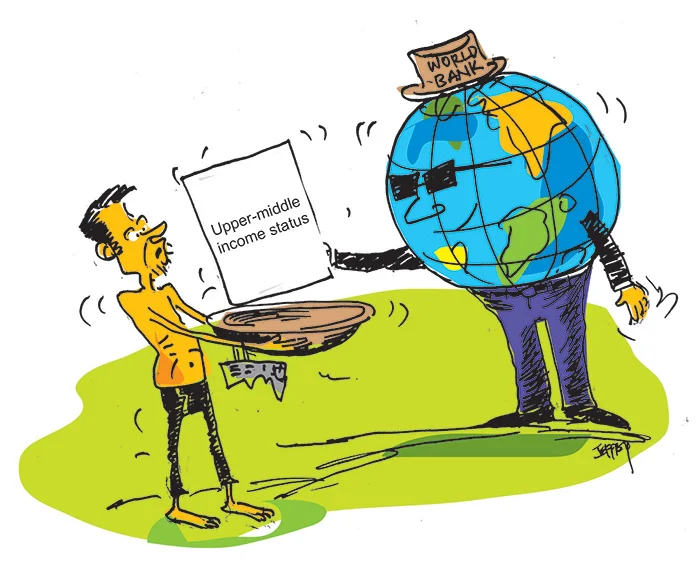
“Sri Lanka has been ranked among the least happy countries in the latest World Happiness Report 2026…standing alongside Ethiopia”- The Sunday Island March 2026
Sri Lanka was officially declared an Upper-Middle Income country by the World Bank in July 2026, regaining the classification it had in 2019.
On the 30th of June, the IMF delegation meeting the President at the Presidential Secretariat praised the government: “…IMF praised the government’s economic programme and noted that Sri Lanka has made greater progress than many other countries implementing IMF-supported programmes. The delegation commended the government for maintaining macroeconomic stability despite a series of external shocks and for remaining firmly committed to its reform agenda…” (Presidential Media Division, 30 June 2026)
Meanwhile, a UN-backed World Happiness Report 2026 compiled by the Wellbeing Research Centre at the University of Oxford, ranked Sri Lanka 134th out of 147 nations. A daily newspaper which ran the story on the 19th of March 2026, added that the report showed that “Sri Lanka has slipped one place from its 133rd ranking in 2025, now standing alongside Ethiopia. The country also trails behind its South Asian neighbours, with India ranked 116th, Pakistan and Bangladesh positioned significantly higher.”
Good News, Bad News
The Upper-Middle Income classification was declared by the World Bank during the Yahapalana government in July 2019. 6 months later, the Yahapalana government was swept out at elections.
Only 2 years later, in April 2022, the country was declared bankrupt, and by July that year the newly elected President was toppled by a people’s uprising for the first time in the country’s history.
To fill the vacuum, an unlikely combination of an unelected MP from the Opposition who was made President by the Parliament and an unpopular government that had barely survived the uprising, governed the country together. It was massively defeated by the people only 2 years later in 2024, despite ‘stabilising’ the economy.
An Upper-Middle Income status may give the impression of a prosperous people, but prosperous people are not an unhappy people. The World Bank report 2026 (World Bank, Sri Lanka Development Update) notes the anomaly: “the recovery is unfinished and has not translated into widespread improvements in welfare.”
The report adds:
* Real output remains below 2018 levels.
* Although poverty is projected to decline in 2025, it remains double the 2019 levels.
* Vulnerability remains high with an additional 10 percent of the population living just above the poverty line.
* Malnutrition continues to be elevated.
* The labour market recovery is slow with real wages and labor force participation well below 2019 levels.
The World Bank’s Poverty and Equity Brief (October 2025) sheds further light:
* Poverty is projected at 22.3-22.4 percent in 2025 and around 20 percent until 2027 without stronger inclusive growth.
* Real earnings remain below pre-crisis levels.
So, are Top of the Class in the IMF index and almost Bottom of the Class in the Happiness Index related?
As a friend who is a highly-placed economist explained to me, if people are poorer, undernourished, indebted, and insecure after stabilisation, then reserves, inflation, and primary balances alone cannot be relied on to judge the next IMF programme. Sri Lanka needs a national programme whose success metric is household recovery, jobs, nutrition, and productive capacity.
From the praise heaped on the President and this government’s strong leadership by the IMF for their performance thus far, sticking closely to the IMF conditionalities, we can only infer that things for the unhappy citizens will hardly get better as they negotiate the 18th IMF programme.
The AKD administration doesn’t haggle on behalf of the people. They see the rewards of that approach in fiscal consolidation and macroeconomic stability. This however, is not the only kind of stability they have to bear in mind, given recent history.
By the People, But Not for the People?
The new or renewed (from July 2019) ‘Upper-Middle Income’ classification has served to remind people where the government has failed, been weak, as much as where it has been strong and succeeded. The economy in the abstract is better off, but the majority of the people who gave the government a two thirds majority, are much worse off in material reality.
To return to my top economist friend, she explained that Sri Lanka should not reject fiscal discipline, but it must own the design of fiscal adjustment. The country needs a fairer tax mix, better tax administration, public investment discipline, and protection of health, education, nutrition, and climate-resilient infrastructure. Otherwise, fiscal discipline becomes socially brittle and growth-reducing.
The direction she recommended is hardly where the government is heading. The World Bank warns that the on-going reliance on regressive indirect taxes could worsen the poverty outlook, while the primary expenditure ceiling of 13 percent of GDP can constrain public investment and service delivery.
A leading financial daily (6 July) reported that at the CA Sri Lanka’s 5th Annual Economic and Tax Symposium, both the Government’s tax policies and the Inland Revenue Department (IRD) “came under sustained criticism from leading private sector tax professionals”. Gajma & Co. Senior Partner N.R. Gajendran argued that “…higher revenues had come largely from imposing a heavier burden on existing taxpayers rather than widening the tax base.”
He said that “When taxes become excessive and unbearable, and it is not coming from the widening of the base, it is coming from the same taxpayer, it erodes expenditure capabilities, it erodes saving capabilities, and it erodes investment capabilities,” warning that “sustained over-taxation ultimately weakens consumption, investment, and long-term economic growth.”
Sri Lanka has already lost a large number of skilled professionals who migrated in droves in the last two years. Factum reports (April 2026) that the annual departures for foreign employment have hovered above the 310,000 mark. This includes Healthcare Professionals (Doctors, nurses), Academics and Researchers (including 80-90% of State University graduates), Technologists and Engineers.
Will the Lawyers be next? The Island editorial of 6 July 2026 strongly supports the stand that the BASL has taken, (endorsed by the Colombo Law Society, Colombo High Court Lawyers Association, LAWASIA and the Commonwealth Lawyers Association) opposing the government’s effort to move a constitutional amendment to extend the retirement age of judges of the Supreme Court and the Court of Appeal, denouncing political interference in the judiciary and urging the government to avoid a Zimbabwean crisis.
None of this makes for a happy citizen, stability notwithstanding.
By the People, for the Creditors
So, what of all those promises made with such passion to do better than all previous governments since Independence in 1948?
The World Food Programme has this to report:
* Households unable to meet essential food needs increased from 14 percent in 2024 to 20 percent in 2026.
* If price trends continue, another 1.3 million people could be unable to afford essential food needs, including nearly 300,000 urban poor.
* Child nutrition remains worrying: stunting 10.1 percent, wasting 8.6 percent, and underweight 16.1 percent. (WFP, Food Security Under Pressure)
Economists warn that a programme that ‘stabilises’ the economy while households sell assets, cut food, reduce education and health spending, and slide into coping strategies, i.e., de-stabilises the household economy and lives, will not be socially, politically or developmentally sustainable.
Those who care for the people recommend that Sri Lanka’s own programme must place adaptive social protection, nutrition, and livelihoods at the very centre.
The promised re-negotiation of the 17th IMF package to make the necessary economic recovery less taxing (pun intended) for the people, less painful, and more sustainable overall, never happened. The government acted as if it was elected by the People for the Creditors.
We have been warned that Sri Lanka’s shift toward commercial borrowing and ISBs changed the debt-risk profile, with ISBs carrying high interest rates and short maturities. The government’s promised negotiations didn’t resemble anything like what was expected by the people, and went the way of the ISB holders who celebrated the victory in Canary Wharf toasting our President in absentia.
IMF Country Report No 26/111 indicates that even after restructuring, debt sustainability risks remain high. Public debt is projected at around 100.1 percent of GDP in 2026, with central government gross financing needs at 19.8 percent of GDP.
Economists remind us that Sri Lanka’s recent graduation to the Upper Middle-Income classification means that we will have to pay more in debt repayments as per the macro-linked bond of the debt restructuring settlement with the creditors.
IMF 18, going on 19?
Who’d have thought it? In the last 77 years, the most pro-people, pro-poor administration has certainly not been the AKD government. There were much better ones, even during the 30 year war, when policies were more enlightened and served the people; were undertaken with confidence and determination, and some still continue to provide the foreign exchange to pay for subsequent errors of judgment. And with the courage of their convictions and confidence in their capacity to deliver, those leaders didn’t feel the need to postpone any elections.
Stabilisation was an immediate necessity. But my economist friend spoke for us all when she told me “Sri Lanka cannot stabilise its way to prosperity. It should not risk turning emergency discipline into a permanent development model”.
With the current state of play, is that what we are looking at? There is little evidence that this administration has the capacity to design an independent programme, not subject to the whims and fancies of IFIs, but as my friend put it, “our own programme: fiscally responsible, socially protective, production-oriented, climate-resilient, and politically owned. The IMF can support that programme, but it cannot be the programme.”
An unhappy people is surely as much of an indicator of the real health of the economy, as the Gross National Income per capita calculated in US dollars by the World Bank. A Sunday newspaper quoted a young economist, Rehana Thowfeek, co-founder/director at Arutha Research, who says: “There is no point in celebrating becoming an upper-middle-income country while 1 in 4 of our people is in poverty, two out of every 5 Sri Lankans cannot afford a healthy diet and 1 out of 3 of our children under 5 years is malnourished.”
This is not a situation that should be allowed to prevail by an allegedly pro-people government, or indeed any government that has been granted the privilege to govern, through the people’s vote. The planning, the policy choices are all in the hands of the government. Will they choose a better path?
People are not unhappy because they are too mean to acknowledge what a wonderful job this government is doing, and give praise to this administration like the IMF at the Presidential Secretariat. It is because they are in pain, they are suffering, they are hungry, they cannot pay the bills, and they are looking at a future where none of these things are going away, but is set to get much worse, as the government slouches towards its next IMF programme and the next debt repayment.
by Sanja de Silva Jayatilleka
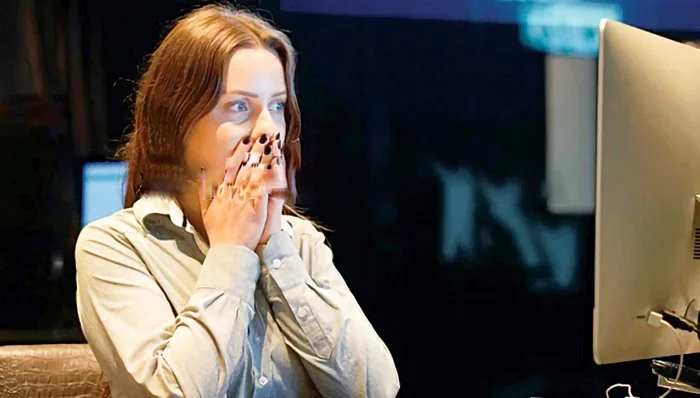
In the brave new wired world,
With the cyber bully and fraudster,
She needs to constantly contend,
Which should set the sensible thinking,
Whether in its basic essentials,
For Her the world has changed,
And let’s also see the message,
That’s understood but not voiced,
That Her cause has suffered dire neglect…
That the whip is in the grasp of the patriarch.
By Lynn Ockersz

Dharmaraja and Kingswood set for historic rugby clash on Saturday

Sri Lankan singer Mariazelle Goonetilleke passes away at the age of 68

Tensions erupt in Indian state after 11-year-old raped and murdered

US and Iran trade attacks as Khamenei is buried

Several spells of showers will occur in the Western, Sabaragamuwa and North-western provinces and in Galle, Matara, Kandy and Nuwara-Eliya districts

Canadian PM visits Saudi Arabia to strengthen energy, mining partnerships

‘Dates have the highest sugar content to fight Coronavirus’

Sunday Island 27 December – Headlines

#SundayIsland 17th December – Headlines

Sunday Island – 28th March

Sunday Island Headlines – 21 March

Sunday Island – 21st February – Headlines
-
 News6 days ago
Singapore-based Buddhist monk marks nearly four decades of humanitarian service
-
 News7 days ago
Freedom 250: US Embassy celebrates America’s 250th Independence Day through magic of American cinema
-
 News21 hours ago
Herath warns prospective migrant workers not to get fleeced by racketeers
-

 News5 days ago
AI concerned over proposed SL military deployment in Haiti
-

 Midweek Review3 days ago
Unexpected focus on ‘pieces of tin’ worn by military men
-
 Latest News4 days ago
Nyamhuri and Ngarava stun Bangladesh by defending 141
-

 Features6 days ago
The NPP’s New Challenge: Balancing Easter Lawfare and Economic Welfare
-
 News2 days ago
Negombo Prison riot: Ensuring protection of prisoners fundamental responsibility of the state – UN