
Features
‘ApiDenna’ with Gypsies Piyal and Shenal


 Music lovers, who are familiar with the lyrics of the Gypsies hit song ‘Lunu Dehi’ will, obviously, remember the opening words “Api denna ek weela…” with the late Sunil Perera doing the needful.
Well, what Sunil said in song, decades ago, has now become a reality, with his brother Piyal Perera, and the Gypsies new find, Shenal Nishshanka, operating as ‘ApiDenna,’ under the management of Ravi De Silva, who is now handling quite a few known showbiz artistes…and sports personalities, as well.
Piyal was quick to add that both he and Shenal haven’t quit the Gypsies.
“The Gypsies have been around for 55 years and I’m their leader. I joined the band when I was just 15 years old.”
According to Piyal, ‘ApiDenna’ is a new venture which he and Shenal decided to try out, with the guidance of Ravi De Silva.
“It has turned out to be a huge success and we seem to be in great demand…at various events,” said Piyal.
He went on to say that as ‘ApiDenna,’ he and Shenal does guest spots, performing with the band in attendance.
“We do everything live – no tracks.”
Referring to Shenal, he said this guy has emerged as a star, literally overnight, and now has a huge following of fans, and is a big hit wherever he performs.
Shenal was introduced to Piyal by one of the members of the Gypsies when he decided to take a break.
He came in as a guitarist but quickly showed his potential as a vocalist and that’s exactly where he is right now…upfront, creating all the excitement with his vocals and stage presentation.
Shenal describes himself as a rocker who can sing baila, too.
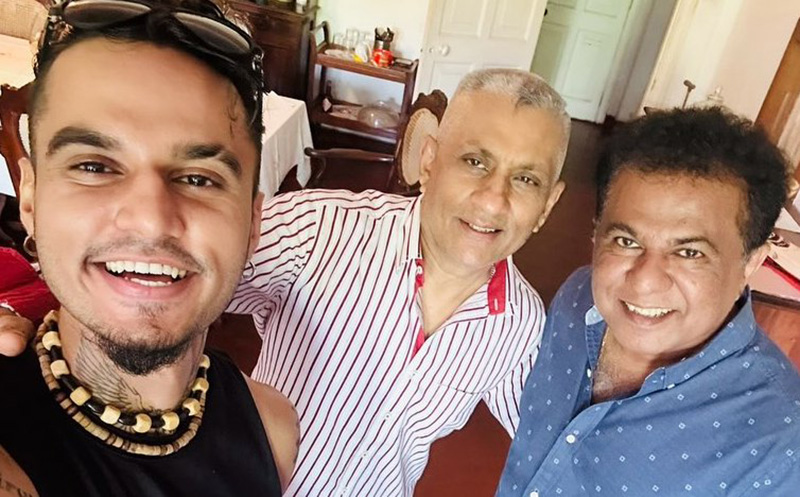
Ravi De Silva (centre) managing ‘ApiDenna’
He also says the late Sunil Parera is a legend and can never ever be replaced.
“I’m not there to replace him or be like him. I’m there to do my own thing.”
The duo’s first overseas gig is to Qatar.
The Gypsies, in the meanwhile, will continue to do their thing to keep their fans happy.
Their overseas assignments, this year, will see them in action in England, Australia, the USA, Canada, and Bangladesh.
Since the Gypsies have a busy work schedule, this year, Piyal mentioned that they would celebrate their 55 years in showbiz next year. “We will call it 55+.”
The band is also working on a few originals to be released before the year is out, said Piyal.
The Gypsies lineup is as follows:
Piyal – Band leader and vocals
Monique – Vocals
Lal – Drums
Shenal – Vocals
Ranga – Bass
Renuka – Lead guitar
Ravi Terrence – Keyboards

by Jehan Perera
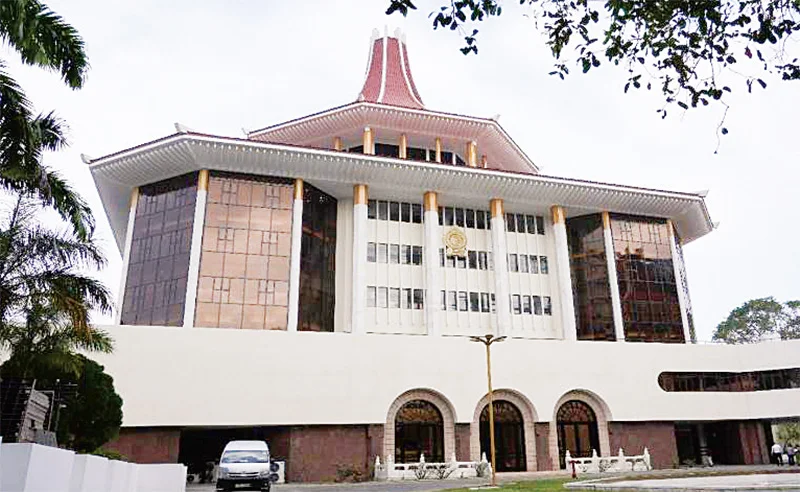
It appears that the die has been cast on the 22nd Amendment. The government appears unshaken in its determination to ensure its passage into law. From the government’s perspective, the 22nd Amendment and associated legislation, by increasing the tenure of all judges by two years, will give them the extra time to complete their existing cases. This will do away with the need to change judges midstream and have complex legal cases go back to the beginning, which has too often been the case. The completion of these cases will be to the benefit of the victims who have waited for decades for justice in some cases. It will also be to the government’s benefit as many of the wrongdoers are those in the political opposition. In the past, human rights and democracy activists, not to mention lawyers in the field, have bemoaned the manner in which court cases have got delayed for a variety of reasons, including judges being promoted or transferred midstream or reaching the age of retirement.
Principled opposition to 22nd Amendment is articulated in terms of the ad hoc and sudden emergence of the amendment. Those who advance this argument have expressed concern that extending judges’ tenure could create a sense of indebtedness to the government and weaken judicial independence. They would prefer the extension of judges’ tenure to be part of a comprehensive package of constitutional reforms that would apply across the board to other sectors of the public service and, ideally, find its place in the new constitution that the NPP promised in its election manifesto. The question is one of timing. Public opinion surveys carried out regularly have shown that the vast majority of people consider that corruption and criminality at high levels need to be brought to an end as soon as possible. They want accountability to become real rather than remain an unfulfilled promise. The public mood today is that the era of impunity must finally end.
Investigations by law enforcement agencies into the misdeeds of politicians in the past have too often come to naught due to the lack of political will on the part of successive governments. But on this occasion there is a manifest expression of such political will, as witnessed in the seemingly endless series of corruption and criminality cases being uncovered and exposed week by week and month by month. It is equally predictable that those under investigation will seek to challenge the legitimacy of this process. Some will perceive the prosecutions as essentially being in the nature of political revenge rather than lawful accountability and argue along those lines. Others will seek to rally public opinion by questioning the independence of the institutions involved. These reactions should surprise no one. But they make it all the more important that the credibility of the institutions through which accountability is pursued be safeguarded.
Safeguard Change
There is an old saying that society is a mule, not a horse. A horse may respond to repeated use of the spurs, but a mule, if driven too hard, may throw its rider off altogether. The proverb captures an important truth about governing societies. History offers many examples of societies that succeeded in exposing wrongdoing but failed to build reconciliation afterwards. The greatest danger is not merely that the guilty will protest their innocence. That is to be expected. The greater danger is that punishment itself becomes the principal language of politics. When that happens, each change of government carries with it the expectation that today’s judgments will tomorrow be revisited, reversed or avenged.
The electoral verdicts of 2024 that swept the NPP into power brought an entirely new group of political leaders to the fore. This transition needs to take place with care to ensure that polarisation and civil conflict are contained rather than intensified. The post-22nd Amendment period will therefore require something more than legal correctness. It will require political sagacity. Accountability needs to be seen in the light of strengthening the legitimacy of institutions rather than becoming sidetracked into another arena of political contestation. If justice comes to be seen as merely the continuation of politics by legal means, even deserving convictions of wrongdoers may lose public confidence on which long lasting justice depends.
Troubling in this context has been the conduct of some opponents of the amendment. They have not only attacked the government leadership for taking forward the 22nd Amendment. They have also launched personal attacks on judges and cast sweeping aspersions on the judiciary itself. Ironically, in seeking to discredit the courts before they deliver their judgments, they risk undermining the very institution they claim to defend. The lawyers who have united against the 22nd Amendment have every right and duty to raise constitutional concerns. Opposition politicians have every right to criticise legislation. But both also carry a responsibility not to erode public confidence in the judiciary through speculative accusations that prejudge the integrity of judges before they have acted. Such argumentation weakens an institution that belongs to the entire country, not to any government or opposition.
Real Test
Sri Lanka is emerging from decades of violent conflict and deep political polarization. Too often in our history, one government’s triumph has become the next government’s point of demonization as in the once widely used phrase of the “17 year curse” by the successor government. Institutions rebuilt today must therefore survive tomorrow’s transfer of power. They must earn the confidence not only of those who celebrate today’s victories, but also of those who will one day sit in opposition. Institutions that command confidence across political divides need to become stronger and not weaker than the governments that created them.
The national challenge is no longer simply whether accountability will be pursued. It is whether accountability will restore faith in the law by ending a culture of impunity that for too long protected the powerful while denying justice to victims. The country has waited too long for that moment. It must not now be compromised by unnecessary political confrontation or irresponsible attacks on the courts. Ultimately, the strongest answer to the critics of the 22nd Amendment will not come from government ministers or parliamentary speeches. It will need to come from the judges themselves.
The extension of the tenure of members of the judiciary will place an even greater obligation upon them to demonstrate, through every judgment they deliver, that they are truly independent, impartial and beholden to no political authority. If they uphold the law without fear or favour, they will expose the predictions of the doomsayers as unfounded. Those in the legal profession, media, civil society and politics should likewise recognise that criticism of judicial decisions must not become an assault on the institution of the judiciary itself. The greatest service that all sides can render Sri Lanka at this moment is to strengthen the people’s faith that justice belongs equally to every citizen and that no one, however powerful, stands above the law.
The Mirage of Consensus:
 (The writer is on X as @sasmester)
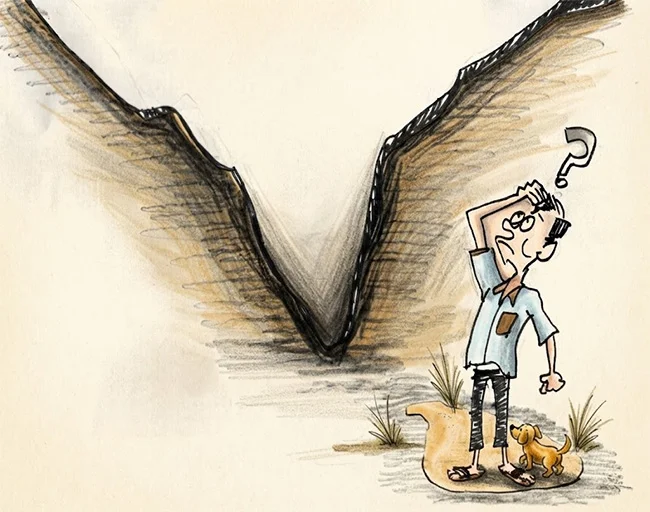
When the Pew Research Center released its report on regional perceptions in South Asia in August 2026, the headline number captured immediate attention, mostly in India and its diaspora. That is, 79% of Sri Lankans view India favourably. This made it the highest favourability rating recorded for India globally. In Sri Lanka what captured attention was yet another number and what it claimed. That is, Sri Lanka is the only South Asian country that was viewed more favourably than unfavorably in India, Pakistan and Bangladesh, the three countries that were surveyed in addition to Sri Lanka. This figure has been widely reported in Sri Lankan government portals such as the Sri Lankan government’s official news portal and almost all private and state-owned news outlets in addition to social media. 51% Pakistanis considered Sri Lanka favourably followed by 49% Indians and 47% Bangladeshis. None of these come close to the Sri Lankans’ view of India. Beyond the nationally mediated euphoria circulating online, what does all this mean? In my view, one cannot take these figures seriously when it comes to policy planning without looking at factors the surveys might not even consider.
In general, quantitative metrics offer a crisp, seemingly authoritative snapshot of public sentiment. Yet, reading survey statistics requires understanding both what numbers reveal and what they obscure. After all, common sense dictates that a percentage point is not a pure reflection of reality. Instead, it is the product of specific research tools, framed questions, and structural constraints that control what can be expressed—and what remains unsaid. For this specific report, only 3,566 adults in India, 1,039 in Pakistan, 1,044 in Bangladesh and 2,513 in Sri Lanka were interviewed between 8 February 2026 to 7 May 2026. They had to respond to a series of predetermined questions out of which they could select one of a series of given answers to each question. In this sense, while these are all routine features of surveys of this kind, they also indicate their clear limitations.
Though commonly used globally in survey research due to its relative efficiency in administration and tabulation, pre-given answer choices have in-built limitations. Standard favourability questions generally offer a scale such as ‘Very Favourable’, ‘Somewhat Favourable’, ‘Somewhat Unfavorable,’ and ‘Very Unfavourable’ or ‘No Opinion.’ This general situation applies to the Pew survey under discussion too. Predetermined choices force nuanced, multi-layered opinions into predefined responses. A respondent with a deeply mixed view is compelled to pick a direction, artificially magnifying either consensus or polarisation or simply opt for ‘no opinion’ if that option is given. Similarly, the dynamics of framing questions and context brings in their own limitations. The sequence and phrasing of survey questions tend to create priming effects. If a questionnaire asks about Sri Lanka’s economic recovery prior to asking about views on favourability towards a nation that assisted in the recovery, gratitude can naturally bias favourability upward.
Survey statistics of the kind Pew Research Center has provided, usually measure surface-level sentiment at a fixed point in time. In this case, the 79% people viewing India positively reflects a notable surge in positive sentiment, up from 65% in 2024. At one level, it provides a clear directional signal: amidst economic stabilisation and financial aid following Sri Lanka’s 2022 crisis, public goodwill toward India has expanded significantly.
What we often forget, however, is that a statistic can measure approval without revealing the underlying motivation or intensity. A 79% favourability rating does not specify whether respondents feel emotional warmth, strategic necessity, or transactional gratitude. It aggregates deeply distinct perspectives into a single percentage. A Tamil respondent in Jaffna, a Sinhala three-wheeler driver in Colombo, and a plantation worker in the Central Province may all select ‘favourable’ out of the choice of responses they are given. But their reasons could vary from perceivably shared ethno-cultural heritage to appreciation for fuel lines kept open during the economic collapse in the recent past. Numbers often articulate ‘how many’, but they remain silent on ‘why.’
Similarly, we cannot forget that Sri Lankans in general private conversations, particularly in the hospitality sector, often view Indians very negatively. This view is closer to the opinions on Indian travellers that have been circulating globally in the recent past and an important parts of a discourse that cannot be captured in a small sample survey like this with the kind of questions that have been used. This brings to my mind the 1994 book, Resplendent Sites, Discordant Voices: Sri Lankans and International Tourism by Malcolm Crick. Among other things, he points out how Sri Lankans had formed opinions about foreign visitors, some of which were quite impolite and negative, but based on experience and direct observation. But Crick had spent considerable time with his respondents in Kandy and surrounding areas, giving him the opportunity to capture more serious local opinions of visitors over time. That possibility was clearly not available to the Pew researchers and others who deploy similar instruments.
Given this situation, one must ask what might lie beneath the affirmation and what might be unuttered in this field of positivity? When a majority of Sri Lankans express a favourable view of India, the research instrument inherently flattens complex geopolitical anxieties into a single positive response. In doing so, it does not explain that Sri Lankans are generally easy-going and not impolite in public dealings which would also include responding to questionnaires. In any case, beyond Sri Lanka, a general problem one can see in public opinion polling is that respondents frequently do not opt to voice underlying reservations due to the binary or forced nature of survey questions. This feeds into the structural politeness I explained earlier, which is perhaps one of Sri Lanka’s most common ‘national’ traits across regions and demographic variations.
My sense is a different instrument exercised over a longer period might have revealed what these respondents might have opted not to say. At least in some circles, Sri Lankans are not lost to the realities of asymmetric power dynamics when it comes to relations with India. Expressing goodwill toward India based on India’s positive role in times of recent crisis, does not eliminate historical anxieties regarding Indian hegemony in the Indian Ocean region and towards Sri Lanka in particular. This includes India’s undisguised interest in building a land bridge to Sri Lanka based on its own strategic and mythological interests despite Sri Lankans’ general but usually unspoken wariness of the idea. A respondent might view India favourably as a helping hand during a time of crisis while harbouring unspoken concerns about sovereignty, maritime border disputes, or economic dependency.
On the other hand, when viewing these kinds of numbers, we cannot overlook domestic ethnic nuances. Views of India in Sri Lanka are historically intertwined with internal ethnic politics and India’s role in it mostly in the guise of a hegemon for the Sinhalas and a kind of ‘savior’ when it comes to Tamils. This is part of Sri Lankan collective memory that is not hitherto forgotten. That is, a simple favourability rating masks internal debates about Indian political influence regarding devolution of political power, minority rights and military intervention.
Given that Sri Lanka is a highly literate society, one cannot assume local people would not be able to distinguish between what might be called ‘transactional realism’ and ‘genuine affinity.’ Goodwill generated by humanitarian assistance and bilateral lines of credit is real, but it is pragmatic rather than normative or emotional. As such, respondents may support closer ties out of immediate economic survival while holding back skepticism about long-term geopolitical leverage.
Also, one needs to bear in mind that standard public opinion surveys rarely provide space for conditional approval. For instance, responses such as the following are unlikely to be among the choices given: ‘I view India favourably, provided it respects our national sovereignty.’ Consequently, subtle geopolitical pragmatism or mere public politeness tends to get recorded simply as flat endorsement.
Having said all this, there are genuine sources of emotional affinity Sri Lankans have with India. These include the historical connections and pilgrim associations both Buddhists and Hindus have with India. On the other hand, in the realm of popular culture, both Bollywood and South Indian cinema and popular Indian music speak directly to Sri Lankans despite Hindi not being a language spoken locally.
Let me conclude with the overall positive consideration Sri Lanka had received in India, Bangladesh and Pakistan referred to at the outset. 51% Pakistanis considered Sri Lanka favourably, the favourability index for Sri Lanka in both India and Bangladesh is less than 50%. By themselves, these are low ratings. On the other hand, it is not clear if the respondents from all four countries were chosen based on some level of engagement with these countries or purely at random. Lacking such background can easily skew the responses.
Notwithstanding the limitations of survey research, one must wonder why Sri Lanka has scored so low given Sri Lanka’s legendary sense of hospitality. Particularly given the massive Indian tourist arrivals in Sri Lanka, many of whom reporting quite positively on their Sri Lanka sojourns on social media, only 49% Indians considered Sri Lanka favorably compared to Sri Lanka’s globally high positive rating of India at 79%. What are the reasons for this intriguing disparity? Is it merely a statistical issue or do Indians tend to go less gaga over their opinions than Sri Lankans who often tend to be not only polite but meek in their public opinions of foreigners? But these are questions that can only be answered via more serious and long-term research than what is possible in survey research.
Finally, reading opinion statistics effectively requires treating numbers not as definitive truths, but as starting points for inquiry. The high favourability rating of India in Sri Lanka might well demonstrate significant public appreciation and a success story in Indian diplomatic outreach coupled with a naïve understanding of regional politics on the part of Sri Lankans. Yet, accurate interpretation of that statistic demands recognising the unspoken conditions, historical complexities, the nature of Sri Lankan silences and structural limitations of the survey tool itself.

In Melbourne, Australia, the music scene is shifting amongst the Sri Lankans in that part of the world.
I’m told that Western-style gigs, that once ruled the calendar, are slowly fading, and, in their place, something beautiful is happening — the demand for Sri Lankan music is growing, loud and proud.
For bands chasing bookings, one thing is clear: adaptability is the key. And leading that charge is EBONY — a nine-piece powerhouse.
For years, EBONY built their name on Western hits. Think iconic ’60s rock and roll, reggae grooves, and today’s chart-toppers that could electrify any dance floor. But 2026 is bringing a new chapter.
Recognising the changing landscape, EBONY is evolving. In the new year, they plan to expand their repertoire and lean deeper into the music of home — more Sinhala classics, more baila, more of the songs that make Sri Lankans abroad close their eyes and remember.
And they’ll be doing it on one of Melbourne’s biggest stages.
EBONY is booked to perform at the annual Voluntary Outreach Clubs (VOC) New Year’s Eve dance, alongside The Hitchhikers. It’s an event the community circles on the calendar … months in advance.
“We have had the pleasure of playing for this event for the past few years,” says EBONY vocalist Lozaine Paul. “It is always a fantastic, well-organised event, and the guests are guaranteed an unforgettable night of music this year, as well.

EBONY’s New Year’s Eve scene
“Yes, we look forward to another wonderful New Year’s Eve with VOC and all the amazing people who come along to celebrate with us!”
EBONY is more than a band. They are a bridge.
Melbourne has become a second home to thousands of Sri Lankans, and EBONY has decided to keep our culture beating strong through music.
Frontline vocals are handled by Lozaine Paul, Ridhwan Adjumain and Radhini Mendis, all Sri Lankans, now based in Melbourne, and they embody that very bridge.
They carry forward the tradition of Sri Lankan singers who take our songs across oceans — bringing the warmth, nostalgia and rhythm of home to those who miss it, while introducing our music to new audiences who are ready to fall in love with it.
This dynamic ensemble boasts a unique blend of seasoned musicianship and vibrant vocals. But more than that, they boast heart.
As the demand for our music grows Down Under, EBONY is making sure Sri Lanka is never too far away.
EBONY comprises:
Keyboards – Cameron Colombege (band leader) and Dumindu Tissera
Bass guitar – Steffan Sansoni
Lead guitar – Ashen Mahaliyanage
Drums – Gene de Hoon
Percussions – Melon Perera
Frontline vocals – Lozaine Paul, Ridhwan Adjumain and Radhini Mendis
The beauty of EBONY is that everyone of them can sing and, as a result, they do some killer harmonies.

Infrastructure is an Instrument of national development, not Just physical assets – PM

Sri Lanka replace injured Vihanga with Meepage for Women’s T20 Asia Cup

Showers in the Western, Sabaragamuwa and North-western provinces and in Kandy, Nuwara-Eliya, Galle and Matara districts

22A: BASL suggests CJ recuse himself from hearing petitions

Chemmani excavation : 583 skeletal remains recovered

Indian boost for disaster management capacity building

‘Dates have the highest sugar content to fight Coronavirus’

Sunday Island 27 December – Headlines

#SundayIsland 17th December – Headlines

Sunday Island – 28th March

Sunday Island Headlines – 21 March

Sunday Island – 21st February – Headlines
-
 News4 days ago
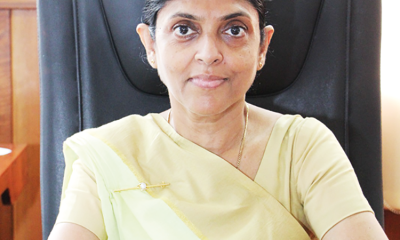
Country’s first woman Surveyor General appointed
-

 News6 days ago
CBSL: Respective banks have to deal with those arrested in connection with alleged illegal money transfers
-

 Business3 days ago
SriLankan Airlines makes ShakthiSAT Mission possible for talented Sri Lankan student
-

 Sports5 days ago
Tharanga, Weber headline stellar Lausanne javelin field
-
 Business5 days ago
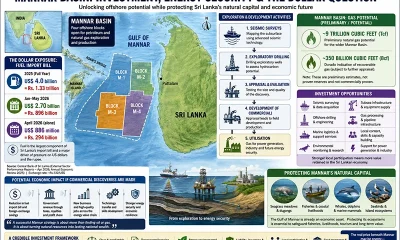
Mannar’s offshore opportunity: the dollar question behind Sri Lanka’s oil and gas search
-
 Features4 days ago
Medical education in Sri Lanka: Then and now
-

 Editorial6 days ago
Bomb and Bill
-
 Latest News4 days ago
Imran Khan moved to private hospital amid deteriorating health