
Business
Airtel and NIMH launch Sri Lanka’s first mental health chatline

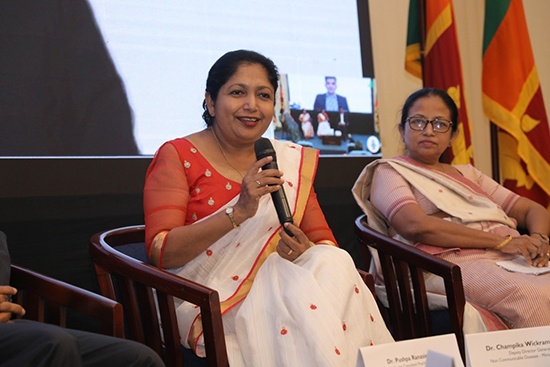
Sri Lanka now has its own text-based helpline for those facing emotional and mental distress. Airtel Lanka together, with the National Institute of Mental Health (NIMH), launched the text-based platform 1926, a dedicated helpline to encourage an open culture around mental health.
The service is free for Airtel customers and is also accessible for users of other mobile networks. In times of need, a user only has to send a simple text message to 1926, and this will be responded immediately by a mental health specialist from NIMH.
The chat line went live on October 10 in commemoration of World Mental Health Day 2020, connecting users to professional counsellors who are available in English, Sinhala, and Tamil languages. The 1926 text-based helpline by Airtel hopes to encourage more young people to reach out to professionals, particularly when they are experiencing times of crisis and may require guidance in mitigating their mental health concerns in a safe and anonymous environment.
Connecting to the launch over Airtel Blue Jeans, CEO and Managing Director, Ashish Chandra said, “Digital technologies are transforming learning, socializing and communication among youth. Our brand is heavily engaged with young Sri Lankans and we are very much aware that they prefer to use digital platforms to engage and find solutions. At Airtel, we are always looking at ways to create meaningful connections for our customers by blending technology with human needs and this is one such initiative.”
Dr. Pushpa Ranasinghe, Senior Consultant Psychiatrist, NIMH said, “With the introduction of the 1926 voice-based hotline in 2018, there has been a gradual increase in the number of people, proactively seeking help to cope with anxiety, depression, stress, and other mental health concerns and directing them to the closest help center.”
She further added, “Mobile phones and text messaging, in particular, have rapidly become the preferred communication tool among the youth, creating a culture connected to its phones. As healthcare professionals, our dependency on technology is now important than ever before. And as a result of its advancements, we can find improved ways of being accessible to those who need help. We are thankful to Airtel for helping us evolve 1926 from a voice to a text-based helpline.”
The event concluded with a panel discussion on addressing mental health for all through greater investments and access.
The session moderated by mental health advocate Shanuki De Alwis featured Dr. Pushpa Ranasinghe, Senior Consultant Psychiatrist, National Institute of Mental Health, Nivendra Uduman, Psychologist and Kanishka Ranaweera, Head of HR, Airtel Lanka.
The NIMH established the ‘1926’ phone hotline in 2018 as part of a concerted effort to address legitimate concerns around the growing public health issues, to provide those in mental or emotional distress to seek assistance.

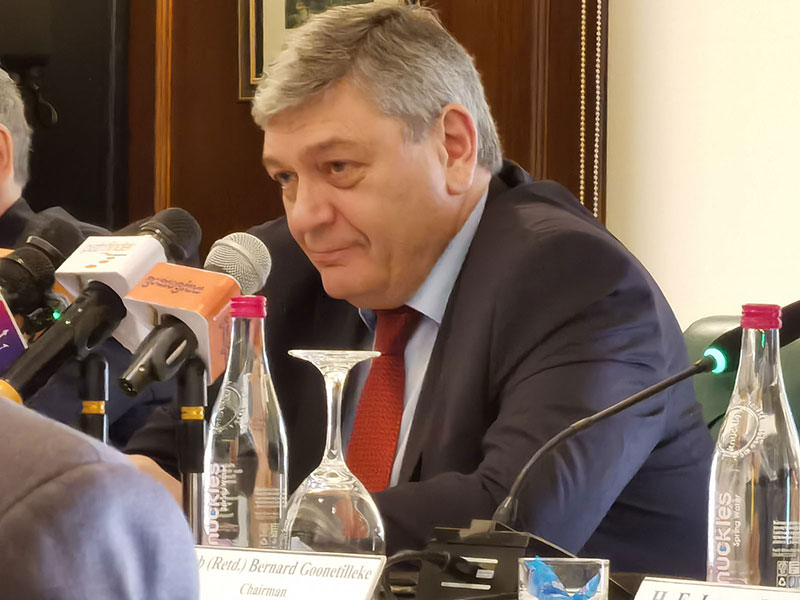
The Russian Federation is deeply considering supplying energy/fuel to Sri Lanka to prevent an energy crisis due to the escalating Middle East war, Russian Deputy Foreign Minister Andrey Rudenko said.
‘We are very much keen to support Sri Lanka and provide fuel/energy to Sri Lanka. This is still under consideration but it would be a positive response from our side, Rudenko said at a media forum yesterday in Colombo. The forum was organised by Pathfinder Foundation Sri Lanka and held at Colombo Club, Taj Samudra Hotel.
Rudenko who made a brief official visit to Sri Lanka said that the Middle East conflict is quite serious and that most Asian countries, including Sri Lanka, are affected by it in areas such as transportation, energy/ fuel and food security. ‘The supply chains related to these sectors have been disrupted for many countries. The escalating war situation in Iran and the Gulf region will affect most economies of the world, he said.
The Deputy Minister said that Russia is still not affected by the crisis but it could be impacted if the war continues for sometime.
‘We will be looking for a convenient payment method for Sri Lankan, when it comes to trade and investments in the future, Rudenko added.
Responding to questions Rudenko said that at present the United Nations is not doing anything to put a full stop to the war and a need of the hour is to strengthen the United Nations to change the world order.
By Hiran H Senewiratne

Event coincides with volatility in global fertiliser markets
Sri Lanka’s long-discussed Eppawala rock phosphate deposit has finally begun feeding a domestic fertiliser value chain, with Lankem Ceylon PLC unveiling the country’s first locally manufactured Single Super Phosphate (SSP) fertiliser in a Rs. 3 billion industrial venture aimed at reducing import dependence and strengthening agricultural resilience.
The product, branded ‘Mada Raja’, was launched at a ceremony in Colombo on March 30, marking the commissioning of a new state-of-the-art manufacturing facility operated by Lankem Minerals Ltd, a fully owned subsidiary of the diversified conglomerate.
With an annual production capacity of 50,000 metric tonnes, the plant is expected to meet up to 80% of Sri Lanka’s SSP fertiliser requirement, positioning the company to play a strategic role in stabilising fertiliser supply at a time when global supply chains remain vulnerable to geopolitical disruptions.
The project is also the first significant industrial initiative in recent years to systematically utilise Eppawala rock phosphate, one of the country’s key mineral resources. Lankem Minerals will source over 30,000 metric tonnes annually from Lanka Phosphate Ltd, thereby strengthening a domestic fertiliser value chain while generating economic activity in the Anuradhapura region.
Speaking at the launch, Lankem Ceylon PLC Managing Director Suren Goonawardene said the initiative reflects a broader effort to reduce Sri Lanka’s dependence on imported fertilisers and build local industrial capability.
“The launch of ‘Mada Raja’ represents a significant step forward in building Sri Lanka’s agricultural resilience,” he said. “As a group we are focused on enabling long-term national value creation by strengthening domestic capability while supporting farmers through locally manufactured solutions.”
The project itself was not a quick undertaking. According to company officials, the concept was first initiated in 2015, followed by nearly a decade of research, technical trials and regulatory clearances before the plant reached commissioning.
A senior official involved in the project said the long development timeline was largely due to the unique mineral composition of Eppawala phosphate.
Earlier fertiliser formulations had typically relied on sedimentary phosphate sources, while the Eppawala deposit contains crystalline rock phosphate, which behaves differently during chemical processing.
“This fundamental difference in mineral structure directly affects how the end product reacts,” the official explained. “The same parameters used for conventional raw materials could not be applied identically.”
The company therefore had to undertake extensive laboratory work and industrial trials to refine the process. During this period, Lankem also worked closely with regulators and technical agencies to ensure the product met recognised standards.
The Sri Lanka Standards Institution, National Fertiliser Secretariat, and the Ministry of Science and Technology were engaged in the process, which eventually led to refinements in the regulatory framework and alignment with ISO-based quality standards.
“Through professional collaboration with the relevant institutions, the standards were enhanced and refined,” the official said. “Today we are unveiling a product that has passed through a rigorous framework of testing and compliance.”
Beyond the industrial and economic dimensions, the company says the product also addresses a growing agronomic challenge: sulphur deficiency in Sri Lankan soils.
Unlike conventional fertilisers such as Triple Super Phosphate (TSP), which primarily supply phosphorus, SSP provides a combination of phosphorus, sulphur and calcium.
This integrated nutrient profile helps improve root development, protein synthesis and soil structure, contributing to better crop performance and long-term soil health.
Lankem Minerals Chairman Ananda Hettiarachchy said the shift toward balanced nutrient management is becoming increasingly important for sustainable agriculture.
By Sanath Nanayakkare

30th anniversary marked with global initiatives, tourism surge, and meditation focus
Perched above the historic town of Gampola, where rolling hills meet drifting clouds, Ambuluwawa emerged this week as a powerful symbol of peace, sustainability, and renewal.
Marking the 30th anniversary of the Ambuluwawa Religious and Biodiversity Complex, foundation stones were laid for an International Meditation Centre and an International Library—two landmark initiatives aimed at promoting global harmony, spiritual reflection, and knowledge sharing.
The ceremony, held Saturday morning, was graced by the Maha Sangha, whose presence infused the occasion with deep spiritual significance.
Among them were the Most Venerable Karagoda Uyangoda Maithree Moorthi Mahanayake Thera of the Amarapura Maha Nikaya, Most Venerable Makulewe Wimala Mahanayake Thera of the Ramanna Maha Nikaya, Most Venerable Niyangoda Vijithasiri Anunayake Thera of the Malwathu Chapter of the Siyam Nikaya, and Most Venerable Wedaruwe Upali Anunayake Thera of the Asgiri Chapter.
At a time when global tensions and conflicts continue to claim lives, the Maha Sangha collectively invoked blessings for peace. Their message was clear and compelling: may the flames of war be extinguished, may lives be protected, and may all nations coexist in unity and compassion.
A solemn Sathya Kriya (act of truth) was conducted at the Ambuluwawa auditorium with the participation of Diyawadana Nilame Pradeep Nilanga Dela, MP and Attorney-at-Law Anuradha Jayaratne, and a large gathering of devotees.
Complementing the day’s proceedings, a spiritually significant all-night Pirith chanting ceremony was held on March 29 inside a specially constructed chamber within the iconic Ambuluwawa tower. As sacred chants resonated through the cool mountain air, they carried with them prayers for global healing, serenity, and the well-being of all living beings.
Beyond its spiritual essence, Ambuluwawa stands as one of Sri Lanka’s most remarkable biodiversity sanctuaries. Rising from a single mountain peak, it encompasses a rare concentration of ecological zones, supporting a diverse range of endemic plant and animal species.
This unique environmental setting has made Ambuluwawa a living example of conservation in action, where biodiversity is preserved alongside cultural and religious heritage.
Speaking at the event, Ambuluwawa Complex Chairman, Jayaratne highlighted the remarkable transformation of Ambuluwawa under its new management.
He noted that annual income had surged to around Rs. 300 million from a modest Rs. 11 million in earlier years, reflecting improved management and growing public interest. Tourist arrivals have also increased significantly—from around 15,000 visitors in the past to over 50,000 within the last four years—underscoring the site’s rising appeal both locally and internationally.
Jayaratne expressed confidence that, with the continued blessings and guidance of the Maha Sangha, Ambuluwawa would witness even greater development in the years ahead.
He emphasised that future initiatives would be carefully aligned with environmental sustainability and spiritual values.
Indeed, over the past decade, Ambuluwawa has steadily evolved into a major tourism hotspot.
Drawn by its distinctive tower, panoramic views, and multi-religious symbolism, visitors increasingly regard it as a unique destination that blends nature, culture, and spirituality. Authorities believe this tourism momentum can be further strengthened through carefully planned, eco-friendly initiatives.
Among these is a proposed cable car project aimed at improving access to the summit while minimising environmental disruption. If implemented with sustainability at its core, the project is expected to enhance visitor experience and elevate Ambuluwawa’s status on the global tourism map.
Central to the future vision, however, is meditation. The planned International Meditation Centre is expected to transform Ambuluwawa into a hub for spiritual tourism, attracting practitioners and seekers from around the world. In an age marked by stress and uncertainty, the tranquil surroundings of Ambuluwawa offer an ideal setting for mindfulness, reflection, and inner healing.
As it marks three decades of existence, Ambuluwawa stands at the crossroads of tradition and transformation. With its blend of biodiversity, spirituality, and growing tourism potential, it continues to send a timeless message to the world—that peace is possible when humanity learns to live in harmony with nature and within itself.
By Ifham Nizam

Brook, Bethell receive warnings from Cricket Regulator after Wellington incident

Former Minister Mahinda Wijesekara passes away aged 83

Navy seize 323kg of heroin from fishing vessel in southwestern seas

Magnitude 7.4 quake hits off Indonesia’s Ternate, tsunami warning lifted

NASA successfully launches historic Artemis II moon mission

Sameer Rizvi arrives in the IPL to guide Delhi Capitals home in low-scoring chase

‘Dates have the highest sugar content to fight Coronavirus’

Sunday Island 27 December – Headlines

#SundayIsland 17th December – Headlines

Sunday Island – 28th March

Sunday Island Headlines – 21 March

Sunday Island – 21st February – Headlines
-

 Features6 days ago
A World Order in Crisis: War, Power, and Resistance
-

 News7 days ago
Energy Minister indicted on corruption charges ahead of no-faith motion against him
-

 Sports7 days ago
SLC to hold EGM in April
-

 Opinion7 days ago
When elephants fight, it is the grass that suffers
-

 Features7 days ago
Lest we forget
-

 News3 days ago
Tariff shock from 01 April as power costs climb across the board
-
 Business7 days ago
Pan Asia Bank empowers export sector as Strategic Partner of NCE Export Awards
-
 News6 days ago
Minister Jayakody indicted in Colombo High Court over alleged corruption