
Business
After Cyclone Ditwah: Climate-proofing Sri Lanka’s health system


As Sri Lanka currently counts human and economic costs of Cyclone Ditwah, the images are both disturbing and somewhat familiar: flooded hospitals, access roads buried by landslides, evacuation centres overflowing with displaced families, and officials in health and disaster management services scrambling to meet everyone’s needs. The death toll is at 355 and rising, with hundreds more missing and over 200,000 displaced, with effects being borne disproportionately in the central hills and low-lying river basins across the country. It has once again placed the spotlight on the preparedness of our disaster response ecosystem, and with climate-related disasters no longer a few and far between, Cyclone Ditwah is a tragic but predictable reminder and caution of the same vulnerabilities that have persisted for years.
A recent chapter of the Institute of Policy Studies of Sri Lanka’s (IPS) State of the Economy report examines how climate risks intersect with Sri Lanka’s health infrastructure, disease profiles, and governance. In the aftermath of Ditwah, there must be an urgent call to reassess Sri Lanka’s disaster preparedness.
Cyclone Ditwah and Vulnerabilities in Health and Communities

Dr Pulasthi Amarasinghe_IPS / Usha Perera_IPS
A considerable number of hospitals and divisional medical centres of Sri Lanka operate in flood-prone and landslide-risk areas throughout the country. Figure 1 shows that the analysis of health facilities against national hazard information reveals the location of hospitals by type that exist in districts that currently face the most severe Ditwah impacts in the central highlands and Sabaragamuwa, Gampaha, and Colombo’s surrounding low-lying urban areas. When rivers overflow, health facilities themselves become vulnerable, not just lifelines.
Moreover, the physical exposure quickly becomes an epidemiological risk. Flood-prone districts tend to report some of the highest average annual numbers of dengue and leptospirosis cases. While access to routine care and emergency transport is disrupted, heavy rainfall and poor drainage create ideal conditions for the spread of vector- and waterborne diseases. Ditwah will therefore not only create an immediate trauma burden, but likely a second wave of climate-sensitive illnesses among people in the most exposed communities.
Climate projections suggest more intense and frequent extreme weather, with a large share of Sri Lanka’s population expected to live in climate “hotspots” by mid-century. However, the transformation of the health system to address the climate reality is occurring at a slower pace than the rate at which climate change is affecting Sri Lanka.
Data and Coordination Lag Behind Frontline Needs
Sri Lanka has strong technical capacity in many parts of its health system and a national Disaster Management Centre (DMC) with a mandate for early warning and response. Yet the overall architecture of disaster and climate risk governance remains fragmented, with the Ministry of Health and the DMC, particularly at the local level, and other agencies linked more by ad hoc coordination. This severely undermines the preparation of relevant stakeholders, even in highly predictable natural disasters such as Ditwah.
In the IPS State of the Economy findings on the topic, health officials and frontline workers report how, even in “normal” times, they juggle multiple unconnected reporting formats and databases. During a large-scale disaster like Ditwah, district health authorities would benefit from real-time information on displaced individuals and households, facilities and their occupancy, and the availability of medicine and staff. Currently, much of this is still pieced together informally or in silos rather than through integrated dashboards that bring hazard, health, and facilities data together.
Additionally, the health-disaster ecosystem loses its ability to monitor diseases as dengue, leptospirosis, and diarrheal diseases, which need to be tracked during heavy rainfall and after floodwaters recede. The current system fails to connect meteorological data with health information systems and prevents the conversion of weather alerts into specific health warnings for local areas. Ditwah is therefore exposing not only weaknesses in physical infrastructure, but also the absence of a joined-up “climate and health” information system.
Digital Fortification: What We Must Build Before the Next Ditwah
One of the core ideas in the IPS report chapter is the need for “digital fortification” of the health sector. A quick and effective solution is an integrated emergency coordination platform that connects the DMC, Ministry of Health, provincial and district health offices, hospitals, and field staff. It can provide a shared picture of affected populations, and regularly update the status of health facilities, bed and drug availability, ambulance routes, and staff deployment. Additionally, a climate and health surveillance system that combines real-time climate and hazard data with routine disease reporting can flag high-risk areas for dengue, leptospirosis, and other climate-sensitive conditions.
Both interventions can be built on existing digital health tools, such as the Hospital Health Information Management System. It would require expanding coverage, backup power for connectivity, and the personnel and training necessary to raise efficiency. Linking these tools to geographic information systems would allow planners to see which facilities are at risk of being cut off and how best to coordinate vertically within health and disaster management systems, and horizontally across them.
From Tragedy to Transformation
Digital solutions do not substitute investments in infrastructure, staff, or primary care. However, they present feasible ways forward in a recovering economy to stretch limited resources by providing decision-makers with timely, detailed information and tools. As climate disasters become more frequent, Sri Lanka cannot afford not to invest in simple yet effective solutions.
Cyclone Ditwah is a national tragedy. It should also be a turning point in how we think about climate resilience in the health sector. As reconstruction support and international assistance are mobilised, Sri Lanka has an opportunity to ensure that “building back” includes building more intelligent, more connected, and more anticipatory disaster preparedness systems.
By Pulasthi Amarasinghe and Usha Perera

Business
Lanka’s largest solar park set to transform energy landscape and local economy in Hambantota

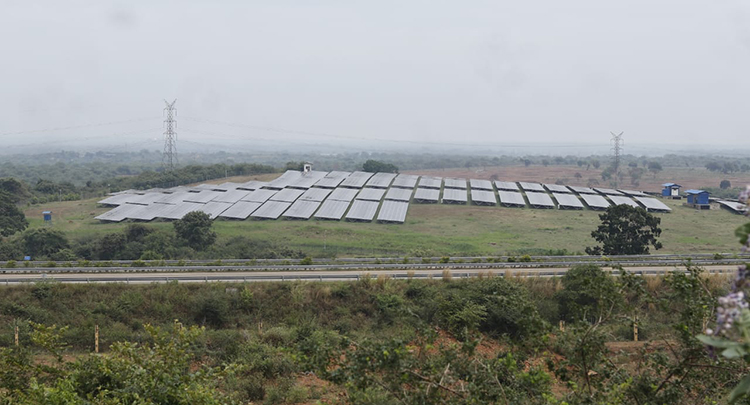
A new era in Sri Lanka’s renewable energy is unfolding in the Gonnoruwa Division of Hambantota District, where construction has begun on the country’s largest solar power park. Spanning 450 acres and designed to generate 150 megawatts (MW) of electricity, the US$150 million private-sector-led project is poised to become a cornerstone of the nation’s sustainable energy ambitions.
Officials say the solar park, guided by the Sustainable Energy Authority and the Mahaweli Authority, will make its first contribution to the national grid by the end of this year, with full capacity expected by 2026. Once completed, the facility will rank among Sri Lanka’s largest renewable energy installations, second only to the 210 MW Victoria Dam and the 150 MW Upper Kotmale hydropower project.
The initiative is being framed as a strategic response to recurring power cuts in the Southern Province during annual drought periods. With a projected 20% contribution to the country’s daytime electricity demand, the solar park is expected to significantly stabilize the grid, reduce reliance on fossil fuels, and contribute to the country’s renewable energy targets.
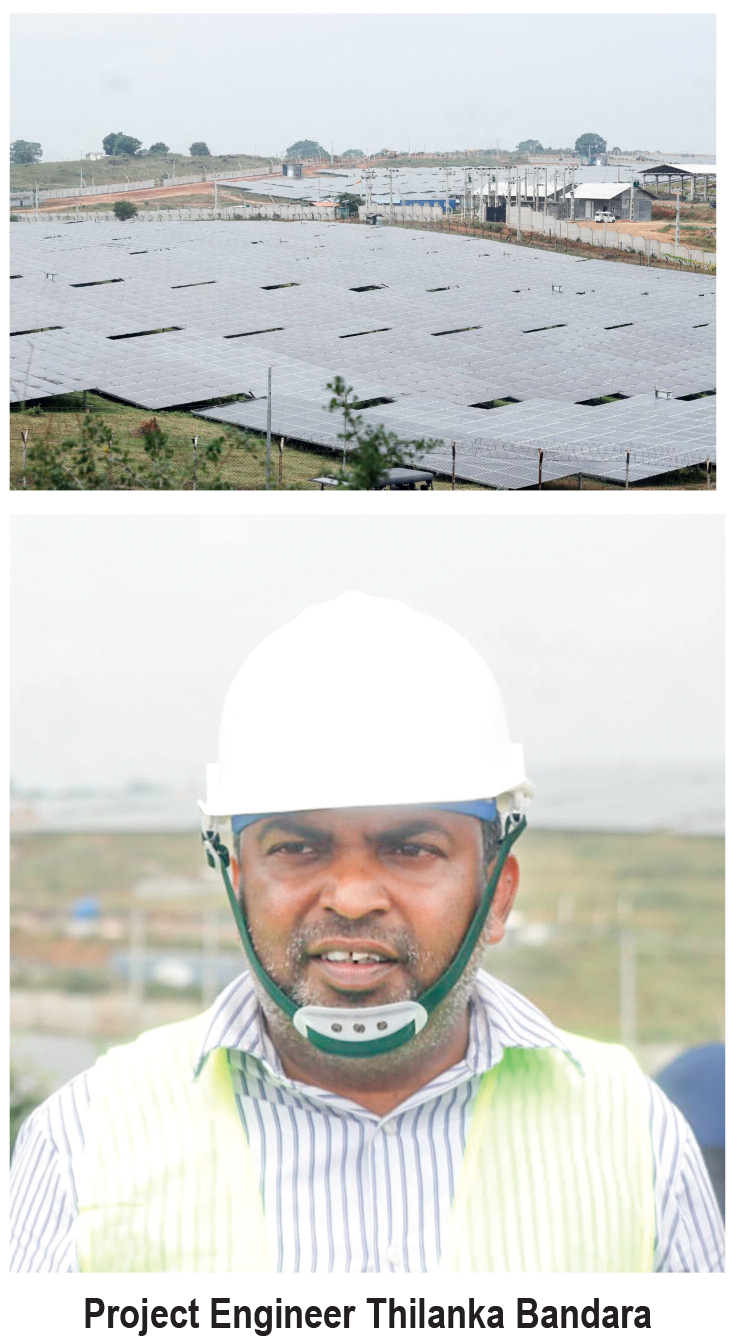
Project Engineer Thilanka Bandara confirmed that preliminary land preparation and boundary works have been completed, with 50 MW already feeding into the national grid. The investment, fully funded through foreign direct investment, local bank loans, and equity capital, requires no government funding. Two private firms are sharing the development, contributing 70 MW and 80 MW respectively.
Bandara highlighted a unique feature of the project: the transmission infrastructure, estimated at US$16 million, is entirely financed by the investors, marking a departure from conventional grid-connected projects. The park will also employ state-of-the-art ground-mounted solar technology, considered the most advanced currently deployed in Sri Lanka.
In a first for Sri Lanka, the solar panels will be installed five feet above the ground, allowing partial-shade crops to be cultivated underneath. Technical Officer Sithmina Bandara explained that this setup will enable the cultivation of food plants such as mushrooms, which thrive in shaded conditions, creating a model for integrated solar-agriculture systems. Agricultural experts have already provided guidance on implementing this initiative, which combines energy production with local food security.
The project is expected to generate 750 to 1,000 direct and indirect jobs, with 400–500 already employed in the initial phase. Long-term maintenance work will provide further employment opportunities, offering a substantial economic boost to the Hambantota region. Environmental management measures are also in place to prevent elephants from entering nearby villages, ensuring harmony between development and wildlife.
All necessary approvals and permits were obtained by February 2025, aligning the project with the Ceylon Electricity Board’s national generation plan. Officials confirmed that upon completion, the total output of the Solar Energy Park will rise to 200 MW, combining existing installations with the new 150 MW facility.
Experts say the Hambantota solar park represents more than just a power generation project. Its innovative design, private-sector financing, and integrated agricultural approach position it as a template for future renewable energy projects in Sri Lanka, reflecting a new model of sustainable development that balances energy, economy, and environment.
By Sirimanta Ratnasekera

The Battle of Esoftians, an annual cricket encounter organized by ESOFT Uni Kandy, concluded with a spectacular display of cricketing prowess as the Kandy team secured a massive 245-run victory over ESOFT Metro Campus, Kurunegala. The match was held on the 15th at the University of Peradeniya Grounds.
Winning the toss and electing to bat first, the ESOFT Uni Kandy batsmen dominated the field from the outset. They showcased an explosive batting performance, posting a formidable total of 280 runs for the loss of 5 wickets in their allotted 20 overs.
In response, the Kurunegala ESOFT Metro team struggled against a disciplined bowling attack. The Kandy bowlers dismantled the opposition’s batting lineup, bowling them all out for a mere 35 runs, sealing a historic win for the Kandy campus.
The event was graced by the presence of key officials from the ESOFT management: Amila Bandara – Chief Operating Officer (ESOFT Uni), Dimuthu Thammitage – General Manager (Central Region), Lakpriya Weerasinghe – Deputy General Manager, ?Lahiru Diyalagoda
Centre Manager-Degree Division, ESOFT Metro Campus Kurunegala and Dushantha Sandaruwan – Master in Charge (ESU Kandy Cricket Club)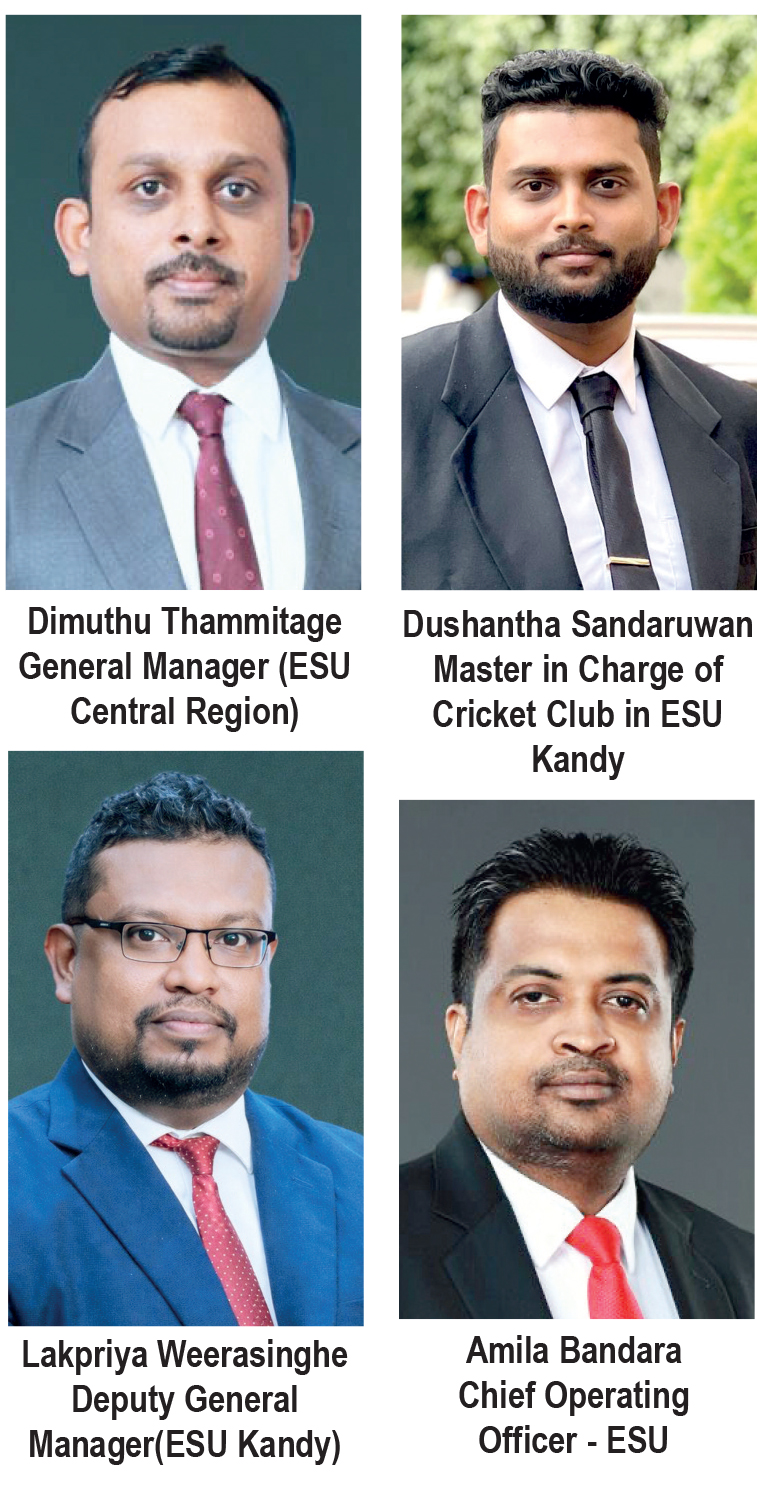
Team Lineups
ESOFT Uni Kandy (Winners)
Chamath Ekanayake (Captain), Dinuka Tennakoon (Vice Captain), Dushantha Sandaruwan (MIC), Chalitha Rathnayake, Pulasthi Bandara, Isuru Dehigama, Kesara Nuragoda, Aadhil Sherif, Isuru Pannala, Achintha Medawatta, Ahamed Shukri, Gowtham Hari Dharshan, Danushka Sahan, Eranda Bandara, and Damith Dissanayake.
ESOFT Metro Campus Kurunegala (Runners-up)
Adeesha Samarasekara, Savishan Madusha, Lahiru Diyalagoda, Hirun Damayantha, Naveen Madushanka, Daham Pothuwewa, Senuda Thewnaka, M.R. Abdulla, Arunodya Dasun, Mohamad Afri, Desith Perera, Lasitha Ranawaka, Anton Dilon, Shenuka Thirantha, and Kavindu Bandara.
Text and Pix By S.K. Samaranayake

HNB PLC, Sri Lanka’s leading private sector bank, has joined as the Official Banking Partner for the 147th edition of the historic “Battle of the Blues,” the Royal–Thomian cricket encounter between Royal College, Colombo, and S. Thomas’ College, Mt. Lavinia. Commenting on the partnership, HNB’s Managing Director/CEO Damith Pallewatte highlighted the bank’s long-standing connection with cricket, including sponsorship of Sri Lanka’s first Test match against England in 1982, and emphasized HNB’s commitment to nurturing young talent and promoting school cricket. The three-day clash for the Rt. Hon. D. S. Senanayake Memorial Shield will take place from March 12–14 at the SSC Grounds, with the Mustangs Trophy one-day match following on March 28 under lights. HNB’s inaugural involvement marks a milestone in the bank’s sports marketing journey, strengthening its role in the school cricket ecosystem. The bank will enhance the spectator experience by introducing digital and cashless banking solutions, modernizing the event while preserving its rich heritage and sporting tradition.

Showers or thundershowers will occur at most part of the Island after 1.00 p.m.

Only single MP refuses salary as Parliament details pays and allowances

Illegal assets of underworld figures frozen since September, Minister tells parliament

Entire coal procurement rigged, SJB charges minister over substandard fuel

WNPS demands immediate ban on illegal construction

CID probes suspect lawyer’s multi-million-rupee money trail in Sanjeewa murder case

‘Dates have the highest sugar content to fight Coronavirus’

Sunday Island 27 December – Headlines

#SundayIsland 17th December – Headlines

Sunday Island – 28th March

Sunday Island Headlines – 21 March

Sunday Island – 21st February – Headlines
-

 Business6 days ago
Ministry of Brands to launch Sri Lanka’s first off-price retail destination
-

 Latest News1 day ago
New Zealand meet familiar opponents Pakistan at spin-friendly Premadasa
-

 Latest News1 day ago
Tariffs ruling is major blow to Trump’s second-term agenda
-

 Latest News2 days ago
ECB push back at Pakistan ‘shadow-ban’ reports ahead of Hundred auction
-

 Features6 days ago
Giants in our backyard: Why Sri Lanka’s Blue Whales matter to the world
-

 Sports3 days ago
Old and new at the SSC, just like Pakistan
-

 News5 days ago
IMF MD here
-
 Business5 days ago
Green Minds: A new platform to rethink environmental governance in Sri Lanka