
Business
Addressing misconceptions on agricultural practices in Sri Lanka’s tea plantations


By Dr. Roshan Rajadurai
The recent move by the government to ensure the availability of fertiliser critical for the country’s agriculture sector is welcomed by all industry stakeholders – including the Regional Plantation Companies (RPCs), which cultivate tea, rubber and other plantation crops. This is a crucial source of support at a time the tea industry in particular, is facing numerous challenges. Hence, the government’s actions are appreciated and commended by all RPCs.
However, recent discussions on fertiliser have brought to the fore certain misconceptions held by certain critics and members of the public on agricultural practices in Sri Lanka’s tea plantations – which produce the world-renowned ‘Ceylon Tea’, one of Sri Lanka’s largest exports and foreign exchange-earners.
Hence, this article will address such myths and misconceptions and put the record straight on the practices with regard to fertiliser and agro-chemical usage in tea plantations managed by Regional Plantation Companies (RPCs).
At the onset, it should be noted that more than 70% of Sri Lanka’s tea is produced by the smallholder sector, which does not come under the management of the RPCs. RPCs can only comment on practices adopted on plantations managed by Regional Plantation Companies.
Adherence to ‘Integrated Agriculture’
Integrated agriculture practices refer to the use of a combination of traditional and modern methods for cultivation, done with due focus on social and environmental factors (beyond mere commercial considerations), with the intention of ensuring long-term sustainability.
Sri Lanka’s tea plantations have been producing output of the highest quality, meeting highly rigorous international quality standards for more than 150 years, which would clearly not have been possible without the use of integrated agriculture practices.
To provide an example of how this is practised operationally, for weed management, RPC plantations use various biological methods (for instance, predators which consume and control the population of harmful insects) and do not rely exclusively on synthetic/chemical inputs. Similarly, all activities related to cultivation, plant protection etc., use a combination of traditional practices, organic material and recommended agro-chemicals used in prescribed quantities.
International accreditations and certifications
Some appear to be of the view that RPCs apply agro-chemicals liberally in large quantities. Firstly, this would be highly imprudent and would go against the very interests of the RPCs. Agro-chemicals are a notable component of the cost of production (CoP), and over-application would simply increase costs.
This myth is also dispelled by the fact that the tea industry of Sri Lanka is by far the most environmentally and otherwise certified tea industry in the world. RPC plantations have been accredited and certified by numerous internationally-reputed organisations such as Rainforest Alliance, Forest Stewardship Council, Fairtrade International and adhere to Good Agricultural Practices (GAP).
In addition, Sri Lankan tea has been recognised as the world’s ‘cleanest’ tea since 1975 by the Food and Agriculture Organisation (FAO) of the United Nations (UN).
95% of Sri Lanka’s tea production is exported. Shipments of tea produced in Sri Lanka are exported to countries, including European countries, with stringent standards in terms of maximum residue limit (MRL), which refers to the highest level of a chemical residue legally allowed in food and beverages.
Robust local framework on agro-chemical usage
Baseless allegations on high agro-chemical usage by tea plantations are also a disservice to the invaluable contributions of globally respected organisations such as the Tea Research Institute (TRI) of Sri Lanka. TRI follows a rigorous testing and approval process in allowing the use of agro-chemicals for tea cultivation.
Following trials, often conducted over several years, agro-chemicals have to be approved for use by an independent professional committee.
While some have claimed in the past that certain chemicals used in tea plantations contributed to health issues in non tea-growing parts of the country, reputed local bodies such as the National Science Foundation has refuted such baseless claims.
Multiple safeguards at the producer, national, international and buyer level ensure strict compliance of the RPCs with best practices in agro-chemical usage.
Niche markets are not a viable option
Some on the other hand, have speculated on the possibility of avoiding agro-chemical usage in Sri Lankan tea plantations by opting for organic cultivation.
Unfortunately, the biggest deterrent to organic tea cultivation is completely beyond the control of growers, as it is the preference of buyers of Ceylon Tea. Ceylon Tea is known and preferred due to certain properties such as aroma, taste and colour. These properties are impacted by the type of plant nutrients applied. When organic inputs are used, the final products tend to differ significantly in terms of appearance, taste, aroma etc. from Ceylon Tea that buyers prefer and are accustomed to. While few plantations have attempted cultivation of organic tea, a number of such experiments have failed due to lack of buyer demand.
There is certainly a small niche market globally for organic tea – which is less than one percent of the total market. However, Sri Lanka’s tea industry, which is already facing severe challenges on multiple fronts, is in absolutely no position to completely re-align itself (including by finding new markets and buyers) to switch and cater to this small segment. An industry which exceeds USD 1.2 billion in value (in terms of total export earnings in 2020) cannot sustain itself by catering to a small niche.
It should be noted that RPCs are responsible for providing employment to 105,000 workers in total and for providing various facilities for a total resident population of approximately one million. Beyond commercial considerations of individual companies, it would be highly irresponsible for the RPCs to ‘bet’ the wellbeing of nearly five percent of the country’s population resident on RPC plantations on a highly niche and a still emerging sector.
In addition, practically, adoption of entirely organic cultivation would be highly challenging. At Rs. 1,900 per kilogram, the estimated production cost of one kilogram of organic tea would be equivalent to nearly three times the cost of production of one kilogram of tea produced via conventional methods.
Greater possibility of disease under organic methods
Another consideration which cannot be ignored is the probability of greater disease, if 100% organic cultivation methods were to be adopted. Many Sri Lankans would have heard of the famous ‘coffee leaf rust’ which commencing in 1869 entirely wiped out Sri Lanka’s significant extent of coffee plantations at the time.
Due to lack of ability (in terms of availability of agro-chemicals etc.) at that time to treat the fungal disease, the entire industry was wiped out. Now, while thanks to advances in agriculture and technology it is possible to address such challenges, it would be extremely difficult to do so, without the use of agro-chemicals to any degree.
For instance, at times of high humidity in plantations, it can be necessary to apply fungicides. If not, due to fungal diseases 20% to 30% of the crop could be lost within a relatively short period of time. Hence, while the coffee leaf rust example is an extreme scenario, it is not one which can be ruled out. Anywhere in the world where conventional agriculture is practiced, agro-chemicals are critical in dealing with such challenges.
Unlike fungicides, lack of application of suitable fertiliser in sufficient quantities may not be immediately apparent in tea. However, given that tea is perennial crop, with tea bushes being able to produce output for 30 or 40 years or more, once the changes start to manifest within a period of perhaps six months, the impact could potentially be long-term and last throughout the life of the tea bush.
Critics can perhaps make invalid comparisons to dispute the above, such as stating that even in midst of fertiliser shortages, national tea production has increased thus far this year, compared with the previous year. This is simply due to last year being unfavourable for tea production, with the drought resulting in a massive 40% crop loss.
RPCs invested in the industry’s future growth
In conclusion, despite certain claims to the contrary, Sri Lankan tea plantations managed by Regional Plantation Companies adhere to all necessary safeguards with regard to responsible agro-chemical usage at both national and international level. If not, the Ceylon Tea brand would not be as strong and internationally-acclaimed for its quality.
RPCs have actively and voluntarily adopted measures such as integrated agriculture practices, to minimise usage of agro-chemicals and incorporate organic elements and biological methods. However, there is an extent to which this can be done and converting to organic tea cultivation for the industry as a whole is not a feasible solution, considering that organic tea is a small, highly niche sector. In addition, converting entirely to organic creates other risks, including greater prevalence of disease.
RPCs have been part of the Ceylon Tea industry for many decades and are not looking to make a ‘quick buck’ and endanger the industry’s sustainability, our own and the livelihoods of our workers, by irresponsible usage of agro-chemicals. RPCs have made a significant contribution to the development of the Ceylon Tea industry and the long-term growth of the industry is very much in our interest. Hence, I would urge all industry stakeholders and members of the public to not be swayed by myths and misconceptions on the practices of RPCs with regard to agro-chemical usage.


‘Australia’s engagement with institutions, such as the Indian Ocean Rim Association (IORA) and “minilateral” platforms, including the Quad and the Combined Maritime Force, are practical examples of middle powers working together to address shared challenges ranging from ocean piracy to humanitarian assistance, Australia High Commissioner to Sri Lanka Matthew Duckworth said at a recent round table forum featuring the media and other important sections, held at the Colombo Club of the Taj Samudra Hotel on the topic ‘Middle Power Diplomacy.’
The forum was organized and conducted by the Pathfinder Foundation of Sri Lanka under the moderation of the latter’s Chairman, Ambassador (Rtd.) Dr. Bernard Goonathilake.
High Commissioner Duckworth underscored that such cooperation is not directed against any particular country but aims to preserve an open, inclusive, and rules-based regional order.
H.C. Duckworth acknowledged the reality of major power competition while stressing that Australia seeks stable and respectful relations with all countries, including Sri Lanka, cooperating where possible and disagreeing where necessary, without compromising core national interests.
Further, the H.C. focused on India’s evolving role in the Indian Ocean, the trajectory of China’s rise, the durability of the current global order, alliance dynamics, and Sri Lanka’s positioning in the Indian Ocean.
Responding to a question about India, the High Commissioner affirmed that Australia expects all major powers—India, China, and the United States—to act transparently and to respect the sovereignty of smaller states. On whether the current emphasis on middle-power diplomacy is a temporary shift or a long-term trend, the High Commissioner stated that middle powers must now play a more visible and proactive role in sustaining international norms and institutions.
H.C. Duckworth added that Australia invests in Sri Lanka in sectors, such as, minerals, renewable energy, textiles and education services. The High Commissioner reiterated Australia’s support for open trade and deeper regional economic integration, emphasizing the importance of economic resilience in a contested global environment.
The Pathfinder Foundation is a Colombo-based think tank dedicated to fostering informed dialogue on foreign policy, economic development and strategic affairs.
By Hiran H Senewiratne
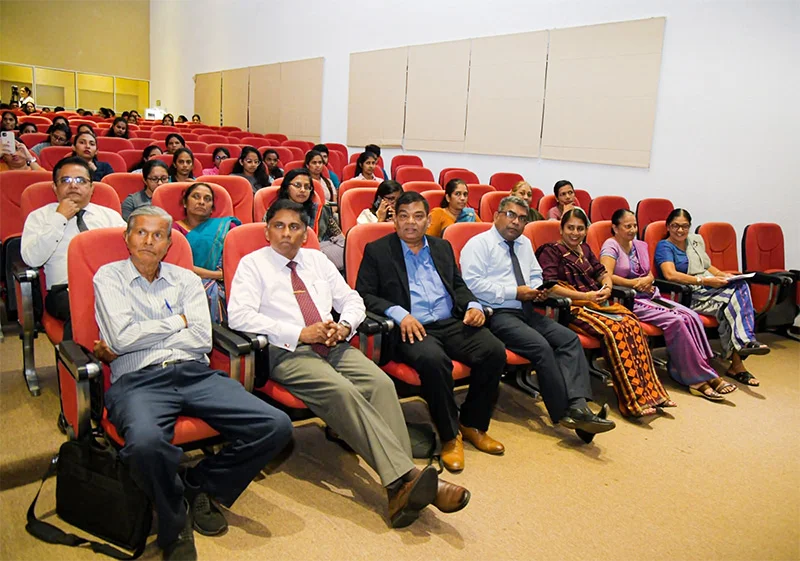
The Ministry of Environment yesterday launched a new knowledge-sharing platform titled Green Minds, aimed at strengthening environmental thinking and institutional capacity among public sector officials, at a time when Sri Lanka is facing mounting ecological stress and climate-related challenges.
The inaugural session of the monthly programme was held on February 12, 2026, at the Ministry auditorium under the patronage of Secretary to the Ministry of Environment, K. R. Uduwawala, with the participation of senior officials from the Ministry and its affiliated institutions.
Addressing the gathering, Secretary Uduwawala said that Green Minds was designed not merely as another training initiative, but as a thinking space for public officials to critically engage with emerging environmental concepts and global best practices.
“Environmental governance today is no longer limited to regulations and enforcement. It requires new ways of thinking, interdisciplinary approaches and continuous learning. Green Minds is intended to become a platform where officials can reflect, debate and update themselves on these evolving realities,” Uduwawala said.
He stressed that Sri Lanka’s environmental institutions must move beyond routine administrative practices and embrace knowledge-driven policy making, particularly in areas such as climate adaptation, biodiversity conservation, sustainable resource management and environmental justice.
The keynote lecture at the inaugural session was delivered by Senior Professor Siri Hettige, who spoke on the role of social sciences in achieving sustainable development in Sri Lanka. He highlighted the often overlooked social dimensions of environmental problems.
“Environmental issues are not purely scientific or technical. They are deeply social. Human behaviour, consumption patterns, inequality and governance structures all shape environmental outcomes,” Prof. Hettige said.
“If we want sustainability, we must understand society as much as we understand nature.”
He pointed out that many environmental policies fail because they do not adequately consider community realities, livelihoods and social power relations.
“You cannot conserve forests without understanding people. You cannot manage waste without understanding urban lifestyles. Sustainability is fundamentally a social project,” he added.
Following the keynote, a high-level panel discussion on strengthening environmental awareness brought together Prof. Hettige, Dr. Herath Vidyaratne, environmental policy analyst, Ravindra Kariyawasam, Adviser to the Minister of Environment, and S. C. Palamakumbura, Conservator General of Forests.
Kariyawasam said Sri Lanka was at a critical juncture where environmental decision making must be aligned with national development priorities.
“We can no longer treat the environment as a separate sector. It has to be integrated into economic planning, infrastructure development and social policy. Green Minds offers a space for officials to think beyond institutional silos,” he said.
Dr. Vidyaratne stressed that environmental literacy among state officials was essential in responding to complex challenges such as climate change, water scarcity and ecosystem degradation.
“The problems we face today are interconnected. Climate change is linked to food security, public health and migration. Officers need systems thinking, not just subject knowledge,” he said.
Meanwhile, Palamakumbura highlighted the importance of translating environmental awareness into institutional action.
“We have knowledge, laws and policies. What we need is consistent implementation and a shared environmental ethic across all institutions. Platforms like Green Minds can help build that collective responsibility,” he said.
He noted that forest conservation, wildlife protection and ecosystem restoration could not succeed without inter-agency cooperation and informed decision makers.
By Ifham Nizam

Spanning tourism, maritime and freight logistics, strategic investments and services, with operations across the region, Aitken Spence PLC, with a legacy of over 157 years, continues to pursue excellence. The Group recorded revenue of Rs. 67 billion for the nine months ending 31st December 2025, underscoring a robust performance across its portfolio of industries. The Tourism sector accounted for 68% of Group revenue, while the Maritime & Freight Logistics sector and Strategic Investments sector contributed 18% and 12% respectively. Furthermore, the Group’s revenue for the third quarter improved by 3.8%, reflecting steady performance across key sectors.
The Group’s total Profit Before Tax (PBT) stood at Rs. 5.6 billion for the nine months ending 31st December 2025, compared to Rs. 4.3 billion in the corresponding period of the previous year, reflecting a growth of 30%. Correspondingly, the Group’s Profit After Tax improved by 42% to reach Rs. 3.4 billion.
Sectoral Performance
The Tourism sector recorded the most notable improvement during the period under review, reporting a Profit Before Tax (PBT) of Rs. 2.0 billion for the nine months ended December 2025. This performance was primarily attributable to the sustained recovery and growth of the tourism industry in Sri Lanka. In addition, the sector benefited from significant improvements in profitability at the Group’s Maldivian resorts, as well as enhanced operating performance across hotel operations in India and Oman.
The Group’s Maritime & Freight Logistics sector was the largest contributor to Profit Before Tax for the period under review, reporting a Profit Before Tax of Rs. 3.3 billion. Sector performance, however, was moderated by lower volumes and margin pressures, particularly impacting overseas freight and airline operations. This was reflected in the reduced contribution from the sector’s equity-accounted investee for the period.
In the Strategic Investments sector, the key contributing segments of printing and plantations both recorded stellar performance for the period under review despite the challenging market conditions of these industries, while the power generation segment witnessed a steady performance with notable contributions from the Waste-to-Energy and renewable power generation operations. However, the significant losses incurred in the apparel manufacturing segment impacted the overall performance of the sector, resulting in a loss of Rs. 652 million at PBT level.
The Services sector recorded strong growth during the period under review, driven primarily by the expansion of operations at Port City BPO, the Group’s most recent investment. This performance was further supported by improvements in performance by the Group’s elevators segment. As a result, the Services sector reported a Profit Before Tax of Rs. 843 million, compared to Rs. 114 million in the corresponding period of the previous year.
The period was marked by notable achievements:
Aitken Spence PLC became the first and only diversified holdings company in Sri Lanka to have its climate targets validated by the Science Based Targets Initiative (SBTi).

Nepal, Scotland chase win to close out what-if tournament

How dark web agent spotted bedroom wall clue to rescue girl from years of harm

US build-up of warships and fighter jets tracked near Iran

Showers above 75 mm are likely at some places in the Central, Uva and Eastern provinces and in Polonnaruwa district

Zimbabwe take on Ireland with clarity about Super Eights path

CEB seeking tariff hike while making huge profits, says opposition trade union leader

‘Dates have the highest sugar content to fight Coronavirus’

Sunday Island 27 December – Headlines

#SundayIsland 17th December – Headlines

Sunday Island – 28th March

Sunday Island Headlines – 21 March

Sunday Island – 21st February – Headlines
-

 Life style2 days ago
Marriot new GM Suranga
-

 Business1 day ago
Ministry of Brands to launch Sri Lanka’s first off-price retail destination
-

 Features2 days ago
Monks’ march, in America and Sri Lanka
-

 Midweek Review6 days ago
A question of national pride
-

 Business6 days ago
Autodoc 360 relocates to reinforce commitment to premium auto care
-

 Opinion5 days ago
Will computers ever be intelligent?
-

 Features2 days ago
The Rise of Takaichi
-

 Features2 days ago
Wetlands of Sri Lanka: