
Features
A senior cop remembers April 1971

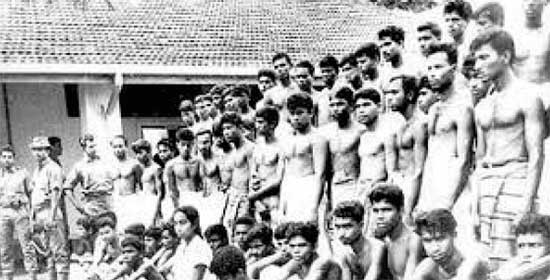
(Excerpted from the memoirs of Senior DIG (Retd.) Edward Gunawardena)
A few months after the SLFP-led United Front Alliance headed by Mrs. Sirima Bandaranaike was elected in 1970, information started trickling in that the JVP was planning an uprising against the government. Cells were formed island-wide and clandestine indoctrination classes conducted by trained cadres. Simultaneously there was a spate of bank robberies and thefts of guns from households were reported to the police from all parts of the island. Unidentified youths were collecting empty cigarette and condensed milk tins, bottles, spent bulbs and cutting pieces of barbed wire from fences to make hand bombs and Molotov cocktails. Instances of bombs being tested even in the Peradeniya campus came to light.
By January 1971 the threat became real and the police began making arrests. Rohana Wijeweera, the leader of the movement, was arrested with an accomplice Kelly Senanayake at Amparai and detained at the Magazine prison. In the villages the common talk was that a ‘Che Guevera’ movement has started. Unknown youth moving about in villages were being referred to as ‘Che Gueveras.’ Police intelligence briefed the government of the developing ‘Naxalite’ like situation and action was taken to alert all police stations.
At the end of March 1971 there was specific information that the first targets would be the police stations. The attacks were to be carried out simultaneously on a particular day at a given time. With heightened police activity, the JVP ‘attack groups’ were pressurized to put their plan into effect hurriedly despite Wijeweera being incarcerated.
Synchronizing the attacks was a problem for the JVP. Mobile phones were not available then and the leaders had to resort to coded messages in newspapers. Police intelligence was able to crack their codes without much difficulty. It came to light that all police stations would come under attack at midnight on of April 5. The plan was to fire with guns at the station, and throw hand bombs and Molotov cocktails so that the policemen would run away or be killed. The attackers were to rush in and seize all the firearms in the stations.
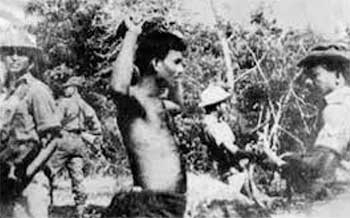 The Police were ordered to be on full alert on this day. On April 4, in addition to my duties as the Director, Police Planning and Research I was acting for Mr. P. L. Munidasa, SP as the Personal Assistant to Mr.Stanley Senanayake the IGP. At about 4 p.m. an urgent radio message addressed to the IGP was opened by me. The message was alarming. The Wellawaya Police station had been attacked and the OIC Inspector Jayasekera had received gunshot injuries, a PC killed and several injured. The police had fought back bravely and not abandoned the station.
As soon as the IGP was informed, he reacted calmly. He summoned all the senior officers present at Headquarters briefed them and ordered that all police stations including the Field Force Headquarters, the Training School and Police Headquarters itself be placed on full alert with immediate effect. Among the officers present I distinctly remember DIGs S.S. Joseph and T.B. Werapitiya. All police officers irrespective of rank were to be armed and issued with adequate ammunition. This task was entrusted to ASP M.D. Perera of Field Force Headquarters who was in charge of the armoury. I too was issued with a Sterling Sub-machine gun.
During this time I was living in Battaramulla with my wife and year old child in my father’s house. My brothers, Owen and Aelian, who were unmarried were also living there. My wife and I with the child occupied a fairly large room in which an official telephone had been installed. We had decided to live here as I had started building a house on the same ancestral property; and it is in this house that we have lived since 1971. 1 had an official car, a new Austin A40 which I drove as I had not been able to find a suitable police driver. Apart from the telephone, I had a walkie-talkie and was in constant communication with the Police Command Room and the IGP.
On the night of April 4 as there was nothing significant happening except for radio messages from police stations asking for additional strength, weapons and ammunition, I was permitted by the IGP to get back home. I telephoned the Welikada and Talangama police stations and was informed that the stations were being guarded and the areas were quiet. At about 10 p.m. I reached home safely and slept soundly. But something strange happened which to date remains a mystery. At about 3.30 a.m. (on the April 5) my telephone rang. The caller in a very authoritative voice said, “This is Capt. Gajanayake from Temple Trees, the Prime Minister wants you immediately.”
I hurriedly got into my uniform and woke up my wife and told her about the call. Just then it occurred to me that I should call Temple Trees. There was an operations room already functioning there and Mr. Felix Dias Bandaranaike had taken control of the situation. When I called, it was answered by my friend and colleague Mr. Cyril Herath. He assured me that I was not required at Temple Trees and that there was no person there by the name of Capt. Gajanayake. Much against the wishes of my wife, my father and brothers, dressed in a sarong and shirt and armed with my revolver I walked down the road for about half a kilometer. But there was none on the road at that time of the night.
By next night disturbing messages were coming to Police Headquarters from all over the Island. A large number of police stations had been attacked and police officers killed and injured. SP Navaratnam and Inspector Thomasz had been shot at on the road in Elpitiya and the latter had succumbed to the injuries. A number of Estate Superintendents had been shot dead. Trees were cut and electricity posts brought down. Desperate messages were pouring in from several Districts stating that administration had come to a standstill. The Kegalle, Kurunegala, Galle and Anuradhapura Districts were the worst affected. The least damage was in areas where the police had taken the offensive. In Colombo although the police stations were not attacked there was panic. With the possibility of water mains being damaged tube wells were hurriedly sunk at Temple Trees. General Attygalle, the Army Commander, had taken over the security of the Prime Minister and Temple Trees.
Talangama Police station that policed Battaramulla was guarded by the people of the area. Even my brothers spent the nights there armed with my father’s shotgun. IP Terrence Perera who was shot dead by the JVP in 1987 was the OIC. The excellent reputation he had in the area made ordinary folk flock to the station and take up positions to defend it if it was attacked. Some of the people of Battaramulla who were regularly there whose names I can remember and who are still living are K.C. Perera, W.A.C. Perera, Jayasiri, Victor Henry, Lionel Caldera and P.P. de Silva among others. Incidentally Brigadier Prasanna de Silva one of the heroes of the recently concluded war against the LTTE is a son of P.P. de Silva.
There were also those who gave assistance in the form of food and drink for all those who had gone to the aid of the police. The late Edward Rupasinghe a prominent businessman of Battaramulla, supplied large quantities of bread and short eats from the Westown Bakery which he owned. However as the attacks on police stations and state property became more and more intense, the SP Nugegoda T.S. Bongso decided to close down the Talangama Police Station and withdraw all the officers to the Mirihana Headquarters Station. This move made it unsafe for me to live in Battaramulla and travel to Police Headquarters.
The late Mr. Tiny Seneviratne SP and his charming wife readily accommodated us in their official quarters at Keppetipola Mawatha. The late Mr. K.B. Ratnayake had also left his Anuradhapura residence to live with the Seneviratnes. KBR and Tiny were good friends. During this time in the midst of all the disheartening news from all directions there were a few bright spots I have not forgotten. These were messages from Amparai, Kurunegala and Mawanella.
At Amparai the ASP in charge A.S. Seneviratne on information received that a busload of armed insurgents were on the way to attack the police station in broad daylight had hurriedly evacuated the station and got men with arms to hide behind trees and bushes having placed a few dummy policemen near the reserve table that was visible as one entered the station. As the busload of insurgents turned into the police station premises a hail of gunfire had been directed at it. About 20 insurgents had been killed and the bus set ablaze.
In Kurunegala the Pothuhera police station had been overrun and occupied by insurgents. Mr. Leo Perera who was ASP Kurunegala had approached the station with a party in mufti unnoticed by the insurgents, taken them by surprise and shot six of them dead. The police station had been reestablished immediately after.
In Mawanella and Aranayake the insurgents held complete sway. Two youths had visited the house of a retired school master on the outskirts of Mawanella town and demanded his gun. He had gone in, and loaded his double barrel gun and come out on the pretext of handing it over to the two youths he had shot them both dead discharging both barrels. The schoolmaster and his family had taken their belongings, got into a lorry and immediately left the area.
With the joint operations Room at Temple Trees under Minister Felix Dias Bandaranaike assisted by the Service Chiefs, the IGP and several senior public servants functioning fully the offensive against the insurgents began to work successfully. Units from the Army, Navy and the Air Force were actively assisting the police in all parts of the Island particularly in making arrests. Helicopters with pilots provided by India and Pakistan were being extensively used by officials and senior officers of the Armed Services and the Police for urgent travel.
On the night of April 10 or 11, I had finished my work at Police Headquarters and returned at about 10 p.m. to Keppetipola Mawatha. During the day my wife had been able to find a police jeep to be sent to Battaramulla to fetch a substantial supply of jak fruits, manioc and coconuts from our garden. The Seneviratnes took immense pleasure in feeding all and sundry who visited their home.
At about 10 p.m. I received a call from the IGP requesting me to take over Kurunegala Division the following morning. He told me that a helicopter would be ready for me at Parsons Road Air Force Grounds at 5.30 a.m. According to him the insurgents were still active in the area; the SP Mr. A. Mahendran was on sick leave and Mr. Leo Perera ASP was bravely handling the situation almost single handed. Although the assignment did not bother me much, my wife was noticeably concerned. Mrs. Seneviratne an ardent Catholic gave me a miniature medal of St. Anthony assuring me that the Saint will protect me from harm.
The helicopter took off at the crack of dawn. It was piloted by a young Flt.. Lieutenant from the SLAF and I was the only passenger. I have forgotten the name of this pilot. He was a pleasant guy who kept conversing with me all the way. He told me that he had flown to Anuradhapura and Deniyaya the previous day and in both those areas the insurgents were on the run and the security forces were on top.
Having been cloistered at Police Headquarters always peeking out of windows with a weapon in the ready or reading messages of deaths of police officers and the successes of insurgents, a feeling of relief overtook me on the flight. In fact I began to look forward to some action and this did not take long to come.
As the helicopter landed I was met by ASP Leo Perera who was a contemporary of mine at Peradeniya. There were several other police officers and also two officers of the Air Force. The latter were there to go to Colombo in the same aircraft. I carried only a travel bag with the minimum of clothes.
My first task was to address the officers gathered at the Police Station. I praised them for facing the situation bravely. Their only complaint was that they were short of ammunition. I suggested to Leo that as far as possible shotguns be used instead of 303 rifles. An officer was dispatched immediately to get as many guns as possible from the Kachcheri and the production room of the court house.
ASP M.D. Perera of Field Force Headquarters who was contacted on radio undertook to airlift 15 boxes of SG and No. four 12-bore cartridges. All the officers present were pleased as they all agreed that shotguns were more effective. The families of police officers too had left their quarters and barracks and taken up residence in different sections of the station. Most importantly their morale was high. Leo Perera had led them admirably.
At about 10 a.m. after partaking of a kiribath and lunumiris breakfast with the men I left for my office, that of the SP Kurunegala. I was very happy when Inspector Subramaniam was assigned to me. He was known to me and he appeared to be pleased with the task. He was a loyal and cheerful type. I chose a Land Rover with a removable canvas top for my use and also a sergeant and two constables with rifles. Subramaniam and I had Sterling sub-machine guns. These officers were to be with me at all times. In the afternoon I was able to obtain two double barrel Webley & Scott shotguns with about 10 No. four cartridges. There were several beds also already in place in the office. Telephoning my wife was no problem as I enjoyed the privilege of priority calls.
I had lunch with Inspector Subramaniam and my escort in the office. The rice and curry lunch had been sent from the Police Station mess. After a late lunch and a brief post lunch rest the four of us dressed in mufti set off in the Land Rover driven by a police driver. IP Subramaniam carried a Stirling sub-machine gun and the sergeant and PC 303 rifles. A loaded double barrel gun lay on the floor board of the Land Rover. After visiting the Potuhera and Mawathagama stations and patrolling the town area we returned to our base. Subramaniam also made arrangements with a boutique in town for some egg hoppers to be delivered to us at 8 p.m.
A little excitement was to come soon. After refreshing ourselves and having eaten the egg hoppers we visited the station. At about 9.45 p.m. I was having a discussion with a few officers in the office of the OIC Crimes when we heard two minor explosions and somebody screaming that the station was being attacked. Armed officers took up positions according to instructions. I ordered that the station lights be put off. An Inspector armed with a loaded shotgun, a few constables and I crawled to the rear of the building. Bombs were being thrown from the direction of a clump of plantain trees. A small tin with the fuse still burning fell close to where we were.
A PC jumped forward and doused the fuse throwing a wet gunny bag on the object. Two more similar objects fell thrown from the same direction. The same PC rushed forward and removed the burning fuses with his hands. As the objects were coming from about the identical place, I grabbed the shotgun and discharged both barrels in that direction simultaneously. The ‘bombing’ stopped thereafter. Two armed mobile patrols were sent out to the roads to look for any suspects. But the roads were empty. At about 11 p.m. the lights were put on and the station resumed its activities.
To say the least these ‘bombs’ were crude and primitive. In each of these we found a large ‘batta’ cracker the fuse of which came out of a hole in the lid of a cigarette tin. Round the ‘batta’ was a layer of tightly compressed fibres akin to the fibres in a squirrels nest. On the outer side of the compressed fibre were barbs cut off barbed wire and rusted nails. A thousand of such ‘bombs’ could not have matched the destructive force of a modern hand grenade. This state of unpreparedness was perhaps the foremost reason why the insurrection fizzled out early.
More action was to follow that same night. After my escort of three officers and I had retired to bed in the SP’s office, a few minutes after midnight the Sergeant guarding a large transformer on the Wariyapola Road with two other constables started calling me on the walkie talkie in a desperate tone. He sounded very excited and told me that shots were being heard close to the guard point. I instructed him to take up position a reasonable distance away from the transformer where there were no lights and shoot at sight any person or persons approaching the transformer. I also assured him that I would be at the guard post with an armed party in the quickest possible time.
IP Subramaniam and the other two officers were eager to join me. I got the driver to remove the hood cloth of the Land Rover. Whilst the sergeant who was armed with a rifle occupied the front seat alongside the driver, Subramaniam and I armed with two double barrel guns loaded with No. four cartridges took up a standing position with the guns resting on the first bar of the hood. The two PCs were to observe either side of the road. Prior to leaving I radioed the Police station to inform the Airforce operations room about my movements and not to have any foot patrols in the vicinity of the transformer.
There were no vehicles or any pedestrians on the way to the transformer. About a hundred meters to go we noticed a group of about eight to 10 dressed in shorts getting on to the road from the shrub. The distance was about 50 to 75 meters. The driver instinctively slowed down. The shining butts of two to three guns made us react instantly. I whispered to Subramaniam when I say ‘Fire’ to pull both triggers one after the other. We fired simultaneously and the Sergeant and PCs also fired their rifles.
Once the smoke cleared we noticed that the group had vanished.
As we approached the spot with the headlights on we noticed three shot guns scattered about the place. On closer examination there was blood all over and a man lay fallen groaning in pain. Beside him was a cloth bag which contained six cigarette tin hand bombs. Two live cartridges were also found. In two of the guns the spent cartridges were stuck as the ejectors were not working. The other gun was loaded with a ball cartridge which had not been fired. Having collected the guns, the bag containing the bombs and some rubber slippers that had been left behind. We proceeded on our mission to the transformer having radioed the guard Sergeant that we were close by.
As we approached the transformer the Guard Sergeant and the 2 PCs came out of the darkness to greet us. They were visibly relieved. But when the Sergeant told us that several shots were heard even 15 minutes before we arrived, I explained to them what had happened on the way. The Sergeant’s immediate response was, “They must be the rascals who were hovering about the village. They are some rowdies from outside this area who are pretending to be Che Guevaras”.
After reassuring them we left. On the way we stopped at the place where the shooting occurred. The man who was on the ground groaning in pain was not there.
Having snatched a couple of hours of sleep, at about 9 a.m. I drove with the escort to the Kurunegala Convent to call on the Co-ordinating officer Wing Commander Weeratne. A charming man, he received me cordially. He looked completely relaxed, dressed only in a shirt and sarong. He introduced me to several other senior officers of the Airforce and Army who were billeted in that spacious rectangular hall. One of the officers to whom I was introduced was Major Tony Gabriel the eminent cancer surgeon. A volunteer, he had been mobilized. I was also told that a bed was reserved for me. But I politely told him that I preferred to operate from my office. Wing Commander Weeratne also told me that he would be leaving to Colombo on the following day and the arrangement approved by Temple Trees was for the SP to act whenever the Co-ordinating officer was out of Kurunegala.
I joined the Co-ordinating officer and others at breakfast – string hoppers, kirihodi and pol sambol and left for the Police Station soon after. The escort was also well looked after. Weeratne and Tony Gabriel became good friends of mine. Sadly they are both not among the living today. After the meeting with the Co-ordinating officer we visited the Potuhera Police Station. Blood stains were clearly visible still and the walls and furniture were riddled with bullet and pellet marks. The officers looked cheerful and well settled. They were all full of praise for the exemplary courage shown by ASP Leo Perera in destroying the insurgents and other riffraff who were occupying the station and for re-establishing it quickly. One officer even went to the extent of suggesting that a brass plaque be installed mentioning the feat of Mr. Leo Perera.
When we returned to Kurunegala the officers were having lunch at the Station. The time was about 1.30 p.m. We too joined. Leo Perera was also there. He had tried several times to look me up but had failed. I complimented him for the excellent work done and told him that the high morale of the Kurunegala police was solely due to his leadership. He smiled in acknowledgment. But I noticed that he was not all that happy. He had a worried look on his face.
At about this time a serious incident had taken place giving the indication that insurgents were still active in the area. An Aiforce platoon (flight) on a recce in the outskirts of the town had come across a group of insurgents in a wooded area. The surprised group had surrendered with a few shot guns. An airman noticing one stray insurgent who was taking cover behind a bush had challenged him to surrender. The insurgent had instantly fired a shot at the airman who had dropped dead. The attacker had been shot dead in return by another airman.
At about 3 p.m. an Airforce vehicle drew up at the police station with a load of nine young men who had been arrested. They had deposited the two dead bodies at the hospital mortuary. All those under arrest were boys in their teens dressed in blue shorts and shirts. They had all been badly beaten up. I cautioned the airmen not to beat them further and took them into police custody. They had bleeding wounds which were washed and attended to by several policemen as they were all innocent looking children.
On questioning they confessed that they were retreating from the Warakapola area and their destination was the Ritigala jungles in Anuradhapura. They had these instructions from their high command. At this time, as if from nowhere appeared two young foreign journalists, a man and a woman. One was from the Washington Post and the other, the young woman from the Christian Science Monitor. Apart from taking photographs they too asked various questions.
The boys had their mouths and teeth were badly stained. They had been chewing tender leaves to get over their hunger. According to them they had been taught various ways to survive in the jungle. They had been told to eat apart from fruits and berries and tender leaves even creatures such as lizards and snakes; and insects particularly termites and earthworms. The nine young men were provided bathing facilities and a meal of buns and plantains; and locked up with about five more insurgent suspects to be sent to the rehabilitation camp that had been established at the Sri Jayawardenapura University premises. This was to be done on the following day in a hired van under a police escort.
At the police station I received a call from the Wariyapola police to say that six young men with gunshot injuries had got admitted to the Wariyapola hospital. They had told the police that they had been shot by a group of insurgents on the Wariyapola-Kurunegala road and had been able to reach the hospital in the trailer of a hand tractor. I immediately guessed that they could be the insurgents who were shot near the transformer. I explained to the OIC Wariyapola that they were a group of insurgents and to keep them in police custody.
In the evening I received a call from the IGP that he would be arriving in Kurunegala at 8 a.m. accompanied by General Attygalle. He told me that they wanted to have a chat with Leo Perera. I immediately informed Leo and told him to remain in office or at the Police Station in the morning.
By that time I had come to know that several Kurunegala SLFP lawyers had made some serious complaints against the ASP. Leo having received credible information that some of these lawyers were in league with insurgent leaders had not only questioned and cautioned them but even got their houses searched. One special reason for these lawyers to be aggrieved was because three of the insurgents shot dead by Leo when he recaptured the Potuhera Police Station had been local criminals who had been associating closely with them.
When the IGP arrived with the General I met them and brought them to my office. Wing Commander Weeratne, the Co-ordinating officer was also present to meet them. He had made arrangements for an armed escort of airmen to accompany the IGP and the General wherever they went. The undisclosed mission of the two top men was to take Leo back to Colombo with them. The IGP had been pressurized by Minister Felix Dias Bandaranaike to transfer the ASP, but the IGP had decided not to displease and discourage a young officer by making him feel that he had been punished. The IGP was more than conscious of the fact that the ASP had done an excellent job in quelling the insurgency in the Kurunegala District.
Leo was in my office. He was cheerful, calm and collected. The IGP and General Attygalle spoke to him cordially. Over a cup of tea the four of us discussed the happenings in the country. After a few minutes the General turned to Leo and said, “Leo, you have been working very hard. You need some rest and you must come along with us to Colombo”. Leo smiled, looked down and calmly responded, “Sir, thank you for the compliment, but let me say that this is not the time to rest, there’s plenty of work to be done”. He then went on to explain the underhand manner in which three lawyers, mentioning their names, who pretended to be great supporters of the government were acting. He went on to emphasize that he even had proof how they were hand in glove with insurgents and local criminals.
The IGP and Attygalle were conspicuously silent. After a few moments Leo spoke again. He said: ” If I come with you now, all these rascals will think that I was arrested and taken to Colombo. I will come to Police Headquarters on my own. Shall drive down this afternoon”.
Soon after the IGP and General Attygalle had left, at about 11 a.m. a high level team of investigators arrived from Colombo. This team consisted of Kenneth Seveniratne, Director of Public Prosecutions; Francis Pietersz, Director of Establishments and Cyril Herath, Director of Intelligence. Their mission was to carry out a general investigation into the happenings in Kurunegala. They were all my friends; my task was to give them whatever assistance they required. They were billeted with the Airforce and worked mainly from my office. They visited several places including the Kurunegala, Potuhera and Mawathagama police stations; and the Rest House which had been the meeting place and ‘watering hole’ of some of the lawyers during the height of the troubles. Many lawyers and several police officers were also questioned by them. They completed their assignment after about a week and left for Colombo.
Significantly they had not been able to find evidence of any wrongdoing by ASP Leo Perera. Before long I too was recalled to Colombo and asked to resume duties as the Director of Police Planning & Research. From this position too I was able to make useful contributions to the rehabilitation effort and particularly the fair and equitable distribution of the Terrorist Victim’s Fund.


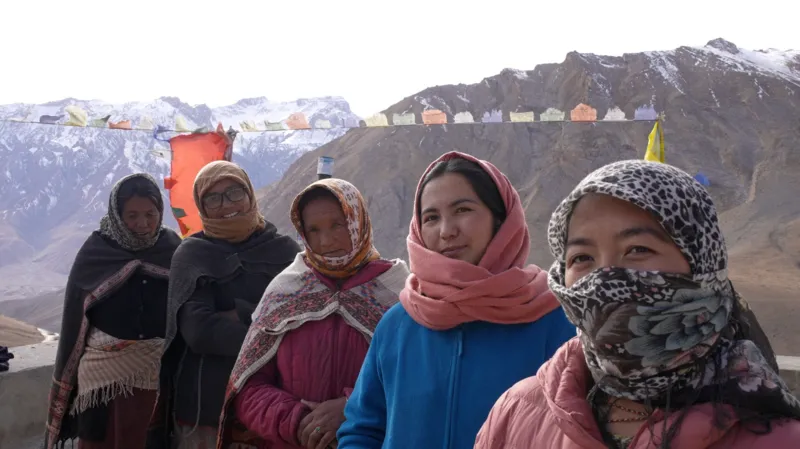
In one of India’s coldest and most remote regions, a group of women have taken on an unlikely role: protecting one of Asia’s most elusive predators, the snow leopard.
Snow leopards are found in just 12 countries across Central and South Asia. India is home to one of the world’s largest populations, with a nationwide survey in 2023 – the first comprehensive count ever carried out in the country – estimating more than 700 animals, .
One of the places they roam is around Kibber village in Himachal Pradesh state’s Spiti Valley, a stark, high-altitude cold desert along the Himalayan belt. Here, snow leopards are often called the “ghosts of the mountains”, slipping silently across rocky slopes and rarely revealing themselves.
For generations, the animals were seen largely as a threat, for attacking livestock. But attitudes in Kibber and neighbouring villages are beginning to shift, as people increasingly recognise the snow leopard’s role as a top predator in the food chain and its importance in maintaining the region’s fragile mountain ecosystem.
Nearly a dozen local women are now working alongside the Himachal Pradesh forest department and conservationists to track and protect the species, playing a growing role in conservation efforts.
Locally, the snow leopard is known as Shen and the women call their group “Shenmo”. Trained to install and monitor camera traps, they handle devices fitted with unique IDs and memory cards that automatically photograph snow leopards as they pass.
“Earlier, men used to go and install the cameras and we kept wondering why couldn’t we do it too,” says Lobzang Yangchen, a local coordinator working with a small group supported by the non-profit Nature Conservation Foundation (NCF) in collaboration with the forest department.
Yangchen was among the women who helped collect data for Himachal Pradesh’s snow leopard survey in 2024, which found that the state was home to 83 snow leopards – up from 51 in 2021.
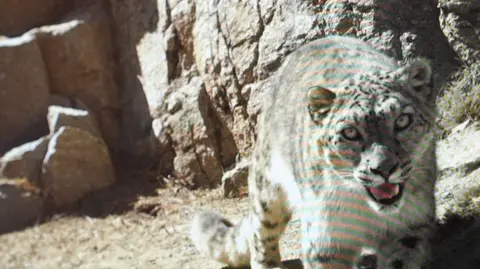
The survey documented snow leopards and 43 other species using camera traps spread across an area of nearly 26,000sq km (10,000sq miles). Individual leopards were identified by the unique rosette patterns on their fur, a standard technique used for spotted big cats. The findings are now feeding into wider conservation and habitat-management plans.
“Their contribution was critical to identifying individual animals,” says Goldy Chhabra, deputy conservator of forests with the Spiti Wildlife Division.
Collecting the data is demanding work. Most of it takes place in winter, when heavy snowfall pushes snow leopards and their prey to lower altitudes, making their routes easier to track.
On survey days, the women wake up early, finish household chores and gather at a base camp before travelling by vehicle as far as the terrain allows. From there, they trek several kilometres to reach camera sites, often at altitudes above 14,000ft (4,300m), where the thin air makes even simple movement exhausting.
The BBC accompanied the group on one such trek in December. After hours of walking in biting cold, the women suddenly stopped on a narrow trail.
Yangchen points to pugmarks in the dust: “This shows the snow leopard has been here recently. These pugmarks are fresh.”
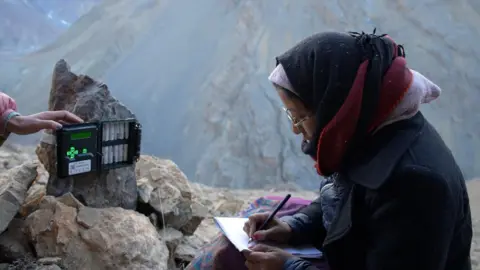
Along with pugmarks, the team looks for other signs, including scrapes and scent‑marking spots, before carefully fixing a camera to a rock along the trail.
One woman then carries out a “walk test”, crawling along the path to check whether the camera’s height and angle will capture a clear image.
The group then moves on to older sites, retrieving memory cards and replacing batteries installed weeks earlier.
By mid-afternoon, they return to camp to log and analyse the images using specialised software – tools many had never encountered before.
“I studied only until grade five,” says Chhering Lanzom. “At first, I was scared to use the computer. But slowly, we learned how to use the keyboard and mouse.”
The women joined the camera-trapping programme in 2023. Initially, conservation was not their motivation. But winters in the Spiti Valley are long and quiet, with little agricultural work to fall back on.
“At first, this work on snow leopards didn’t interest us,” Lobzang says. “We joined because we were curious and we could earn a small income.”
The women earn between 500 ($5.46; £4) and 700 rupees a day.
But beyond the money, the work has helped transform how the community views the animal.
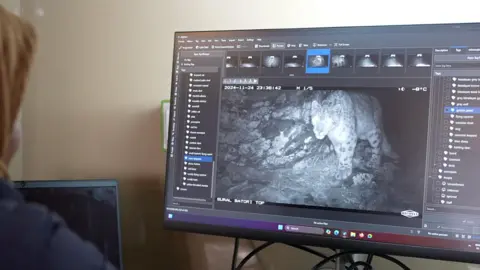
“Earlier, we thought the snow leopard was our enemy,” says Dolma Zangmo, a local resident. “Now we think their conservation is important.”
Alongside survey work, the women help villagers access government insurance schemes for their livestock and promote the use of predator‑proof corrals – stone or mesh enclosures that protect animals at night.
Their efforts come at a time of growing recognition for the region. Spiti Valley has recently been included in the Cold Desert Biosphere Reserve, a Unesco-recognised network aimed at conserving fragile ecosystems while supporting local livelihoods.
As climate change reshapes the fragile trans-Himalayan landscape, conservationists say such community participation will be crucial to safeguarding species like the snow leopard.
“Once communities are involved, conservation becomes more sustainable,” says Deepshikha Sharma, programme manager with NCF’s High Altitudes initiative.
“These women are not just assisting, they are becoming practitioners of wildlife conservation and monitoring,” she adds.
As for the women, their work makes them feel closer to their home, the village and the mountains that raised them, they say.
“We were born here, this is all we know,” Lobzang says. “Sometimes we feel afraid because these snow leopards are after all predatory animals, but this is where we belong.”
[BBC]

If elephants are truly to be given “freedom” in Udawalawe, the solution is not simply to open gates or redraw park boundaries. The map itself tells the real story — a story of shrinking habitats, broken corridors, and more than a decade of silent but relentless ecological destruction.
“Look at Udawalawe today and compare it with satellite maps from ten years ago,” says Sameera Weerathunga, one of Sri Lanka’s most consistent and vocal elephant conservation activists. “You don’t need complicated science. You can literally see what we have done to them.”
What we commonly describe as the human–elephant conflict (HEC) is, in reality, a land-use conflict driven by development policies that ignore ecological realities. Elephants are not invading villages; villages, farms, highways and megaprojects have steadily invaded elephant landscapes.
Udawalawe: From Landscape to Island
Udawalawe National Park was once part of a vast ecological network connecting the southern dry zone to the central highlands and eastern forests. Elephants moved freely between Udawalawe, Lunugamvehera, Bundala, Gal Oya and even parts of the Walawe river basin, following seasonal water and food availability.
Today, Udawalawe appears on the map as a shrinking green island surrounded by human settlements, monoculture plantations, reservoirs, electric fences and asphalt.
“For elephants, Udawalawe is like a prison surrounded by invisible walls,” Sameera explains. “We expect animals that evolved to roam hundreds of square nationakilometres to survive inside a box created by humans.”
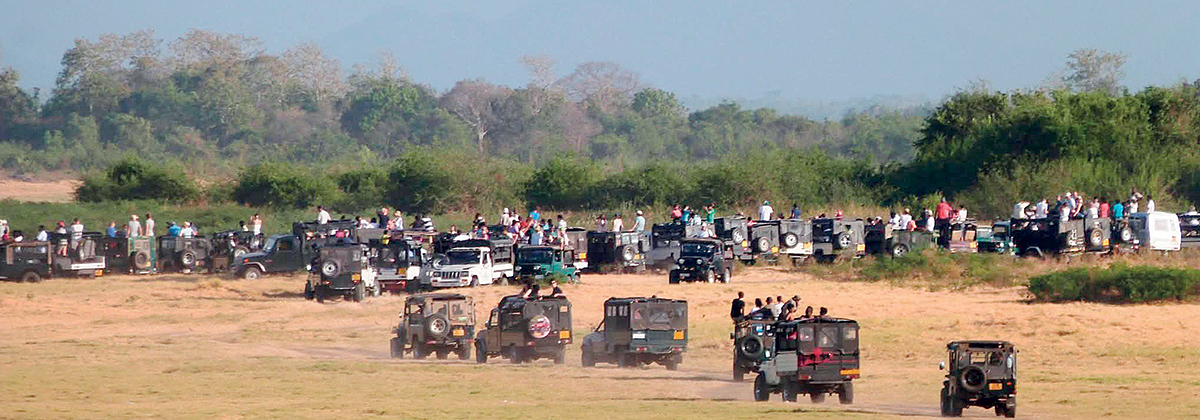
Elephants are ecosystem engineers. They shape forests by dispersing seeds, opening pathways, and regulating vegetation. Their survival depends on movement — not containment. But in Udawalawa, movement is precisely what has been taken away.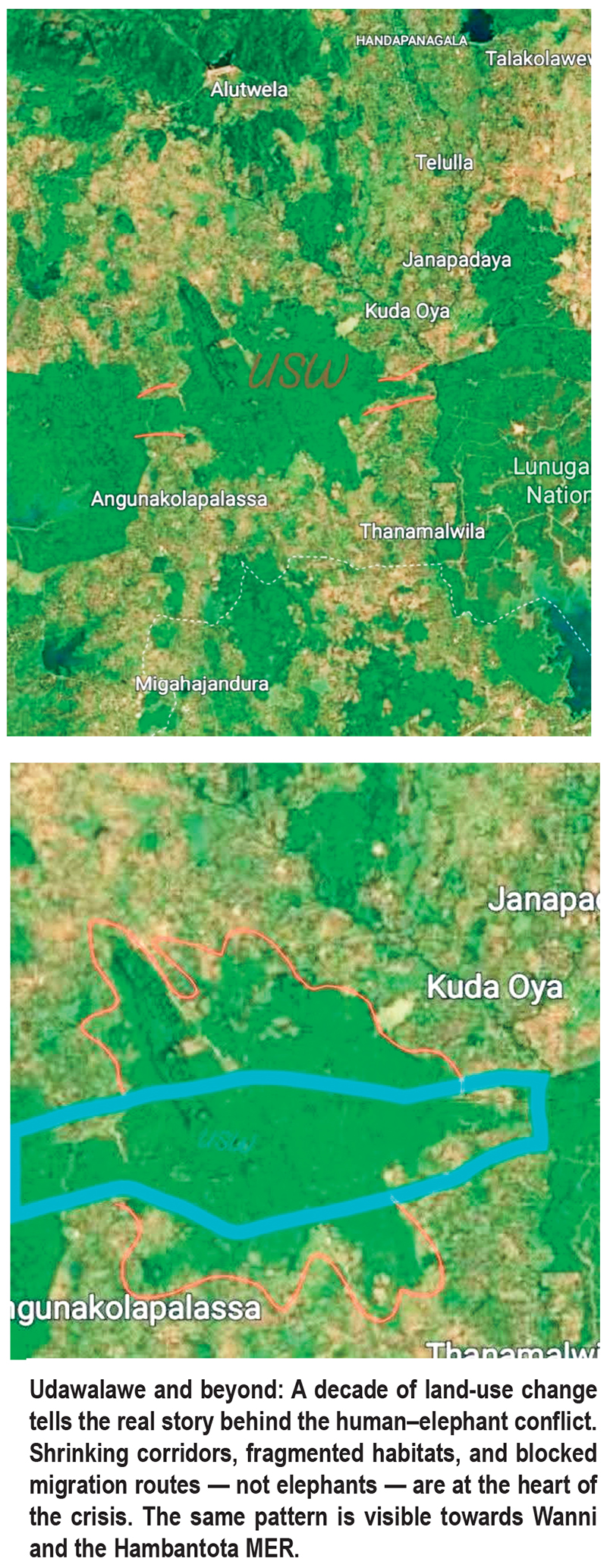
Over the past decade, ancient elephant corridors have been blocked or erased by:
Irrigation and agricultural expansion
Tourism resorts and safari infrastructure
New roads, highways and power lines
Human settlements inside former forest reserves

Sameera
“The destruction didn’t happen overnight,” Sameera says. “It happened project by project, fence by fence, without anyone looking at the cumulative impact.”
The Illusion of Protection
Sri Lanka prides itself on its protected area network. Yet most national parks function as ecological islands rather than connected systems.
“We think declaring land as a ‘national park’ is enough,” Sameera argues. “But protection without connectivity is just slow extinction.”
Udawalawe currently holds far more elephants than it can sustainably support. The result is habitat degradation inside the park, increased competition for resources, and escalating conflict along the boundaries.
“When elephants cannot move naturally, they turn to crops, tanks and villages,” Sameera says. “And then we blame the elephant for being a problem.”
The Other Side of the Map: Wanni and Hambantota
Sameera often points to the irony visible on the very same map. While elephants are squeezed into overcrowded parks in the south, large landscapes remain in the Wanni, parts of Hambantota and the eastern dry zone where elephant density is naturally lower and ecological space still exists.
“We keep talking about Udawalawe as if it’s the only place elephants exist,” he says. “But the real question is why we are not restoring and reconnecting landscapes elsewhere.”
The Hambantota MER (Managed Elephant Reserve), for instance, was originally designed as a landscape-level solution. The idea was not to trap elephants inside fences, but to manage land use so that people and elephants could coexist through zoning, seasonal access, and corridor protection.
“But what happened?” Sameera asks. “Instead of managing land, we managed elephants. We translocated them, fenced them, chased them, tranquilised them. And the conflict only got worse.”
The Failure of Translocation
For decades, Sri Lanka relied heavily on elephant translocation as a conflict management tool. Hundreds of elephants were captured from conflict zones and released into national parks like Udawalawa, Yala and Wilpattu.

Elephant deaths
The logic was simple: remove the elephant, remove the problem.
The reality was tragic.
“Most translocated elephants try to return home,” Sameera explains. “They walk hundreds of kilometres, crossing highways, railway lines and villages. Many die from exhaustion, accidents or gunshots. Others become even more aggressive.”
Scientific studies now confirm what conservationists warned from the beginning: translocation increases stress, mortality, and conflict. Displaced elephants often lose social structures, familiar landscapes, and access to traditional water sources.
“You cannot solve a spatial problem with a transport solution,” Sameera says bluntly.
In many cases, the same elephant is captured and moved multiple times — a process that only deepens trauma and behavioural change.
Freedom Is Not About Removing Fences
The popular slogan “give elephants freedom” has become emotionally powerful but scientifically misleading. Elephants do not need symbolic freedom; they need functional landscapes.
Real solutions lie in:
Restoring elephant corridors
Preventing development in key migratory routes
Creating buffer zones with elephant-friendly crops
Community-based land-use planning
Landscape-level conservation instead of park-based thinking
“We must stop treating national parks like wildlife prisons and villages like war zones,” Sameera insists. “The real battlefield is land policy.”
Electric fences, for instance, are often promoted as a solution. But fences merely shift conflict from one village to another.
“A fence does not create peace,” Sameera says. “It just moves the problem down the line.”
A Crisis Created by Humans
Sri Lanka loses more than 400 elephants and nearly 100 humans every year due to HEC — one of the highest rates globally.
Yet Sameera refuses to call it a wildlife problem.
“This is a human-created crisis,” he says. “Elephants are only responding to what we’ve done to their world.”
From expressways cutting through forests to solar farms replacing scrublands, development continues without ecological memory or long-term planning.
“We plan five-year political cycles,” Sameera notes. “Elephants plan in centuries.”
The tragedy is not just ecological. It is moral.
“We are destroying a species that is central to our culture, religion, tourism and identity,” Sameera says. “And then we act surprised when they fight back.”
The Question We Avoid Asking
If Udawalawe is overcrowded, if Yala is saturated, if Wilpattu is bursting — then the real question is not where to put elephants.
The real question is: Where have we left space for wildness in Sri Lanka?
Sameera believes the future lies not in more fences or more parks, but in reimagining land itself.
“Conservation cannot survive as an island inside a development ocean,” he says. “Either we redesign Sri Lanka to include elephants, or one day we’ll only see them in logos, statues and children’s books.”
And the map will show nothing but empty green patches — places where giants once walked, and humans chose. roads instead.
By Ifham Nizam
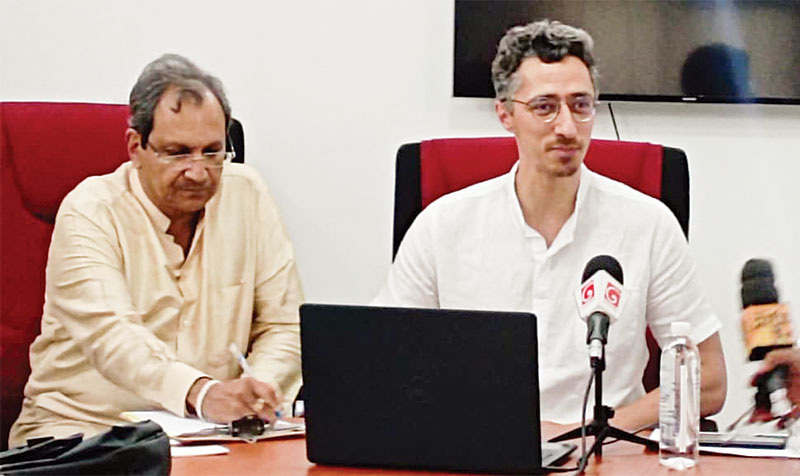
 SAARC or the South Asian Association for Regional Cooperation has been declared ‘dead’ by some sections in South Asia and the idea seems to be catching on. Over the years the evidence seems to have been building that this is so, but a matter that requires thorough probing is whether the media in South Asia, given the vital part it could play in fostering regional amity, has had a role too in bringing about SAARC’s apparent demise.
That South Asian governments have had a hand in the ‘SAARC debacle’ is plain to see. For example, it is beyond doubt that the India-Pakistan rivalry has invariably got in the way, particularly over the past 15 years or thereabouts, of the Indian and Pakistani governments sitting at the negotiating table and in a spirit of reconciliation resolving the vexatious issues growing out of the SAARC exercise. The inaction had a paralyzing effect on the organization.
Unfortunately the rest of South Asian governments too have not seen it to be in the collective interest of the region to explore ways of jump-starting the SAARC process and sustaining it. That is, a lack of statesmanship on the part of the SAARC Eight is clearly in evidence. Narrow national interests have been allowed to hijack and derail the cooperative process that ought to be at the heart of the SAARC initiative.
However, a dimension that has hitherto gone comparatively unaddressed is the largely negative role sections of the media in the SAARC region could play in debilitating regional cooperation and amity. We had some thought-provoking ‘takes’ on this question recently from Roman Gautam, the editor of ‘Himal Southasian’.
Gautam was delivering the third of talks on February 2nd in the RCSS Strategic Dialogue Series under the aegis of the Regional Centre for Strategic Studies, Colombo, at the latter’s conference hall. The forum was ably presided over by RCSS Executive Director and Ambassador (Retd.) Ravinatha Aryasinha who, among other things, ensured lively participation on the part of the attendees at the Q&A which followed the main presentation. The talk was titled, ‘Where does the media stand in connecting (or dividing) Southasia?’.
Gautam singled out those sections of the Indian media that are tamely subservient to Indian governments, including those that are professedly independent, for the glaring lack of, among other things, regionalism or collective amity within South Asia. These sections of the media, it was pointed out, pander easily to the narratives framed by the Indian centre on developments in the region and fall easy prey, as it were, to the nationalist forces that are supportive of the latter. Consequently, divisive forces within the region receive a boost which is hugely detrimental to regional cooperation.
Two cases in point, Gautam pointed out, were the recent political upheavals in Nepal and Bangladesh. In each of these cases stray opinions favorable to India voiced by a few participants in the relevant protests were clung on to by sections of the Indian media covering these trouble spots. In the case of Nepal, to consider one example, a young protester’s single comment to the effect that Nepal too needed a firm leader like Indian Prime Minister Narendra Modi was seized upon by the Indian media and fed to audiences at home in a sensational, exaggerated fashion. No effort was made by the Indian media to canvass more opinions on this matter or to extensively research the issue.
In the case of Bangladesh, widely held rumours that the Hindus in the country were being hunted and killed, pogrom fashion, and that the crisis was all about this was propagated by the relevant sections of the Indian media. This was a clear pandering to religious extremist sentiment in India. Once again, essentially hearsay stories were given prominence with hardly any effort at understanding what the crisis was really all about. There is no doubt that anti-Muslim sentiment in India would have been further fueled.
Gautam was of the view that, in the main, it is fear of victimization of the relevant sections of the media by the Indian centre and anxiety over financial reprisals and like punitive measures by the latter that prompted the media to frame their narratives in these terms. It is important to keep in mind these ‘structures’ within which the Indian media works, we were told. The issue in other words, is a question of the media completely subjugating themselves to the ruling powers.
Basically, the need for financial survival on the part of the Indian media, it was pointed out, prompted it to subscribe to the prejudices and partialities of the Indian centre. A failure to abide by the official line could spell financial ruin for the media.
A principal question that occurred to this columnist was whether the ‘Indian media’ referred to by Gautam referred to the totality of the Indian media or whether he had in mind some divisive, chauvinistic and narrow-based elements within it. If the latter is the case it would not be fair to generalize one’s comments to cover the entirety of the Indian media. Nevertheless, it is a matter for further research.
However, an overall point made by the speaker that as a result of the above referred to negative media practices South Asian regionalism has suffered badly needs to be taken. Certainly, as matters stand currently, there is a very real information gap about South Asian realities among South Asian publics and harmful media practices account considerably for such ignorance which gets in the way of South Asian cooperation and amity.
Moreover, divisive, chauvinistic media are widespread and active in South Asia. Sri Lanka has a fair share of this species of media and the latter are not doing the country any good, leave alone the region. All in all, the democratic spirit has gone well into decline all over the region.
The above is a huge problem that needs to be managed reflectively by democratic rulers and their allied publics in South Asia and the region’s more enlightened media could play a constructive role in taking up this challenge. The latter need to take the initiative to come together and deliberate on the questions at hand. To succeed in such efforts they do not need the backing of governments. What is of paramount importance is the vision and grit to go the extra mile.

The SSC finally steps out of the sunshine and into the floodlights

SAARC journalists meet in New Delhi

Governor of Gujarat met with Sri Lanka PM to discuss exposition of Devnimori Relics

India chase sixth Under-19 World Cup title, England their first since 1998

Meet the women protecting India’s snow leopards

Louvre Museum crown left crushed but ‘intact’ after raid

‘Dates have the highest sugar content to fight Coronavirus’

Sunday Island 27 December – Headlines

#SundayIsland 17th December – Headlines

Sunday Island – 28th March

Sunday Island Headlines – 21 March

Sunday Island – 21st February – Headlines
-

 Business6 days ago
Hayleys Mobility ushering in a new era of premium sustainable mobility
-

 Business3 days ago
SLIM-Kantar People’s Awards 2026 to recognise Sri Lanka’s most trusted brands and personalities
-
 Business6 days ago
Advice Lab unveils new 13,000+ sqft office, marking major expansion in financial services BPO to Australia
-

 Business6 days ago
Arpico NextGen Mattress gains recognition for innovation
-

 Business5 days ago
Altair issues over 100+ title deeds post ownership change
-

 Editorial6 days ago
Govt. provoking TUs
-

 Business5 days ago
Sri Lanka opens first country pavilion at London exhibition
-

 Business4 days ago
All set for Global Synergy Awards 2026 at Waters Edge