
Opinion
A national post-cyclone reflection period? – II


A call to transform schools from shelters of safety into sanctuaries of solidarity
(Part I of this article appeared on 10 Dec. 2025— https://island.lk/a-national-post-cyclone-reflection-period/)
What Could NPCRP Look Like in School?
In the aftermath of Cyclone Ditwah, Sri Lankan schools can play a crucial role in helping children process their experiences, rebuild their sense of safety, and find meaning in collective healing. To achieve this, schools can employ a period of at least two or three weeks of continuous reflection and creative processing, a rich set of classroom, school-wide, and community-level activities, tailored to the needs of students in the post-disaster landscape.
Classroom Level: Beyond morning assemblies and daily curricular learning, classrooms can engage in reflection-based group projects that deepen understanding and reconstruct a sense of narrative around the disaster. Students may create timelines of the cyclone, maps of affected areas, and “hero stories” honoring rescuers, first responders, volunteers, teachers, parents, and neighbours. They can also explore environmental dimensions by studying land management, erosion, and deforestation—connecting personal trauma with broader ecological lessons. Using ordinary mobile phones, groups may produce mini documentaries capturing their community’s stories, strengthening both empathy and agency.
One powerful approach could be to dedicate the first period of each school day to guided sharing circles facilitated by teachers. During these sessions, students can explore gentle prompts such as: What did I experience? What did I witness? What am I feeling now—and why? What do I need to feel safe? How can I help my family or community? What have I or haven’t I done that would have contributed to natural disasters? What am I or am I not doing to contribute to environmental preservation? What more could I or couldn’t I do to avoid further ecological harm? Children may express themselves through spoken reflection, creative writing, drawing, painting, journaling, storytelling, role-play, poetry, song, or even handicrafts made from safely cleaned, recycled flood debris.
School Level: At the school level, exhibitions of student expressions, multi-faith remembrance ceremonies, guest talks by mental-health professionals, environmental awareness workshops, tree-planting memorials, disaster drills, and student-led volunteer clubs can bring the whole school community together in collective learning and restoration. Peer-support groups and simple grounding exercises can help students process emotions gently and safely. Collaborative murals and wall paintings portraying hope and resilience can serve as both an emotional outlet and a communal act of rebuilding.
Community Level: Beyond the school walls, community-based initiatives—such as joint parent-student rebuilding projects, clean-up campaigns, home-visit systems for affected families, partnerships with clergy and village leaders, parental sharing groups, and collaborations with NGOs for counselling and disaster training—help weave stronger bonds between families, educators, and local institutions.
Throughout the NPCRP process, teachers and parents can play an essential psychosocial role by observing children with quiet attentiveness. Signs such as withdrawal, silence, unusual aggression, disturbed sleep routines, anxiety triggered by rain or thunder, sudden academic decline, or persistent sadness may indicate deeper distress. Those showing significant symptoms can be gently referred to school counsellors, psychosocial officers, or local mental-health teams for additional support. Early identification can be life-changing, especially for children who may otherwise suffer in silence.
After the NPCRP period, schools might organize a simple but meaningful internal exhibition showcasing student artwork, posters on resilience and disaster preparedness, documentary videos, and a “wall of gratitude” dedicated to rescue workers and volunteers. A remembrance corner honoring victims and survivors can provide a quiet space for communal reflection. Parents, guardians, religious leaders, and community members may be invited to witness the strength and vulnerability of their young people and to reaffirm a shared commitment to rebuilding lives and landscapes.
The reflection period may culminate in a closing ceremony of remembrance and resolve—an inclusive event that reflects Sri Lanka’s multicultural and multi-religious identity. The program could include a moment of silence, the lighting of oil lamps or candles, blessings from clergy of different faith traditions, and the felicitation of survivors and volunteer responders. Schools may also unveil a small, simple memorial—perhaps a stone, a tree, or a bench—created collaboratively by students, parents, and teachers, bearing a message such as: “From suffering, we rise — Cyclone Ditwah, 2025.” Even the simplest symbol can become a powerful reminder of shared endurance and collective hope.
Finally, schools could document this entire journey by gathering student photographs, stories, artwork, and personal reflections into a printed booklet or digital archive. Such a record would serve not only as a testimony of what the children endured, but also as a chronicle of resilience, solidarity, and renewal, something future generations can look back on as they continue the work of building a safer, more compassionate, and more environmentally conscious Sri Lanka.
Why Does NPCRP Matter?
Creating space for reflection and healing after Cyclone Ditwah should not be an optional exercise, but a national imperative. Emotional healing is essential because children recover best when they are encouraged to express what they have lived through; silence, on the other hand, often deepens fear, while shared storytelling strengthens resilience. This process, when adhered to within an established framework such as the Canadian sharing model or Jesuit spiritual conversation, is therefore therapeutic, nurturing respect and community-building through active listening and intentional speaking. As young people hear one another’s experiences, they develop empathy, and empathy in turn strengthens social cohesion—the foundation of a healthy democracy. Psychosocial activities that students engaged in during this period further facilitate opportunities to identify and support those students who show early signs of distress, while transforming schools into nurturing spaces that form whole persons, not just exam-takers.
Crucially, this period allows schools to integrate values that often remain outside the syllabus—emotional intelligence, ecological responsibility, national solidarity, and ethical reflection—contributing to strengthening national identity, as young people from diverse ethnic, linguistic, and social backgrounds discover a common narrative of suffering and survival. Also, fostering an understanding of environmental responsibility encourages sustainable behaviors that benefit the nation’s ecosystems for decades to come. Ultimately, these efforts strengthen the triangle of school–home–community relationships, building trust networks that not only support healing now but fortify the Sri Lankan nation against the uncertainties of the future. In that light, the cyclone, devastating as it was, offers a real-world context through which these values can be meaningfully taught and internalized.
Just as early psychosocial support leads to healthier long-term mental health outcomes, preventing deep-seated trauma from taking root, the long-term benefits of reflection extend well beyond the current disaster. Sri Lanka’s increasing vulnerability to monsoons and cyclones underscores the need to prepare the next generation for future disasters; children who learn to respond proactively, intelligently, and compassionately today will grow into adults who can lead communities safely through tomorrow’s crises. Children who are given tools to process trauma today will mature into resilient, compassionate, and confident adults capable of leadership in difficult times. A culture of solidarity can begin to take root when young people learn to care for “the other”, helping to soften and heal the country’s longstanding divisions. Improved disaster preparedness becomes a natural by-product of an educated and emotionally informed younger generation, reducing future loss of life and enhancing community responsiveness.
Conclusion
Cyclone Ditwah has forced Sri Lanka into a moment of profound reckoning—one that goes beyond the damaged infrastructure and broken landscapes. It has confronted us with the emotional and moral responsibility we hold toward our children, who have witnessed, endured, and responded to this disaster in countless ways. As the nation embarks on the long road to recovery, the reopening of schools becomes more than a logistical necessity; it becomes a national act of renewal, a declaration that our commitment to healing is as strong as our commitment to rebuilding.
If we are courageous enough to embrace this moment, schools can become powerful spaces of transformation. Not only can they restore stability and routine, but they should be the first places to cultivate empathy, resilience, ecological responsibility, and a shared sense of belonging, the qualities that Sri Lanka urgently needs as it confronts both old and emerging challenges. By creating structured opportunities for reflection, dialogue, creativity, and community engagement, we ensure that our children do not merely “move on” but move forward with understanding, resilience, educated solidarity, and purpose.
To that end, if the experiences carried by Sri Lankan children today are met with guided reflection and compassionate mentorship at school, they can become the seeds of a more humane and united nation. But if ignored, suppressed, or treated with less urgency and priority, they risk hardening into private wounds that isolate rather than connect. This is why the Ministry of Education’s choices in the coming weeks matter so profoundly. Like NPCRP, an intentional, well-structured reflective period within schools is not a delay in learning; it is learning in its highest form. It is the education that acknowledges life, loss, dignity, and responsibility, the kind of education that prepares children not only for examinations but for citizenship. Reopening schools without systematically addressing the emotional and moral dimensions of this tragedy, therefore, would be a missed opportunity
Hence, let us allow this disaster to teach us something enduring: that Sri Lanka rises strongest not when it focuses solely on rebuilding walls and bridges, but when it rebuilds its people, beginning with the youngest among us. Let us empower children to speak, share, create, question, and hope. Let us help them connect their experiences to a greater moral and ecological awareness. Let us show them that solidarity is not a distant ideal but a lived reality, learned through compassion and strengthened through community.
In the months and years to come, a new story will be told about how Sri Lanka responded to Cyclone Ditwah. Let that story be one of unity, vision, and courage. Let it be said that we refused to let our children carry their fears alone. Let it be remembered that our schools became sanctuaries of healing and hubs of civic renewal. And let it be known that from the grief of 2025 emerged a generation—educated, empathetic, and resilient—capable of guiding Sri Lanka toward a more just, prepared, and environmentally conscious future. As the legendary image of the Phoenix reminds us, from mud, we rise, and from learning, we (re)build the Sri Lanka she was always meant to be. (Concluded)
Dr. Rashmi M. Fernando, S.J., is a Jesuit priest, educator, and special assistant to the provost at Loyola Marymount University, Los Angeles, California, USA.
by Dr. Rashmi M. Fernando, S.J. ✍️


Hardly a week goes by, when someone in this country does not preach to us about the great, long lasting and noble nature of the culture of the Sinhala Buddhist people. Some Sundays, it is a Catholic priest that sings the virtues of Buddhist culture. Some eminent university professor, not necessarily Buddhist, almost weekly in this newspaper, extols the superiority of Buddhist values in our society. Some 70 percent of the population in this society, at Census, claim that they are Buddhist in religion. They are all capped by that loud statement in dhammacakka pavattana sutta, commonly believed to have been spoken by the Buddha to his five colleagues, when all of them were seeking release from unsatisfactory state of being:
‘….jati pi dukkha jara pi dukkha maranam pi dukkham yam pi…. sankittena…. ‘
If birth (‘jati’) is a matter of sorrow, why celebrate birth? Not just about 2,600 years ago but today, in distant port city Colombo? Why gaba perahara to celebrate conception? Why do bhikkhu, most prominent in this community, celebrate their 75th birthday on a grand scale? A commentator reported that the Buddha said (…ayam antima jati natthi idani punabbhavo – this is my last birth and there shall be no rebirth). They should rather contemplate on jati pi dukkha and anicca (subject to change) and seek nibbana, as they invariably admonish their listeners (savaka) to do several times a week. (Incidentally, Buddhists acquire knowledge by listening to bhanaka. Hence savaka and bhanaka.) The incongruity of bhikkhu who preach jati pi duklkha and then go to celebrate their 65th birthday is thunderous.
For all this, we are one of the most violent societies in the world: during the first 15 days of this year (2026), there has been more one murder a day, and just yesterday (13 February) a youngish lawyer and his wife were gunned down as they shopped in the neighbourhood of the Headquarters of the army. In 2022, the government of this country declared to the rest of the world that it could not pay back debt it owed to the rest of the world, mostly because those that governed us plundered the wealth of the governed. For more than two decades now, it has been a public secret that politicians, bureaucrats, policemen and school teachers, in varying degrees of culpability, plunder the wealth of people in this country. We have that information on the authority of a former President of the Republic. Politicians who held the highest level of responsibility in government, all Buddhist, not only plundered the wealth of its citizens but also transferred that wealth overseas for exclusive use by themselves and their progeny and the temporary use of the host nation. So much for the admonition, ‘raja bhavatu dhammiko’ (may the king-rulers- be righteous). It is not uncommon for politicians anywhere to lie occasionally but ours speak the truth only more parsimoniously than they spend the wealth they plundered from the public. The language spoken in parliament is so foul (parusa vaca) that galleries are closed to the public lest school children adopt that ‘unparliamentary’ language, ironically spoken in parliament. If someone parses the spoken and written word in our society, there is every likelihood that he would find that rumour (pisuna vaca) is the currency of the realm. Radio, television and electronic media have only created massive markets for lies (musa vada), rumour (pisuna vaca), foul language (parusa vaca) and idle chatter (samppampalapa). To assure yourself that this is true, listen, if you can bear with it, newscasts on television, sit in the gallery of Parliament or even read some latterday novels. There generally was much beauty in what Wickremasinghe, Munidasa, Tennakone, G. B. Senanayake, Sarachchandra and Amarasekara wrote. All that beauty has been buried with them. A vile pidgin thrives.
Although the fatuous chatter of politicians about financial and educational hubs in this country have wafted away leaving a foul smell, it has not taken long for this society to graduate into a narcotics hub. In 1975, there was the occasional ganja user and he was a marginal figure who in the evenings, faded into the dusk. Fifty years later, narcotics users are kingpins of crime, financiers and close friends of leading politicians and otherwise shakers and movers. Distilleries are among the most profitable enterprises and leading tax payers and defaulters in the country (Tax default 8 billion rupees as of 2026). There was at least one distillery owner who was a leading politician and a powerful minister in a long ruling government. Politicians in public office recruited and maintained the loyalty to the party by issuing recruits lucrative bar licences. Alcoholic drinks (sura pana) are a libation offered freely to gods that hold sway over voters. There are innuendos that strong men, not wholly lay, are not immune from seeking pleasures in alcohol. It is well known that many celibate religious leaders wallow in comfort on intricately carved ebony or satin wood furniture, on uccasayana, mahasayana, wearing robes made of comforting silk. They do not quite observe the precept to avoid seeking excessive pleasures (kamasukhallikanuyogo). These simple rules of ethical behaviour laid down in panca sila are so commonly denied in the everyday life of Buddhists in this country, that one wonders what guides them in that arduous journey, in samsara. I heard on TV a senior bhikkhu say that bhikkhu sangha strives to raise persons disciplined by panca sila. Evidently, they have failed.
So, it transpires that there is one Buddhism in the books and another in practice. Inquiries into the Buddhist writings are mainly the work of historians and into religion in practice, the work of sociologists and anthropologists. Many books have been written and many, many more speeches (bana) delivered on the religion in the books. However, very, very little is known about the religion daily practised. Yes, there are a few books and papers written in English by cultural anthropologists. Perhaps we know more about yakku natanava, yakun natanava than we know about Buddhism is practised in this country. There was an event in Colombo where some archaeological findings, identified as dhatu (relics), were exhibited. Festivals of that nature and on a grander scale are a monthly regular feature of popular Buddhism. How do they fit in with the religion in the books? Or does that not matter? Never the twain shall meet.
by Usvatte-aratchi
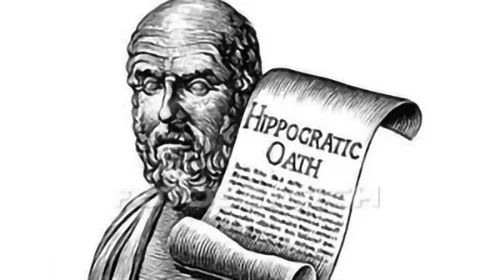
Almost all government members of the GMOA (the Government Medical Officers’ Association). Before joining the GMOA Doctors must obtain registration with Sri Lanka Medical Council (SLMC) to practice medicine. This registration is obtained after completing the medical studies in Sri Lanka and completing internship.
The SLMC conducts an Examination for Registration to Practise Medicine in Sri Lanka (ERPM) – (Formerly Act 16 in conjunction with the University Grants Commission (UGC), which the foreign graduates must pass. Then only they can obtain registration with SLMC.
When obtaining registration there are a few steps to follow on the as stated in the “
GUIDELINES ON ETHICAL CONDUCT FOR MEDICAL & DENTAL PRACTITIONERS REGISTERED WITH THE SRI LANKA MEDICAL COUNCIL” This was approved in July 2009, and I believe is current at the time of writing this note. To practice medicine, one must obtain registration with the SLMC and complete the oath formality. For those interested in reading it on the web, the reference is as follows.
https://slmc.gov.lk/images/PDF_Main_Site/EthicalConduct2021-12.pdf
I checked this document to find the Hippocratic Oath details. They are noted on page 5. The pages 6 & 7 provide the draft oath form that every Doctor must complete with his/her details. Oath must be administered by
the Registrar/Asst. Registrar/President/ Vice President or Designated Member of the Sri Lanka Medical Council and signed by the Doctor.
Now I wish to quote the details of the oath.
I solemnly pledge myself to dedicate my life to the service of humanity;
The health of my patient will be my primary consideration and I will not use my profession for exploitation and abuse of my patient;
I will practice my profession with conscience, dignity, integrity and honesty;
I will respect the secrets which are confided in me, even after the patient has died;
I will give to my teachers the respect and gratitude, which is their due;
I will maintain by all the means in my power, the honour and noble traditions of the medical profession;
I will not permit considerations of religion, nationality, race, party politics, caste or social standing to intervene between my duty and my patient;
I wish to ask the GMOA officials, when they engage in strike action, whether they still comply with the oath or violate any part of the oath that even they themselves have taken when they obtained registration from the SLMC to practise medicine.
Hemal Perera

Dr. Lesego the Surgical Registrar from Lesotho who did the on-call shift with me that night in the sleepy London hospital said a lot more than what I wrote last time. I did not want to weaken the thrust of the last narrative which was a bellyful for the legal fraternity of south east Asia and Africa.
Lesego begins, voice steady and reflective, “You know… he said, in my father’s case, the land next to Maseru mayor’s sunflower oil mill was prime land. The mayor wanted it. My father refused to sell. That refusal set the stage for everything that followed.
Two families lived there under my dad’s kindness. First was a middle-aged man, whose descendants still remain. The other was an old destitute woman. My father gave her timber, wattle, cement, Cadjan, everything free, to build her hut. She lived peacefully for two years. Then having reconciled with her once estranged daughter wanted to leave.
She came to my father asking for money for the house. He said: ‘I gave you everything free. You lived there for two years completely free and benefitting from the produce too. And now you ask for money? Not a cent.’ In hindsight, that refusal was harsh. It opened the door for plunderers. The old lady ‘sold’ the hut to Pule, the mayor’s decoy. Soon, Pule and his fellow compatriots, were to chase my father away while he was supervising the harvesting of sunflowers.
My father went to court in September 1962, naming Thasoema, the mayor, his Chief clerk, and the trespassers as respondents. The injunction faltered for want of an affidavit, and under a degree of compulsion by the judge and the attending lawyers, my father agreed to an interim settlement of giving away the aggressors total possession with the proviso that they would pay the damages once the court culminates the case in his favour. This was the only practical alternative to sharing the possession with the adversaries.
From the very beginning, the dismissals and flimsy rulings bore the fingerprints of extra‑judicial mayoral influence. Judges leaned on technicalities, not justice. They hid behind minutiae.
Then nature intervened. Thasoema, the mayor, hale and hearty, died suddenly of what looked like choking on coconut sap which later turned out to be a heart attack. His son Teboho inherited the case. Months later, the Chief clerk also died of a massive heart attack, and his son took his place. Even Teboho, the mayor’s young son of 30 years died, during a routine appendectomy, when the breathing tube was wrongly placed in his gullet.
About fifteen years into the case, another blow fell. A 45‑year‑old judge, who had ruled that ‘prescription was obvious at a glance, while adverse possession was being contested in court all the time, died within weeks of his judgment, struck down by a massive heart attack.
After that, the case dragged on for decades, yo‑yoing between district and appeal courts. Judges no longer died untimely deaths, but the rulings continued to twist and delay. My father’s deeds were clear: the land bought by his brother in 1933, sold to him in 1936, uninterrupted possession for 26 years. Yet the courts delayed, twisted, and denied.
Finally, in 2006, the District Court ruled in his favour embodying every detail why it was delivering such a judgement. It was a comprehensive judgement which covered all areas in question. In 2015, the Appeal Court confirmed it, his job being easy because of the depth the DC judge had gone in to. But in October 2024, the Supreme Court gave an outrageously insane judgment against him. How? I do not know. I hope the judge is in good health, my friend said sarcastically.
Lesego paused, his voice heavy with irony “Where nature dared, judges hid. And that is the truth of my father’s case.”
Dr.M.M.Janapriya
UK

More than 5,000 flights cancelled as US east coast digs out of record snow

Pakistan bat vs unchanged England with Afridi back

Navy seize an Indian fishing boat poaching in Mannar seas

Fair weather will prevail except for showers in the Southern province and in Rathnapura, Monaragala and Kaluthara districts after 2.00 p.m

Families of those sentenced to death for killing MP Atukorale seek AKD’s intervention

OPV leaves Baltimore, expected in Colombo in May

‘Dates have the highest sugar content to fight Coronavirus’

Sunday Island 27 December – Headlines

#SundayIsland 17th December – Headlines

Sunday Island – 28th March

Sunday Island Headlines – 21 March

Sunday Island – 21st February – Headlines
-
 Features3 days ago
Why does the state threaten Its people with yet another anti-terror law?
-
 Features3 days ago
Victor Melder turns 90: Railwayman and bibliophile extraordinary
-
 Features3 days ago
Reconciliation, Mood of the Nation and the NPP Government
-

 Features2 days ago
LOVEABLE BUT LETHAL: When four-legged stars remind us of a silent killer
-
 Features3 days ago
Victor, the Friend of the Foreign Press
-
 Latest News4 days ago
New Zealand meet familiar opponents Pakistan at spin-friendly Premadasa
-

 Latest News4 days ago
Tariffs ruling is major blow to Trump’s second-term agenda
-

 Latest News4 days ago
ECB push back at Pakistan ‘shadow-ban’ reports ahead of Hundred auction