
Sports
A campaign that’s brought the fans back

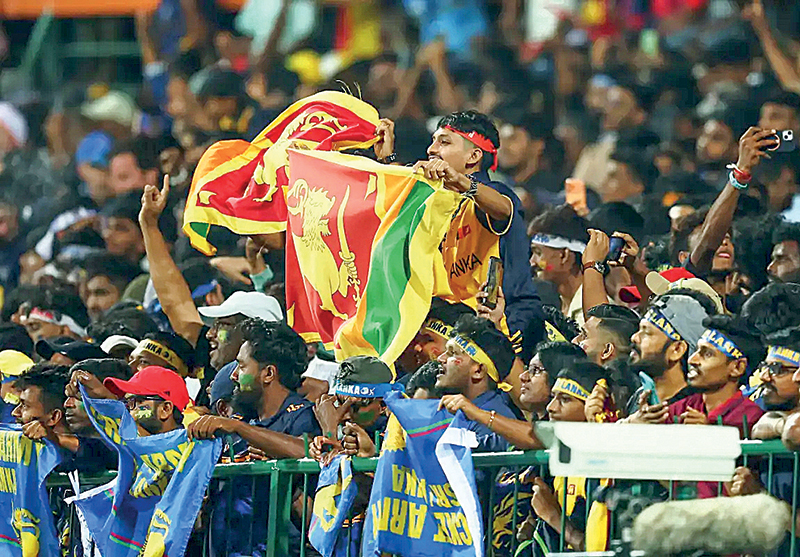
Sri Lanka’s final group game of the T20 World Cup was, on paper, a dead rubber. Zimbabwe had already punched their Super Eight ticket and so had the co-hosts. Yet, 24 hours before the toss, tickets were sold out. By the time the coin went up at Colombo’s R. Premadasa Stadium, the access roads were chock-a-block, horns blaring, vendors shouting, fans draped in blue streaming in like it was a final.
For a so-called inconsequential game, it felt anything but.
When supporters turn up in numbers for a fixture with nothing riding on it, that’s not blind loyalty, that’s belief. Sri Lanka, after years in the wilderness, have given their faithful something to cheer about. They are no longer making up the numbers. They are back in the contest.
The moment that injected oxygen into this campaign was the night they showed Australia the exit door. For Sri Lankan fans, there is no sweeter soundtrack than the silence of an Aussie dressing room packing up early. The younger fan brigade may relish having a go at India, but knocking out Australia still carries its own flavour.
Now the focus shifts to the Super Eight. Three games. Win two and Sri Lanka could be boarding flights to Calcutta or Bombay for a semi-final berth. That would be a seismic moment. The national side has not reached the last four of a global event for 12 long years. In cricketing terms, that’s an eternity.
Sport, like life, moves in cycles. Between 2007 and 2015, Sri Lanka were serial semi-finalists and finalists, a golden era when reaching the knockouts of ICC events was routine business. England, in contrast, were perennial underachievers in white-ball cricket, often bundled out early and licking their wounds. But they went back to the drawing board, addressed their white-ball philosophy, and emerged as a different beast, fearless, methodical and consistent on the global stage.
Sri Lanka appear to be following a similar blueprint.
One of the burning issues identified was strike rate. Last year, Chairman of Selectors Upul Tharanga publicly called for urgency with the bat. Too many Sri Lankan batters were stuck in second gear, striking at 120 or 130, respectable in another era, but pedestrian in modern T20 cricket.
This tournament has told a different story.
Kamindu Mendis has been batting as if the fielders are mere ornaments, striking at a jaw-dropping 225. Dasun Shanaka has rediscovered his finishing boots, going at 200. Pavan Rathnayake has muscled his way to 177, while Pathum Nissanka, long seen as more accumulator than aggressor, has operated at a healthy 155.
Those are not cosmetic improvements. Those are match-defining numbers.
Sri Lanka’s bowling cupboard has rarely been bare. Spin has been their calling card, seamers their workhorses. But too often in recent years, the batting has misfired, leaving bowlers with too little to defend. Now, with Pathum anchoring, Pavan counter-punching and Kamindu playing the role of accelerator, the top order is beginning to hum. Charith Asalanka, meanwhile, is far too gifted to be warming the bench for long.
The Super Eight will provide sterner examinations. England have had the wood over Sri Lanka in recent meetings. Pakistan and New Zealand, however, are sides we have found ways to outfox. More importantly, the middle order, once the soft underbelly, is showing signs of steel.
There are, of course, absentees that could haunt them in the business end. Wanindu Hasaranga, Matheesha Pathirana and Eshan Malinga would have been invaluable when the heat rises. Experience in global tournaments and franchise leagues like the IPL is currency you cannot easily replace. Hasaranga’s recurring hamstring troubles remain a concern and managing his fitness, including conditioning, must be a priority if he is to prolong his career.
Credit, too, must go upstairs. Sri Lanka Cricket have left no stone unturned. The appointment of Vikram Rathour and R. Sridhar, key lieutenants under Ravi Shastri during India’s successful run, has added tactical clarity. The involvement of South Africa’s Paddy Upton, a guru of the mental side of the game, has strengthened the team’s headspace.
The dividends are visible.
For now, the biggest victory may not be on the points table but in the stands. The blue flags are back. The roads are jammed again. The buzz has returned.
In Sri Lanka, that is often the first sign that a team has truly turned the corner.
by Rex Clementine


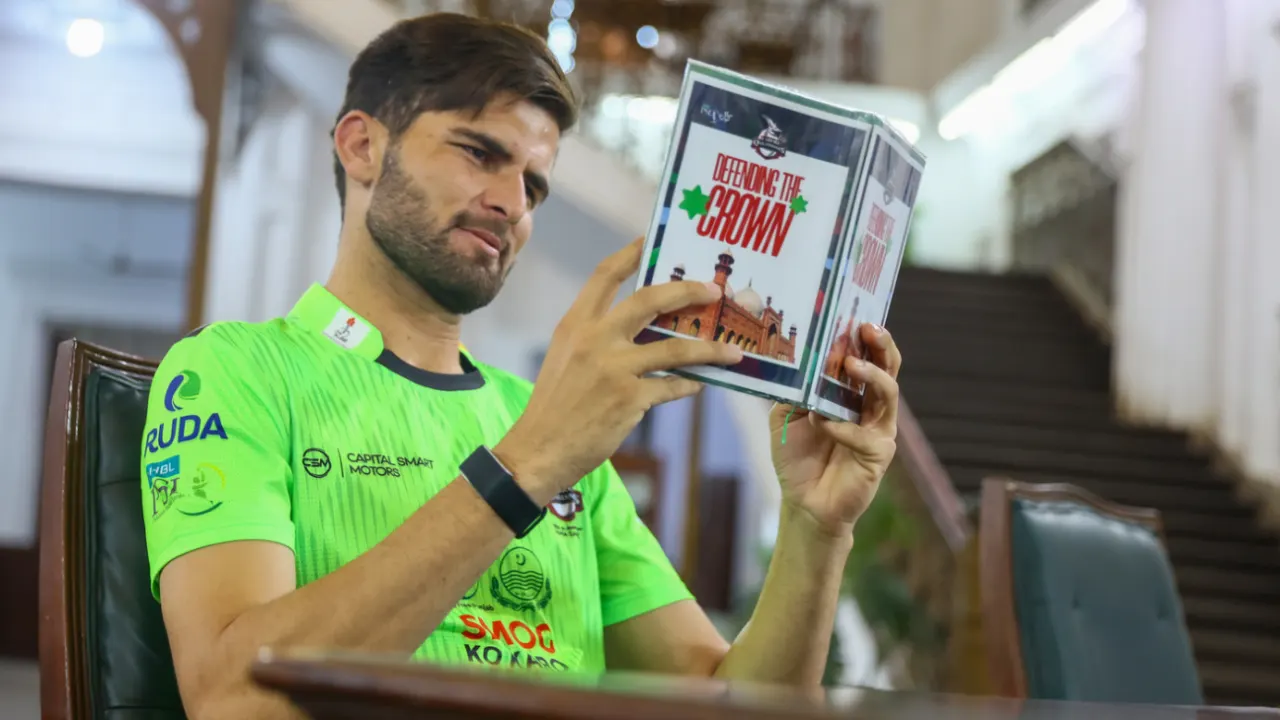
Lahore Qualandars have fined Shaheen Shah Afridi PKR 1 million (approx. USD 3600) following the incident that saw the Punjab police accuse him of violating security protocols at the team hotel. In a statement, Qalandars said they had imposed the fine on their captain to “maintain discipline and impose accountability”.
There will be no action taken against Qalandars player Sikandar Raza, who was also accused by the police of violating the same protocols. At a press conference yesterday, Raza said he took responsibility for the incident and attempted to exonerate Afridi from blame.
News of the incident emerged after a letter from the Punjab police to PSL CEO Salman Naseer was made widely available on social media. It accused Qalandars, Afridi and Raza’s team, of violating security protocols, alleging that, despite being refused permission to receive visitors in Raza’s room by both the PCB’s security and anti-corruption manager as well as Naseer, Afridi and Raza took people up to the player’s room. Despite Raza saying they stayed in his room for 40 minutes, the letterclaims they spent approximately three hours there.
Qalandars accepted the broader details of the incident, but the statement said it had been “overstated in public discourse, amplified beyond its original context”, and was “unnecessarily escalated”.
“While underscoring that the matter arose from a misunderstanding rather than any deliberate attempt to violate established procedures, Lahore Qalandars reiterated its full respect for all security protocols,” the statement said.
“The organisation reaffirmed its commitment to strict adherence to standard operating procedures (SOPs) and emphasised the importance of continued clarity and alignment in the communication of protocols to prevent similar situations in the future.”
[Cricinfo]
New IPL season, new-look team, but same-old batting troubles for Chennai Super Kings [CSK].
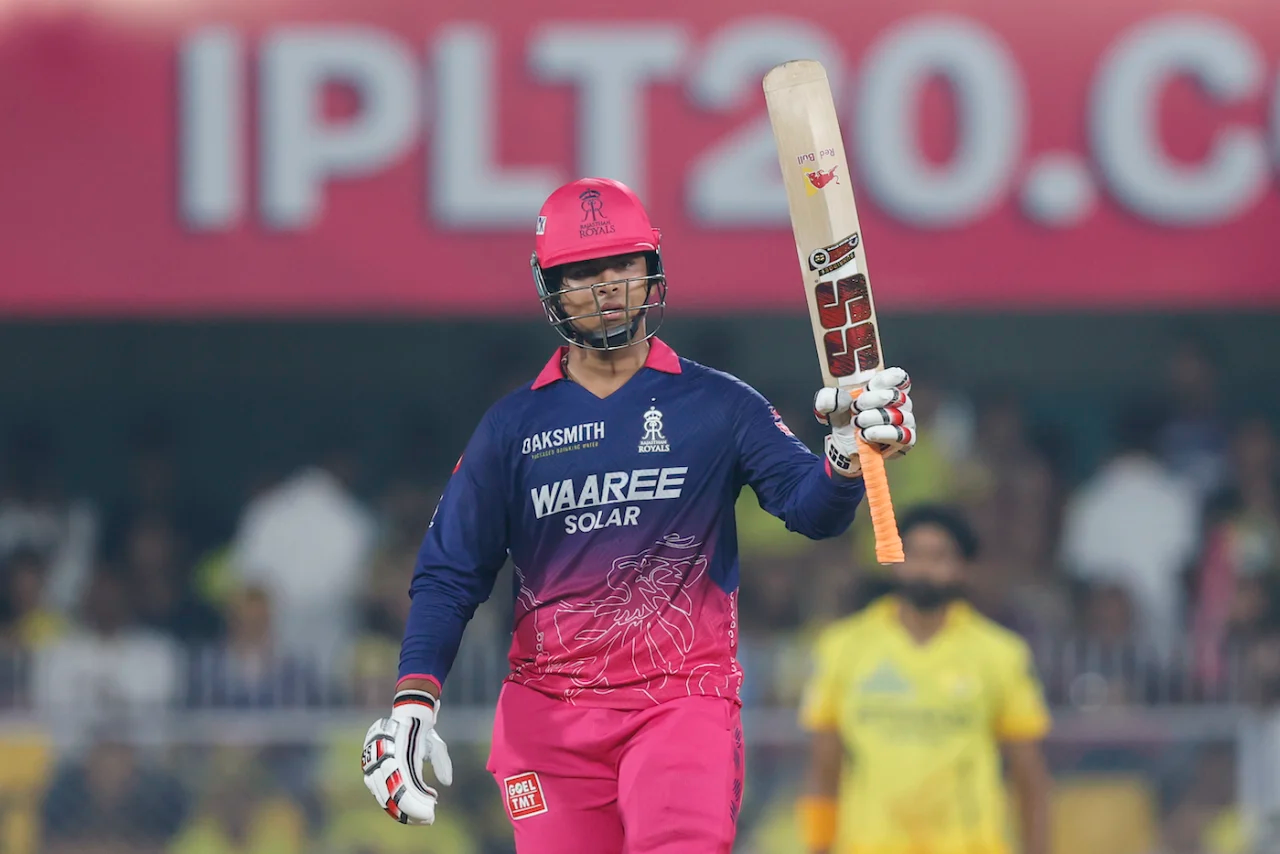
On Monday, their powerplay score of 41 for 4 against Rajasthan Royals [RR] was straight out of 2025, when they had finished rock bottom in the league, before they were eventually bowled out for 127. That total then looked next to nothing when 15-year-old Vaibhav Sooriyavanshi, who is four years younger than the IPL itself, clattered a 15-ball half-century. RR razed the target down with eight wickets and almost as many overs to spare.
The Guwahati pitch was trickier to bat on in the early exchanges – it had spent considerable time under covers both on match day and match eve – and RR made excellent use of the dampness after winning a crucial toss and opting to bowl. Both Jofra Archer and Nandre Burger bowled Test-match lengths to wreck CSK’s top order. Ravindra Jadeja then marked his return to RR after 17 years with a double-wicket first over. Sooryavanshi then ripped up CSK’s attack, and the IPL record books.
It was Burger who made the opening breakthrough when he knocked Sanju Samson over in the second over. Burger bowled a perfectly pitched delivery – neither full or short – on a good length, and got it to seam away from over the wicket. Samson, who was shaping up for an inswinger, was made to look silly by the left-arm quick.
Ruturaj Gaikwad then exposed all his stumps, only to be bowled by a 143.3kph delivery from Archer. Both the CSK openers fell for 6 each, and the revamped middle order could not stop the rot.
CSK’s title-winning sides of old used to navigate such Test-match style passages of play with their all-format experience. But the team management has now pivoted to youth who tried to hit their way out of trouble, and wound up collapsing spectacularly.
Ayush Mhatre dared to hook a head-high bouncer, and was caught behind for a golden duck. Matthew Short, who got an opportunity in place of the injured Dewald Brevis, chipped a slower ball from Sandeep Sharma to midwicket to leave CSK at 38 for 4 in the sixth over.
That soon became 57 for 6 after Jadeja’s double-strike in his first over. The first wicket of Sarfaraz Khan had Jadeja written all over it. He speared in a fast, flat dart that thudded into Sarfaraz’s pads, and trapped him lbw for 17 off 12 balls. Sarfaraz had come in as CSK’s Impact Sub in their bat-first XI that had Noor Ahmad slotted in at No. 8. Had CSK fared better with the bat, they may have had the option of strengthening their bowling with the potential inclusion of Gurjapneet Singh or allrounder Ramakrishna Ghosh.
Shivam Dube came out attacking as well, launching his first ball for six over wide long-on. But Jadeja quickly shifted his lines wide of off and had Dube slicing a catch to wide long-off. Jadeja bared his emotions and gave his former team-mate a send-off. He finished with 2 for 18 in his three overs and later said “pink looks good on me” with a big smile on his face during the innings break.
At one point, CSK were in danger of being bowled out for a sub-100 total, but Jamie Overton’s 43 off 36 balls – he was the only CSK batter to pass 20 on the day – dragged them to 127. Overton added 33 with Anshul Kamboj, the highest ever for the last wicket for CSK.
CSK could’ve dismissed Sooryavanshi for a golden duck had debutant Kartik Sharma not dropped him in the first over of the chase. Matt Henry drew a mis-hit over midwicket with a hard-length delivery, but Kartik, who usually keeps wicket for Rajasthan, missed a difficult catch and parried it away to the boundary. What happened next ball? Sooryavanshi swatted it over wide long-on for the first of his five sixes.
The pick of Sooryavanshi’s sixes was a scythed hit off a slower ball from Henry in the third over. Henry took pace off and bowled a slower cutter wide of off, but Sooryavanshi powered it over deep point, one of the two fielders in the outfield, with his incredible bat speed and bat swing. He pressed on to bring up his fifty off 15 balls. Only four other players – his opening partner Yashasvi Jaiswal, KL Rahul, Pat Cummins and Romario Shepherd – have hit quicker fifties in the IPL.
CSK cut Sooryavanshi’s innings short on 52 off 17 balls when Sarfaraz pulled off a superb diving catch at sweeper cover off Kamboj in the seventh over. Kamboj struck again in his next over to remove Dhruv Jurel, but Jaiswal (38*) and captain Riyan Parag (14*) completed RR’s demolition of CSK.
Brief scores:
Rajasthan Royals 128 for 2 in 12.1 overs (Vaibhav Sooryavanshi 52, Yashaswi Jaiswal 38*, Druv Jurel 18, Riyan Parag 14*; Anshul Kamboj 2-27) beat Chennai Super Kings 127 in 19.4 overs (Sarfaraz Khan 17, Kartik Sharma 18, Jamie Overton 43; Ravindra Jadeja 2-18, Jofra Archer 2-19, Nandre Burger 2-26, Brijesh Sharma 1-17, Sandeep Sharma 1-22, Ravi Bishnoi 1-16) by eight wickets
[Cricinfo]

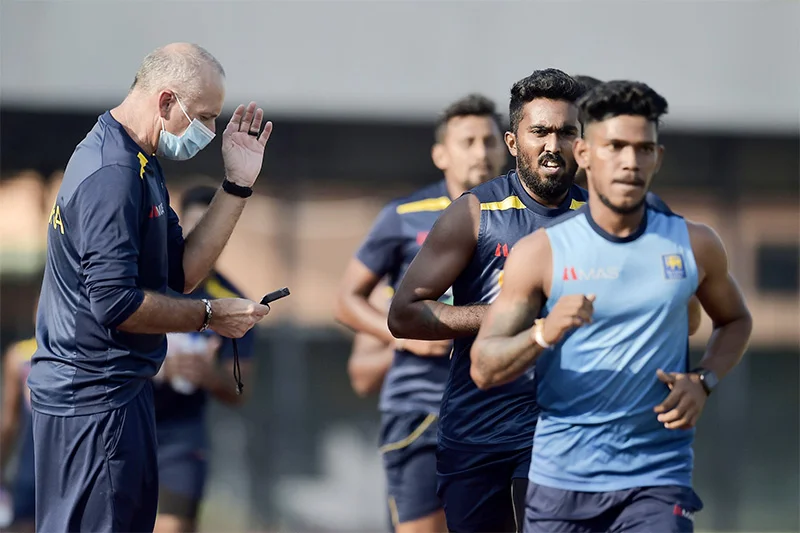
Sri Lanka Cricket has drawn a hard line in the sand, vowing zero tolerance for players who fail fitness tests, with a clear message that those who don’t make the grade risk being left out in the cold when selections are made. While Sri Lanka’s campaign in the recent T20 World Cup, co-hosted with India, had its moments in the sun, fitness issues proved to be the Achilles’ heel.
The wheels began to come off midway through the tournament as key bowlers broke down, forcing the selectors to field a second-string unit. Across the board, fitness levels looked below the required standard.
In the immediate aftermath of the World Cup, the board tightened the screws, making it mandatory for players to clear fitness tests before being granted No Objection Certificates (NOCs) to feature in franchise leagues such as the IPL and PSL.
“The concerns about the fitness levels of players were flagged during the tournament and we are addressing it,” a board official told Telecom Asia Sport. “There has been non-stop cricket over the last 36 months, leaving very little time for players to work exclusively on fitness. But having said that, professional cricketers should be able to meet minimum standards.”
“In the past, we have fined players for failing fitness tests, but if that’s not yielding results, we will have to explore stronger measures. If it comes to a point where a player is deemed ineligible for selection due to failing fitness standards, we will have to take that call.”
Telecom Asia Sport understands that the numbers make for grim reading. Of the 46 players put through the fitness grind, only 12 managed to pass. Those who cleared the bar have secured NOCs and are plying their trade in India and Pakistan, while others, including Nuwan Thushara, have been benched after failing to meet the cut.
Leg-spinner Wanindu Hasaranga and tearaway quick Matheesha Pathirana are set to undergo their fitness tests after completing rehabilitation. If they come through unscathed, both are expected to be back in action from the second week of April.
SLC’s fitness regime is no walk in the park. It includes skinfold tests to monitor body fat, a two-kilometre run to assess endurance, a 20-metre sprint, agility drills and a counter-movement jump. The spotlight, however, falls heavily on skinfold measurements and endurance, with players given a second bite at the cherry before fines and now potentially harsher consequences come into play.

Steps are taken to accelerate the recovery efforts following Cyclone Ditwah despite Global Economic Challenges

Qalandars fine Afridi for violating security protocols

Sooryavanshi, Archer, Burger demolish Chennai Super Kings

Showers may occur at a few places in the Western and Sabaragamuwa provinces and in Galle and Matara districts after 2.00 pm

Burning of low-grade coal at N’cholai plant increases pollution: Parliament

Tariff shock from 01 April as power costs climb across the board

‘Dates have the highest sugar content to fight Coronavirus’

Sunday Island 27 December – Headlines

#SundayIsland 17th December – Headlines

Sunday Island – 28th March

Sunday Island Headlines – 21 March

Sunday Island – 21st February – Headlines
-

 News7 days ago
Senior citizens above 70 years to receive March allowances on Thursday (26)
-

 Features4 days ago
A World Order in Crisis: War, Power, and Resistance
-

 News5 days ago
Energy Minister indicted on corruption charges ahead of no-faith motion against him
-

 News6 days ago
US dodges question on AKD’s claim SL denied permission for military aircraft to land
-

 Business6 days ago
Dialog Unveils Dialog Play Mini with Netflix and Apple TV
-

 News7 days ago
CEB Engineers warn public to be prepared for power cuts after New Year
-

 Sports5 days ago
SLC to hold EGM in April
-

 Latest News5 days ago
A strong Technical and Vocational Education and Training (TVET) system equips individuals with practical, relevant, and future-oriented skills helping to innovate responsibly towards a greener and sustainable future – PM