
Features
75 Years (3): Tom Nairn, AJ Wilson and the Break-up of States

Rajan Philips
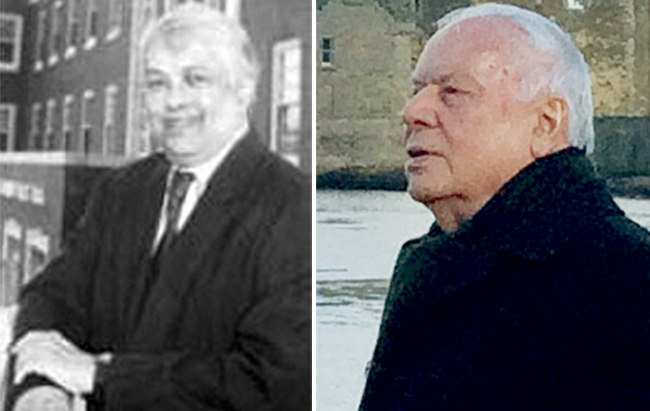
Tom Nairn, widely known for his 1977 book, The Break-up of Britain, considered by many as “the most significant book on British politics of the past half-century,” passed away on January 21, in Edinburgh, Scotland. He was 90 years old and had become a “guru figure” for Scottish Nationalists over the last few decades. Tributes have poured in from across Scotland’s political spectrum, both nationalists and unionists, including First Minister Nicola Sturgeon who would have been seven years old when Break-up first appeared, her predecessor Alex Salmond, as well as former Prime Minister Gordon Brown, the Scotsman from Glasgow. To writer David Greig, Nairn was “Scotland’s intellectual engine of civic contemporary nationalism.” Others have called Nairn, Scotland’s greatest modern philosopher.
The break-up book was not primarily an exposition or celebration of Scottish nationalism, but a breakdown of the crisis of the British State. In his 1977 introduction, Nairn acknowledges that “although no main part of the book was written in Scotland, that country’s problems were never far from the inspiration of all of them.” The introduction includes a list of Scottish intellectuals who helped him with comments and suggestions for the book, and the list includes Gordon Brown. Brown would have been 26 then, still six years before becoming a Member of Parliament, and was working on his PhD thesis at the University of Edinburgh, titled The Labour Party and Political Change in Scotland 1918–1929. The two had collaborated earlier, in 1975, in publishing the “The Red Paper on Scotland”, which Brown edited and to which Nairn was the lead contributor.
Gordon Brown stayed with the Labour Party in Scotland and in Britain, to become Britain’s longest serving Chancellor of the Exchequer and later Prime Minister. Nairn broke away first facilitating the formation of the Scottish Labour Party and then blessing its incorporation within the Scottish Nationalist Party. Brown’s passionate campaign against independence during the 2014 referendum was a factor in 55% of the people of Scotland voting against independence, a verdict that left Nairn hugely disappointed.
Brown was generous in his adulation of Tom Nairn after his death, describing him as “a great writer, thinker, intellectual and good man,” and acknowledging that Nairn “disagreed with me on many things but his books and scholarship will long be remembered.” Anthony Barnett, a former co-editor of the New Left Review, has called Tom Nairn and Gordon Brown “two towering political intellectuals,” who for nearly half a century “have wrestled over and shaped the Left’s view of the United Kingdom.” One of them (Brown) “directly shaped the Kingdom itself,” while the other (Nairn) played a direct “role in the emergence of modern Scotland.” Their “joint story” remains to be told.
Their story would be similar to the often-told Canadian story of Pierre Trudeau and Rene Levesque, two French Canadians and their intellectual and political fight over the status of Quebec in Canada. Here again, Trudeau as Prime Minister of Canada was able to thwart the attempt of Levesque, as the Premier of Quebec, to achieve quasi-separation for his Province through a constitutional arrangement called “sovereignty association.” As a political intellectual, Trudeau was quite dismissive of the statist aspirations of nationalism and characteristically said: “It is not the concept of nation that is retrograde, but its claim to sovereignty.”
Wilson’s Break-up
Eleven years after the publication of The Break-up of Britain, AJ Wilson published the first of his trilogy on the Sinhalese-Tamil conflict in Sri Lanka and titled it, The Break-up of Sri Lanka, perhaps emulating Nairn’s break-up title in Britain. Professor Wilson was not an advocate of political causes but a respected academic and Sri Lanka’s pre-eminent political scientist. The fact that Wilson was the son-in-law of SJV Chelvanayakam, Q.C., the father-figure leader of non-violent Tamil politics, did not diminish his reputation as an objective and detached academic. The affinal relationship certainly gave Wilson an intimate view of decision making in Tamil politics even as it gave him uniquely congenial access to Sri Lanka’s political leaders across the island’s many divides. Wilson was known for his affinity toward and admiration for Leftist leaders, NM Perera and Bernard Soysa; and his writings showed intellectual empathy for Prime Minister SWRD Bandaranaike and his well-intended, but failed, efforts to reconcile Sinhala-Tamil differences.
A product first of the University of Ceylon and then the London School of Economics, where he obtained his PhD and DSc, Professor Wilson had contributed immensely to the cause of political education in Sri Lanka directly as a teacher of several hundreds of political science students at Peradeniya, and indirectly through his popular and comprehensive textbook, Introduction to Civics and Government, that reached several thousands of students, in all three languages, in Sri Lanka’s schools until the book was banned by ultranationalist ignoramuses at the Department of Education in the early 1960s. Nonetheless, the book was more than a textbook and remained a constant companion for Sri Lanka’s political intellectuals like Rev. Paul Caspersz and Upali Cooray.
Wilson left Peradeniya in 1973 to accept the position as Chair of Political Science at the University of New Brunswick, Fredericton, Canada, where he remained until his retirement in 1993. Wilson’s break-up book directly arose out of his experience as a constitutional advisor to President Jayewardene between 1978 and 1983, and as a mediator between the President and the TULF leaders. The book is a historical narrative written by an academic from the standpoint of a political participant-observer. It is worth noting that the median over Sri Lanka’s national problem became totally out-sourced, post-Wilson and post-1983.
Now, several decades after the publications of the two break-up books and notwithstanding their premonitory titles, there has been no break-up either in Britain or in Sri Lanka. That is one superficial way of looking at it. A different view would be that over the last three decades there have been significant changes to the ruling structures of the two countries and they have contributed to the two states remaining unbroken. The truth is also that neither book carried a prognostic message or warning, but rather a critique and an analysis of the crisis in which each state was, and continues to be, embedded.
Tom Nairn went on to live for 45 years after the first break-up edition, revisited, modified or reinforced his arguments against a backdrop of rapid world changes, and wrote and published prolifically. Among the more significant books that followed the break-up are: The Enchanted Glass (1988), a substantive critique of and a polemical satire on the British monarchy; Faces of Nationalism (1997), in which Nairn widens his gaze beyond the British isles to make sense of the explosions of nationalism accompanying the implosions of the Soviet Union and Yugoslavia; and After Britain: and New Labour and the Return of Scotland (2000), a masterpiece on Blair’s “pseudo-conservative” Labourists as logical successors to Thatcher’s “pseudo-radical” Tories. In 2008, he targeted Gordon Brown, when he was Prime Minister, with an essay, Gordon Brown: The Bard of Britishness, which was published by the Institute of Welsh Affairs, as a symposium including responses to Nairn by others. As well, a new Verso edition of the Break-up was published in January 2022, 45 years after its first appearance.
Professor Wilson passed way in 2000, twelve years after the publication of The Break of Sri Lanka in 1988. He was in poor health but managed to publish two more books, to complete the trilogy and add to his impressive collection of nearly a dozen books on Sri Lankan politics. The second of the trilogy, published in 1994, was a political biography: SJV Chelvanayakam and the Crisis of Sri Lankan Tamil Nationalism, 1947-1977. His last word was published in 2000: Sri Lankan Tamil Nationalism: Its Origins and Development in the 19th and 20th Centuries. In between, he wrote articles to the Lanka Guardian and the Tamil Times, expressing his opinion on political events, including the one that he wrote with some optimism for positive changes when Chandrika Kumaratunga became Sri Lanka’s President in 1994.
Tom Nairn and Nationalism
Tom Nairn was born in Freuchie, Fife County, Scotland, not far from St. Andrew’s. After high school, he went first to Edinburgh College of Art but changed course for a degree in philosophy at the University of Edinburgh, followed by a stint at Oxford. Already steeped in Scottish history and culture, along with those of the Kingdom and the Empire, Nairn went to Italy on a British Council scholarship, where he learnt Italian and took to Gramsci. He would later recall that “If you were a Marxist [in Britain] you were a Stalinist or a Trotskyist, … but I was insulated against that by my Italian experience.” He was a compulsive writer, an academic and an activist. His academic activism, while a lecturer in 1968 at Hornsey College of Art, north London, in support of a sit-in protest, led to an administrative dismissal and quiet disbarment from teaching in British institutions. As a peripatetic academic, he roamed from Europe to Australia, before returning home to teach and write.
Nairn was a natural fit to the group of leftist intellectuals and activists who took over the publication of journal New Left Review (NLR), in London, in the 1970s. The journal had been in publication from 1960, launched by a group of British Marxists who, on the one hand, rejected the politics of the Labour Party and the legacy of Stalinism in the Communist Party of Great Britain, and, on the other, identified themselves wholeheartedly with the then vigorous Campaign for Nuclear Disarmament. The NLR became a conduit in English for the continental schools of Marxism and a respected forum for disseminating and debating the writings of interwar and postwar Marxists and progressive intellectuals like Antonio Gramsci, Gyorgy Lukacs, Karl and Hedda Korsch, Jean Paul Sartre and Simone de Beauvoir, EP Thompson, Louis Althusser, Nicos Poulantzas, and Charles Taylor.
The 1970s NLR group included, besides Tom Nairn, Perry Anderson, Robin Blackburn, Anthony Barnett, Fred Halliday, Nicolas Krasso, and Tariq Ali among others. Sri Lanka’s Upali Cooray, Marxist and Labour Lawyer, was active in the NLR circle. By the 1970s, NLR began taking positions in British politics and Anderson and Nairn formulated the famous Anderson-Nairn thesis on the decline and fall of Britain. The NLR supported Britain joining the European Community, setting itself apart from many in the Labour Party and much of the British Left at that time. Tom Nairn wrote and published a special issue of the journal in 1972, titled, “The Left against Europe?”
The Break-up of Britain, Nairn’s magnum opus, is a collection of articles that he wrote to the New Left Review (NLR) between 1970 and 1977. The articles were written at different times – 1970, 1974, 1975 and 1976, during a decade of alternating governments and severe political and economic crises. The book was published two years before Margaret Thatcher became Prime Minister. A postscript was added to the 1981 edition by which time Margaret Thatcher was into her third year as Prime Minister.
The book’s chapter headings are indicative of Nairn’s diagnoses of the crisis of Britain’s multi-national state. The first chapter, perhaps written last in 1976, was aptly titled “The Twilight of the British State.” There were two chapters on Scotland (Scotland and Europe, and Old and New Scottish Nationalism); two on England (English Nationalism: the case of Enoch Powell, and the English Enigma); one each on Wales (Culture and Politics in Wales) and Northern Ireland (Relic or Portent?); a penultimate chapter titled, Supra-Nationalism and Europe; and the final chapter: The Modern Janus, a powerful reflection on Marxism and nationalism that begins challengingly, “The theory of nationalism represents Marxism’s great historical failure.”
For students of nationalism, the Break-up’s publication presaged a surge of writings in English on the theory and manifestations of nationalism. Two pathbreaking books appeared in 1983. Benedict Anderson’s (older brother of Perry Anderson) Imagined Communities, brought into relief two principal processes of nation making. ‘Print capitalism’ that led to mass production of newspapers and languages in the hitherto vernaculars of the world, and ‘pilgrimage’ that made modern nomads out of state functionaries, and the two together enabled and facilitated the contemporaneous collective imagination of hitherto disparate groups of people. Anderson’s “preciously written” book somewhat overshadowed Ernest Gellner’s Nations and Nationalism that was also published in 1983.
Gellner’s assertive thesis is that the emergence of nations and nationalisms became feasible only because of industrialization and modernization. Gellner’s student, Anthony Smith, countered Gellner and asserted the ethnic-primordiality of nations in his book, The Ethnic Origins of Nations, published in 1986. Tom Nairn’s writings could be seen as synthesizing the two, modernity and pre-modernity, privileging the former without dismissing the latter. Esoterically speaking, modernity and post-modernity have made possible the national survival of many cultural groups which in Engels’s dismissive description should have been reduced to becoming “ethnographic monuments.”
Tom Nairn is considered to be among the four most cited writers on nationalism along with Benedict Anderson, Ernest Gellner and Anthony Smith. Many others have since enriched the universe of writings on nationalism. Two outstanding books on nationalism in the industrial cradle of Western Europe are, Patrick Geary’s (2002) The Myth of Nations: The Medieval Origins of Europe; and Joep Leerssen’s (2006, first published in the Dutch-language) National Thought in Europe: A Cultural History. Books on nationalism in postcolonial societies outside South Asia, include, Robert J. Foster’s (1995) edited symposium, Nation Making: Emergent Identities in Postcolonial Melanesia; Neil Lazarus’s (1999) Nationalism and Cultural Practice in the Postcolonial World; and Anthony Reid’s (2010) Imperial Alchemy: Nationalism and Political Identity in Southeast Asia.
A common feature of late-twentieth century writings on nationalism is the emphasis on culture and the reliance on cultural anthropology. Intervening at the political-intellectual level was Eric Hobsbawm, a contemporary of Ceylon’s Pieter Keuneman and India’s Mohan Kumaramangalam at Cambridge, Marxist and prolific historian, and an intellectual of the British Communist Party who fought Stalinism from within the Party. In his 1991 book, Nations and Nationalism Since 1780: Programme, Myth, Reality, and other writings, Hobsbawm countered the statist (and break-up) assertions of nationalism by powerfully pointing out the hopeless stalemates that contending national polities might generate if every national group, including majority groups, were to insist on a state of its own and reject any and all compromising alternatives. Hobsbawm’s warning comes alive in the two break-up narratives of Britain and Sri Lanka. A dubiously redeeming feature in Britain has been what Nain called the ‘English Enigma,’ a peculiar, imperially sustained, and culturally snobbish abstinence from nationalism by the English people. The tragically opposite indulgence in nationalisms has been the story of post-independence Sri Lanka. More on that – Next Week.


World DNA Day falls on 25 April:
On 25 April 1953, Watson and Crick published an article, in the acclaimed journal “Nature” titled “Molecular structure of nucleic acids: A structure for deoxyribonucleic acid”.
The one-page article largely based on theoretical arguments and the previous work of Rosalind Franklin who examined DNA using X-rays, changed the world forever by explaining how genetic information is copied and transmitted.
Everyone concerned with promoting science in the country should be aware of the story behind the discovery of DNA and tell it to their children and students and remind the policymakers.
The world commemorates the transformative event on 25th April every year. An example vividly illustrates how intense curiosity and imagination, rather than mere indulgence in technologies, leads to groundbreaking discoveries.
DNA Day is also intended to celebrate the completion of the Human Genome Project in 2003. Genome means the entire set of genetic information characterising an organism.
Heredity and inheritance
Heredity is the cause of transferring traits from parents to their offspring. The closely related word “inheritance “refers to the specific nature of the transmitted trait. For example, we say intelligence is hereditary in their family and he inherited his father’s intelligence.
The resemblance of progeny to parentage was common knowledge, taken for granted and considered a blending of maternal and paternal traits. Philosophers of antiquity proposed several theories to explain the inheritance of parental traits by the offspring. Hippocrates believed the essence of all body parts of the parents are incorporated into the male and female germinal essence and therefore the offspring display characteristics as a proportionate blend. Aristotle offered a different explanation. He argued that the active principle is in the male seminal fluid and the mother’s blood provided the original body material. The inaccuracy of these theories was apparent. Sometimes children possess qualities akin to grandparents rather than parents. Fathers or mothers of humans and animals, deformed by accidents or disease, gave birth to normal children- a clear proof that the acquired characters are not inherited. Children of a blue-eyed mother and a brown-eyed father have either blue or brown eyes but not a blend of blue and brown.
Two golden sayings in our culture, “Arae gathi nare” and “Jammeta wada lokuei purrudha” (“Hereditary characters persist” and “Habits overtake heredity “), agree more with modern genetics, than the views of Hippocrates and Aristotle.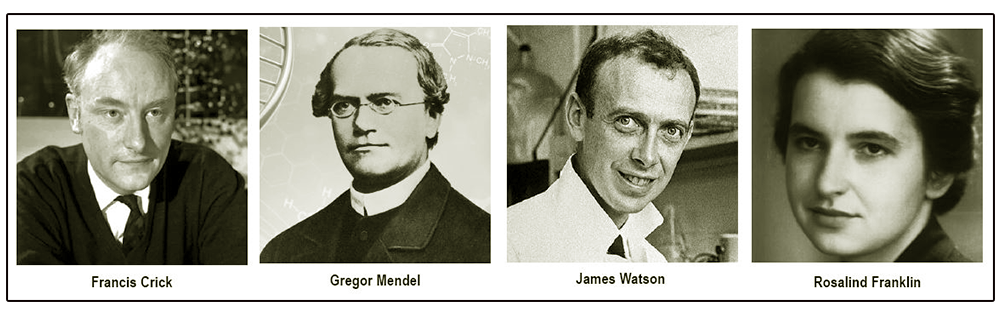
Gregor Mendal’s groundbreaking experiment
The Austrian mathematician cum botanist, Gregor Mendel was the first to conduct a systematic investigation to understand the cause of heredity. Being unconvinced of the traditional explanations, he carried out a series of experiments lasting eight years to determine how the traits (plant height, seed color, flower color etc.) of pea plants are transmitted from generation to generation. When Mendel cross pollinated tall and short plants, he found that the progeny was entirely tall. However, when first generation tall plants were allowed to self-pollinate, the missing short trait reappeared at a statistically significant probability of 25 percent. Mendel’s work provided an unequivocal proof that traits do not blend but exist as unique entities, manifested from generation to generation following a predictable mathematical pattern.
Mendel’s finding remained unrecognized for more than 30 years. His ideas were too far ahead of time and biologists were shy of mathematics. In the early 1900s several European botanists arrived at the same conclusion based on independent experiments. With the advancement of microscopy, a great deal of information about plant and animal cells was gathered. A key finding was the presence of colored bodies in the cell nucleus named chromosomes, seen separating during cell division, leading to the hypothesis that Mendel’s genetic units (genes) should be physical entities present in the chromosomes.
Chemists and biologists wondered what the genetic material in chromosomes made off. Is it a protein, carbohydrate or a lipid? Most biological materials are constituted of these substances.
Discovery of DNA
Great discoveries are made by unusual people. The Swiss Friedrich Miescher belonged to a clan of reputed physicians. Following family tradition, he qualified as a doctor but did not engage in profitable practice of medicine. He decided to do research to understand the foundations of life. In search for new biological substances, he experimented with pus deposited in bandages and extracted a substance rich in phosphates but very different from proteins. The new substance called “nuclein” was indeed DNA. Later, the German biochemist Albrecht Kossel following the Miescher’s work, showed that DNA contains four crucial compounds, adenine (A), cytosine (C), guanine (G) and thymine (T), known as nucleotide bases.
Avery – MacLeod – McCarthy Experiment
The flu pandemic of 1918 killed an estimated 50 million people worldwide due to the pneumonia that followed the viral infection. Pneumonia was caused by the virulent bacterium Streptococcus pneumoniae. The British bacteriologist, Frederick Griffith attempting to find a vaccine for pneumonia, worked with two strains of Streptococcus pneumoniae, one virulent causing pneumonia in mice, and the other avirulent to them. He found that neither the virulent strain denatured by heating nor the live avirulent strain injected into mice caused the disease, whereas a mixture of the denatured virulent strain and the live avirulent strain was deadly to mice just as the virulent one. He concluded that some chemical compound present in the virulent strain – a transforming principle – has changed the avirulent strain to the virulent strain.
In 1944, Oswald Avery, Colin MacLeod and Maclyn McCarty working at the Rockefeller University, United States, continued the work of Frederick Griffith to identify the transferring principle and found that it is not protein as widely believed, but deoxyribonucleic acid (DNA). Their result pointed to the conclusion that DNA is the carrier of genetic information.
A book by a physicist that triggered a transformation in biology
The insights of brilliant brains engaged in fundamental inquiry have opened the way for major scientific discoveries and technological innovations. In 1944, the Austrian theoretical physicist Erwin Schrodinger, one of the founders of quantum mechanics, published a book titled “What is life? The physical aspect of the living cell “. The American biologist Maurice Wilkins said he was so inspired by Schrodinger’s book and after reading it, he decided to switch from ornithology to genetics. While physicist Maurice was influenced to take up biology. Francis Crick was a physicist working on magnetic mines for the British Admiralty during the war. After reading “What is life” he thought a physicist could find treasures in biology and joined the Cavendish Laboratory in Cambridge to pursue a Ph.D.
Structure of the DNA molecule
When DNA was shown to be the molecular entity that encodes genetic information, chemists rushed to determine its structure.
The pattern formed when X-rays passing through a material cast an image on a screen, provides information about its molecular structure. In 1938, the English physicist William Astbury examined DNA using x-rays and concluded that the molecule has a helical structure. Having heard a group in the United Kingdom was attempting to unearth the structure of DNA, the American theoretical chemist, Linus Pauling, adopted Astbury’s data and proposed a model for the structure of DNA, publishing the results in the journal “Nature” in January 1953.
There was an obscure but remarkably talented person, Rosalind Franklin, pursuing x-ray diffraction studies on DNA at King’s College London. After a painstaking effort, she obtained accurate x-ray diffraction images of DNA. Her colleague, Maurice Wilkins, working in the same laboratory, passed the images to Francis Crick and James Watson at Cavendish Laboratory.
Crick and Watson were more insightful and theoretical in their approach to elucidating the structure of DNA. They, inspired by Erwin Schrodinger’s hypothesis, that the entity accounting for heredity should be an aperiodic molecular entity in cells, arrived at the double helix model, showing that Linus Pauling’s model was erroneous. The Crick – Watson model explained how DNA stores information and replicates during cell division. Their assertions were subsequently confirmed rigorously by experimentation. Crick, Watson and Wilkins received the Nobel Prize for Physiology and Medicine in 1962.
The work following the Crick – Watson model, firmly established that the DNA is a polymer string constituted of two strands made of a sugar- phosphate backbone, connected to each other by linkage nucleotide bases A, T, G, C. The base A links base T and G to C. When one strand is defined by the arrangement of bases, the complementary strand is defined. The arrangement bases store information analogously to a four-letter alphabet. Each individual in a species has a unique sequence of arrangement base pairs. The variation within the species is generally a fraction of a percent.
The Watson-Crick model also explained how the DNA molecule replicates. The two strands unwind and separate, and two complementary strands are inserted. The detailed dynamics of the replication process are not fully understood.
‘DNA is a cookbook’
DNA functions like a multiple – volume cookbook, written in a four-letter alphabet. The volumes are kept in a rack in the kitchen. The rack is the nucleus and volumes on it are the chromosomes, and the cell is the kitchen. A paragraph giving a recipe is a gene. Enzymes act as chefs, who read recipes and give instructions to cell machinery to prepare the dishes, which are proteins. The system is so complex; a complete macroscopic analogy would be impossible.
The significance of the Crick- Watson work
Until Charles Darwin proposed the idea of evolution, biology lacked a theoretical foundation. Darwin hypothesized, when organisms reproduce, the progeny inherit parental characters, but there are variations. The variants, though similar to the parents, have some new or altered characters. If these characters, originating from mutations or cross – breeding are favorable for survival in the environment, they dominate in the population, inheriting advantageous traits. Thus, random generation – to – generation, advancements of living organisms, become possible – a way of improving the design of things in a production process without a designer. Living systems store information and progeny retrieve them, when required. A bird hatched from an egg when matured, knows how to fly.
The discovery of DNA and understanding how it stores genetic information, replicates and mutates explained Darwinian evolution. A mutation is a change in the ordering of base pairs, accidentally during replication or due to external chemical or physical causes. In sexual reproduction, the offspring gets nearly half of its DNA from each parent. Consequently, the offspring does not have DNA identical to one parent. It mixes up DNA in the species. However, mutations generate new genes, driving evolution. Sexual reproduction and mutation acting in concert introduced the diversity of life on earth we see today.
Once science becomes explanatory and predictive, it opens the way for innovations. Theories of mechanics and electromagnetism formulated in the late 19th and early 20th centuries brought forth modern engineering, transforming it from an empirical craft to a scientific technological discipline. Before the discovery of DNA structure and its function, biological innovations were largely empirical. Today we have genetic engineering – genes in organisms can be manipulated. The goal of more advanced genetic engineering, referred to as synthetic biology, aims to induce major genetic changes to organisms by incorporating several genes to alter biochemical, physiological and anatomical functions. Gene technology is rapidly transforming medicine, agriculture and biotechnology. Cures have been found for diseases formerly branded incurable.
How did DNA come into existence
Life is believed to have originated in prebiotic oceans enriched with carbon and nitrogenous substances. How did DNA originate there? Today, chemists can synthesize DNA in minutes, via selective procedures, only humans can do with their knowledge. Even in a vast ocean containing trillions of times more molecular ingredients than in a test tube, a molecule as complex as DNA is most unlikely to be created by random events during the largest possible time scales of the universe. A plausible scenario would be DNA evolving from simpler self-replicating molecules such as RNA (a single strand of DNA) precursors. Unlike RNA, DNA is highly stable and good stability is necessary for the evolution of advanced forms of life.
Epigenetics
Earlier we pointed out there are two golden sayings in our culture: “Arae gathi nare” and “Jammeta wada lokuei purudha (“Hereditary characters persist” and “Habits overtake heredity “). The first is a consequence of our genetic predisposition determined by DNA and explicit genes. However, the character of an individual is also influenced by the physical, social and cultural environment. Although completely non-genetic, our children frequently follow habits we indulge in. Again, the behavior of an individual is also influenced by the physical, social and cultural environment.
The environmental factors also trigger or silence genes. The study of this important genetic effect, which does not alter the sequence of base pairs, is referred to as epigenetics. Epigenetic effects could be deleterious or beneficial. Sometimes, chronic stress causes disease, including cancer. Research suggests engagement in creative and imaginative activities, and establishes favorable epigenetic changes in the brain. Inheritance is dictated mainly by the arrangement of base pairs in DNA. Epigenetic changes involve chemical changes in DNA without altering the sequence. These alterations are erasable but allow transmission to subsequent generations.
Conclusion: World DNA day message to lawmakers
The discovery of the structure of DNA stands as one of the most significant scientific discoveries in human history. It is a lesson to all those involved in research and education, telling how great discoveries originated. It is intense curiosity, imagination and preparation rather than mere indulgence in technologies that clear the path for discovery and innovation. A society that advocates policies conducive to discoveries, also develops new technologies that follow. If we just borrow technologies from places where they originated, hoping for quick economic returns, the effort would be a gross failure. Students, determined to be the best judging from exam performance, engage in professional disciplines and perform exceptionally. Why are we short of discoveries and innovations in those disciplines? Will our lawmakers ever realize the issue? They need to wonder why we are weak in science and poor in innovation. Right policies can even reverse adverse epigenetic attributes propagating in a society!
By Prof. Kirthi Tennakone
ktenna@yahoo.co.uk
National Institute of Fundamental Studies
REVIEWED BY Prof. Rajiva Wijesinha
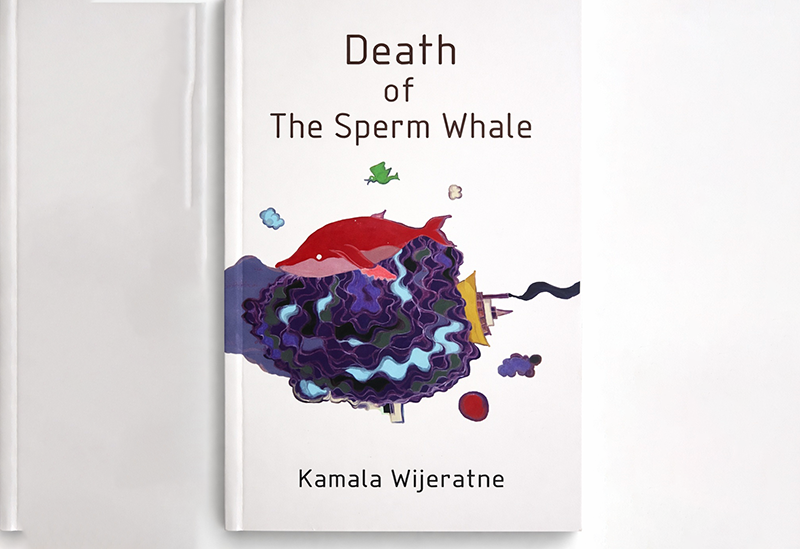
Earlier this year, I sent her most recent book by an old friend, Kamala Wijeratne. Death of the Sperm Whale is her first book of poetry in four years, though in between she has published fiction, two books though both of them too were slim volumes. I am full of admiration for her in that she keeps going, the last of the poets whom I helped to a wider readership in the eighties, when I championed Sri Lankan writing in English, something hardly any academic was prepared to do in those conservative days.

Kamala Wijeratne
Kamala’s subjects are those she has explored in the past, but the use of the plural indicates that her range is expansive. She dwells much on nature, but she deals also with political issues, and engages in social criticism. There are several poems about Gaza, the multiple horrors occurring there having clearly affected her deeply. She repeatedly draws attention to the slaughter of children, the infants sent by God only to be taken back. And she deals with the destruction of the life of a doctor, after his healing, a theme that has kept recurring in the ghastly world which is subject to the whims of the incredibly nasty Netanyahu.
The title poem is about a whale destroyed by ingesting plastic, a tragedy to which we all contribute, though those who ‘loll on the beach, their senses dulled by the burgers they eat’ could not care less. More immediate is the simple account of a friend whose infant had died in hospital, when they diagnosed pneumonia too late.
Contrasting with these urgent statements are Kamala’s gentle perceptions, as when she writes of her son supporting her as she walks, while she thinks back to the days she supported him; of a marigold growing in a crack in a shrine, offering obeisance with its golden flowers to the Noble One; of birds investigating her dining room and deciding not to build there, the male lingering ‘confused and irritated’ but eventually following the female through the window for ‘She was mistress after all.’
She is deeply interested in the passing of time, and its impact on our perceptions. The first poem in the book is called ‘First Poem of 2024’ when she ‘heard the weeping of the dying year’, and went on to meditate on how we have categorised the passing of time, while the universe moves on regardless.
She welcomes the return of the Avichchiya, the Indian Pitta, a bird that has figured previously in her poetry, after six months, but this time she spares a thought for his case against the peacock, which stole his plumes.
There are two personal poems, one about a former student who turned her back on her when she had achieved success, the other about being nominated for a literary award, but not getting it after the excitement of attending the Awards Ceremony. Swallowing her disappointment, she congratulates the winner, noting that she will not go into ecstasies the next time she is nominated.
Paraphrase cannot do justice to Kamala Wijeratne’s gentle touch, which has expanded its reach over the years. So,A I will end by quoting from her tribute to Punyakante Wijenaike, another of the distinguished ladies whose work I promoted, the one before the last to leave us. The tribute ends, recalling her most impressive work Giraya,
Like the nutcracker
That makes a clean cut
You cut the human psyche
To reveal its darkest depths
by Kamala Wijeratne

On the occasion of World Earth Day, the conversation around sustainability often turns to forests, oceans, and climate. Yet, one of the most critical resources sustaining life remains largely unnoticed – soil. Beneath every thriving crop and every secure food system lies a complex, living ecosystem that quietly performs functions essential not just for agriculture, but for the health of the planet itself.
Soil is far more than a passive medium for plant growth. It is a dynamic and living system, teeming with microorganisms that drive nutrient cycling, regulate water movement, and support biodiversity at multiple levels. It acts as a natural reservoir, storing carbon and playing a crucial role in mitigating the impacts of climate change. The productivity, resilience, and long-term viability of agriculture are intrinsically tied to the health of this foundational resource.
However, decades of intensive agricultural practices have begun to take a visible toll. The increasing pressure to maximize yields has often led to excessive and imbalanced use of fertilisers, particularly nitrogen-heavy inputs. While these may provide short-term gains, their prolonged and unchecked use has resulted in significant nutrient imbalances within the soil. Essential micronutrients are depleted, soil organic carbon levels decline, and the rich microbial life that sustains soil fertility begins to diminish. The result is a gradual but steady erosion of soil health – one that ultimately reflects in reduced productivity and increased vulnerability of crops to stress.
Parallel to the challenge of soil degradation is the growing concern of water scarcity. Agriculture remains the largest consumer of freshwater resources, and inefficient irrigation practices continue to strain already depleting groundwater reserves. In an era marked by climate variability, erratic rainfall patterns, and increasing frequency of droughts, the need for efficient water management has never been more urgent.
Adopting scientifically sound and resource-efficient practices offers a clear pathway forward. Techniques such as rainwater harvesting and precision irrigation systems – like drip and sprinkler methods – enable farmers to optimize water use without compromising crop health. Complementary practices such as mulching and proper field levelling further enhance moisture retention and reduce water loss, ensuring that every drop contributes effectively to plant growth.
Equally important is the shift towards a more balanced and holistic approach to nutrient management. Soil testing must form the backbone of fertiliser application strategies, ensuring that crops receive nutrients in the right proportion and at the right time. Integrating organic sources – such as farmyard manure, compost, and green manure – helps replenish soil organic matter, improving both soil structure and its capacity to retain water and nutrients.
Sustainable soil management also extends to cultivation practices. Reduced or minimum tillage helps preserve soil structure, while crop rotation and intercropping promote biodiversity and break pest and disease cycles. The inclusion of cover crops protects the soil surface from erosion and contributes to organic matter buildup, reinforcing the soil’s natural resilience.
In recent years, there has also been growing recognition of the role played by biological and enzymatic inputs in enhancing soil health. These inputs stimulate beneficial microbial activity, improve nutrient availability, and increase nutrient use efficiency. By reducing dependence on excessive chemical fertilisers, they offer a pathway toward more sustainable and environmentally responsible farming systems. The transition to sustainable agriculture is not merely a technical shift – it is a collective responsibility.
Farmers, scientists, industry stakeholders, and policymakers must work in tandem to promote awareness and facilitate the adoption of practices that conserve soil and water resources. The long-term sustainability of agriculture depends on decisions made today, at both the field and policy level. As we mark World Earth Day, the message is clear: the future of agriculture is inseparable from the health of our soil and the stewardship of our water resources. A fertile, living soil is not just the foundation of productive farming – it is the cornerstone of ecological balance and food security. Protecting it is not an option; it is an obligation we owe to generations to come. (The Statesman)
(The writer is Chairman Emeritus, Dhanuka Agritech.)

Iran says ‘fully prepared’ for football team’s World Cup participation

LA 2028 Olympic cricket stadium in IPL proposal

Oil rises above $106 per barrel as US, Iran deadlocked in Strait of Hormuz

UAE captain Waseem fined and handed demerit point for criticising umpiring

Shanto century, Mustafizur five-for seals series win for Bangladesh

Showers above 75 mm are likely at some places in the Western, Sabaragamuwa, Central, North-western and Southern provinces

‘Dates have the highest sugar content to fight Coronavirus’

Sunday Island 27 December – Headlines

#SundayIsland 17th December – Headlines

Sunday Island – 28th March

Sunday Island Headlines – 21 March

Sunday Island – 21st February – Headlines
-

 News4 days ago
Rs 13 bn NDB fraud: Int’l forensic audit ordered
-

 Business7 days ago
Harnessing nature’s wisdom: Experts highlight “Resist–Align” path to resilience
-

 Opinion5 days ago
Shutting roof top solar panels – a crime
-

 News7 days ago
Gratiaen Trust announces longlist for the 33rd Annual Gratiaen Prize
-

 News6 days ago
From Nuwara Eliya to Dubai: Isha Holdings markets Agri products abroad
-

 News2 days ago
Lanka faces crisis of conscience over fate of animals: Call for compassion, law reform, and ethical responsibility
-

 News5 days ago
Church calls for Deputy Defence Minister’s removal, establishment of Independent Prosecutor’s Office
-

 News15 hours ago
No cyber hack: Fintech expert exposes shocking legacy flaws that led to $2.5 million theft