
News
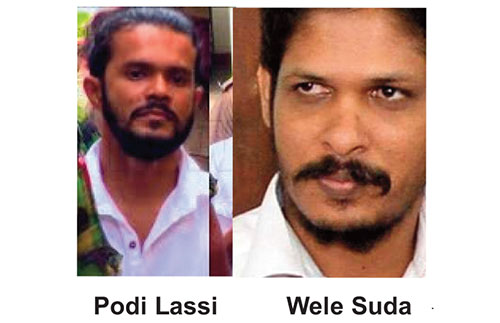
‘Wele Suda’, ‘Podi Lassi’ seek court protection following deaths of fellow criminals in police custody

Justice Minister endorses BASL’s concerns over ‘extra-judicial killings’
by Shamindra Ferdinando
The Court of Appeal will take up the high profile case of convicted prisoner Gampola Vicarage Samantha Kumara alias Wele Suda’s legal bid to prevent him being handed over to the police on Monday (24). ‘Wele Suda’ recently moved the court, successfully, through his mother, Rajagalgoda Gamage Malani, in the wake of two killings in police custody.
Referring to the killing of Dineth Melon Mabula alias ‘Uru Juwa’ and Dharmakeerthi Tharaka Perera Wijesekera alias Kosgoda Tharaka, on May 11 and 13, respectively, Saliya Pieris, recently elected President of the Bar Association (BASL) said: “These deaths have all the hallmarks of extra-judicial killings and we call upon the State to ensure the safety and security of persons in their custody.”
The BASL issued a comprehensive statement in this regard.
The Court of Appeal directive, in respect of a writ petition filed on behalf of the convicted person (Wele Suda) was issued on May 17.
‘Wele Suda’ is held at the maximum security Boossa prison, one-time detention facility used to detain those apprehended in connection with the second JVP-led insurrection. The Court of Appeal issued an interim directive to prevent the police from taking custody of ‘Wele Suda’ effective till May 24. The bench consisted of Justice Arjuna Obeysekara and Justice Priyantha Fernando.
Romesh de Silva, PC, who appeared for Wele Suda’s mother told court that his client feared for the life of her son that he, too, would be killed the way several others were dealt with. The top lawyer sought an interim order as his client was deeply concerned over the imminent handing over of her son to the police.
The head of a 9-member committee tasked with formulating a new draft Constitution, de Silva explained how the continuing deaths of persons handed over to the police troubled his client who believed her convicted son sentenced to death couldn’t be handed over to the police.
The petitioner has named Inspector General of Police, Commissioner General of Prisons, Superintendent Boossa Prison and the Attorney General as respondents.
In response to The Island query Justice Minister Ali Sabry, PC, said that he endorsed the views expressed by the President of the BASL. The Minister said; “No one should take the law into their own hands and everyone should be answerable.”
The late Kosgoda Tharaka’s alleged links transpired in investigations into the recovery of the largest weapons cache ever from the underworld in late June 2020. Police commandos recovered 11 T-56 assault rifles and one T-81 hidden in a building at Pitipana, Homagama. The police subsequently recovered some more weapons and ammunition though the inquiry remains stalled.
Attorney-at-law and civil society activist Senaka Perera told The Island that Kosgoda Tharaka had been the second prominent suspect killed after being handed over to some other police unit by the Criminal Investigation Department (CID). Lawyer Perera said that Samarasinghe Arachchige Madush Lakshman aka Makandure Madush, who had been in the custody of the CID since early May 2019, was killed soon after he was handed over to the Colombo Crime Division (CCD). Kosgoda Tharaka, too, had been held by the CID and was recently handed over to the Peliyagoda Special Crimes too died in custody. The latter was also involved in killing of a policeman during a botched jewellery shop robbery at Matara.
Perera charged that the National Police Commission (NPC) chaired by retired IGP Chandra Fernando seemed to be in deep slumber. He said that in his capacity as the President, Committee for Protecting Rights of Prisoners, he took up the issue at hand with the NPC.
Lawyer Perera said that Police headquarters owed an explanation on how suspects died after being transferred from the custody of one police unit to another. Responding to another query, Perera underscored the danger in exposing a convicted person to a life threatening environment. He cited the writ application filed in respect of ‘Wele Suda’ as a bid to prevent another death in custody.
The Court of Appeal on April 05, 2019 rejected an appeal filed by ‘Wele Suda’ over the death sentence imposed on him by the Colombo High Court in 2015 for the possession of heroin.
In the backdrop of effort to prevent the police taking the custody of ‘Wele Suda,’, President’s Counsel Saliya Pieris appeared in the Court of Appeal on Thursday (20) on behalf of Janith Madushankar alias Podi Lassi. Pieris brought to the notice of justices, Sobitha Rajakaruna and Dhammika Ranepola the most recent killings in police custody of ‘Uru Juwa’ and ‘Kosgoda Tharaka’.
Pieris sought judicial intervention to ensure safety and security of his client against the backdrop of high profile killing in police custody. The lawyer requested that the court directed the IGP to transfer his client from the Custody of the CID to another unit.
Deputy Solicitor General Dileepa Peiris who appeared on behalf of the outgoing Attorney General Dappula de Livera, PC, assured the court the matter would be taken up with the IGP. The case will be taken up on June 16.
The Island sought the opinion of Nalin Ladduwahetty, PC, regarding the death in police/judicial custody and legal representations for underworld figures and those involved in narcotics –related offenses. Condemning deaths in custody, PC Ladduwahetty emphasized that every suspect or accused in a case had a right for legal representation. The presumption of innocence operated at all times until a competent court found one guilty.
Chrishmal Warnasuriya explained that no one should die in police custody or otherwise except by the due process followed in terms of the law- a sentence issued by a court of law. Warnasuriya also underscored the responsibility on the part of the lawyers to appear before those who sought their advice. Dismissing what he called the widespread assertion the lawyers were supposed to lie for their clients, Warnasuriya said their responsibility was to present their clients version of events before a court of law. “The decisions are taken by court,” the lawyer who appears for W.U.C. Premasiri, Sub Inspector of Police held by the CID in connection with the controversial Police Narcotics Bureau (PNB) dealing in heroin case said. The SI has been held in terms of Detention Orders issued in terms of the Prevention of Terrorism Act (PTA). Warnasuriya emphasized that a lawyer as an officer of court couldn’t turn away cases and refusal only subjected to some professional limitations, which do not apply in the present instance. The basic principle is that all should be afforded legal representation regardless of the offense and circumstances, Warnasuriya said.
Meanwhile, during parliamentary proceedings on Thursday (20), Field Marshal Sarath Fonseka faulted Public Security Minister Rear Admiral Sarath Fonseka for deaths in police custody. The former Army Commander said that those who had been arrested by the police during the yahapalana administration were killed under controversial circumstances.

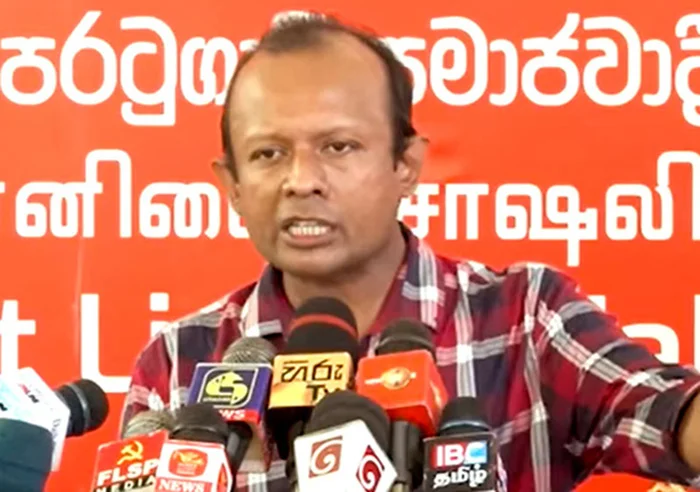
The Frontline Socialist Party (FSP) yesterday accused the government of seeking to use the proposed Protection of the State from Terrorism Act (PSTA) to suppress popular political activity, claiming that some of its provisions were more repressive than those of the Prevention of Terrorism Act (PTA).
FSP Education Secretary Pubudu Jayagoda told a media briefing, in Nugegoda, that the definition of terrorism in the Bill was so broad that it could be used to label almost any form of popular political activity as terrorism.
He said the Bill’s approach to defining terrorism was based largely on attempts to compel a government, or an international organisation, to do, or refrain from doing something, rather than on internationally recognised criteria, such as killings, causing serious bodily harm, kidnapping or acts intended to spread terror among the public.
Jayagoda also alleged that the Bill transferred substantial powers from the judiciary to the executive, while extending powers of arrest, investigation and detention to the armed forces, in addition to the police.
He claimed that the government had sought to portray the Bill as a replacement for the PTA while retaining or introducing provisions that could facilitate political victimisation and repression.
The FSP also questioned the government’s decision to proceed with the Bill, despite having previously sought public views on an earlier draft.
Jayagoda said a draft had been published earlier this year, with the period for public submissions ending on February 28, but the Bill subsequently gazetted was essentially the same draft with some provisions rearranged.
Jayagoda also referred to a letter reportedly sent by Attorney-at-Law Saliya Peiris, a member of a Committee, chaired by President’s Counsel Rienzie Arsecularatne, that had been appointed to draft the legislation. He said Peiris had stated, in the October 06 letter, that changes had been made to the draft prepared by the Committee.
“This means that even the Committee, appointed to prepare the Bill, was a deception,” Jayagoda alleged.
He said that the PSTA was fundamentally similar to the Anti-Terrorism Bill introduced by the previous government, in 2023, which the National People’s Power (NPP) opposed and challenged in court.
“If the NPP opposed that Bill then and is now bringing the same legislation before Parliament, the government must explain its position,” he said.
Jayagoda called on NPP MPs to oppose the PSTA in Parliament and urged trade unions and other groups to build a broad public movement against the legislation.
He challenged the government to an open debate on the Bill.
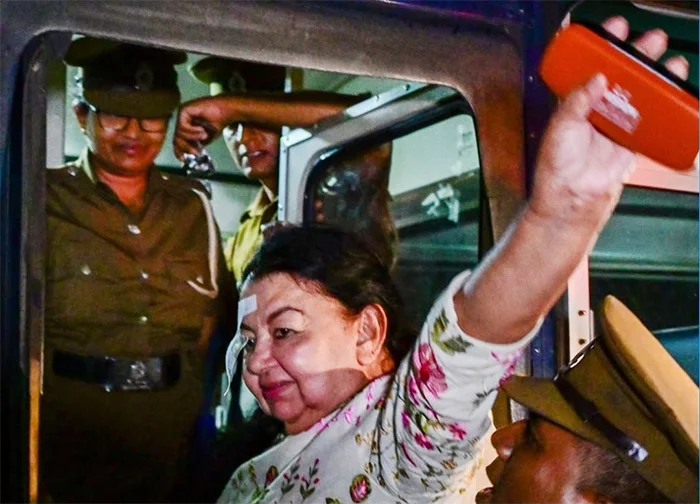
Former First Lady Shiranthi Rajapaksa was yesterday remanded until 13 October after being produced before the Colombo Magistrate’s Court following her arrest by the Commission to Investigate Allegations of Bribery or Corruption (CIABOC).
Shiranthi, wife of former President Mahinda Rajapaksa, was arrested at her residence on Poorwarama Road, Kirulapone, after CIABOC officers recorded a statement from her for nearly two hours.
According to the CIABOC, the arrest was made over allegations that Rs. 10 million obtained from the National Savings Bank through the Siriliya Saviya organisation was misappropriated.
The money was allegedly obtained to provide a Computed Tomography (CT) scanner to the children’s hospital. Investigators allege that the scanner was not provided and that the funds were instead unlawfully used.
CIABOC is investigating alleged offences under the Public Property Act and corruption-related provisions in connection with the transaction and other financial activities involving Siriliya Saviya, which was headed by Rajapaksa.
Rajapaksa returned to Sri Lanka on Monday night on a flight from Malaysia after travelling overseas for medical treatment. She left for Singapore on 16 September after being admitted to a private hospital in Colombo on 15 September following an illness.
She had been due to appear before the Financial Crimes Investigation Division (FCID) on 13 October in connection with its investigation into the financial affairs of Siriliya Saviya.
Meanwhile, her lawyers filed an anticipatory bail application before the Maligakanda Magistrate’s Court on Monday, seeking an order preventing her arrest in connection with the FCID investigation.
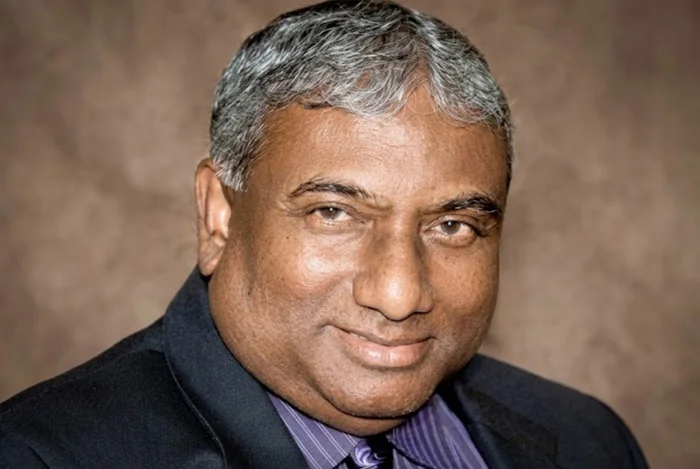
Former National Savings Bank (NSB) Chairman Pradeep Kariyawasam was yesterday granted bail by the Colombo Magistrate’s Court following his arrest by the Commission to Investigate Allegations of Bribery or Corruption (CIABOC).
Kariyawasam, husband of former Chief Justice Shirani Bandaranayake, was arrested in connection with the Bribery Commission’s investigation into the ‘Siriliya Saviya’ account linked to former First Lady Shiranthi Rajapaksa.
The investigation concerns financial activities involving the Siriliya Saviya initiative, which was headed by Rajapaksa, wife of former President Mahinda Rajapaksa.
CIABOC is continuing investigations into the alleged financial irregularities relating to the account.

Showers above 100 mm are likely at some places in the Western, Sabaragamuwa, Central, Uva and Southern provinces and in Anuradhapura district

PSTA worse than PTA: FSP

Shiranthi R remanded until 13 Oct.

Former NSB Chairman Kariyawasam granted bail

Katchatheevu row: India SC urges fishermen to avoid Sri Lankan waters

Remembering Juvenal, Coke, Acton and Machiavelli

‘Dates have the highest sugar content to fight Coronavirus’

Sunday Island 27 December – Headlines

#SundayIsland 17th December – Headlines

Sunday Island – 28th March

Sunday Island Headlines – 21 March

Sunday Island – 21st February – Headlines
-

 Editorial6 days ago
Colombo Port drug bust: The plot thickens
-

 Features4 days ago
The first woman in the foreign service or Ceylon Overseas Service it was then called
-

 Editorial5 days ago
Fuelling discontent and protest
-

 News3 days ago
Geneva takes up Sallay’s case and govt. ignores opportunity to answer accusations
-

 Latest News5 days ago
Tharindu Rathnayake, bowlers secure Asian Games Bronze for Sri Lanka
-
 Foreign News5 days ago
Ten injured after car crashes into rugby supporters in Australia
-

 Features3 days ago
Sri Lanka Cricket Bill: Governance reform is not yet a cricket strategy
-

 News4 days ago
Nearly 20 Iranian tankers stranded off Lanka amid US sanctions