
Sports
25 years from the formation of first Cricket Interim Committee


by Rex Clementine
This year marks the 25th anniversary of the appointment of the first ever Cricket Interim Committee. Ironically, the man who was chosen to Chair that committee, although a keen follower of the game, had little experience in its administration. Rienzie T. Wijetilleke is his name.
Orders to appoint Wijetilleke, then the Chairman of Hatton National Bank, came directly from the Country‘s President, Chandrika Kumaratunga who was well acquainted with his “no nonsense” approach to discipline and accountability.
The year 1999 seriously marred the hard earned reputation of the Board of Control for Cricket in Sri Lanka (BCCSL) which also had an impact on our players.
Authentic allegations of growing corruption since the World Cup was won in 1996 were compounded by violence at the Annual General Meeting in March 1999, and the image of the Board had descended to its lowest ever both at home and in the eyes of the International Cricket Council (ICC).
The President’s reaction was swift and decisive as she dissolved the entire Board and appointed the first ever Interim Committee to administer cricket.
To make matters worse, defending World Champions Sri Lanka fared disastrously in the ICC World Cup in the UK in May of that year crashing out of the tournament in the preliminary rounds signalling that it was time for some of our heroes of 1996 to be accorded a graceful exit and change ushered in.
Wijetilleke ‘s hand was hugely strengthened by the appointment of the other members to the Committee, with reputed names as S. Skandakumar (a vastly experienced Hony Secretary of Board of Control for Cricket), Sidath Wettimuny, Michael Tissera, Ashantha de Mel (national cricketers of excellent standing) and Kushil Gunasekera (a proven track record for meticulous planning of international events at home)
Wijetilleke introduced checks and balances to Maitland Place through strong foolproof structures and left the cricketing side of the game to his knowledgeable colleagues.
The appointment of Sidath Wettimuny as Chairman of selectors gave early notice of the major changes that were in store and after offering Arjuna Ranatunge the opportunity to graciously step down as captain, which he refused to do, Sidath and his committee, supported by the Interim Committee removed him and appointed a young Sanath Jayasuriya as captain.
A new era was indeed on the horizon but there was work yet to be done.
With a nucleus of young players as Mahela Jayawardena, Kumar Sangakkara, T.M. Dilshan Chamara Silva etc emerging, the Interim Committee was unanimous that Dav Whatmore coach of the World Cup winning team had to be brought back.
Skandakumar, attending the ICC AGM at Lord’s in June 1999 was mandated by the Interim Committee to meet Whatmore, who was on contract to Lancashire, and negotiate for his return.
This is what Wijetilleke wrote in his memoirs on that visit. “Skanda in his significant role as ambassador of goodwill was able to achieve a great deal in restoring the credibility and image of the Board of Control for Cricket in the eyes of the ICC.
“He was also able, acting on a mandate of the committee, to successfully negotiate for the return of Whatmore as National Coach for three years from August 1999.”
Whatmore’s return had an instantaneous impact as in a triangular tournament in the same month with World Cup champs Australia and India participating, Sri Lanka emerged victorious. Shortly thereafter when the first ever Test series win against Australia was registered at home, these meaningful changes were indeed bearing fruit and a new era for our cricket both on and off the field had dawned!
Wettimuny’s mature judgement ensured the presence of Arjuna and Aravinda for that Test series to help humble Steve Waugh’s champion side!
With our credibility restored, the ICC entrusted the Board of Control for Cricket, the responsibility to host the ICC Under-19 World Cup that had no less than 16 international teams participating .
This challenge was met to perfection thanks to the leadership Kushil Gunasekera provided where every detail was addressed and the tributes paid by the ICC at the conclusion of that tournament spoke for themselves.
Our national team in the months following the Test series win against Australia toured Zimbabwe and Pakistan for similar series and returned triumphant in both.
Sadly if not tragically, in spite of all of these, the Interim Committee had continuing differences with the then Sports Minister S.B Dissanayake on his own agendas and after a remarkably successful tenure the entire committee resigned en masse after twelve months in Hony office in May 2000.
At the time of that resignation they held the following positions in their substantive jobs: Rienzie T. Wijetilleke – Chairman, Hatton National Bank, S. Skandakumar – Chairman, George Steuart’s Group, Michael Tissera – Senior Director, Tea Tang, Sidath Wettimuny – Chairman and MD, Noble Group Exports, Ashantha de Mel – Co-Owner, Asia Couture Exports, Kushil Gunasekera – Chairman, Foundation of Goodness.
The loss was very much Sri Lanka’s but these exceptional gentlemen left a legacy that reminded all that Honorary Office was indeed holding Office with Honour!









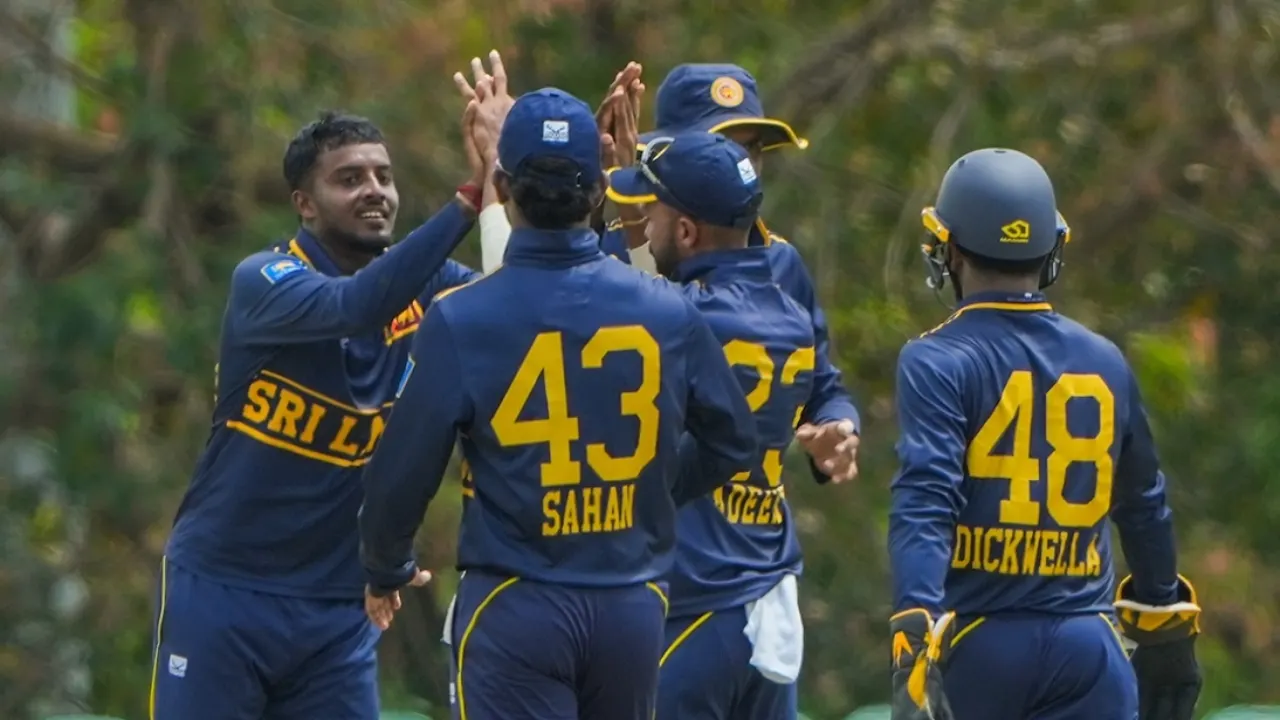
Opening batter Sineth Jayawardena has charged into the Sri Lanka T20I squad for the series against Pakistan, while Vijayakanth Viyaskanth has claimed the legspinner’s spot in the absence of the injured Wanindu Hasaranga. Seam-bowling allrounder Chamindu Wickremesinghe has also been named, as has batter Sahan Arachchige, while seamer Binura Fernando makes a return.
Omitted from the the squad were the likes of batter Charith Asalanka, fast bowler Dilshan Madushanka, ambidextrous spinner Tharindu Rathnayake, and batting allrounder Janith Liyanage.
Fast bowler Dushmantha Chameera was named in the squad, but his participation is subject to fitness.
Jayawardena, 21, has got his call-up because of an outstanding recent run in domestic T20s. In the past month, he has struck 101 off 52 and 82 off 32 for Tamil Union Cricket Club in the club T20 competition. He has played a single T20I, at the ongoing Asiad, but otherwise has never been part of a full-strength Sri Lanka side.
Others, such as Wickramasinghe, Arachchige, and Viyaskanth have earned their call-ups through years of performance at domestic level. Each of these players has appeared in T20 internationals for Sri Lanka before, but with the national team having had little success in this format in 2026, this inclusion represents their best chance yet to embed themselves within the side.
The three T20Is, which are all set to be played in Rawalpindi, will begin on October 9.
Sri Lanka squad :
Kamil Mishara, Sineth Jayawardena, Kusal Mendis (capt.), Lahiru Udara, Sahan Arachchige, Kamindu Mendis, Dasun Shanaka, Chamindu Wickramasinghe, Dunith Wellalage, Maheesh Theekshana, Vijayakanth Viyaskanth, Binura Fernando, Nuwan Thushara, Eshan Malinga, Dushmantha Chameera (subject to fitness)
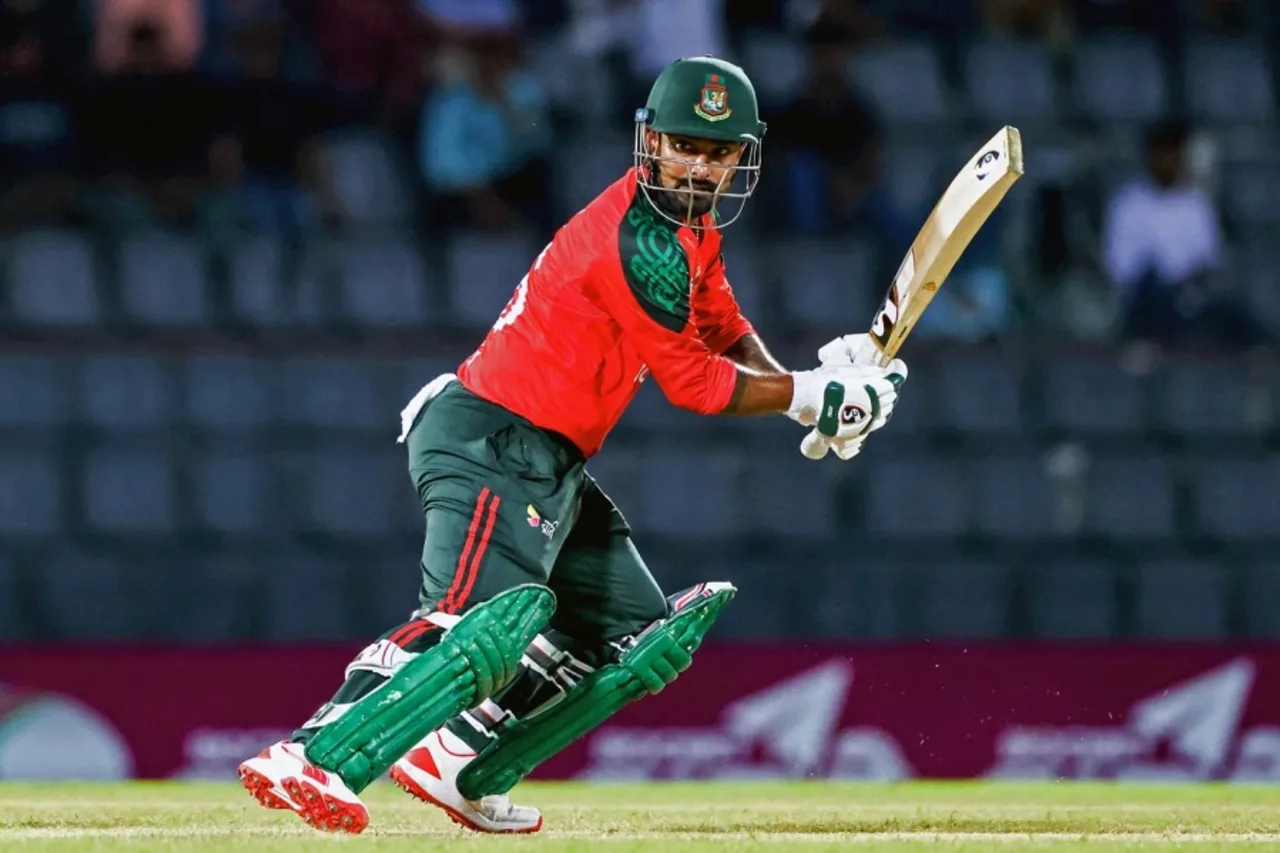
At the end of a wretched week in Nisshin, Bangladesh and Sri Lanka have something real to play for: an Asian Games bronze.
Both teams have a point to prove. Bangladesh recovered well from a poor start in their semi-final against Pakistan, thanks to Towhid Hridoy’s efforts with the bat, but their bowlers couldn’t defend 111 in a 13-overs-a-side game, and Mustafizur Rahman was taken to the cleaners in one of his rare poor outings in T20Is.
But at least they ran Pakistan close. In the other semi-final, India ran riot over Sri Lanka, bowling them out for 45. Sri Lanka had a second-string side on the field, but they wouldn’t have bargained for the basic mistakes they made, like the three run-outs in their innings.
Bangladesh, who can call on most of their first-choice players, start the third-place match as clear favourites, but the testing conditions at Nisshin can even up contests that look one-sided on paper. And both teams will have the motivation of bringing joy to contingents that have endured mostly barren Asian Games campaigns.
After a run-less Australia tour where Litton Das made three ducks in a row in the Test series, he was out for 2 against Pakistan. Litton faced just three balls, off which he attempted two reverse-sweeps, the second of them costing him his wicket. It was a perplexing innings on a pitch that offered a lot of turn and awkward bounce. Sometimes it’s hard to say if a batter is really out of form when he’s made a string of low scores, but Litton, who has led Bangladesh impressively in this format over the last couple of years, will want to break out of this run quickly.
Sahan Arachchige couldn’t quite muster up a captain’s performance against India, especially after his top three batters fell for ducks. He scored 9 before falling to a sweep shot against Axar Patel. He had earlier taken two wickets with his offbreaks. The 30-year-old allrounder now has the chance to put together a better show and inspire his team to the bronze.
Both teams could test their bench strength in the bronze-medal match.
Sri Lanka (probable): Sineth Jayawardena, Lasith Croospulle, Sohan de Livera (wk), Nuwanidu Fernando, Sahan Arachchige (capt), Ashen Bandara, Chamika Karunaratne, Wanuja Sahan, Tharindu Ratnayake, Vijayakanth Viyaskanth, Binura Fernando.
Bangladesh (probable): Tanzid Hasan, Saif Hassan, Litton Das (capt), Parvez Hossain Emon (wk), Towhid Hridoy (c), Mosaddek Hossain, Mahedi Hasan, Rishad Hossain, Aliss Al Islam/Nasum Ahmed, Shoriful Islam, Mustafizur Rahman/Hasan Mahmud.
[Ceicinfo]

The Wanderers Stadium in Johannesburg will host the 2027 ODI World Cup final, as it did in 2003, as well as the marquee match between India and Pakistan on October 10 at next year’s tournament. Wanderers, South Africa’s biggest ground with a capacity of over 30,000, has been preferred over Newlands in Cape Town, an iconic ground because of its mountain backdrop.
Newlands will instead host the opening match between India and defending champions Australia on October 7. So, a re-match of the 2023 final kicks off the group stage of the 14th edition of the tournament. Prior to that, the Namibia Cricket Ground in Windhoek will stage the Super Series, a three-team preliminary round which will decide which side makes it to the 12-team main event. Newlands gets a semi-final as well on November 17, with the other knockout game scheduled to take place in SuperSport Park in Tshwane (Centurion) on November 18. Zimbabwe, the co-hosts, are getting five games in the World Cup group stage and they play all of them at home.
The 12 teams – two of whom have yet to be decided – will be divided into two groups of six. Afghanistan, Australia, India, Pakistan, Zimbabwe and one of the qualifiers make up Group A. Bangladesh, England, South Africa, Sri Lanka, New Zealand and the other qualifier make up Group B. The two qualifiers will come from a 10 team tournament early next year, with the winner advancing to the group stage and the losing finalist and two losing semi-finalists to play the Super Series. A venue for the qualifiers has yet to be established but it is likely to be played either in South Africa or Namibia. The top eight teams besides the co-hosts in the ICC rankings on September 30 this year gained automatic qualification to the World Cup.
The World Cup will be staged between October 2 – to commemorate the birthday of Mahatma Gandhi, who spent two decades working as a lawyer in South Africa – and will conclude on November 21. The semi-finals and the final will have a reserve day.
South Africa, the co-host in group B, begin their campaign against New Zealand – a re-match of the 2026 T20 World Cup semi-final – at Newlands on October 9. Zimbabwe, the co-host in group A, will face Afghanistan in Bulawayo on October 11 to start their journey.
The top three teams of each group will move into the Super 7 phase, with the better fourth-place finisher across the two groups taking the seventh spot. Several teams already have their designations for the Super 7 phase and there is a chance of a second India vs Pakistan game in Cape Town on November 7.
- A1: India
- A2: Australia
- A3: Pakistan
- AB4: England
- B1: New Zealand
- B2: South Africa
- B3: Sri Lanka
If either Bangladesh or Afghanistan or any other team who are not seeded, get through their groups, they will assume seeding of the seeded team that gets knocked out.
In addition to hosting the preliminary round of the World Cup, Windhoek will host three group games, two of them involving 2019 champions England. The newly constructed Mosi-oa-Tunya Stadium in Victoria Falls, Zimbabwe got the final game of the group stages – India vs Zimbabwe on October 24 and three Super 7 matches. According to the ICC’s pre-seeding, these will be India vs Australia on October 28, Pakistan vs England on October 30 and Australia vs New Zealand on November 1.
There will be five matches played at Durban, including the final one of the Super 7 between A1 (India) and B3 (Sri Lanka) on November 14. In all there are 12 venues – Windhoek in Namibia, Victoria Falls, Harare and Bulawayo in Zimbabwe and Cape Town, Paarl, Johannesburg, Tshwane (Centurion), Bloemfontein, Durban, KuGompo City (East London) and Gqeberha (Port Elizabeth).
[Cricinfo]

Ambassador of the UAE to Sri Lanka meets with the Prime Minister

EU rejects Trump’s diesel demand amid Iran war shortages

Sineth Jayawardena, Vijayakanth Viyaskanth in Sri Lanka squad for Pakistan T20Is

Bronze at stake as Bangladesh, Sri Lanka look to bring cheer to Asian Games contingents

Wanderers to host 2027 men’s ODI World Cup final as well as India vs Pakistan

Prime Minister joins Gandhi Jayanti Commemoration

‘Dates have the highest sugar content to fight Coronavirus’

Sunday Island 27 December – Headlines

#SundayIsland 17th December – Headlines

Sunday Island – 28th March

Sunday Island Headlines – 21 March

Sunday Island – 21st February – Headlines
-

 Editorial7 days ago
Birth of a bad law
-

 News5 days ago
Police remove Thileepan statue in Jaffna
-
 News7 days ago
TIN mandatory for key transactions from Nov. 1
-

 Features5 days ago
The 22nd Amendment, constitutional recovery and illiberal slippage
-

 Features5 days ago
Of foreigners as CEOs of Lankan ventures
-

 Latest News3 days ago
Gold winner Tharanga gets brand-new Honda Vezel from SLAAJ
-

 News5 days ago
Sajith rejects Jt. Opp. protest sabotage claim; SJB TU chief demands remedial action
-

 Features4 days ago
Thailand’s biggest new global star …