
Features
2025 Budget: Challenges, hopes and concerns

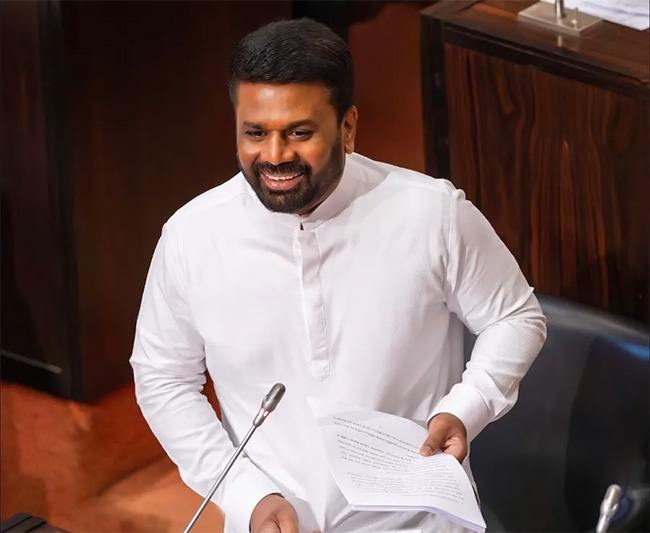
 Sri Lanka’s recent government budget has sparked both hope and concern. While some see it as a positive step toward improving the country’s economy, others worry about whether the government’s proposals can be successfully implemented. This analysis explores the budget’s approach and what it could mean for the country’s financial future.
Credit Rating Improvement and What It Means
Fitch Ratings recently upgraded Sri Lanka’s credit rating, moving it from a risky “Restricted Default” (RD) to a “CCC+” rating. This shows that the country’s financial situation is improving, though it still faces a high risk of default. The government aims to increase its revenue, especially through trade taxes and income tax, but experts warn that the success of these plans is uncertain, particularly when it comes to lifting restrictions on imports.
Economic Democracy and Market Regulation
The government claims that this budget is based on the idea of “economic democracy,” aiming to balance market forces with government control. While it promises fairer distribution of wealth, critics argue that it still relies on market-driven policies that may not bring the desired changes. The budget seems to follow similar strategies to past administrations, despite the government’s claim of pursuing a new direction.
The current government, led by a Marxist-influenced party, has shifted its approach by aligning with global economic institutions like the International Monetary Fund (IMF). This represents a departure from its previous, more radical stance. The government’s vision focuses on rural development, support for small businesses, and an export-driven economy, continuing strategies from previous administrations rather than implementing drastic changes.
Stability and Continuity in Policy
One of the more positive aspects of the budget is its consistency with the fiscal policies of the past government. Sri Lanka’s economy has suffered from sudden policy changes in the past, often triggered by political transitions. By maintaining a steady course, the current government seeks to ensure stability in the recovery process, despite criticisms from political opponents.
Sri Lanka continues to face significant financial challenges, including a large budget deficit. The government’s spending in 2025 is expected to exceed its revenue by about LKR 2.2 trillion, leading to a deficit of around 6.7% of GDP. To cover this gap, the government plans to borrow both locally and internationally. However, debt repayment remains a major concern, with billions needed to settle existing obligations.
Tax Revenue and Public Spending Issues
Sri Lanka’s tax collection remains critically low, which worsens the country’s financial troubles. Tax evasion, exemptions, and inefficient administration make it hard to collect sufficient revenue. The government has raised VAT to 18% to boost income, but this could increase inflation, further harming families’ ability to afford basic goods. Additionally, corruption in public institutions continues to drain state resources, preventing effective use of funds for national development.
The Auditor General’s Department recently uncovered financial irregularities in several ministries, reinforcing concerns over systemic corruption.
Sectoral Allocations, Budget Inequities and Falures
Despite claims of prioritizing social welfare, the government’s budget allocation for key sectors remains insufficient. For example, while the government allocated LKR 500 million to improve 379 childcare centers nationwide, this amount pales in comparison to regional standards. In neighboring Bangladesh, the government spends around USD 60 per child annually, while Sri Lanka spends less than USD 25. It’s unclear whether this allocation represents an increase in funding or just a reshuffling of existing resources.
One of the biggest criticisms of the budget is its failure to address the high cost of essential goods, going against promises made during the election. Prices for basic items like rice and coconut are still high, due to supply chain issues, rising fuel costs, and tax policies. The absence of targeted subsidies or price controls has led to growing public dissatisfaction.
Public sector salary adjustments are also a point of contention. The government plans to introduce salary increases in three phases, with the full benefits expected by 2027. However, much of this increase was already granted in previous years through allowances, meaning the adjustment is more about restructuring existing funds than providing real pay increases. This slow approach raises concerns about whether employees’ purchasing power will improve, especially with inflation still a pressing issue.
The government has also urged the private sector to raise wages, but past experiences suggest that private companies often resist such requests. Without formal agreements or laws to enforce wage hikes, there is uncertainty over whether employees will see real wage growth that matches the rising cost of living.
Neglecting Vulnerable Workers and Obstinate Behaviour
Another group left out of the budget’s plans is casual and contract workers, who were expecting improvements in job security and wages, particularly those earning below LKR 1,800 per day. Despite promises made during the election, these workers have not seen any significant changes, which raises doubts about the government’s commitment to improving labor rights and income equality.
The government’s handling of private sector wage increases has also been criticized for a lack of transparency. In a televised discussion, A government representative became visibly agitated when questioned about the date of the agreement with employers, displaying obstinate behavior and refusing to answer the opposition MP’s inquiry.
Review of the Banking Sector’s Role in Govt. Revenue and Economic Growth
The banking sector helps generate national revenue through taxes such as corporate income tax, value-added tax (VAT), and financial transaction levies. However, the claim that it contributed 10% to government revenue in 2024 needs to be understood in context. Past figures have shown fluctuations in financial sector taxes, influenced by economic conditions and fiscal policies. The government’s growing reliance on the banking sector for tax revenue could signal financial stress, and this situation warrants further analysis to understand its long-term sustainability.
While the Sri Lanka Bankers Association (SLBA) emphasizes banks’ support for implementing the government’s budget proposals, their ability to do so effectively depends on broader economic conditions, regulations, and financial stability. Sri Lanka has faced persistent economic issues like high public debt and inflation, which could hamper the ability of banks to help implement fiscal policies effectively. The real impact of the banking sector in driving economic growth remains uncertain, especially given factors like currency instability and a lack of foreign investment.
Digitization and Financial Transparency
The proposal to introduce Point-of-Sale (POS) machines at VAT-registered businesses aligns with global trends in digital financial integration. This move is expected to improve transparency, reduce tax evasion, and increase banking efficiency. Research has shown that digital payments can boost financial inclusion and reduce informal economic activities. However, Sri Lanka faces challenges such as limited digital infrastructure, cybersecurity concerns, and resistance from businesses that still prefer cash transactions.
More digital services could strengthen anti-money laundering (AML) controls, improve transaction monitoring, and reduce cyber threats. However, shifting to a fully digital banking system requires substantial investments in technology, regulatory alignment, and digital literacy among consumers.
Support for SMEs and Development Banking Initiatives
The creation of a Credit Guarantee Institute for SMEs is a significant step. Research shows that credit guarantees can reduce lending risks and improve SME access to financing. However, past state-managed financial programs in Sri Lanka have been inefficient, often involving politicized lending practices.
For these new initiatives to succeed, they will need transparent governance, careful credit risk management, and strong regulations….
Conclusion
Sri Lanka’s banking sector is crucial for economic stability and revenue generation, but the increasing fiscal demands and the push for digital transformation present both significant opportunities and risks. Policymakers need to avoid over-taxation that could stifle credit expansion and investment while addressing digital finance challenges like cybersecurity and infrastructure gaps. The 2025 budget underscores the nation’s vulnerable fiscal situation, where efforts for economic stabilization are hampered by public debt, corruption, and welfare constraints. Achieving sustainability requires comprehensive tax reforms, better public expenditure management, and stronger anti-corruption measures. Without these reforms, Sri Lanka faces prolonged economic hardship, rising inequalities, and diminishing trust in governance. The budget also reflects a blend of ideological transformation and economic pragmatism, with policies largely aligning with past approaches. Fitch Ratings’ cautious optimism signals the potential for recovery, contingent on successful policy implementation. Ultimately, policy continuity is seen as Sri Lanka’s best bet for navigating fiscal uncertainty and achieving economic stability.
(The writer, a senior Chartered Accountant and professional banker, is Professor at SLIIT University, Malabe. He is also the author of the “Doing Social Research and Publishing Results”, a Springer publication (Singapore), and “Samaja Gaveshakaya (in Sinhala). The views and opinions expressed in this article are solely those of the author and do not necessarily reflect the official policy or position of the institution he works for. He can be contacted at saliya.a@slit.lk and www.researcher.com)


by Prof. Janaka Wijesinghe, Dr. Nishala Wedamulla and Gayathma Weerawanni
As climate variability becomes an increasing challenge for nations worldwide, Sri Lanka faces growing concerns over the impact of El Niño, a natural climate phenomenon that can disrupt rainfall patterns, increase temperatures, and place additional pressure on agricultural production. For a country where agriculture remains a vital part of the economy and rural livelihoods, preparing for climate uncertainty has become essential to safeguarding food security. Food security includes not only the availability of food but also access to nutritious and affordable food.
Climate-induced disruptions to agricultural production can affect all dimensions of food security. Vulnerable populations, including low-income households and rural communities, are often the most affected by fluctuations in food supply and market prices.
Cause of the phenomenon
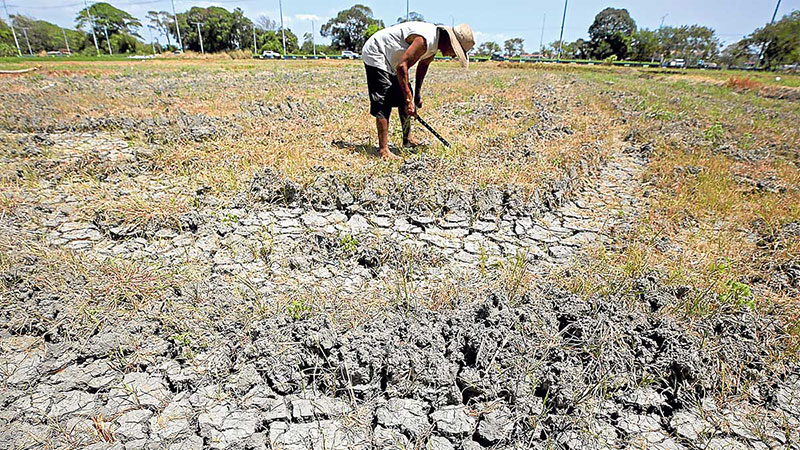
El Niño occurs when sea surface temperatures in the central and eastern Pacific Ocean become unusually warmer than normal, influencing global weather patterns. Although the phenomenon originates thousands of kilometres away, its effects are felt across many regions, including South Asia. According to experts, in Sri Lanka, El Niño events can contribute to irregular rainfall, prolonged dry periods, higher temperatures, and changes in the timing and intensity of monsoon rains.
Sri Lanka’s agriculture sector is particularly vulnerable to these climate fluctuations and faces increasing challenges from climate variability, with the El Niño phenomenon emerging as one of the most significant threats to national food security. As global temperatures continue to rise, understanding and preparing for the impacts of El Niño has become essential for ensuring a stable food supply and protecting the livelihoods of millions of Sri Lankans. Mainly, rice, the staple food of Sri Lanka, depends heavily on reliable water availability.
Reduced rainfall during critical cultivation periods can lead to drought conditions, lower reservoir levels, and can affect paddy yields, while excessive rainfall at unexpected times can damage the crop through flooding, diseases, and poor field conditions. In addition, other crops, including vegetables, fruits, and plantation crops, may also experience productivity losses due to heat stress and water shortages. These impacts can result in food shortages, rising food prices, and reduced incomes for farming communities.
The consequences of climate-related agricultural disruptions extend beyond farmers. Reduced crop production can lead to increased food prices, greater dependence on imports, and challenges in maintaining a stable food supply. For vulnerable communities, especially small-scale farmers and low-income households, these impacts can significantly affect nutrition and livelihoods.
Need to reduce postharvest losses
In such circumstances, reducing postharvest losses becomes a critical component of national food security strategies. Food that is produced but lost after harvesting represents wasted land, water, energy, labour, and financial resources invested in the production. In Sri Lanka, significant quantities of fruits, vegetables, grains, and other agricultural commodities are lost due to inadequate harvesting practices, poor postharvest handling, unsuitable storage conditions, inefficient transportation, and limited processing facilities. During periods of climate stress, such as El Niño-induced droughts, these losses become even more serious because the available food supply is already under pressure. Minimising postharvest losses can, therefore, increase food availability without requiring additional land or agricultural inputs. Hence, strengthening postharvest management can make a major contribution to climate resilience. Improved harvesting techniques, better packaging, temperature-controlled storage, efficient transportation systems, and modern processing technologies can extend the shelf life of agricultural products and reduce wastage.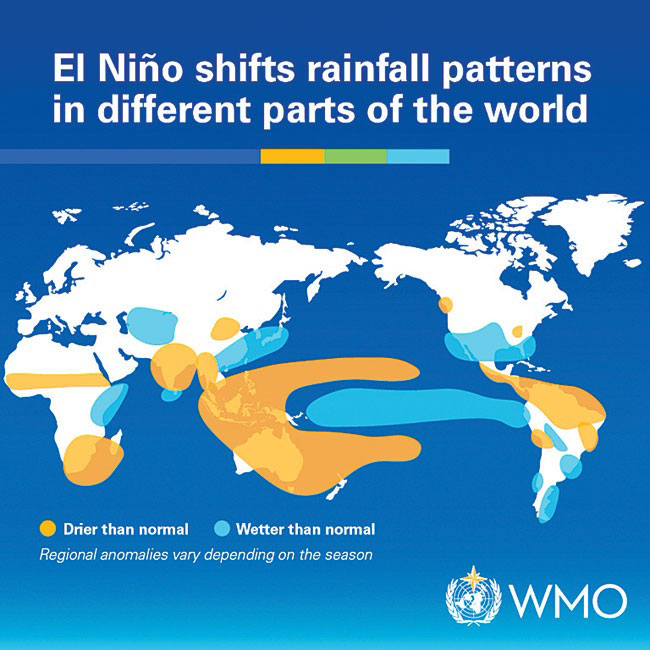
How to face challenges
Promoting small-scale processing and value addition can also help farmers preserve surplus production and maintain income during periods of market fluctuations. Achieving food security in an era of climate uncertainty requires a comprehensive approach that considers both production and preservation. Increasing agricultural productivity alone is not sufficient if a significant portion of harvested food is lost before reaching consumers. Reducing postharvest losses should be recognised as one of the most practical, cost-effective, and sustainable solutions for ensuring food availability.
Moreover, Sri Lanka has opportunities to strengthen its resilience against El Niño-related challenges. Improving climate forecasting systems and ensuring that farmers receive timely weather information can help communities make better decisions on planting dates, crop selection, and water management. Climate-smart agricultural practices, such as drought-tolerant crop varieties, efficient irrigation methods, soil conservation, and improved water storage, can reduce risks associated with changing weather patterns. Water management remains one of the most important strategies for climate resilience. Expanding rainwater harvesting, maintaining irrigation systems, and protecting watersheds can help communities manage water shortages during dry periods.
Importance of climate-smart agriculture
At the same time, Sri Lanka must continue to promote climate-smart agricultural practices. The use of drought-tolerant crop varieties, efficient irrigation systems, soil conservation methods, and improved weather forecasting services can help farmers adapt to changing climate conditions. Providing timely climate information enables farmers to make informed decisions regarding crop selection, planting schedules, and resource management.
Investment in research and innovation will also play a key role. Agricultural institutions and researchers can support farmers by developing technologies and practices suited to changing climatic conditions. Promoting crop diversification can further reduce dependence on a limited number of crops and provide alternative sources of income during periods of climatic stress.
Food security in the face of climate change requires cooperation among government agencies, farmers, researchers, private-sector stakeholders, and communities. Early warning systems, disaster preparedness plans, and supportive agricultural policies can help minimise the effects of extreme climate events. As climate uncertainty becomes the new normal, proactive measures are essential to protect Sri Lanka’s food future. While El Niño presents significant challenges, strategic planning, innovation, and collaboration can help the nation build resilience and ensure that every citizen has access to safe, nutritious, and affordable food. More importantly, policy support is crucial in building a resilient food system. Government agencies, research institutions, and the private sector must work together to develop sustainable agricultural practices and strengthen food supply chains. Diversifying food production and reducing post-harvest losses can also contribute to greater food security.
El Niño as a stark reminder
El Niño is a reminder that climate challenges do not respect geographical boundaries. While Sri Lanka cannot control global climate phenomena, it can strengthen its ability to adapt and respond. By combining scientific knowledge, sustainable farming practices, and effective planning, the nation can protect its food systems and ensure a more secure future in an era of increasing climate uncertainty.
As the climate continues to change, preparedness is no longer an option; it is a necessity for protecting Sri Lanka’s food security and the livelihoods of generations to come.

BY Dr B. J. C. Perera
MBBS(Cey), DCH(Cey), DCH(Eng), MD(Paediatrics), MRCP(UK), FRCP(Edin), FRCP(Lond),
FRCPCH(UK), FSLCPaed, FCCP, Hony. FRCPCH(UK), Hony. FCGP(SL)
Specialist Consultant Paediatrician and Honorary Senior Fellow,
Postgraduate Institute of Medicine, University of Colombo, Sri Lanka.
An independent freelance medical correspondent
KEY POINTS
=Being parents of a newborn baby is a tremendous responsibility.
=To attend to the necessary chores and duties at home, the home set-up must be well organised.
=The routine care of a baby, throughout 24 hours, is a demanding one. But if things are well looked after and prearranged, it would make the task that much easier.
=It is a joint responsibility of the mother, as well as the father, and all other inmates of the same household.
At long last, the baby has arrived, and the parents will be taking him or her home. Usually in uncomplicated deliveries, even after Caesarean operations, the baby is sent home in a couple of days. It is generally a hectic time, and if steps have not already been taken to get things organised at home, it can be quite difficult for new parents. Getting things in shape should have started well before the baby’s birth, but even if he or she arrives earlier and unexpectedly, getting organised at that stage is important to make life easier for both parents. This is perhaps easier said than done, especially for a young couple, but it is a process that would pay dividends. All that is required is plenty of common sense. Getting organised for the newborn baby well in time will make life that much easier in the subsequent months and years to come.
An important thing to do is to arrange everything in the bedroom so that the ‘baby things’ are easily accessible and you know where to find each item. As an example, it should not be necessary to look high and low for nappy pins once a nappy has been put on the baby. What is advocated today is to keep the baby in the same bed as the parents, and this means an extra cot may not always be necessary. It would also provide a little more space in the room, which would otherwise have been taken up by a cot. However, a small baby cot is sometimes useful to put the baby to sleep and provide some rest and relaxation to the mother.
If the baby is kept on the same bed as the mother, there is no danger of the mother rolling over the baby during sleep, as the natural in-built maternal instincts would wake her up at the slightest touch from the baby or the tiniest noise from the baby.
Clothes and nappies
The clothes and nappies of the baby should be easily accessible and available at all times. It is not necessary to buy a new almirah or a cupboard for the baby. A couple of shelves of a cupboard that is already in the bedroom would do nicely. Even a small separate wooden or cane rack with shelves too would be more than adequate for this purpose. The secret is to still have sufficient room in your own bedroom to move about even after getting the baby’s things organised. Sweeping and cleaning the bedroom should be done every day. Some people elect to wet-mop the floor, which is a really good thing. These tasks should not take too much time and could be quickly attended to when the baby is resting quietly after a feed.
Other people in the household and perhaps the father of the baby could help in this regard. Battery torch lights and emergency lights for power failures should be kept in places that are easily accessible, even in the dark. It is no joke to start looking for these things when there is a loss of electrical power. One needs to be prepared, as such unexpected power failures are so very frequent in certain areas of the country. Incidentally, there is nothing against the use of electric fans in the bedroom where the baby is.
During very warm days, it will only make the baby more comfortable. It will not cause any illness. The same applies to air conditioners, provided they are maintained well and serviced regularly. If there is a telephone in the house, it would be worthwhile getting a cordless extension so that the mother does not have to run around in circles to answer the phone while attending to the needs of the baby. This is of course minimised completely today with the use of modern mobile phones.
Feeding the baby should not cause any problems at all. The need of the hour is to exclusively breastfeed for the first six months. THERE IS NO OTHER MILK THAT COMES EVEN CLOSE TO THE GOODNESS OF MOTHER’S MILK – FULL STOP; NO ARGUMENTS AND NO BUTS. There is extremely convincing and overriding scientific evidence for breast milk being the very best form of nutrition for a new arrival. It is the golden elixir of life, and there is nothing else, absolutely nothing else, that is as good as mother’s milk for a baby. The infant milk-food companies can even shout from the rooftops but they have no chance, whatsoever, against proven scientific medical evidence. It is also important to stress that babies need to be fed on demand and very definitely NOT BY THE CLOCK. All babies will indicate by various actions when they are hungry and feel the need to be fed.
Breastfeeding obviates need for bottles, etc.,
Exclusive breastfeeding would obviate the need for bottles, teats, cups, spoons, formula milk powder, sterilising equipment, etc. There is no extra cost involved as well. Government legislation has provided working mothers with sufficient maternity leave to feed their babies with human milk for at least the first four months. If there are ways of getting a little bit more leave to stretch it to six months, this should be explored to the fullest, as the benefits of exclusive breastfeeding are worth a lot more than money could buy. There are added benefits of breastfeeding such as control of the mother’s weight and figure as she burns up a significant number of calories in producing her milk.
When it is time to give the baby a bath, arrange everything you need around the place where you are going to bathe the baby. Towels, soap, etc., should be at arm’s length. If there is help available at home in the form of members of the extended family or domestic aides, this is the time you could really make use of them. When the mother gets used to the procedure, bathing a baby is no big deal. In most instances, it is a thing that both mother and baby would enjoy. Get the baby used to bathing as early as possible. This will prevent him or her from making an almighty fuss at bath time later on. Almost all babies love to be in water provided they are introduced to bathing very early in their lives.
The mother must arrange her mealtimes and resting periods to coincide with the times when the baby is quiet or is sleeping. Mother’s meals just need to be nutritious, and everyday foods are more than adequate. It is not necessary to go out of the way to provide her with expensive supplementary foods or additional forms of nutrition. There is no scientific evidence to say that certain foods are not good for nursing mothers. The notions of “heaty” foods and “cooling” foods have no scientific rationale.
Most authorities believe that a nursing mother could and should eat anything and everything. The only thing necessary is to provide a nicely balanced and adequate diet. The mother needs to get a sufficient and acceptable amount of sleep, especially during the day. This is particularly important because she may have to get up several times during the night to feed and change clothes of the baby. Steps must be taken to provide her with these essential periods of rest. Organising a routine to help her with this aspect would be most desirable.
Father’s work schedule
It is also advantageous for the father to get his work schedules and duties rearranged as much as possible and in such a manner so as to provide sufficient time at home to help in caring for the baby. This, of course, depends on the exact type of work that he is involved in. In each and every case, a genuine effort should be made to have quality time with the mother and the baby. This is particularly useful for the first few months of the baby’s life. As far as possible, the father should be equally involved with the rearing practices of the baby. Looking after a baby should be a shared responsibility. This process also enhances the baby developing a very beneficial and desirable bond with both parents.
The arrival of a new baby should not lead to a complete social embargo for the family. One could travel outside the home with the baby, especially if the times of travel are carefully planned to suit the requirements of the baby, such as feeding times. Even then, if the baby is breastfed, he or she could be fed almost anywhere. Some babies are, however, prone to throwing up while travelling immediately after a feed. It is generally better to avoid intensely overcrowded social gatherings, but social visiting, attending weddings and parties, with the baby in tow, are quite in order, even when the baby is just a few weeks old.
If the parents own a car, it is a good idea to get a commercially available baby car seat that is fitted to the rear seat of the car. The sooner you get the baby used to travelling in this baby seat, the better it is for all around. It is the safest way to take the baby in the car. In some of the Western countries, newborn babies are not discharged from the hospital till a car seat is fitted to the car. Unfortunately, baby car seats are not that popular in this country, but it must be pointed out that they contribute a great deal towards the safety of a baby in the case of a traffic accident.
Unnecessary expenditure
Many parents spend unnecessary amounts of money on a baby. All kinds of expensive items, such as perfumes, colognes, powders, etc., are not quite essential for a baby. The natural milky smell of a baby is quite unique. The clothes that one buys for a baby should be simple, uncomplicated, light and preferably of cotton origin. Their design should be very safe for the baby. It is best to remember that babies grow up very fast, especially in the first two years of life and tend to outgrow clothes in next to no time. Even the toys for the baby should be appropriately selected and should be very safe and eminently affordable.
There is no reason whatsoever that the expenses for a little newborn baby should be more than what one would normally need to spend on an adult.
A newborn baby should be such a joy for the entire family, including the extended family. Grandparents would usually dote on the baby. If there are other children, it is important to provide the necessary attention to them as well so that they would not feel neglected. It would prevent sibling rivalry, and the other kids would go on to love the new arrival. All newborn babies are quite a delight and not a burden, and it is definitely their right to be treated as such.

by J. A. A. S.R anasinghe,
Productivity Specialist
rathula49@gmail.com
The recent appointment of Vipul Misra, an Indian national, as Acting Chief Executive Officer of Sri Lankan Airlines deserves to be viewed from a much broader perspective than simply as an appointment to a vacant position. In my view, it is a sensible and courageous decision by the Government.
Sri Lankan Airlines is a national asset operating in an intensely competitive international aviation industry. It requires specialised aviation knowledge, commercial acumen, operational discipline and international exposure. According to the report on his appointment, Misra brings more than two decades of aviation engineering and leadership experience, including experience with major Indian carriers such as Air India, Vistara, IndiGo, SpiceJet, Kingfisher Airlines and Air Deccan.
Dr. Sarath Obeysekera, a high-profile CEO and the former Managing Director of Colombo Dockyard PLC contends the appropriateness of filling senior corporate positions of the public sector from foreign nationals, when positions of high-calibre CEOs are not locally available. He says that Sri Lankan Airlines has previously benefited from expatriate professional leadership. During the Emirates management period from 1998 to 2008, British aviation professional Peter Hill led the airline through rebranding, fleet modernisation, network expansion and improvements in service standards.
The airline reported profits during several of those years, although later analysis showed that gains from aircraft sales and leaseback transactions contributed significantly to some results. Nevertheless, the airline was run with greater commercial discipline, clearer accountability and considerably less day-to-day political interference.
Following the end of Emirates management, due to direct intervention by the then President, Sri Lankan Airlines faced turbulent situations and passed through numerous chairmen, chief executives, restructuring proposals, procurement controversies and political interventions while taxpayers continued to carry its debts and losses.
It would be unfair to suggest that every Sri Lankan chairman or CEO was incompetent or corrupt. Sri Lanka has produced many outstanding aviation professionals. The deeper problem has been a governance system in which even capable executives can be weakened by political appointments, interference in commercial decisions, frequent leadership changes and the absence of measurable accountability. He says that the arrival of Indian professional leadership is not limited to aviation.
Colombo Dockyard presents another significant example. Following the acquisition of a controlling interest by India’s state-owned Mazagon Dock Shipbuilders, Capt. Jagmohan was appointed its non-executive chairman. He is a naval architect with extensive experience in warship design, naval dockyards, shipbuilding and major maritime projects. (Mazagon Dock leadership)
This partnership could give Colombo Dockyard access to capital, technology, Indian and international orders, specialised naval work and a much larger supply chain. However, because the Dockyard is an important national maritime asset, success must be measured by the creation of skilled Sri Lankan employment, expansion into commercial and offshore engineering, growth in exports, transfer of technology and development of local managerial successors—not merely by a change of ownership or boardroom nationality.
The rise of Indian professionals should not surprise us. Sundar Pichai leads Alphabet and Google, while Indian-born executives have led several other globally important technology and industrial corporations. India has built an enormous pool of engineers, scientists, accountants and managers through technical education, English-language capability, exposure to large competitive markets and international professional mobility.
India’s formal national ambition is Viksit Bharat 2047—to become a developed nation by the centenary of its independence. The target is 2047 rather than 2040, and its vision specifically combines economic growth, skills, social progress, sustainability and good governance. (Government of India)
The important lesson is that nationality should not be the principal criterion for selecting the person to lead a strategically important State enterprise. Competence should be, according to Dr. Obeysekera. This principle should now be extended to another equally important national institution — the Sri Lanka Ports Authority (SLPA), as this post has fallen vacant and an advertisement has appeared in the newspapers calling for applications from suitable applicants.
The recent discussion surrounding the vacant substantive post of Managing Director of the SLPA, including Dr. Sarath Obeysekera’s call for the appointment of a “developer, not merely an administrator”, raises a fundamental question: Are we looking for someone merely to administer the existing machinery of the Ports Authority, or someone capable of transforming Sri Lanka’s ports into major engines of investment, industry, employment and foreign-exchange earnings?
The distinction is crucial. On the other hand, one should not be over excited for the manner in which foreign nationals are employed not in hundred perhaps in thousands in manual operational activities in heavy industries in Sri Lanka. In the case of Shipbuilding and Construction industries, the deployment of welders and skilled workers have now become a norm rather than an exception.
Sri Lanka possesses enormous maritime advantages. Colombo is strategically located on one of the world’s busiest shipping routes, while Hambantota and Trincomalee offer substantial possibilities for future development. Yet the challenge is no longer simply to operate ports efficiently. The country must develop the ecosystem around them — logistics, ship repair, shipbuilding, offshore services, maritime industries, warehousing, bunkering, technology, investment and related export-oriented activities.
This requires a different type of leadership. The government should therefore consider applying the same bold thinking demonstrated in the Sri Lankan Airlines appointment to the SLPA. If the best person to transform the Ports Authority is a Sri Lankan, appoint that person. If the best candidate is an internationally recognised professional from India, Singapore, Dubai, Europe, Japan or elsewhere, why should nationality become a barrier?
Indeed, the Sri Lanka Ports Authority Act itself provides that the Minister shall appoint a “competent and experienced person” as Managing Director, whose responsibility includes directing the business, exercising the Authority’s functions and controlling its employees. That statutory emphasis on competence and experience should guide the selection.
What Sri Lanka needs is not another appointment based primarily on seniority, institutional familiarity or traditional public-sector credentials. It needs a leader with a proven international track record in port development, maritime logistics, commercialisation, investment attraction and large-scale project execution. Such a person should be given clear targets and held accountable for delivering them.
The appointment of an international professional should not be regarded as an admission of failure on the part of Sri Lankan professionals. On the contrary, it would demonstrate confidence in the principle that Sri Lanka’s national assets deserve the best available talent, wherever that talent may be found.
The government has already demonstrated this new approach through the Sri Lankan Airlines appointment. I respectfully suggest that it should now have the courage to apply the same principle to the Sri Lanka Ports Authority.
Our national assets are too valuable to be confined to a search for talent within national boundaries. The best person for the job should be given the job irrespective of nationality.

Trophy row unlikely to repeat in Japan

Powerful explosions at Syrian army site near Aleppo injure at least four

Government committed to ensuring the rights of children with disabilities and providing equal opportunities – PM

Ellis and Inglis break Zimbabwe hearts to secure one-wicket thriller

Kenya’s Ngetich breaks women-only half-marathon world record by a second

Showers about 100 mm are likely at times in the Western, Sabaragamuwa and North-western provinces and in Galle, Matara, Kandy and Nuwara-Eliya Districts

‘Dates have the highest sugar content to fight Coronavirus’

Sunday Island 27 December – Headlines

#SundayIsland 17th December – Headlines

Sunday Island – 28th March

Sunday Island Headlines – 21 March

Sunday Island – 21st February – Headlines
-

 News4 days ago
US embassy won’t comment on IGP’s probe into joint drug raid
-

 News3 days ago
Bid for Basil’s extradition nears final stage: Police
-

 Features6 days ago
The emptying university: why are academics leaving?
-

 Business4 days ago
All-new Bolero MaXX unveiled in Sri Lanka
-

 News2 days ago
Shanakiyan urges urgent action over reported death sentence for Lankan in Saudi Arabia
-

 Opinion6 days ago
Who committed genocide and created mass graves in Sri Lanka?
-

 Opinion4 days ago
A journalist who wrote across the divide
-

 Weather6 days ago
Showers above 100 mm expected at times in the Western, Sabaragamuwa, Central, Uva and Southern provinces, and in Ampara and Batticaloa districts