
Latest News
WWC 2025: Mooney’s rescue act for the ages denies Pakistan a historic win


Beth Mooney’s masterful maiden World Cup century rescued Australia from 76 for 7, set up a match-winning total of 221 and denied Pakistan the opportunity to pull off the first upset of the tournament. Australia are now at the top of the points table, with two wins and a washout while Pakistan remain winless in last place.
Mooney continued a magnificent 2025, in which she now averages 63.42, with an innings that was a class above anyone else on a slow, low turner in Colombo. Only two other batters, Alana King and Sidra Amin, got more than 20; King’s innings came with Mooney at the other end. The pair shared a 106-run ninth-wicket stand and King’s 51* was the highest score for a player batting at No.10 or lower in women’s ODIs. They completely eclipsed the efforts of Pakistan’s spinners, who shared six wickets for 98 runs in their 30 overs and gave their side real hope before the batters completely faded away.
Pakistan were bowled out for 114, undone by seam and swing. As much as Pakistan will need to question their batting, they will wonder how they squandered the opportunity to bowl Australia out for one of their lowest World Cup scores after getting themselves into a position of such advantage. The answer lies in Mooney’s approach.
Unlike all the other batters, she demonstrated an ability to play late and move in the crease and showed patience in the face of extreme pressure. All told, Mooney hit 11 fours in her century and ran 44 singles, nine twos and a three. She earned the right to play with freedom at the end and Australia’s final flourish of 81 runs in the last 10 overs including 53 off the last four, iced the cake.
Their takedown of Diana Baig, who conceded 74 in her 10 overs, will also ask questions of Pakistan’s bowling options. They only had five at their disposal and while four had an excellent day out, they could not close things out quickly enough after Fatima Sana chose to bowl in hot, humid conditions because she suspected spin could play a role. She was proved right almost immediately.
Sana introduced spin in the form of Sadia Iqbal in the fifth over, Iqbal ended it by drawing Alyssa Healy forward as she tried to flick. Healy gave Baig a simple catch at midwicket.
Four balls later, Sana, after bowling 12 dot balls and with her hero Ellyse Perry at the other end, had Phoebe Litchfield playing across the line and skying it straight up. The Pakistan captain kept her composure to take a good catch. In the end, Sana did not get to bowl to Perry at all as she took herself off to go all spin.
Nashra Sandhu struck with her fifth ball when Perry came down the track, was beaten by turn and Sidra Nawaz did some excellent work behind the stumps to break them. With that, Sandhu became the leading wicket taker for Pakistan in ODI World Cups, going past former captain Sana Mir and she showed no signs of stopping. In her next over, Sandhu deceived Annabel Sutherland with the one that held its line and beat the inside edge to bowl her.
Though left-arm spin has been the discipline of destruction at this tournament, offspinner Rameen Shamim was not to be denied a share of the spoils. Ash Gardner chipped Shamim straight to Sana at midwicket. Then, Sandhu sent one down slow, Tahlia McGrath tried to get it over extra cover but could not get to the pitch of the ball and sliced it to Baig, who lunged forward to take the catch in the infield.
When Georgia Wareham was done in by extra bounce and gave Shamim a relatively simple return catch, Australia were 76 for 7 – the second lowest at the fall of the seventh wickets since 67 for 7 against New Zealand in 1993. Sandhu thought she had the eighth in the 23rd over when Garth missed a straight one and was given out lbw but she reviewed and replays showed she had hit the ball.
That proved crucial as it allowed Australia to rebuild, in a similar fashion to the way they did after being 128 for 5 against New Zealand. This time, they were able to do it against a Pakistan attack that had to go back to their seamers, in the absence of another spin option. Sana brought herself back on in the 28th over and should have run Garth out but got herself into a poor position at the non-striker’s end. She also had to go back to Baig, and Australia’s 100 and Mooney’s fifty both came off her in a sign of things to come.
The eighth-wicket stand between Mooney and Garth grew 39 before another Nawaz special behind the stumps. Baig sent a full ball down leg, Garth missed the flick with her front foot out of the crease and back heel lifted. Nawaz reacted quickly to collect, stay low and break the stumps. Australia were 115 for 8 and again, Pakistan could not close things out.
King did a sterling job of holding her end and helped Mooney drag the innings into its latter stages. Mooney was on 85 when she was given lbw to Iqbal, against a delivery that turned in and pinned her on the back leg. She reviewed and ball tracking showed it was doing too much and would have missed leg stump. King was 17 off 35 at the time.
Mooney entered the nineties when she whipped Baig behind square and moved swiftly to 97 with a cut that went to the deep-third boundary. Her hundred came with a single off Sana, and then she let King have some fun. King took 13 runs off Baig’s final over and then back-to-back sixes off Sana’s last over to bring up 50 off 48 balls. Mooney then smashed two more fours before being dismissed off the last ball as she cut Sana to cover.
Pakistan’s demoralisation with how they fielded showed in their batting. Sadaf Shams looked nervy initially, edged Megan Schutt between the keeper and slip and then nicked off against Garth. Schutt got on the board three overs later when Muneeba Ali was caught low by Sutherland at mid-off, in a dismissal that looked eerily similar to Heather Knight’s not out against Bangladesh.
Nawaz, promoted to No.4, had no footwork when she edged Garth to Healy, Schutt had Natalia Pervaiz caught by Mooney at slip and then Garth bowled Eyman Fatima, playing and missing as she attempted a slog. Pakistan were in a mess at 31 for 5 and it didn’t get much better.
Sana chopped a short Sutherland ball onto her stumps before Sidra Amin and Shamim put on 29 in 52 balls, which was Pakistan’s best stand. Spin ended it when Amin picked out Sutherland at long-on. Pakistan were 78 for 7 but had no batters to take them close. Shamim and Sandhu delayed the inevitable for 68 balls in a 25-run stand. Pakistan were dismissed in 36.3 overs and their net run rate plunged to -1.887.
Brief scores:
Australia Women 221 for 9 in 50 overs (Alyssa Healey 20, Beth Mooney 109, Alana King 51*; Fatima Sana 2-49, Rameen Shamin 2-29, Nashra Sandhu 3-37) beat Pakistan Women 114 in 36.3 overs (Sidra Amin 35; Kim Garth 3-14, Annabel Sutherland 2-15, Megan Schutt 2-25) by 107 runs
[Cricinfo]


Th European Union “fully rejects” a US demand to release emergency diesel stocks as the fuel’s price soars in America and elsewhere amid the war with Iran.
The EU “fully rejects” the threat made by the US to ban diesel exports if Europe does not release more of its fuel stocks, according to European Commission spokesperson Anna-Kaisa Itkonen.
“A ban would not be beneficial to anyone. It would undermine our trust in the United States as a reliable partner,” she said, adding that the next EU’s Oil Coordination Group meeting is scheduled for October 15, but could be brought forward if needed.
On Thursday, President Trump said the US could ask European countries to release diesel reserves to rein in rising diesel prices due to the war on Iran.
His comments came after Treasury Secretary Scott Bessent urged Europe to “immediately” tap its reserves.
[Aljazeera]
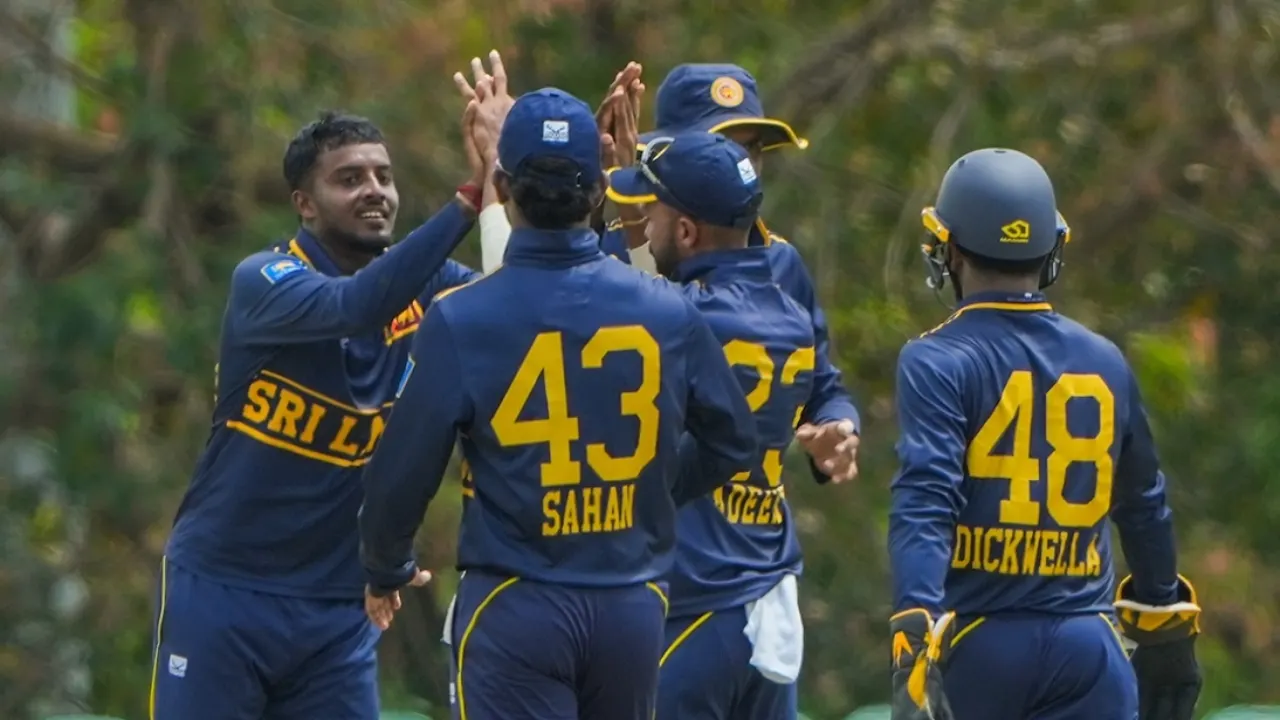
Opening batter Sineth Jayawardena has charged into the Sri Lanka T20I squad for the series against Pakistan, while Vijayakanth Viyaskanth has claimed the legspinner’s spot in the absence of the injured Wanindu Hasaranga. Seam-bowling allrounder Chamindu Wickremesinghe has also been named, as has batter Sahan Arachchige, while seamer Binura Fernando makes a return.
Omitted from the the squad were the likes of batter Charith Asalanka, fast bowler Dilshan Madushanka, ambidextrous spinner Tharindu Rathnayake, and batting allrounder Janith Liyanage.
Fast bowler Dushmantha Chameera was named in the squad, but his participation is subject to fitness.
Jayawardena, 21, has got his call-up because of an outstanding recent run in domestic T20s. In the past month, he has struck 101 off 52 and 82 off 32 for Tamil Union Cricket Club in the club T20 competition. He has played a single T20I, at the ongoing Asiad, but otherwise has never been part of a full-strength Sri Lanka side.
Others, such as Wickramasinghe, Arachchige, and Viyaskanth have earned their call-ups through years of performance at domestic level. Each of these players has appeared in T20 internationals for Sri Lanka before, but with the national team having had little success in this format in 2026, this inclusion represents their best chance yet to embed themselves within the side.
The three T20Is, which are all set to be played in Rawalpindi, will begin on October 9.
Sri Lanka squad :
Kamil Mishara, Sineth Jayawardena, Kusal Mendis (capt.), Lahiru Udara, Sahan Arachchige, Kamindu Mendis, Dasun Shanaka, Chamindu Wickramasinghe, Dunith Wellalage, Maheesh Theekshana, Vijayakanth Viyaskanth, Binura Fernando, Nuwan Thushara, Eshan Malinga, Dushmantha Chameera (subject to fitness)
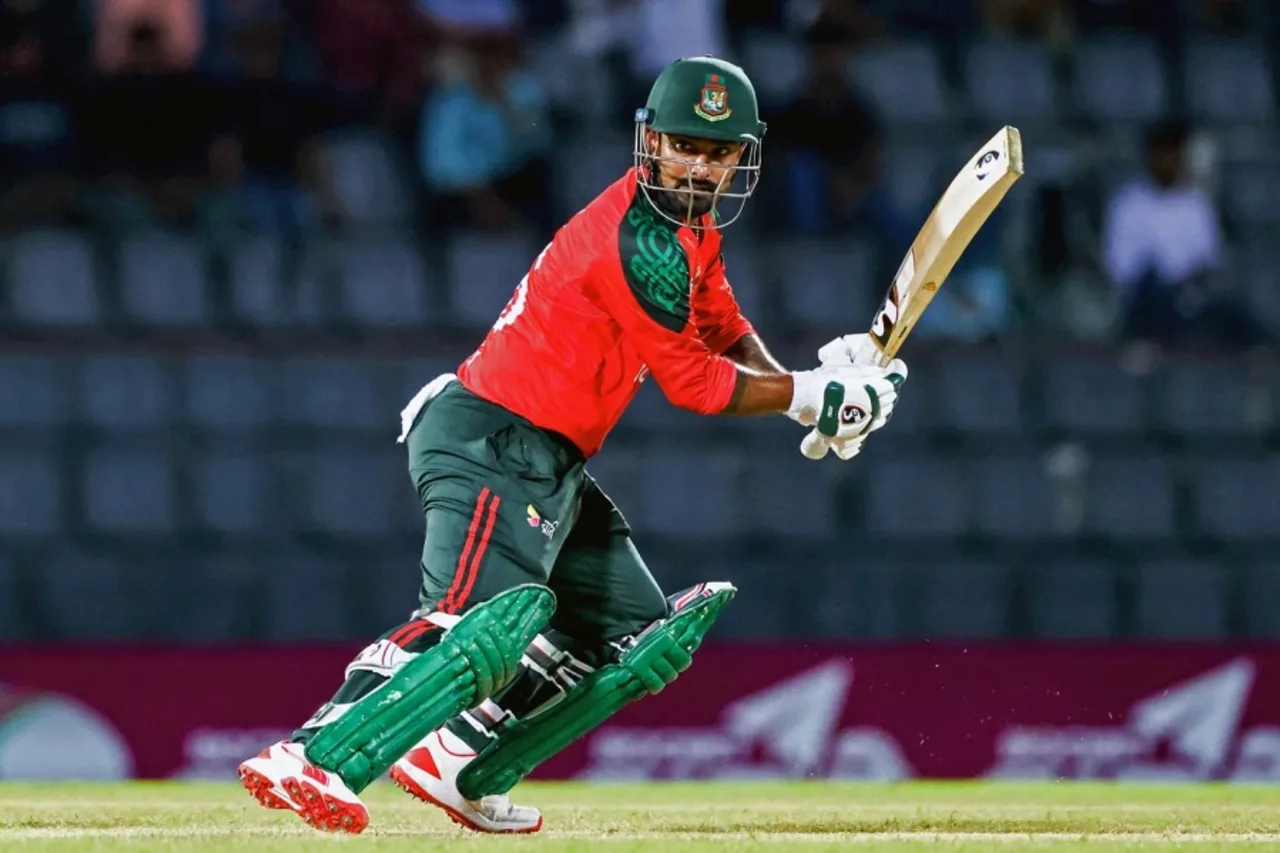
At the end of a wretched week in Nisshin, Bangladesh and Sri Lanka have something real to play for: an Asian Games bronze.
Both teams have a point to prove. Bangladesh recovered well from a poor start in their semi-final against Pakistan, thanks to Towhid Hridoy’s efforts with the bat, but their bowlers couldn’t defend 111 in a 13-overs-a-side game, and Mustafizur Rahman was taken to the cleaners in one of his rare poor outings in T20Is.
But at least they ran Pakistan close. In the other semi-final, India ran riot over Sri Lanka, bowling them out for 45. Sri Lanka had a second-string side on the field, but they wouldn’t have bargained for the basic mistakes they made, like the three run-outs in their innings.
Bangladesh, who can call on most of their first-choice players, start the third-place match as clear favourites, but the testing conditions at Nisshin can even up contests that look one-sided on paper. And both teams will have the motivation of bringing joy to contingents that have endured mostly barren Asian Games campaigns.
After a run-less Australia tour where Litton Das made three ducks in a row in the Test series, he was out for 2 against Pakistan. Litton faced just three balls, off which he attempted two reverse-sweeps, the second of them costing him his wicket. It was a perplexing innings on a pitch that offered a lot of turn and awkward bounce. Sometimes it’s hard to say if a batter is really out of form when he’s made a string of low scores, but Litton, who has led Bangladesh impressively in this format over the last couple of years, will want to break out of this run quickly.
Sahan Arachchige couldn’t quite muster up a captain’s performance against India, especially after his top three batters fell for ducks. He scored 9 before falling to a sweep shot against Axar Patel. He had earlier taken two wickets with his offbreaks. The 30-year-old allrounder now has the chance to put together a better show and inspire his team to the bronze.
Both teams could test their bench strength in the bronze-medal match.
Sri Lanka (probable): Sineth Jayawardena, Lasith Croospulle, Sohan de Livera (wk), Nuwanidu Fernando, Sahan Arachchige (capt), Ashen Bandara, Chamika Karunaratne, Wanuja Sahan, Tharindu Ratnayake, Vijayakanth Viyaskanth, Binura Fernando.
Bangladesh (probable): Tanzid Hasan, Saif Hassan, Litton Das (capt), Parvez Hossain Emon (wk), Towhid Hridoy (c), Mosaddek Hossain, Mahedi Hasan, Rishad Hossain, Aliss Al Islam/Nasum Ahmed, Shoriful Islam, Mustafizur Rahman/Hasan Mahmud.
[Ceicinfo]

Ambassador of the UAE to Sri Lanka meets with the Prime Minister

EU rejects Trump’s diesel demand amid Iran war shortages

Sineth Jayawardena, Vijayakanth Viyaskanth in Sri Lanka squad for Pakistan T20Is

Bronze at stake as Bangladesh, Sri Lanka look to bring cheer to Asian Games contingents

Wanderers to host 2027 men’s ODI World Cup final as well as India vs Pakistan

Prime Minister joins Gandhi Jayanti Commemoration

‘Dates have the highest sugar content to fight Coronavirus’

Sunday Island 27 December – Headlines

#SundayIsland 17th December – Headlines

Sunday Island – 28th March

Sunday Island Headlines – 21 March

Sunday Island – 21st February – Headlines
-

 Editorial7 days ago
Birth of a bad law
-

 News5 days ago
Police remove Thileepan statue in Jaffna
-

 News7 days ago
TIN mandatory for key transactions from Nov. 1
-

 Features5 days ago
The 22nd Amendment, constitutional recovery and illiberal slippage
-

 Features5 days ago
Of foreigners as CEOs of Lankan ventures
-

 Latest News3 days ago
Gold winner Tharanga gets brand-new Honda Vezel from SLAAJ
-

 News5 days ago
Sajith rejects Jt. Opp. protest sabotage claim; SJB TU chief demands remedial action
-

 Features4 days ago
Thailand’s biggest new global star …