Latest News
WWC 2025: Mlaba, Brits, Luus seal comfortable win for South Africa
Tazmin Britts is having a year like no other. Her fifth hundred in 2025 – the most-ever by a woman in a calendar year – studded South Africa’s dominance as they got onto the points table with a crushing six-wicket win over New Zealand, who slumped to their second straight loss in Indore.
Four nights after being bundled out for the second-lowest score in World Cups, South Africa showed authority and intent in chasing down 232 in 40.5 overs. This somewhat helped cover up for a massive net run rate dent from their embarrassing loss to England in Guwahati.
That South Africa had only these many to chase was largely thanks to left-arm spinner Nonkululeko Mlaba, whose 4 for 40 triggered an alarming slide after Sophie Devine and Brook Halliday threatened a jailbreak. After the pair had added a quickfire 86 for the fourth-wicket, New Zealand were coasting at 187 for 3 in 38 overs when Mlaba made big dents.
Halliday contributed 45 off 37 in a terrific exhibition of sweeps and reverse-sweeps, before falling to one hit too many when she top-edged a slog-sweep off Mlaba at the start of the 39th. During her stay, she briefly gave South Africa the shivers, like she had in last year’s T20 World Cup final in Dubai.
South Africa hit back quickly after Halliday’s dismissal, with Mlaba next sending back Maddy Green to an ill-advised reverse sweep as she picked out backward point. Amid the collapse, Devine held out hope for New Zealand, like she’d done in hitting a valiant 112 against Australia in their opener.
Devine helped shift gears after Georgia Plimmer struggled to hit the ball off the square in a painstaking 31 off 68 balls. Devine was largely measured, taking 66 deliveries to bring up a half-century, her 17th in ODIs, before shifting gears, as she fed off Halliday’s form and enterprise.
Halliday and Devine raised their half-century stand off just 41 deliveries, and New Zealand looked set for a lift-off. But Devine’s dismissal for 85, attempting to work a full delivery into the leg side, had a deflating effect. Ayabonga Khaka then cleaned up the lower order, as New Zealand lost 7 for 44 to be bowled out for 231, leaving 13 deliveries unused.
All told, it was an innings of contrasting fortunes. New Zealand played themselves into a hole, consuming as many as 72 dots in the first 15 overs to leave the middle order with too much to do, after Suzie Bates fell for a second straight duck off the first ball of the match and Amelie Kerr for 22. Then Devine and Halliday bailed them out, but in having a terrible back 10, New Zealand undid all the good work through the middle overs.
To make a fist of the target, New Zealand needed early wickets, and they had one when Laura Wolvaardt, who plucked a stunner to end New Zealand’s innings, was out lbw playing around her front pad to Jess Kerr. But that was as much joy as they were to derive over the next two hours as Brits put on an exhibition, with Sune Luus for company.
Brits’ was a high-tempo innings full of stunning shots, and it included a thrilling takedown of Amelie Kerr early in the innings to offset any threat South Africa had. Having begun the innings steadily, Brits went into overdrive after the 10-over mark, at one point hitting five boundaries in nine deliveries, en route to a 44-ball half-century, her fastest in ODIs.
Brits equally punished Eden Carson, the offspinner, muscling a six to bring up the 100 partnership off 111 deliveries. Brits’ use of her feet to negate any turn and bludgeon spinners repeatedly down the ground made for thrilling viewing. And while she was flying, Luus was fighting for survival.
Unlike Brits, Luus struggled for timing, but the reward for all that tenacity for a fight was a half-century that she raised off 76 balls. Brits’ counter-attack gave her the rare luxury of finding her feet as the ball spun and jumped, merely underlining how ridiculously easy Brits had made batting look.
Brits fell soon after getting to her century, bowled attempting to pull a skiddy length ball off Lea Tahuhu to leave South Africa briefly wobbly, as they lost two more wickets in an attempt to raze down the runs. But even through that, the result was a foregone conclusion.
Luus raised the winning runs with a lofted hit over extra cover, finishing unbeaten on 81 to ensure South Africa ride a wave of confidence when they meet hosts and table-toppers India come Thursday in Vizag. New Zealand will hope for a change of luck when they travel to Guwahati to play Bangladesh the following day.
Brief scores:
South Africa Women 232 for 4 in 40.5 overs (Taxmin Brits 101, Sune Luus 83*, Amelia Kerr 2-62) beat New Zealand Women 231 in 47.5 overs (Georgia Plimmer 31, Amelia Kerr 23, Sophie Devine 85, Brooke Halliday 45; Nonkululeko Mlaba 4-40) by six wickets
[Cricinfo]

Latest News
Ebola outbreak may be spreading faster than first thought, WHO doctor warns
People living close to the epicentre of a deadly Ebola outbreak have told the BBC of their fear, as the World Health Organization (WHO) warned cases may be spreading faster than originally thought.
One man in the Democratic Republic of Congo’s northeastern Ituri province said infected people were dying “very fast”, adding: “Ebola has tortured us.”
The virus is believed to have killed 136 people in the DR Congo, officials say, with more than 514 cases now suspected in the country. One person has died in neighbouring Uganda.
The WHO’s Dr Anne Ancia told the BBC that the more the UN agency investigates the outbreak, the clearer it becomes cases have spread to other areas.
Modelling by the London-based MRC Centre for Global Infectious Disease Analysis released on Monday suggested there had been “substantial” under-detection, and that it could not rule out there had already been more than 1,000 cases.
The study suggested that the current outbreak is “larger than currently ascertained” and that its “true magnitude remains uncertain”.
A man who spoke to BBC News and identified himself as Bigboy said people are “really scared” and doing what they can to protect themselves.
He said locals are taking precautions such as washing hands with clean water, but added that he wished they could get access to other protective supplies such as face masks.
Another Ituri local, Alfred Giza, said people in the community are aware of the threat and waiting to receive face masks to protect themselves, but that he would not know what to do if a family member or friend contracted the disease.

The Red Cross warned that Ebola can escalate quickly if cases are not identified early, communities lack information and health systems are overwhelmed, adding “we are seeing all those conditions” in the current outbreak.
On Tuesday, DR Congo President Félix Tshisekedi called for “calm” and urged Congolese citizens to remain vigilant, after holding a crisis meeting on Monday evening.
WHO chief Tedros Adhanom Ghebreyesus, who declared the outbreak an international emergency last week, said he was “deeply concerned about the scale and speed of the epidemic”.
He declared the emergency late on Saturday night – before the WHO’s emergency committee met to assess the situation and recommend priority medical interventions, which it is due to do soon.
The cash-strapped organisation has already released almost $4m (£3m) to combat the outbreak – but much more may be needed.
The outbreak is taking place in a region which has suffered years of conflict, with hospitals and clinics damaged or destroyed, and millions fleeing their homes. Most are living in unsanitary conditions.
There are also more than 11,000 refugees who have fled fighting in South Sudan, and big population movements among people seeking work in local gold mines.
It is feared the outbreak may have been ongoing for several weeks before it was first detected on 24 April.
There is no vaccine for the strain of Ebola virus fuelling the latest rise in cases, but the WHO is evaluating whether other drugs may provide protection.
Speaking to BBC Newsday, Ancia said DR Congo’s Ituri province was a “very unsecured area with lots of movement of population”, making it difficult for the agency to investigate and help control the disease.
She continued: “The more we are investigating this outbreak, the more we realise that it has already disseminated at least a little bit across border and also in other provinces.”

The outbreak has spread to the province of South Kivu, where the population has been affected by a humanitarian crisis for many years, she added.
There has also been a case in eastern DR Congo’s biggest city, Goma, which has a population of around 850,000 people and is under the control of Rwandan-backed rebels.
High levels of insecurity in several provinces mean people move around often, increasing the risk and spread of the virus, she said.
Several African countries are taking precautions by tightening border screenings and preparing health facilities. Neighbouring Rwanda has also closed its borders with the DR Congo. Uganda has told people to avoid hugging and shaking hands.
An American citizen, belived to be missionary group doctor Peter Stafford, was evacuated from the DR Congo after developing symptoms over the weekend.
Germany’s health ministry told the BBC a US citizen was taken to the country for treatment.
The US Centers for Disease Control and Prevention (CDC) said at least six other Americans who were exposed were also being evacuated. On Tuesday, the agency said it was in the process of moving the Americans to Germany and the Czech Republic, where they would be monitored for symptoms in quarantine.
The WHO and other agencies are working with governments and communities to try to stop the spread of the virus, urging residents to follow preventative measures and report to the nearest health facility if they experience any symptoms.
What is Ebola and how does it spread?

Ebola is caused by a virus and initially causes symptoms similar to the flu, with fever, headache and tiredness.
As the disease progresses, vomiting and diarrhoea develop and it can lead to organ failure. Some, but not all, patients develop internal and external bleeding.
The virus spreads from one person to another by contact with infected bodily fluids such as blood or vomit.
The Bundibugyo strain fuelling this rise in cases is rare, and has previously only caused two outbreaks, when it killed about a third of those infected.
Between 2014 and 2016, more than 28,600 people were infected by Ebola in West Africa, the largest outbreak of the virus since its discovery in 1976.
It was caused by the Zaire strain, for which there is an approved vaccine.
The disease spread to a number of countries in West Africa and beyond, including Guinea, Sierra Leone, the US, UK and Italy, killing 11,325 people.
[BBC]
Latest News
Sooryavanshi’s stunning 93 takes Rajasthan Royals closer to IPL playoffs
No Riyan Parag? No Ravindra Jadeja? No fast start for Vaibhav Sooriyavanshi? No problem for Rajasthan Royals (RR) as they hunted down 221 against Lucknow Super Giants (LSG) and moved up to No.4 on the points table. If RR also win their final league game against Mumbai Indians on Sunday, they will firm up their playoffs spot, irrespective of other results.
In RR’s chase of 221, Sooryavanshi got off to an unusually slow start – he was on 11 off 12 balls at one point. After watching his opening partner and RR stand-in captain Yashasvi Jaiswal dominate the powerplay, Sooryavanshi cranked up to top gear when he lined up left-arm seamer Akash Singh for two sixes and three fours in the ninth over. He then went on a more familiar six-hitting spree and by the time he was dismissed for 93 off 38 balls in the 14th over, he extended his sixes tally in IPL 2026 to 53. Only Chris Gayle has smashed more sixes in an IPL season, back in 2012 when Sooryavanshi was a year old.
Dhruv Jurel sealed the chase for RR with a calm fifty in the company of Donnovan Ferreira.
Jofra Archer ran in hard and hit the Jaipur deck harder, but even his extreme pace and bounce wasn’t going to bother Mitchell Marsh and Josh Inglis, the Western Australia boys. In the first over, Marsh advanced down the track, manufactured swinging room and flayed Archer for a four and a six over the covers.
Inglis was more fluent square of the wicket or behind square. He scooped Archer over short fine leg for four in the third over and by the end of the powerplay, LSG racked up 83 for 0. Four of LSG’s top-five powerplay scores in the IPL have come in this season. RR’s attack, meanwhile, went wicketless in the powerplay for a fourth successive game.
Wristspinner Yash Raj Punja bowled the first boundary-less over in the first innings. In the 13th over, he conceded only seven runs to go with the wicket of Nicholas Pooran (16). That over triggered a passage of play where LSG went 22 without a boundary. Earlier, he had stopped LSG’s opening stand at 109 in the ninth over when he tossed up a wrong’un on an in-between length and bowled Inglis for 60 off 29 balls. Punja returned figures of 4-0-35-2, demonstrating why RR trusted him and promoted him into their main squad after he was a net bowler with the side in the previous season.
Marsh brought up his fifty off 25 balls, but could manage only 43 off his last 32 balls on the day. The lack of pace from Punja, Sandeep Sharma and Dasun Shanaka slowed him down. “To be honest, felt like torture out there,” Marsh summed up the back-end of his innings. He suggested that he may have left a few boundaries out there.
Marsh, Rishabh Pant and Ayush Badoni all departed in the final over of the innings, bowled by Archer, which cost RR only five runs.
RR came out swinging in the powerplay in the chase, but it was Jaiswal, and not Sooryavanshi, who was doing most of the swinging during that phase. He was responsible for 39 of the 71 runs RR scored in the powerplay. Jaiswal latched onto anything that was remotely wide of off. His four fours off Akash in a 23-run first over, bowled by Akash, set the tone for the chase.
By the end of the powerplay, Sooryavanshi was on 25 off 16 balls, which was measured by his standards. All of 15, he had the maturity that he could catch up on a pitch where the ball came onto the bat nicely. He reached his half-century off 23 balls with a reverse-sweep and threatened to convert it into a century until Mohsin Khan stopped him. He finished with a strike rate of almost 245.
Prince Yadav, who had earned a call-up to India’s ODI squad earlier in the day, was pumped for back-to-back sixes. The other Yadav – Mayank – wasn’t spared either, with the teenage phenom launching him for back-to-back sixes in the next over.
Sooryavanshi holed out while attempting his 11th six, but by then he had snatched the Orange Cap from Marsh. Jurel then anchored the chase while Ferreira applied the finishing touches.
Brief scores:
Rajasthan Royals 225 for 3 in 19.1 overs (Yashasvi Jaiswal 43, Vaibhav Sooryavanshi 93, Dhruv Jurel 53*, Donovan Fereira 16*; Akash Singh 1-54, Mohsin Khan 1-31) beat Lucknow Super Giants 220 for 5 in 20 overs (Mitchell Marsh 96, Josh Inglis 60, Nicholas Pooran 16, Rishabh Pant 35; Jofra Archer 1-39, Yash Raj Punja 2-35) by seven wickets
[Cricinfo]
Latest News
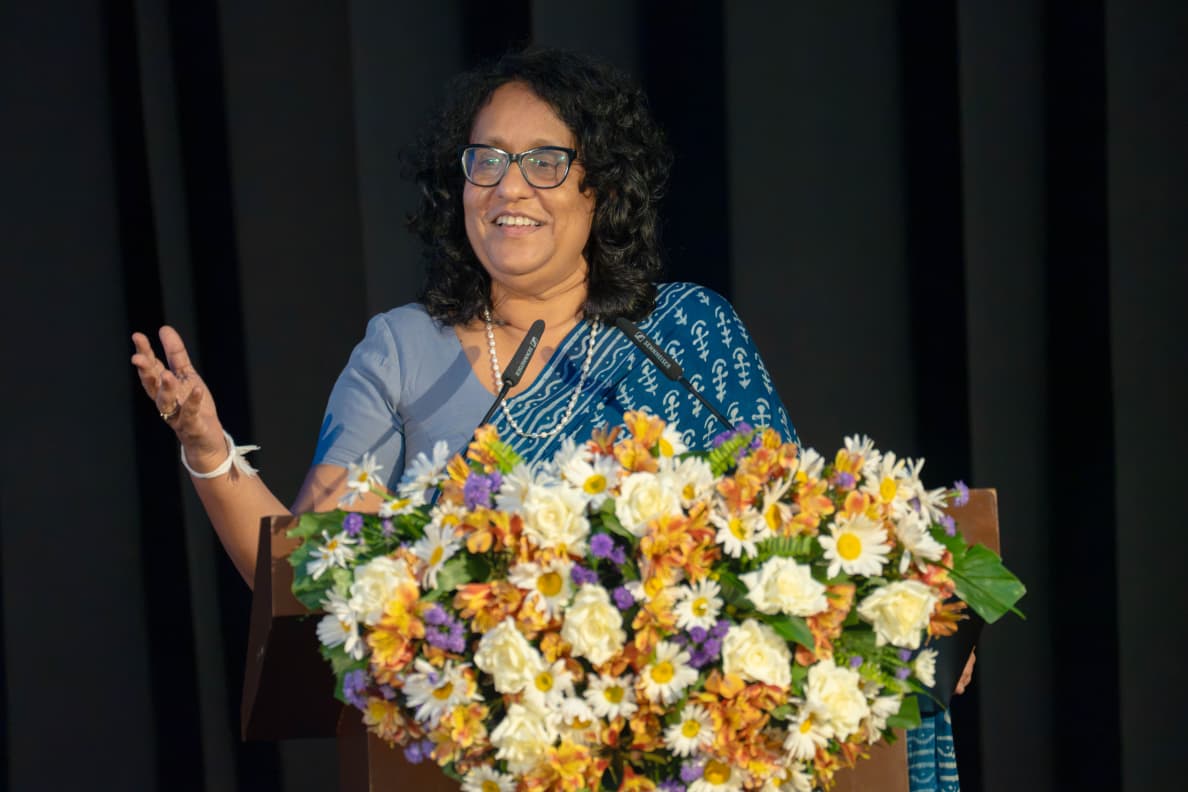
17th National War Heroes’ Day Commemoration held with pride under the patronage of the President
President Anura Kumara Dissanayake stated that the present Government, having taken upon its shoulders the aspirations of all heroes who sacrificed their lives for the pride of a free nation, is firmly committed to building a model country founded on peace and development.
The President further stated that Sri Lanka, which for centuries has been guided by Buddhism, rooted in boundless loving-kindness, non-violence and compassion towards all living beings, is a country where humanity rises above ethnic divisions.
President Dissanayake also emphasised that, instead of following the destructive and tribalistic path that sows hatred and anger among people, the present Government has chosen a path that leads the country towards unity, development and prosperity while safeguarding the lives of its people. He stressed that the Government would proceed along this path fearlessly and with determination.
The President made these remarks while addressing the 17th National War Heroes’ Day Commemoration held on Tuesday afternoon (19) at the War Heroes Memorial in Battaramulla.
The National War Heroes’ Day Commemoration, which marks the victory that ended the civil war that lasted for more than three decades, was held with pride under the patronage of the Commander-in-Chief President Anura Kumara Dissanayake.
A special feature of this year’s commemoration, organised by the Ranaviru Seva Authority, was the increased opportunity provided for a larger number of war hero families to participate.
Speaking further, President Anura Kumara Dissanayake said:
“We are gathered here today to pay tribute and honour to our heroes who contributed immensely to liberating the motherland.
Today, 17 years after the end of the war, we gather here before this War Heroes Memorial to remember the heroes who sacrificed their lives for the country and to fulfil the aspirations for which they fought.
At this moment, we respectfully remember all the heroes who paid with their lives, blood and tears for the pride of a free nation. We pay the nation’s tribute and respect to those who sacrificed their lives not for themselves, but for others and for the country.
In particular, we must honour the parents who gifted such heroic sons and daughters to this motherland. You may each be participating in this commemoration in different ways. Among the thousands of names inscribed on this memorial, some of you may be searching for your father. Others may be searching for a husband, a loved one, a relative, a brother, a closest friend or companion. They sacrificed their lives not only for the security of your country and mine, but also for greater ideals.
I wish to say that those brothers and sisters, who sacrificed parts of their bodies, just as others sacrificed their lives, will forever remain heroic figures in our hearts. Today, as a nation, we continue to experience the results of your immense sacrifice and dedication.
Had it not been for your sacrifice and dedication, we might still be living in a significantly more fearful State. We firmly believe that you will go down in history as the group that played the greatest role in liberating this motherland. Yet within that sacrifice were many other aspirations, the aspiration for a peaceful country. You, more than anyone else, reject a country defined by war and conflict. You understand better than anyone how destructive and horrifying war can be. Therefore, I believe that the greatest call and aspiration for peace within this motherland lies within you.
At the same time, there was also the aspiration for a developed nation. Alongside the struggle to liberate the motherland, you also carried the hope of transforming this country into a developed State. You aspired for a country founded on fairness and the rule of law, a country capable of succeeding in the world. Those were the aspirations carried by those who sacrificed their lives. Before this War Heroes Memorial, I solemnly pledge that we will take responsibility for building the future they envisioned. I pledge that we will never betray their aspirations.
Whenever we celebrate victory, there is something we must remember. There are still children waiting at their doorsteps for fathers who will never return. They will never again receive a father’s affection. Likewise, the pain of wives who lost their husbands will echo throughout their entire lives. Their husbands will never return. We know this.
There are also mothers and fathers who look upon their remaining children while carrying the memory of the child they lost. We know those parents will never receive their child back. All of them search for their loved ones upon this War Heroes Memorial. Deep within their hearts remain their husbands, child or brother. Yet here they search for a name engraved upon this memorial and place a hand upon their chest with a sigh.
Can we ever truly respond to this grief? Is merely commemorating the fallen heroes enough? Is paying tribute to their sacrifices sufficient? The responsibility placed upon those of us who remain alive is to build the State they dreamed of.
In every danger and every threat, they came forward to protect the nation. Whether facing enemy threats or natural disasters, they fulfilled a unique mission of sacrifice. Just as they protected the country during war, they also risked their lives to save others during disasters. Therefore, we assure you that they will forever remain unforgettable in our hearts.
As I stated last year, we stand at a crossroads. We must seek knowledge instead of ignorance. We must build unity instead of division. We must move towards progress rather than stagnation. As I said then, there are two paths before us. One is the destructive and tribalistic path that spreads hatred and anger among people. The other is the path that leads this country towards unity, development and prosperity while safeguarding the lives of the people. I believe that even in the most difficult moments, we will choose the second path. Before you today, I pledge to walk that path fearlessly and with determination.
For the first time in history, a republic accountable to the people has emerged through this transformation. It is truly a people’s republic in the fullest sense of the word, firmly for future generations. Today, we are travelling towards the creation of a humanitarian Sri Lankan nation. This journey has been built upon flames of resilience and determination. It has been marked by extraordinary hardship and suffering. Yet we must remember that the ultimate goal of this difficult journey is to transform this country into a bright and exemplary nation. That, too, was the aspiration of these war heroes, and we bear the responsibility of fulfilling it.
Today, what we carry forward is the indivisible spirit of humanity that exists among us. We are improving Sri Lanka’s image on the international stage. We are transforming our country into one that values the rule of law and the independence of the judiciary. Carrying upon our shoulders the aspirations of all those who sacrificed their lives to save this country, we are engaged in a determined journey to build a model nation.
War can shatter the world into pieces. Peace alone can unite it. A humane society cannot be built upon piles of corpses. Temples of peace cannot rise amidst rivers of blood. A comforting country or world for future generations cannot be built upon exploding bombs and bullets. War is a tragedy. Therefore, we have consigned the story of war to history and embraced the enduring worship of peace in the present.
The Tri-Forces and the security forces of our country fulfilled their duty. They fought against separatism. This motherland belongs equally to Sinhalese, Tamils and Muslims, Malays and Burghers, all of whom have the right to live anywhere within it. You fought against attempts to divide this motherland. They did not wage war against an ethnicity. The horrific consequences of war were experienced by all communities. Young people of one country were lost because of this war.
Opportunistic, power-hungry politicians and extremist agendas divided the people of one country into two.
Political indecency turned humanity into a football. Even today, some continue debating whether war is good or bad. My Government and I are not here to debate whether war was good or bad. We are here to ensure that another war never arises again. I believe this is the aspiration of the war heroes and all patriotic citizens of this country.
Likewise, every citizen, Sinhalese, Tamil, Muslim, Burgher or Malay, must be guaranteed the freedom to live with equal privileges. The belief that human rights, responsibilities and privileges belong equally to all must become embedded within society. Our society had become accustomed either to bowing before powerful authorities or living in fear. Certain groups are unaccustomed to living in a free and democratic State. They prefer conflict, insults and slander. But we remain committed to a democratic and free nation.
We must create a country where everyone with talent, ability and merit can progress. Those who previously thrived on privilege may find this painful. Those who believed themselves special while oppressing others may feel disturbed when they are no longer treated as special. They may become agitated when the law is applied equally regardless of status, as never before in history. Yet we remain unconditionally committed to universal fairness and to sustainably fulfilling the aspirations of the people. That, too, was the aspiration of the fallen war heroes.
This month in which we hold this commemoration is also religiously significant. It is during this month that we commemorate the thrice-sacred events of the Buddha, who delivered to the world the message of compassion, loving-kindness and peace. Buddhism is founded upon non-violence, compassion and boundless loving-kindness towards all beings.
For centuries, our country has functioned upon these noble principles. Yet we know there remains a small minority who spread hatred and anger for their own power and interests.
Sri Lanka possesses a rich multicultural identity. For thousands of years, this country has been a remarkable home for diverse ethnic, cultural, religious and linguistic communities. In this post-war era, Sri Lanka is striving to move beyond its painful experiences. War is an extremely painful experience. We are working to ensure that this suffering is not inherited by future generations. We are building bridges for sustainable peace and coexistence. Acceptance of diversity and non-discrimination contribute greatly towards sustainable peace and coexistence.
At the world-renowned Sri Pada, devotees of all religions worship together. Within the Buddhist monasteries of the UNESCO World Heritage city of Polonnaruwa are Hindu shrines. The Kataragama Devalaya is sacred to Buddhist, Hindu and Islamic devotees alike. Pilgrims from Jaffna in the North travel to Kataragama in the South by foot. Devotees visiting the Kirivehera also visit the Devalaya. In times of natural disaster, humanity rises above ethnic divisions. In moments of hardship, people help one another without discrimination.
What an extraordinary country can be built upon such an inspiring human society? The time has come to confine the destruction we experienced to history. For decades we have been trapped in an economic war, and we must win that war. For decades we have been trapped in a war against unemployment and we must win that war. The younger generation longs for a free and liberated country and we must achieve that.
We are engaged in a struggle to secure an exceptional country for the younger generation of this nation. How can a country win its future when children are deprived of parental love and protection? We must win that struggle. We must win the struggle to create a country where every citizen is treated equally and fairly and where this land is regarded as the motherland of all.
We pay tribute to all those who wiped away the tears of twenty million people by bringing an end to decades of war in this country. In that achievement, the role played by the war heroes was exceptional. Once again, we offer you our deepest respect for that noble service.
I invite you to move forward towards a country filled with peace, where the language of war is heard no more. We must also put an end to the clamour of racism, religious extremism and small disruptive groups. This country must never again become prey to any racist or extremist group. I invite all of you to stand together for that purpose.”
Deputy Minister of Defence, Retired Major General Aruna Jayasekara, Deputy Minister of Public Security and Parliamentary Affairs, Sunil Watagala, Defence Secretary Air Vice Marshal Sampath Thuyacontha (Retired), Secretary to the Ministry of Public Security, Ravi Seneviratne, Commanders of the Tri-Forces, former Commanders, the Inspector General of Police, the Director General of the Civil Security Department, the Director of the National Cadet Corps, senior military officers and family members of fallen and disabled war heroes were among those present at the commemoration.
President’s Media Division (PMD)
-
Features3 days agoSri Lankan Airlines Airbus Scandal and the Death of Kapila Chandrasena and my Brother Rajeewa
-
News4 days agoLanka’s eligibility to draw next IMF tranche of USD 700 mn hinges on ‘restoration of cost-recovery pricing for electricity and fuel’
-
News3 days agoKapila Chandrasena case: GN phone records under court scrutiny
-
News3 days agoRupee slide rekindles 2022 crisis fears as inflation risks mount
-
Opinion6 days agoElectricity tariffs have skyrocketed: Can further increases be prevented?
-
Business3 days agoExpansion of PayPal services in Sri Lanka officially announced
-
Features5 days agoMysterious Death of United Nations Secretary General Hammarskjöld
-
News3 days agoCourt orders further arrests in alleged USD 42 Mn NDB fraud case