
News
Women’s rights advocates reject debt restricting proposals and demand economic justice

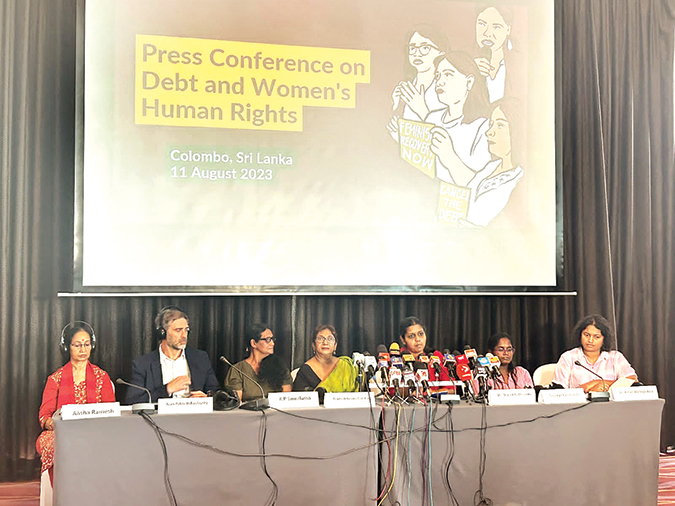
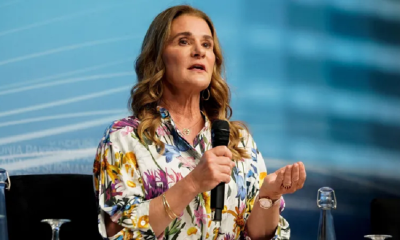
Women’s rights groups in Sri Lanka have vehemently opposed the current debt restructuring proposals that unfairly place the responsibility of repayment on the nation’s working class, particularly its women. Addressing a press conference, several women’s organizations have called for immediate and sustainable solutions to the ongoing debt crisis in Sri Lanka, emphasizing the need for solutions that genuinely address the lived experiences, challenges, and requirements of the people.
Prominent lawyer and activist Lakmali Hemachandra expressed concern over the compromise of workers’ social security funds to service the debt of the world’s wealthiest income earners. Hemachandra emphasized that hardworking individuals in Sri Lanka are facing severe violations through domestic debt restructuring, leading to a loss of their financial security. The restructuring process is set to conclude in September, further endangering workers’ savings. Hemachandra urged the international community to acknowledge and condemn the alarming practice of using workers’ savings to repay creditors, highlighting the lack of genuine public support for such measures.
Juan Pablo Bohoslavsky, Former UN Independent Expert on Debt and Human Rights, raised questions about the selective burden placed on domestic creditors and proposed a more equitable distribution of sacrifices. He underscored that international law demands inter-creditor equity in sovereign debt restructuring, urging for fair treatment across all debt holders.
The ‘National Convening on Debt and Women’s Human Rights,’ held in Colombo on August 9-10, 2023, brought together women’s rights groups from Sri Lanka and other Asian countries. These advocates discussed the profound impact of the ongoing crisis on their lives and criticized the inadequacy of government responses. International financial institutions, notably the World Bank and IMF, were censured for imposing unjust austerity measures without accountability, exacerbating economic turmoil in the region.
Sri Lanka faces a severe economic crisis due to an unsustainable debt burden of 103.8 percent of GDP as of March 2023. This crisis compounds the challenges faced by households still recovering from the COVID-19 pandemic. The government’s hurried implementation of austerity measures to secure an IMF bailout has led to cuts in public spending, significant hikes in utility, food, and energy costs, regressive taxation, and limited social security disbursements. These measures disproportionately affect low to middle-income families and pose a threat to wage and job security, particularly for women. Alarmingly, the government’s decision to utilize the earnings of the Employee Provident Funds to repay debt places an undue burden on the working class and restricts avenues for resistance and legal action.








… reminds AKD led over 560 protests during Yahapalanaya
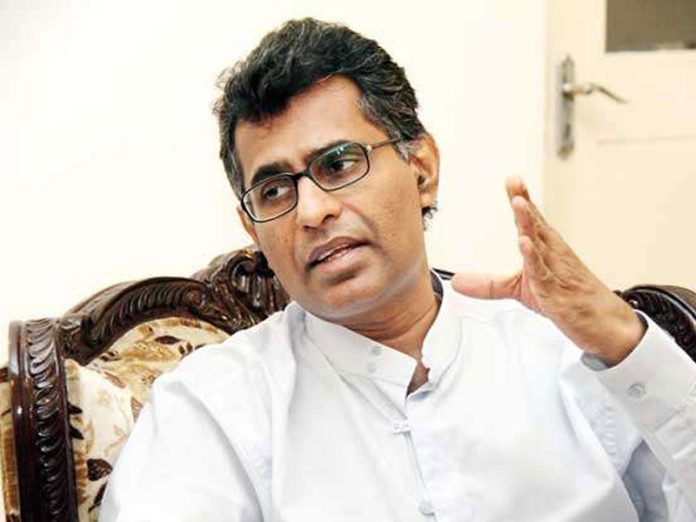
Former Yahapalana Minister and United Republican Front (URF) leader Patali Champika Ranawaka yesterday (19) alleged that the JVP, which carried out over 560 protests during the 2015-2019 period, was now bent on preventing the Opposition from exercising its democratic right to protest.
Recalling the declaration made by the JVP at the height of the violent protest campaign in July 2022 that it would set the Parliament ablaze, the former parliamentarian lashed out at the JVP-led administration for using the police excessively to curb political opposition. Ranawaka said this while addressing the media at the former President Ranil Wickremesinghe’s Flower Road Office .
Commenting on the protest campaign launched by the Maha Sangha, demanding presidential pardon for General Secretary of the Bodu Bala Sena (BBS) Ven. Galagotaatte Gnanasara, the ex-Colombo District lawmaker alleged that President Anura Kumara Dissanayake used a combination of police, investigative units and JVP cadres to break up the monks’ protest. The government went to the extent of compelling the JVP/NPP-run Colombo Municipal Council (CMC) to deprive the peaceful protesters of basic toilet facilities, he alleged.
The government’s actions proved that only those with prior approval from JVP Pelawatte headquarters could launch protests in Colombo, its suburbs or in the provinces. The police have become a political tool in the hands of the JVP, the ex-Minister said. (SF)

By SK Samaranayake
Six people were killed and seven others injured when a speeding bulker lorry carrying cement and concrete ploughed into several vehicles and a shop on the Kandy-Jaffna A9 road at Kurugoda, Akurana, yesterday (19).
Four of the victims, two women and two men, died on the spot in the accident which occurred around 10.30 am, according to Alawathugoda Police.
Police said the bulker, travelling at high speed from the Matale direction, collided with three three-wheelers, two motorcycles and two lorries before veering off the road and crashing into a commercial establishment.
Five of the injured were rushed to the National Hospital of Kandy, where hospital sources said two remained in critical condition.
The bodies of the four victims were placed at the Akurana Hospital, where two others, who suffered minor injuries, were also receiving treatment.
The driver of the bulker was arrested by the Alawathugoda Police Traffic Division and is to be produced before court.
Investigations are being conducted under the supervision of Central Province Senior DIG Lalith Pathinayake.

By Shamindra Ferdinando
owledging that there had been an administrative lapse on the part of the President’s Office in 2019 when Maithripala Sirisena granted presidential pardon to Ven. Gnanasara Thera, Convener of Janathawadi Joint Opposition Prof. G.L. Peiris yesterday (19) urged President Anura Kumara Dissanayake to rectify whatever those shortcomings and release the General Secretary of Bodu Bala Sena.
Addressing the media at the former President Ranil Wickrekmesinghe’s Flower Road Office, Prof. Peiris emphasized that it was not fair to hold Ven. Gnanasara accountable for lapse or technical fault of others at the Presidential Secretariat during President Sirisena’s tenure.
Prof. Peiris was flanked by UNP Chairman Wajira Abeywardena and United Republican Front (URF) leader Patali Champika Ranawaka.
The fresh appeal was made on behalf of Ven. Gnanasara in the wake of President Dissanayake and JVP heavyweight Anura Kumara Dissanayake ruling out fresh presidential pardon for the monk. Minister Lal Kantha declared that the government couldn’t under any circumstances meet the continuing monks’ protest demanding Ven. Gnanasara’s release. President Dissanayake dismissed repeated appeals for Ven. Gnanasara’s release when he addressed the NPP really in Badulla.
Sirisena granted presidential pardon in May 2019 even before he completed a year of his six-year term of rigorous imprisonment for contempt of court during proceedings of the media personality Prageeth Ekneligoda’s 2010 January disappearance in the Homagama Magistrate’s court.
At the onset of the regular weekly briefing, Prof. Peiris said that he would report to the Commission to Investigate Allegations of Bribery or Corruption (CIABOC) today (20) morning as requested by the commission. “The CIABOC wanted to record my statement regarding a meeting I chaired at the ministry after the conclusion of the war in 2009 pertaining to an ongoing investigation.”
Commenting further on the imprisonment of Ven. Gnanasara, the former parliamentarian said that President Sirisena intervened following a spate of requests made on behalf of BBS General Secretary by the Mahanayakes, Anunayakes and other Maha Sangha.
The Supreme Court on 10 September, 2026 rescinded the presidential pardon granted in late May 2019.

Heavy showers about 100 mm are likely at some places in the Northern, North-central, Central, Eastern, North-western and Uva provinces

Molineux, Dunkley enter WPL 2027 auction with top base price of INR 50 lakh

Ranawaka accuses govt. of using JVP cadres and police to suppress political opponents

Six killed as speeding bulker crashes into vehicles, shop in Akurana

Prof. Peiris, summoned by CIABOC, appeals for Ven. Gnanasara’s release

Tusker Agbo found safe and in good health

‘Dates have the highest sugar content to fight Coronavirus’

Sunday Island 27 December – Headlines

#SundayIsland 17th December – Headlines

Sunday Island – 28th March

Sunday Island Headlines – 21 March

Sunday Island – 21st February – Headlines
-

 Latest News7 days ago
Nissanka’s return headlines Sri Lanka’s Test squad against Pakistan
-

 Features2 days ago
Kotahena:A Small Enclave, An Extraordinary Legacy
-

 News6 days ago
Sri Lanka, India caught in US-Iran ship crisis
-
 News3 days ago
Asgiri Mahanayake calls for immediate release of Gnanasara Thera
-
 Latest News7 days ago
Imran Khan’s PTI braces to fight federal takeover of Khyber Pakhtunkhwa
-

 Latest News6 days ago
Missiles intercepted near Riyadh after Saudi coalition hits Yemen fuel depot
-

 Latest News6 days ago
Kusal Mendis’ unbeaten 87 hands Sri Lanka consolation win
-

 News2 days ago
Record 1,600 students take Russian Classical Ballet examination in Sri Lanka