
Latest News
Woman jailed in Germany for keeping Yazidi woman as slave

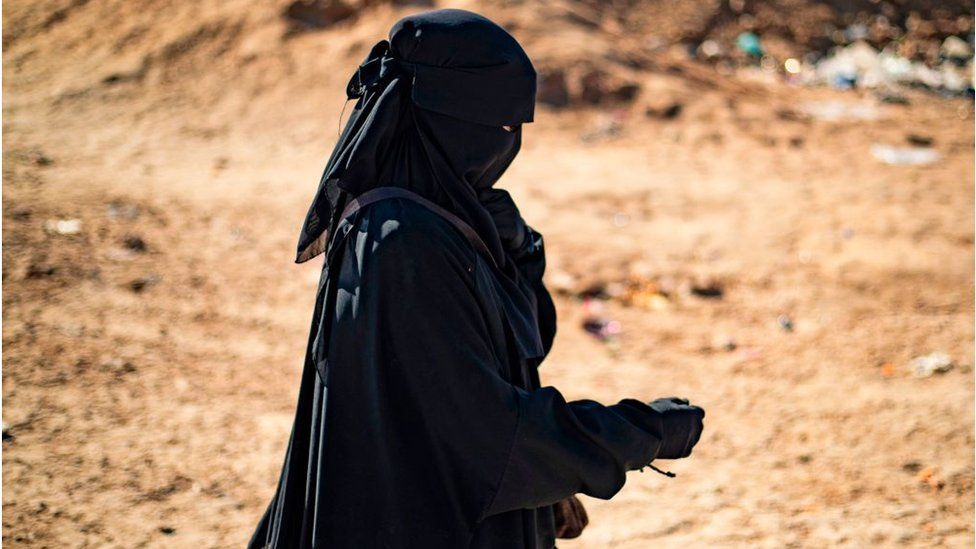
BBC reported that a German woman who joined the Islamic State (IS) group has been jailed for nine years for crimes including keeping a Yazidi woman as a slave. The defendant was also found guilty of crimes against humanity and membership of a foreign terrorist organisation.
A court in the western city of Koblenz said the 37-year-old had abused the young Yazidi woman for three years while they lived in Syria and Iraq. It also found she had encouraged her husband to rape and beat the woman. “All of this served the declared purpose of IS, to wipe out the Yazidi faith,” said prosecutors at the start of the trial in January.
In 2014, IS fighters stormed into the ancestral heartland of the Yazidi people in northern Iraq. The Yazidis fled to Mount Sinjar. Many were killed and some 7,000 women and girls were seized and enslaved. Among them was the young woman whom prosecutors said the accused, named as Nadine K, and her husband used as a slave from 2016, when they moved to the city of Mosul in Iraq. They had travelled to Syria to join IS a year earlier and later moved back there with the woman, who was in her early 20s at the time.
In March 2019, Nadine K and her family were captured by Kurdish forces in Syria. She was arrested last year after being repatriated to Germany.
During her trial, the accused denied coercing the Yazidi woman but said she should have done more for her. The victim, who was freed in 2019, testified in Nadine K’s trial in February and was present for Wednesday’s verdict. Her lawyer said her client hoped that all of those who had committed similar crimes would be brought to justice, according to the Associated Press news agency.
There have been a number of trials in Germany recently involving former IS members accused of killing or abusing Yazidis. In October 2021, a woman was jailed for 10 years over the killing of a Yazidi girls she and her husband had bought as a slave.
A month later, a German court issued the first worldwide ruling that recognised crimes by IS against the Yazidi people as genocide.









Latest News
Heat Index at Caution Level in the Northern, North-central, North-western, Western, Sabaragamuwa, Eastern and Southern provinces and in Monaragala district.

Warm Weather Advisory
Issued by the Natural Hazards Early Warning Centre
at 3.30 p.m. on 20 April 2026, valid for 21 April 2026
The Heat index, the temperature felt on human body is likely to increase up to ‘Caution level’ at some places in the Northern, North-central, North-western, Western, Sabaragamuwa, Eastern and Southern provinces and in Monaragala district.
The Heat Index Forecast is calculated by using relative humidity and maximum temperature and this is the condition that is felt on your body. This is not the forecast of maximum temperature. It is generated by the Department of Meteorology for the next day period and prepared by using global numerical weather prediction model data.

Effect of the heat index on human body is mentioned in the above table and it is prepared on the advice of the Ministry of Health and Indigenous Medical Services.
ACTION REQUIRED
Job sites: Stay hydrated and takes breaks in the shade as often as possible.
Indoors: Check up on the elderly and the sick.
Vehicles: Never leave children unattended.
Outdoors: Limit strenuous outdoor activities, find shade and stay hydrated.
Dress: Wear lightweight and white or light-colored clothing.
Note:
In addition, please refer to advisories issued by the Disaster Preparedness & Response Division, Ministry of Health in this regard as well. For further clarifications please contact 011-7446491.


Nahid Rana’s five-wicket haul followed by Tanzid Hasan’s fiery half-century got Bangladesh a six-wicket win against New Zealand. The home side leveled the ODI series, setting up the decider in Chattogram on Thursday.
It was a much-needed contribution from the Bangladesh batters, who were criticised for losing the first game by 26 runs. This time, the bowlers blew a hole through New Zealand’s top and middle orders, with Rana taking 5 for 32, his second five-for in ODIs, before the batters got them home in 35.3 overs.
Bangladesh’s chase, however, began with uncertainty once again. Nathan Smith burst through Saif Hassan with an excellent inswinger in the first over. Soumya Sarkar, drafted into the playing XI to replace Afif Hossain, fell after making eight runs. He struck Will O’Rourke for a six but New Zealand captain Tom Latham kept the three slips as he urged O’Rourke to keep bowling bouncers.
Soumya fell into the trap, when his attempted glide with a vertical bat, only reached Dean Foxcroft at third slip. Tanzid retaliated almost immediately, hitting Smith for two sixes in the fifth over. The first was over long-on, the next over midwicket with a lovely flick.
Tanzid reached his fifty with his third six, slog sweeping Foxcroft over midwicket in the 15th over. He took just 33 balls to reach his sixth half-century in ODIs.
Najimul Hossain Shanto, who made a golden duck in the first game, was more of his dominant self, complementing Tanzid’s efforts in their third-wicket partnership. Shanto struck Foxcroft’s half-tracker for six in the 17th over, before launching Jayden Lennox over long-off for a similar result.
Tanzid was racing towards a big score, hammering Lennox for his fourth six in the 23rd over. But the left-arm spinner had the last laugh the very next ball as Tanzid top-edged a hoick across the line for Henry Nicholls to take a steepling catch tracking back at cover. It ended a 120-run third wicket stand.
Litton Das, playing his 100th ODI, couldn’t add much to the total, when Lennox had him caught off a slog in his next over. Shanto hobbled off the field after completing his fifty due to cramps.
Towhid Hridoy and Mehidy Hasan Miraz added 32 to complete the chase. Hridoy made an unbeaten 30 off 31 balls with five fours, while Mehidy struck the winning run in the 36th over.
Rana had earlier dominated the New Zealand batting line-up whenever captain Mehidy handed him the ball. He took the first two wickets: Henry Nicholls, New Zealand’s top scorer from the first game, trapped lbw, before a 146kph bouncer got Will Young. Rana got the ball to rear into the No 3 batter, who could only guide it to gully where Soumya took an easy catch.
Nick Kelly found Muhammad Abbas as a willing ally, as the pair rebuild the New Zealand innings in the middle overs. Abbas broke the boundary drought of 33 balls, when he edged Soumya to deep third in the 20th over. Kelly struck another bookended the over with another four before driving Mehidy Hasan Miraz through cover in the following over.
Kelly then laid into Taskin Ahmed, driving him down the ground and clipping him over midwicket among his three fours in the 25th over. Kelly soon reached his fifty in the 27th over, before Rana, brought back into the attack, removed Abbas. Wicketkeeper Litton ran quite a distance towards fine-leg, where he dived to complete a brilliant catch. Litton had earlier taken a fine tumbling catch to remove Tom Latham, the New Zealand captain, off Soumya’s bowling
Kelly started to apply himself as a more aggressive batter. He moved a lot around the crease, even getting hit on his visor when he tried to hook Shoriful Islam’s length ball in the 35th over. He fell to the same bowler in his next over, caught at midwicket for 83.
Bangladesh’s fielders contributed to their good showing. Towhid Hridoy took three catches including a superb effort at long-on to end the New Zealand innings.
Rana added two more to his kitty in the death overs, removing Dean Foxcroft for 15, before yorking Jayden Lennox for a duck. Rana’s five wickets apart, Shoriful Islam took two wickets while Rishad Hossain, Taskin Ahmed and Soumya took a wicket each.
Brief scores:
Bangladesh 199 for 4 in 35.3 overs (Tanzid Hasan 76, Najmul Hossain Shanto 50 retd, Towhid Hridoy 30*; Jayden Lennox 2-36) beat New Zealand 198 in 48.4 overs (Nick Kelly 83; Nahid Rana 5-32, Shoriful Islam 2-32) by six wickets
[Cricinfo]

Rs 13 bn NDB fraud: Int’l forensic audit ordered

Easter Sunday commemorations

Former Minister Gamage under CIABOC probe over recruiting 134 persons from Galle district

Coal scam: SJB says NAO report obstacle to NPP bid to suppress the truth

Of masterminds

Fertilizer shortages threaten to wither Sri Lanka’s plantation sector output

‘Dates have the highest sugar content to fight Coronavirus’

Sunday Island 27 December – Headlines

#SundayIsland 17th December – Headlines

Sunday Island – 28th March

Sunday Island Headlines – 21 March

Sunday Island – 21st February – Headlines
-

 News5 days ago
PNS TAIMUR & ASLAT set sail from Colombo
-

 Business3 days ago
Harnessing nature’s wisdom: Experts highlight “Resist–Align” path to resilience
-

 News3 days ago
Gratiaen Trust announces longlist for the 33rd Annual Gratiaen Prize
-

 Latest News7 days ago
“I extend my heartfelt wishes to all Sri Lankans for a peaceful and joyous Sinhala and Tamil New Year!” – President
-

 News2 days ago
From Nuwara Eliya to Dubai: Isha Holdings markets Agri products abroad
-

 News3 days ago
Heroin haul transported on 50-million-rupee contract
-

 Latest News4 days ago
Singapore Zoo’s first Sri Lankan leopard cubs make their public debut
-

 Latest News7 days ago
US blockade of Iran would worsen global energy crisis, analysts say