
News
WNPS Forges New Groundthrough Private Land Acquisition for Biodiversity Conservation

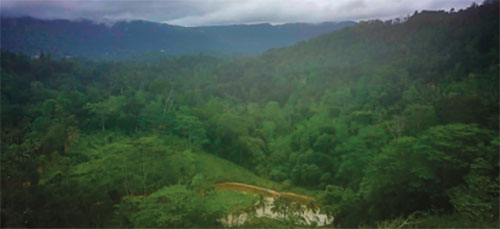
Wildlife and Nature Protection Society (WNPS) is pleased to sign their inaugural Memorandum of Understanding (MOU), under the PLANT Guarantee Company.
PLANT – WNPS’ Preserving Land and Nature Trust, was set up with the aim of acquiring privately owned lands for the purpose of conservation (outright or on a long-term lease) and to collect funds through the Trust, to purchase lands for the purpose of conservation. Sustainable forest-grown Ceylon tea brand Kaley Teas will be partnering with WNPS on this ground-breaking PLANT initiative.
In a time of rapid development and increasing demand for resources such as now, land conservation and reforestation play an important role in safeguarding wildlife habitats. Protecting unharmed forests is also among the most efficient and cost-effective ways to combat climate change. The PLANT (Preserving Land and Nature Trust) strategy is to acquire as many acres of private land as possible for conservation purposes under a Single Purpose Vehicle (either through lease or outright donation of land and by collecting funds under the Trust for purchasing of land). Acquiring private land for the purpose of biodiversity conservation is not a new concept and is practiced globally with a lot of success. The aim of the vehicle is to increase the land extent available for conservation, as remaining habitats are being eroded by unplanned development and unsustainable agricultural practices that cause grave and unprecedented threat to both forest cover and wildlife.
Pioneers in conservation
 Established in 1894, the Wildlife and Nature Protection Society (WNPS) is the third oldest conservation society in the world and the largest in Sri Lanka with a membership base of over 3,000. For the last 127 years WNPS has been working with many stakeholders including scientists, researchers, policy makers, conservationists, activists and the general public, to protect Sri Lanka’s rich biodiversity. Partnering with companies and supporters who share the same vision, allows the WNPS to springboard its efforts in protecting Sri Lanka’s flora and fauna for future generations
Protecting Sri Lanka’s wildlife habitats is now more important than ever
Sri Lanka is known as a global biodiversity hotspot for its high number of species, in a relatively limited area. Sri Lanka’s biodiversity also has a high rate of endemism – about 27% of the country’s plants are endemic and 22% of its amphibians, birds, mammals, and reptiles. Sadly, Sri Lanka has one of the highest recorded rates of primary forest destruction in the world (Global Forest Watch). Primary forest cover has fallen from 84% in 1881 to less than 17% today (Mongbay). Habitat loss is the leading threat to Sri Lanka’s native ecosystems and species. It should come as no surprise that 30 species of mammals, 14 species of birds, 13 species of reptiles, 75 species of amphibians, 121 species of fish and 298 species of plants in Sri Lanka are listed as Threatened (IUCN Red List version 2020)
The biggest threat to Sri Lanka’s forests and wildlife habitats are human activities such as urbanization, agricultural expansion and ill-advised development projects.
Government decisions, such as the decision to abolish Circular No. 5/2001 and hand over forested land classified as Other State Forests (OSF) from the Forest Department (FD) to the Divisional Secretaries and District Secretaries for selected development projects, will destroy even more of our wildlife habitats.
Partners with a shared vision
Kaley Teas is a pioneering Ceylon tea, which comes from a single garden surrounded by forests, bordering Sinharaja Rainforest. The tea is grown organically, made with the finest leaves that are hand-picked, naturally withered from the winds from the rainforest and hand made.
Kaley continues to restore abandoned tea lands stripped of its natural balance by re-establishing bio diverse forest eco-systems. As Kaley’s teas are grown in a forest environment, the income of the community who grow and make tea is totally dependent on the existence of the forest. In this regard, Kaley Farms has set up a multi-pronged program to enrich the living standards of the families involved in the growing, plucking and making of Kaley Tea. Kaley will share their life stories, especially those of women and children who face various challenges on a daily basis. This will enable their partners to relate much closer to their communities. Ultimately, Kaley hopes that these actions will positively impact the 300 or so families in the village and will also help build a model that could be rolled-out elsewhere in the country.
Through this partnership WNPS and Kalay Teas hopes to protect and further develop the forest eco system and biodiversity, carry out research, publish findings which can aid in conservation and conduct training programs to educate village communities to ensure sustainability.

Latest News
Sun directly overhead Dodanduwa, Rathgama, Yakkalamulla, Akuressa, Mulgirigala, Ranna, Kalamatiya and Ussangoda at about 12:13 noon today (05th April)


On the apparent northward relative motion of the sun, it is going to be directly over the latitudes of Sri Lanka during 05th to 15th of April in this year.
The nearest areas of Sri Lanka over which the sun is overhead today (05th) are Dodanduwa, Rathgama, Yakkalamulla, Akuressa, Mulgirigala, Ranna, Kalamatiya and Ussangoda at about 12:13 noon
Latest News
Heat Index at Caution Level in the Western, Sabaragamuwa, Southern, Eastern, North-western, Northern and North-central provinces and in Monaragala district

Warm Weather Advisory
Issued by the Natural Hazards Early Warning Centre
Issued at 3.30 p.m. on 04 April 2026, valid for 05 April 2026
The Heat index, the temperature felt on human body is likely to increase up to ‘Caution level’ at some places in the Western, Sabaragamuwa, Southern, Eastern, North-western, Northern and North-central provinces and in Monaragala district.
The Heat Index Forecast is calculated by using relative humidity and maximum temperature and this is the condition that is felt on your body. This is not the forecast of maximum temperature. It is generated by the Department of Meteorology for the next day period and prepared by using global numerical weather prediction model data.

Effect of the heat index on human body is mentioned in the above table and it is prepared on the advice of the Ministry of Health and Indigenous Medical Services.
ACTION REQUIRED
Job sites: Stay hydrated and takes breaks in the shade as often as possible.
Indoors: Check up on the elderly and the sick.
Vehicles: Never leave children unattended.
Outdoors: Limit strenuous outdoor activities, find shade and stay hydrated.
Dress: Wear lightweight and white or light-colored clothing.
Note:
In addition, please refer to advisories issued by the Disaster Preparedness & Response Division, Ministry of Health in this regard as well. For further clarifications please contact 011-7446491.


The internationally recognized “Walk for Peace,” originating from the United States, is set to take place in Sri Lanka starting April 21, 2026, led by the Most Venerable Paññakara Thero and a delegation of twelve monks from the Maha Sangha, President’s Media Division said.
Spanning seven days across the island, this pilgrimage’s purpose and concept are guided by the Buddha’s teaching, “Caratha bhikkhave carikam bahujana hitaya bahujana sukhaya lokanukampaya” (Wander forth, O Monks, for the welfare and happiness of the many, out of compassion for the world).
This program aims to promote peace and lovingkindness within society. It serves as a practical demonstration that peace cannot be attained by force, but must be cultivated step-by-step through mindfulness.
The inaugural event of this program is scheduled to be held in Anuradhapura on April 21, 2026. A ceremony to receive the sacred sapling of the Jaya Sri Maha Bodhi will take place at 4:00 PM, followed by special religious observances at the sacred Ruwanweliseya premises at 5:00 PM.
Thereafter, the walk will commence from the ancient Dambulla Royal Cave Temple and proceed towards Kandy. Upon reaching Kandy, the Maha Sangha will pay their respects to the Chief Prelates (Maha Nayaka Theros) of the Malwatta and Asgiriya Chapters, before visiting the Sri Dalada Maligawa (Temple of the Sacred Tooth Relic) to receive blessings.
Throughout the journey, the procession will carry the sacred sapling of the Jaya Sri Maha Bodhi, along with venerated relics from the historic Nilagiri Cetiya, Madanwala Raja Maha Viharaya in Hanguranketa, Mahiyangana Raja Maha Viharaya, and the Hunupitiya Gangaramaya.
The walk will conclude at Independence Square in Colombo on April 28, 2026. Subsequently, the venerated relics and the sacred sapling of the Jaya Sri Maha Bodhi are to be carried from Independence Square to Gangaramaya Temple, Hunupitiya, Colombo by a procession.
The Sri Lankan coordination of the event is spearheaded by Venerable Melpitiye Wimalakirti Thera. The Government of Sri Lanka’s flagship national program, “Clean Sri Lanka,” serves as the principal state partner.
Additionally, the event receives extensive support from various state institutions, including the National Design Centre, the Tri-Forces, and the Department of Information.
At the conclusion of the seven-day walk, a special State Ceremony will be held at Independence Square in Colombo on April 28, 2026. Concurrently, a special exhibition showcasing Sri Lanka’s Buddhist heritage and traditional handicrafts will be organized by the National Design Centre at the Gangaramaya premises on April 28 and 29, 2026.
This exhibition will feature brass items (ceremonial fans, flags, statues, bowls, and pinnacles), lacquerwork (caskets and boxes), clay crafts (bowls and statues), palm leaf crafts (fans and sesath), natural dyeing of robes, Dumbara wall hangings, traditional drums, and traditional paintings.
The primary objective of this cultural program is to contribute Sri Lanka’s Buddhist and cultural heritage to a project in Texas, USA, where the Tripitaka is being inscribed in 10 languages and enshrined within 840 stupas to create a centre for Buddhist education.

Sameer Rizvi aces another tricky chase as Delhi Capitals floor Mumbai Indians

Sun directly overhead Dodanduwa, Rathgama, Yakkalamulla, Akuressa, Mulgirigala, Ranna, Kalamatiya and Ussangoda at about 12:13 noon today (05th April)

Showers expected in the Western, Sabaragamuwa, Central, Southern, Uva, Eastern and Northcentral provinces after 2.00 p.m.

Heat Index at Caution Level in the Western, Sabaragamuwa, Southern, Eastern, North-western, Northern and North-central provinces and in Monaragala district

Global ‘Walk for Peace’ to be held in Lanka

World Bank launches new 5-year partnership framework with Lanka

‘Dates have the highest sugar content to fight Coronavirus’

Sunday Island 27 December – Headlines

#SundayIsland 17th December – Headlines

Sunday Island – 28th March

Sunday Island Headlines – 21 March

Sunday Island – 21st February – Headlines
-

 News3 days ago
2025 GCE AL: 62% qualify for Uni entrance; results of 111 suspended
-

 News5 days ago
Tariff shock from 01 April as power costs climb across the board
-
 News6 days ago
Inquiry into female employee’s complaint: Retired HC Judge’s recommendations ignored
-

 Features6 days ago
New arithmetic of conflict: How the drone revolution is inverting economics of war
-

 Editorial3 days ago
Search for Easter Sunday terror mastermind
-

 Business4 days ago
Hour of reckoning comes for SL’s power sector
-

 Sports6 days ago
Sri Lanka’s 1996 World Cup heroes to play exhibition match in Kuala Lumpur
-

 Features5 days ago
Seychelles … here we come