
Latest News
Withdrawing from the IMF agreement would jeopardize the trust in Sri Lanka’s economy – President

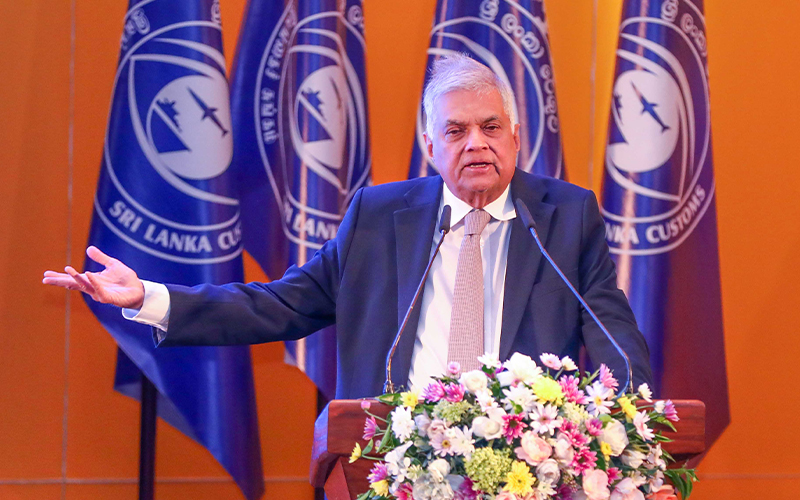
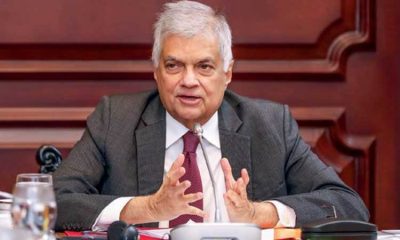
President Ranil Wickremesinghe extended an invitation to all political party leaders in the Parliament to engage in discussions with the Managing Director of the International Monetary Fund (IMF) on the implementation of the agreement with the IMF.
Emphasizing the importance of unity in leading the country to success, he reiterated that withdrawing from the agreement would jeopardize the trust in Sri Lanka’s economy. The President stressed that the nation’s economy suffered due to the politics of promises, emphasizing the need for all political parties to formulate comprehensive plans for the country’s development when gearing up for an election.
President Ranil Wickremesinghe made these remarks during the International Customs Day celebrations at the Colombo Customs Headquarters this morning (26).
The President expressed gratitude to all members of the Customs Department for their contributions to the customs revenue in 2023. Highlighting customs tax, VAT and income tax as the three primary sources of income globally, the President stressed the importance of enhancing the efficiency of the customs service to boost the country’s revenue. He further noted that upcoming government legislation and modernization initiatives will overhaul all public revenue-generating institutions.
President Ranil Wickremesinghe delivered six Certificates of Merit to customs officials for rendering exceptional services to the International Customs. The Director General of Sri Lanka Customs, Sarath Nonis, presented the Strategic Plan for 2024 to President Wickremesinghe and State Minister for Finance, Ranjith Siyambalapitiya.
Additionally, a memento was presented to the President by the Director General of Sri Lanka Customs.
President Ranil Wickremesinghe, offering additional remarks, stated:
“The Customs Department holds a significant historical position, being considered one of the oldest government departments in Sri Lanka. Historical records indicate that customs taxes were collected around 2000 years ago at the ancient port of Manthai. From the Anuradhapura era, through the Kotte era and into the Kandy era, customs revenue has played a pivotal role in the nation’s existence.
I express my gratitude to the Customs Department for their contribution in helping us overcome the economic crisis faced in 2022. Customs duties, VAT and income taxes stand as the three primary sources of income for nations globally. In the contemporary landscape of international trade agreements, regional trade agreements and free trade agreements, our focus should be on enhancing income. To achieve this, the current customs services need to operate with efficiency.
While we are unable to allocate additional staff to your department, your commendable performance highlights the potential for substantial revenue improvement. There is a considerable journey ahead, and the government is firmly committed to the comprehensive modernization of customs and other revenue departments, which includes the imminent introduction of new legislation.
This initiative is a crucial component of the measures undertaken to steer the country out of the economic crisis. The decisions made in 2023 have paved the way for recovery from the economic downturn of 2022, although the journey is on-going. By the end of this year, our aim is to elevate the country’s income to 12% of the GDP. By 2026, we target a further increase to 15%.
To achieve this, income must be generated from the existing economy, necessitating economic development. The pressing question today is how to facilitate this economic growth. The out-dated economic system is incapable of propelling the country forward. The reliance on daily loans led to the collapse of the country’s economy. It is imperative to overhaul this economic system for sustainable progress.
We are still grappling with challenging times. In 2021, we faced shortages of essential goods, including medicine, fertilizer and fuel. Today, these necessities are available, with associated costs. The Cost of living is still felt by everyone. Economic development is crucial to alleviating these issues. While it is a wish that the economic damage of 2022 could be swiftly undone, the reality is that we need to transition to a new economy.
To stimulate economic growth, we must focus on a competitive market, bolster exports, and increase foreign exchange reserves. An agreement with Thailand is set to be signed on February 3rd, marking an opportunity for collaboration. While Thailand shares a Theravada Buddhist heritage with Sri Lanka, our respective economic paths have diverged, leading to discernible differences today.
Our actions today shape the future economy of our country. It necessitates thoughtful consideration and discussion. Political parties should engage in meaningful dialogue, especially when preparing for elections, understanding the intricacies of addressing the country’s challenges.
It is imperative to carefully consider the future trajectory of our nation’s economy through open discussions. Political parties should engage in thorough deliberations, articulating strategic steps to address the challenges facing our country. Achieving solutions demands thoughtful discourse and a united commitment to charting a realistic economic path forward. Our emphasis should be on comprehensive discussions, steering away from impractical endeavours—symbolized by the metaphorical notion of bringing rice from the moon. Continuous evaluation and, when needed, adaptation of existing programs should be integral to our on-going conversation and collective dedication to progress.
Our country has recently entered into an agreement with the International Monetary Fund, a pact signed by numerous countries, including 15-20 others. It is an agreement we cannot simply walk away from, necessitating collective discussion and consideration. However, the unfortunate reality is that our political landscape often resembles the fleeting nature of “papadam” —put in the pan, enjoyed when it blooms, and soon forgotten. The cycle repeats, with new issues emerging, gaining momentary attention, and eventually fading into oblivion.
We raised concerns on social media, vehemently opposing certain drafts, only to witness them become law despite public outcry. The Anti-Terrorism Act is now looming on the horizon, met with similar protests, yet risks being consigned to collective amnesia. Similarly, the introduction of the TRC Act sparked fears about the demise of free education, but these worries, too, eventually dissipated. This cyclical nature of political discourse has contributed to the challenges our country currently faces, a reality we must not lose sight of.
We must have the strength to transcend our current predicament, recognizing that this decision impacts not only our own future but also that of our children. Hence, I urge all political party leaders in parliament to engage in discussions regarding our stance on the agreement with the IMF and whether any amendments are deemed necessary.
Following these discussions, I am willing to extend an invitation to the Managing Director of the IMF to participate in a collective dialogue here. Let us collaboratively explore different perspectives and propose modifications if deemed beneficial. While the amendment process is open for consideration, it is imperative to acknowledge the existing agreement and work towards its implementation.
(PMD)







Missiles and drones have been intercepted over Riyadh after the Saudi-led coalition fighting in Yemen struck a fuel depot near the Houthi-controlled capital, Sanaa, its spokesperson says.
Maj Gen Turki al-Maliki said several projectiles targeting the Saudi capital and other cities were intercepted after the coalition carried out a strike on the Yemen Petroleum Company’s al-Sabaha facility on Tuesday night.
The Houthis warned they would target the airport and Aramco refinery in Saudi Arabia’s capital, Riyadh, and Aramco’s headquarters in the eastern city of Dammam.
Al-Maliki later said missiles targeting cities including Dammam had been intercepted, while shrapnel had fallen in a residential area in Dhahran.
It came as the Saudi cabinet, chaired by Crown Prince Mohammed bin Salman, said the Iran-backed group would “bear the consequences” of its recent deadly attacks on the kingdom.
Thirteen people were killed when a missile hit King Khalid International Airport in Riyadh on Saturday, while another person was killed in a similar attack there the following day.
On Tuesday, the coalition said its forces had destroyed three drones north of Riyadh.
The Houthis have said they are targeting airports, oil and gas facilities, and military bases in Saudi Arabia with missiles and drones in response to deadly Saudi strikes on territory that they control in western Yemen, including Sanaa.
The Saudi-led coalition has been providing air support for Yemeni pro-government forces mounting an offensive on Yemen’s Red Sea coast and several other front lines.

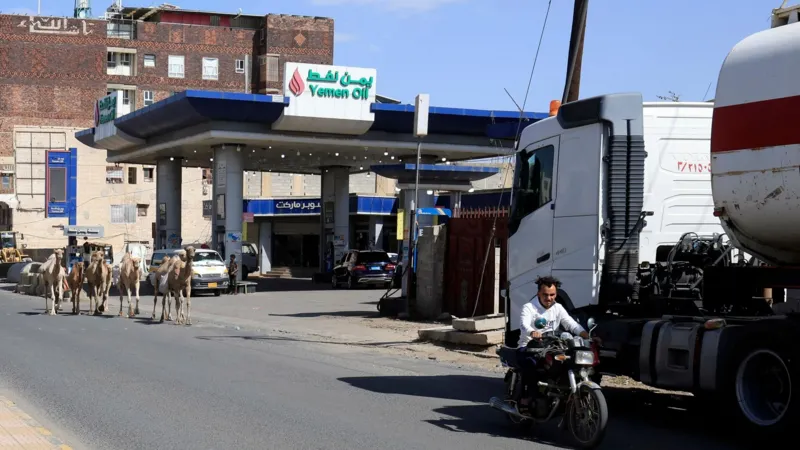
A correspondent for AFP news agency reported that queues formed at petrol stations in Sanaa on Tuesday afternoon following the coalition’s warning of an impending operation against the al-Sabaha oil facility, with many residents worried about shortages.
The Yemen Petroleum Company, which is run by the Houthis, issued a statement that sought to reassure them, saying the facility “does not contain any stock of petroleum products”.
The company also said it had “taken all necessary precautionary measures to address any emergency, ensuring the stability of the supply situation and the continued meeting of citizens’ needs in a normal manner”.
After al-Maliki confirmed the strike, first reported by Houthi media, explosions were heard over Riyadh and other Saudi cities, with al-Maliki reporting four missiles and two drones had been intercepted near the capital.
Yemen has been devastated by a civil war that began in 2014, when the Houthis ousted the internationally-recognised government from Sanaa. The conflict escalated in 2015, after the Saudi-led coalition of Arab states intervened in an attempt to restore the government’s rule.
A four-year-old informal ceasefire began to unravel in July, when the Houthis announced a “maritime embargo” against Saudi Arabia and began missile and drone attacks on Saudi airports, oil facilities and tankers in the Red Sea.
The Houthis said they were retaliating for what they call a Saudi blockade of their territory, as well as an air strike on Sanaa airport that they blamed on the kingdom.
The conflict escalated in September after the Houthis seized part of Yemen’s south-western Red Sea coast near the Bab al-Mandab Strait, a chokepoint for global shipping. Their advance contributed to a rise in oil prices following six months of war between the US, Israel and Iran.
US President Donald Trump said on Truth Social on Tuesday the Houthis were “behaving very badly… and purposefully trying to drive up Oil Prices”.
Speaking to reporters, he did not answer a question on whether he’d made a decision to help the Saudis retaliate against them, but said he “might” ask Turkish President Tayyip Erdogan to intervene.
Last week, pro-government forces said they had regained control of territory overlooking Bab al-Mandab after launching a major counter-offensive with the support of Saudi air strikes.
Hundreds of people have reportedly been killed in Yemen since August. The UN’s human rights office says they include at least 54 civilians, half of them children.
More than 216,000 people have also been displaced across the country, and suspected cholera cases have tripled in three weeks, rising from 217 to 647, according to the UN.
[BBC]
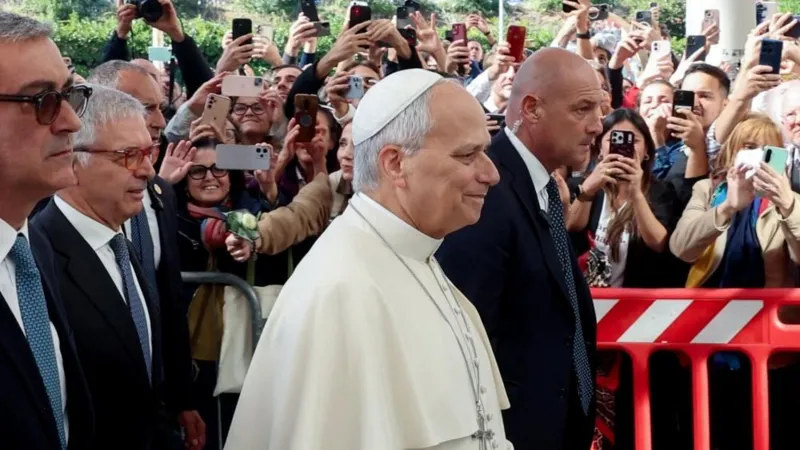
Pope Leo XIV has been diagnosed with lung cancer but had successful surgery to remove a lower lobe of his right lung, the Vatican has said in a medical bulletin.
The 71-year-old underwent a 90 minute surgery on Tuesday at Rome’s Gemelli Hospital and was subsequently diagnosed with lung adenocarcinoma.
“After the operation, the Pope awoke normally and returned after a brief period of observation to his room on the 10th floor,” the Vatican said in a statement.
The lump was first detected during what the Vatican has described as “routine checks”.
Earlier, large crowds gathered outside the hospital to greet the Pope, with some waiting for several hours.
They cheered greetings and well wishes as he passed, while he waved and smiled back through the lowered back window of his car.
He was then met by staff on the hospital steps. “I’m sorry,” one of them commiserated, to which the Pope gave a smile and a shrug. “We’re here for you,” he was assured.
In its statement, the Vatican said the whole lower lobe of the Pope’s right lung was removed “to ensure the procedure was radical”.
A Vatican source told Agence France-Presse news agency further tests were being carried out to see if there was any sign the cancer had spread.
It was Leo XIV himself who on Sunday announced news of his operation to the world, speaking from the balcony in St Peter’s Square after delivering the traditional Angelus blessing.
He said the nodule, or growth, on his lung was “contained” and had been found “at a very early stage”, but that doctors had advised him to have it removed.
Gemelli’s thoracic surgery team operated on the Pope, whose schedule has already been cleared until 20 October to give him time to recover.
Nodules are quite common and not necessarily cancerous, but after it was examined the medical team confirmed it was pulmonary adenocarcinoma, “as suspected by pre-operative tests”, the Vatican said.
The Vatican has stressed that the pontiff, who is generally thought to be fit, had no symptoms of infection or illness.

Cardinal Kikuchi Tarcisio Isao of Tokyo wrote on social media that he’d had an audience with Pope Leo on Monday, and said the pontiff felt “nothing wrong” physically.
He said the Pope had decided to check in for surgery as soon as possible because he was due to travel to Latin America in early November, and was keen to stick to that plan.
The trip is particularly significant because it includes a visit to Peru, where the pontiff was a missionary and then a Bishop for many years.
Despite all the reassurances, the news has shaken Catholics all over the world.
“Am I worried? Yes, because I certainly wasn’t expecting anything like this,” Vatican Secretary of State Cardinal Parolin told journalists on Tuesday.
He agreed that the news was like a “bolt from the blue”, but said the cardinals had been struck by the Pope’s “serenity” and were confident in his recovery.
Outside Gemelli Hospital, which has treated several popes and is home to a large statue of John Paul II, a few Catholics lingered after the pontiff was admitted.
Carla had come specially, wanting to be close.
“He seems calm, so we are calm too – even though illness is always unpleasant,” she told the BBC. “We will wait here and pray.”
[BBC]
Latest News
Expedite the cleaning of Colombo’s canals and drainage systems within the next two weeks – PM instructs officials
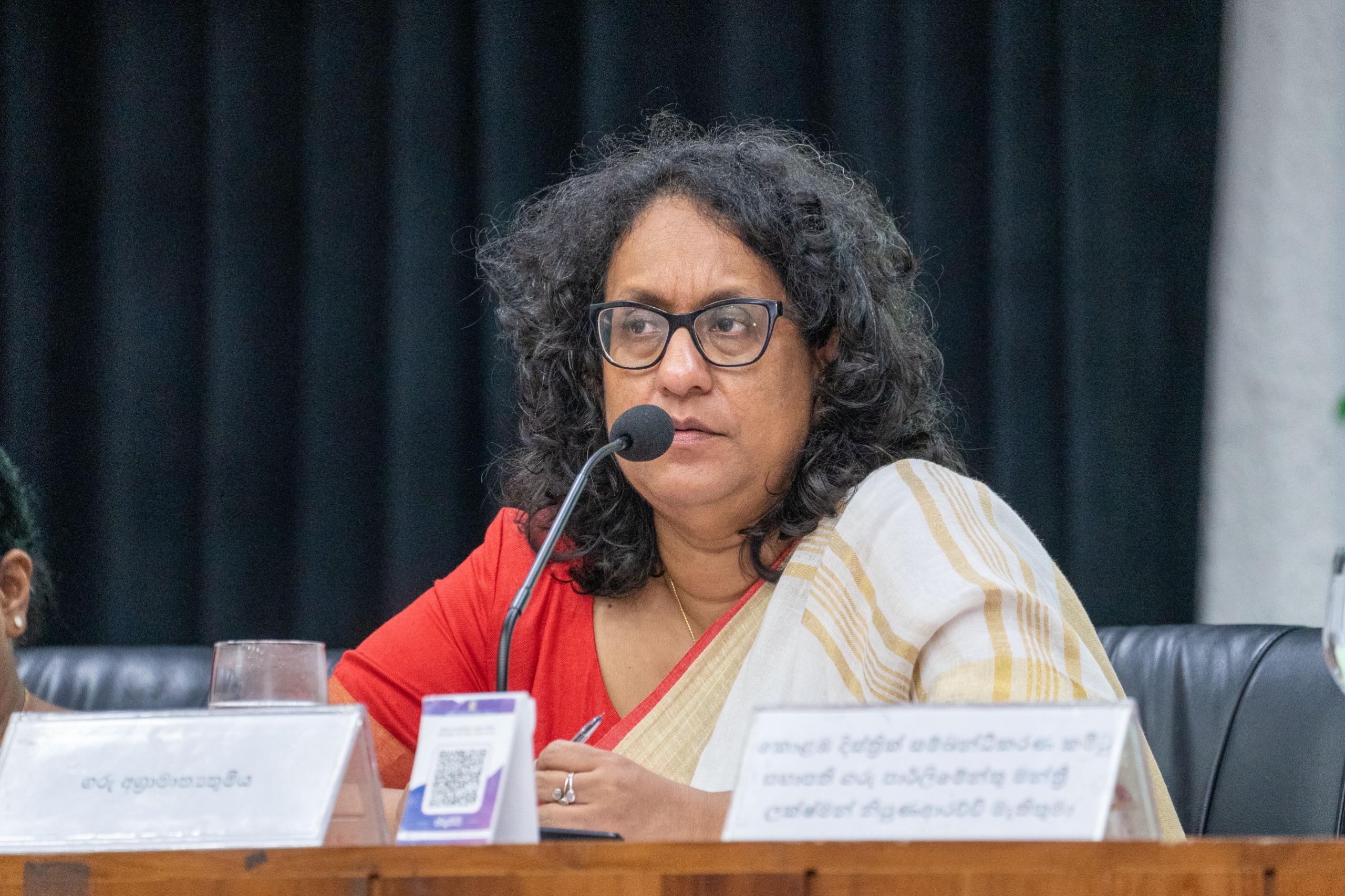
[Prime Minister’s Media Division]

Missiles intercepted near Riyadh after Saudi coalition hits Yemen fuel depot

MI5 chief warns of threats to UK from Russia, Iran and AI

Pope diagnosed with lung cancer but had successful surgery, Vatican says

Expedite the cleaning of Colombo’s canals and drainage systems within the next two weeks – PM instructs officials

Kusal Mendis’ unbeaten 87 hands Sri Lanka consolation win

Cabinet approves redrafting of State Assets Management Act

‘Dates have the highest sugar content to fight Coronavirus’

Sunday Island 27 December – Headlines

#SundayIsland 17th December – Headlines

Sunday Island – 28th March

Sunday Island Headlines – 21 March

Sunday Island – 21st February – Headlines
-

 Features6 days ago
The Sri Lankan who made Scottish history
-

 Sports6 days ago
Nissanka absence opens door for Sri Lanka’s young guns
-

 News5 days ago
NDB fraud Rs 60mn more than reported
-

 News7 days ago
Gnansara Thera to be assigned to prison printing section: Officials
-

 News5 days ago
Removing monk’s robes matter for Sangha to decide: Mahanayake Theras
-
 News7 days ago
OIC of FCID summoned before Maligakanda Magistrate
-
 News6 days ago
Shiranthi R remanded until 13 Oct.
-

 Features6 days ago
Future of Sri Lanka’s state university system: Should it be shut down and reopened?