
News
Will Covid-19 preventive measures ultimately result in more casualties?

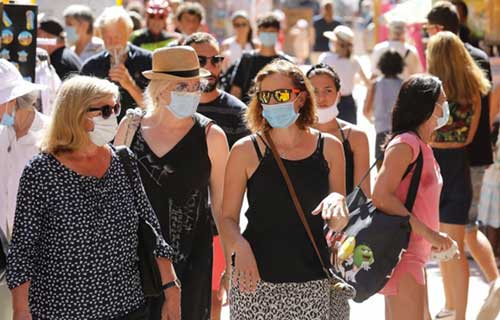
Is the cure more deadly than the virus?
Opinions are largely divided when it comes to the nature of preventive measures necessary to stem the further spread of Covid-19.
Decision-makers depend on the guidance and recommendations of medical experts in adopting health safety protocols the public should adhere to.
Interestingly, a prominent group of global medical experts recently initiated a process to specifically focus on the negative impacts on the public health in general as a result of coronavirus related shutdowns and curfews in a country.
Titled ‘The Great Barrington Declaration’, the group of infectious disease epidemiologists and public health scientists raised grave concerns over the damaging physical and mental health impacts of the prevailing Covid-19 policies, and recommended an approach they called ‘Focused Protection’.
The experts claimed that the ongoing lockdown policies in many countries are producing devastating effects on short and long-term public health. The results include lower childhood vaccination rates, worsening cardiovascular disease outcomes, fewer cancer screenings and deteriorating mental health – leading to greater excess mortality in years to come, with the working class and younger members of society carrying the heaviest burden. Keeping students out of school is a grave injustice, they claimed.
Keeping these measures in place until a vaccine is available will cause irreparable damage, with the underprivileged disproportionately harmed. The normal time-line for releasing a vaccine to the public is between 8 – 12 years, they opined.
“The vulnerability to death from Covid-19 is more than a thousand-fold higher among the old and infirm than the young. Indeed, for children, the virus is less dangerous than many other viral strains, including influenza”, the medical experts declared.
As immunity builds in the population, the risk of infection to all – including the vulnerable – falls. It’s a known fact that all populations will eventually reach herd immunity – i.e. the point at which the rate of new infections is stable. The goal should therefore be to minimize mortality and social harm until herd immunity settles in, the experts recommended.
The most compassionate approach that balances the risks and benefits of reaching herd immunity is to allow those at minimal risk of death to live their lives normally and to build up immunity to the virus through natural infection, while better protecting those at the highest risk. This is what medical experts call “Focused Protection”.
Adopting measures to protect the vulnerable should be the central aim of public health responses to Covid-19. By way of example, nursing homes should use staff with acquired immunity and perform frequent PCR testing of other staff and all visitors. Staff rotation should be minimized. Retired people living at home should have groceries and other essentials delivered to their homes.
When possible, they should meet their family members outside, rather than inside. A comprehensive and detailed list of measures, including approaches to multi-generational households, can be implemented, and is well within the scope and capability of public health professionals, they further said.
The medical experts are of the view that those who are not vulnerable should immediately be allowed to resume life as normal. Simple hygiene measures, such as hand washing and staying home when sick should be practiced by everyone to reduce the herd immunity threshold. Schools and universities should be open for in-person teaching. Extracurricular activities, such as sports, should be resumed. Young low-risk adults should work normally, rather than from home.
Restaurants and other businesses should remain open. Arts, music, sport and other cultural activities should resume. People who are more at risk may participate if they wish, while society as a whole enjoys the protection conferred upon the vulnerable by those who have built up herd immunity, they said.
On October 4, 2020, ‘The Great Barrington Declaration’ was authored and signed in Great Barrington, United States, by Dr. Martin Kulldorff, Professor of Medicine at Harvard University, a Biostatistician, and Epidemiologist with expertise in detecting and monitoring infectious disease outbreaks and vaccine safety evaluations, Dr. Sunetra Gupta, Professor at Oxford University, an Epidemiologist with expertise in Immunology, Vaccine Development, and Mathematical Modeling of Infectious Diseases, Dr. Jay Bhattacharya, Professor at Stanford University Medical School, a Physician, Epidemiologist, Health Economist, and Public Health Policy Expert focusing on Infectious Diseases and Vulnerable Populations, Dr. Rajiv Bhatia, Physician, Epidemiologist and public policy expert at the Veterans Administration, USA
The other eminent medical professionals who endorsed the declaration were: Dr. Stephen Bremner, Professor of Medical Statistics, University of Sussex, England, Dr. Anthony J Brookes, Professor of Genetics, University of Leicester, England, Dr. Helen Colhoun, Professor of Medical Informatics and Epidemiology, and Public Health Physician, University of Edinburgh, Scotland, Dr. Angus Dalgleish, Oncologist, Infectious Disease Expert and Professor, St. George’s Hospital Medical School, University of London, England, Dr. Sylvia Fogel, Autism Expert and Psychiatrist at Massachusetts General Hospital and Instructor at Harvard Medical School, USA.
Dr. Eitan Friedman, Professor of medicine, Tel-Aviv University, Israel, Dr. Uri Gavish, Biomedical consultant, Israel, Dr. Motti Gerlic, Professor of Clinical Microbiology and Immunology, Tel Aviv University, Israel, Dr. Gabriela Gomes, Mathematician studying infectious disease epidemiology, Professor, University of Strathclyde, Scotland, Dr. Mike Hulme, Professor of Human Geography, University of Cambridge, England, Dr. Michael Jackson, Research Fellow, School of Biological Sciences, University of Canterbury, New Zealand, Dr. Annie Janvier, Professor of Pediatrics and Clinical Ethics, Université de Montréal and Sainte-Justine University Medical Centre, Canada, Dr. David Katz, physician and president, True Health Initiative, and founder of the Yale University Prevention Research Center, USA, Dr. Andrius Kavaliunas, Epidemiologist and Assistant professor at Karolinska Institute, Sweden, Dr. Laura Lazzeroni, Professor of Psychiatry and Behavioral Sciences and of Biomedical Data Science, Stanford University Medical School, USA, Dr. Michael Levitt, Biophysicist and Professor of Structural biology, Stanford University, USA were also among the signatories.
They were joined by the recipient of the 2013 Nobel Prize in Chemistry, Dr. David Livermore, Microbiologist, Infectious Disease Epidemiologist and Professor, University of East Anglia, England, Dr. Jonas Ludvigsson, Pediatrician, Epidemiologist and Professor at Karolinska Institute and Senior Physician at Örebro University Hospital, Sweden, Dr. Paul McKeigue, Physician, Disease modeler and Professor of Epidemiology and Public Health, University of Edinburgh, Scotland, Dr. Cody Meissner, Professor of Pediatrics, Expert on Vaccine Development, Efficacy, and Safety. Tufts University School of Medicine, USA, Dr. Ariel Munitz, Professor of Clinical Microbiology and Immunology, Tel Aviv University, Israel, Dr. Yaz Gulnur Muradoglu, Professor of Finance, Director of the Behavioural Finance Working Group, Queen Mary University of London, England, Dr. Partha P. Majumder, Professor and Founder of the National Institute of Biomedical Genomics, Kalyani, India, Dr. Udi Qimron, Professor of Clinical Microbiology and Immunology, Tel Aviv University, Israel, Dr. Matthew Ratcliffe, Professor of Philosophy, Specializing in Philosophy of Mental Health, University of York, England, Dr. Mario Recker, Malaria Researcher and Associate Professor, University of Exeter, EnglandDr. Eyal Shahar, Physician, Epidemiologist and Professor (emeritus) of Public Health, University of Arizona, USA, Dr. Karol Sikora, Physician, Oncologist, and Professor of Medicine at the University of Buckingham, England, Dr. Matthew Strauss, Critical Care Physician and Assistant professor of Medicine, Queen’s University, Canada, Dr. Rodney Sturdivant, Infectious Disease Scientist and Associate Professor of Biostatistics, Baylor University, USA, Dr. Simon Thornley, Epidemiologist and Biostatistician, University of Auckland, New Zealand, Dr. Ellen Townsend, Professor of Psychology, Head of the Self-Harm Research Group, University of Nottingham, England, Dr. Lisa White, Professor of Modelling and Epidemiology, Oxford University, England and Dr. Simon Wood, Biostatistician and Professor, University of Edinburgh, Scotland.
– Dr. Dietmar Doering
(The writer is a Social Scientist and Head of AGSEP Research)



SLPP MP Namal Rajapaksa and former Krrish Group Executive Director and businesswoman Janaki Siriwardena were further remanded until October 23 by the Colombo Chief Magistrate’s Court yesterday in connection with an alleged Rs. 70 million bribery case involving the Krrish Group.
Colombo Chief Magistrate Asanga S. Bodaragama rejected the bail application filed on behalf of Siriwardena.
The Magistrate said the order on Namal Rajapaksa’s bail application was not ready and would be delivered on the next court date.
The Commission to Investigate Allegations of Bribery or Corruption (CIABOC) arrested the two suspects and produced them before court over allegations that a bribe of Rs. 70 million had been solicited and accepted in connection with the affairs of the Krrish Group.

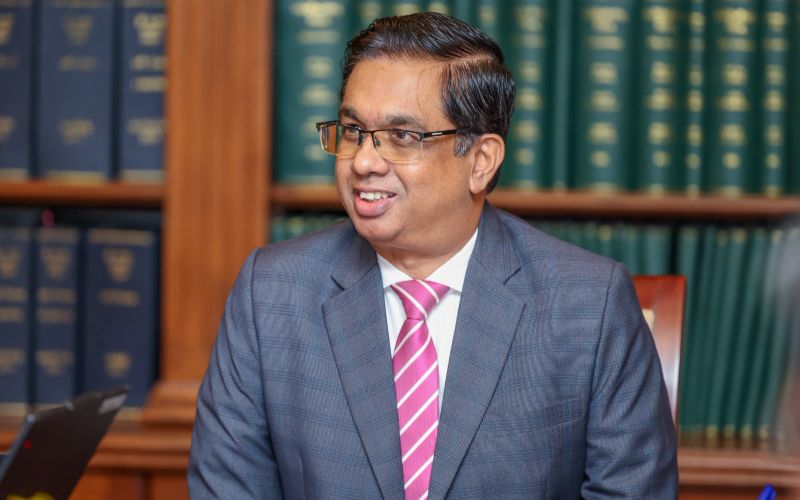
A progress review meeting on reforms and modernisation initiatives at Sri Lanka’s key state revenue-collecting institutions was held on Thursday (15) at the Presidential Secretariat, chaired by Secretary to the President Dr Nandika Sanath Kumanayake, with the participation of representatives of the International Monetary Fund (IMF) and officials of the Revenue Administration, Reform and Modernisation Bureau (RARMB) of the Presidential Secretariat.
At the meeting, the IMF representatives commended the revenue collection efficiency of the Department of Inland Revenue, Sri Lanka Customs and the Department of Excise, the country’s three leading state revenue-collecting institutions. Extensive discussions were also held on the progress of the reform and modernisation programmes being implemented at these institutions.
Secretary to the President Dr Nandika Sanath Kumanayake outlined the progress achieved by the three institutions to date and the reforms planned for implementation in the future.
The IMF representatives also highlighted the importance of strengthening risk management, developing human resources and ensuring the efficient operation of computer systems at the respective institutions.
Senior Additional Secretary to the President Seevali Arukgoda also attended the meeting. The IMF was represented by Cindy Negus, Senior Economist in Revenue Administration for the Asia and Pacific, Europe, Middle East and Central Asia regions; Alison Lister, Revenue Administration Adviser; and Gregory Toppin, Resident Revenue Adviser in Sri Lanka. A group of senior officials from the Revenue Administration, Reform and Modernisation Bureau of the Presidential Secretariat also participated.
(President’s Media Division)

By Anuradha Hiripitiyage
Electricity tariffs should be reduced by between 3 and 5 percent instead of being increased by 2.88 percent in the fourth quarter, as proposed by the National System Operator (NSO), Electricity Consumers’ Association Secretary Sanjeewa Dhammika said.
Addressing a media briefing in Maradagahamula, Divulapitiya, Gampaha, yesterday (16), Dhammika said a proper assessment of electricity generation costs, including the contribution of hydropower, could justify a reduction in tariffs.
He said the NSO had sought approval from the Public Utilities Commission of Sri Lanka (PUCSL) for a 2.88 percent tariff increase, which was expected to generate an additional Rs. 4,438 million.
However, the Commission had indicated that an increase of only 1.46 percent was warranted, amounting to Rs. 2,245 million, he said, adding that even this increase was unnecessary.
Dhammika alleged that the proposed revision sought to pass on to electricity consumers the financial burden arising from the non-arrival of five coal shipments and failed tenders.
“The Government had said that the burden of coal-related losses would not be passed on to the public. It is therefore unjust to make consumers bear these costs,” he said.
He pointed out that the PUCSL had forecast that hydropower would account for 32.34 percent of total electricity generation in the coming quarter, while the cost of such generation would represent only 3.45 percent of the overall cost of electricity production.
Consumers should benefit from the lower cost of hydropower generation rather than bear the burden of more expensive thermal power generation, he said.
Dhammika also questioned the inclusion of Rs. 669 million in capacity charges that had not been approved by the PUCSL, as well as a further Rs. 1,069 million to repay loans relating to incomplete projects.
Including such charges in the proposed tariff revision was unjustifiable, he said.
The PUCSL has given the public until October 30 to submit their views on the proposed tariff revision.
Dhammika said the possibility of increased hydropower generation in the coming weeks, as reservoir levels rise, should also be taken into account when determining electricity tariffs.
He maintained that tariffs could be reduced by 3 to 5 percent if hydropower generation was properly assessed and coal-related losses and unapproved charges were excluded from the calculations.
He further claimed that electricity tariffs could be reduced by as much as 10 percent through the promotion of renewable energy and the effective use of solar power and battery storage systems.
The Electricity Consumers’ Association urged the Government to withdraw the proposed tariff increase, insisting that consumers should not be made to bear costs arising from coal supply problems and other disputed charges.

Namal, Janaki further remanded

Achintha smashes 1,500 metres record at All Island Schools Games

Rare pink diamond goes on display in France 100 years after amateur heist

Nursery owner in China jailed for life after hundreds of children poisoned

Pakistan, Sri Lanka look to find the right mix as World Cup countdown begins

Mumbai Indians and head coach Mahela Jayawardene part ways

‘Dates have the highest sugar content to fight Coronavirus’

Sunday Island 27 December – Headlines

#SundayIsland 17th December – Headlines

Sunday Island – 28th March

Sunday Island Headlines – 21 March

Sunday Island – 21st February – Headlines
-

 News7 days ago
Sri Lanka escalates anti-graft drive with Shiranthi’s jailing
-

 News7 days ago
Iranian ships stranded, Lanka fears US sanctions
-

 Latest News6 days ago
Farhan and Sadaqat help Pakistan seal series in style
-

 Latest News4 days ago
Nissanka’s return headlines Sri Lanka’s Test squad against Pakistan
-

 Features6 days ago
Intake 16: 45 years of duty and honour
-
 News6 days ago
Malwathu Chapter issues statement on talks with President over Gnanasara Thera’s robes
-
 News7 days ago
Navi Pillay’s Lankan affairs in focus as she wins 2026 Nobel Peace Prize
-

 News6 days ago
CP alleges NPP has taken the blame for illegal US sanctions on Iranian vessels