
Sports
Why do we have so much focus on fitness?

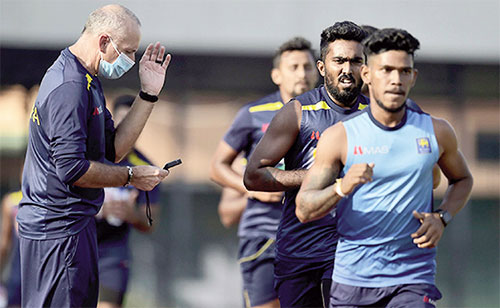
Sri Lanka’s fitness trainer Grant Ludon keeps a close eye as players complete the two kilometer run.
by Rex Clementine
When Sri Lanka announced Mickey Arthur as their Head Coach, it was just a matter of time that he confronted some players on their fitness. Along the way, he had dropped Dilruwan Perera, Prabath Jayasuriya, Avishka Fernando and Bhankua Rajapaksa. The first to speak against the stiff fitness regime is Rajapaksa and it can be assured that there are many others who are moaning about the two kilometer run that they are supposed to do in less than eight minutes and 30 seconds and the skin fold test.
It’s not just over as yet. The eight minute 30 seconds given for the two kilometer run is just average standard. It is supposed to get stiffer by next year where players are supposed to finish the run in less than eight minutes, like it is done in rest of the world.
Head Coach Arthur and Director of Cricket Tom Moody have got good reason to argue as well. If Sri Lanka’s fast bowling coach can finish two kilometers in less than seven minutes and 30 seconds at the age of 47, why not the players who are 20 years younger than him.
Opening batsman Avishka Fernando has learned it the hard way. One of the most promising young batsmen in international cricket, Fernando failed the skin fold test. As a result, he was sent home from Galle in January having joined the team for the two match Test series against England.
Then he failed the fitness test and was overlooked for the tours of West Indies and Bangladesh. Fernando has got his act together and has improved his fitness. He now finds himself back in the side for the tour of England. But he has missed out on a central contract. Quite harsh one may say but given the team’s poor fitness standards, there’s only one way players are going to learn.
Exciting times are ahead as we are going to see two attacking batsmen in Danushka Gunathilaka and Avishka Fernando opening the batting in England. Well, not if Gunathilaka fails a second fitness test. Both him and Dhananjaya de Silva need to finish the two kilometer run in less than eight minutes and 30 seconds if they need to be on that plane to England.
New fitness standards are going to help improve the game overall. You’ll see new energy levels on the field, better running between the wickets and more importantly batters being able to bat for long and bowlers having the stamina to go for longer spells.
Sidath Wettimuny during the Lord’s Test in 1984 had an opportunity to go onto become the first Sri Lankan to score a double hundred. It would have been quite an achievement as well as he would have become the first Sri Lankan to score a hundred, first Sri Lankan to 150 mark and then the double hundred. But he was dismissed for 190 on the third day of the Test match having batted for two full days. Wettimuny always says that if he had the fitness levels of the current players he would have achieved much more.








The head of Turkiye’s football refereeing body and four other officials have been placed in pretrial detention by a court as part of a corruption investigation, the state news agency Anadolu reports.
Ferhat Gundogdu, head of the Central Referees Committee, and six others appeared before a judge over allegations of manipulation of the referee administration process, Anadolu said on Saturday.
They appeared on Friday before a judge at Istanbul’s Caglayan courthouse on several charges, including forgery of official documents, breach of trust and illegal acquisition of personal data, the report said.
The judge remanded five people in custody and granted the other two conditional release, Anadolu said.
It was the latest scandal to shake football in Turkiye, coming exactly a year after the Turkish Football Federation (TFF) suspended 149 referees on charges of illegal betting.
On Thursday night, police from the illegal betting and sports crime unit also detained Yasin Kol, a referee from Turkiye’s top-flight Super Lig, as well as an assistant referee, media reports said.
Justice Minister Akin Gurlek said prosecutors are examining claims about “interference in the processes of referee classification, assignments, scoring and appointments as well as the exams on rules”.
During raids on Tuesday, police searched the VAR room at TFF’s headquarters in Istanbul. Observers said the investigation was likely linked to last year’s betting scandal and would have implications for the federation.
“It does seem to be a continuation of 2025, and it looks like it will continue further,” sports journalist Ayhan Sensoy told the AFP news agency.
Sensoy, who wrote a 2024 book on the issue called The Gambling Pit, said it was unlikely that federation bosses “have any chance of staying in office”.
So far, the TFF has not directly addressed the arrests as its top officials are due to fly home on Saturday after attending Friday night’s Belgium-Turkiye UEFA Nations League clash in Liege, which Turkiye lost 3-0.
[Aljazeera]
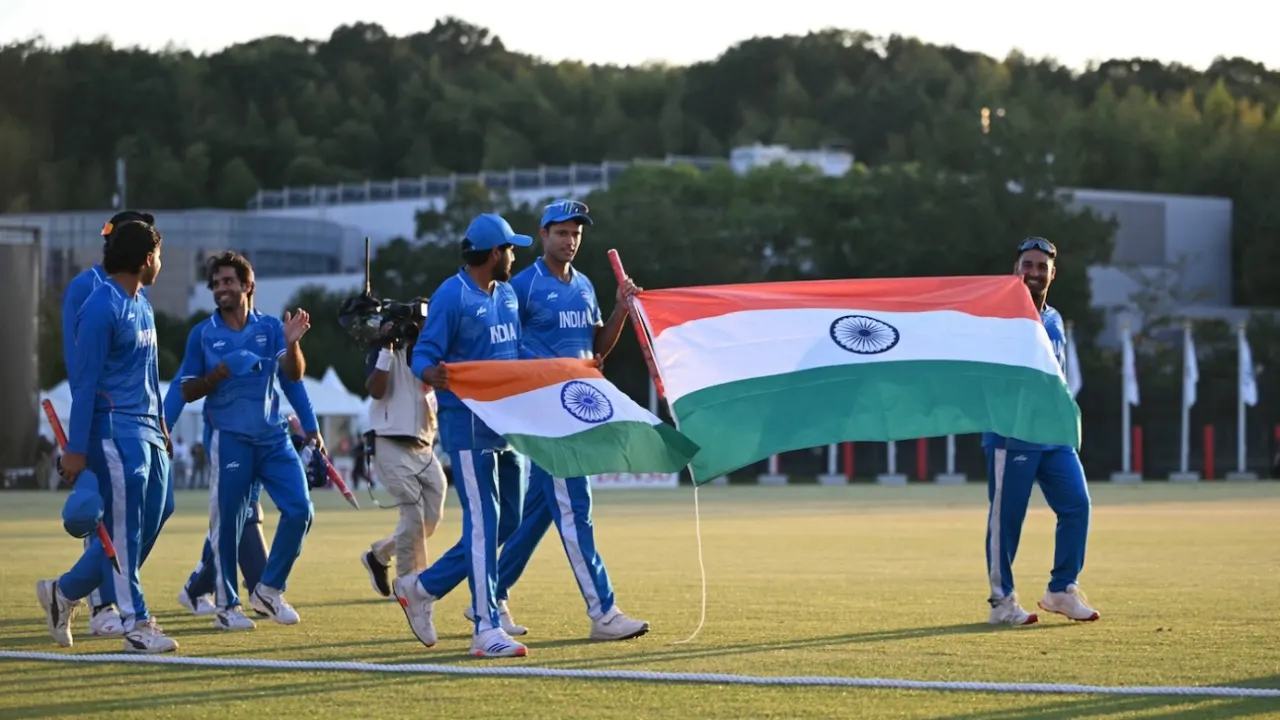
Rapid half-centuries from Abhishek Sharma and Tilak Verma at either end of their innings set India up to defend their Asian Games men’s gold with a 19 run win over Pakistan in Nisshin. The final pitted a full-strength India against a second-string Pakistan, and the first two-thirds of the contest went alongside expected lines, but a stunning 51-ball 96 from Hasan Nawaz ensured there was a tense finish. With this result, India have a 4-3 advantage over Pakistan in finals of major tournaments (five or more teams) across formats.
The pitch in Nisshin was another slow, grippy turner, but the smallness of the outfield meant spinners were under constant pressure to hit their lengths consistently. India hit 15 sixes, and Pakistan ten – that perhaps summed up the difference between the two sides. India had more pedigreed T20 hitters in their line-up, and bowlers with better control too. In packing their side with allrounders, though, they were also perhaps a frontline bowler light, and it showed in the figures of their fourth, fifth and sixth bowlers – Ravi Bishnoi, Abhishek and Shivam Dube went for a combined 100 in eight overs.
It was clear from the start that Pakistan’s bowling lacked the pinpoint control to contain a line-up as explosive as India’s. And their plans seemed a little iffy too. For instance, they brought on Saad Masood, a legspinning allrounder making his T20I debut, in the second over against the left-left pair of Vaibhav Sooryavanshi and Abhishek. In an over reminiscent of Abrar Ahmed to Ishan Kishan in the T20 World Cup earlier this year – a similar match-up that Kishan dominated – Saad went for 24 runs in the over, conceding three sixes and a four.
Sooryavanshi was caught behind off Saim Ayub off the first ball of the next over, earning a look of disgust from his partner – it seemed to communicate his disapproval of Sooryavanshi’s choice of shot, the reverse-sweep. The rest of Abhishek’s innings showed why he may have been disappointed in Sooryavanshi. He tore Pakistan’s attack to shreds, but pretty much all his shots followed a broad plan: sit on the back foot as much as possible, and use the slowness of the pitch to his advantage by shortening the lengths of the spinners. Pakistan’s spinners, for their part, obliged him with some long-hops of their own.
Abhishek hit seven sixes in 27 balls before he fell trying to hit another, undone by low bounce after stepping out to the left-arm spinner Arafat Minhas. At that stage, with India 93 for 3 in 7.5 overs, it looked like Abhishek had batted Pakistan out of the game.
Pakistan’s spin quintet – both teams played just one frontline seamer each – regrouped, though, and conceded just 28 runs in six overs, while taking the wickets of Kishan and Shreyas Iyer, to have India 142 for 5 after 16.
But Pakistan’s control loosened thereafter. Where they had been guilty of bowling too short at the start of India’s innings, they erred too full now, and began feeding Tilak and Shivam Dube with slot balls. They hit six sixes between them in the last four overs, four of them coming off successive balls across the 18th and 19th overs. Ahmed Daniyal, Pakistan’s lone seamer, dismissed Dube off the first ball of the final over, but Tilak ensured there would be no let-up in the hitting, finishing the innings with 6, 6, 2, 1, reaching his half-century along the way.
India scored 69 off their last four overs, and once again looked to have batted Pakistan out of the game.
Pakistan began their chase with a 33-run opening stand during which Sahibzada Farhan and Maaz Sadaqat kept finding the boundary off the edge. That stand ended when Farhan middled a slog-sweep off Washington Sundar straight to deep midwicket.
False shots continued to bring Pakistan runs through their innings. In all, their batters would score 51 off 49 not-in-control balls, as against India’s 12 off 25. Luck certainly played its part in evening this contest.
The other major factor, however, was Nawaz. He walked in when Pakistan were going nowhere, and 36 for 2 soon became 39 for 3 in 6.1 overs. Nawaz himself took his time early on, and could have been out for 4 off 11 had a collision between Sooryavanshi at long-off and Bishnoi at long-on not caused the former to spill a catch off Abhishek.
But that moment of fortune seemed to flick a switch in Nawaz, and suddenly he began holding his shape beautifully through his big hits. He hit three sixes off the next five balls he faced, off Abhishek and Bishnoi. With Ayub also beginning to pepper the boundary at the other end, India began to worry. The pair put on 87 off 48 balls, with Nawaz by far the dominant partner, contributing 57 off 26.
When Dube came on in the 15th over and immediately removed Ayub, Pakistan needed 86 from 35 with six wickets in hand. Nawaz continued to keep Pakistan in the contest, but by this stage both teams were very aware that there was one Jasprit Bumrah over remaining. He started it with Pakistan needing 44 off 12, and finished it with the equation reading 33 from 6. Debutant Saad hit his one minor misstep – a low full-toss – for a straight six, but the other five balls were near-unhittable, either searing yorkers or slower cutters that gripped and lost a lot of pace off the pitch.
Pakistan were still not out of it mathematically, and it came down to the lumbering Dube – who had bowled a similarly nervy final over in the T20 World Cup semi-final earlier this year, conceding 22 when England had needed 30. Here he gave away a four off the first ball and a wide immediately after, but a pinpoint yorker next up ensured the match was all but sealed mathematically. Nawaz slogged the fourth ball for six to get in sight of a hundred, but his top-edged hook off the final ball settled in Sanju Samson’s gloves, leaving him four runs short.
Scores:
India 211 for 6 in 20 overs (Vaibhav Sooriyavanshi 15, Abhishek Sharma 61, Shreyas Iyer 21, Ishan Kishan 20, Tilak Varma 51*, Shivam Dube 27; Saim Ayub 1-47, Ahmed Daniyal 2-43, Arafat Minhas 2-25, Abrar Ahmed 1-29) beat Pakistan 192 for 6 in 20 overs (Sahibzada Farhan 10, Maaz Sadaqat 23, Hasan Nawaz 96, Saim Ayub 29, Saad Masood 12*; Axar Patel 2-29, Washington Sundar 2-29, Shivam Dube 2-33) by 19 runs
[Cricinfo]

Vijayakanth Viyaskanth broke the stand with Parvez’s wicket and triggered another collapse. Bangladesh went from 50/5 to 72/8 in the space of 18 deliveries, the chase now well beyond their reach. Sri Lanka’s bowling quartet of Ratnayake (2-18), Nuwan Thushara (2-18), Vijayakanth Viyaskanth (2-26), Wanuja Sahan (2-17) did all of the damage as Bangladesh were bowled out for 102 – 63 short of their target.
Scores:
Sri Lanka 165/9 in 20 overs [Sahan Arachchige 33, Ashen Bandara 18, Thjarindu Rathnayake 65; Mahedi Hasan 2-19, Al Islam 1-18, Rishad Hossain 1-46, Saif Hasan 2-28, Mustafizur Rahman 2-43] beat Bangladesh 102/10 in 17.3 overs [Parvez Hossain Emon 20, Towhid Hridoy 11, Yasir Ali 21, Rishad Hossain 10, Nasum Ahmed 26; Nuwan Thushara 2-18, Tharindu Rathnayake 2-18, Vijayakanth Viyaskanth 2-26, SahanArachchige 1-09, Wanuja Sahan 2-17, Dushan Hemantha 1-11] by 63 runs.
[Cricbuzz]

Turkish court detains football refereeing chief pending corruption trial

Ten injured after car crashes into rugby supporters in Australia

Polls open in Latvia against backdrop of perceived Russia threat

Abhishek, Tilak and spinners secure gold for India at Asian Games again

Tharindu Rathnayake, bowlers secure Asian Games Bronze for Sri Lanka

G7 to release 100 million barrels of oil and diesel after Trump export ban threat

‘Dates have the highest sugar content to fight Coronavirus’

Sunday Island 27 December – Headlines

#SundayIsland 17th December – Headlines

Sunday Island – 28th March

Sunday Island Headlines – 21 March

Sunday Island – 21st February – Headlines
-

 News6 days ago
Police remove Thileepan statue in Jaffna
-

 Features6 days ago
The 22nd Amendment, constitutional recovery and illiberal slippage
-

 Features6 days ago
Of foreigners as CEOs of Lankan ventures
-

 Latest News4 days ago
Gold winner Tharanga gets brand-new Honda Vezel from SLAAJ
-

 News6 days ago
Sajith rejects Jt. Opp. protest sabotage claim; SJB TU chief demands remedial action
-

 Features4 days ago
Why Sri Lanka needs an Inclusive Civic Nationalism – urgently
-

 Features5 days ago
Thailand’s biggest new global star …
-

 News3 days ago
US-assisted ‘Ice’ detection: NPC to examine IGP’s move to transfer drug-busting team