
News
WHO brainstorming meeting among public health experts: Observations and recommendations


Covid-19 surge in Sri Lanka
Public health experts representing diverse specialties held a brainstorming meeting convened by the World Health Organisation (WHO) Sri Lanka to discuss the current spike in cases in Sri Lanka recently, according to a media statement issued by the WHO Colombo Office. The key observations and recommendations to policy and decision-makers indicated below are documented based on proceedings and the consensus achieved at the meeting. The views expressed on the situation are those of the experts and do not necessarily reflect those of WHO.
The following crucial factors were considered:
The COVID-19 situation in Sri Lanka is very likely to get worse over the next few weeks. The decisions we take NOW will affect the lives of millions of Sri Lankans. Therefore, the next 3-4 weeks are critical in controlling transmission and saving lives.
The epidemiological trend of the past weeks shows a rapid exponential increase in the number of cases, this trend is likely to continue for some time if no effective interventions are made.
There is a lag of 1-2 weeks between infection and case detection and a further lag of an additional 2-3 weeks between an increase of reported cases and an increase in reported ICU admissions and deaths. Thus, the deaths and ICU admissions we are seeing now are the consequence of infections that took place at the early stage of this third wave (3-4 weeks ago).
The public sector health system is stretched to the limit, making it difficult to manage COVID-19 cases as well as other essential services. More health professionals and preventive staff (e.g. PHIs) are getting infected and HR policies need to be geared to meet the urgency. There is a “tipping point” beyond which the system can rapidly go out of control.
The more transmissible and severe variants detected in India and other variants have already been detected in the country, these can spread faster and may even circumvent vaccine-induced immunity.
Vaccines will be crucial to controlling the epidemic in the medium-term but will not address the immediate crisis we now face. Some vaccines are only effective after the second dose. Therefore, it will take a minimum of 6-8 weeks to see the effects of vaccination in the number of new cases.
In the context of the above, there are two URGENT actions we can take to save lives – stop new infections as effectively as possible and prepare for the predictable increase in severe cases and deaths.
1.
Globally, evidence shows that strict and immediate measures to restrict mobility are the only measures that quickly and drastically reduce cases. Sri Lanka will also benefit from strict mobility restrictions whilst maintaining major economic activities and essential services. There is a need to stop inter-district travel and introduce severe restrictions on non-essential human mobilities and the congregation of people. Universal adherence to ‘precautions’ such as appropriate masking, physical distancing, hand hygiene, and avoiding the 3Cs – crowds, confined and enclosed spaces, and close-contact settings is a must. High transmission areas must be shut down for 2-3 weeks to stop or limit transmission. There should be a national mobilization effort to accelerate vaccination.
2.
Reconsider the management of asymptomatic cases, revise clinical management protocol to include home management. Increase focus on intermediate care centres to detect cases early, properly monitor patients, and appropriately manage cases, thereby minimizing the need for more intensive care. Prepare for an increase in hospitalization and the need for adequate HDU and ICU care.
Participants
Dr. Palitha Abeykoon, WHO Consultant and WHO Director-General’s Special Envoy For COVID-19 Preparedness and Response for SEAR
Prof. Malik Peiris, Chair/Professor – School of Public Health, The University of Hong Kong, Faculty of Medicine, Hong Kong
Dr. Ananda Wijewickrama, Consultant Physician and Past President of the College of Physicians
Prof. Neelika Malavige, Professor and Head, Department of Immunology and Molecular Medicine, Sri Jayewardenepura University
Dr. Vinya Ariyaratne
Public Health Specialist, President- Sarvodaya (CSO)
Dr. Padma Gunaratne, Consultant Neuro Physician and President, Sri Lanka Medical Association
Prof. Indika Karunathilake, Prof. in Medical Education, Department of Medical Education, Faculty of Medicine and Former President – SLMA
Prof. Asita de Silva, Senior Professor of Pharmacology, University of Kelaniya and President, Sri Lanka Association of Clinical Pharmacology & Therapeutics
Prof. Manuj Weerasinghe , Professor in Community Medicine, Faculty of Medicine, Colombo
Dr. LakKumar Fernando, Consultant Pediatrician and President, Association of Medical Specialists
Dr. Nihal Abeysinghe, Consultant in Community Medicine and Former Chief Epidemiologist in Sri Lanka and President of the College of Community Physicians in Sri Lanka
Prof. Saroj Jayasinghe, Consultant Physician and former Prof. of Medicine, Faculty of Medicine, Colombo
Prof. Kamini Mendis , Professor Emeritus, University of Colombo; Public Health Expert and former WHO Malaria expert
Dr. Olivia Nieveras, Officer In-Charge, WHO Sri Lanka
Dr. Sapumal Dhanapala, WHO Sri Lanka
Dr. Padmal de Silva, WHO Sri Lanka
Prof. Nalika Gunawardena, WHO Sri Lanka
Mr. T Suveendran, WHO Sri Lanka
Dr. Preshila Samaraweera, WHO Sri Lanka
Ms. Sahani Chandraratna, WHO Sri Lanka
Dr. Mizaya Cader, WHO Sri Lanka
Ms. Sadhani Rajapakse, WHO Sri Lanka
Dr. Anjalee De Silva, WHO Sri Lanka
Dr. Roshan Sampath , WHO Sri Lanka
Dr. Shreenika De Silva, WHO Sri Lanka


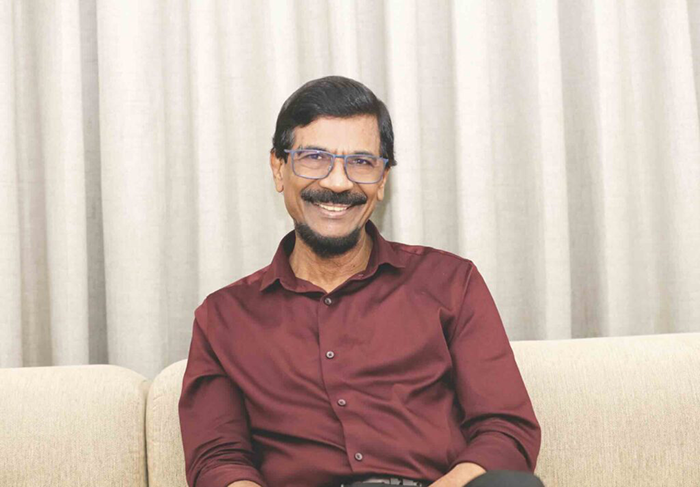
The much-delayed Provincial Council (PC) elections cannot be held this year due to financial and legal constraints, JVP General Secretary Tilvin Silva has said in Jaffna.Silva said so, fielding questions from journalists after the opening of the NPP coordination office in the Jaffna District on Saturday.
When asked whether the government was under Indian pressure to conduct the Provincial Council elections soon, Silva answered in the negative, claiming that Sri Lankan and Indian governments maintained close and friendly relations with a strong level of understanding.
He said budgetary allocations had been made for the PC elections, but the government had been compelled to divert resources for disaster relief following the impact of Cyclone Ditwah. According to Silva, nearly Rs. 500 billion had to be allocated for relief measures, making it difficult to hold the elections this year. He further said legal complications in the electoral reform process had also contributed to the delay in holding the PC elections, noting that a parliamentary committee had been appointed to determine the electoral systems under which the PC polls should be conducted. Once the committee submitted its report and if no further issues arose, the elections could possibly be held next year, he said.
Silva also said the government had taken measures to strengthen reconciliation and development in the North by releasing lands previously occupied by military camps and improving road infrastructure.He added that empowerment initiatives were being implemented under the Praja Shakthi programme and that both Sri Lanka and India were continuing to work in close cooperation.
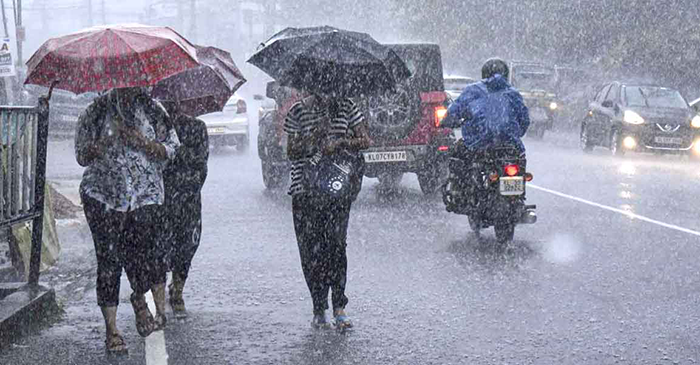
More than 31,000 people across Sri Lanka have been affected by worsening weather conditions, as the southwest monsoon intensifies ahead of its full establishment, raising fears of renewed flooding in vulnerable low-lying areas, the Disaster Management Centre (DMC) has warned.
The DMC has said 31,072 individuals from 7,983 families have already been impacted by persistent rain, strong winds and rising water levels across multiple districts, with the situation most severe in the Gampaha District where 15,313 people from 3,950 families have been affected and one death reported.
Officials have cautioned that the scale of disruption could worsen as the southwest monsoon is expected to fully establish over the island around May 26–27, bringing heavier and more sustained rainfall to the southwestern region.
At present, 18 safety centres are in operation, sheltering 1,724 displaced persons from 446 families. One person has been injured and 859 houses have been partially damaged. Two houses have been destroyed.
The Department of Meteorology has forecast increased rainfall over the coming days, warning that conditions are likely to deteriorate further as monsoon activity strengthens.
Flood-hit areas remain widespread, with river systems still under pressure despite a brief easing in rainfall on Saturday. The Kelani River has returned to normal levels, but minor flooding persists along the Kalu River basin, particularly in the Millakanda area, where tributary water levels remain elevated.
Low-lying areas in Bellapitiya, Horana, continue to be inundated, while traffic on the Bulathsinhala–Kalutara road remains disrupted due to flooding in Diyakaduwa. Authorities have also flagged continued risk in Putupawula and Ellagawa along the Kalu River.
The Attanagalu Oya basin is also slowly receding, though residents in Dunamale have been urged to remain on alert. Several homes in Ja-Ela remain underwater, with residents alleging that delayed repairs to a damaged canal embankment worsened the flooding.
In a fresh blow to infrastructure, the Swarna Hansa Podi Ela bridge in Ja-Ela collapsed on Saturday evening, further disrupting local transport links, while the main Ja-Ela–Gampaha bus route remains submerged in parts of Yakkaduwa.
Meteorologists have warned that rainfall is expected to intensify again from May 26 to 28, when the southwest monsoon is likely to be formally declared over Sri Lanka, raising the risk of further flooding and landslides in already saturated areas.
by Norman Palihawadane and Chaminda Silva

Police said a suspect wanted in connection with the murder of an elderly couple inside a shop in Dickoya town, Hatton, had been arrested on Saturday evening (23).
The arrest was made in the Bogawantalawa police area. Acting on a tip-off, the police arrested him while he was hiding in a house on a tea estate.
Police said stolen gold jewellery had been recovered.
Preliminary investigations revealed that the suspect, originally from Badulla, had been residing in Dickoya after his marriage.
Earlier on Saturday, Hatton Police released CCTV footage of the suspect and sought public assistance to trace and arrest him.
According to police, the suspect allegedly slit the throat of the elderly woman and killed her husband using a sharp weapon on Thursday (21) before fleeing with gold jewellery valued at around 18 sovereigns, including a necklace and earrings.
Investigations further revealed that the suspect had arrived in Dickoya town on the morning of May 21 and visited several jewellery shops claiming he intended to purchase a gold necklace, while loitering in the area.
Police said that around 1.15 pm, he entered the couple’s shop and remained concealed inside the premises before allegedly carrying out the attack.
Hatton Police added that the suspect is believed to have committed the murders and left the shop around 5.30 pm the same day before going into hiding.
by Norman Palihawadane

Attacks on Ebola centres intensify in eastern DRC amid outbreak fears

Oil prices fall amid mixed signals on US-Iran peace deal

Kuldeep and Rahul help Delhi Capitals sign off with big win

Trump tells US negotiators ‘not to rush’ into deal with Iran

Showers will occur at times in the Western, Sabaragamuwa and North-western provinces and in Galle, Matara, Kandy and Nuwara-Eliya districts

No PC polls this year, says Tilvin

‘Dates have the highest sugar content to fight Coronavirus’

Sunday Island 27 December – Headlines

#SundayIsland 17th December – Headlines

Sunday Island – 28th March

Sunday Island Headlines – 21 March

Sunday Island – 21st February – Headlines
-

 Features5 days ago
Octopus, Leech, and Snake: How Sri Lanka’s banks feast while the nation starves
-
 Opinion4 days ago
Murder of Ehelepola family, Bogambara Wewa and Sightings of Wangediya
-
 News4 days ago
Steps underway to safeguard Sri Lanka’s maritime heritage
-
 Sports5 days ago
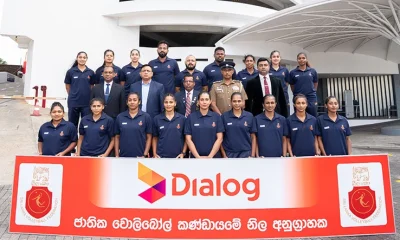
Sri Lanka women’s volleyball team ready for Central Asian challenge
-

 Editorial4 days ago
A play without its protagonist
-
 Features1 day ago
The NPP’s pivot to the past
-

 Opinion3 days ago
The need to reform Buddhist ecclesiastical order
-
 Midweek Review5 days ago
Overall SLPP failures stressed in new Aragalaya narrative