
Latest News
White House defends freezing funds as ‘reasonable’ while Democrats express ‘extreme alarm’

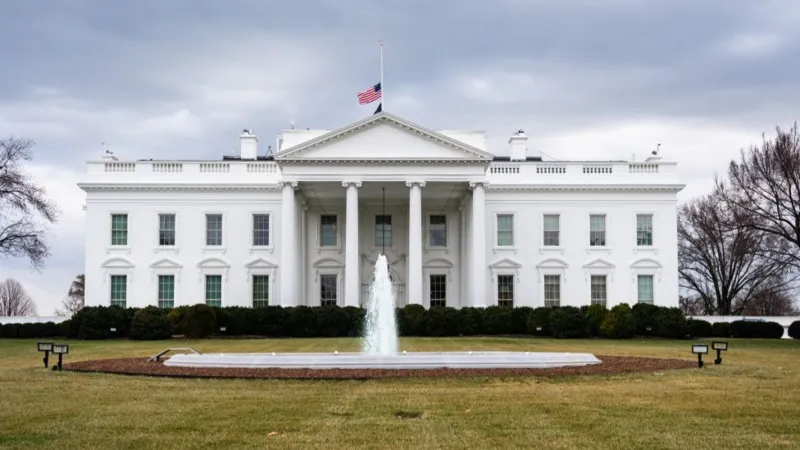
The two-page memo, from the acting head of the White House budget office, instructs agencies to “temporarily pause all activities related to obligations or disbursement of all Federal financial assistance”.
Much about the order, which went into effect on Tuesday afternoon, and its scope remain unclear, sowing widespread confusion.
The directive could paralyse billions of dollars meant for federal programmes, from disaster relief to cancer research.
Democrats have warned it may have brutal and far-reaching consequences.
In her first news conference as White House press secretary, Karoline Leavitt defended the directive, saying the motivation for the freeze is being “good stewards for tax dollars”.
“I think this is a very reasonable measure,” she said on Tuesday, adding that the pause would allow the government to weed out spending for “woke” gender issues and diversity programmes that conflict with Trump’s executive orders.
Medicare and Social Security benefits will not be affected, nor will any programme “that provides direct benefits to individuals”, including Supplemental Nutrition Assistance Program, known as SNAP or food stamps, the White House said.
But Leavitt did not clarify how aid to individuals would be protected in practice, as much of it goes first to state governments and other organisations, which then pass the assistance on to individuals. Leavitt also did not rule out Medicaid, a jointly run federal and state program which provides health insurance to low-income Americans, being cut off.
On Tuesday, hours after the late-night order was issued, the White House issued a second memo, with further information.
The pause is not “across the board”, the second memo said, but applies only to projects implicated by Trump’s various executive orders, including those that aimed at scraping diversity programmes in the federal government.
Democrats have assailed the freeze, saying it will bring chaos and harm to millions of Americans and warning it violates federal law.
In a letter to the White House, top Democrats expressed “extreme alarm”.
“The scope of what you are ordering is breathtaking, unprecedented, and will have devastating consequences across the country,” wrote Washington Senator Patty Murray and Connecticut Congresswoman Rosa DeLauro.
“We write today to urge you in the strongest possible terms to uphold the law and the Constitution and ensure all federal resources are delivered in accordance with the law.”
A coalition of Democratic states attorneys general said they will file suit to block the order, calling it unconstitutional.
“My office will be taking imminent legal action against this administration’s unconstitutional pause on federal funding,” New York Attorney General Letitia James wrote on social media. “We won’t sit idly by while this administration harms our families.”
In the Monday evening memo, which comes days after the US halted nearly all foreign aid, the acting head of the Office of Management and Budget (OMB) Matthew Vaeth called on government agencies to ensure spending is consistent with Trump’s priorities.
Federal agencies must “temporarily pause all activities related to obligation or disbursement of all federal financial assistance,” and any other programs that included “DEI, woke gender ideology and the Green New Deal,” Vaeth wrote.
DEI (Diversity, Equity and Inclusion) programmes aim to promote participation in workplaces by people from a range of backgrounds.
Their backers say they address historical or ongoing discrimination and underrepresentation of certain groups, including racial minorities, but critics argue such programmes can themselves be discriminatory.
The Green New Deal, a proposal to prevent climate change through public policy, was never signed into law.
Vaeth suggested that the pause would last until at least mid-February, asking agencies to provide a detailed report on the programmes that have been affected by 10 February.
It remains uncertain how much money is involved. The memo suggests that the federal government spent $10tn (£8tn) in fiscal year 2024, more than $3tn of which went to federal financial assistance. But the source of those numbers is unclear. The nonpartisan Congressional Budget Office reported that the government spent $6.7tn that year.
Nonprofit groups have responded in distress.
“This order is a potential five-alarm fire for nonprofit organizations and the people and communities they serve,” Diane Yentel, the chief executive of the National Council of Nonprofits, said in a statement.
“From pausing research on cures for childhood cancer to halting food assistance, safety from domestic violence and closing suicide hotlines, the impact of even a short pause in funding could be devastating and cost lives,” she added.
The move follows last week’s news that the Department of State had issued a halt to nearly all existing foreign assistance and paused new aid, according to an internal memo sent to officials and US embassies abroad.
It appeared to affect everything from development assistance to military aid, making exceptions only for emergency food aid and for military funding for Israel and Egypt.
Trump earlier issued an executive order for a 90-day pause in foreign development assistance pending a review of efficiencies and consistency with his foreign policy.
The US is the world’s biggest international aid donor, having spent $68bn (£66bn) in 2023 according to government figures.
(BBC)


The Rose Bowl, which has been awarded to the winner of ODI series between the women’s teams of Australia and New Zealand since 1985, has now been expanded to include T20Is as well.
New Zealand’s three match T20I tour of Australia, which begins on Sunday at the North Sydney Oval, will be the first T20I edition of the Rose Bowl. The teams will get to face off again for the trophy in March 2027 when they meet again for three ODIs, also in Australia.
For Rose Bowl series that include matches in both white-ball formats, the trophy will go to the team with the most wins overall. In case of a drawn series, the current holder will retain the trophy.
“The Rose Bowl is a prestigious trophy that holds a lot of meaning to current and past players, and it’s a series we’ve always taken a lot of pride in competing in,”Catherine Campbell, NZC’s chief cricket operations officer and a former New Zealand player, said. “With so much T20I cricket now being played, this is a brilliant opportunity to keep the Rose Bowl relevant and to build on the history between us and our Australian rivals.”
New Zealand captain Melie Kerr was excited by the broadening of opportunities to compete for the Rose Bowl.
“We’re all aware of what the Rose Bowl represents and the importance it holds in the White Ferns whakapapa [genealogy],” said Kerr. “Great players and teams have fought for it over the years and we’d love the opportunity to claim our own piece of that history.”
Australia have held the Rose Bowl continuously since wresting it back from New Zealand in 2000. Since that 3-0 win, Australia have won 18 times with one series – in 2008-09 – shared 2-2. Overall, Australia have won 26 of the 31 ODI series played for the Rose Bowl, with New Zealand winning three times and three series drawn.
North Sydney will host all three T20Is of the upcoming Rose Bowl series, on October 18, 20 and 22.
[Cricinfo]
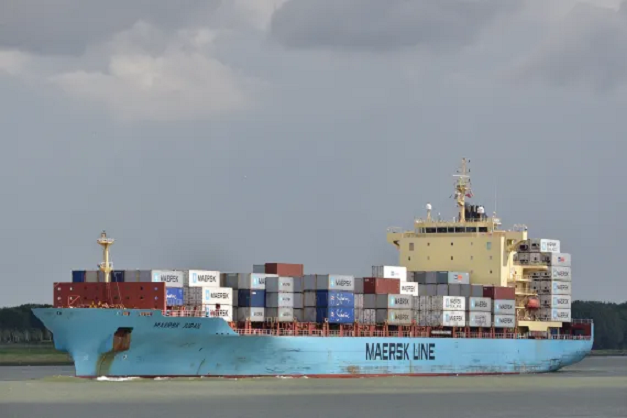
US President Donald Trump claims the US Navy’s “effective” blockade has stopped all Iranian ships from crossing the Strait of Hormuz.
Iran’s Islamic Revolutionary Guard Corps (IRGC) navy says a supertanker carrying more than two million barrels of crude oil has struck a sea mine while attempting to cross the Strait of Hormuz through an “unauthorised” route.
The collision caused a huge explosion and a major fire on board the vessel, the IRGC said in a statement reported by semi-official Tasnim news agency.
It alleged that the tanker had turned off all tracking and radar systems, attempting to pass through the strait using deception and with US military support.
‘The Strait of Hormuz is closed’, the IRGC navy warned, adding that vessels violating Iranian regulations would face severe consequences for relying on US backing.
[Aljazeera]
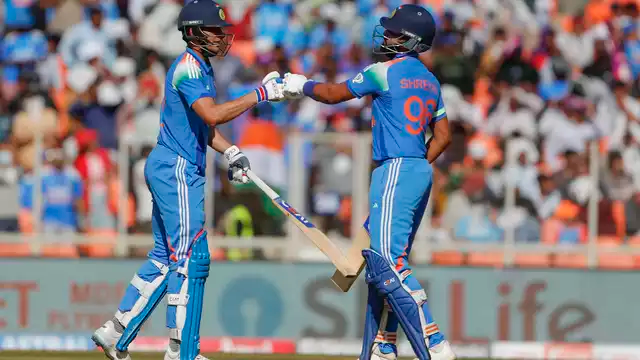
Squad for the first three ODIs: Shubman Gill [C], Rohit Sharma, Virat Kohli, Shreyas Iyer [VC], KL Rahul [WK], Nitish Kumar Reddy, Axar Patel, Naman Dhir, Anshul Kamboj, Gurnoor Brar, Ruturaj Gaikwad, Arshdeep Singh, Ishan Kishan [WK], Mohammed Siraj, Prasidh Krishna*, Kuldeep Yadav
Squad for fourth and fifth ODIs: Shreyas Iyer [C], Rohit Sharma, Virat Kohli, Tilak Varma, Ishan Kishan [WK, VC], Nitish Kumar Reddy, Axar Patel, Naman Dhir, Auqib Nabi, Gurnoor Brar, Ruturaj Gaikwad, Arshdeep Singh, Kumar Kushagra [WK], Mohammed Siraj, Yash Thakur, Kuldeep Yadav
[Cricbuzz]

Review of progress in reforms and modernisation of key state revenue-collecting institutions

Rose Bowl expanded to include Australia vs New Zealand T20Is

Trump claims US Navy blockade stops Iranian ships in Hormuz

Showers above 75 mm are likely at some places in the Western, Sabaragamuwa, Central and North-central provinces and in Trincomalee and Mullaitivu districts

Cut power bills by 3-5%, don’t hike them, consumers demand

Asgiri Mahanayake calls for immediate release of Gnanasara Thera

‘Dates have the highest sugar content to fight Coronavirus’

Sunday Island 27 December – Headlines

#SundayIsland 17th December – Headlines

Sunday Island – 28th March

Sunday Island Headlines – 21 March

Sunday Island – 21st February – Headlines
-

 News7 days ago
Sri Lanka escalates anti-graft drive with Shiranthi’s jailing
-
 News7 days ago
Iranian ships stranded, Lanka fears US sanctions
-

 Latest News6 days ago
Farhan and Sadaqat help Pakistan seal series in style
-
 Latest News4 days ago
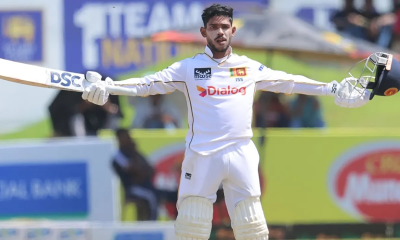
Nissanka’s return headlines Sri Lanka’s Test squad against Pakistan
-

 Features6 days ago
Intake 16: 45 years of duty and honour
-
 News6 days ago
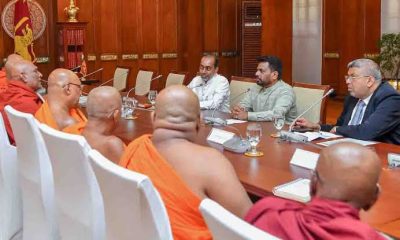
Malwathu Chapter issues statement on talks with President over Gnanasara Thera’s robes
-
 News7 days ago
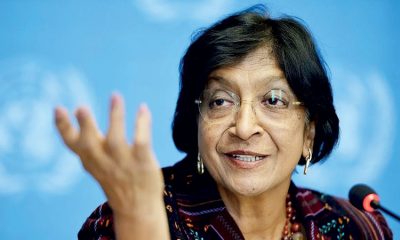
Navi Pillay’s Lankan affairs in focus as she wins 2026 Nobel Peace Prize
-
 News6 days ago
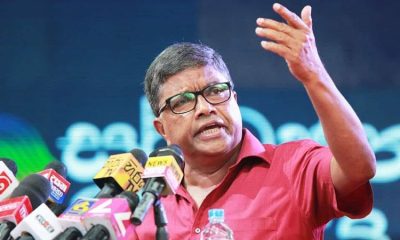
CP alleges NPP has taken the blame for illegal US sanctions on Iranian vessels